Range Rover Review

Written By Ivan Aistrop
- 2022
- SUV
- Diesel, petrol, plug-in hybrid
What we love
Sublime comfort and refinement
Magnificent cabin quality and presence
Still unmatched off road
Things to consider
Extremely expensive to buy and run
Some touch-sensitive controls are fiddly
Brand reliability reputation is still a concern
The DRIVE take on the Land Rover Range Rover, is it the right car for you?
The Range Rover still occupies a unique position. Plenty of luxury SUVs now offer plush cabins, serious performance and commanding image, but very few combine those qualities with genuine all-terrain ability and the same sense of occasion. The latest Range Rover is more polished, more technologically advanced and more luxurious than ever, yet it still feels unmistakably like a Range Rover. It is also ruinously expensive, and the brand’s reliability reputation still hangs over it, but as a luxury SUV that can genuinely do everything, the Range Rover remains the one to beat.
The Land Rover Range Rover in more detail
The Range Rover is not short of rivals in 2026. Buyers at this end of the market can look at everything from a BMW X7 and Mercedes-Benz GLS to a Porsche Cayenne, Bentley Bentayga and even a Rolls-Royce Cullinan if budgets are truly astronomical. Even so, the Range Rover still feels like the original reference point for the class.
That is because it continues to blend qualities that most rivals only specialise in individually. Some are more overtly sporty, some are even flashier inside, and some can match it for outright pace. What the Range Rover still does better than almost anything else is combine proper luxury-car comfort, authentic SUV toughness and a sense of effortless authority.
This fifth-generation car, launched in 2022, sharpened that formula rather than reinventing it. The styling is cleaner and more restrained than before, the cabin is more minimalist and modern, and the engineering is more sophisticated. All-wheel steering, active anti-roll control and adaptive air suspension all help it feel far more agile than something this large has any right to be. Off road, it remains in a different league to almost every luxury rival.
The current UK line-up is also simpler than the wider engine spread seen earlier in this generation’s life. The main new-car story now centres on the D350 diesel, the P460e and P550e plug-in hybrids, and the P530 V8, with HSE, Autobiography and SV trims making up the core walk-up. A Westminster Edition also sits in the current UK range. That means buyers still have meaningful choice, but the line-up is less sprawling than it once was.
The plug-in hybrids are especially significant because they make the Range Rover easier to justify in everyday use than older versions ever were. An official electric range of up to 75 miles is enough to cover a lot of local driving without waking the petrol engine, which is a very different proposition from the token PHEV ranges luxury SUVs used to offer.
All that said, the Range Rover is still a car that asks for compromise in one obvious area: cost. Even the least expensive current version is deep into six-figure territory. Running costs are substantial, insurance is as high as it gets and the expensive-car tax surcharge is unavoidable. It is also impossible to ignore Land Rover’s reputation for electrical and reliability issues over the years, even if the latest car itself is still relatively young.
What's the best Land Rover Range Rover trim and engine option?
For most buyers, the Range Rover D350 in HSE trim is likely to be the most rounded choice. It is not the most glamorous powertrain in the range, but it offers exactly the sort of effortless, long-legged shove that suits a huge luxury SUV like this. It is also likely to make the most sense if you regularly cover longer distances.
If your use is more mixed and you can charge regularly, the P460e plug-in hybrid is arguably the smartest modern choice. The long official EV range makes it far more useful day to day than most luxury PHEVs, and it gives the Range Rover an impressive breadth of ability.
Trim-wise, HSE already gives you so much equipment that it does not feel like a compromise. Autobiography adds more indulgence and will be the point many buyers settle on, while SV is best treated as the ultra-luxury choice rather than the obvious default.
What’s the price of the Land Rover Range Rover?
The current UK Range Rover line-up starts at £107,530 and rises to £177,540 before options. HSE opens the range, Autobiography sits above it, and SV models top the core line-up. Westminster Edition also features in the current UK offering.
That makes the Range Rover firmly a six-figure purchase across the board. There is no bargain-basement route into ownership, and once you start adding desirable options or stepping up to SV territory, the numbers become enormous even by luxury-SUV standards.
Alternatives to the Land Rover Range Rover
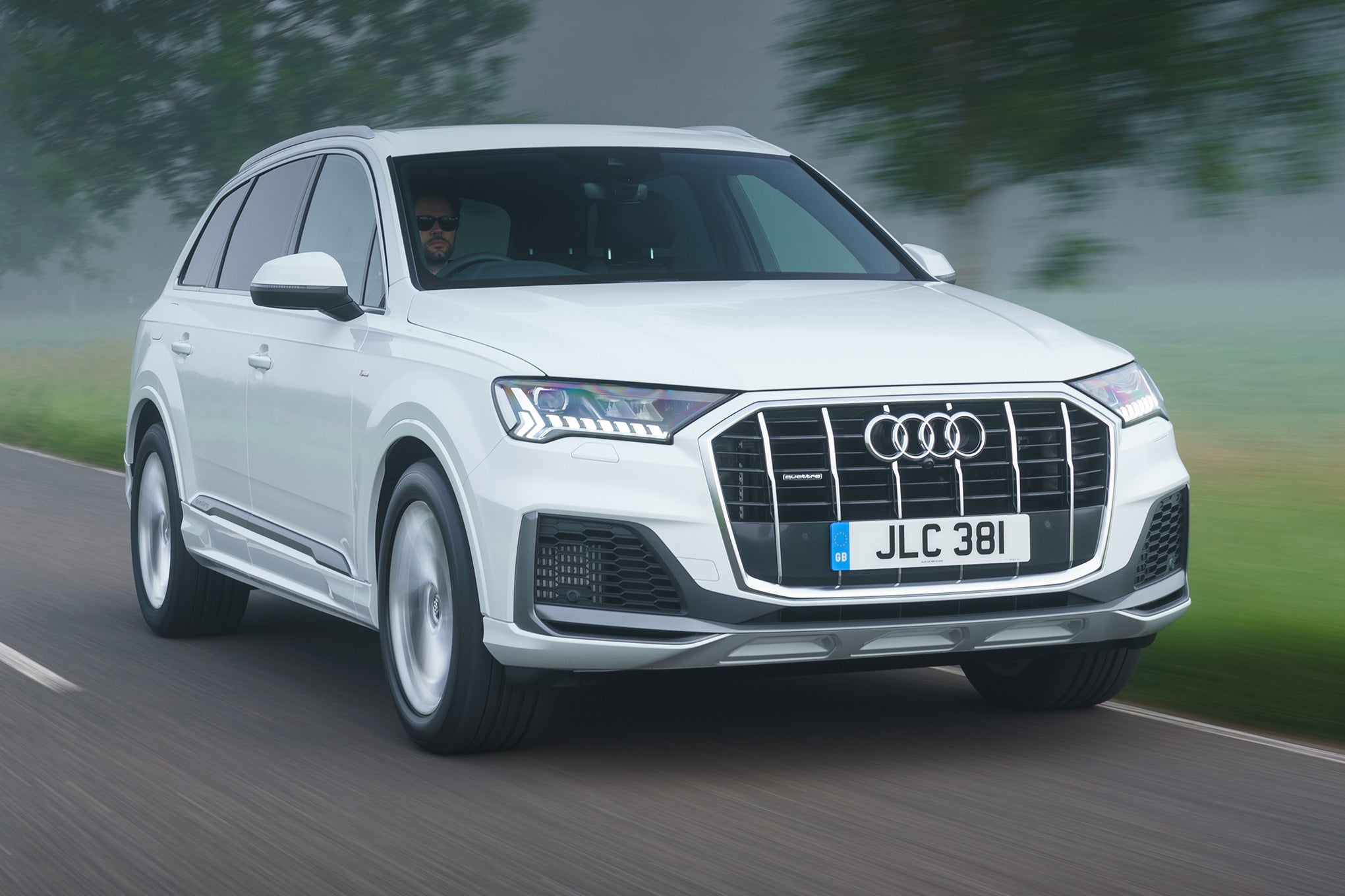
The Porsche Cayenne is one of the clearest alternatives if you want something more driver-focused without giving up luxury. The Audi Q7 is much less expensive and more understated, but it also feels more ordinary and does not carry the same sense of occasion. The Bentley Bentayga sits closer on price and image, while the Porsche Cayenne itself is a more road-led alternative if off-road ability is not a priority.
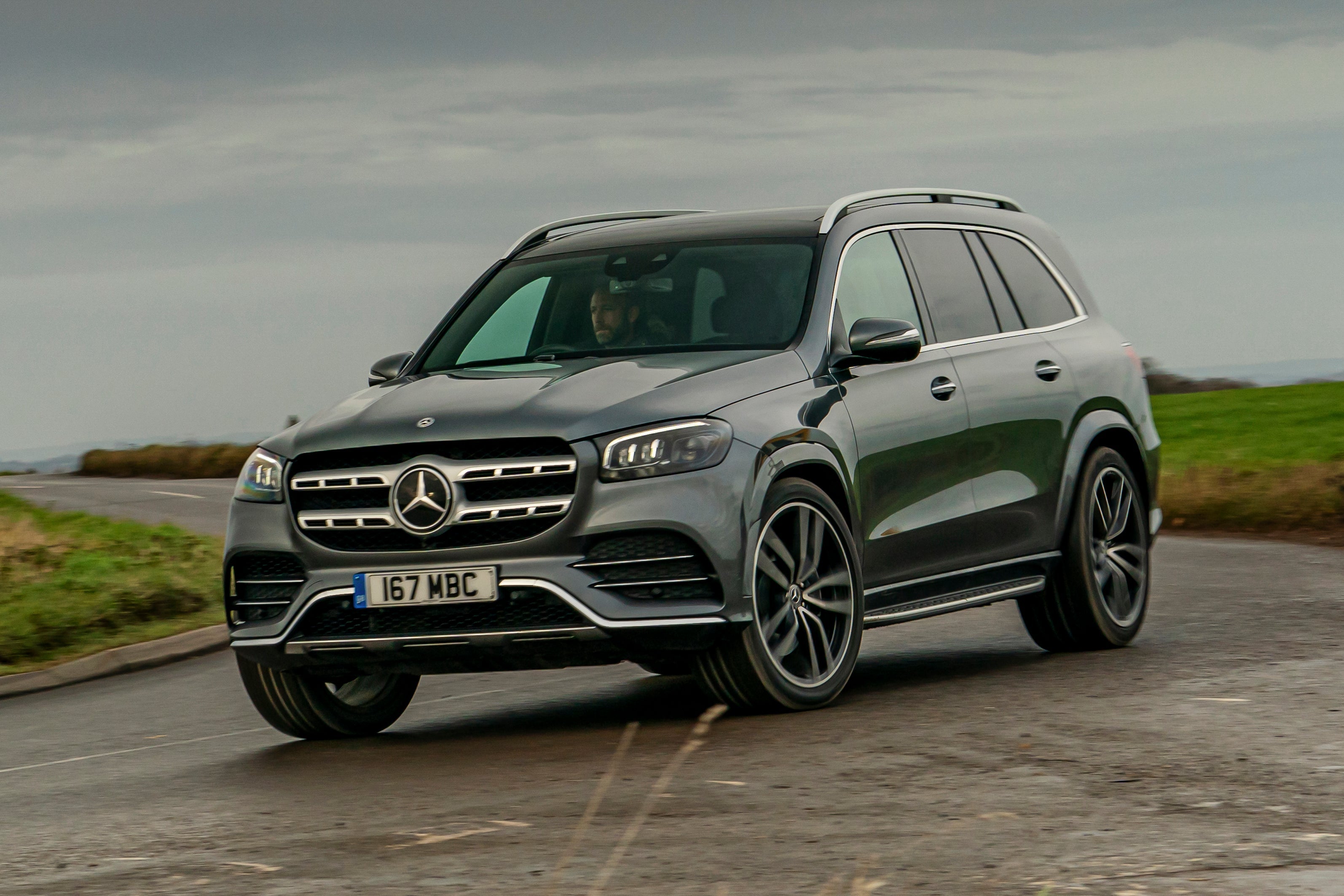
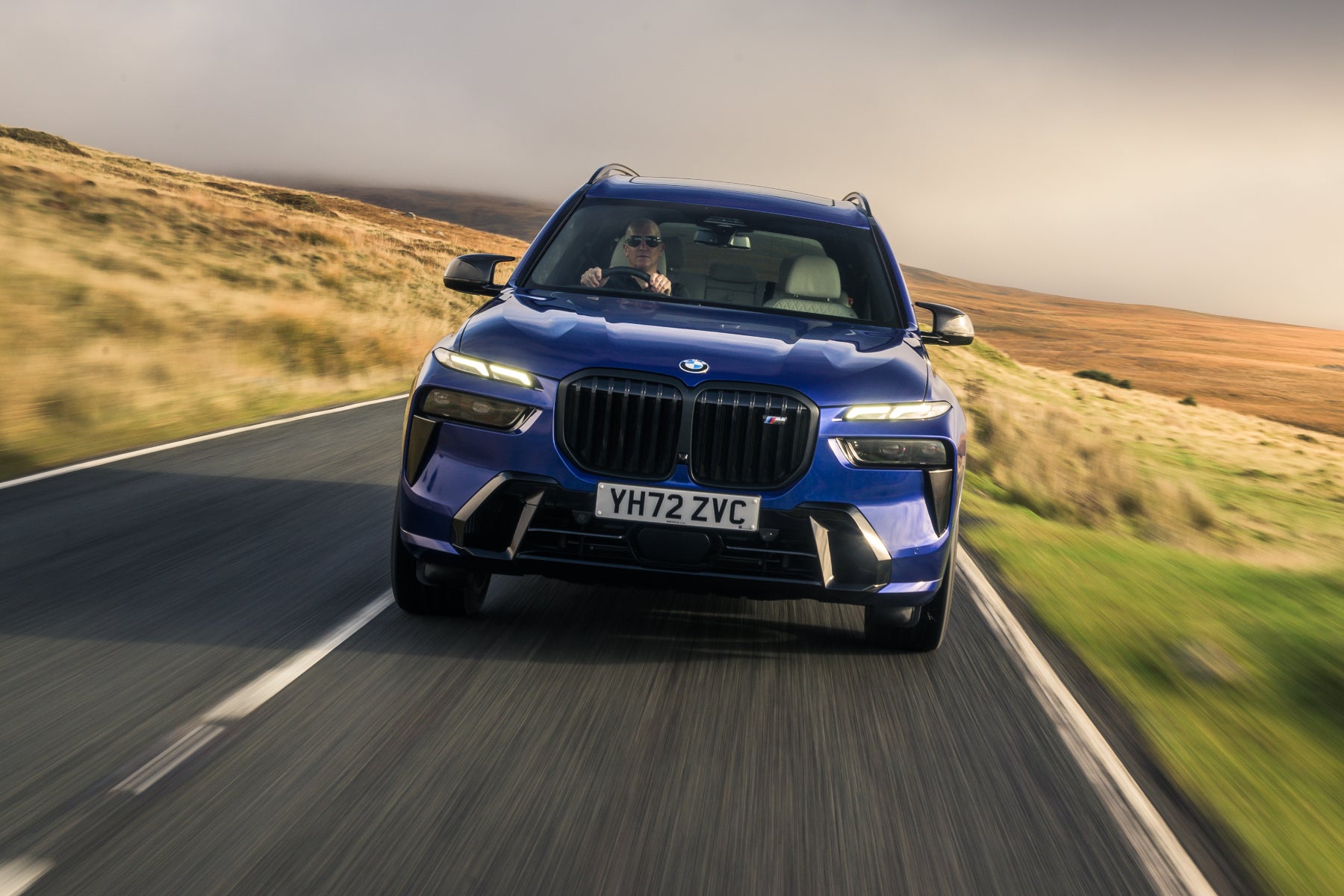
The BMW X7 and Mercedes-Benz GLS remain the most direct mainstream luxury-SUV alternatives. Both are spacious, plush and highly capable, but neither has quite the same blend of stately presence and genuine go-anywhere ability. If image and sheer lavishness matter most, the Rolls-Royce Cullinan is the obvious outlier above everything else
What's the interior like in the Land Rover Range Rover?
The Range Rover’s interior is exactly what buyers at this level should expect. It is serene, beautifully finished and spacious enough to make most rivals feel a little ordinary.
Land Rover Range Rover boot space and practicality
The Range Rover is available in standard-wheelbase and long-wheelbase forms, and the long-wheelbase car can also be had with seven seats. That immediately gives it more flexibility than many rivals.
Front-seat space is enormous, as you would hope, and the driving position remains one of the Range Rover’s signature strengths. You sit high, visibility is excellent for such a large vehicle and there is an easy, arm-on-the-window-sill sense of command that still feels distinctively Range Rover.
Rear space is equally impressive. Even the standard-wheelbase car has ample room for tall adults, while the long-wheelbase version moves into proper limousine territory for second-row legroom. If you choose the seven-seat long-wheelbase version, the third row is genuinely usable for adults in a way that many luxury SUVs still cannot quite manage.
Boot space varies depending on which body style and seating layout you choose. Officially, the seven-seat LWB offers 312 litres to the roof behind the third row, 1,061 litres behind the second row and up to 2,601 litres with the rear seats folded. Standard and long-wheelbase five-seat cars go larger again behind the rear seats in dry-measure terms, but the crucial point is that the Range Rover is highly practical regardless of which version you buy.
For context, the third row in the seven-seat Range Rover is more accommodating than in many luxury seven-seat SUVs, and the split tailgate still makes loading easier than on most rivals. It remains one of the smartest and most useful features on the car.
Land Rover Range Rover dimensions
The standard-wheelbase Range Rover is 5,052mm long, while the long-wheelbase and long-wheelbase seven-seat versions stretch to 5,252mm. Width is 2,047mm with mirrors folded and height is 1,867mm.
These are huge dimensions, but the Range Rover disguises them surprisingly well from behind the wheel. The upright shape, strong visibility and standard all-wheel steering all help it feel less unwieldy than the numbers suggest.
Tech and infotainment in the Land Rover Range Rover
A 13.1-inch central touchscreen running JLR’s Pivi Pro software sits at the heart of the dashboard, while a 13.7-inch digital driver display takes care of the instruments. Wireless Apple CarPlay and Android Auto are included, and the system supports online media and voice functions including Alexa integration.
The interface is much better than older JLR systems, with sharp graphics and a logical enough layout, but it is not perfect. Some inputs need a harder press than they should, and the response time can occasionally lag behind the class best. It feels premium and modern, but not completely class-leading on usability.
Materials available on the Land Rover Range Rover
Material quality is exceptional. The Range Rover’s interior looks and feels every bit as expensive as it should, with beautifully finished surfaces, carefully judged textures and a general sense of calm, expensive restraint.
Even before you get into the more lavish upholstery, veneers and SV-specific personalisation, the basic ambience is hugely impressive. It is not trying too hard, and that is part of why it works so well.
What's the Land Rover Range Rover like to drive?
The Range Rover is one of those rare cars that feels special within a few hundred yards. It combines limousine-like comfort with a surprising degree of control and an ease of use that belies its sheer size.
Land Rover Range Rover range and performance
The current UK Range Rover range is centred on four main powertrains.
The D350 is likely to be the rational choice for many buyers. It is effortlessly strong, smooth for a diesel and gives the Range Rover exactly the kind of low-effort pace a vehicle like this needs. You never feel short of performance.
The P460e and P550e plug-in hybrids are the modern alternatives and, on paper, they make a compelling case. Both offer very strong performance, and the long electric range means they can cover substantial day-to-day mileage without using any petrol at all if you charge consistently.
The P530 V8 is the indulgent option. It is fast enough to feel faintly absurd in something this large, but if you want the full-fat Range Rover experience with a big petrol engine, this is where you end up.
Performance data
| Model | Engine/battery size | Power | 0-62mph | Range/MPG |
|---|---|---|---|---|
Range Rover D350 | 3.0-litre six-cylinder diesel mild hybrid | 350PS | 6.1 seconds | Up to 37.0mpg |
Range Rover P460e | 3.0-litre six-cylinder plug-in hybrid | 460PS | 5.7 seconds | up to 75 miles EV range |
Range Rover P550e | 3.0-litre six-cylinder plug-in hybrid | 550PS | 5.0 seconds | Up to 75 miles EV range |
Range Rover P530 | 4.4-litre V8 petrol | 530PS | 4.6 seconds | Up to 24.8mpg |
Land Rover Range Rover driving and refinement
Ride comfort remains the Range Rover’s defining dynamic trait. Standard adaptive air suspension gives it that trademark wafting quality over rough surfaces, and the car feels serenely composed over the sort of broken roads that can unsettle lesser SUVs.
There is still the odd low-speed tremor on very large wheels, particularly in urban use, but in the broader context the Range Rover is an exceptionally comfortable car. The fact that it manages that without feeling wallowy is just as impressive.
The standard all-wheel steering makes a huge difference. At low speeds it shrinks the turning circle dramatically, which makes the Range Rover far easier to place and manoeuvre than a vehicle over five metres long really ought to be. At higher speeds it adds stability and helps the car feel less cumbersome.
Body control is also impressively disciplined thanks to active anti-roll technology. The Range Rover does not encourage enthusiastic driving in the way a Porsche Cayenne might, but it corners with more composure than you expect and never feels flustered.
Refinement is superb. The D350 is especially impressive because it never really shouts about being a diesel unless you work very hard to notice it. Road noise is low, wind noise is subdued for such a bluff vehicle and the overall sense of calm is a huge part of the car’s appeal. The plug-in hybrids are even quieter at lower speeds when running on electricity.
How safe is the Land Rover Range Rover?
The Range Rover earned a five-star Euro NCAP rating in 2022. It also comes with a very broad suite of safety and driver-assistance systems, including adaptive cruise control with steering assistance, autonomous emergency braking, blind-spot assistance, lane aids and traffic sign recognition.
At this level, you expect a comprehensive safety package, and the Range Rover delivers one.
Running costs: What it's like to live with a Land Rover Range Rover
Owning a Range Rover is expensive whichever way you approach it. Fuel, insurance, tax and maintenance all come with numbers to match the purchase price.
Land Rover Range Rover fuel economy
The diesel remains the most sensible conventional choice if you do big miles, with official economy of up to 37.0mpg. The V8 is much thirstier, sitting around the mid-20s on the official cycle and likely dropping lower in real-world use.
The plug-in hybrids look much more appealing on paper, not just because of their long EV range but because they can slash fuel use if your routine suits them. Used properly, a P460e or P550e can make far more sense than their weight and performance figures initially suggest. Used without charging, they quickly lose that advantage.
The PHEV battery is 38.2kWh gross with 31.8kWh usable capacity, and Land Rover’s earlier official technical data quotes around five hours for a full charge on a 7kW wallbox and around 40 minutes to 80 per cent on a 50kW DC charger.
Land Rover Range Rover warranty and servicing
Land Rover covers the Range Rover with a three-year, unlimited-mileage manufacturer warranty in the UK.
Servicing works on a flexible schedule that takes account of driving style and usage rather than quoting one simple fixed mileage interval, which is common at this end of the market.
Land Rover Range Rover insurance groups
All current Range Rover versions sit in insurance group 50, which is the highest group available. That means premiums are about as steep as they get.
This will not come as a surprise on a vehicle this expensive and powerful, but it is still worth spelling out because there is no cheap version to insure.
How much does it cost to tax a Land Rover Range Rover?
From the second year onwards, a Range Rover costs £200 a year in standard VED form, whether you choose diesel, petrol or plug-in hybrid.
The more important cost is the Expensive Car Supplement. Because every Range Rover costs far more than £40,000 when new, every version attracts the extra £440 a year on top of the standard rate from years two to six. That means a Range Rover will cost £640 a year to tax over that five-year period before dropping back to the standard rate afterwards.
What trims are available with the Land Rover Range Rover?
The current UK Range Rover line-up is built around HSE, Autobiography and SV, with Westminster Edition also appearing in the current range.
HSE already looks lavishly equipped. Standard highlights include 21-inch alloy wheels, 20-way electric front seats, leather upholstery, heated front seats, heated steering wheel, three-zone climate control, keyless entry, soft-close doors and a fixed panoramic roof.
Autobiography is the trim many buyers will gravitate towards because it adds the sort of indulgence that feels appropriate at this level. It brings extra luxury features, richer trim choices and the more opulent ambience people tend to expect from a Range Rover.
SV sits at the top of the range and turns the luxury dial even further. It is also where the personalisation possibilities open right up, which is part of the reason prices become so extreme.
Westminster Edition sits in the current walk-up as another six-figure option and adds further visual and equipment distinction over HSE.
Ask the Drive experts: common questions
How much does the Range Rover cost?
Is the Range Rover a good luxury SUV?
What is the best Range Rover version to buy?
Can you get a seven-seat Range Rover?
Get our latest advice, news and offers
Keep me updated by email with the latest advice, news and offers from Drive.
.jpg)