Mercedes-Benz GLS Review

Written By Andrew Brady
- 2019
- SUV
- Diesel mild hybrid
What we love
Genuinely spacious seven-seat interior
Smooth and muscular six-cylinder diesel
Lavish equipment and impressive infotainment
Things to consider
BMW X7 is more polished to drive
Enormous by UK road and parking standards
Expensive to buy, insure and maintain
The DRIVE take on the Mercedes Benz Gls, is it the right car for you?
The Mercedes-Benz GLS is one of the few luxury SUVs that can carry seven adults without making those in the third row feel like an afterthought. Its huge cabin, effortless diesel engine and extensive equipment make it an impressive family and long-distance car, while the styling and scale give it the sense of occasion expected from Mercedes’ flagship SUV. A BMW X7 is more composed and feels more solidly built, while an Audi Q7 or Volvo XC90 will meet most families’ needs for less money. The GLS earns its place for buyers who genuinely need its extra space and want their practicality served with conspicuous luxury.
The Mercedes Benz Gls in more detail
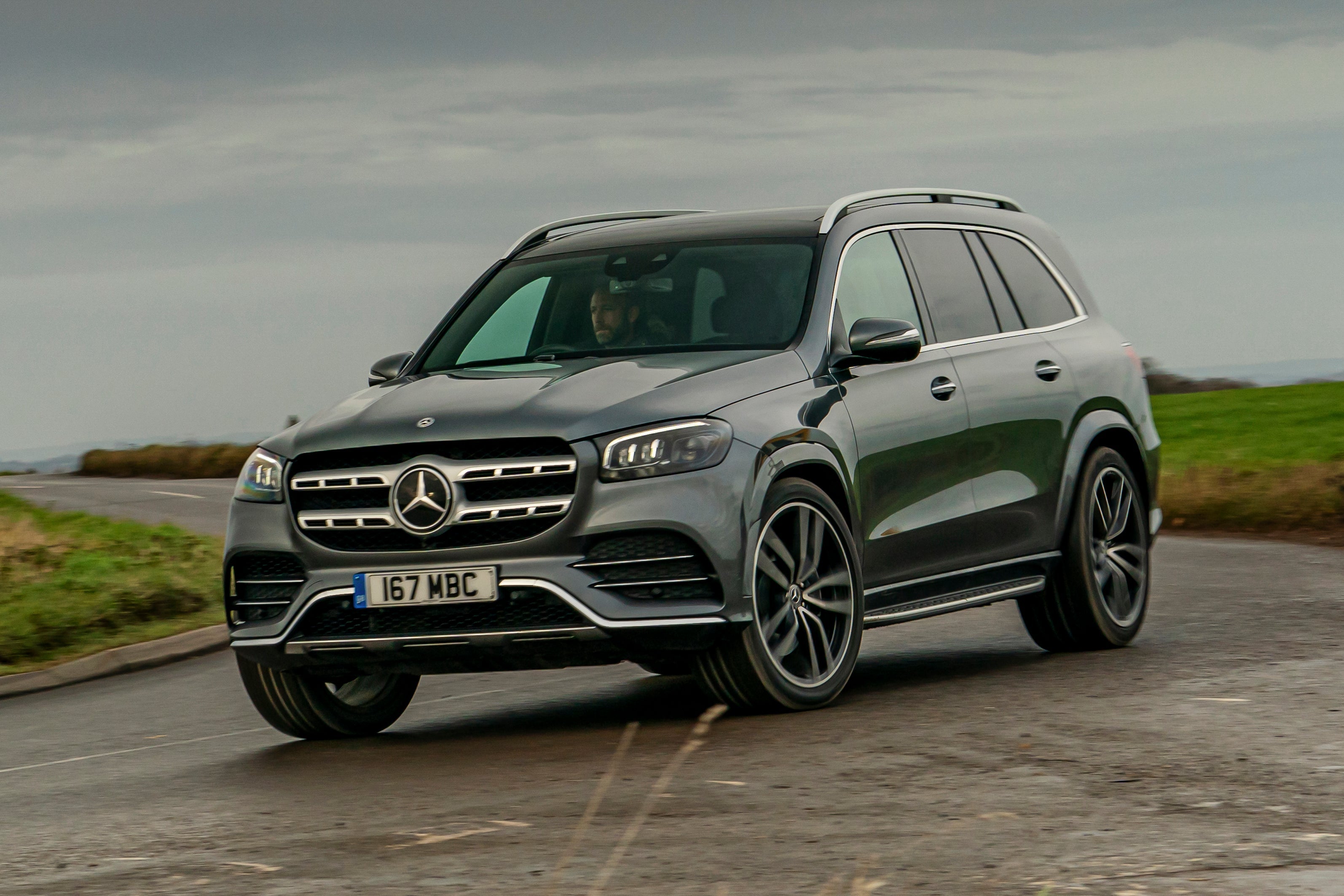
The GLS is so enormous that it can’t fail to get you noticed, while there’s enough space in the passenger compartment and boot to deal with the needs of any family, and the generous luxury kit and clever infotainment tech on board will keep everyone entertained. In principle, a very similar car to the BMW X7, which is better on comfort and quality, but still very appealing.
Few companies have embraced the SUV revolution with quite so much enthusiasm as Mercedes-Benz. The company offers no fewer than eight varieties: small ones, big ones, middle-sized ones, cheap ones, pricey ones, hardcore ones, lifestyle ones, coupe ones, you name it.
The GLS, though, is the flagship of them all. Labelled as ‘the S-Class of SUVs’, it’s job is to deliver limousine levels of class, quality, technology and luxury, but with all the desirability, image, practicality and versatility that you’d expect from an SUV.
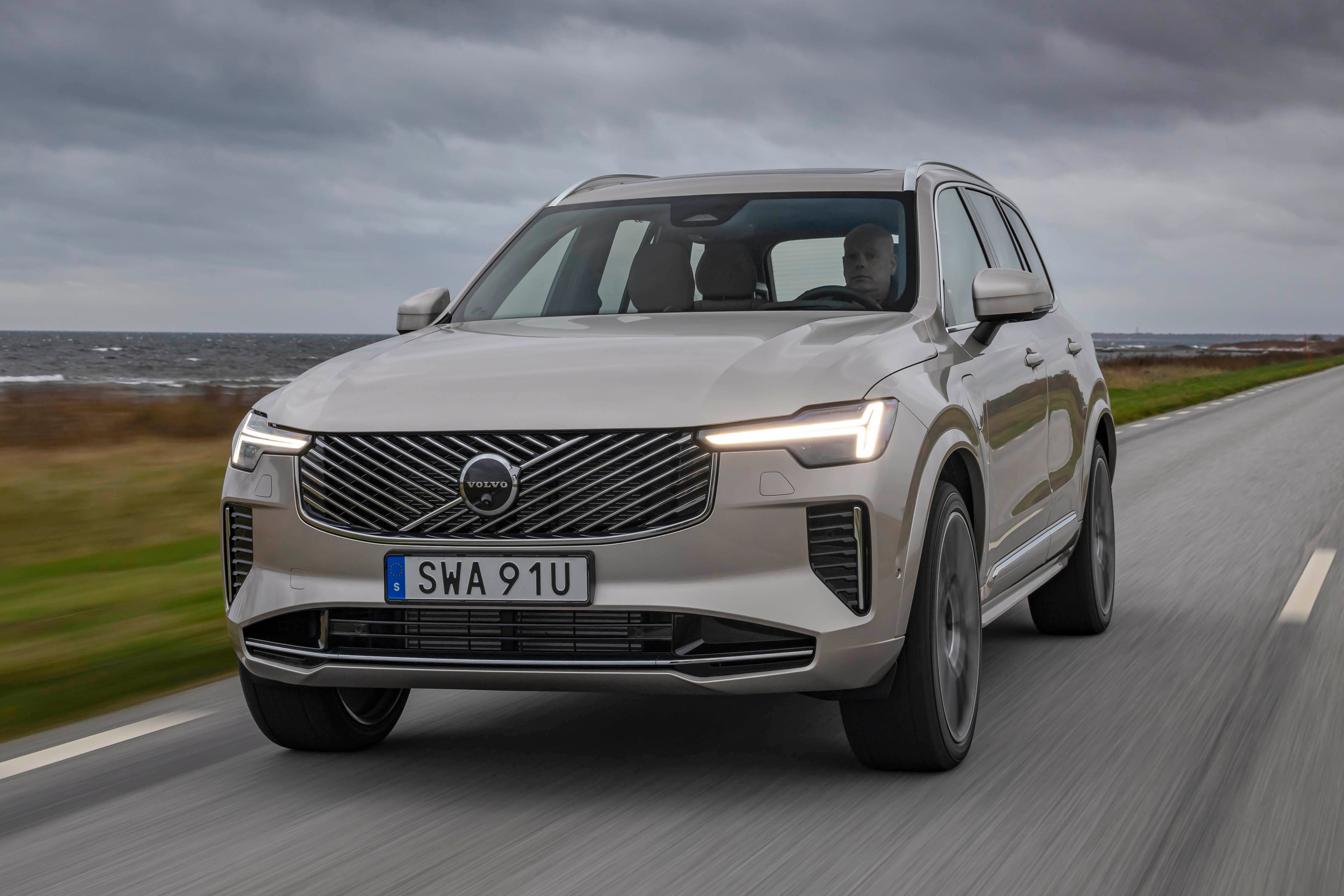
Good job, then, that it’s absolutely massive. Any car that can make a Volvo XC90 look puny has to be on the chunky side.
Good job, too, that it has a huge seven-seat cabin that's crafted from expensive-feeling materials, and stuffed with luxury equipment and a variety of interesting infotainment technology. Good job, also, that it has a strong, muscular diesel engine that delivers superb mechanical refinement and competitive efficiency. That’s plenty of those boxes checked already.
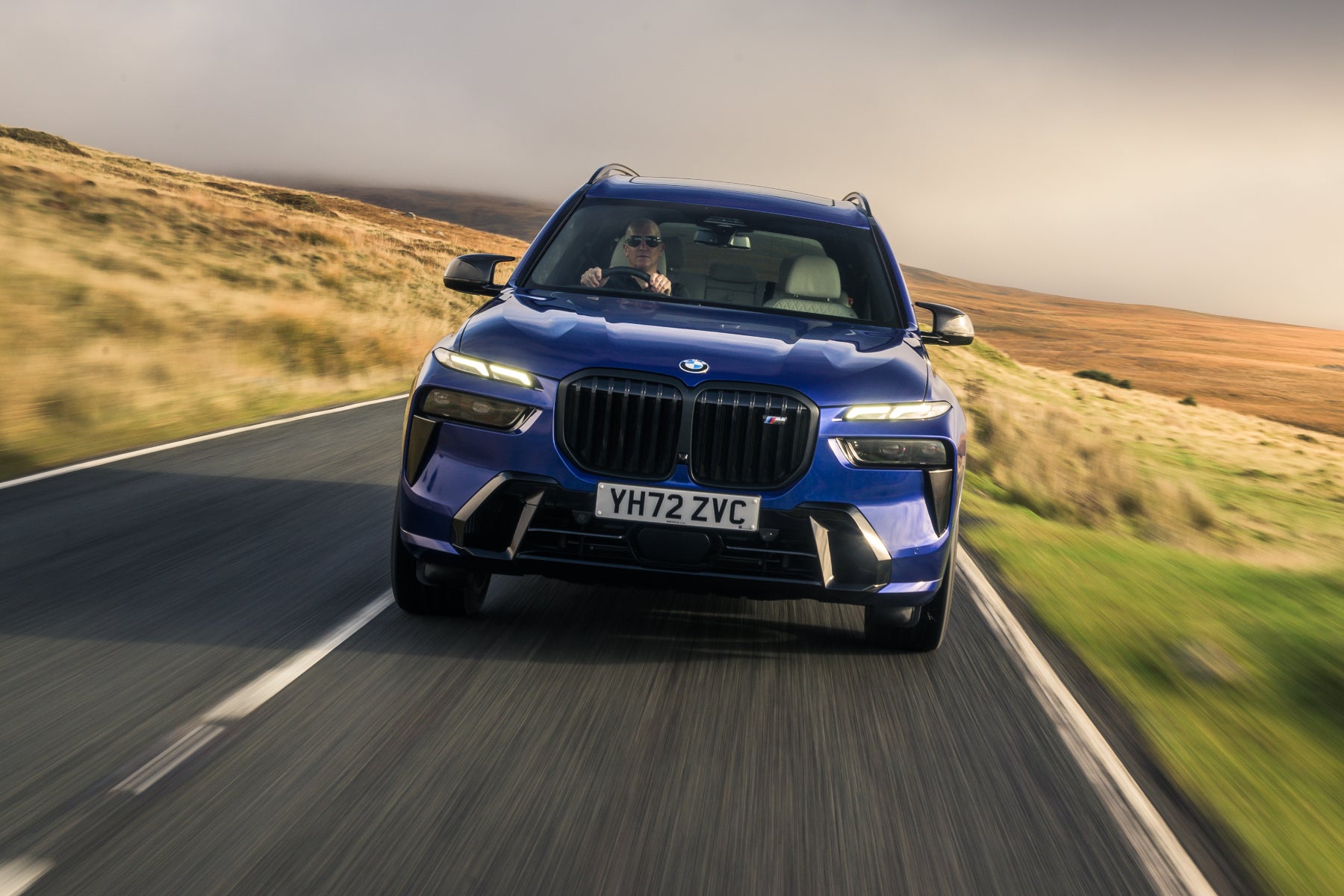
Unfortunately, the GLS has got one big problem, and it’s called the BMW X7. Both cars are a bang-on match for each other in terms of size, price, appeal, and a whole host of other factors. And although the X7’s nostril-heavy looks might not be to everyone’s taste, anyone who’s experienced the car will know that it’s very, very good. And crucially, it’s better - in a number of ways - than the GLS.
Cabin quality is one of them. Yes, the big Merc feels very posh and lustrous inside, but the BMW’s greater solidity and attention-to-detail means it feels appreciably more dense and substantial. The Merc can’t match the Beemer on the road, either.
It doesn’t ride as comfortably, regardless of your surroundings or speeds, and it feels a good deal more cumbersome in the bends. And in a luxury car, that dynamic polish is essential in creating the right impression of civility and sophistication, and if it’s not there, all the swanky touchscreens in the world can’t make up for it.
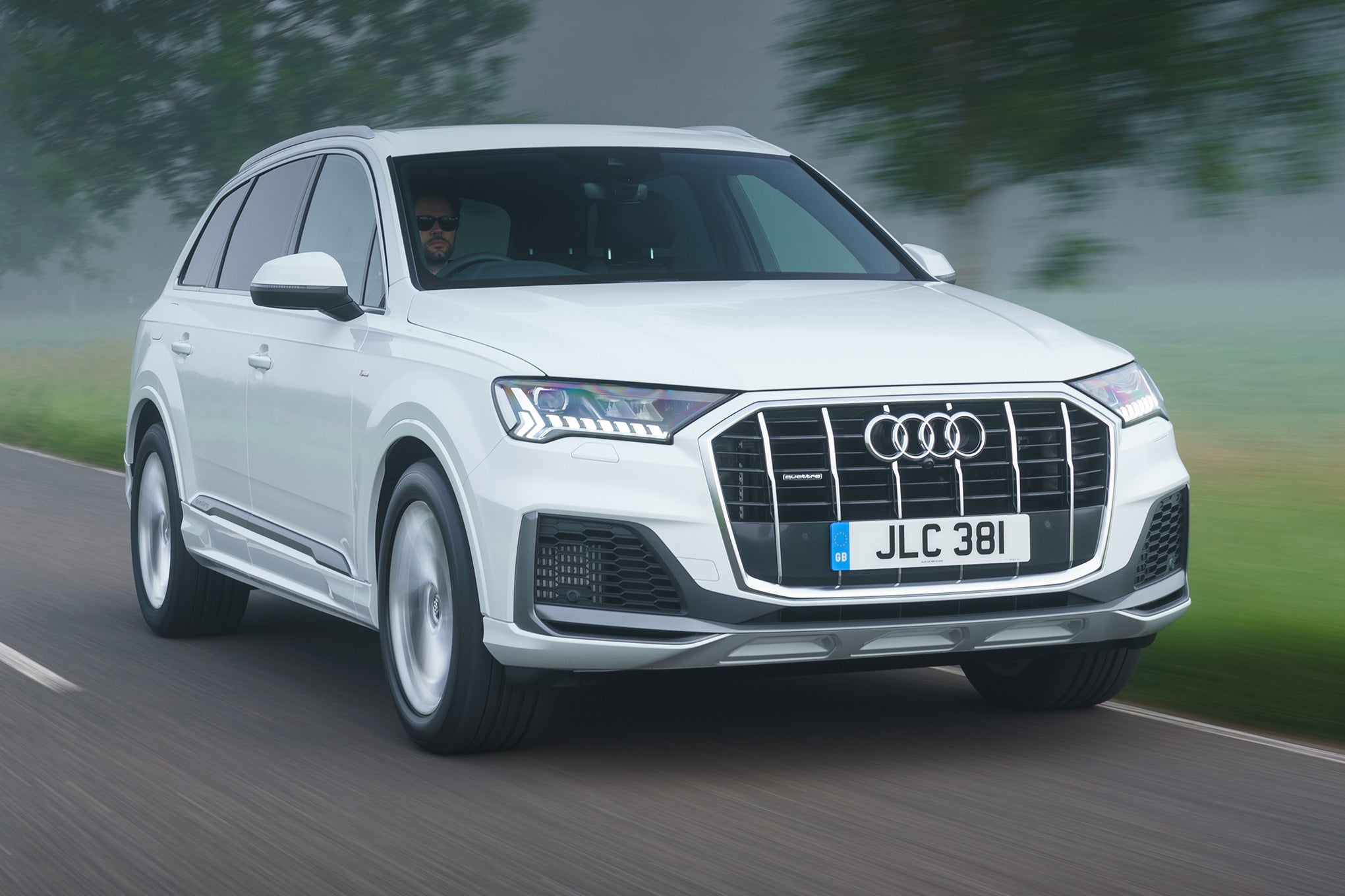
There’s also the challenge posed by smaller, cheaper seven-seat SUV choices such as the Audi Q7 and Volvo XC90, both of which are excellent, the Audi especially. Ask yourself: do I really need a car as big as a GLS? For most, the answer will be no.
If you do, then - don’t get us wrong - the GLS is a very strong contender in a lot of ways. Tech-heads, in particular, will love it. However, the X7 is just a better all-rounder, while other excellent cars like the Audi Q7 do a very similar job for considerably less money.
What's the best Mercedes Benz Gls trim and engine option?
The GLS 450d AMG Line Premium is the best all-round version.
Its 367PS six-cylinder diesel is smooth, quiet and powerful enough to move the GLS with surprising ease, while returning respectable fuel economy for something this large.
AMG Line Premium also includes the comfort, safety, parking and infotainment equipment most buyers will want.
Premium Plus adds appealing luxuries, but the price rises sharply without improving the GLS’s core ability. Business Class places greater emphasis on second-row comfort and makes most sense for chauffeur use.
What’s the price of the Mercedes Benz Gls?
The Mercedes-Benz GLS starts at approximately £99,995 for the GLS 450 d AMG Line Premium.
Premium Plus costs around £110,920, while Business Class is approximately £120,920. That puts it close to the BMW X7 and well above smaller seven-seat SUVs such as the Audi Q7 and Volvo XC90.
Alternatives to the Mercedes Benz Gls
The BMW X7 is the GLS’s closest rival. It rides with greater composure, feels more controlled through bends and has a cabin with a stronger sense of solidity.
The Audi Q7 is smaller, cheaper and easier to use on UK roads. It remains spacious and refined, though it cannot match the GLS for theatre or third-row room.
The Volvo XC90 has excellent seats, a calm interior and a practical seven-seat layout. Its engines do not feel as effortless as the Mercedes’ six-cylinder diesel.
The Range Rover is more luxurious in a traditional sense and far more capable off road. It is often more expensive and is not always as useful for carrying seven people.
What's the interior like in the Mercedes Benz Gls?
The GLS has the space, visual impact and equipment expected of a flagship luxury SUV. It feels expensive throughout, although a BMW X7 has a more substantial finish in a few key areas.
Mercedes Benz Gls boot space and practicality
There’s absolutely loads of space up front, and those in the middle row also get a vast amount of head- and legroom, allowing even tall passengers to stretch out. The GLS is more comfortable than most when seating three across the middle bench, too, thanks to the sheer width of the cabin and a transmission tunnel that’s flat and low so you can comfortably sit with your feet on top of it.
The middle-row chairs slide, recline and fold electrically, and they move far enough out of the way to allow pretty good access to the third row.
If they’re much over six foot, those in the very back might want to ask those in front to use their electric seat sliders to donate a little bit of legroom, but there’s still a shade more than you get in the Audi Q7 and Volvo XC90, although the BMW X7’s third row is roomier still.
The boot is still a really impressive size even with all the seats in place, and if you fold the third row down (electrically, of course), and you get an absolutely vast luggage space.
Mercedes Benz Gls dimensions
The GLS measures 5,217mm long, 1,956mm wide and 1,823mm high, increasing to 2,164mm across the mirrors.
Its size makes narrow roads, older garages and multi-storey car parks challenging. The 360-degree camera is essential, while the 12.52-metre turning circle is reasonable rather than remarkable for something this large. It is manageable in town, but never feels compact.
Tech and infotainment in the Mercedes Benz Gls
Aside from the quality on show, the cabin’s wow-factor is provided by the two glass-fronted 12.3-inch screens that are mounted side-by-side in front of the driver. The system is controlled either by tapping and swiping the left-hand screen, or via a touchpad and shortcut buttons located on the partition between the front seats.
The graphics are sharp and the menus have a logical layout, but the touchpad controller isn’t a patch on the iDrive rotary dial you get in the BMW X7 because it's more distracting.
That said, you can also operate the system via a sophisticated voice control system that’s designed to recognise natural speech rather than specific commands, and it works very well.
The infotainment functionality you get includes DAB radio, sat-nav, Bluetooth, Apple Carplay and Android Auto, a wireless phone charging plate and a Burmester surround sound system. The navigation has augmented reality, which overlays instruction graphics over a camera image of the road ahead of you, pointing out precisely where you should be going.
Materials available on the Mercedes Benz Gls
All the materials in your eyeline are sumptuously textured and thoughtfully finished, while even most of those that are more hidden away feel of a similarly high grade.
The build quality is very solid, too, although there are one or two places - like the window switches, for example - where things feel a little more lightweight and hollow than the do in an Audi Q7 or BMW X7, and as a result, the GLS doesn’t feel quite as dense or substantial overall.
What's the Mercedes Benz Gls like to drive?
The GLS is smooth, quiet and effortless on a motorway, but its suspension and handling do not feel as polished as the best rivals.
Mercedes Benz Gls range and performance
There’s only one engine available in the GLS, and it’s a 3.0-litre, six-cylinder unit with 367PS. Considering the car weighs almost two and a half tonnes, it really has its work cut out, but it actually copes really well.
The 0-62mph time of 6.1 seconds even sounds pretty racy, but in reality, the car builds speed in a brisk, effortless way. Picking up speed on the move isn’t a problem, either, although if you bury the right-hand pedal to ask for a sudden surge of acceleration, the nine-speed automatic gearbox needs a second or two to decide which gear to give you.
In fairness, this is something that also afflicts pretty much all the GLS’s rivals, and it’s nowhere near as bad in the big Merc as it is in some. Otherwise, the gearbox behaves impeccably, switching ratios smoothly and cleanly and mostly getting its choice of gear right first time.
Performance data
| Model | Engine/battery size | Power | 0-62mph | Range/MPG |
|---|---|---|---|---|
GLS 450 d 4Matic | 3.0-litre | 367PS | 6.1 seconds | Up to 34.9mpg |
Mercedes Benz Gls driving and refinement
Whatever mode you select for the air suspension, it thuds and shudders over bumps and potholes that you’d hardly feel in most rivals. What’s more, the body bobs around rather a lot when you hit a big bump, and on an undulating road, those prone to travel sickness may well go a bit green around the gills.
The handling is also pretty untidy. There’s lots of grip and traction thanks to the standard four-wheel drive, but the body leans unsettlingly as you change direction, even at gentle speeds. The steering is slow, too, and all that means that most rivals feel a good bit more eager to turn than the GLS does.
The four-wheel drive and lofty ground clearance should allow the GLS to cope with muddy tracks easily enough, but don’t expect the GLS to delve as far into the countryside as a Range Rover can.
How safe is the Mercedes Benz Gls?
Euro NCAP has not published a standalone crash-test rating for the current GLS, so it should not be described as a five-star car without qualification.
Standard equipment includes autonomous emergency braking, blind-spot monitoring, lane-keeping assistance, traffic-sign recognition and driver-attention monitoring. The GLS also has multiple airbags, adaptive lighting and a comprehensive parking system.
Higher trims add more advanced adaptive cruise control and active steering assistance. These systems can manage speed and lane position on a motorway when conditions allow, but the driver remains responsible at all times.
Running costs: What it's like to live with a Mercedes Benz Gls
The GLS is expensive to buy, insure, service and tax. Its diesel engine is reasonably economical for the car’s size, but this remains a costly luxury SUV to own.
Mercedes Benz Gls fuel economy
The GLS 450d returns an official 34.9mpg. Long motorway journeys should produce figures in the low 30s with restrained driving, while short urban trips and frequent acceleration will reduce that considerably.
Mercedes Benz Gls warranty and servicing
The GLS has a three-year manufacturer warranty, plus three-year paint cover and 30-year anti-corrosion protection, subject to Mercedes’ terms.
Mercedes Benz Gls insurance groups
The GLS sits in insurance groups 48 to 50. Its price, performance and costly technology result in high premiums, while AMG versions occupy the top of the scale.
How much does it cost to tax a Mercedes Benz Gls?
Because all Mercedes GLS of this generation cost over £40,000 when new, all are subject to a surcharge on their annual VED rate for being an ‘expensive car’. That means you’ll pay £440 on top of the flat rate of £200 for five years of the car’s life from year two.
What trims are available with the Mercedes Benz Gls?
AMG Line Premium is the entry point to the current range.
It includes large alloy wheels, air suspension, LED headlights, heated seats, a panoramic roof, five-zone climate control, soft-close doors, keyless entry, a powered tailgate and extensive parking assistance.
AMG Line Premium Plus adds massaging front seats, upgraded audio and further comfort equipment.
Business Class focuses on rear-seat passengers, with additional luxury and entertainment features.
AMG Line Premium already includes almost everything most buyers need. Premium Plus is worthwhile for buyers who value its comfort upgrades, while Business Class is best suited to chauffeur use.
Ask the Drive experts: common questions
Is the Mercedes-Benz GLS a genuine seven-seater?
How big is the Mercedes-Benz GLS’s boot?
Which Mercedes-Benz GLS is best?
Is the Mercedes-Benz GLS bigger than the GLE?
Get our latest advice, news and offers
Keep me updated by email with the latest advice, news and offers from Drive.
.jpg)
.jpg)