Volvo EX30 Review

Written By Phil Hall
- 2023
- SUV
- Electric
What we love
Reasonably affordable by premium EV standards
Compact dimensions make it easy to live with
Extended Range version has genuinely useful range
Things to consider
Rear-seat space is only average
Too many controls are buried in the screen
Cabin quality is not uniformly premium
The DRIVE take on the Volvo Ex30, is it the right car for you?
The Volvo EX30 gets the small electric SUV formula broadly right. It looks smart, goes very well, feels modern inside and now offers more than 300 miles of range in the right version. It isn’t especially roomy in the back and the boot is only average for the class, so a Skoda Elroq makes more sense if family practicality is the priority. The single-screen dashboard can frustrate, too, although a recent software update has made its menus easier to use.
The EX30 P5 Long Range is the version to have. It combines strong range with more performance than most drivers will ever need, while Plus adds enough equipment to give the EX30 the premium feel you’d expect from a Volvo. Overall, it remains a stylish and appealing compact EV that feels more distinctive than most mainstream alternatives.
The Volvo Ex30 in more detail
The Volvo XC40 broadened the Swedish brand’s appeal when it arrived in 2018. The smaller Volvo EX30 electric SUV goes a step further, opening the door to a new group of buyers with compact dimensions, strong performance and a relatively accessible starting price. Our Volvo EX30 review explains where it impresses and where some of its minimalist thinking goes too far.
The EX30 is Volvo’s smallest SUV to date. It uses parent company Geely’s dedicated SEA electric car platform, which also underpins models including the Smart #1, Polestar 4 and Zeekr X. That shared hardware does not make the EX30 feel generic, though. Volvo has worked hard to give it a clear identity of its own.
Browse used Volvo EX30s for sale →
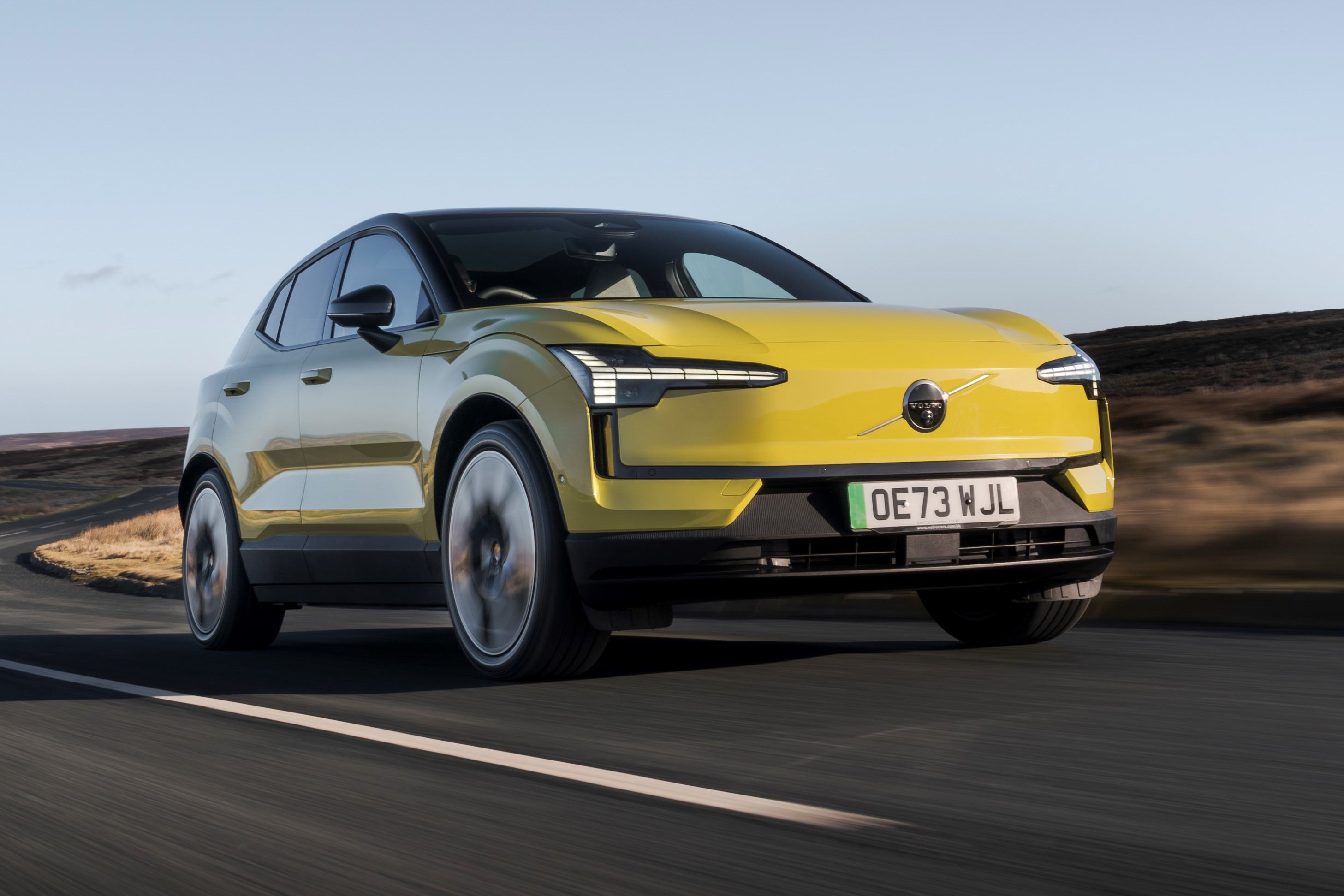
That starts with the design. The EX30 looks unmistakably like a modern Volvo, with its distinctive Thor’s Hammer headlights, upright stance and crisp body surfacing. Like the electric EC40, EX40 and seven-seat EX90, there is no conventional front grille, but the badge and diagonal Volvo motif leave little doubt about what you are looking at. It is a handsome, neatly proportioned car.
From a distance, the EX30 can look almost like a scaled-down XC40, but it is significantly smaller. It measures 4.23 metres long, 2.03 metres wide including the mirrors and 1.55 metres high. The XC40 is around 20cm longer and 10cm taller, although the two are broadly similar in width. That makes the EX30 much easier to place in town and gives it a footprint closer to other compact electric SUVs.
There are three main drivetrain options. The rear-wheel-drive Single Motor version uses a 51kWh battery and produces 275PS, with an official range of up to 209 miles. The Single Motor Extended Range model gets a larger 69kWh battery and stretches that figure to as much as 295 miles.
At the top of the range is the Twin Motor Performance. It uses the same larger battery but adds a second motor to drive all four wheels, producing 434PS and cutting the 0 to 62mph time to just 3.6 seconds. That makes it exceptionally quick for such a small SUV, while the official range remains a useful 279 miles. For most buyers, though, the Extended Range model is likely to make more sense than paying for performance you may rarely use.
Inside, the EX30 marks a bigger departure from Volvo convention. There is no separate instrument display ahead of the driver, with speed, navigation and almost every major vehicle function concentrated on the portrait-oriented 12.3-inch central touchscreen. It gives the cabin a clean, uncluttered look, but it also asks too much of the screen. Some commonly used functions are buried deeper in the menus than they should be, including simple controls such as the rear window demister.
Volvo offers four interior themes, or ‘rooms’, with extensive use of recycled and more sustainable materials. There are some thoughtful details and the overall design feels distinctive rather than cheap, but practicality is not class-leading. Rear legroom is tighter than you might expect and the boot is only average for the class.
Those compromises stop the EX30 being the obvious choice for everyone, particularly families who need maximum space or drivers who prefer conventional controls. But if you want a compact electric SUV with genuine Volvo character, strong range and unusually potent performance available further up the range, the EX30 is well worth shortlisting. It also provides one of the more attainable routes into a new Volvo.
For a tougher-looking take on the same formula, read our Volvo EX30 Cross Country review to see whether its extra capability and styling upgrades are worth the premium.
What's the best Volvo Ex30 trim and battery option?
The P5 Long Range Plus is the EX30 we’d choose. Its 69kWh battery gives the car up to 303.9 miles of official range, depending on specification, while the rear-mounted motor produces 272PS. That’s more than enough performance – 0–62mph takes just 5.3 seconds – without the unnecessary excess of the 428PS P8 AWD.
The cheaper 51kWh P5 still makes sense if most of your driving is local. Its 209.4-mile official range will be sufficient for plenty of buyers, and it’s the cheapest route into an EX30. For an only car, though, the Long Range is worth paying for.
Trim-wise, Plus remains the best balance. Core isn’t badly equipped and now gets an impressively comprehensive safety package, front and rear parking sensors and Vehicle-to-Load hardware. Long Range Core versions also get a heat pump. Plus brings the features that make the EX30 feel more premium, including heated front seats and steering wheel, two-zone climate control, Harman Kardon audio, wireless phone charging, Pilot Assist and a power tailgate. Ultra adds worthwhile luxuries including a 360-degree camera, Park Pilot Assist, panoramic roof, powered front seats and a more powerful 22kW AC onboard charger.
The P8 AWD is spectacularly fast, but its 3.6-second 0–62mph time feels more like an engineering party trick than something a compact family SUV genuinely needs.
What’s the price of the Volvo Ex30?
The Volvo EX30 starts at £33,060 for the P5 Core with the 51kWh battery. The same powertrain in Plus trim costs £35,160. Moving to the larger battery, the P5 Long Range Core starts at £37,260, while our preferred P5 Long Range Plus is £39,860. The P8 AWD starts at £42,360 in Plus trim. There are also plenty of used Volvo EX30s for sale for considerably less.
Ultra is available with the larger battery, costing £43,360 for the P5 Long Range and £45,860 for the P8 AWD. Black Edition versions add a darker exterior treatment and start at around £40,360. A Black Edition Ultra P8 AWD starts at £46,110, making it the most expensive standard EX30 covered by this review.
That gives the EX30 a very wide price spread. At around £33,000 it looks competitive for a premium-badged compact EV. Once you’re approaching £45,000, though, larger and more practical electric SUVs become increasingly difficult to ignore. That’s another reason the P5 Long Range Plus looks like the sweet spot.
Alternatives to the Volvo Ex30
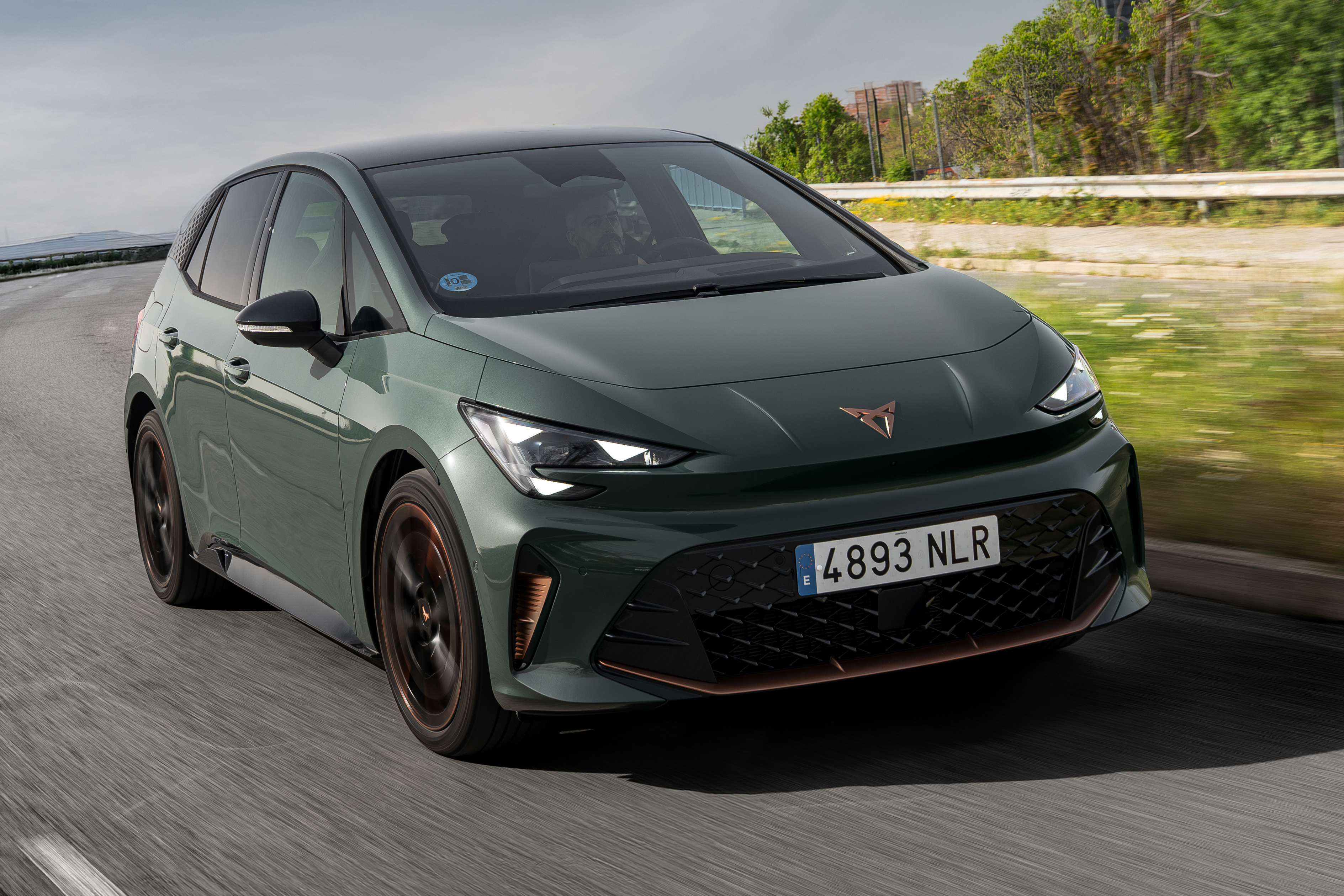
The Cupra Born is one of the best alternatives if you want something more engaging to drive. It isn’t an SUV, but it offers a similarly manageable footprint, greater rear-seat space and a more conventional driving environment.
The Volkswagen ID.3 follows much the same formula but with a more restrained personality. It’s roomy and comfortable, and its separate driver display means basic information is easier to see than it is in the Volvo.
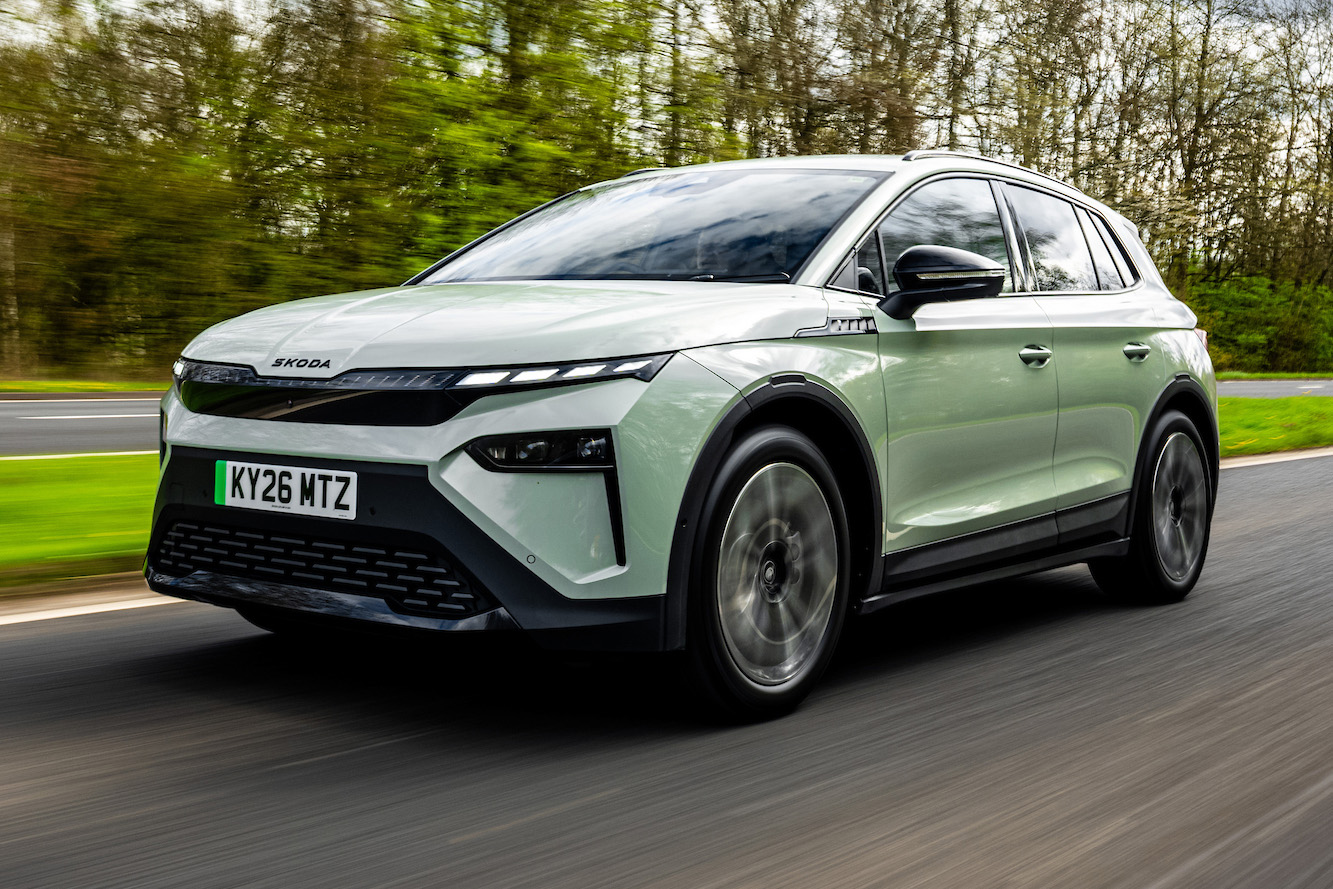
If SUV shape and family practicality matter, the Škoda Elroq is the obvious alternative. It’s larger than the EX30 but rewards that extra bulk with far more rear-seat and boot space. For anyone regularly carrying children, pushchairs or holiday luggage, it’s the easier car to live with.
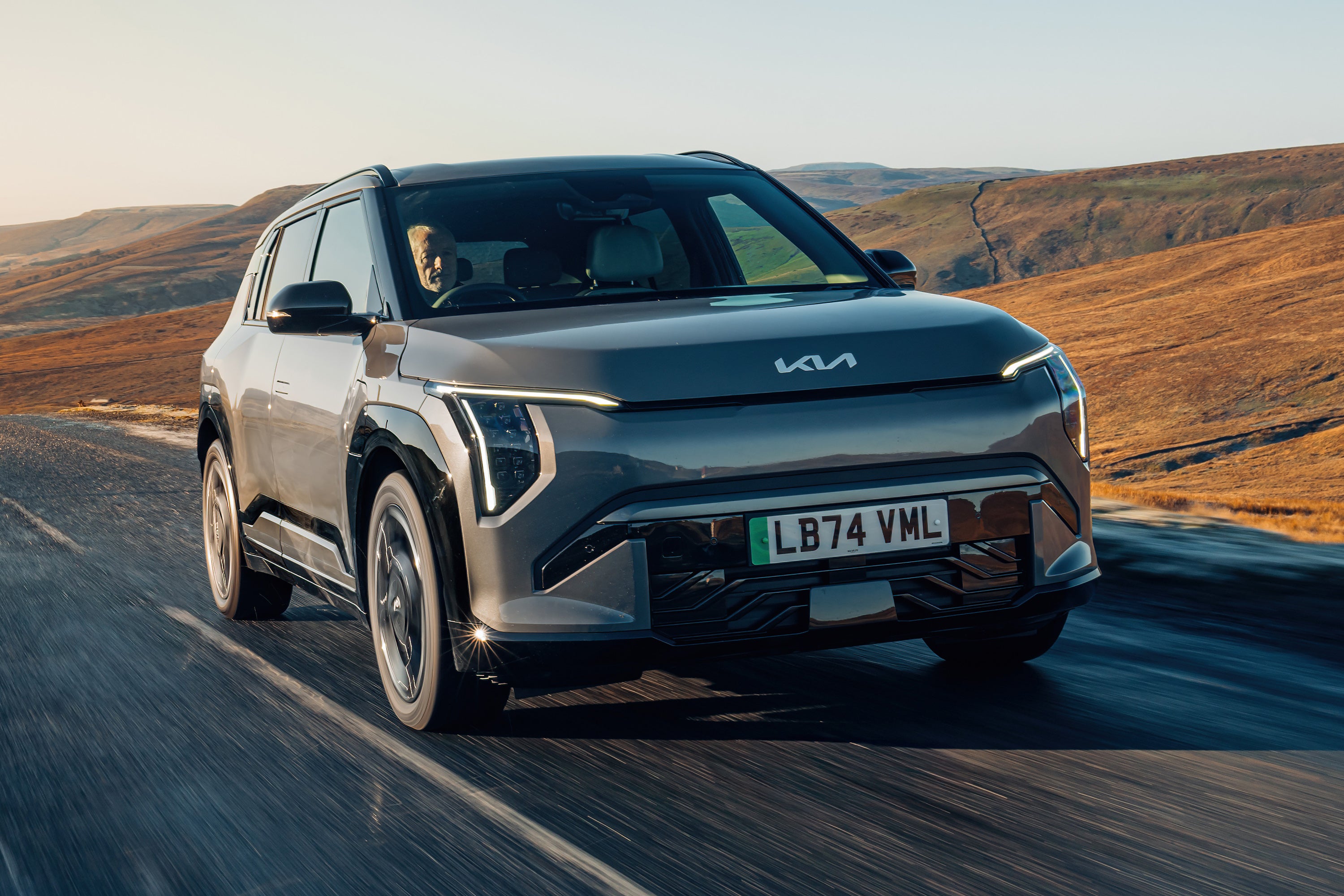
The Kia EV3 is another strong rival, particularly if range, cabin space and warranty cover matter more than outright performance. The Smart #1 is the EX30’s closest technical relative and offers a roomier cabin, although its styling and infotainment have a very different character.
The Volvo EX30’s advantage is its combination of genuinely compact dimensions, strong performance, minimalist Scandinavian design and a premium badge.
What's the interior like in the Volvo Ex30?
The Volvo EX30’s cabin is one of its strongest selling points. It feels modern, clever and intentionally different, with almost everything concentrated around the 12.3-inch central touchscreen. Removing a separate driver display, conventional door speakers and many switches gives the cabin a remarkably clean appearance.
The downside is usability. Having your speed, climate controls and various car settings in one central location can make simple tasks require more attention than they should. The latest software improves matters with clearer controls and a configurable shortcut area, but the minimalist philosophy itself hasn’t changed.
Volvo Ex30 boot space and practicality
The Volvo EX30 feels roomy enough from the front seats. There’s plenty of headroom, the seats are comfortable and the driving position works well, so it doesn’t feel like a compromised small car once you’re behind the wheel.
Storage is unusually clever. Volvo has moved the electric-window controls to the centre console and speakers into the dashboard soundbar, freeing up large door pockets.
Rear space is less impressive. Headroom is decent, but legroom is only average and taller adults will notice the limitations more quickly than they would in a Kia EV3 or Škoda Elroq. Volvo quotes 821mm of rear legroom. For younger families it’s less problematic. There are Isofix points on the two outer rear seats and the back bench is usable enough for everyday duties, but the EX30 isn’t the ideal small SUV if adults regularly occupy the back.
Boot capacity also needs some explanation. Volvo quotes 318 litres beneath the window line with five seats in use. Load all the way to the roof and the figure is 400 litres. That distinction is important – the 400-litre figure isn’t created simply by repositioning the adjustable boot floor.
With the rear seats folded, there are 718 litres below the window line or up to 1,000 litres when loaded to the roof. There’s also a small 7-litre compartment beneath the bonnet.
Those figures make the EX30 practical enough for shopping, small pushchairs and weekend luggage, but a Kia EV3, Skoda Elroq or Volvo EX40 offers substantially more carrying capacity.
Volvo Ex30 dimensions
The Volvo EX30 measures 4,233mm long, 1,838mm wide and 1,550mm high, with a 2,650mm wheelbase. The width increases to 2,032mm with the door mirrors extended, or 1,940mm with them folded. That makes it one of the smaller SUVs in this part of the electric-car market.
Its short overall length is particularly useful in town, where it takes up little more road space than many family hatchbacks. The relatively long wheelbase helps maximise the available cabin room, although there’s no escaping the fact that the rear seats and boot are smaller than those of larger rivals.
Tech and infotainment in the Volvo Ex30
The EX30 uses a single 12.3-inch portrait display in the middle of the dashboard. There’s no separate instrument cluster, so the upper section of the screen displays information including vehicle speed, range and driver-assistance status. The rest handles navigation, media, climate control and the majority of the car’s settings. Google built-in is standard, providing Google Maps, Google Assistant and apps through Google Play. Wireless Apple CarPlay is included too. The interface looks sharp and generally responds quickly, but the issue has always been how much it needs to do.
Volvo has responded to criticism with its latest software. The settings and control system has been redesigned, while a customisable contextual bar can surface frequently used or predicted functions without making you dig through as many menus. The update is being rolled out over the air to new and existing EX30s. It’s an improvement, although putting the speedometer and almost all controls into one screen remains a divisive design decision. Plus and Ultra get the excellent Harman Kardon audio system. Instead of conventional door-mounted front speakers, it uses a soundbar extending across the top of the dashboard.
Current cars also support Vehicle-to-Load (V2L), allowing suitable electrical equipment to draw energy from the drive battery via a separately purchased adapter. Plug & Charge is available on cars from the 2026 model year -on cars and lets compatible public chargers recognise the vehicle and handle authentication and payment automatically.
Materials available on the Volvo Ex30
Volvo has made the EX30’s materials part of the design rather than simply attempting to replicate a conventional leather-and-soft-plastic premium cabin. Recycled and renewable materials are used extensively, with textiles, recycled plastics, flax-based decoration and Nordico synthetic upholstery appearing depending on specification.
The current range has four main interior themes: Indigo, Black, Harvest and Mist. Indigo uses dark textiles and denim-inspired trim while Harvest is new for the 2027 model yeat and combines light recycled woven fabric, Nordico and dark flax decoration. Black is another newer option, pairing dark Nordico with flax trim for a much more monochrome appearance. Mist provides the lightest, most traditionally Scandinavian feel.
Earlier EX30s were also offered with Breeze and Pine themes. The result feels more interesting than simply covering everything in black synthetic leather. Some harder plastic surfaces betray the EX30’s relatively attainable price, but they generally feel like part of the design rather than evidence of careless cost-cutting.
What's the Volvo Ex30 like to drive?
All EX30s are quick, tidy and easy to drive. Even the cheapest P5 has substantially more power than most compact family SUVs, while the rear-wheel-drive layout gives the single-motor versions a pleasingly balanced feel. Ride quality is generally well judged and refinement is good, although the EX30 isn’t quite as dynamically engaging as its acceleration figures might suggest. The P8 AWD is extraordinarily fast but arguably far more powerful than the chassis or intended use requires.
Volvo Ex30 range and performance
The current EX30 range has three powertrain options. The entry P5 Electric, previously known as the Single Motor, uses a 51kWh nominal battery with 49kWh usable capacity.
Its rear-mounted electric motor produces 272PS and 343Nm, taking the car from 0–62mph in 5.7 seconds. Official range is up to 209.4 miles.
The P5 Long Range Electric, previously called Single Motor Extended Range, retains the same 272PS and 343Nm output but uses a 69kWh nominal battery with around 65kWh usable capacity. Its lighter battery chemistry and gearing actually make it slightly quicker, with 0–62mph taking 5.3 seconds. Maximum current range is 303.9 miles, depending on specification.
The P8 AWD Electric, formerly Twin Motor Performance, adds a 156PS front motor to the 272PS rear unit. Combined output is 428PS and 543Nm, while 0–62mph takes just 3.6 seconds. That makes the EX30 faster than many dedicated performance cars, although official range drops to 279.6 miles.
There really isn’t a slow EX30. For most drivers, the P5 Long Range is the obvious choice. It has more than enough performance but prioritises range over a headline acceleration figure.
The P8 AWD is undeniably entertaining, but paying extra for performance that you’ll rarely exploit is difficult to justify in a compact family SUV.
Performance data
| Model | Engine/battery size | Power | 0-62mph | Range/MPG |
|---|---|---|---|---|
Volvo EX30 P5 | 51kWh | 272PS | 5.7 seconds | Up to 209.4 miles |
Volvo EX30 P5 Long Range | 69kWh | 272PS | 5.3 seconds | Up to 303.9 miles |
Volvo EX30 P8 AWD | 69kWh | 428PS | 3.6 seconds | Up to 279.6 miles |
Volvo Ex30 driving and refinement
Around town, the Volvo EX30 feels very much in its element. Its compact dimensions, light steering and immediate electric response make it easy to thread through traffic and squeeze into smaller parking spaces.
The P5 Long Range suits the chassis particularly well. Its 272PS sounds excessive on paper, but the accelerator calibration is progressive enough that it doesn’t feel hyperactive in everyday use.
Ride quality is generally well judged. There’s enough firmness to keep the body controlled through corners without the brittle low-speed ride that affects some small, heavy EVs.
The EX30 isn’t particularly sporty, despite its rear-wheel-drive layout. The steering is accurate rather than communicative and the suspension is configured for reassuring everyday progress rather than entertainment.
The P8 AWD makes that contrast even more obvious. Its 3.6-second acceleration is spectacular, but once you’re through a couple of corners it becomes clear this isn’t a compact electric hot hatch.
Refinement is good. There’s little wind noise and tyre roar is reasonably well contained, although larger-wheel versions inevitably transmit more road texture.
Rear visibility isn’t great because of the thick pillars and relatively small rear window. Fortunately, all current cars have front and rear parking sensors and a reversing camera, while Ultra adds a 360-degree camera with a 3D view.
How safe is the Volvo Ex30?
Independent safety organisation Euro NCAP awarded the Volvo EX30 a full five-star rating in 2024. It scored 88% for adult occupant protection, 85% for child occupant protection, 79% for vulnerable road-user protection and 80% for safety assistance.
Standard safety equipment is extensive. Current Core cars include automatic emergency braking, blind-spot monitoring with steering assistance, front and rear cross-traffic alert, Door Opening Alert, Lane Keeping Aid, driver monitoring, adaptive cruise control and collision-avoidance systems.
Pilot Assist is fitted from Plus upwards and adds steering assistance to the adaptive cruise-control system. Euro NCAP separately assessed Pilot Assist in 2025 and awarded it a Moderate assisted-driving rating. It praised the system’s safety backup but noted weaknesses in aspects of driver engagement and steering-wheel monitoring.
Overall, though, the EX30 combines a strong independent crash-test result with an unusually broad standard active-safety package.
Running costs: What it's like to live with a Volvo Ex30
The EX30 should be inexpensive to run if you can charge mainly at home. Efficiency is respectable, servicing is only required every two years or 18,000 miles and Volvo’s battery warranty is broadly in line with the class.
Insurance is one area where the EX30 can sting. Even the least powerful version sits in a relatively high group because 272PS is hardly typical entry-level performance.
Company-car drivers benefit from the 4% Benefit-in-Kind rate for zero-emission cars in 2026/27.
Volvo Ex30 charging times and costs
The 51kWh P5 has a maximum 134kW DC charging rate, while the 69kWh P5 Long Range and P8 AWD can accept up to 153kW. The smaller battery goes from 10–80% in around 26 minutes under suitable conditions, while the 69kWh versions need around 28 minutes.
Core and Plus use an 11kW three-phase onboard charger. Volvo quotes six hours for a complete 0–100% charge of the smaller battery and eight hours for the 69kWh pack from a three-phase 16A supply. Ultra upgrades to a 22kW onboard charger, which is useful if you regularly have access to a suitable three-phase AC point. Battery preconditioning can automatically prepare the pack when a rapid charger is entered as a destination in Google Maps.
The EX30 now also supports Vehicle-to-Load. A separate adapter is required, but it means the drive battery can power compatible external devices and appliances.
How much a charge costs will depend overwhelmingly on where you plug in. A cheap overnight home tariff makes the EX30 inexpensive to run, while regular motorway rapid charging can cost several times as much.
Volvo Ex30 warranty and servicing
The Volvo EX30 has a three-year or 60,000-mile manufacturer warranty, whichever comes first. The high-voltage battery receives separate eight-year or 100,000-mile cover. Volvo will also act if the battery’s state of health falls below 70% because of a manufacturing or material defect during that period.
Servicing for fully electric Volvos is required every 24 months or 18,000 miles, whichever comes first. That’s a less generous whole-car warranty than Kia or Hyundai provide, although the service interval is relatively relaxed.
Approved Used electric Volvos also come with a battery-health certificate and retain whatever remains of the original eight-year/100,000-mile high-voltage battery warranty.
Volvo Ex30 insurance groups
Insurance groups are relatively high for such a small SUV. The P5 generally starts around group 35, with the P5 Long Range around 37-38 and P8 AWD versions around 40-41, depending on specification. That reflects the EX30’s unusually strong performance and means insurance is one area where some slower mainstream rivals could be considerably cheaper.
As ever, the group itself is only a guide, so get a quote for the precise derivative before buying.
How much does it cost to tax a Volvo Ex30?
A new EX30 registered in the 2026/27 tax year costs £10 in VED during its first year. From the second year onwards, it pays the standard £200 annual rate.
The Expensive Car Supplement now applies to electric cars with an original list price of more than £50,000. No current standard EX30 covered here exceeds that figure, even in P8 AWD Black Edition Ultra form, so none attracts the additional charge. That’s useful because several larger premium EVs now fall above the threshold.
What trims are available with the Volvo Ex30?
The regular Volvo EX30 range is split across Core, Plus and Ultra trims, with Black Edition versions providing a darker, style-led alternative on selected larger-battery models.
Core starts from £33,060 and is available with the P5 or P5 Long Range powertrains. It already comes well equipped, with 18-inch alloy wheels, a 12.3-inch centre touchscreen, Google built-in, wireless Apple CarPlay, adaptive cruise control, blind-spot monitoring, front and rear parking sensors and a reversing camera. One-pedal driving, an 11kW onboard charger and Vehicle-to-Load hardware are also standard, while compatible MY26-on cars support Plug & Charge. P5 Long Range Core models also get a more efficient heat-pump heating system.
Plus is the sweet spot in the range for most buyers. It adds heated front seats, a heated steering wheel, two-zone climate control, air purification, wireless phone charging and a Harman Kardon premium soundbar. Pilot Assist and a power-operated tailgate are also included, along with upgraded ambient lighting and 19-inch alloy wheels on larger-battery versions. These are useful upgrades rather than cosmetic extras, which makes Plus the easiest trim to recommend.
Ultra is the most luxurious regular EX30, adding 20-inch alloy wheels, a fixed panoramic glass roof and power-adjustable front seats with driver’s seat and mirror memory. You also get dark-tinted rear windows, a 360-degree camera with 3D view and Park Pilot Assist. A 22kW AC onboard charger is standard, too. It is the most desirable specification, but Plus delivers most of the equipment that matters for less.
Black Edition models are based on Plus or Ultra and add a darker exterior treatment, including gloss-black wheels, badges, grille detailing and mirror caps. New 2027 model-year cars can also be specified with a black interior.
Core represents strong value, but Plus offers the best balance of price, comfort and equipment. Ultra is worth considering if you particularly want its panoramic roof, powered seats, upgraded parking technology or faster AC charging.
Ask the Drive experts: common questions
How much does the Volvo EX30 cost?
What’s the maximum range of the Volvo EX30?
Which Volvo EX30 is best?
How fast is the Volvo EX30?
Get our latest advice, news and offers
Keep me updated by email with the latest advice, news and offers from Drive.
.jpg)