Skoda Enyaq Coupe Review

Written By Phil Hall
- 2022
- SUV
- Electric
What we love
Very comfortable and versatile electric family car
Long official range in all versions
Feels like strong value next to premium-badged alternatives
Things to consider
Set up with comfort rather than sportiness in mind
Larger battery contributes to a higher starting price
Coupé roofline has a small impact on practicality
The DRIVE take on the Skoda Enyaq, is it the right car for you?
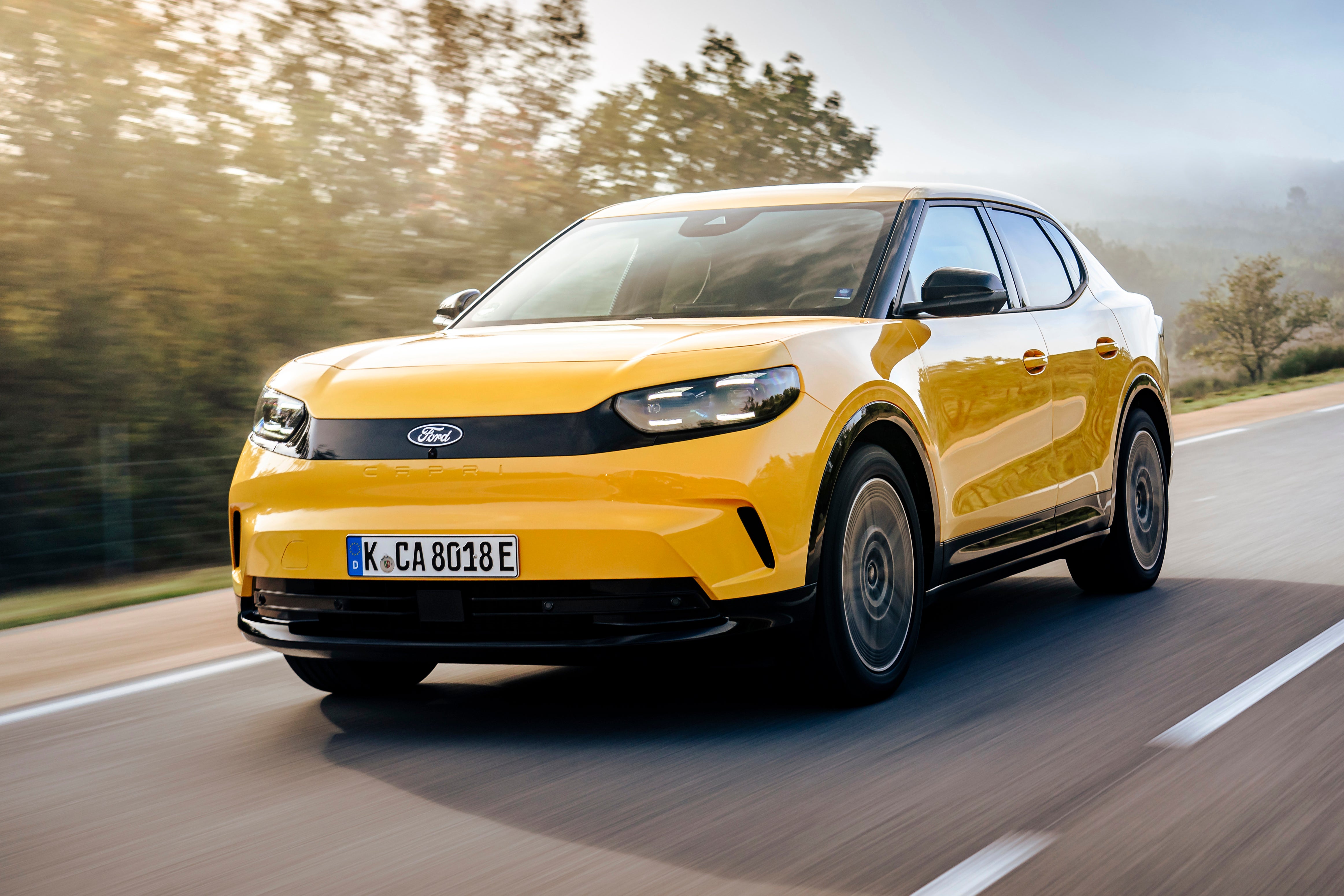
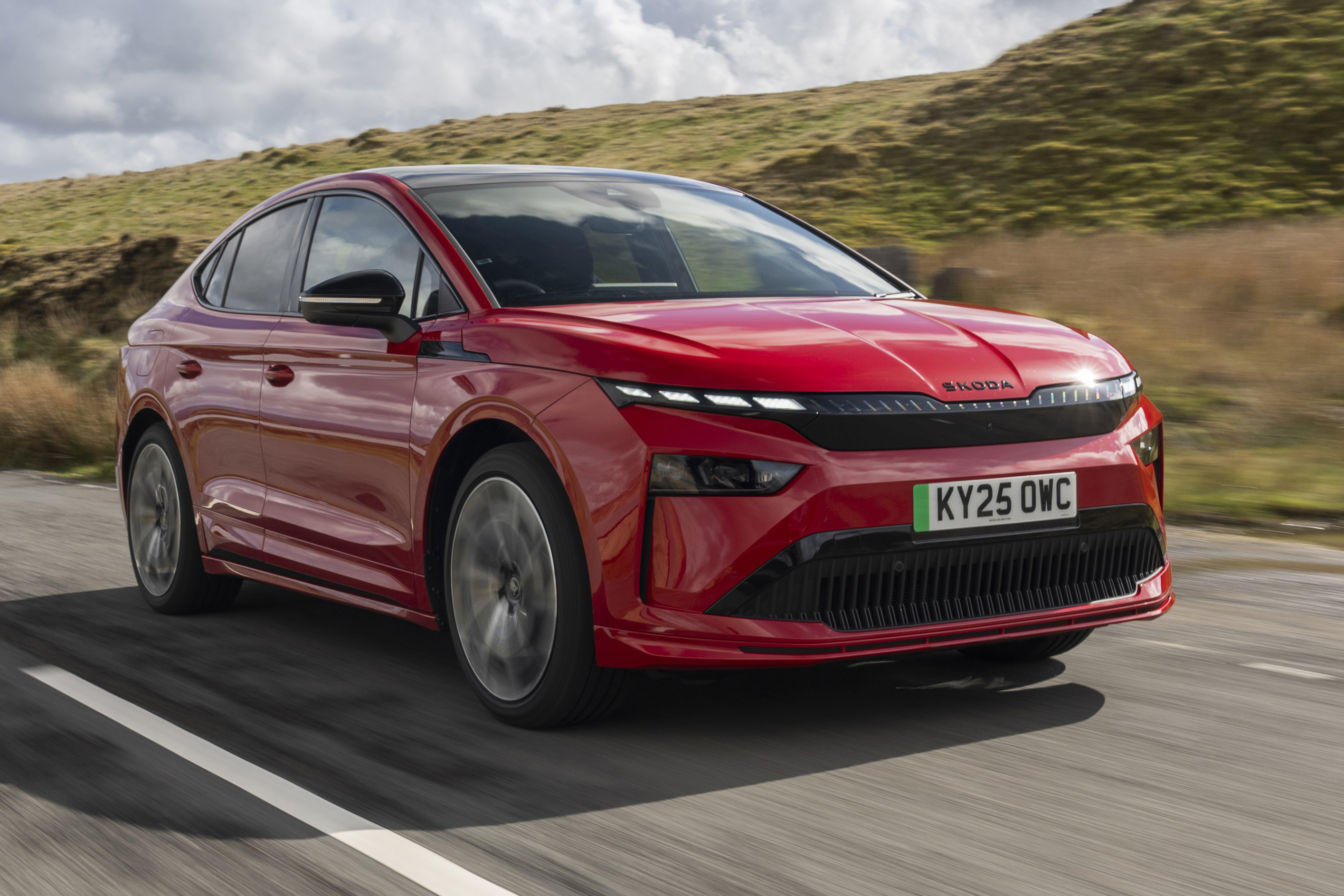
The Skoda Enyaq Coupe makes a lot of sense if you like the regular Enyaq’s easy-going, practical nature but want something that looks a little more distinctive. It is still spacious, still comfortable and still very easy to live with, yet the swoopier roofline gives it more visual appeal and slightly stronger aerodynamic efficiency. It is not the most exciting electric SUV to drive, and the standard Enyaq remains the more rational choice if maximum boot space matters most, but the Coupe gives away less practicality than you might expect and still makes a very strong family-EV case.
The Skoda Enyaq in more detail
You may view the Skoda Enyaq Coupe as just an Enyaq with a different roofline, and fair enough because that’s precisely what it is, but in reality, the car is a little more than the sum of its parts. It shares the same core strengths as the regular SUV, and that’s great, because the standard Enyaq is one of the most convincing family EVs on sale. The Coupe, however, is aimed at slightly different buyers. Where the regular Enyaq majors on straightforward value and everyday practicality, the Coupe tries to add a bit more style and desirability without completely undermining the core brief.
And that’s its real strength. A lot of coupe-SUVs ask you to give up too much practicality and versatility in the name of appearance. The Skoda Enyaq Coupe only loses 15 litres of luggage space compared with the regular Enyaq, and while the roofline is obviously lower, rear headroom is still generous and the panoramic glass roof helps keep the cabin feeling airy.
Browse used Škoda Enyaqs for sale →
The 2025 update has helped the Enyaq Coupe in its pursuit of extra style, because the car now has Skoda’s newer front-end treatment. The facelift also brought some useful changes to range, efficiency and standard equipment. And it’s just as well. The electric-SUV market has become much more crowded since the Enyaq first appeared, and buyers now have more credible alternatives to choose from than ever. Even so, the Skoda still stands out by doing the basic family-car job so well.
A big part of the Enyaq Coupe’s appeal is that it’s still very recognisable as a Skoda. As well as meaning loads of space, that also means thoughtful design, exemplary quality, handy touches that genuinely make everyday family life a little bit easier, and a straightforward and affordable ownership proposition. This feels like a car designed to slot into normal family life without asking too much of the people using it.
What's the best Skoda Enyaq trim and battery option?
For most buyers, the Enyaq Coupe Edition 85 is the best option. It gives you the longest official range in the Coupe line-up at up to 365 miles, strong performance, and a generous standard equipment list, despite being the entry-level version of the Coupe.
SportLine 85 is the choice if you want the sharper-looking styling and do not mind paying more for a more assertive appearance. The 85x adds four-wheel drive, which most buyers won’t need unless they regularly drive in poor weather or on loose surfaces. The vRS sits above these as the performance flagship, but we’ve written a separate review of that version.
What’s the price of the Skoda Enyaq?
The Skoda Enyaq Coupe currently starts at £46,720 for the Edition 85. SportLine 85 starts at £49,670, SportLine 85x at £51,170 and the Enyaq Coupe vRS at £54,370. There are also plenty of used Škoda Enyaqs for sale for considerably less.
That positions the Coupe above the regular Enyaq SUV, especially since the weaker entry-level powertrain that’s available on the SUV isn’t offered in Coupe form. With the versions that are comparable, you’re looking at around £2,000 more for the Coupe than for the equivalent version of the SUV. Despite the elevated prices, the Coupe still looks like fair value next to more premium-badged rivals. The Audi Q4 Sportback e-tron remains the obvious comparison point here, because it offers a very similar package for more money.
Alternatives to the Skoda Enyaq
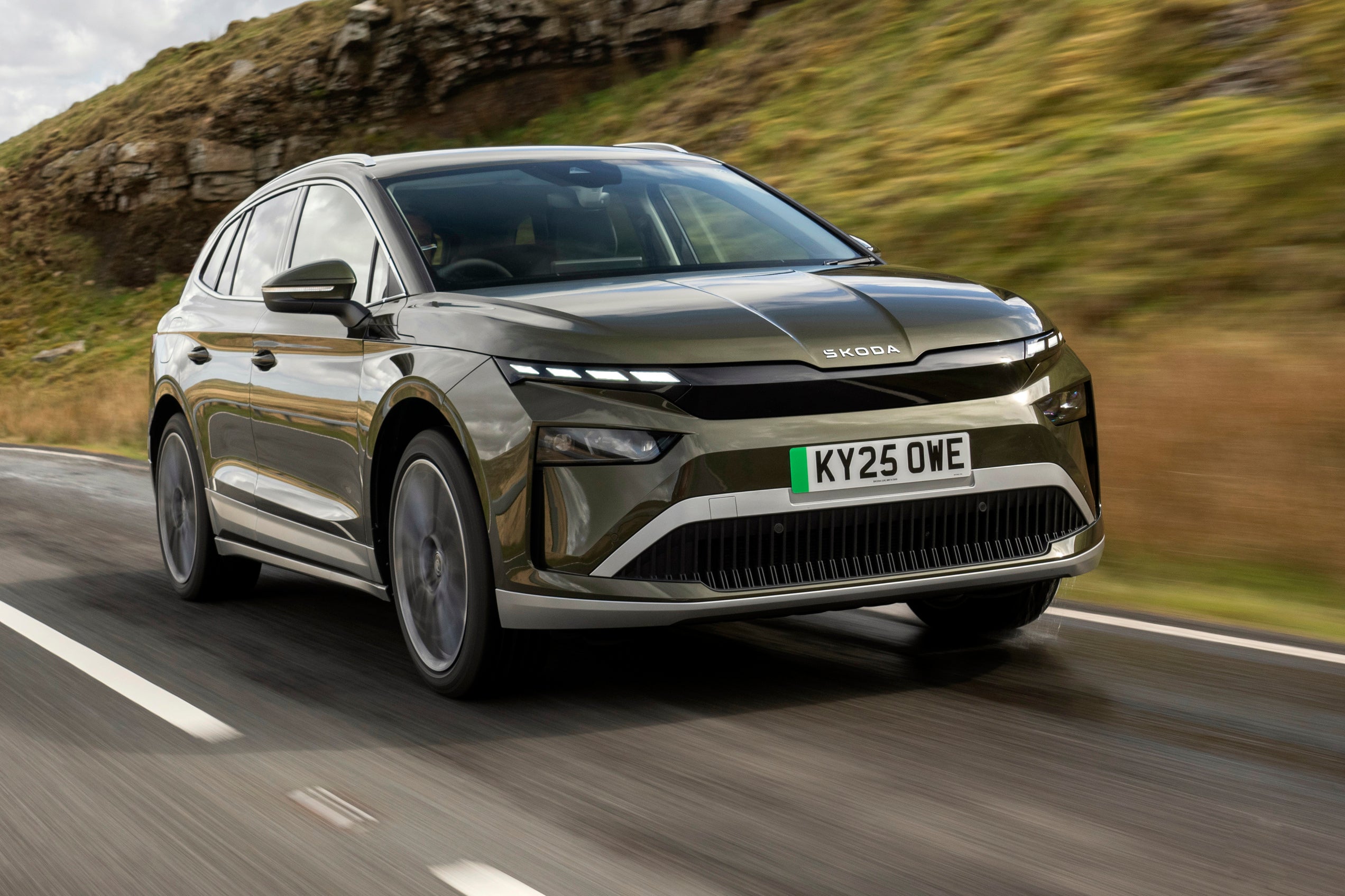
The regular Skoda Enyaq is the most obvious alternative because it gives you almost all the same virtues with a squarer, more practical body and a lower entry price. That is the real decision many buyers will be making: whether the Coupe’s sleeker shape is worth paying extra for.
Beyond that, the Volkswagen ID.5 is closely related and targets the same buyer from a slightly different angle, while the Audi Q4 Sportback e-tron is the more premium-badged alternative. The Ford Capri and Explorer also share the same underpinnings as the cars we’ve mentioned, while the Tesla Model Y might also be of consideration if you are looking at electric family SUVs in this price bracket.
What's the interior like in the Skoda Enyaq?
The Skoda Enyaq Coupe’s cabin follows the same basic formula as the regular Enyaq, which means it’s smart, functional and more sophisticated than some rivals. The different design selections - or interior themes - help, because they give the interior a bit more character than the usual black-on-black treatment.
Skoda Enyaq boot space and practicality
The Skoda Enyaq Coupe gives away less practicality than its shape suggests, and that is one of its biggest strengths. Boot space stands at 570 litres, which is only a fraction down on the regular Enyaq SUV’s 585 litres, and is still vast. In other words, you’re not making a dramatic compromise to get the sleeker roofline.
Rear passenger space is also better than the shape of the car first implies. The panoramic glass roof helps keep the cabin airy, and there is still easily enough headroom in the back for tall adults, while the legroom you get is massive.
The rear bench is better suited to two people rather than three due to the width of the cabin, but that’s the case with pretty much all cars of this size, and three adults will fit for short hops if they’re prepared to get friendly. A wide central seat with a flat floor in front of it makes life more pleasant for whoever ends up in the middle. The rear doors also open nice and wide for really easy access, too.
The driving position is easy to get comfortable in, with a clear view forward and enough adjustment to suit a wide range of drivers. You do not sit especially high by SUV standards, but visibility is still good overall.
There is also generous cabin storage, with a deep bin on every door, cupholders and cubbies in the centre console and phone pockets for those in the rear seats. The boot gets plenty of helpful touches, too, such as fold-out bag hooks, segmented underfloor storage for your charging cables and other goodies, plus levers built into the side walls to allow you to drop the rear seats from the boot.
Do so, and a maximum of 1,610 litres of cargo space is opened up (that’s 100 litres down on the Enyaq SUV, but still massive, and the folded seatbacks lie flush with the boot floor so that there’s no step in your extended loadbay. Part of it is sloped, though, because those backrests do lie at a slight angle.
Skoda Enyaq dimensions
Strangely, given the low-slung design of the roofline, the Enyaq Coupe is actually a millimetre or two taller than the regular SUV version, standing 1,620mm in vRS form and 1,623mm in all other forms. The Coupe is identical in width (1,879mm without door mirrors) to the regular SUV, and in length as well (4,660mm for the vRS, 4,658mm for the others).
Tech and infotainment in the Skoda Enyaq
Every Skoda Enyaq - the Coupe included - gets pretty much the same basic infotainment system. This includes a 5.0-inch digital instrument screen, a 13.0-inch central touchscreen, built-in navigation, wireless smartphone connectivity, DAB radio and numerous USB-C ports front and rear. The only real differences as you move up the trim-level structure are that SportLine and vRS cars get an upgraded Canton sound system and a head-up display on top of all that.
The central screen looks good, with smart fonts and slick-looking graphics, and the system responds quickly to your inputs without any discernable lag. It’s not without its shortcomings, though. It attracts reflections on a sunny day due to its position on top of the dashboard. The bigger issue, however, is that like with so many cars these days, the Enyaq is far too reliant on the touchscreen interface, with too many functions having to be accessed and operated through it, and this makes it look cluttered, complicated and confusing. This includes the climate controls, which is particularly irritating. The temperature controls are always visible at the bottom of the screen, but doing anything more involved with the ventilation system - such as changing the fan speed or direction of the airflow - involves delving into a separate menu.
Materials available on the Skoda Enyaq
If you’re worried that going for a Skoda will mean having a poorer-quality interior than the equivalent Audi or Volkswagen, then really don’t. Not only is the Enyaq’s cabin a match for these rivals, it even has the beating of them in some areas. The plastics used feel plush and tactile everywhere you look, and even in the lower reaches of the cabin, and there isn’t a single panel that lets the side down. There are some really nice little touches, too: for instance, the door pockets are flock-lined so that keys and coins won't scrape against the inner surface as you roll over bumps, preventing an annoying rattle. How’s that for attention to detail?
One of the Enyaq Coupe’s quieter strengths is that the interior can feel more interesting than some direct rivals depending on the ‘design selection’ - Skoda’s name for different interior themes - you choose. Loft is the standard theme for Edition cars, with a mixture of cool grey fabric and artificial leather, while there are a range of alternative themes if you’re prepared to pay a bit more. The Lodge design selection gives a cool two-tone colour scheme with fabric upholstery made from recycled materials, while Lounge uses a mixture of microsuede, artificial leather and mint green piping. Alternatively, there are two Suite design selections that offer leather and artificial leather upholstery in either black or deep brown.
Sportline and vRS cars have their own individual design selections, with microsuede, artificial leather and a range of sporty styling embellishments. There’s not a bad choice to be made, though, because all the design selections we’ve encountered look great.
What's the Skoda Enyaq like to drive?
The Enyaq Coupe is not a performance SUV, and it’s not trying to be. All versions are quick, but they’re still more about easy-going family use than excitement, even in vRS form. The car’s real strength is that it feels calm, composed and comfortable.
Skoda Enyaq range and performance
The entry-level 60 powertrain-and-battery option that’s offered in the regular Enyaq SUV isn’t offered in the Coupe, so most of the range uses the 85 powertrain, all with an 82kWh battery. The Edition 85 and SportLine 85 both use a 286PS rear-drive layout. Both feel genuinely brisk rather than merely adequate, both off the line and when picking up speed on the move, and most drivers will be more than satisfied with the level of performance on offer.
The 85x adds a second motor to the front axle for four-wheel drive, and thus better traction, but the overall output remains at 286PS. Likewise, the 0-62mph sprint time remains unchanged with both the 85 and 85x dispatching that benchmark in 6.5 seconds.
There are differences in range though, albeit small ones. The 85 Edition puts in the best official WLTP figure of 365 miles, while the bigger wheels of the SportLine variant chops this to 356 miles. The figure falls further in the four-wheel-drive 85x, down to 336 miles.
The Enyaq vRS also has twin-motor four-wheel drive, but this time with power hiked up to 340PS, trimming the 0-62mph sprint time to 5.2 seconds. It’s capable of feeling fairly explosive off the line, for sure, but once you’re rolling, it has a similar rapid-but-not-rabid character to the 85 version. Suffice it to say that no version of the Enyaq Coupe will leave you feeling short of go in any situation.
The vRS does pretty well for range, too, courtesy of the fact that it’s got a slightly larger 84kWh battery. The official figure say you’ll get 347 miles on a full charge.
Performance data
| Model | Engine/battery size | Power | 0-62mph | Range/MPG |
|---|---|---|---|---|
Enyaq Coupe Edition 85 | 82kWh | 286PS | 6.5 sec | Up to 365 miles |
Enyaq Coupe SportLine 85 | 82kWh | 286PS | 6.5 sec | Up to 356 miles |
Enyaq Coupe SportLine 85x | 82kWh | 286PS | 6.5 sec | Up to 336 miles |
Enyaq Coupe vRS | 84kWh | 340PS | 5.2 sec | Up to 347miles |
Skoda Enyaq driving and refinement
The Skoda Enyaq has a generally calm and relaxed character that makes it an exceptionally good family car, and that doesn’t change one iota with the Coupe version. Despite its racier styling, it still majors on comfort, and that’s its greatest asset. The absorbent suspension does a fabulous job of smoothing over bumps and ruts in the road, keeping those inside feeling cosseted, and that’s the case at any speed, and on any sort of road.
That relaxed character is contributed to even further by the Enyaq’s excellent refinement: the all-electric powertrain is as quiet as you’d expect, while road noise and wind noise are isolated really well, too, even at motorway speeds.
While the Enyaq Coupe certainly isn’t the most involving car you’ll ever drive, even in sporty vRS form (would you really expect that of a large family SUV anyway?), the handling nevertheless impresses. There’s enough control in the suspension to keep the body feeling tied-down and tidy when negotiating a set of bends, and to stop it from feeling floaty and bouncy on an undulating road. Grip and traction are plentiful regardless of whether your Enyaq has four driven wheels or two, and the steering is responsive and predictable, even if it feels rather artificial at times.
Despite the size of the car, you also get a surprisingly tight turning circle, which helps with low-speed manoeuvring and parking. So does the standard fitment of front- and rear parking sensors, and a reversing camera. Generally, then, with light controls and instant responses., the Enyaq is just a very easy and relaxing car to drive.
How safe is the Skoda Enyaq?
The Skoda Enyaq was originally crash-tested by Euro NCAP in 2021, and was retested once again - against newer, more stringent safety standards - in 2025. On both occasions, it achieved the full five-star rating, with the latter test seeing particularly strong adult and child occupant scores, and that result extends to the Coupe version, too.
All versions of the Enyaq come with a healthy spread of standard safety kit, which includes front-, side- and curtain airbags, a central interaction airbag, various lane-assist functions, emergency steering support, blind-spot detection, traffic sign recognition, and adaptive cruise control. Isofix child seat tethering points are fitted to the outer rear seats, and also the front passenger seat as well.
Running costs: What it's like to live with a Skoda Enyaq
The Enyaq Coupe’s ownership costs should be fairly painless. It is efficient (slightly more so than the regular Enyaq, in fact), and home charging costs remain much lower than filling up an equivalent petrol SUV.
Skoda Enyaq charging times and costs
As with all EVs, charging at home will be by far the most affordable way to run your Skoda Enyaq Coupe. Hooked up to a regular 7kW home wallbox charger, all versions will take somewhere in the region of 12 hours to take on a full charge, and if you pay for your domestic electricity at the UK’s national average rate, that charge will cost you around £22. However, do as most smart EV owners do, and get yourself on a variable home power tariff that allows you to charge your car overnight on vastly discounted off-peak power, then you’ll likely pay around a third of that for the same charge. It’s well worth doing, then.
Early Enyaqs had rubbish maximum DC rapid charging speeds of around 50kW or thereabouts, but that was improved massively with the 2025 upgrades, and all versions of the Coupe now support 175kW charging. It’s possible to take on a 10% to 80% top-up in around 28 minutes in optimum conditions. Charging this way will cost much, much more, though, (think three times more than a home charge billed at that national average rate) so we wouldn’t rely on DC rapid chargers on a regular basis.
Skoda Enyaq warranty and servicing
Skoda’s standard UK warranty is three years or 60,000 miles, while the high-voltage battery is covered for eight years or 100,000 miles, which is a legal requirement. The Enyaq Coupe will need servicing every two years, so routine maintenance should cost less than with a combustion-engined car.
Skoda Enyaq insurance groups
Insurance groupings for the Enyaq Coupe kick off at group 34 for the 85 Edition, rising to group 35 for the 85 SportLine. It’s odd that the 85x SportLine rises up to group 38 when it has no more power or pace, and yet has the added security of all-wheel drive. Classifications top-out with the vRS in group 39. Premiums are unlikely to be cheap, then, but they shouldn’t be unreasonable by the standards of the class.
How much does it cost to tax a Skoda Enyaq?
There are currently four versions of the Enyaq Coupe, two of which have a list price that sits below £50,000, and two of which have a price that sits above. And £50,000 is the price threshold at which an electric car becomes liable for the expensive-car supplement on VED road tax. Cars affected will be liable for an additional sum of £440 per year between years two and six of the car’s life, on top of the £200-per-year flat rate for cars that don’t bust the threshold.
Bear in mind, though, that the threshold includes optional extras, of which there are a great many available on the Enyaq, and the versions that beat the threshold don’t do so by a massive amount. Be restrained when speccing your Enyaq to make sure you don’t saddle yourself with liability.
What trims are available with the Skoda Enyaq?
While the regular Skoda Enyaq SUV range starts with SE L, and then moves on to Edition, SportLine, and vRS, the Coupe isn’t offered in SE L form, and so the Coupe range starts with Edition trim.
Standard kit is generous, and includes 19-inch alloy wheels, LED Matrix headlights, electrically adjustable door mirrors, heated front seats, a heated steering wheel, electric driver’s seat adjustment with massage, predictive adaptive cruise control, three-zone climate control, wireless phone charging, keyless entry, rear side airbags, rear window blinds, a rear-view camera, front- and rear parking sensors and an electric tailgate with virtual pedal. All versions of the Coupe also get a panoramic roof as standard, which you don’t get on any version of the regular SUV without paying extra, and it’s not a cheap option.
SportLine gets larger 20-inch wheels, sportier exterior detailing with illuminated elements, and the racier interior treatment, plus an upgraded Canton sound system, a head-up display, and a 360-degree camera system.
To that, the vRS adds its own styling treatment, a powered front passenger seat with massage function, and Dynamic Chassis Control adaptive suspension.
Ask the Drive experts: common questions
Is the Skoda Enyaq Coupe practical enough for a family?
Which Skoda Enyaq Coupe is the best one to buy?
Is the Skoda Enyaq Coupe better than the Audi Q4 Sportback e-tron?
Should you buy the Enyaq Coupe instead of the regular Enyaq?
Get our latest advice, news and offers
Keep me updated by email with the latest advice, news and offers from Drive.
.jpg)
.jpg)
.jpg)