Volkswagen ID.5 GTX Review

Written By Matt Robinson
- 2022
- SUV
- Electric
What we love
GTX additions make for a stylish car
Decent straight-line performance
Just as practical as the regular ID.5
Things to consider
Prioritises performance over maximum range
Its sportier setup gives it a slightly firmer character
The coupe-style roof slightly limits rear visibility
The DRIVE take on the Volkswagen Id5, is it the right car for you?
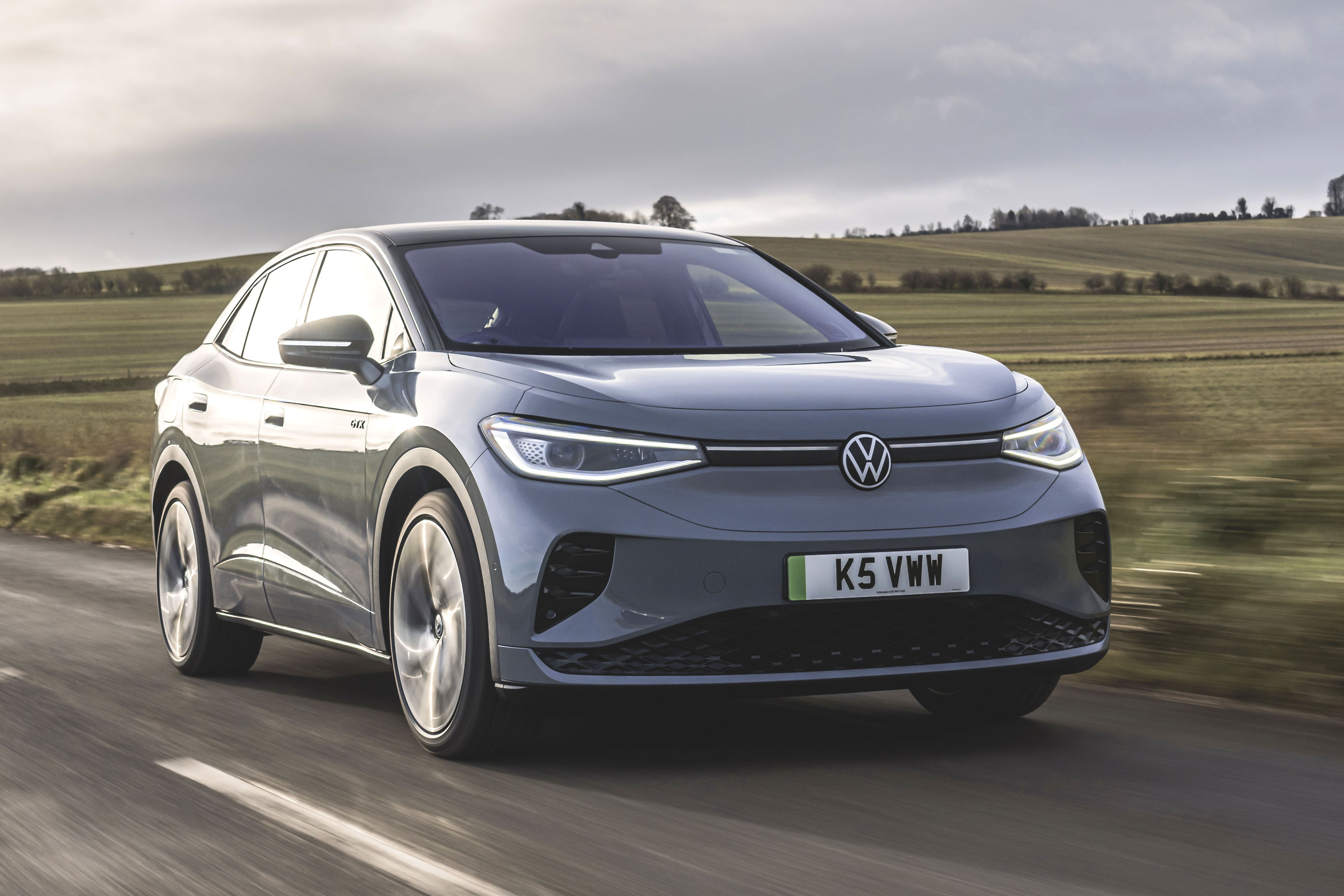
The Volkswagen ID.5 GTX stands out from the rest of the ID.5 range thanks to its extra motor, giving faster acceleration and all-wheel drive. It’s comfortably the most expensive version of the car, but should be just as easy to live with – there’s no reduction in practicality, it’s comfortable, and the range only drops slightly compared with an ID.5 Pro.
You do need to set your expectations about what it’ll feel like on a twisting country road, though. There are more exciting performance EVs out there, so if it’s pure driving thrills you’re looking for, you might be better off looking elsewhere. And if you don’t think you’ll make the most of the extra performance, give the cheaper ID.5 Pro a look.
The Volkswagen Id5 in more detail
The VW ID.5 GTX was the second electric performance model to wear Volkswagen’s revived GTX badge. Originally used for certain versions of the Volkswagen Scirocco, GTX was brought back in 2021 for electric performance cars.
The ID.4 GTX kicked things off, with the ID.5 GTX we’re covering here following hot on its heels. They’re scarcely different from one another, though. The main thing that changes between the ID.4 and ID.5 is a sloping roofline and tailgate on the latter, giving a coupe-like side profile. Each gets the same electric powertrain, and thus the same performance.
Browse used Volkswagen ID.5s for sale →
On that front, there’s a 77kWh battery pack powering two electric motors. This is the only version of the ID.5 to get this arrangement, with all others having a single motor powering the rear wheels.
The motors combine to provide a healthy 340PS, 54PS more than the next most powerful ID.5 and enough for a 0-62mph time of 5.4 seconds.
There are faster electric cars for similar money (notably the Tesla Model Y Long Range All-Wheel Drive), and ones that are more exciting. You’ll need to really want the extra performance of the VW ID.5 GTX and its sportier looks for it to make the near-£6,000 uplift in price compared to the next most expensive ID.5 worth it.
You do, though, get a want-for-nothing spec, so if you’re already considering getting something like an ID.5 Pro Black Edition and speccing pretty much every option, there is a rationale for upgrading.
If you opt for the VW ID.5 GTX, you’ll find it’s just as easy to live with as any other ID.5. The range figure doesn’t drop all that much compared to an ID.5 Pro; there’s no change in practicality, and despite its sportier suspension setup, the GTX is still a comfortable car to drive.
There isn’t much of a practicality penalty for picking the VW ID.5 GTX over the ID.4 GTX, either, so you can simply let your styling tastes lead your decision.
What's the best Volkswagen Id5 trim and battery option?
That’s an easy one – the VW ID.5 GTX is effectively a trim level in the ID.5 line-up, or to give it the full name, ID.5 GTX Edition (previously ‘GTX Max’). There’s also only one battery option, so the only decisions you’ll need to make are what to add in the configurator. You won’t be doing much of that, anyway – because the standard spec is high, there aren’t a great deal of optional extras available.
What’s the price of the Volkswagen Id5?
The Volkswagen ID.5 GTX costs £54,400. That’s £1,500 more than an ID.4 GTX, and just under £6,000 more than the next most expensive version of the ID.5, the Pro Black Edition. There are plenty of used Volkswagen ID.5s for sale on the secondhand market but fewer GTX models so you may have to be patient if you're after a particular colour or spec.
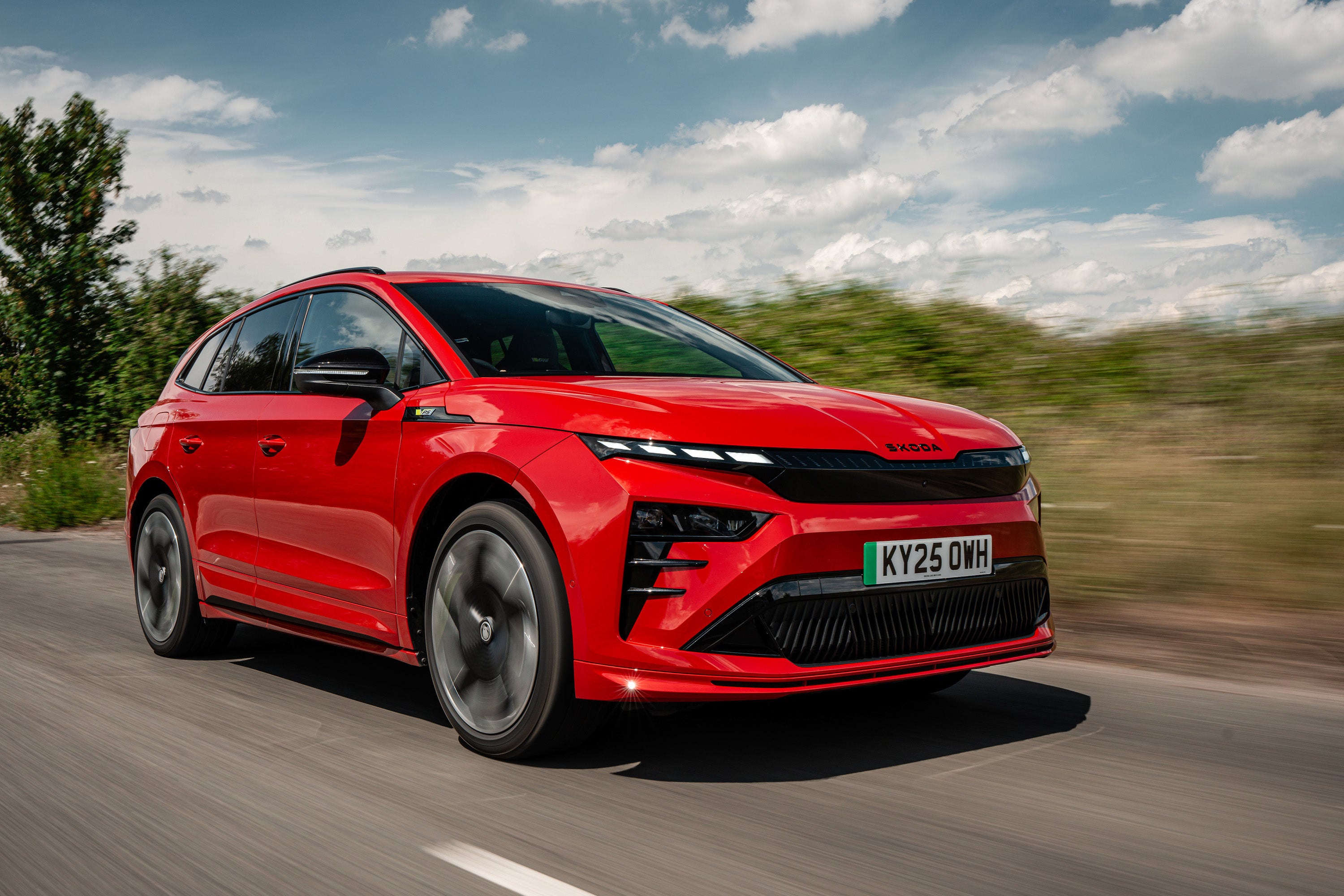
The closely related Skoda Enyaq Coupe vRS costs less, but there’s all of £30 in it. For a further comparison, a Tesla Model Y Long Range All-Wheel Drive is £51,990.
The VW ID.5 GTX has been around for a few years now, which means there are great deals to be had on the used market if you don’t fancy paying quite as much.
Alternatives to the Volkswagen Id5
There’s a Volkswagen ID.5 GTX alternative that’s very close to home. That’s the Skoda Enyaq Coupe vRS, which is built on the same platform and uses many of the same components.
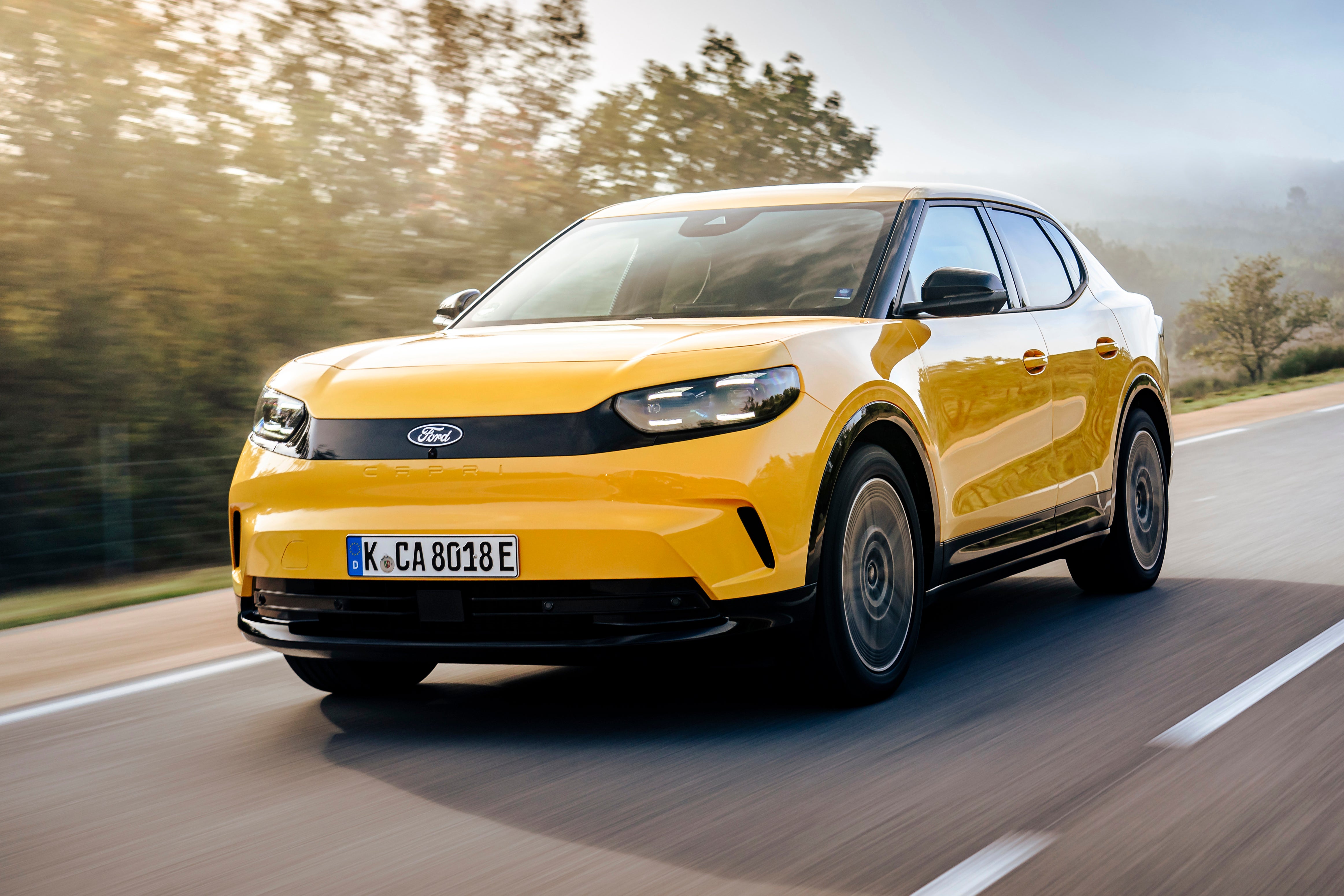
The same is true of the Ford Capri Premium with the AWD Extended Range powertrain specced – don’t be fooled by the blue oval badges, because it’s actually made from the same bits and pieces as both the VW ID.5 GTX and Enyaq Coupe vRS as part of a joint venture between Ford and Volkswagen.
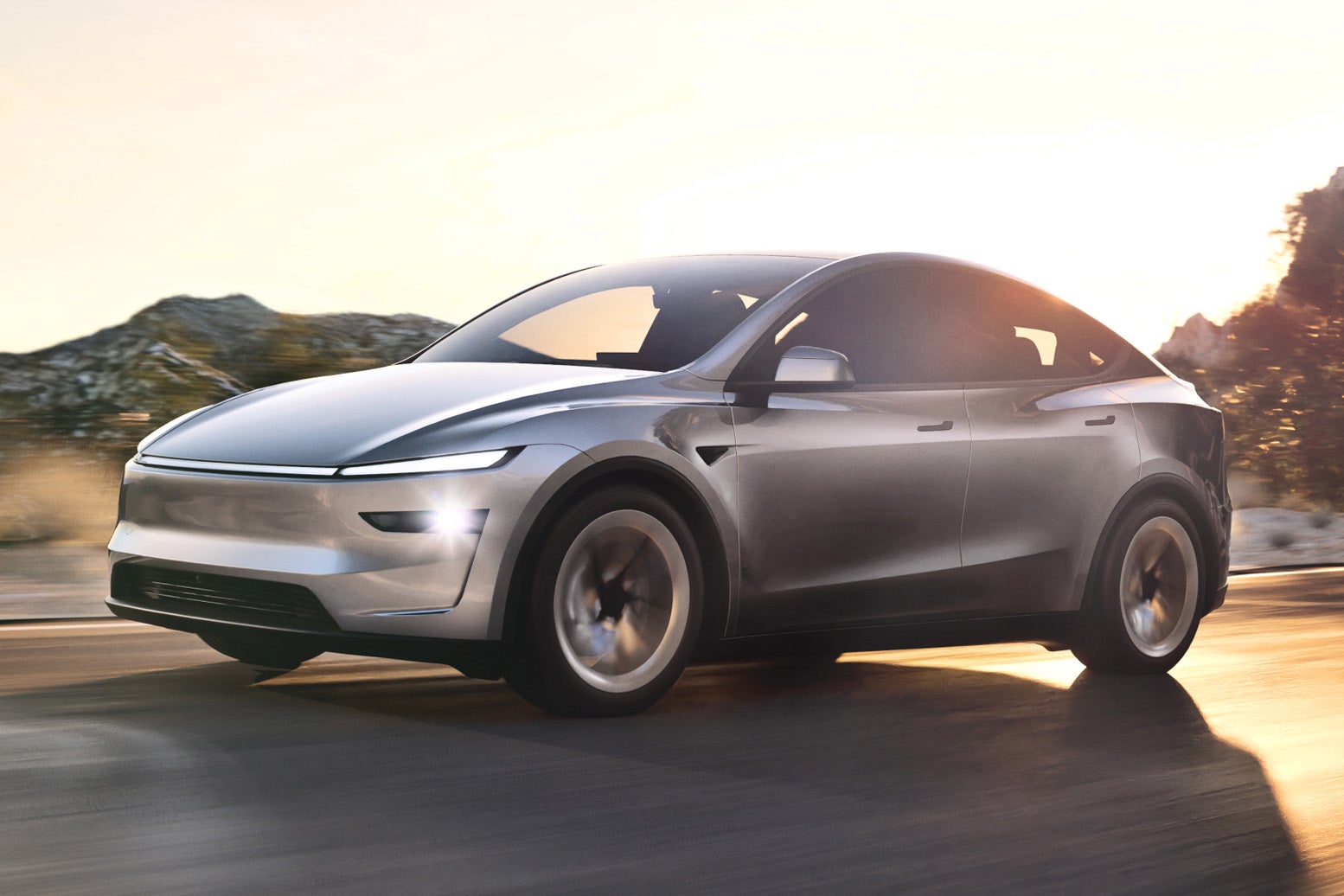
Further afield, the Tesla Model Y Long Range All-Wheel Drive could be considered an alternative. It’s similarly priced, but quicker and goes further on a full charge. Not everyone will be keen on its interior experience, though, which leans even further on its central touchscreen than the ID.5 GTX.
You could simply buy the ID.4 GTX instead of the ID.5 GTX. Along with being cheaper, it’s also slightly more practical. It all comes down to how much you like the looks of the swoopier ID.5.
What's the interior like in the Volkswagen Id5?
The interior of the VW ID.5 GTX is much like other ID.5s, although there are some red accents to give an extra sense of sportiness. For the sake of sustainability, the cabin also steers clear of proper leather, using leatherette instead. The GTX also suffers no loss in practicality, although the ID.5 model in general is marginally less practical than the closely related ID.4.
Volkswagen Id5 boot space and practicality
There’s no penalty in terms of practicality for choosing an VW ID.5 GTX over another derivative of the car – the boot space is unchanged.
And that boot space is actually six litres better than in the ID.4, at 549 litres. A healthy figure, but slightly behind the Ford Capri’s 572-litre boot. The rear seats fold in a flexible 40/20/40 arrangement, opening up 1,561 litres of total space.
This is where there’s a deficit to the ID.4, because that figure measures up to the ceiling of the car, where the ID.5’s sloping roofline and tailgate rob you of 173 litres of cargo volume.
There’s a 12mm reduction in rear headroom compared to an ID.5, but there’s still decent clearance even for taller occupants. Rear legroom is generous, too.
Volkswagen Id5 dimensions
The VW ID.5 GTX is 4,582mm long, 1,852mm wide (not including the door mirrors) and 1,601mm tall. In terms of length and width, it’s exactly the same as all other ID.5 models, but it’s 9mm lower due to its different suspension setup. It should come as no surprise that a Skoda Enyaq vRS is roughly the same size, while a Tesla Model Y is a fair bit longer at 4,790mm, and slightly taller.
Tech and infotainment in the Volkswagen Id5
The VW ID.5 GTX features a 12.9-inch touchscreen infotainment system. You need to use it for most climate control functions, which could take some getting used to if you’re coming from a car with physical buttons. There are, at least, touch-sensitive shortcuts for the climate control temperature zones on the lower part of the display’s bezel.
The screen responds well to touch, and the menu systems all make sense. The graphics are crisp and clear, too.
The in-built navigation system works quite well, but it’s not up to the standard of something like Google Maps or Waze. Using either will be easy enough, because you can connect your own device via the wireless Apple CarPlay or Android Auto.
On that subject, you can keep your devices charged with a wireless charging pad or one of several USB-C sockets. The sockets supply 45W, meaning they’re potent enough to keep a laptop charged, and will top up a smartphone quickly.
The digital instrument cluster is compact at just 5.3 inches across, but it makes good use of its limited screen real estate by clearly displaying key information. It’s backed up by an augmented reality head-up display that the GTX gets as standard.
Materials available on the Volkswagen Id5
The VW ID.5 GTX features a mostly black interior with ‘Tornado Red’ elements to emphasise the car’s sense of sportiness. There’s no leather, with the interior and door inserts instead using leatherette.
The seats also use leatherette, with inserts made from something called ‘ArtVelours’, a microfibre fabric which uses recycled materials in its construction, with some of it derived from plastic water bottles.
What's the Volkswagen Id5 like to drive?
The VW ID.5 GTX feels capable and secure to drive, with a dash of sportiness rather than feeling overtly like a country road carving machine. Comfort remains fairly high on the agenda, and refinement is decent. Performance is punchy if not blisteringly quick.
Volkswagen Id5 range and performance
Originally, the VW ID.5 GTX developed 299PS and 460Nm of torque from its dual-motor powertrain, but Volkswagen gave the car a big boost in late 2024 to 340PS and 545Nm. This slashed the 0-62mph time from 6.2 to 5.4 seconds.
The top speed remains the same at an electronically limited 112mph – even if you find yourself on a derestricted autobahn, you aren’t going to want to go much quicker than that in an EV, or the range will drop rapidly.
The acceleration figures are perfectly respectable, but some ID.5 GTX alternatives are notably quicker. The Tesla Model Y Long-Range All-Wheel Drive puts out an impressive 513PS for a 0-62mph time of 4.8 seconds, for example, and it’s slightly cheaper than the ID.5 GTX. A Ford Mustang Mach E develops 487PS and will rocket to 62mph in just 3.7 seconds, but you’ll pay a lot more for one of those than for an ID.5 GTX.
Instantly delivered torque means the ID.5 GTX feels brisk off the line, but not what you’d call a rocketship beyond that point compared to those more powerful alternatives we mentioned earlier. That increase in power that came in 2024 was certainly very welcome.
The GTX will do 331 miles on a full charge according to the WLTP combined figure. This should only be used as a rough guide and a useful point of reference when comparing to other cars, because what you actually get in real-world driving will vary depending on many factors, including your driving style and the time of year.
This is only a slight drop compared to the ID.5 Pro models, which have range figures from 347 - 352 miles depending on the version. Meanwhile, a Tesla Model Y Long Range AWD manages 372 miles on a full charge.
Performance data
| Model | Engine/battery size | Power | 0-62mph | Range/MPG |
|---|---|---|---|---|
GTX | 77kWh | 340PS | 5.4 seconds | Up to 331 miles |
Volkswagen Id5 driving and refinement
Despite having all-wheel drive, there is still a rear bias to the GTX’s powertrain because the rear motor puts out more power than the one at the front. Generally, though, it’s a very secure-feeling and capable car.
VW ID.5 GTX models also have a slightly lower, stiffer suspension setup than other ID.5s, but you don’t need to worry about the car thumping over potholes and speed bumps with little grace.
It’s still a very compliant car that’s scarcely less comfortable than its siblings. Refinement at speed is good, too, so you’ll be able to cover plenty of miles without it becoming tiring.
Along with the suspension tweaks, you also get variable steering, which tightens the steering ratio the more you turn the wheel. It makes the car feel nicely manoeuvrable in tighter corners.
Although the VW ID.5 GTX is satisfying to drive along a twisting country road, it’s not what you’d call thrilling. If that matters to you, it might be worth looking at something like a Ford Mach E GT, but that’s a much more expensive car.
How safe is the Volkswagen Id5?
Euro NCAP has never crash tested an ID.5, instead carrying over the ID.4’s rating, because its slightly different rear end makes no meaningful difference to how safe it is.
On that front, it’s good news, because that rating for the 2021 test was the full five stars. Breaking down to the individual categories, the ID.4/ID.5 was rated as 93% for adult occupants, 89% for child occupants, 76% for vulnerable road users and 85% for its safety assistance systems.
Those assistance systems include a driver attention monitor, adaptive cruise control, rear traffic alert, lane change assistance and an exit warning system.
Running costs: What it's like to live with a Volkswagen Id5
The GTX has the best rapid charging capability of any ID.5. It can accept up to 185kW, which means a 10-80% charge is possible in under 30 minutes, assuming conditions are optimal. Public chargers can be expensive in the UK, though, charging as much as 90p per kWh.
Our recommendation is to keep your ID.5 GTX charged at home, a process which will take just over 10 hours for a full top-up from near flat. On a typical UK tariff, this will cost around £20, but you can slash this figure if you can get on a variable rate system and time your charging sessions to coincide with cheaper off-peak periods.
Volkswagen Id5 charging times and costs
Decent efficiency means that the ID.5 GTX should be cheap to run, especially if combined with an electricity tariff that gives cheaper off-peak rates. That makes up for the car being liable for the expensive car tax premium, as does servicing, which will be cheaper than for a petrol or diesel car of comparable performance.
Volkswagen Id5 warranty and servicing
The VW ID.5 GTX’s standard warranty runs for three years or 60,000 miles, whichever arrives first. If you want to extend beyond that, there are three levels of cover called 'Essentials' 'Standard' and 'Plus' that are available for an annual fee.
The ID.5 GTX’s high-voltage battery pack comes with the mandated eight years and 100,000 miles of separate cover. This guarantees a battery health of at least 70%.
If you’re buying new or nearly new, you won’t have to worry about servicing for a while – the ID.5 GTX’s first one isn’t until two years or after 20,000 miles, whichever comes first. Servicing for electric cars is generally cheaper, too, because of the reduction in consumables that need switching out.
Volkswagen Id5 insurance groups
The current version of the ID.5 GTX sits in insurance group 41. This is a few groups higher than the original, less powerful version of the car. For comparison, the next most powerful ID.5, the Pro, is in group 35. A Tesla Model Y Long Range All-wheel drive is in group 42.
How much does it cost to tax a Volkswagen Id5?
EVs no longer get out of paying for Vehicle Excise Duty, which is currently a flat rate of £200 annually, payable from the second year of ownership. There’s an extra sting in the tail, because EVs are also liable for the government’s expensive vehicle tax supplement, and although the threshold for zero emissions vehicles is £10,000 higher at £50,000, the ID.5 GTX is expensive enough to fall foul. That means you’ll be paying an extra £440 annually from years two to six.
What trims are available with the Volkswagen Id5?
The ID.5 GTX is available in one trim grade called the GTX Edition. Earlier versions were called GTX Max. As you’d hope for the most expensive version of the ID.5, the standard spec is high.
Standard equipment for the ID.5 GTX Max includes 20-inch alloy wheels, gloss black exterior styling, an electric tailgate with kick sensor, Matrix LED headlights, panoramic roof, electrically adjustable and front seats with massage function and heating, nine-speaker Harman Kardon sound system, wireless smartphone charger, wireless Apple CarPlay/Android Auto keyless entry/start, three-zone climate control, ambient lighting augmented reality head-up display and adaptive cruise control.
On top of that, there are a handful of options you can choose, including an energy-saving heat pump for £1,150, two-tone colours from £990, and different wheel options for £1,000.
Ask the Drive experts: common questions
What’s the difference between an ID.4 and ID.5?
What does Volkswagen GTX mean?
How fast is the Volkswagen ID.5 GTX?
Get our latest advice, news and offers
Keep me updated by email with the latest advice, news and offers from Drive.
.jpg)