08/10/2026
Best people carrier vans in the UK: Top picks for 2026

Written By Mark Nichol
The MPV – aka the multi-purpose vehicle or people carrier – was supposed to be dead, forgotten because everyone buys an SUV these days, right? Well, yes, mostly – but there’s only so much space you can squeeze from an SUV, especially if you need to carry more than five people.
If you regularly need to carry seven, eight or even nine people, there's still nothing better than a van-based MPV . Because they start life as a big box on wheels, van-derived MPVs are cars which can carry adult-sized passengers in every seat and also swallow loads of luggage. It’s not rocket science.
This means that they’re not necessarily the easiest of things to live with when it comes to the mundane day-to-day stuff. Reverse parking in a busy supermarket car park, negotiating a drive-through's narrow, bendy lane and lifting the enormous tailgate when you’re parked nose-to-tail in a busy town centre are all situations that would be much easier with a regular family hatchback.
Yet the latest van-based people carriers are far more sophisticated than you might expect. Most now come with car-like infotainment systems, parking sensors, adaptive cruise control, heated seats and enough driver assistance technology to embarrass luxury cars from a decade ago. They’re also pleasant to drive as well, sitting you higher than Lord Sugar’s boardroom stool from The Apprentice. All lofty and powerful.
So, here are our expert team of road testers' picks for the best van-based people carriers on sale in 2026.
1. Volkswagen Caravelle
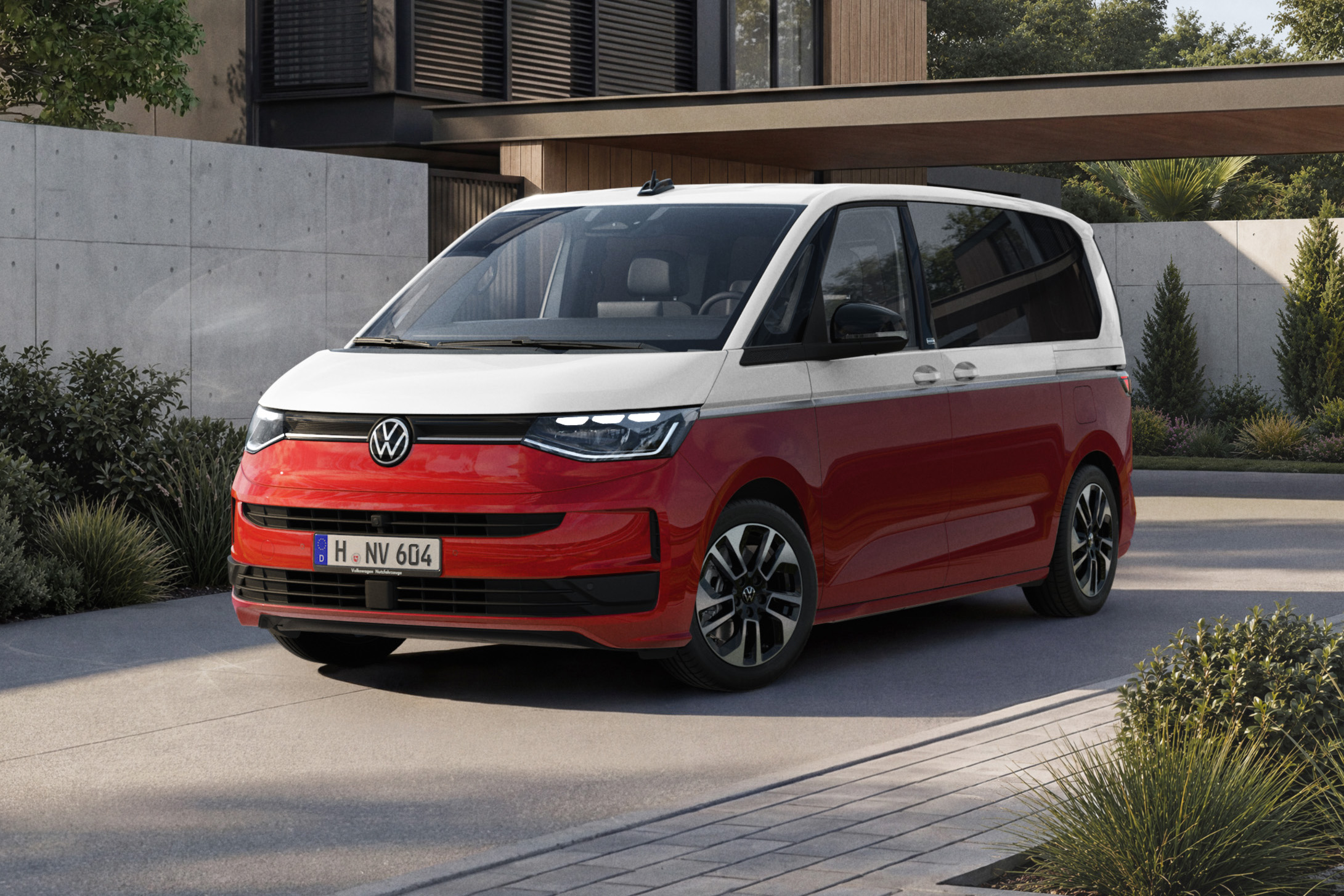
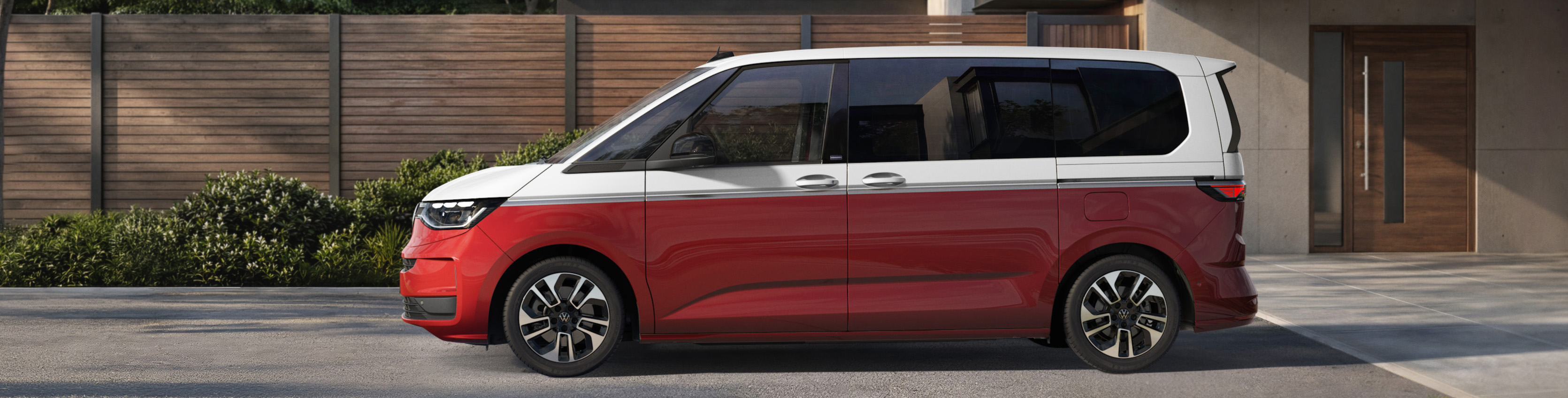
Volkswagen's biggest people carriers used to be based on its Transporter van. This one isn't. Originally called the VW Multivan, the Volkswagen Caravelle – facelifted and renamed as of summer 2026 – sits on the same basic platform as the VW Golf, Passat and a whole host of other Volkswagen Group cars. In fact, despite its former name and the fact it was developed by Volkswagen's Commercial Vehicles division, you can't actually buy a van version of it.
These sound like trivial details, but they transform the way it drives. Compared with traditional van-based MPVs, the Caravelle feels remarkably car-like in its handling. The steering is lighter, the ride is more composed and it corners without sawing like a canoe on a windy lake.
The cabin is the Caravelle's real highlight. Depending on specification, you'll find up to seven individual seats, all mounted on rails so they can slide backwards and forwards, be removed entirely or rearranged to suit your needs. Need to carry six adults and a week's luggage? Fine. Need to transport a washing machine? Also fine. And the clever sliding centre console is one of those features that sounds daft until you've lived with it.
Engine choices include a 2.0-litre diesel and a petrol-fuelled plug-in hybrid. The diesel remains a sensible option, returning around 45mpg in real-world driving, while the latest Volkswagen Caravelle eHybrid PHEV can officially cover more than 50 miles on electric power alone.
Find a used Volkswagen Multivan
2. Ford Tourneo Custom
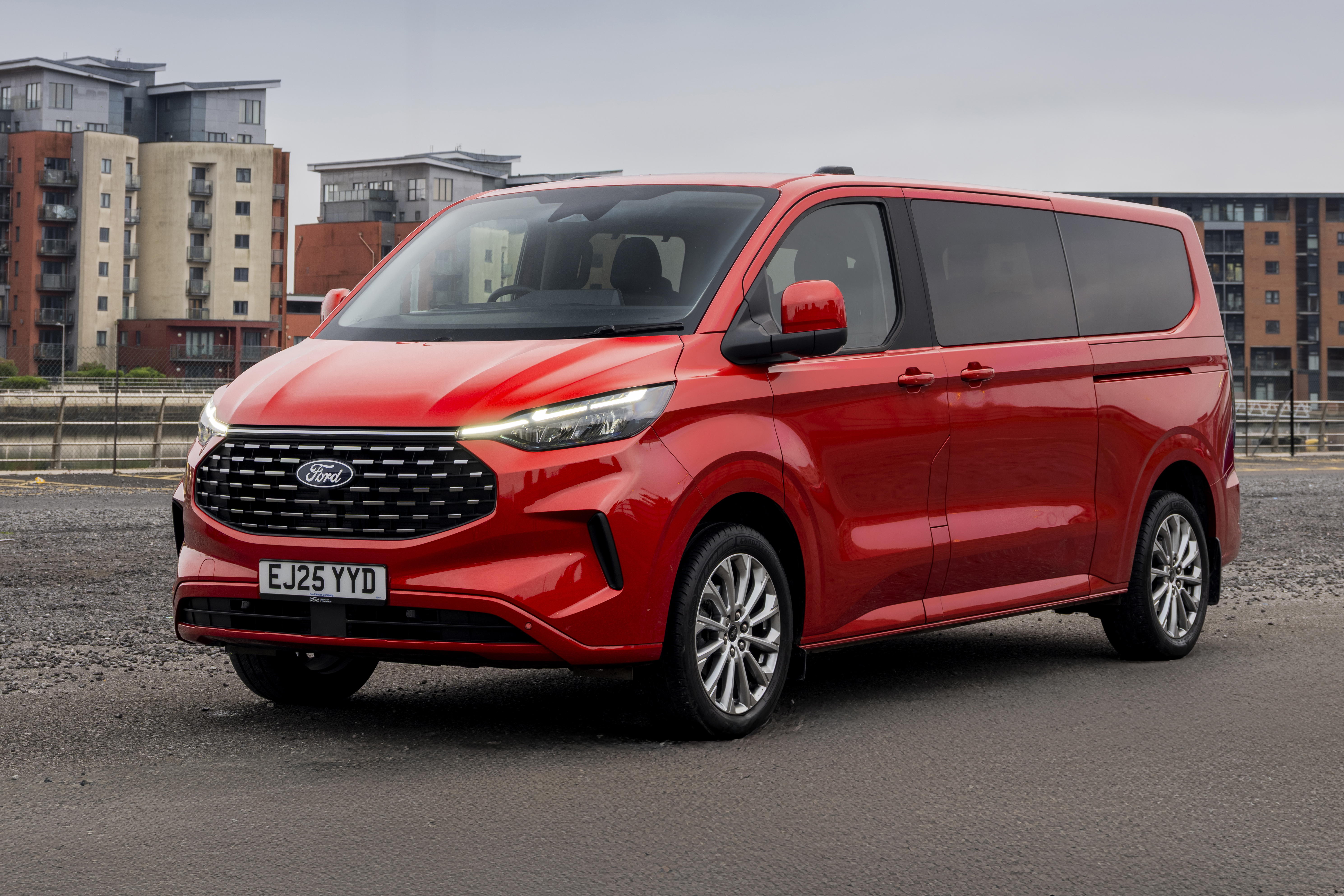
Although the previous generation of this van-derived MPV was very good, the latest Ford Tourneo Custom feels like its maker took on board every criticism aimed at its predecessor and quietly fixed most of them. It remains one of the best-driving vehicles of this type, which is a strange thing to say about something the size of a small bungalow, yes, but Ford has made it feel remarkably manageable on narrow roads and surprisingly composed on motorways. When empty, a lot of van-based passenger cars bounce around on the motorway like they’re in Snoop Dogg’s moshpit.
The latest model is available with diesel, plug-in hybrid and fully electric power. Most people will gravitate towards the diesels, which combine strong performance with economy approaching 40mpg. But the plug-in hybrid offers up to 32 miles of claimed electric driving range, making it a really cost-effective left-field company car. If you can make it work around your life, the all-electric Ford Ford E-Tourneo Custom is the best one – quiet, quick, refined with up to 210 miles of official range from a single charge.
A 13.0-inch multimedia touchscreen dominates the dashboard, while the seating flexibility remains exceptional. Depending on specification, you can carry up to nine people and the conference-style seating arrangement makes it feel properly special, with second-row seats which can be rotated to face the third row, creating a mobile meeting room… Or a highly effective way for siblings to kick each other.
It's not as plush as the Mercedes-Benz V-Class, but it's considerably more affordable. A starting price of just under £60,500 means the Ford Tourneo Custom starts at a whopping £18,000 less than the big Mercedes.
Find a used Ford Tourneo Custom
3. Mercedes-Benz V-Class
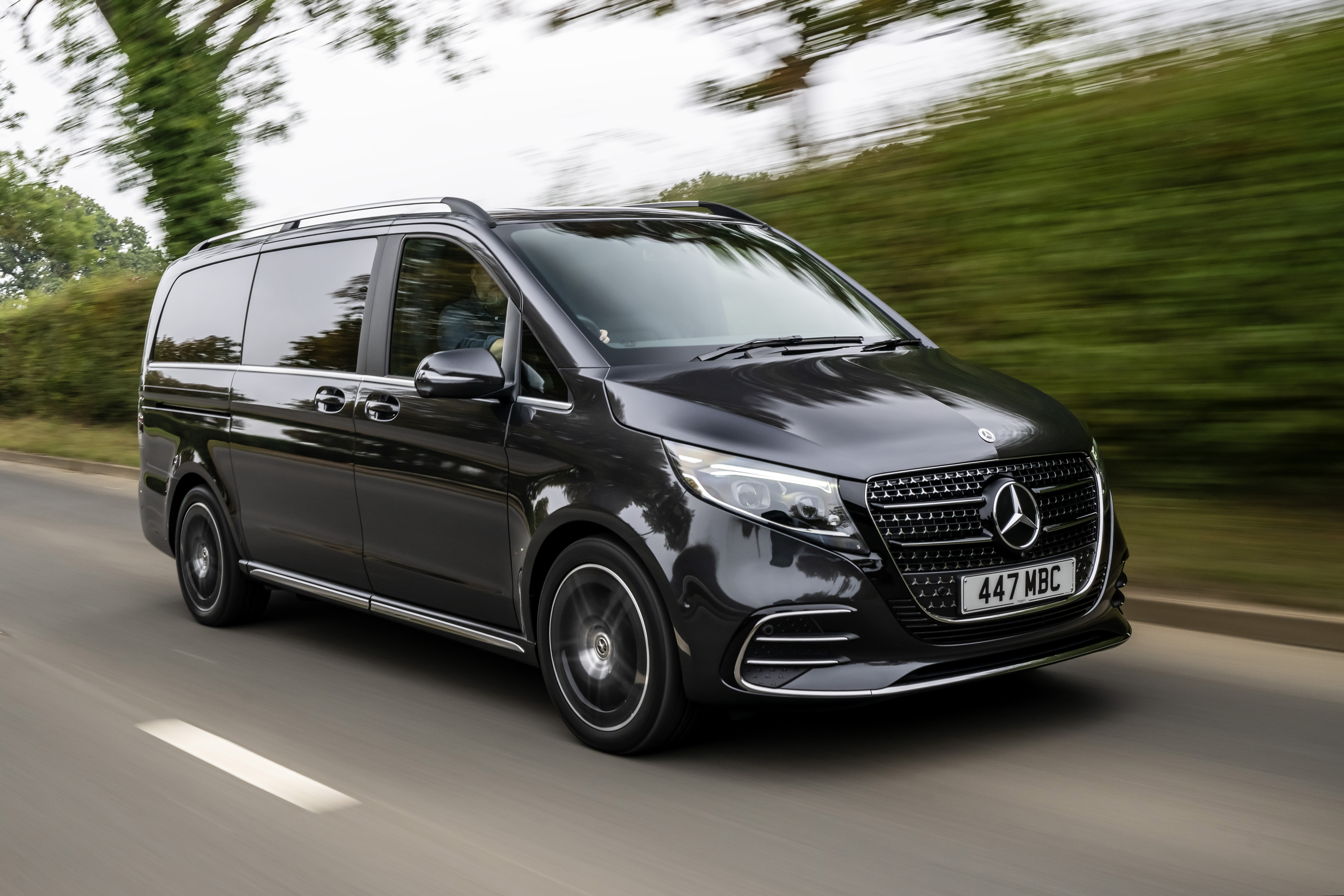
For a company which has spent years perfecting the art of making large cars feel sublime, that expertise is very obvious inside the Mercedes-Benz V-Class. While it’s no Mercedes S-Class, the interior materials are excellent, the design feels modern and the overall sense of quality is leagues ahead of the average van.
Most versions seat seven people, although an eight-seater version is available. Either way, rear passengers enjoy acres of space while heated leather seats, interior ambient lighting and multi-zone climate control are standard across the range. Power comes from a 2.0-litre diesel engine in two states of tune – for us, the more powerful Mercedes V300d is the one to choose thanks to its combination of effortless performance with fuel economy approaching 40mpg. It also sounds considerably less like a tractor than many van-derived diesels.
Technology and equipment aside, the Mercedes V-Class's real party trick is good old basic refinement. At motorway speeds it feels astonishingly quiet and smooth for something with the aerodynamic properties of a garden shed. You pay for all this, though: it’s very easy to specify a new one up to a £100,000-plus sticker price. Actual Mercedes S-Class money, in other words.
Find a used Mercedes-Benz V-Class
4. Volkswagen ID. Buzz
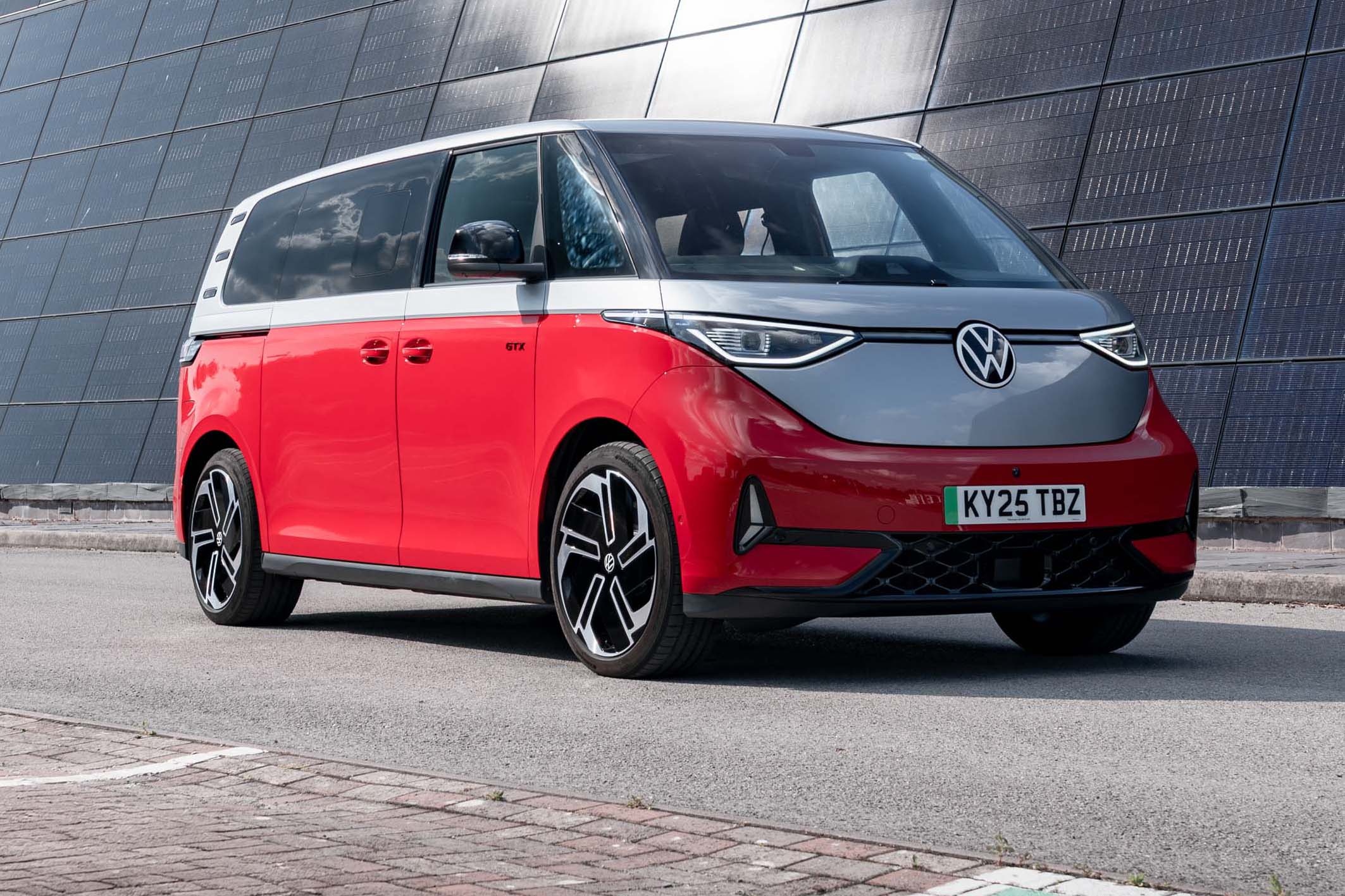
A masterclass in nostalgia marketing, thankfully the Volkswagen ID. Buzz backs it up by being a brilliant family car. Inspired by Volkswagen's iconic Microbus models, the ID. Buzz has something that most modern vehicles fail to achieve – it has character. And four years after its release, familiarity hasn’t made it boring.
Recent updates mean battery sizes and range have improved significantly, with some versions now boasting claimed driving ranges of 293 miles between charges. Rapid charging speeds of up to 185kW mean long journeys are as convenient as almost any modern EV you care to mention.
Inside, there's loads of room and a wonderfully airy atmosphere thanks to the vast windows. The addition of the seven-seat version finally addresses one of the biggest criticisms levelled at earlier models. Its multimedia touchscreen isn’t the best – the menus are clunky – and its £60k starting price isn’t cheap, but the Volkswagen ID. BUzz isn’t just a good van-based family car, it’s a great family car full stop.
Find a used Volkswagen ID. Buzz
5. Toyota Proace Verso Electric
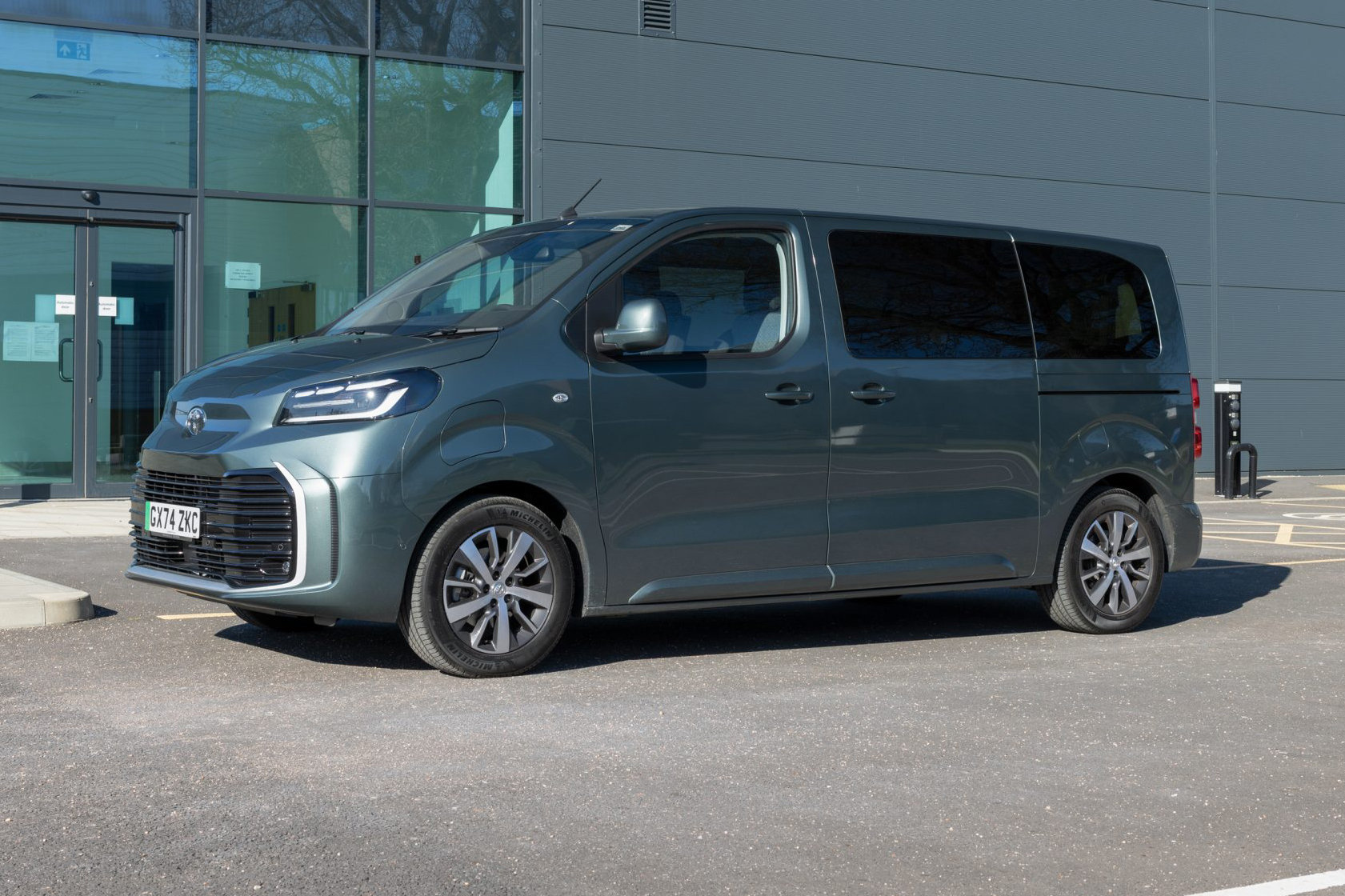
The Toyota Proace Verso Electric isn’t really a Toyota at all. It’s a van-based MPV built by Stellantis – that's the group behind a whole host of other brands, which means you can buy near-identical versions of this Toyota as the Citroen e-SpaceTourer, Peugeot E-Traveller and the Vauxhall Vivaro Life Electric. When you buy the Proace Verso Electric, you get something the others don't have – a five-year warranty which can be extended to 10 years if you have the servicing work carried out at a Toyota dealer.
Like the other Stellantis models, the Proace Verso Verso is available with up to nine seats and enough interior flexibility to satisfy most family requirements. The ride is comfortable, visibility is excellent and the sliding rear side doors make life considerably easier in tight car parks.
New electric versions offer around 200 miles of real-world range from the 75kWh battery pack, but browse the used market and you'll find a healthy selection of older diesel-powered alternatives capable of returning more than 40mpg. The highest-specification versions feel surprisingly luxurious too, with leather upholstery, heated seats and rear tables available.
It's not the most exciting choice here, but the Toyota Proace Verso Electric’s arguably the most sensible.
Find a used Toyota Proace Verso Electric
6. Citroen SpaceTourer
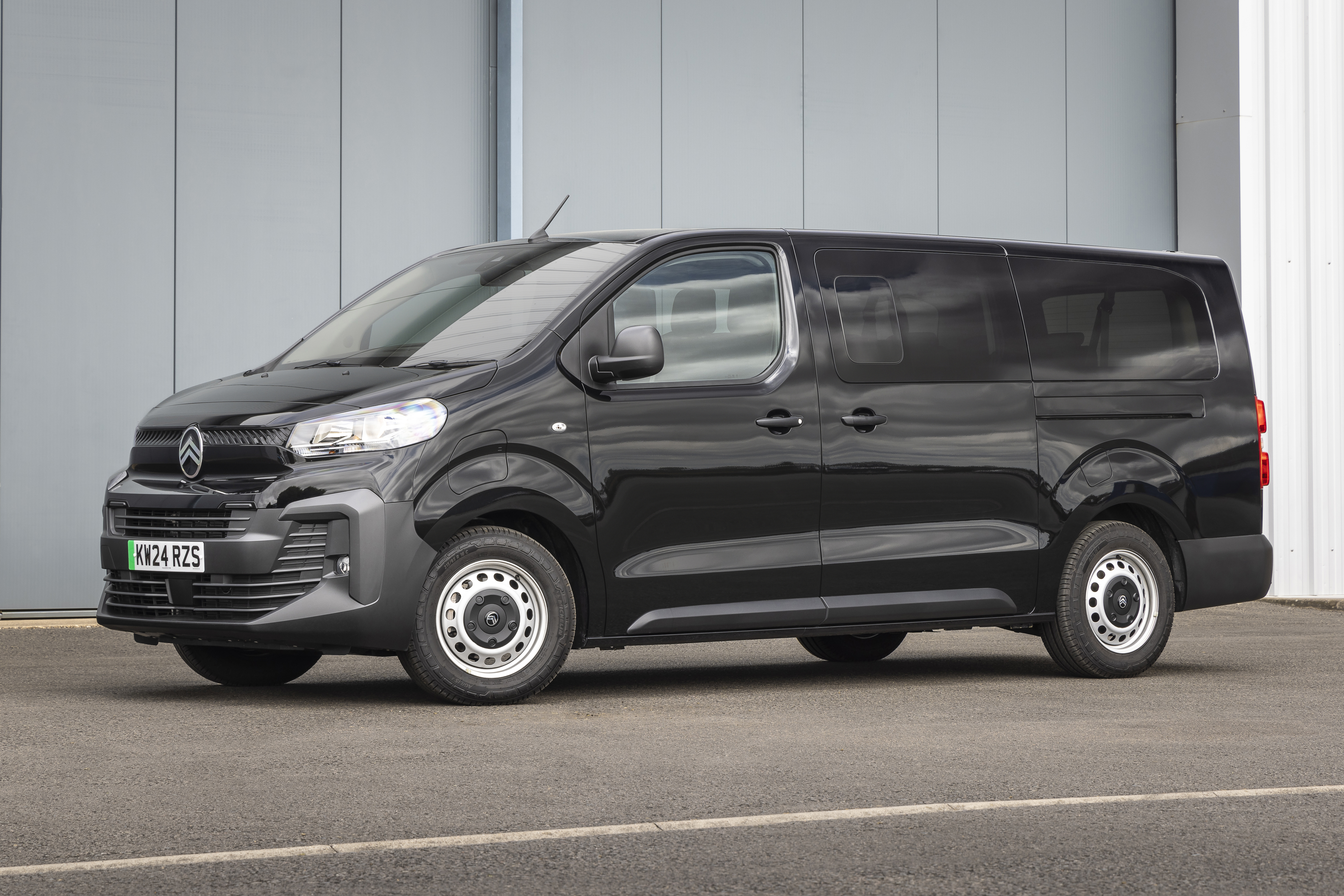
We could have picked any of the other Stellantis options here, but we’ve gone with the Citroen SpaceTourer. It’s available in two easily distinguishable body lengths – M and XL – both of which can be had in two levels of specification, with each combination also available with either diesel or fully electric power. Choose your favourite badge though, to be honest – as the Peugeot and Vauxhall alternatives are essentially identical.
The SpaceTourer can carry anything up to nine people depending on specification and does so comfortably. The driving experience is refreshingly easy, with light steering, excellent visibility and it never feels intimidating despite its size – those XL models are 5333mm long. If you're moving up from a conventional family car, the adjustment period is surprisingly short.
Electric Citroen e-SpaceTourer models use a 75kWh battery, offering an official driving ranges of 215 miles, but in the real world you'll be doing very well to get above 180 miles. If you really can’t do electric, the 180PS diesel is relatively frugal, making it a cost-effective to run family car of the vast variety.
Find a used Citroen SpaceTourer
7. Lexus LM
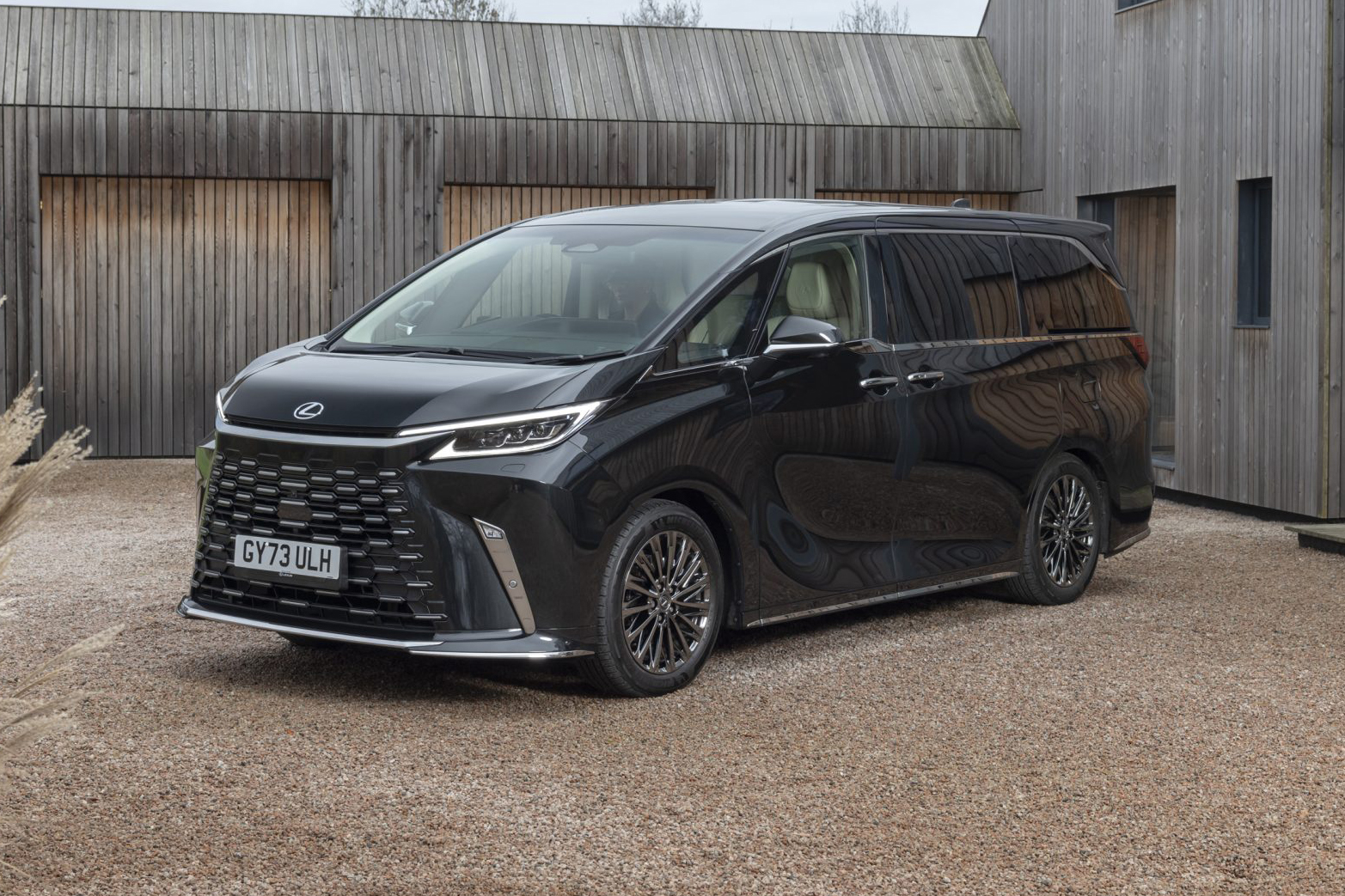
The Lexus LM makes absolutely no sense until you sit in it. In the best possible way it feels like someone took their van to MTV and said 'hey Xzibit, pimp my ride like a Hotel Du Vin.' The result is one of the best and most interesting luxury cars on the market – albeit one with nowhere near the practicality that a car this massive should have. Then again, for all it's van-shaped, there's no van sold which shares its bodywork.
Most buyers will choose the flagship four-seater version, which replaces the the second- and third-row seats with two airline-style reclining armchairs, separated by a centre console big enough to play chess on. Ahead sits a gigantic 48-inch screen, separating the driver from the VIPs behind. The Lexus's other features include massage seats, climate control, ambient lighting, refrigerated storage and acres of leather. Actual leather too, not the vegan-friendly 'pleather' that most cars have nowadays.
Power comes from a 2.5-litre self-charging hybrid producing 250PS and while it’s not quick, the Lexus LM350h is whisper-quiet, incredibly comfortable and rides with the sort of composure you'd expect from a luxurious SUV. In fact, it was actively engineered around rear-seat comfort rather than driving dynamics, with its suspension, body structure and even noise insulation all designed with the people in the back as the priority. It’s basically a £100,000 limo masquerading as a van. Awesome.
Find a used Lexus LM
Quite simply, it's an MPV – or multi purpose vehicle – that is based on a van design. It means that the side panels and rear have windows, seats are fitted and the inside has a car-like feel to it. Many are rather luxurious and are used for executive transport. They're a favourite in TV programmes, such as The Apprentice.
In the UK, the largest MPV is the Mercedes-Benz V-Class, based on the Mercedes-Benz Vito van. Previously there was the Chrysler Grand Voyager and Renault Espace, but these are no longer sold as most people prefer SUVs.
The Volkswagen Caravelle is the best all-round large MPV currently on sale. Its car-based underpinnings make it more refined and easier to drive than most rivals, while the flexible interior provides enormous practicality for large families.
The Ford Tourneo Custom, Toyota Proace Verso, Citroen SpaceTourer, Peugeot Traveller and Vauxhall Vivaro Life can all be configured with nine seats. The Ford is arguably the most rounded choice thanks to its excellent driving manners and modern interior.
It depends how you use it. Electric models are ideal for local journeys, school runs and airport transfers with predictable mileage. However, if you're regularly covering hundreds of motorway miles with seven or eight passengers on board, a diesel still makes a lot of sense thanks to its range and rapid refuelling times.