Citroen Berlingo Van Review

Written By Ivan Aistrop
- 2018
- Van
- Diesel, Electric
What we love
Good figures for load volume and payload
Some handy practicality touches
Reasonably comfortable and easy to drive
Things to consider
e-Berlingo has a rather limited range
Early on, the basic version was a bit too basic
Rivals are better rounded
The DRIVE take on the Citroen Berlingo Van, is it the right car for you?
The Citroen Berlingo stands out among compact vans because it posts impressive figures for payload and loadspace, being better on both of those things than most non-Stellantis rivals. Then again, those in-house rivals are just as good in those regards - they are mechanically identical after all - so you’ll probably choose between them based on which one you like the look of, or more likely, which one you can get the best deal on.
The Citroen Berlingo Van in more detail
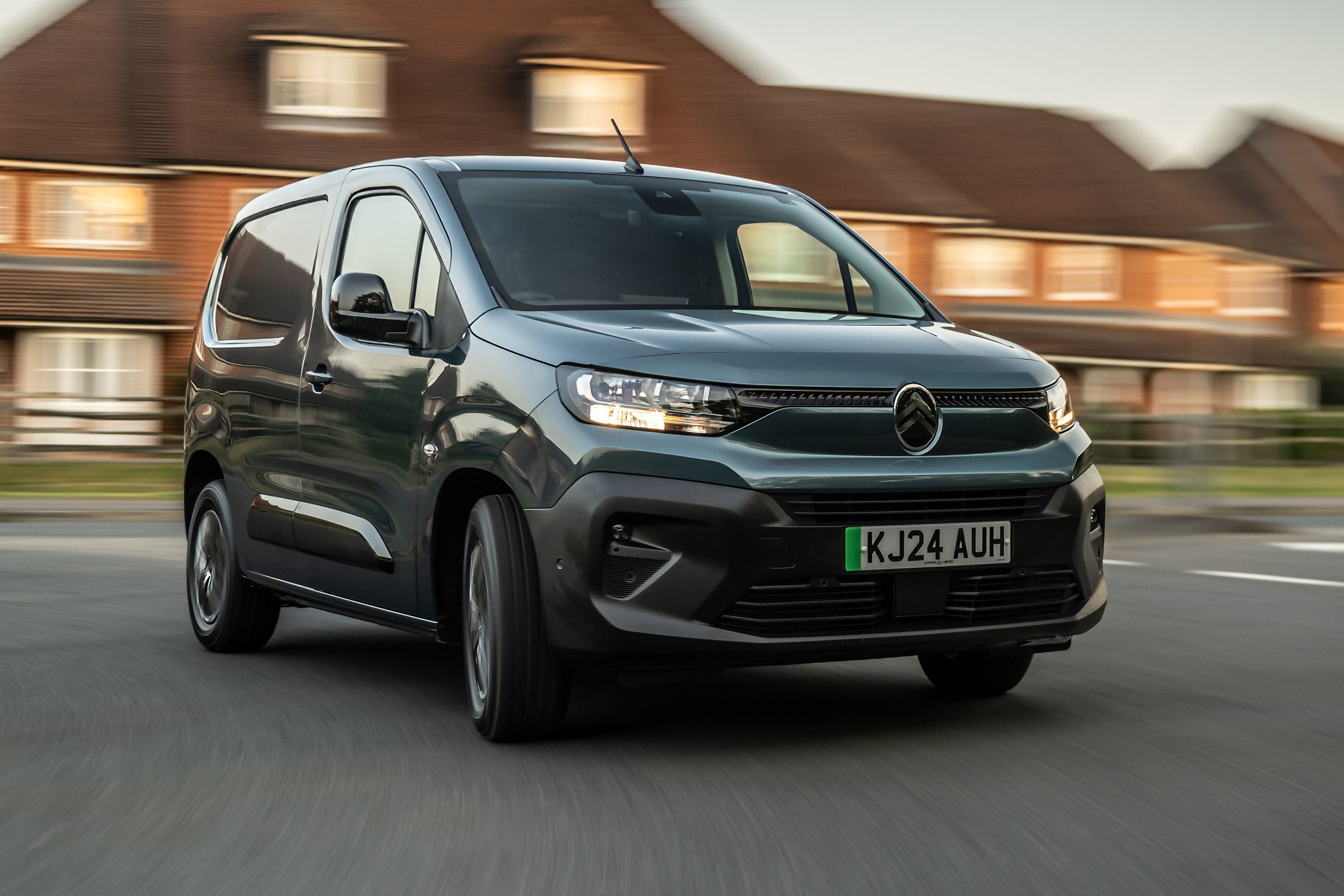
The Citroen Berlingo is a very recognisable name to those familiar with commercial vehicles. That name has been around since 1996, and these days, the Berlingo is now in its third incarnation, released in 2018.
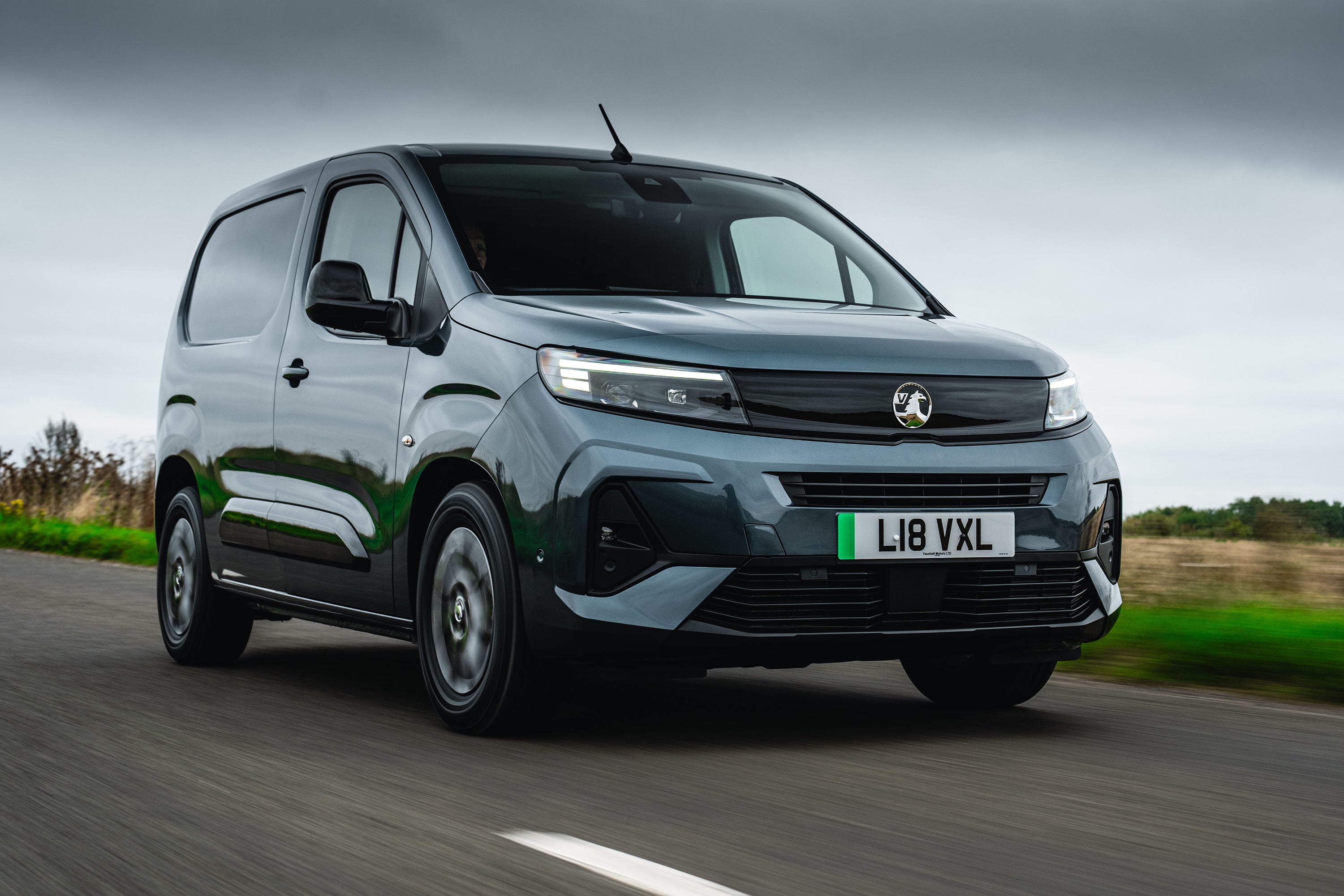
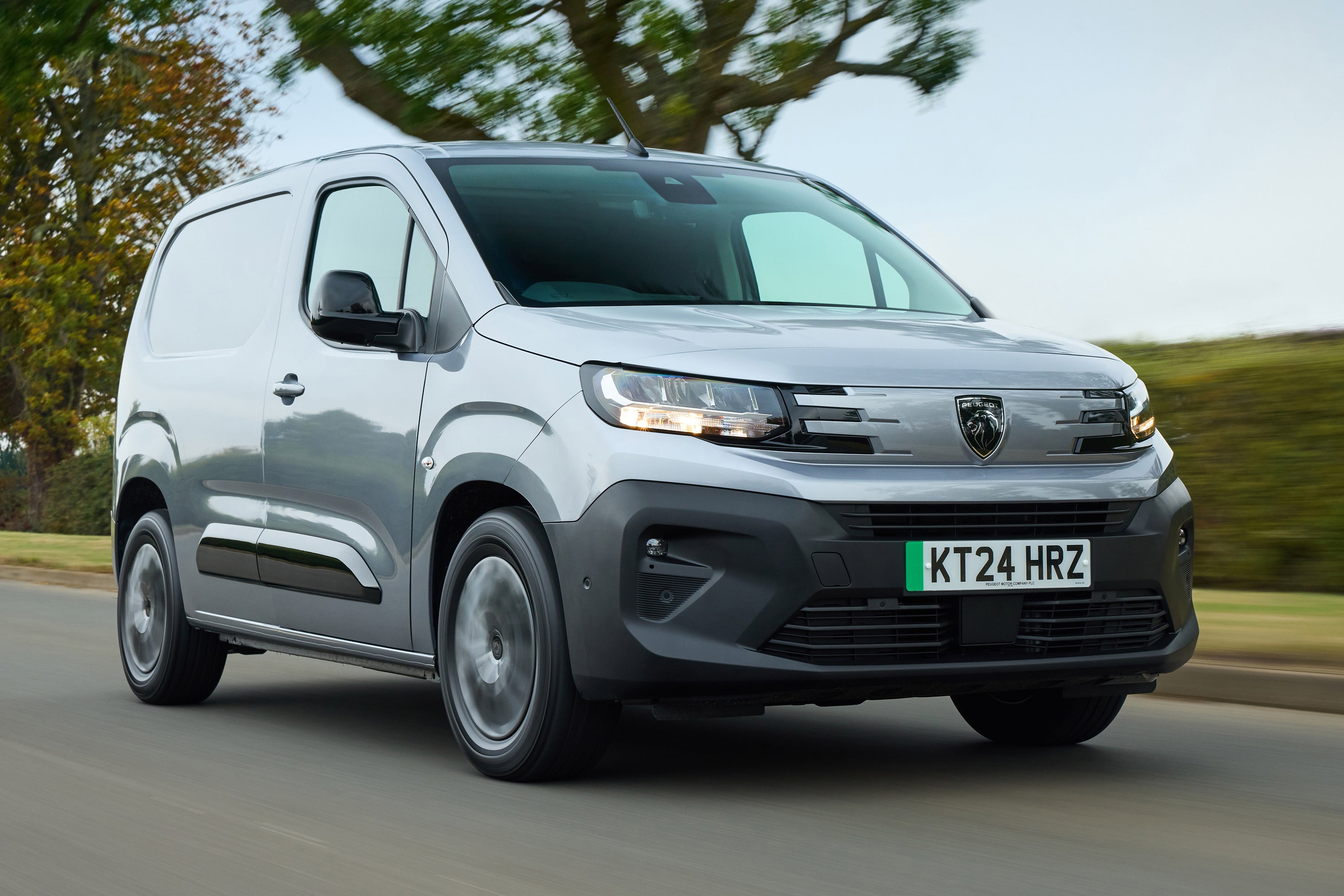
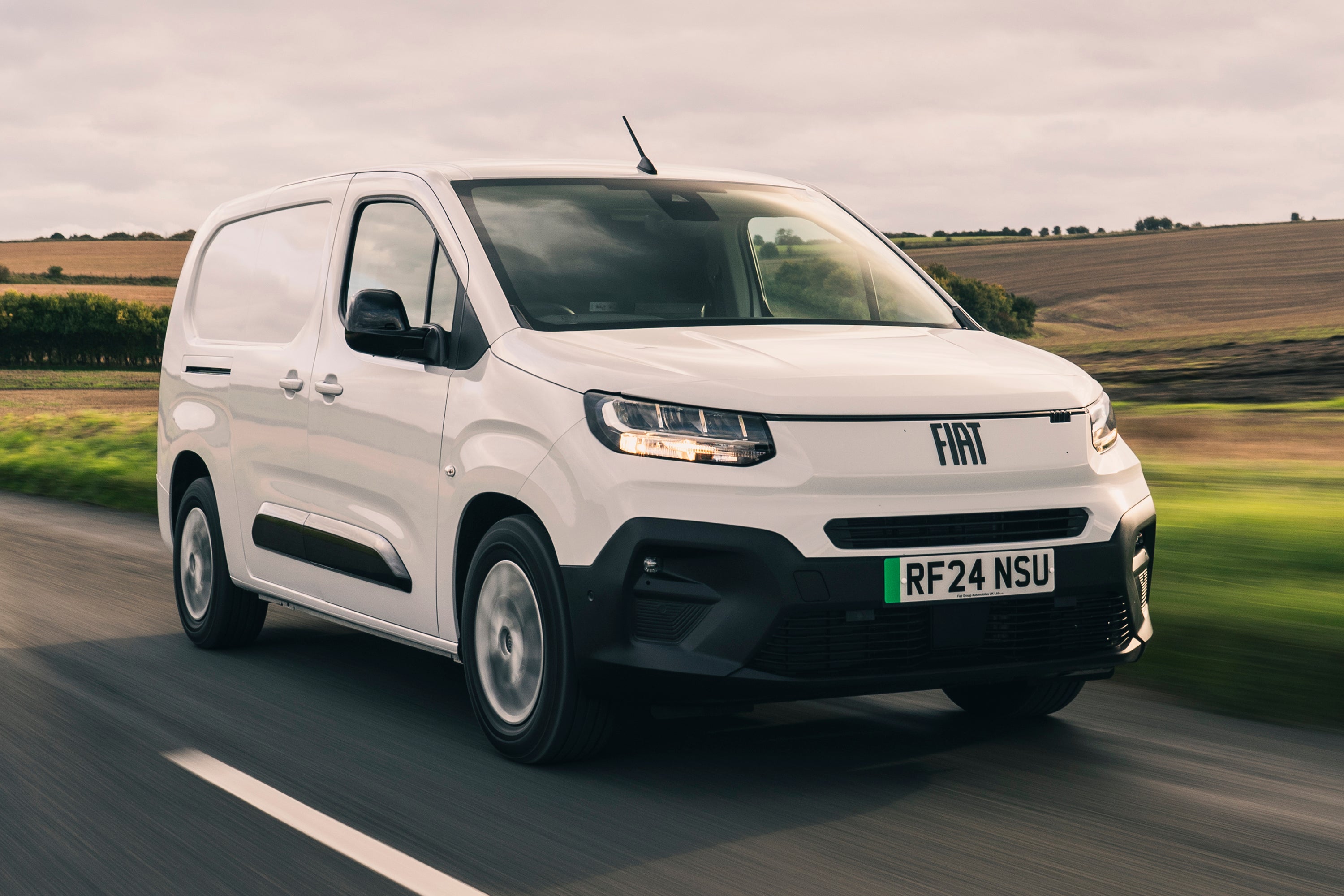
Like it always has, the present-day Berlingo shares its bits and bobs - including its platform, parts and technology - with the Peugeot Partner van. These days, however, those bits and bobs are shared between more models than ever. You see, for several decades, both Peugeot and Citroen had been proud members of French car manufacturing company Groupe PSA, and they’d also been joined in the group in recent years by Vauxhall. Since then, however, PSA has merged with FCA - the company that previously owned Fiat, Jeep and Alfa Romeo, among others - to form an automotive manufacturing powerhouse named Stellantis. And as such, the underpinnings for the Berlingo and Partner now also form the basis for other small van offerings within the wider group, those being the Vauxhall Combo and Fiat Doblo.
To be honest, very little separates the four models. They’re pretty much identical in terms of their basic dimensions and their mechanicals, and the only real differences are minor cosmetic ones, plus small variations in prices and specs. The good news, though, is that all of them are among the most practical small vans, with good figures for payload and load capacity.
You get plenty of choice over your powertrain, too. There used to be a sole petrol engine available, but that's now no more, but you can still choose between a pair of diesels, with either 100PS and a manual gearbox, or 130PS and an automatic. If your business is conducted solely within the city limits, however, you might also want to consider the all-electric e-Berlingo version.
In most areas, the Berlingo is probably exactly what you’d expect. It’s easy and fairly comfortable to drive, it’s rather basic but sturdily built inside, and there are a couple of trim levels available that offer varying amounts of creature comforts, depending on your budget. Running costs are competitive, and so are purchase prices. In most areas, the Berlingo doesn’t really stand out hugely, but it’s still competitive within its class as an overall package.
What's the best Citroen Berlingo Van trim and battery option?
We never got the chance to try the now-defunct petrol Berlingo yet, so we don’t know if that version was ever worth bothering with. We can tell you, though, that if you’re looking for a diesel van, then the lower-powered 100PS version will probably suffice. It has enough pace and good fuel economy. You might have to be prepared to change gear a lot to maintain your progress, though, so if that sounds like a pain, you might want to go for the brawnier diesel with the automatic gearbox. Alternatively, you could go for the all-electric e-Berlingo version. This is a pleasant enough thing to drive and to live with, and warrants recommendation provided that your business suits an electric van. However, the limited range might rule it out for some users, and the payload figures aren’t as high as with the diesel versions.
What’s the price of the Citroen Berlingo Van?
If you’re buying a brand new Berlingo van, then prices start at around £25,000 for the entry-level diesel version. From there, you'll be paying around £1,000 extra if you want to upgrade from the standard M bodystyle to the larger XL version, around the same again if you want to upgrade from Enterprise-Plus trim to Driver trim, and around £2,500 to upgrade from the weaker 100PS engine ti the brawnier 130PS engine with the automatic gearbox.
If you’re considering the all-electric e-Berlingo, meanwhile, then prices range from around £28,000 to £31,000. However, you can bring that down by around £2,500 if you qualify for the Plug in Van Grant (PiVG) offered by the Government’s Office for Zero-Emission Vehicles (OZEV).
Whether you choose diesel or electric, i you want the Crew Van version, that costs around £1,200 more than its panel-van equivalent.
Alternatives to the Citroen Berlingo Van
If you’re looking for vehicles that are similar to the Berlingo, there are a handful of them that are extremely similar indeed. Almost identical, in fact. That’s because Citroen is part of the vast stable of automotive brands that is Stellantis, brands that share parts and tech, as well as manufacturing and development costs, and so the Berlingo is mechanically identical to the group’s other compact van offerings such as the Peugeot Partner, Vauxhall Combo and Fiat Doblo. Even Toyota offers a version in the form of the Proace City van, and that company isn’t even part of Stellantis. These vehicles only really differ in terms of their styling, plus a few pricing and spec differences.
Other compact van offerings that aren’t related to those of the Stellantis stable include the Volkswagen Caddy Cargo, the Ford Transit Courier and Transit Connect, the Mercedes-Benz Citan and the Nissan Townstar.
What's the interior like in the Citroen Berlingo Van?
Importantly, the Berlingo does well in the practicality stakes, with good figures for cargo capacity and payload. The interior can feel a little basic, but that's good for usability and durability.
Citroen Berlingo Van boot space and practicality
The Citroen Berlingo is available in two lengths, the standard M version being around 4.4 metres long, while the XL version is 350mm longer. You’ll find that 190mm of this extra space sits in the wheelbase, while the rest lives in the rear overhang.
The width of the load bay is identical in both versions, standing at 1,229mm between wheel arches. The height of the M’s load bay is 1,200mm, and the XL’s is 1,270mm in height. The load bay length, meanwhile, is 1,817mm in the M and 2,167mm in XL. All told, those dimensions allow both versions to carry two Euro Pallets.
If you’re looking to maximise your official load capacity figure, then you’ll want an example with the clever load-through bulkhead: the passenger seat in the front folds forward and down, and a sizeable hatch can be opened up between the loadbay and the seating compartment. Immediately after the 2024, this came as standard on the higher-spec Driver model and was optional on the entry-level Enterprise version, but these days, it's standard across the board. It’s not available at all on the Crew Van version. It extends your maximum load length to 3,090mm in the M and 3,440mm in the XL, and that also increases your maximum load volume by quite a bit: from 3.3 cubic metres to 3.8 cubic metres in the M, and from 3.9 cubic metres to 4.4 cubic metres in the XL.
Immediately after the facelift mentioned, regular single-cab Berlingo models had two front seats in Enterprise form, while Driver models got an additional third ‘jump seat’ in the middle (the cabin is just about wide enough for three people to squeeze in, but be prepared to rub shoulders with your workmates). This feature was later made standard on the Enterprise-Plus, too. A Crew Cab version of the XL is also offered, with two seats up front and a further three-seat rear bench behind.
Of course, the extra seats in the Crew Cab come at the expense of some load space. The width between the wheel arches is the same, while the height of the load area stands at 1,243mm. However, with the rear seats in place, the load length amounts to just 1,450mm, while the load volume stands at just 1.8 cubic metres. When they’re not needed, however, the rear seats can be folded down, increasing your figures to 2,000mm and 3.5 cubic metres, respectively.
In terms of those all-important payload figures, early Berlingos were better than newer ones, with some versions achieving official figures of more than 1,000kg. These days, most diesel-engined versions get reasonably close to that mark, although none quite hit it, and all but one have a figure of more than 925kg. The exception is the Crew Van, which can only haul 840kg.
The all-electric e-Doblo can't haul quite as much. The official figures stand at 759kg on the M, and 691kg on the XL. The e-Doblo Crew Van’s figure stands at 642kg
Most Berlingos have a Gross Vehicle Weight (GVW) of around 2.4 tonnes, give or take a handful of kilos.
All Berlingos have twin doors on the back end that can open to 180 degrees if you unhook the stoppers on the hinges for easier access. The M also has a sliding door on the left side of the van, while the XL adds another sliding door on the other side.
The Crew Van gets a hard-wearing plastic covering on the load floor, while the load bay is bare metal in the others. A wooden floor covering is available as an option. However, no version of the Doblo gets illumination in the load area, unless you pay extra for an option pack. We reckon that’s a bit mean.
All versions of the Berlingo come with lots of adjustment for the driving position: the seat has height adjustment with plenty of travel, and the steering wheel moves both up and down and in and in and out. This makes it easy to get comfy during your working day.
You get a clear view out at the front of the vehicle, but due to the bulkhead behind you, you obviously don’t get much in the way of rear visibility, except for what you can see in your door mirrors, and those are a bit on the small side. Luckily, rear parking sensors are standard on even basic versions, while Driver models come with a digital rearview mirror that displays a live feed from a rear-facing camera, along with reversing cameras at the back and sides of the vehicle. That digital rearview gadget is useful, but it takes some getting used to because it makes your depth perception feel like it’s all out of whack.
Those more used to modern passenger cars - rather than commercial vehicles - might feel like the Berlingo’s cabin is a little too simple: the touchscreen infotainment system only has a basic level of functionality. That means lot of functions are controlled by buttons and switches on the dashboard. While that doesn’t feel very cutting-edge, it’s actually much better for usability, and in our view, safety as well. That’s because physical switches are much easier and less distracting to use on the move than a touchscreen. What’s more, all the controls are clearly marked, so it’s immediately clear what everything does.
Citroen Berlingo Van dimensions
If you make do with the standard-length M version of the Berlingo, then your van will measure 4,403mm in length, 1,848mm wide (excluding door mirrors or 2,107mm with them) and 1,860mm tall.
If you opt for the larger XL version, meanwhile, then your Berlingo will measure 4,753mm long, but will be identical to the M in width and height.
Tech and infotainment in the Citroen Berlingo Van
Not all that long ago, the entry-level Enterprise trim of the Citroen Berlingo got something called a Smartphone Station as standard. This was essentially a mounting cradle for your smartphone on the dashboard, with a USB port and Bluetooth connecting it to the two speakers. You also got audio controls on the steering wheel.
The Driver version, meanwhile, got a 10.0-inch touchscreen with navigation, DAB, two extra tweeter speakers, and Apple CarPlay/Android Auto smartphone mirroring. It’s certainly not the most sophisticated system you’ll ever encounter, but its simplicity makes it easier to navigate than many such systems. There are a couple of strangely designed menus and some ambiguously designed on-screen icons, but you get used to it all with familiarity.
Driver versions also had a 10-inch digital instrument screen behind the steering wheel in place of the basic version’s traditional instrument dials. It looks good, and it has a variety of different layouts to choose from, but most of them present most of the same information, just in slightly different ways.
Later on, the entry-level Enterprise-Plus was upgraded to also have 10.0-inch touchscreen, albeit without native navigation, but it had most of the other functionality, smartphone compatibility included, importantly.
Materials available on the Citroen Berlingo Van
You wouldn’t expect a commercial vehicle like the Berlingo to be the last word in sophistication or tactility, and so it proves with the Berlingo. Most of the surfaces you’re faced with are made out of grey plastic with a hard, grainy finish, so there isn’t a great deal for your eyes and your fingertips to enjoy, but it does mean that the Berlingo’s interior will be very hard-wearing and stand up well to hard daily use. And in a working vehicle like this, that has to be the priority. Yes, some rival vans do feel a bit posher, but the Berlingo’s interior quality is totally acceptable.
What's the Citroen Berlingo Van like to drive?
The Citroen Berlingo does well on the road. The ride is fairly comfortable for a van, keeping your working days tolerable, and the handling feels secure. The diesel and electric powertrains are entirely adequate, too.
Citroen Berlingo Van range and performance
Two diesel options are available in the Berlingo, both 1.5-litre units with either 100PS and a six-speed manual gearbox, or with 130PS and an eight-speed automatic transmission.
The former is easily quick enough to get you around with a reasonable amount of purpose - with a vehicle that’s so dynamically basic, you probably wouldn’t want to go much faster, to be honest - but maintaining your pace can be more problematic. Let the revs drop below 2,000rpm, and the engine loses pretty much all of the limited gumption it had with more revs on the dial, so if you get caught behind slower-moving traffic or come up against a steepish incline, then you’ll need to make a downshift or two (or maybe three) to get back up to speed again, and even then, it’ll take a while. And that’s with an empty load bay: put a few hundred kilos on board, and you’ll be chopping around on the gearbox like Carl Douglas at the discotheque (ask your parents).
The 130PS version with the automatic gearbox is considerably more relaxed in everyday use. It’s not a whole lot faster, because it ultimately doesn’t have a lot more urge than the entry-level engine, and it still has that same low-rev flatness to its character. However, the automatic gearbox will never let the revs drop below that 2,000rpm threshold when you’re on the move, eliminating that flatness, and although you can hear the gearbox making a vast number of changes to maintain or gain pace, at least you’re not having to do them yourself.
Earlier on in its life, the Berlingo was available with the two diesel options we’ve talked about, along with another developing 75PS, which we never got to try. A petrol option was briefly available, too, a 1.2-litre three-cylinder turbo engine with 110PS, but we never got to try that, either.
If the idea of an electric van appeals, then consider the e-Berlingo. It has a 136PS motor driving the front wheels, but you only get full power when you select the Power driving mode: select Normal or Eco, and you’ll get progressively less power. And sure enough, there’s an appreciable difference between the modes. Eco mode delivers enough oomph to cope around town and with lower-speed work, but once the traffic around you is moving at around 50mph or thereabouts, or you need more zip to exploit gaps in traffic, then you’ll need to swap to one of the other modes.
Normal mode will be enough for most drivers in most situations. Your level of performance still feels decidedly leisurely, but it’s enough to get you around without feeling like you’re getting in anyone’s way. Having said that, the Power mode’s extra punch does come in handy when pulling away at busy junctions or joining motorways.
You can alter the strength of the vehicle’s regenerative braking (this harvests energy that would otherwise be lost during deceleration, and feeds it back to the battery) in three stages using paddles behind the steering wheel. The lightest mode allows you to almost coast along, while the heaviest mode is almost strong enough to qualify as a one-pedal driving mode, although the car won’t come to a complete halt without the intervention of the friction brakes. All are easy to get used to.
If you buy an e-Berlingo built after the 2024 facelift, then you’ll get the e-Berlingo with the greatest official range figure. The WLTP regime puts the average range figure at 213 miles, and that’s 38 miles better than with earlier examples of the e-Berlingo.
Don’t bank on getting that in the real world, though. Even in optimum conditions, you’ll be doing well to achieve 180 miles, and cold temperatures and motorway stints will see your achievable average drop very quickly.
Performance data
| Model | Engine/battery size | Power | 0-62mph | Range/MPG |
|---|---|---|---|---|
1.5 diesel manual 100 | 1.5 diesel | 100PS | TBC | Up to 54mpg |
1.5 diesel automatic 130 | 1.5 diesel | 100PS | TBC | Up to 51mpg |
e-Berlingo | Electric 52kWh | 136PS | 11.7 seconds | 213 miles |
Citroen Berlingo Van driving and refinement
The dynamic quality you want above all others from your van is comfort: after all, if you’re spending hours of your working day traipsing between jobs, then you’re unlikely to care how well it goes around corners.
And the Berlingo does a thoroughly decent job on that score. Yes, the suspension can feel a little jumpy when the load bay is bare, but that’s the case in pretty much all vans, and once you stick a bit of weight in the back, things quickly settle down. And whether you’re running empty or fully loaded, the Berlingo is never uncomfortable.
And although handling isn’t the priority, the Berlingo does a reasonable job there, too, feeling stable and secure on all types of road. The light steering and tight turning circle are also big pluses when plodding through urban areas.
Yes, we would say that compact van rivals such as the VW Caddy Cargo and Ford Transit Courier are slightly better on both ride and handling if that’s particularly important to you, but it’s also true that the Berlingo will give you very little reason for complaint.
Have a go in the all-electric e-Berlingo version, and as you’d expect, you hardly hear a peep out of the powertrain. That low level of noise does make the wind- and road noise you hear at moderate-to-high speeds a bit more noticeable, but neither is loud enough to be bothersome. You’ll hear the suspension clonking a little over bumps occasionally, plus the odd creak from the bodywork echoing around the load bay. Again, though, this is nothing you wouldn’t expect in a panel van.
The diesel engines are inevitably rather more audible than the electric motor, but most of the time, the noise they make stays distant and muted. The less powerful diesel has to be worked quite hard at times to maintain your pace, whereupon it becomes a little more vocal, but it rarely gets annoyingly loud.
How safe is the Citroen Berlingo Van?
The Berlingo’s list of standard safety equipment includes driver assistance features such as automatic emergency braking, lane keep assist, high beam assist, intelligent speed limit assistance, and driver attention alert. Upgrading to the Driver trim level adds blind spot detection.
Adaptive cruise control with stop-and-go traffic function isn’t provided as standard, but there is an option pack that provides it, along with lane positioning assist. However, it’s only available on electric or automatic versions, and not on the Crew Van.
All Berlingos have driver and passenger airbags, and side airbags in the front, to help protect those inside in a crash. However, those in the back seats of the Crew Van version aren’t protected by any airbags.
The passenger-carrying version of the Berlingo was crash-tested by Euro NCAP in 2018 and earned four out of five stars. You’d expect a similar level of protection from the panel van version.
The Berlingo van has undergone Euro NCAP’s commercial vehicle crash tests and achieved a score of four out of five stars.
Running costs: What it's like to live with a Citroen Berlingo Van
Whether your Berlingo runs on diesel or electricity, your running costs should be relatively affordable.
Citroen Berlingo Van charging times and costs
Citroen states that the e-Berlingo’s battery has a capacity of 52kWh, but in truth, only 50.7kWh of that is usable capacity. That’s not Citroen being naughty, it’s just a case of semantics: all EV batteries keep a few dormant cells in reserve to prolong battery life, and while some manufacturers quote usable capacity, others quote total capacity.
If you’re charging up at home or at work on a 7.4kW wallbox charger, as most owners/operators will, then a full juice-up will take around six-and-three-quarter hours. Assuming that you’re paying the UK’s national average rate for domestic electricity, that charge will cost around £14.
DC rapid charging is supported at up to 100kW, which if you can find a powerful enough charger, can take your battery from 0-80% in just 30 minutes. Do bear in mind, though, that power from such chargers is much, much more expensive: it varies by quite a lot, but three times the price of domestic power is a decent rule of thumb. As a result, we’d only recommend using these chargers in emergencies. Relying on them regularly will get very expensive indeed, and probably won’t be much cheaper - if at all - than running a diesel van.
Citroen Berlingo Van fuel economy
With the latest versions of the Berlingo, the best official fuel economy figure you’ll get from a combustion engine is from the BlueHDi 100: this has a maximum combined figure of 54.4mpg, and a minimum combined figure of 46.0mpg, so expect the average combined figure to sit somewhere in between. The BlueHDi 130 automatic, meanwhile, isn’t too far behind: the maximum combined figure is 51.9mpg, while the minimum is 43.4mpg.
Citroen Berlingo Van warranty and servicing
You get an unlimited-mileage manufacturer warranty for the first two years, while in the third year, you get a retailer warranty limited to 100,000 miles. The battery in electric versions, meanwhile, is covered for eight years or 100,000 miles, and will be replaced or repaired if it falls below 70% of its original capacity during that time.
All versions have service intervals of two years or 25,000 miles, whichever happens first, although the EV also needs an initial inspection at one year, 12,500 miles to make sure that everything is working as it should. Those long intervals will help minimise downtime for your business.
Citroen Berlingo Van insurance groups
There’s not much to pick between the various versions of the Berlingo when it comes to insurance groupings. The cheapest version to insure is the Crew Van variant, which sits in group 28 (out of 50, with 50 the most expensive group). Any other variant with the 100PS diesel engine sits in group 29, while all versions with the more powerful 130PS diesel sit in group 31. The all-electric e-Berlingo models split the difference, all of those variants sitting in group 30.
How much does it cost to tax a Citroen Berlingo Van?
Light goods vehicles (LCVs) are, like passenger cars, taxed at a flat rate, albeit a different one. While car owners pay £200 per year for their now-metaphorical tax disc, van drivers are charged £360 per year. Also note the VED exemption for electric vehicles ended in 2025, so owners of the e-Berlingo are on the hook for the same road tax costs as diesel drivers.
What trims are available with the Citroen Berlingo Van?
When the Berlingo was first launched, it was available in four trim levels: X, Enterprise, Worker and Driver.
The X had a full bulkhead, automatic headlights, Hill Start Assist, Citroen Connect Box with Emergency & Assistance system, and DAB radio with hands-free Bluetooth functionality.
The Worker was designed for building site use and adds an Overload Indicator, Grip Control with Hill Descent Assist, Michelin Latitude Mud & Snow tyres, increased ground clearance (+30mm), and underbody protection.
Enterprise built on the X specification, adding air conditioning, rear parking sensors, an 8.0-inch colour touchscreen, Android Auto, Apple CarPlay and MirrorLink, plus an automatic electronic parking brake, the Extenso modular folding seat, and front fog lights with cornering function.
Driver was based on the Enterprise version and added automatic windscreen wipers, Magic Wash and integrated steering wheel controls. Other features include Citroën Connect Nav, Surround Rear Vision, and a six-way adjustable driver seat that has lumbar adjustment and under-seat storage.
When the Berlingo was facelifted in 2024, the range was slimmed down to just two trim levels: Enterprise and Driver.
Enterprise included manual air conditioning, electrically adjusting and heated door mirrors, electric windows, remote locking, rear parking sensors, cruise control, and automatic headlights. On the outside, you get door handles and bumpers in black plastic, and steel wheels with half hubcaps.
The Driver looked a bit posher, with full-sized wheel trims and body-coloured bumpers and door handles, plus front foglamps and LED headlamps. Also, you got the extra jump seat in the front and the clever folding passenger seat with a load-through hatch in the bulkhead, plus the upgraded infotainment, a digital rearview mirror, rear- and side view cameras, front- and rear parking sensors, an electric parking brake, rain-sensing wipers, an alarm and power folding mirrors.
These days, the trim levels available are Enterprise-Plus and Driver. The equipment provision is broadly similar to before, except that the entry-level trim has more of the important features as standard: that includes the load-through bulkhead with central jump seat, and the 10.0-inch infotainment screen, albeit without native navigation.
Ask the Drive experts: common questions
Is the Citroen Berlingo a car or a van?
Is the Citroen Berlingo any good?
What’s the difference between the Citroen Berlingo, Peugeot Partner, Vauxhall Combo and Fiat Doblo?
Get our latest advice, news and offers
Keep me updated by email with the latest advice, news and offers from Drive.
.jpg)