Nissan Townstar Review

Written By Ivan Aistrop
- 2023
- Panel van, Crew Cab van
- Petrol, EV
What we love
Comfortable ride
Competitive practicality
Generous equipment
Things to consider
EV much more expensive than petrol
Low payload on EV
Bland interior colour scheme
The DRIVE take on the Nissan Townstar, is it the right car for you?
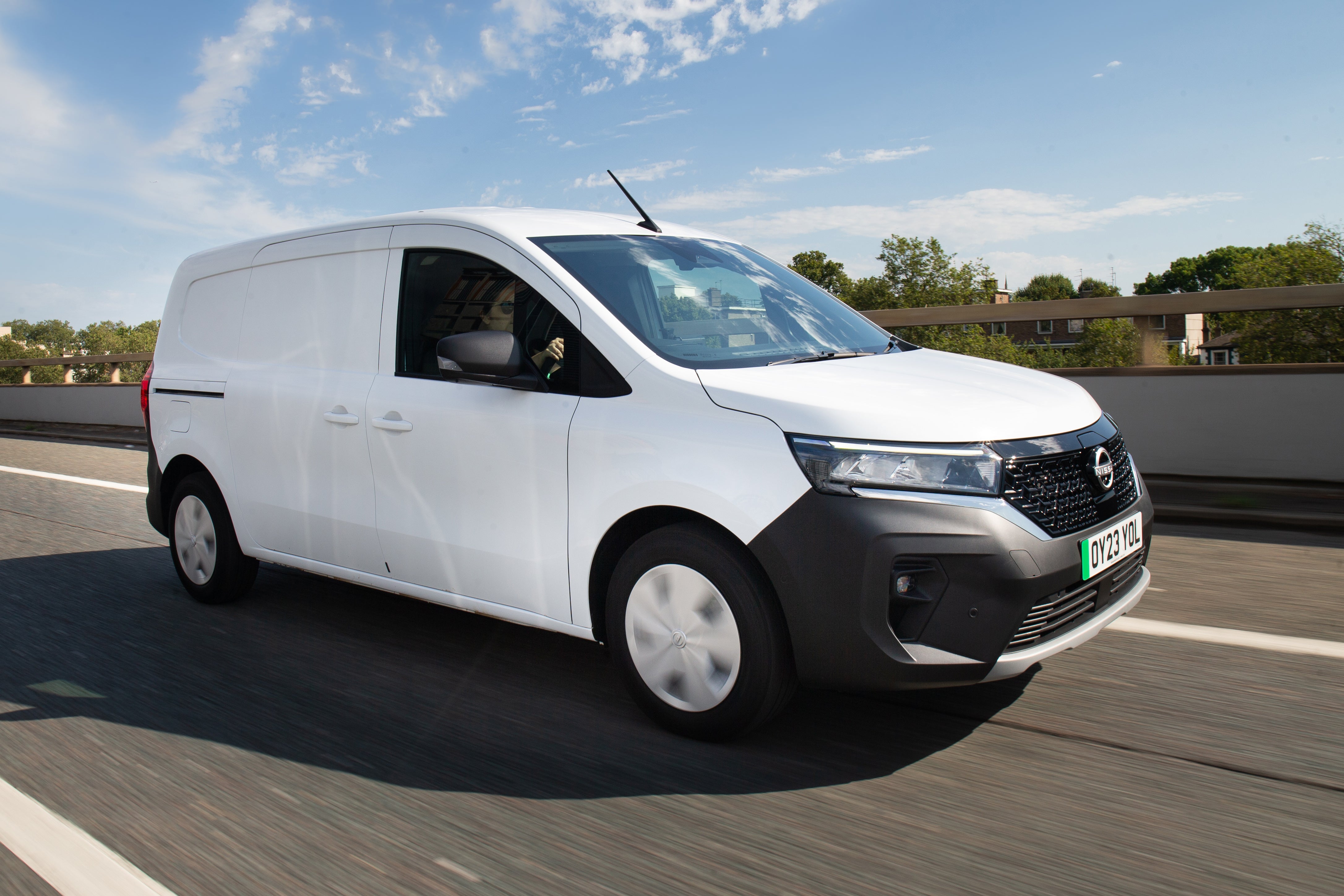
If your business is such that you need the space and versatility of a van but you don’t need the enormous space that a large van affords, then a compact van is a good solution. And of the compact vans on the market currently, we reckon the Nissan Townstar is one of the better ones. It’s especially impressive for ride comfort and equipment, and it’s competitive in all the other important areas, too.
The Nissan Townstar in more detail
The Nissan Townstar maybe isn’t the first name on the lips of many people looking for a compact van for their business, but perhaps it should be. It’s a very good all-rounder, but has a couple of areas of real strength that make it really compelling. Find out what they are in our 2026 Nissan Townstar review.
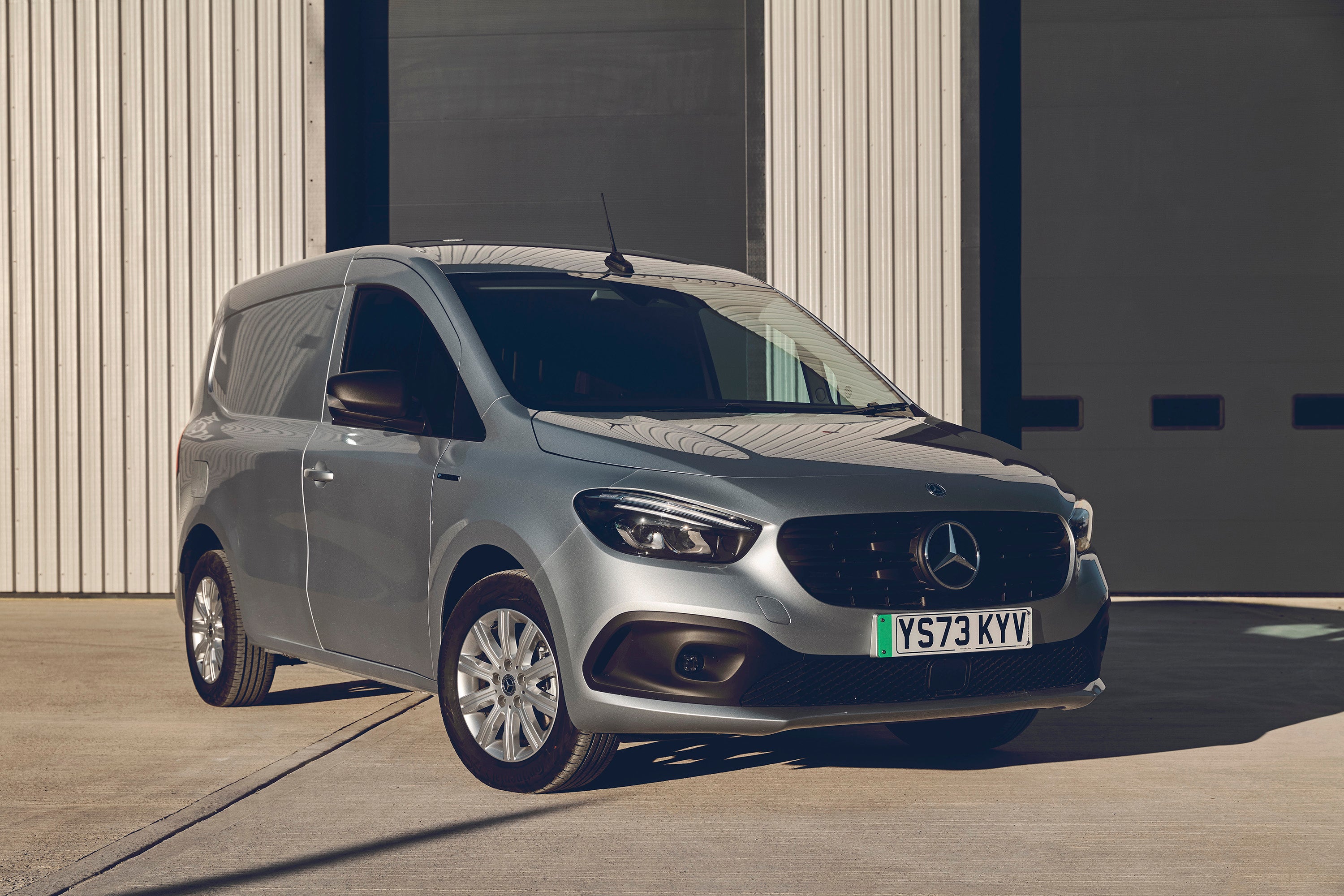
Like with most vans, though, the Nissan Townstar isn’t exactly unique. The process of badge-engineering - where manufacturers team up to share the costs of developing and building a vehicle, resulting in those companies selling mechanically identical vehicles differentiated only by the badges they wear - is common throughout the motor industry, and is especially rife in the commercial vehicle sector. So, just like a Volkswagen Caddy Cargo is mechanically identical to a Ford Transit Connect , and a Citroen Berlingo Van is mechanically identical to a Peugeot Partner (And a Vauxhall Combo. And a Fiat Doblo. And a Toyota Proace City), the Nissan Townstar shares its innards and oily bits with the Renault Kangoo and Mercedes Citan. And what’s more, all of these vehicles could be considered rivals.
So, in such a crowded marketplace, how does the Nissan Townstar stand out? Well, for starters, by being competitive in pretty much every area. Practicality and versatility is perhaps the most important area for any commercial vehicle, and the Townstar is right up there on that score, with generous load bay dimensions and capacity, plus thoughtful touches to make the space more usable.
It’s also solidly built from durable (if not particularly plush) materials, so it’ll stand up well to hard daily use, and it comes with a better-than-average five-year, 100,000-mile warranty, complete with roadside assistance.
It also offers you choice over how you want your van to be powered. For those who need to cover longer distances, a petrol engine is offered (there’s no diesel option, though, oddly), while those whose work is concentrated within the city limits can take advantage of a Nissan Townstar with an all-electric powertrain.
As well as being competitive in most areas, the Nissan Townstar also manages to excel in a couple. First off, it’s well equipped: the entry-level version comes with all the essentials, plus a couple of luxuries you might not expect, while the high-end versions feel borderline luxurious.
It’s also an immensely comfortable vehicle to pootle around in thanks to a soft suspension that’s brilliant at soaking up lumps and bumps. Chuck in accurate steering, light controls and reasonable performance, and it’s also a very easy vehicle to drive, and all that is super-important when you spend large portions of your working day at the wheel.
Okay, so the Nissan Townstar isn't perfect. The electric version is lots more expensive than the petrol, and has a significantly reduced payload. Even so, though, for the right sort of person with the right sort of business, the Nissan Townstar will still suit.
What's the best Nissan Townstar trim and battery option?
So far, we’ve only tried the all-electric Nissan Townstar EV. That means we can’t tell you if it’s any better than the petrol-powered version, but there’s certainly very little wrong with it, so it’s easy to recommend if you can live with the limited range.
In terms of trim level, the Acenta gets most of the basics, including a reversing camera and rear parking sensors to make parking manoeuvres easier, so we can't see much point in upgrading to the Tekna. Alternatively, if you want the five-seater Crew Van version, that's only available in one trim level, known as N-Connecta.
What’s the price of the Nissan Townstar?
Prices start at a little over £23,000 (excluding VAT, on the assumption that your business will be able to claim that back) for the standard-sized L1 version with the petrol engine and a manual gearbox in entry-level Acenta trim. Roughly speaking, you'll pay about £2,000 to upgrade to higher-spec Tekna trim, while adding an automatic gearbox will cost around £1,500. It's another £1,500 to upgrade from the L1 bodystyle to the long-wheelbase L2, meanwhile, and if you want your Townstar in multi-seat Crew Van form, you'll pay a bit more still.
Prices are a bit closer together for the electric versions, confusingly. That's because the cheapest L1 versions only qualify for the Government's Plug-in Van Grant (PiVG) at the lower rate of £2,500, while the L2 versions - including the Crew Van - qualify for the full £5,000 amount, bringing purchase prices closer together. Depending on the bodystyle and trim level you pick, you'll be paying (approximately) between £30,000 and £32,000 for an electric Townstar.
Alternatives to the Nissan Townstar
There are two vehicles that are extremely similar to the Nissan Townstar, and those are the Renault Kangoo and the Mercedes-Benz Citan. Why? Because underneath their respective skins, the three are all mechanically identical.
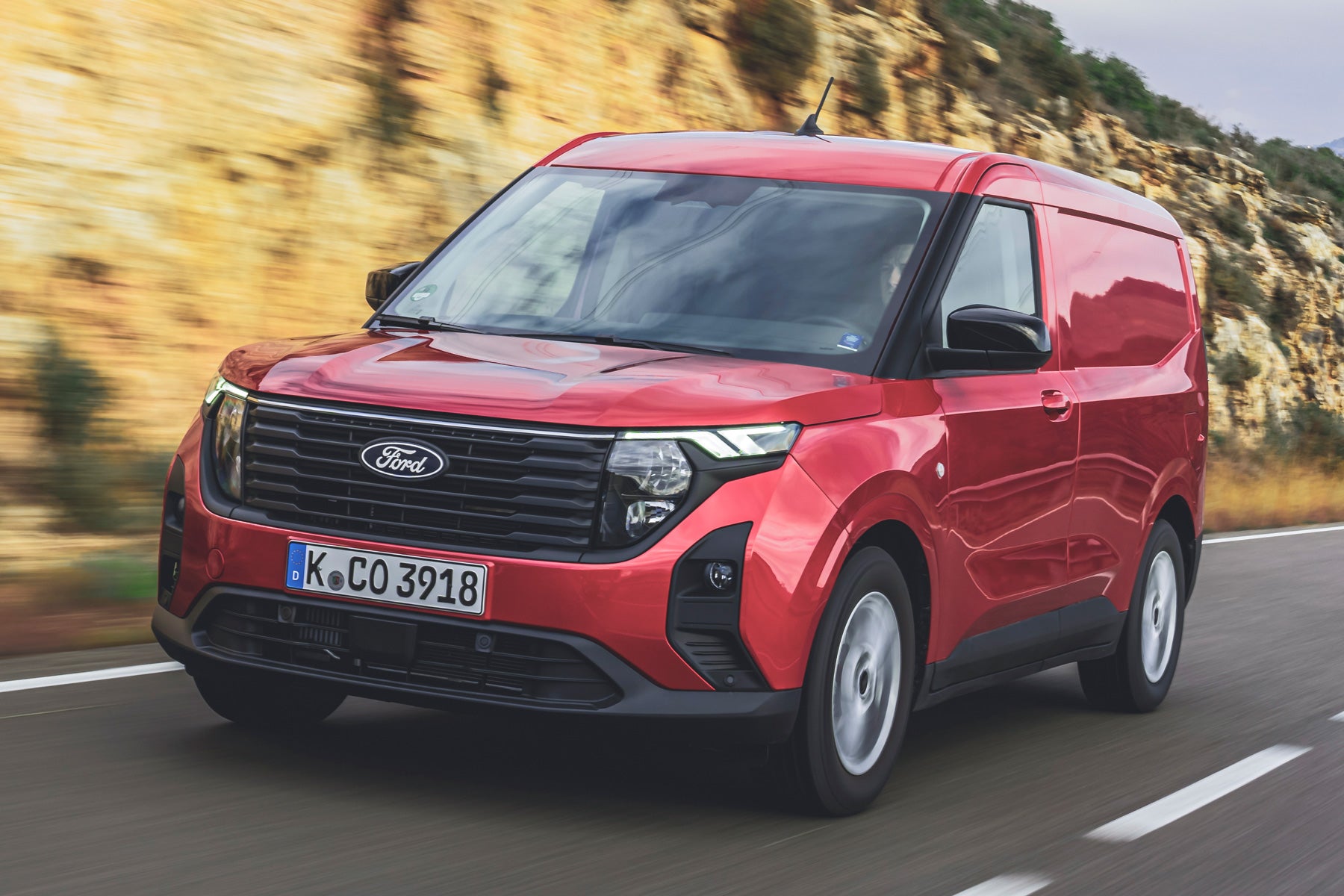
Ford offers a couple of rivals in the form of the Transit Courier and the Transit Connect. The latter is a smidge bigger than the former, but there’s very little in it. The latter also shares its mechanicals with the Volkswagen Caddy Cargo, so has to be considered as another rival.
Then there’s the group coming out of the Stellantis stable, those being the Citroen Berlingo, the Peugeot Partner, Fiat Doblo and the Vauxhall Combo. Toyota isn’t part of Stellantis, but nevertheless, it offers another version of the same van called the Proace City.
What's the interior like in the Nissan Townstar?
The Nissan Townstar is very competitive with its rivals on practicality, with decent figures for loadspace and payload. The cabin is comfortable and the build quality is solid, although you might wish that the colour scheme were a wee bit more imaginative.
Nissan Townstar boot space and practicality
Let's start with what life is like behind the wheel. There’s plenty of adjustment on both the driver’s seat and steering column, so drivers of all shapes and sizes will be able to get comfy. In some vans, tall drivers are prevented from sliding their seat back far enough by the metal bulkhead behind them, but that’s not the case in the Townstar because there’s a decent amount of space between those two items.
Obviously, that bulkhead means your rear visibility is limited to what you can see in your door mirrors, which aren’t as large as they are on some vans, but they can be adjusted electrically. Initially, the entry-level Acenta version had rear parking sensors to help with manoeuvres, while the Tekna got a reversing camera and all-round sensors, and the Tekna+ got a 360-degree camera system. Now, however, the trim levels have been fettled so that the Acenta has rear sensors and a reversing camera, while the Tekna gets sensors and cameras all-round. The Tekna+ no longer exists.
Visibility to the front, meanwhile, is splendid thanks to the perched-up driving position and thin windscreen pillars with large quarter-light windows just behind them.
The Townstar can be had with either two- or three seats in the front (the latter is an affordable optional extra), or as a Crew Van that sacrifices some of the loadbay for a second row of three seats . The one we tested was a two-seater, and had plenty of space for those two, but we reckon things might be rather more snug with three seats crammed in.
There’s a decent amount of storage, with shelves above the windscreen, reasonable door bins, a big glovebox, a cubby under the central armrest, a couple of shallow cupholders, and a large lidded cubby on top of the dashboard behind the steering wheel. Rivals have more areas for odds and ends, though, and if you specify the three-seater version, you’ll lose half the ones we’ve mentioned.
As we've mentioned, the Townstar is available in two sizes: the short-wheelbase L1 is around 4.5 metres long, while the larger L2 is almost 5.0 metres long. The Crew Van variant is only available in L2 form.
In terms of load area, you get 3.3 cubic metres of space in the L1 and 4.3 cubic metres in the L2. In both, the loadbay is 1,248mm wide between the rear wheelarches, and loadbay height stands at 1,215mm in the L1 and 1,229mm in the L2. Obviously, the bigger difference lies in the length of the loadbay, and this stands at 1,810mm in the L1 and 2,230mm in the L2. With those dimensions, both versions are capable of carrying two Europallets.
On the back of the Townstar, you’ll find twin side-hinged rear doors that can be opened up to 180 degrees if you unhook the stoppers built into the hinges, and this gives really good access to the loadbay. On top of that, all versions of the Townstar get sliding side doors on both sides of the vehicle for even better access: some vans only give you one of these, and some none at all. The L2’s sliding doors open a little wider than the L1’s and this bigger aperture allows you to load a Europallet through the side.
If you’re considering a petrol-powered Townstar, the maximum payloads are 740kg for the L1 and 774kg for the L2. That reduces by quite a bit on the all-electric version: 502kg for the L1 and 703kg for the L2.
Obviously, the Crew Van version is a rather different kettle of fish, because some of its cargo-carrying capacity is sacrificed for an extra row of seats. With all those seats in place, your loadspace length is 1,458mm long for a load volume of 2.1 cubic metres. However, when they’re not needed, those rear seats can be folded down to boost the loadbay to 2,000mm in length and 3.1 cubic metres in capacity. The payloads for the Crew Van are given at up to 734kg on the petrol and 692kg on the electric version.
Nissan Townstar dimensions
The Nissan Townstar is a compact van, and in terms of dimensions, it’s 1,860mm wide (without door mirrors) and 1,864mm tall. There are two body lengths available, meanwhile, the L1 being 4,488mm long and the L2 being 4,910 long.
Tech and infotainment in the Nissan Townstar
All versions of the Townstar come with the same 8.0-inch colour touchscreen in the middle of the dashboard, and it supports Bluetooth, DAB radio, Apple CarPlay and Android Auto. We couldn’t get our Android phone to connect with the latter, but to be fair, that might not have been the fault of the vehicle. Tekna (and now-defunct Tekna+) versions also have integrated navigation, which will come in handy if that should happen to you.
The graphics are a little dated, and not the sharpest, either, but they’re good enough to do the job and it’s reasonably easy to find your way around the system. The touch-sensitive shortcut icons on the left-hand side of the screen help on that score, as do fairly logical menu layouts. What’s more, while the system has all the functionality you want, it’s not absolutely rammed full of superfluous features, and that also helps make the system easy to navigate.
The old-school analogue dials of early Acenta and Tekna models might not give you the techy feelgood factor of fashionable digital instruments, but they’re as easy as pie to read and keep you well abreast of everything you need to know about. The Tenka+ did get digital instruments, and these do just as good a job and look a little flashier. The digital instruments now come as standard throughout the range.
Materials available on the Nissan Townstar
The interior of pretty much every commercial vehicle under the sun puts durability before tactility, and that’s no different in the Townstar. Yes, all the plastics are hard to the touch rather than being cushioned, but that means they won’t mark anywhere near as easily and they can be wiped clean. They look smart enough, too, and everything feels very solidly put together. Most of the buttons and switches feel substantial in the way they work, too, with the climate control dials feeling particularly slick. If we’ve one complaint, it’s that Nissan could’ve been a wee bit more imaginative with the colour scheme of the interior: it’s VERY grey in there.
What's the Nissan Townstar like to drive?
If you're looking for a small van to be comfortable enough and quiet enough to make your working day easier, then the Nissan Townstar is a splendid choice.
Nissan Townstar range and performance
The electric version of the Nissan Townstar, the imaginatively named Townstar EV, has a 121PS electric motor powering the front wheels through a single-speed transmission, and it’s fed by a 45kWh lithium-ion battery pack.
According to the official figures, it’ll do the 0-60mph dash in 11.6 seconds in L1 form, or 12.3 seconds in the slightly heavier L2. That suggests fairly leisurely performance, but that’s not quite the full story. It actually feels much perkier than the numbers suggest when pulling away from the mark, where the strong and instantaneous torque from the electric motor can deliver its best effect. We reckon its 0-30mph time would actually be pretty quick, and it’s getting the rest of the way up to 60mph that takes up most of the official time.
You can feel that more leisurely unfurling of performance when trying to pick up speed on the move, but the Townstar EV never feels underpowered or out of its depth, and you’ll easily keep up with motorway traffic. Like with many EVs, the top speed is pretty low at 84mph.
The petrol-powered Townstar has a 1.3-litre four-cylinder turbocharged petrol engine that’s mated to either a six-speed manual gearbox, or a seven-speed automatic. Nissan doesn’t quote a 0-60mph or 0-62mph time for this version (many commercial vehicle manufacturers don't), but it has a higher top speed than the EV at 114mph. However, we haven’t tried this version yet, so we can’t tell you what it’s like.
The Nissan Townstar EV has quite a small battery at just 45kWh, so it’s range isn’t the biggest compared with most electric cars, although compared with other electric vans, it’s pretty competitive. The WLTP combined range is given at 178 miles combined, and a figure of 250 miles is said to be achievable when confined to city driving. As always with EVs, though, you’ll see that figure plummet with prolonged motorway use, or when it’s cold outside.
Performance data
| Model | Engine/battery size | Power | 0-62mph | Range/MPG |
|---|---|---|---|---|
1.3 TCe 130 manual | 1.3 petrol | 130PS | TBC | Up to 41mpg |
1.3 TCe 130 automatic | 1.3 petrol | 130PS | TBC | Up to 40mpg |
Townstar EV | Electric 45kWh | 121PS | 11.6 seconds (L1)/12.3 seconds (L2) | 178 miles |
Nissan Townstar driving and refinement
If you’re spending large portions of your working day at the wheel of your commercial vehicle, then comfort is by far and away the most important dynamic attribute it can have. Happily, that’s precisely where the Townstar excels.
The softly sprung suspension does a brilliant job of isolating you from the effects of a scruffy road surface, smoothing out bumps and potholes in a really effective manner at all speeds.
However, that doesn’t come at the expense of sloppy body control. It doesn’t bounce you around over the dips and crests of an undulating road, staying controlled and stable at all times. Of course, the tall body will lean over a bit as you turn a corner, but it feels far from untidy and you’ll like how easy the steering is because it’s quick and light. There isn’t much feel, granted, but that’s hardly a pressing concern for a panel van.
Like with most electric vehicles, you’re in for a pretty quiet life with Nissan Townstar EV. You hear a bit of a whine from the motor as it spools up, but it's very quiet and distant at all times. You’ll plod through town very quietly indeed, with only the odd creak from the loadbay or clonk from the suspension for company.
Go faster, and you’ll hear a bit of wind noise fluttering around the windscreen at motorway speed, but it’s still fairly quiet and road noise is reasonably well contained as well. The electric Townstar is a pleasantly quiet way to travel, then, but we can’t comment on how refined the petrol version is because we haven’t tried it yet.
How safe is the Nissan Townstar?
The Townstar gets a very decent amount of safety kit as standard, but precisely what you get depends on the trim level you go for. Acenta versions come with six airbags, automatic emergency braking, driver attention alert, traffic sign recognition, speed limit assistance, and lane keep assist. Tekna trim adds blind spot assist and an automated parking function.
The Townstar has achieved the full five-star rating in Euro NCAP’s dedicated commercial vehicle testing programme.
Running costs: What it's like to live with a Nissan Townstar
The Nissan Townstar isn't offered with diesel power, which is rare in this sector of the market. The petrol engines on offer will deliver around 41mpg according to official WLTP figures, while the electric version will be very cheap to run, so long as you charge it in the right way and can live with the limited range of 178 miles.
Nissan Townstar charging times and costs
The Townstar's CCS charging port, which has now become the European standard, is concealed behind the Nissan badge on the nose. Once upon a time, your standard equipment included two charging cables: one Type 2 to Type 2 cable for plugging into home wallboxes and slower AC public chargers (on higher powered DC public chargers, the cable is usually built into the charger itself), and one cable with a Type 2 plug at one end to fit the vehicle, and a three-pin domestic plug at the other to fit into a regular household plug socket. These days, however, you only get the former.
Use the latter, and a full charge will take ages (this is known as ‘granny charging’, somewhat uncharitably) due to the slow flow of domestic power. This 2.3kW hookup will take 23 hours to fully charge the battery. Do what most owners will do, however, and get a home wallbox charger fitted, and your charging speed will jump up to 7.4kW, meaning the time needed for a full charge comes down to less than seven hours.
Find yourself a slightly faster outlet, like you might get at slow public chargers or industrial sites, and the same charge comes down to four and a half hours on an 11kW hookup, or if you can find a 22kW outlet, then you’ll get a 15-80% charge in an hour and a half. The Townstar’s maximum DC rapid charging speed of 80kW isn’t great in the scheme of things, but the small battery means that same 15-80% top-up can be delivered in just 37 minutes.
How much it costs will depend entirely on how much you pay for your power. Charge the car at home on a tariff priced at the UK's national average, and a full charge will cost about £12. Get yourself on a household tariff that allows you to charge overnight at a discounted rate, however, and you’ll probably pay half that, maybe even less. It flips the other way if you use public rapid chargers on a regular basis, because these can easily cost double what you’ll pay for domestic electricity.
Nissan Townstar fuel economy
When it comes to fuel economy, there’s a very slight difference between the L1 and L2 models, but both have an official WLTP figure of around 41mpg. If you're after more precision, the L1's figure is 41.5mpg when teamed with the manual gearbox, or 40.9mpg when teamed with the automatic. The L2's figure is 40.4mpg regardless of transmission. In any case, then, there's very little in it.
Nissan Townstar warranty and servicing
Nissan's commercial vehicle warranty stands at five years or 100,000 miles, whichever occurs first. That mileage limit is about par for the course in the van market, but the five-year part is two years better than most van manufacturers give you. Roadside assistance is also provided for the same period.
The battery in the EV version is covered for eight years, 100,000 miles, which is fairly standard stuff.
Petrol versions of the Townstar have service intervals of two years or 18,000 miles, whichever happens first, while on the Townstar EV, that's extended to two years or 24,000 miles. That's pretty good, and should help minimise downtime for your business.
Nissan Townstar insurance groups
Go for the petrol-powered Townstar, and your van will sit in insurance groups 27 or 28, depending on trim level. Go for the electric one, and it’ll be between 28 and 30. Considering there are 50 groups, of which 1 is the cheapest and 50 is the most expensive, then insurance premiums won’t be super-cheap, but they won’t be super-expensive, either.
How much does it cost to tax a Nissan Townstar?
As a light goods vehicle, the petrol-powered Nissan Townstar is liable for a flat rate of VED tax for such vehicles, which is currently charged at £360 per year. That's the case regardless of which fuel type you pick, because VED exemption for EVs was abolished in April 2025.
What trims are available with the Nissan Townstar?
When it first went on sale, the Townstar panel van was offered in three trims: Acenta, Tekna and Tekna+.
Acenta had most of the essentials, along with a couple of little luxuries. The standard kit list included steel wheels with trims, remote locking, climate control, powered windows, cruise control, reversing sensors, and automatic lights and wipers.
Mid-range Tekna trim gave slightly sharper looks with a body-coloured front bumper and door handles, while you also got keyless entry and go, sat nav, a reversing camera and all-round parking sensors.
Top-end Tekna+ trim added 16-inch alloys, a leather steering wheel, 360-degree cameras, and an extra safety package.
These days, things are a little different. Tekna+ trim has been binned, and Acenta and Tekna trims have been fettled to provide more standard kit.
The entry-level Acenta now comes with LED exterior lighting, electrically adjusting and folding door mirrors with heating, remote central locking, automatic lights and wipers, electric windows, LED lighting and a 12v socket in the load area, a 7.0-inch digital instrument panel, automatic climate control, cruise control, rear parking sensors, a reversing camera, and the 8.0-inch touchscreen with Apple CarPlay and Android Auto.
Tekna now adds integrated sat-nav, a smartphone holder, body-coloured front- and rear bumpers, body-coloured door handles, keyless entry and go, automatic high beam, a leather steering wheel, 360-degree parking sensors and cameras, an automated parking function, and blind spot detection.
The Crew Van variant comes in its own N-Connecta trim level, which sits somewhere between the two trims of the panel van. Apart from the extra seats and windows, you get pretty much everything that the Acenta gets, but with auto high beam, a leather steering wheel, a smartphone holder and all-round parking sensors thrown in.
Ask the Drive experts: common questions
What is the Nissan Townstar?
Is the Nissan Townstar the same as the Renault Kangoo and Mercedes-Benz Citan?
How big is the Nissan Townstar?
Get our latest advice, news and offers
Keep me updated by email with the latest advice, news and offers from Drive.