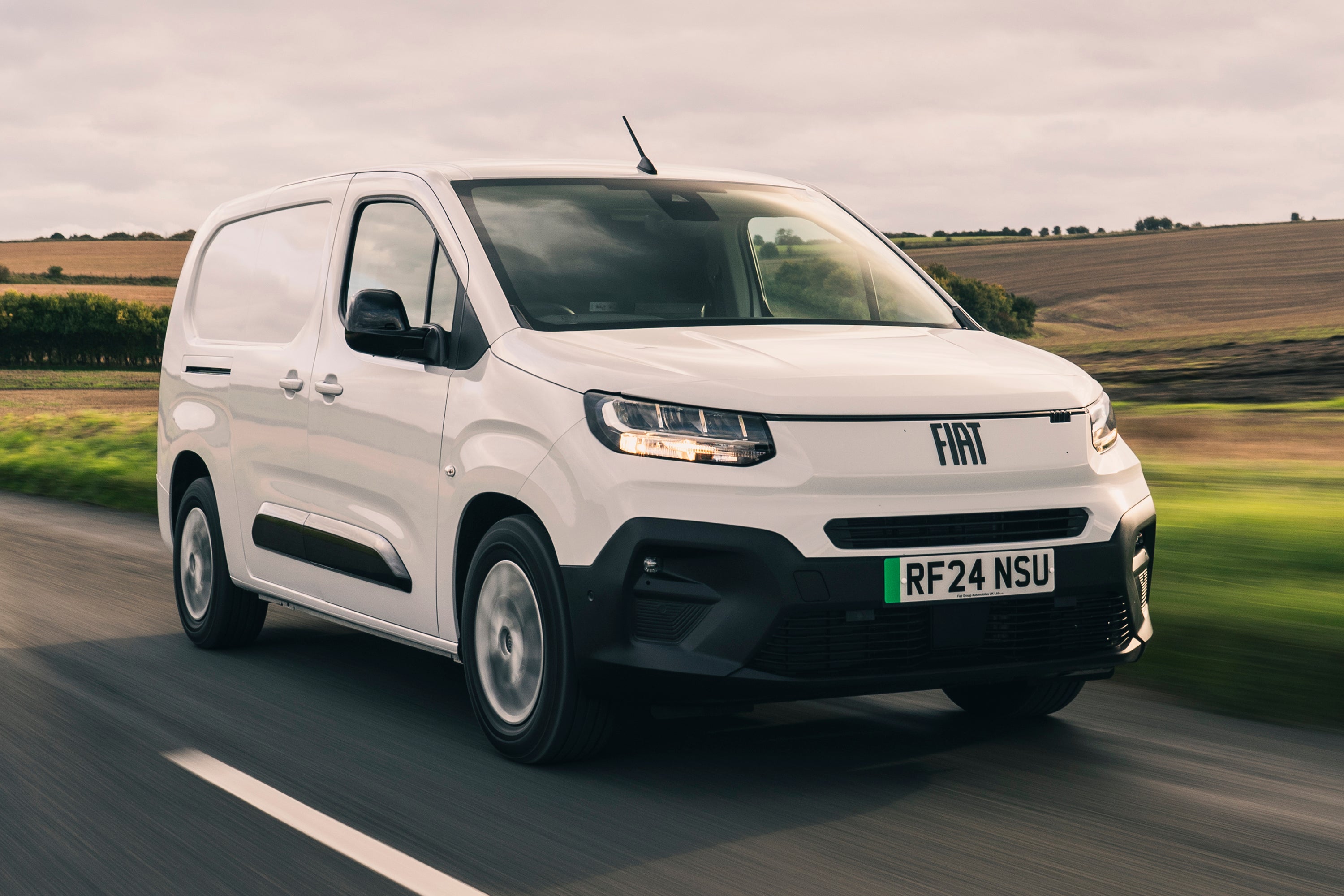
Fiat Doblo Cargo Review

Written By Ivan Aistrop
- 2022
- Panel van, crew van
- Diesel, electric
What we love
Good figures for payload and load volume
Some handy practicality features
Electric version comfortable and easy to drive
Things to consider
e-Doblo rather slow and has limited range
Entry-level diesel engine is a little flat
Rivals are more rounded
The DRIVE take on the Fiat Doblo, is it the right car for you?
The Doblo does the job of a compact van as well as any of its myriad Stellantis-Group stablemates, primarily because it’s all but identical mechanically. It posts impressive figures for payload and loadspace, and it's better than most non-Stellantis rivals in both areas. However, some rivals have the measure of the Doblo in other areas, such as comfort and refinement.
The Fiat Doblo in more detail
The Fiat Doblo name has been around for more than 20 years now, but during that time, the mechanical nature of the small panel van that’s worn it has changed quite a bit. The Doblo used to be a Fiat through-and-through, but these days, now that Fiat has been assimilated into the vast Stellantis Group, the Doblo is pretty much identical to the Citroen Berlingo, Peugeot Partner, and Vauxhall Combo. But is it any good? We’ll find out in this Fiat Doblo review.
On paper, experienced van users will probably be quite impressed with the Doblo. Like its sister vans, it sits towards the upper end of the class for important figures like payload and load volume. This makes it among the more practical vehicles of its type, which obviously, is of critical importance for any van.
It also offers plenty of choice. You have the choice of two body lengths and two trim levels, and on the powertrain front, you can choose between two diesel engines and an all-electric version. There should be a Fiat Doblo to suit every business, then.
The driving experience is pretty much exactly what you’d expect in a vehicle of this type: comfort and ease are the primary goals, which it achieves with reasonable success, but the Doblo doesn’t feel too clumsy in the corners, either. The all-electric Fiat e-Doblo has modest performance and a fairly limited range, but it’s well-suited to pottering around the city if that’s where you conduct the majority of your business.
Much like most vans of this type, the Doblo’s interior is plasticky but undeniably hard-wearing, but that's nothing to complain about in the scheme of things.
What's the best Fiat Doblo trim and engine option?
If you’re considering a diesel, then the lower-powered 100PS version will probably suffice, because it has enough pace, and delivers good fuel economy. You’ll need to be prepared to change gear a lot to maintain your progress, though, so if that sounds like a pain, you might want to go for the more powerful diesel engine with the automatic gearbox. Alternatively, you could go for the electric e-Doblo version. This is a pleasant enough thing to drive and to live with and is thoroughly recommendable if your business suits an electric van. However, the limited driving range might rule it out for some users, while the payload figures aren’t as high as with the diesel Doblo, either.
On the trim-level front, the entry-level Plus has most of what you need. However, the loftier Primo model doesn't actually cost a lot more, and it comes with some desirable additions that'll genuinely make your life easier, such as a reversing camera, digital rearview mirror, rain-sensing wipers and sat-nav.
What’s the price of the Fiat Doblo?
Prices for the Doblo start at around £25,000 (excluding VAT) for the smaller M version in entry-level Plus trim with the most modest 100PS diesel powertrain. The upgrade to the larger XL long-wheelbase bodystyle is actually very affordable at around £1,000, and it costs a similar amount to upgrade from Plus trim to the higher-spec Primo, which again, isn't a huge amount for the extra kit you get. However, the upgrade to the pokier 130PS engine is a little dearer at around £2,500. That's partly because the pokier engine comes only with an automatic gearbox. The priciest version of the panel van stands at around £29,000.
The Government will most likely give you £2,500 towards the price of your new van through its Plug-in Van Grant (PiVG) scheme, but even with that amount deducted, prices for the electric versions are rather punchier than they are for the diesels. An e-Doblo will cost you between £28,000 and £30,000, roughly speaking.
The crew van models are kind of standalone models with their own specifications that lie somewhere in between Plus and Primo trims, but they are a little dearer that their panel van equivalents due to their extra seats, windows and bulkheads. The diesel one costs a little over £27,000, while the electric one is a little over £30,000.
In comparison to other similarly sized vans, the Doblo predictably costs about the same as the other Stellantis-produced equivalents with which it shares it mechanicals and tech. It's certainly not the most expensive van of its type, and holds a price advantage over plenty of rivals.
Alternatives to the Fiat Doblo
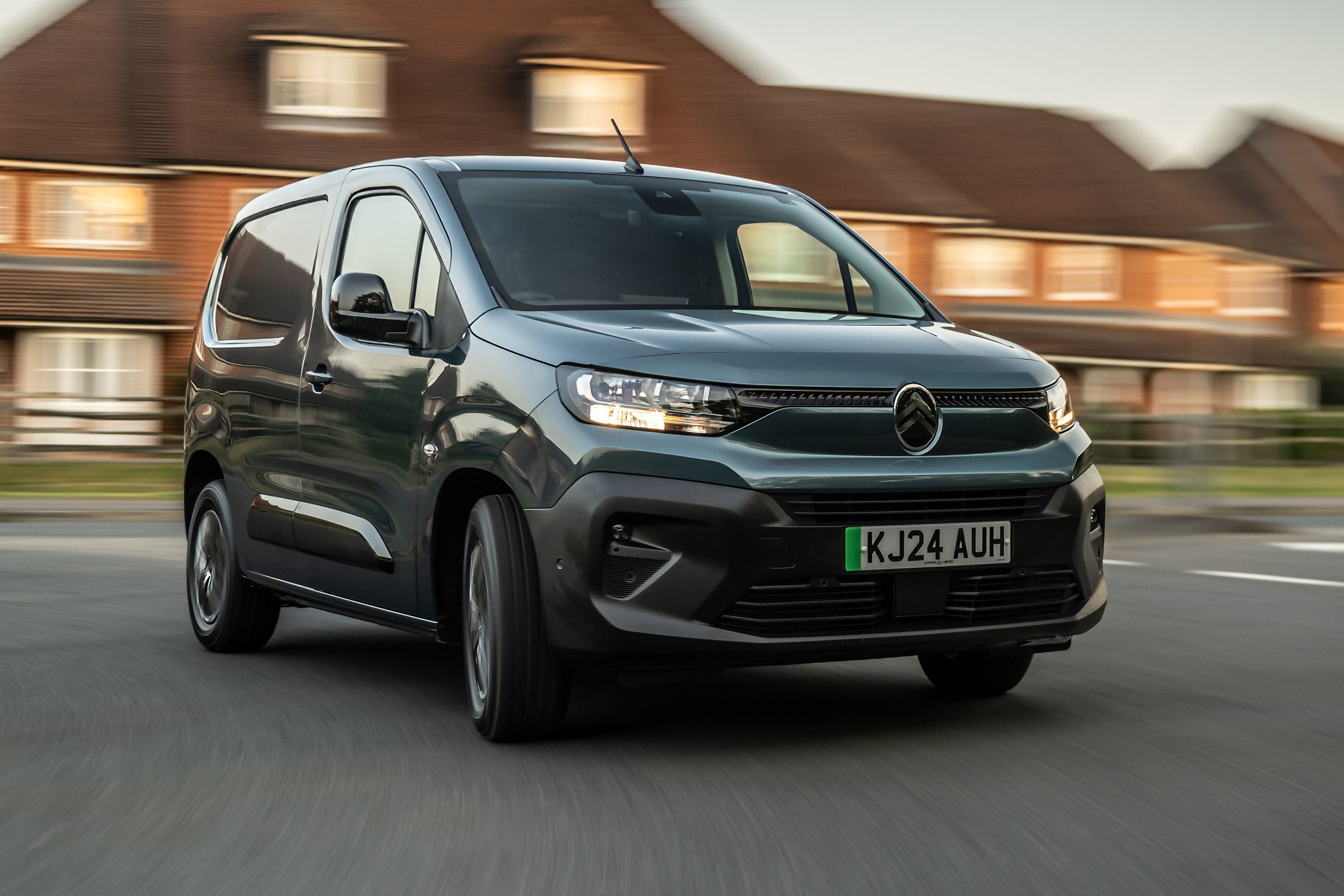
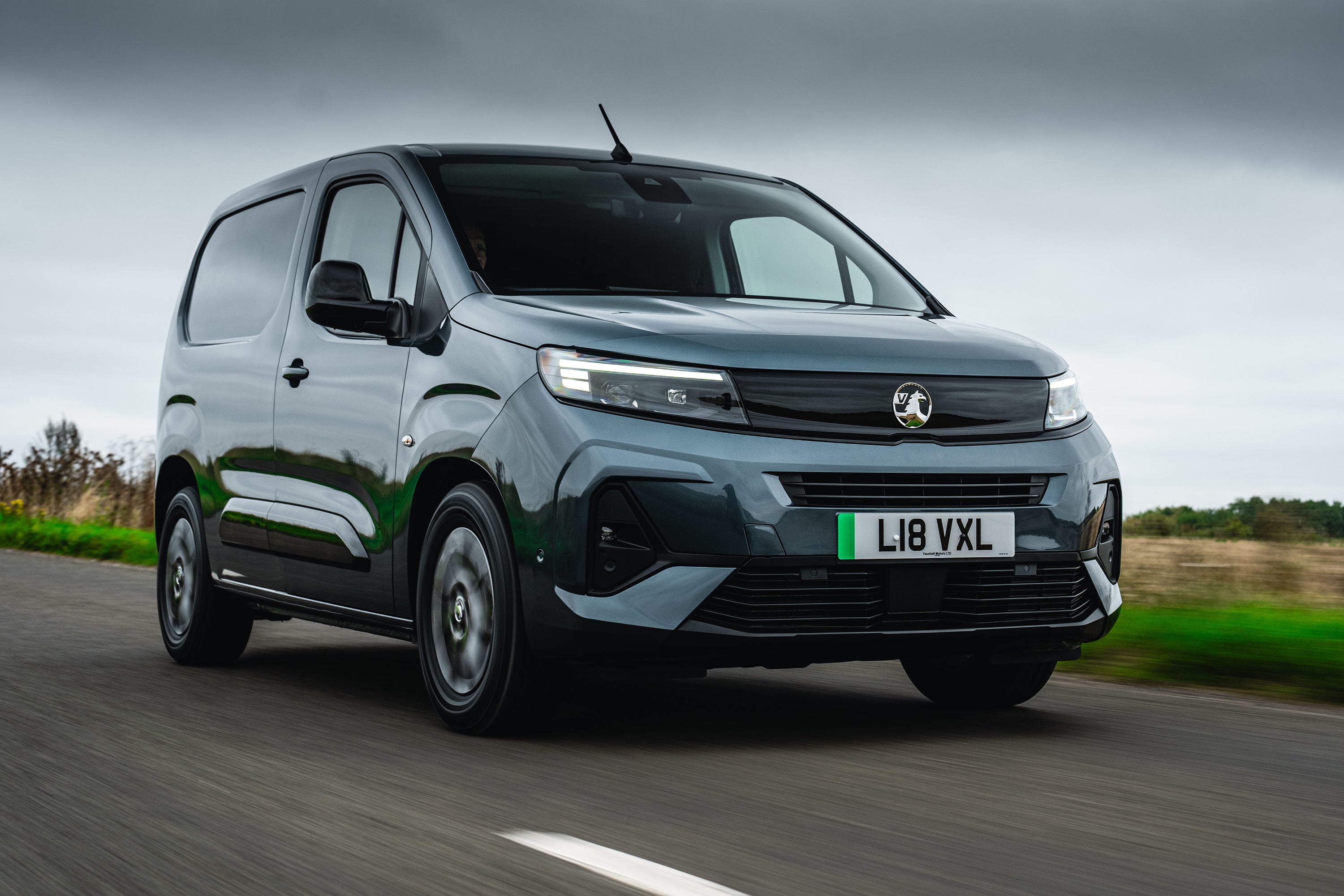
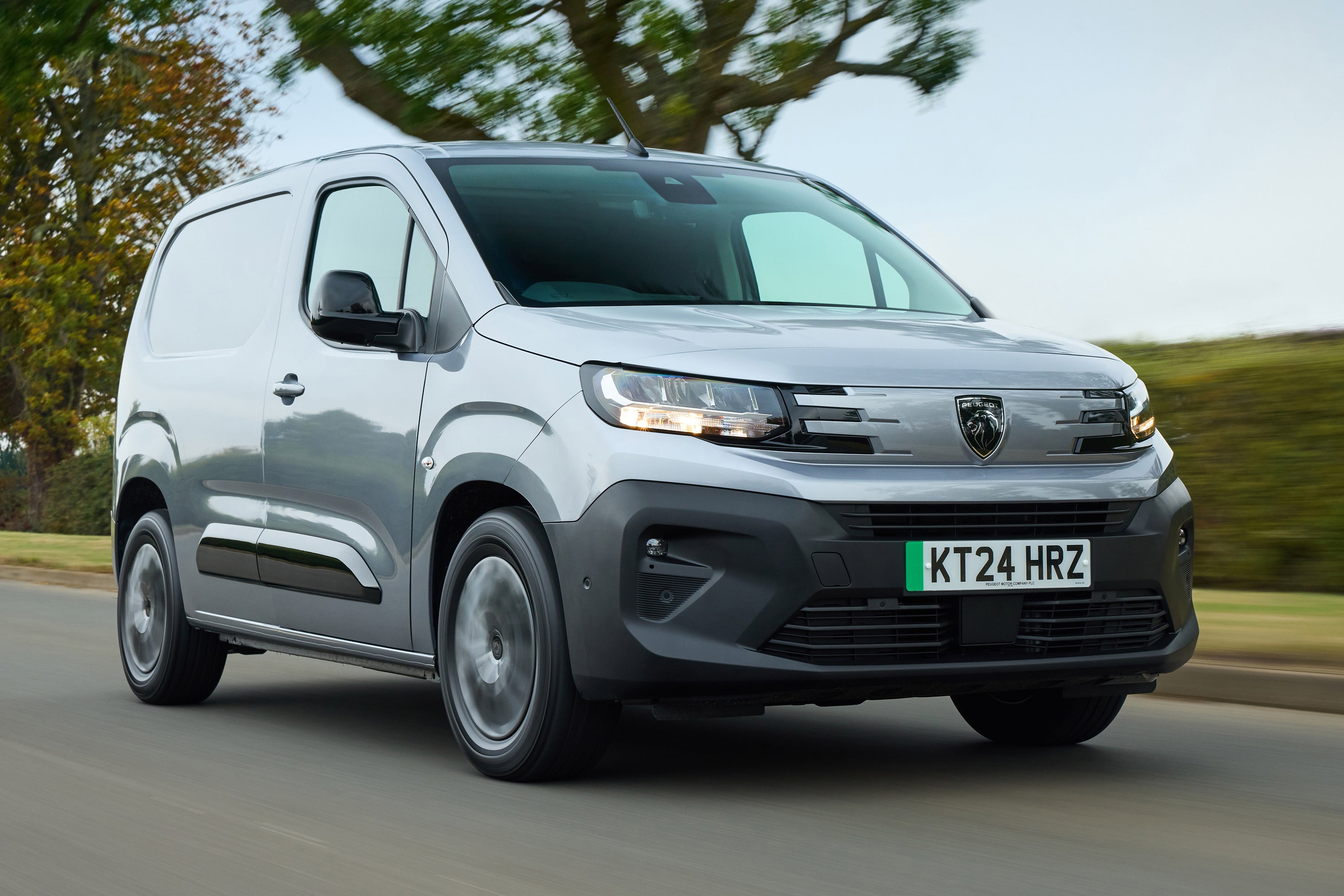
Well, there’s a handful of vehicles that are extremely similar to the Fiat Doblo, those being the Citroen Berlingo, the Peugeot Partner, and the Vauxhall Combo. As they’re all compact van offerings from the various members of the massive Stellantis stable of automotive brands, they’re all mechanically identical, and only really differ in terms of their styling, and a few very minor pricing and spec differences. Even Toyota offers a version in the form of the Proace City van, and that company isn’t even part of Stellantis.
Other compact van offerings that aren’t related to the Doblo include the Volkswagen Caddy Cargo, Ford Transit Connect, Ford Transit Courier, Renault Kangoo, Nissan Townstar, and Mercedes Citan.
What's the interior like in the Fiat Doblo?
The Doblo's cabin is basic but functional, just as you'd expect from a commercial vehicle. Importantly for a van, though, it puts in very decent figures for both load volume and payload.
Fiat Doblo boot space and practicality
All Doblos come with plenty of adjustment for the driving position: the steering wheel moves up and down, and in and out, while the driver's seat has a plentiful amount of height adjustment. This makes it easy to find a comfortable position in which to while away the miles.
If you’re more used to brand-new passenger cars than commercial vehicles, you might feel like the Doblo’s cabin is a little over-simplified. The touchscreen infotainment system in the range-topping Primo version only provides a very basic level of functionality, while early versions of the basic Doblo didn’t have a touchscreen at all, and many functions are controlled by buttons and knobs on the dashboard. However, while tech-heads might not like that, everyone else will be jumping for joy: physical buttons and knobs are much easier and less distracting to use on the move than a touchscreen interface, and all the controls are clearly marked and easy to find. Sometimes, it really is better to keep things simple. These days, however, the touchscreen comes as standard on both trim levels.
Your visibility at the front quarters of the vehicle is fine, but you don’t get much in the way of visibility at the back in basic models due to the bulkhead behind you. The door mirrors aren’t very big, either, which further limits your view behind. At least rear parking sensors are standard. It's also worth bearing in mind that the Primo trim gets front sensors, a reversing camera, a digital rear-view mirror as standard, and for not all that much more cash. If you're not familiar with the concept of a digital rearview mirror, it displays a live feed from a rear-facing camera, although it takes some getting used to because it makes your depth perception feel all screwy.
The Fiat Doblo is available in two lengths, depending on your needs. The standard M version - previously known as the L1 - is around 4.4 metres long, while the XL - previously the L2 - version is 350mm longer, 190mm of which sits in the wheelbase, and the rest in the rear overhang.
In both versions, the width of the load bay is identical at 1,229mm between the wheel arches. The height of the load bay is 1,200mm in the M/L1 and 1,270mm in the XL/L2. The load bay length, meanwhile, is 1,817mm in the M/L1 and 2,167mm in XL/L2.
There’s a little more to the story, though. Some versions come with a load-through bulkhead - known dramatically as 'Extenso' - underneath the two-person front passenger seat as standard (the cabin has just about enough width for three people to squeeze in, but you’ll probably be rubbing shoulders with your workmates). Early on, this was only provided on the range-topping Primo model, but you now get it with Plus trim as well. Any version without this setup gets just two regular front seats.
In terms of maximum figures, it’s quite an important feature. It extends your maximum load length to 3,090mm in the M/L1 and 3,440mm in the XL/L2. Perhaps more importantly, though, this fancy bulkhead also increases the maximum load capacity of your van: from 3.3 cubic metres to 3.8 cubic metres in the M/L1, and from 3.9 cubic metres to 4.4 cubic metres in the XL/L2.
Then there's the crew van variant. This is offered exclusively in XL/L2 form, and it has two seats up front and a further three-seat rear bench behind, with a two-position moveable ladder-frame bulkhead behind.
This obviously comes at the expense of some cargo space. The width between the wheel arches is the same, while the load height stands at 1,243mm. However, with the rear seats in place, the load length is just 1,450mm and the load volume is just 1.8 cubic metres. With the rear seats folded and the two-position bulkhead set to its forwardmost position, these figures increase to 2,000mm and 3.5 cubic metres, respectively.
In the case of the all-electric e-Doblo, those all-important payload figures stand at 759kg on the M/L1, and 691kg on the XL/L2. The Crew Van’s figure stands at 642kg
The diesel versions can haul a little more: 982kg in the M/L1, and between 927kg and 936kg in the XL/L2, with the Crew Van having a figure of 840kg. All examples have a Gross Vehicle Weight (GVW) of around 2.4 tonnes, give or take a maximum of 55kg.
All versions of the Doblo have twin doors on the back end that give easy access to the load bay. These can open to 180 degrees, for even easier access, if you unhook the stoppers. The L1 also has a sliding door on the left side of the van, while the L2 and crew van variants have sliding doors on both sides.
The Crew Van gets a plastic trim on the load floor, while the load bay is bare metal in the others, or a wooden floor covering is available as an option. We reckon it’s a bit mean, though, that no version of the Doblo gets illumination in the load area unless you pay extra.
Fiat Doblo dimensions
There are two basic versions of the Doblo, a standard-length one called the M (previously the L1) and a long-wheelbase one called the XL (previously the L2). The M version is 4,403mm long, while the XL version is 4,753mm long. Both are 1848mm wide (not including door mirrors) and 1,860mm high.
Tech and infotainment in the Fiat Doblo
In previous years, the infotainment system you got in your Doblo depended on which trim level you chose, and the one in the entry-level Plus version was woefully basic. It amounted to little more than a mounting cradle for your smartphone on the dashboard, with Bluetooth, DAB radio, two speakers, and audio controls on the steering wheel. The other strange thing about this was that this arrangement was a no-cost option: you didn't pay extra for it, but if you didn't remember to specify it when you ordered, then you did without.
Contemporary versions of the Primo did rather better, with a 10.0-inch central touchscreen with Apple CarPlay/Android Auto smartphone mirroring, DAB radio, more speakers, navigation and a 10.0-inch digital instrument panel. These days, Plus versions get the same system, albeit without the in-built navigation.
It’s far from the most sophisticated system you’ll encounter, but on the flipside of that, its simplicity makes it much easier to find your way around than many such systems. There are a few quirks, such as some ambiguously designed on-screen icons, but you get used to these fairly quickly.
The 10.0-inch digital instrument cluster looks good, it’s easy to read and there are a variety of different layouts to choose from. However, most of the layouts present most of the same information, just in slightly different ways.
Materials available on the Fiat Doblo
Most commercial vehicles are designed and built for durability and versatility, rather than tactility. And that’s certainly the case with the Doblo. Most of the interior surfaces you encounter are fashioned from thick slabs of hard grey plastic, meaning that while they’re not much of a treat for the eyes or the fingertips, they do feel extremely solid and hard-wearing.
Regardless of the trim level you choose, diesel models get a plastic floor lining in the cabin, while electric models are carpeted. We’re not entirely sure why.
What's the Fiat Doblo like to drive?
The biggest dynamic priority for those who spend hours of their working day at the wheel of their van is comfort: after all, you wouldn’t expect a panel van to relish being flung around corners, even when racing between jobs. On that score, the Doblo is just what you expect.
Fiat Doblo range and performance
The Doblo is available in either diesel form or all-electric e-Doblo form, and we’ll start with the electric one. It has an electric motor driving the front wheels through a single-speed transmission, and it’s fed by a 52kWh battery pack. At its maximum, the motor develops 136PS and 270 Nm of torque, which makes it capable of a 0-62mph time of 11.7 seconds, and a top speed of 82mph.
Bear in mind, though, that this is the maximum you get. Select the vehicle’s Normal driving mode rather than the Sport mode, and the level of power and acceleration you get is restricted to preserve range. Select Eco mode, and your performance is restricted even more.
There’s a clearly appreciable difference between the modes. Eco mode is just about brisk enough to cope around town and with lower-speed work, but when you’re getting into 50mph territory or thereabouts, or you need more urge to exploit gaps in traffic, then you’ll need to swap Eco mode for one of the others.
Normal mode will be enough for most drivers in most situations. Your level of performance still feels decidedly leisurely, but that’s hardly a problem because you don’t tend to drive commercial vehicles like the Doblo like your hair’s on fire anyway. That said, the Sport mode’s extra zip does come in handy when pulling away at a busy junction or joining a motorway, although again, you’ll hardly be rewriting the rules of physics with your acceleration.
The e-Doblo has an official WLTP range of 213 miles, so reckon on around 160-170 miles in the real world with mixed driving conditions. Do bear in mind, though, that prolonged high-speed motorway runs will see your achievable range plummet very quickly, and so will cold weather. Also bear in mind that these figures apply to Normal mode: spending all your time in Eco mode might get you a bit more, while Sport mode will likely get you a bit less.
You get paddles behind the steering wheel to alter the strength of your regenerative braking (this harvests energy that would otherwise be lost during deceleration, and feeds it back to the battery) in three stages. The lightest mode allows you to almost coast along, whereas the heaviest mode is almost strong enough (but probably not quite) to qualify as a one-pedal driving mode. All are easy to get used to.
Both of the two diesel variants use a 1.5-litre Multijet turbodiesel engine, badged as the 100 and the 130, although the actual power outputs are 102PS and 131PS, respectively. The former gets a six-speed manual while the latter gets an eight-speed automatic.
The entry-level choice is quick enough to get you going with a reasonable amount of purpose, so getting up to speed isn’t a problem, but maintaining your pace can be a little more difficult. Should the rev counter drop below 2,000rpm, the engine loses almost all of its urge, so if you hit an incline or get caught behind slower-moving traffic, you’ll need a downshift or two (or maybe three) to get back up to speed again. And that’s with nothing in the load bay: stick a few hundred kilos of cargo on board, and things will get exponentially worse.
The 130PS version with the automatic gearbox is a good bit more relaxed in everyday use. Ultimately, the engine doesn’t have a great deal more urge than the entry-level engine, so isn’t much faster, and it has that same low-rev flatness to its character. However, the automatic gearbox never lets the revs drop below that 2,000rpm threshold when you’re on the move, and although a vast number of gearchanges are needed to maintain or gain pace, at least they’re being done for you.
Performance data
| Model | Engine/battery size | Power | 0-62mph | Range/MPG |
|---|---|---|---|---|
Diesel 100 manual | 1.5-litre diesel | 102PS | TBC | Around 54mpg |
Diesel 130 automatic | 1.5-litre diesel | 131PS | TBC | around 52mpg |
e-Doblo | Electric 52kWh | 136PS | 11.7 seconds | 213 miles |
Fiat Doblo driving and refinement
The driving experience is pretty much exactly what you’d expect in a vehicle of this type. The suspension is geared towards comfort rather than agility, even though the ride can still be a little jumpy when you have an empty load bay, but it quickly settles down with some weight on board, and it’s never uncomfortable.
While handling is not the priority with the Doblo, it feels reasonably stable and secure on all types of roads, while the light steering and tight turning circle help with around-town duties. Okay, so rivals like the Ford Transit Courier and VW Caddy Cargo do a slightly better job on both ride and handling, but you’ll have very little reason for complaint with the Doblo.
As you’d expect in the all-electric e-Doblo version, you hardly hear a peep out of the powertrain. That shortage of noise does make the wind- and road noise you hear at moderate-to-high speeds all the more noticeable, but neither is loud enough to be troublesome. You occasionally hear the suspension clonking a little over bumps, plus the odd creak from the bodywork echoing through the load bay behind you, but again, it’s not at a level that’s abnormal for your average panel van.
Inevitably, the diesel engines make themselves heard a bit more than the electric motor, but most of the time, the noise stays distant and muted. The less powerful diesel sometimes has to be worked quite hard to maintain your progress, and it becomes a little more vocal as a result, but it seldom gets too loud.
How safe is the Fiat Doblo?
The Doblo’s standard equipment list includes driver assistance features including lane keep assist, high beam assist, automatic emergency braking, intelligent speed limit assistance, and driver attention alert. Choosing the Primo trim level adds a pack that includes blind spot detection, as well as a whole bunch of extra parking assistance.
There is an option pack available that adds adaptive cruise control with stop and go, but it’s only available on electric versions of the Primo for some reason.
All Doblos have driver and passenger airbags, side airbags and curtain airbags, to help protect occupants in a crash. In the Crew Van, however, airbags are found in the front seats only.
The Doblo has been subjected to Euro NCAP's dedicated van crash tests (or rather, the Citroen Berlingo has, but the two are so closely related that the result applies to the Fiat as well), and has achieved four out of five stars. That sounds pretty good until you realise that no van that has ever undergone the tests has failed to score at least four stars.
Running costs: What it's like to live with a Fiat Doblo
Running costs for the Doblo should be pretty affordable across the board.
Fiat Doblo charging times and costs
The e-Doblo has a total battery capacity of 52kWh, but only 50.7kWh of that is usable (all EV batteries have a few dormant cells to prolong battery life). So, if you’re doing as most owners will do and are charging at home or at work on a 7kW wallbox charger, a full juice-up will take a little under seven hours. That charge will cost around £14 if you’re paying the national average rate for domestic electricity at your property. However, you'll likely pay less than half that if you get yourself on a variable home power tariff that allows you to charge overnight on heavily discounted off-peak electricity.
The e-Doblo supports DC rapid charging at up to 100kW, which can take your battery from 0-80% in just 30 minutes if you can find a powerful enough charger. Just bear in mind that power from chargers like this is much, much more expensive (it varies, but three times the average price of domestic power is a decent rule of thumb), so we’d only recommend using these chargers when you absolutely have to. Relying on them regularly will get very expensive.
Fiat Doblo fuel economy
Choose a diesel-powered Doblo, and WLTP fuel consumption figures suggest you’ll get up to 54.4mpg from the 100, or up to 51.9mpg on the 130. These figures are always rather optimistic, though, and you probably won’t do as well as that in the real world. We reckon you can expect around 45mpg or upwards if you’re gentle, or less if your van is loaded up with stuff.
Fiat Doblo warranty and servicing
The Doblo comes with a three-year warranty (two years of manufacturer warranty, and a third year of retailer warranty), with a 100,000-mile limit.
The electric version has a battery warranty of eight years or 100,000 miles, during which time the battery will be repaired or replaced for free if it falls below 70% of its original capacity.
Servicing only needs to occur every two years or 25,000 miles on all Doblos, although on the electric version, you’ll need an initial inspection at one year/12,500 miles to make sure everything is working as it should. Those long service intervals should minimise the downtime that your business will need to factor in to keep your vehicle running smoothly.
Fiat Doblo insurance groups
There isn’t a huge amount to pick between the various versions of the Doblo when it comes to insurance groupings. Doblos with the 100PS diesel engine will sit in groups 28 or 29 depending on trim level, while those with the more powerful 130PS unit command a classification of either group 30 or 31. The all-electric e-Doblo, meanwhile, gets a grouping of either 29 or 30. As insurance groupings range from 1 to 50, with 1 being the cheapest and 50 being the most expensive, you can expect middling premiums on the Doblo.
How much does it cost to tax a Fiat Doblo?
Like all light goods vehicles (LCVs), the Doblo is liable for a flat rate of VED road tax for such vehicles, and this is currently charged at £360 per year.
The e-Doblo is no longer exempt from VED on account of being an EV, so buyers of the electric version will face the same road tax costs as buyers of the diesels.
What trims are available with the Fiat Doblo?
Early on in the Doblo's life it was available in two trim levels, the basic version, known simply as Doblo, and the higher-end Primo version.
The base-level Doblo was rather sparse, with the standard roster including a manual parking brake (although all electric Doblos had an electric parking brake), manual air conditioning, electrically adjusting and heated door mirrors, electric windows, remote locking, cruise control, rear parking sensors, and automatic headlights. The vehicle also looked pretty basic, with door handles and bumpers in black plastic, and steel wheels with half hubcaps.
The Primo looked a bit smarter, with full wheel trims and body-coloured bumpers and door handles, not to mention LED headlamps and front fog lamps. On top of that, you got the extra front seat with load-through bulkhead, upgraded infotainment, an electric parking brake, rain-sensing wipers, a digital rearview mirror, rear- and side view cameras, front- and rear parking sensors, power-folding mirrors, and an alarm.
These days, the entry-level trim is called the Plus, and it's better equipped than before, with the touchscreen infotainment system, digital instruments, and the double front passenger seat with load-through bulkhead. The upgraded trim level is still called Primo, and aside from the items that are now standard on the Plus version, the upgrades are largely the same as before.
Ask the Drive experts: common questions
Is the Fiat Doblo a car or a van?
Is the Fiat Doblo any good?
What’s the difference between the Fiat Doblo and the Citroen Berlingo, Peugeot Partner and Vauxhall Combo?
Get our latest advice, news and offers
Keep me updated by email with the latest advice, news and offers from Drive.
.jpg)
.jpg)