Toyota Yaris Review

Written By Andrew Brady
- 2020
- Hatchback
- Hybrid
What we love
Excellent hybrid efficiency
Strong standard safety equipment
Easy and relaxing to drive
Things to consider
Rear space is only average
Some cabin plastics feel cheaper than the best rivals
Ride is not quite as soft as a Polo’s
The DRIVE take on the Toyota Yaris, is it the right car for you?
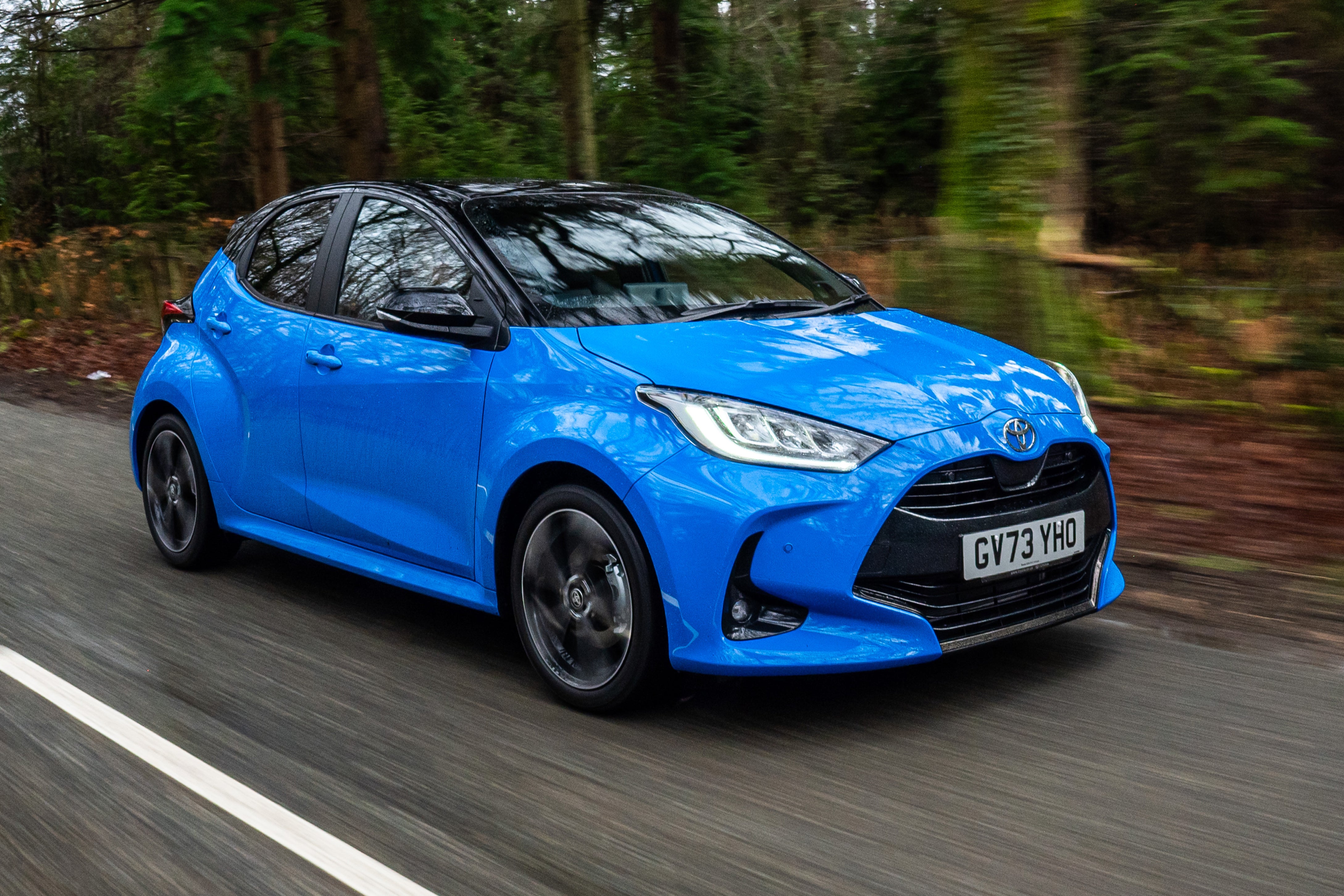
The Toyota Yaris is one of the most complete small hatchbacks on sale because it gets the important things right. It is efficient in real-world driving, easy to drive in town, very well equipped for safety and backed by one of the strongest ownership propositions in the class. It is not the roomiest supermini, and a Volkswagen Polo still feels slightly plusher and more spacious, but the Yaris counters with hybrid efficiency, strong standard kit and a sense that it has been engineered to be easy to live with for years. If you want a small car that feels smart, modern and reassuringly sensible without being dull, the Yaris remains one of the best choices in the class.
The Toyota Yaris in more detail
The Yaris used to be one of those cars people bought because it was dependable rather than because they particularly wanted one. That was never a disastrous place for Toyota to be, but it did leave the Yaris trailing the best superminis for desirability. Cars such as the Ford Fiesta, Volkswagen Polo and Peugeot 208 had much stronger emotional pull, while the Toyota often felt like the solid but slightly forgettable option.
This generation changed that. Toyota turned the Yaris into something sharper looking, much more cohesive to drive and significantly more polished inside. At the same time, it leaned even harder into hybrid power, which is exactly where Toyota has the most credibility. The result is a small hatchback that feels far more modern and far more complete than older Yaris models ever managed.
That matters because the supermini market is packed with strong alternatives. The Polo remains a benchmark for breadth of ability, the Renault Clio is still one of the smartest all-rounders and the Peugeot 208 continues to major on style. To stand out in that group, the Yaris needed more than just a reputation for reliability.
What helps it enormously is that it no longer feels like a compromise. The hybrid system is not some worthy add-on that buyers tolerate in return for low fuel bills. It is a central part of what makes the Yaris so pleasant to use. Around town especially, the smooth low-speed response and ability to switch into electric running give it a calmness many small petrol rivals cannot match.
The more recent update has kept it fresh. Toyota added the stronger 130PS hybrid in upper trims, improved the infotainment setup and tightened up the digital instrument story. So while the basic Yaris formula remains unchanged, the current car is more coherent and easier to recommend than ever.
This is why the Yaris now feels like such a strong proposition. It is still sensible, still dependable and still designed to be easy to own. It is just no longer boring.
What's the best Toyota Yaris trim and engine option?
For most buyers, the best Toyota Yaris is the Design with the 116PS hybrid powertrain. It strikes the right balance between price, equipment and efficiency, and it avoids pushing the car into the sort of price territory where buyers might start wondering whether they should just buy something bigger.
Toyota now offers two versions of its 1.5-litre full-hybrid setup. The 116PS model remains the mainstay of the range and, for the vast majority of buyers, it is all the Yaris really needs. It feels eager enough around town, settles down nicely on faster roads and delivers the sort of fuel economy that makes the whole car easy to justify.
The 130PS version is a welcome addition because it gives upper trims a little more punch, but the difference is not transformative in everyday use. It is slightly quicker and slightly stronger if you accelerate harder, yet the basic character of the Yaris remains the same.
That is why Design 116PS still makes the most sense. It gets the key visual and equipment upgrades over the entry Icon, but it does not drag you too far up the price list.
In simple terms, Icon is the value one, Design is the sweet spot, Excel is the plush one and GR Sport is the sportier-looking one.
What’s the price of the Toyota Yaris?
The Toyota Yaris currently starts at £23,995 for the Icon Hybrid 116PS. The Design Hybrid 116PS rises to £25,345, while the Excel Hybrid 130PS comes in at £28,645 and the GR Sport Hybrid 130PS reaches £30,095.
That means the Yaris is not the bargain-basement supermini some buyers may remember from years ago. It asks proper money, especially once you move into the upper trims, and that means it has to deliver more than just a famous badge.
Thankfully, it broadly does. Standard safety kit is strong, the hybrid system gives it a meaningful real-world efficiency edge and the overall quality of the car is high enough that it rarely feels overpriced once you actually spend time with it.
It also helps that the Yaris now has a well-established used market. Earlier examples still make plenty of sense if you want the same basic formula for less money, though the more recent tech upgrades mean newer cars are worth seeking out if budget allows.
Alternatives to the Toyota Yaris
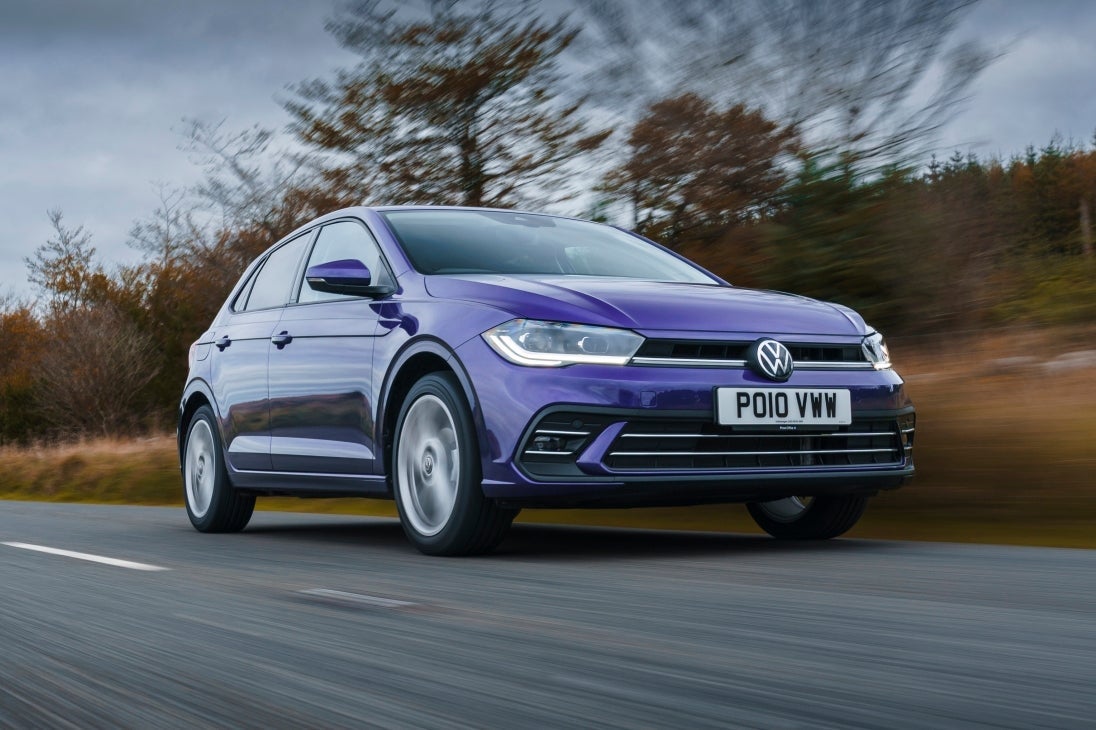
The Volkswagen Polo remains one of the Yaris’s clearest rivals because it still does so many things well. It is roomier, rides a little more softly and feels more consistent in cabin quality, though it cannot match the Toyota’s hybrid efficiency.
The Renault Clio is another important alternative because it blends style, comfort and practicality very effectively. It is one of the smartest all-round superminis on sale, even if the Toyota counters with a stronger long-term ownership story.
The Hyundai i20 is a useful benchmark if space matters, because it offers more room in the back and a slightly more grown-up feel in some respects. Again, though, it lacks the Toyota’s self-charging hybrid advantage.
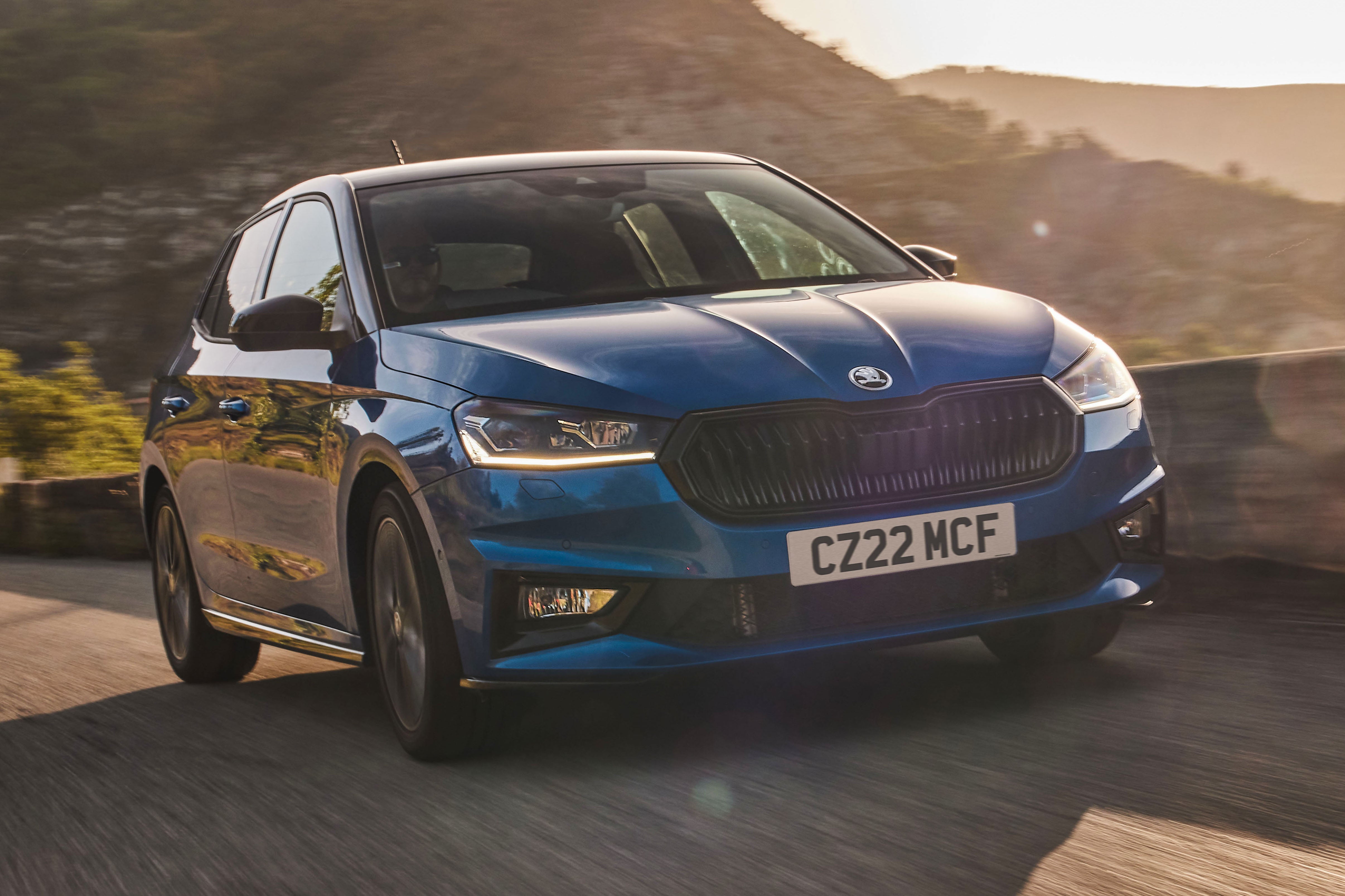
Beyond those three, the Peugeot 208, SEAT Ibiza and Skoda Fabia are all worth considering. The Yaris makes most sense if you want a small hatchback that feels especially easy to use every day and especially cheap to fuel without needing to plug it in.
What's the interior like in the Toyota Yaris?
The Yaris cabin is much more appealing than older Toyotas tended to be, though it still is not perfect.
Toyota Yaris boot space and practicality
Practicality is adequate rather than class-leading. Up front the Yaris feels welcoming enough, with a slightly raised driving position and decent room for driver and passenger. Getting comfortable is easy, and the basic layout is straightforward to understand.
The rear seats are less impressive. Adults can fit, but taller passengers will notice that knee room is only average by supermini standards. The Polo and Hyundai i20 both feel a little more generous here.
Boot space is another area where the Yaris trails the strongest rivals. At 286 litres, it is usefully sized for day-to-day duties but smaller than a Renault Clio’s and not as cleverly packaged as the best supermini boots. There is no especially useful false floor or underfloor trickery to make it feel more flexible, and the loading lip is more pronounced than it ideally should be.
That does not make the Yaris impractical. It is still roomy enough for shopping, smaller cases and the usual clutter of daily life. It just means buyers who prioritise space above all else may find better answers elsewhere.
Toyota Yaris dimensions
The Toyota Yaris measures 3,940mm long, 1,745mm wide & 1,500mm high. That keeps it right in the heart of the supermini class and helps explain why it feels so manageable in tighter town driving.
Its compact dimensions are a big part of the appeal. The Yaris is easy to thread through narrow streets, simple to park and generally feels like exactly the right size for drivers who want something small without it feeling tinny.
Tech and infotainment in the Toyota Yaris
This is one of the areas the update improved most obviously. Earlier cars already had reasonable infotainment, but the newer walk-up is easier to understand and gives the Yaris a stronger technology story.
Icon now gets a 9-inch central touchscreen, while upper trims use Toyota’s larger 10.5-inch system. Apple CarPlay and Android Auto are standard, which is really the key point in a car like this, because many buyers will simply use their own apps for navigation and media.
Driver-display tech also depends on trim. Icon and Design use a 7-inch combimeter setup, while Excel and GR Sport gain the much more substantial 12.3-inch digital display. Neither is especially flashy, but both are clear enough and keep the Yaris feeling current.
Toyota also deserves credit for keeping the system easy to use. This is not a small car that buries basic functions under layers of menus. The whole thing is more intuitive than that.
Materials available on the Toyota Yaris
The Toyota Yaris makes a good first impression inside. The dashboard design is more sculpted and more interesting than older Toyotas, and there are enough soft-touch areas around the main contact points to make it feel a cut above what many buyers may expect.
The weakness comes lower down, where there are still harder plastics and a few cheaper-feeling details that stop the cabin from matching the very best in the class for perceived quality. A Polo still feels more consistent here.
Even so, the Toyota’s overall fit and finish are strong. The controls feel solid, the switchgear works cleanly and the whole interior gives the impression it will wear its mileage well. That matters a lot in a car like this.
What's the Toyota Yaris like to drive?
The Yaris is one of those small cars that becomes more impressive the longer you live with it. It is not the most exciting supermini, but it is very easy to appreciate.
Toyota Yaris range and performance
The current Yaris line-up uses Toyota’s 1.5-litre full-hybrid setup in two outputs. The standard version produces 116PS, while the more powerful version delivers 130PS.
On paper, the jump does not look dramatic. Toyota quotes 0-62mph in 9.7 seconds for the 116PS version and 9.2 seconds for the 130PS version. Both have a top speed of 108mph.
For most buyers, the 116PS version is enough. It feels more alert in urban driving than the raw figures suggest because the electric motor gives it an immediate response off the line. The 130PS model is a useful upgrade if you simply want the better-equipped trims anyway, but it is not essential.
Performance data
| Model | Engine/battery size | Power | 0-62mph | Range/MPG |
|---|---|---|---|---|
Hybrid 116 | 1.5-litre | 116PS | 9.7 seconds | Up to 70.6mpg |
Hybrid 130 | 1.5-litre | 130PS | 9.2 seconds | Up to 68.9mpg |
Toyota Yaris driving and refinement
The Toyota Yaris is one of the easiest superminis to drive well. Around town it feels smooth, quiet and very relaxed. The hybrid system’s ability to lean on electric running at lower speeds gives it a calmness many small petrol cars struggle to match.
The steering is light enough to make parking and urban manoeuvres easy, yet there is still enough weight and accuracy to stop the Yaris feeling detached once you leave town. It corners tidily too, with good body control and more poise than older Yaris generations ever managed.
That does not make it a true driver’s choice. A Ford Fiesta still feels keener and more playful, and some rivals ride a little more softly over rough edges. But the Toyota has enough composure and enough polish that it never feels dynamically disappointing.
Refinement is one of its strongest cards. In gentle use the Yaris is very quiet for a small car, and even on the motorway it remains calmer than many superminis. The hybrid transmission still lets the engine flare under hard acceleration, but Toyota has done a good job of making that less intrusive than in older systems.
How safe is the Toyota Yaris?
The Toyota Yaris earned a full five-star Euro NCAP rating in 2020, and that remains a very impressive result in a demanding test regime.
Toyota Safety Sense is standard across the range, which is a major strength. The Yaris comes with a broad spread of driver-assistance systems including adaptive cruise control, lane assistance, road-sign recognition and automatic high beam. That makes it feel especially well equipped for a supermini.
The active safety systems are also better integrated than some rivals’ setups. Rather than feeling like a bundle of half-finished driver aids, the Yaris’s assistance package generally works in a measured and well-judged way.
Running costs: What it's like to live with a Toyota Yaris
Running costs are one of the Yaris’s biggest selling points. This is a small hatchback designed to be easy on fuel and straightforward to own.
Toyota Yaris fuel economy
Toyota quotes up to 70.6mpg for the 116PS Yaris, while the more powerful 130PS version still manages excellent official economy in the high-60s mpg depending on trim.
Those are very strong numbers for a supermini, and Toyota hybrids have a habit of getting closer to their claimed figures than many rival powertrains do in everyday use. Around town especially, the Yaris can be impressively frugal.
That means the Yaris is one of those rare small cars that feels genuinely cheap to fuel rather than simply not too bad. If your mileage is mainly urban or mixed, it should be very easy to live with.
Toyota Yaris warranty and servicing
New cars get a three-year manufacturer warranty, and Toyota then adds a further 12 months or 10,000 miles of cover after each qualifying dealer service, up to 10 years or 100,000 miles.Servicing schedule is on a 12-month or 10,000-mile interval, whichever comes first, and that is the pattern Yaris buyers should budget around.
Toyota Yaris insurance groups
Insurance groups run from 13 to 14 across the current line-up, which is reasonable enough for a modern hybrid supermini with this level of safety equipment and technology.
It is not the absolute cheapest car in the class to insure, but it should still remain manageable for most buyers.
How much does it cost to tax a Toyota Yaris?
The Toyota Yaris now costs £200 a year in VED after year one, which is the current standard annual rate for petrol and hybrid cars.
The Expensive Car Supplement applies above £40,000, and the Yaris sits comfortably below that threshold across the current range. So there is no additional premium-car tax to worry about here.
What trims are available with the Toyota Yaris?
The Toyota Yaris line-up consists of Icon, Design, Excel and GR Sport.
Yaris Icon is the entry point, but it still comes with plenty. Standard kit includes 16-inch alloys, the 9-inch touchscreen, reversing camera, automatic air conditioning, LED rear lights and Toyota Safety Sense.
Yaris Design adds the smarter exterior lighting treatment, tinted rear windows and the digital instrument upgrade. This is the trim that makes the strongest overall case because it feels noticeably more complete without becoming expensive.
Yaris Excel is the more luxurious version. It brings extra comfort kit, keyless entry, more advanced safety features, upgraded audio and the larger digital driver display.
Yaris GR Sport is the visually sportier model and also gets the stronger 130PS hybrid setup. It adds more aggressive styling cues, larger wheels and a more assertive cabin look, but like most GR Sport Toyotas it is more about image than deep mechanical change.
Ask the Drive experts: common questions
Is the Toyota Yaris a good small car?
Which Toyota Yaris is best?
Is the Toyota Yaris hybrid only?
Does the Toyota Yaris get the Expensive Car Supplement?
Get our latest advice, news and offers
Keep me updated by email with the latest advice, news and offers from Drive.