Skoda Fabia Review

Written By David Ross
- 2021
- Hatchback
- Petrol
What we love
Excellent boot space for a small hatchback
Comfortable, quiet and easy to live with
Strong value in the middle of the range
Things to consider
Cabin focuses on durability and practicality
80PS engine is best suited to town driving
Manual gearbox isn’t available
The DRIVE take on the Skoda Fabia, is it the right car for you?
The Skoda Fabia is one of the easiest small cars to recommend. It is not the cheapest small car on sale, and it does not try to be the sportiest either, but it gets the important bits right. It is spacious for its size, comfortable over poor roads, cheap enough to run and available with a sensible line-up of petrol engines. If you want a small hatchback that feels grown-up, but without stretching to a larger family car, the Fabia should be high on your shortlist. If style matters more than space, a Renault Clio looks sharper, while a Volkswagen Polo remains the slightly posher sister car.
The Skoda Fabia in more detail
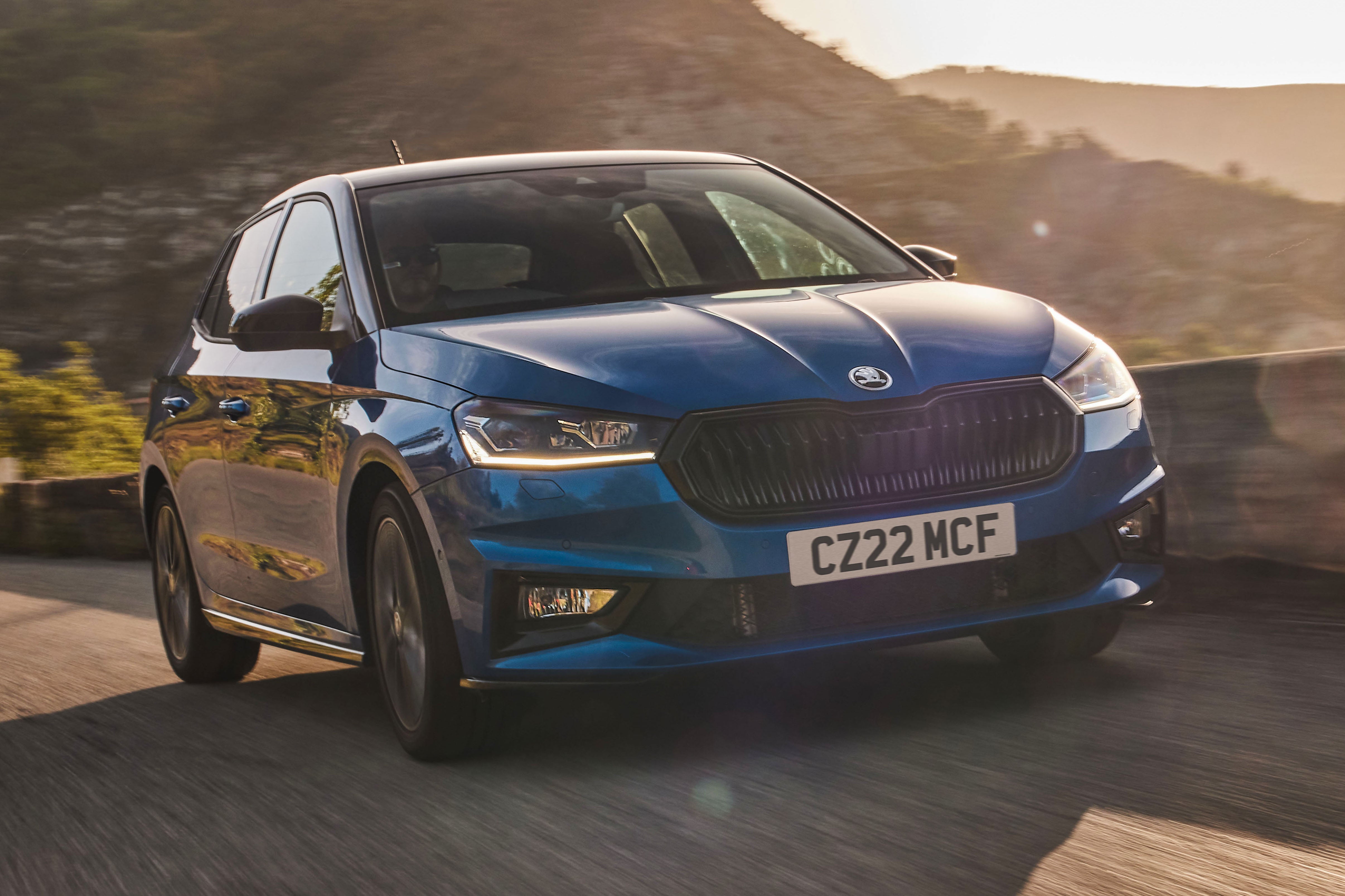
The current Skoda Fabia has been around since 2021, but it still feels right up to date because it was a big step forward over the old car. It is larger than before, has a much more practical cabin and boot, and feels more mature on the move than many superminis, yet it looks a lot sharper than ever before as well. That’s important, because small hatchbacks are no longer cheap by default, and buyers now need a reason to choose one over a small SUV. The Fabia’s appeal is simple: it gives you nearly all the everyday usefulness of a larger car in a more manageable package.
The range is now petrol-only in the UK, with naturally aspirated and turbocharged 1.0-litre engines, plus a stronger 1.5-litre turbo petrol higher up the line-up. As of April 2026, the standard range runs from SE Edition to Design Edition, SE L Edition and Monte Carlo Edition, with the Fabia 130 sitting above them as a more specialised performance-focused version. Prices now start just above £21,000 and rise to just over £30,000 for the 130.
Browse used Škoda Fabias for sale →
Importantly, despite its strong value, the Skoda Fabia does not feel stripped out or compromised in its best versions. Even the basic car has a sensible amount of standard kit, but the mid-range trims add the items many buyers want, and will be prepared to pay the extra for. The result is a small car that feels utterly sensible. It is particularly strong if you value comfort, ease-of-use, generous interior space, and a genuinely useful boot. At 380 litres, the Fabia’s luggage space is actually better than that of many cars in the class above.
Where the Skoda Fabia falls a little short is excitement. It’s tidy, secure and utterly competent, but you couldn’t call it playful, and some rivals such as the Renault Clio are a bit more interesting to drive. Having said that, the Fabia has the beating of most rivals for ride comfort, so there are compensations.
It should also be said that the Skoda Fabia’s interior feels sensible and solid rather than premium, but that’s not a rarity in the class. It’s fine in the cheaper trims, but a bit more noticeable once you start spending Monte Carlo trim money.
What's the best Skoda Fabia trim and engine option?
For most buyers, the sensible choice is the Skoda Fabia SE L Edition with the 1.0 TSI 116PS engine. That combination gives you enough performance to make the car feel effortless, but without pushing the price too far into larger-car territory. Officially, the manual 116PS SE L manages 0-62mph in 9.3 seconds and returns up to 55.3mpg, which is a sensible blend of pace and economy for everyday UK driving.
The cheaper 95PS 1.0 TSI available in SE Edition and Design Edition trims is still worth considering if you mainly drive in town or want to keep costs down, but the 116PS version is the one that makes the Skoda Fabia feel properly rounded. The 80PS MPI is hard to recommend unless a low purchase price is your main priority: a 0-62mph figure of 15.7 seconds is slow by any standard, but more than that, you’ll be working it to its limits to achieve even adequate performance. At the other end of the scale, the 1.5 TSI 150PS is brisk and suits motorway drivers well, but it starts to chip away at the Fabia’s value-for-money appeal.
Trim-wise, and while the SE Edition is decent, the SE L Edition is better value because it adds some useful extra features, including wireless smartphone connectivity, a rear-view camera and folding heated door mirrors. There’s also a large 9.2-inch touchscreen with a built-in sat nav and 10-inch digital dash. Opt for the Skoda Fabia Monte Carlo if you want a sportier look, but you do pay a premium for it.
What’s the price of the Skoda Fabia?
The Fabia range starts at £21,070 for the SE Edition 1.0 MPI 80PS manual. Design Edition cars begin at £21,955, SE L Edition cars at £23,845 and Monte Carlo Edition cars at £24,305. The range-topping Fabia 130 starts at £30,010. It’s not the cheapest small car out there then, and some good rivals can be had for less, but it is nevertheless competitive for a well-equipped supermini, especially one with so much space. That said, the Skoda Fabia 130 does push into territory where you might start looking at larger hatchbacks. There are also plenty of used Škoda Fabias for sale for considerably less.
Alternatives to the Skoda Fabia
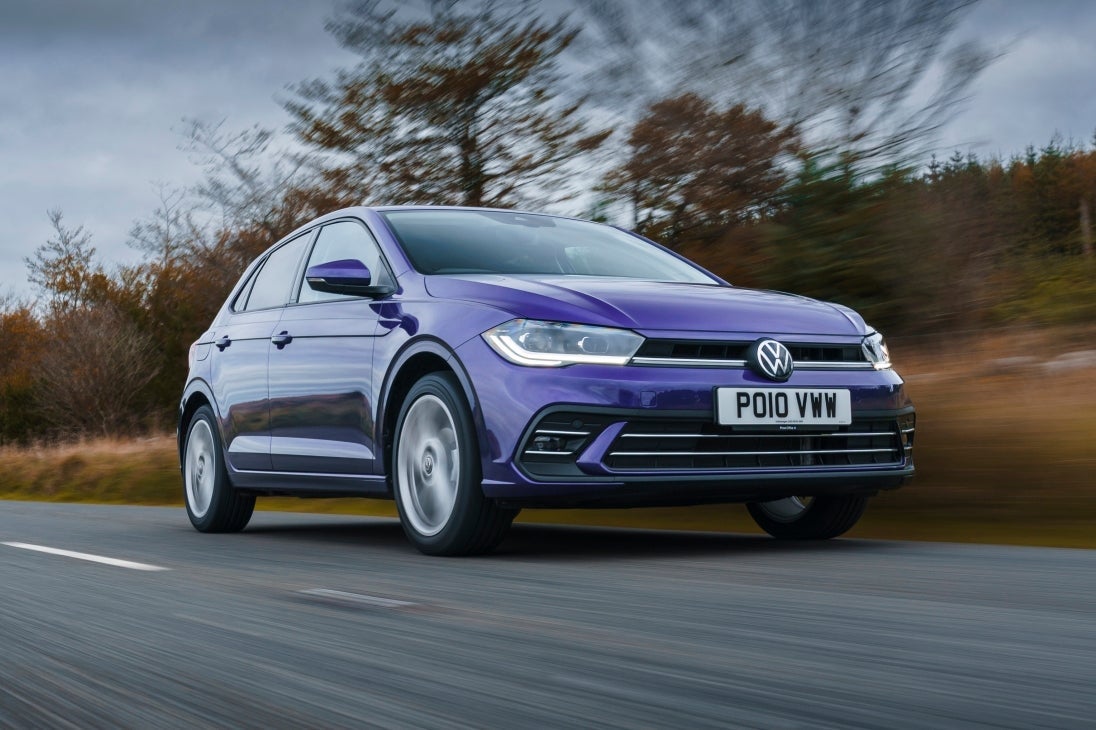
The most obvious alternative is the Volkswagen Polo. It shares much with the Fabia underneath, feels slightly more polished inside and, in the eyes of some buyers, has a slightly more desirable image. If you want the Skoda Fabia formula with a slightly more upmarket feel, it is the natural place to start, but do bear in mind that its boot is smaller at 351 litres and you’ll pay a bit more for the privilege.
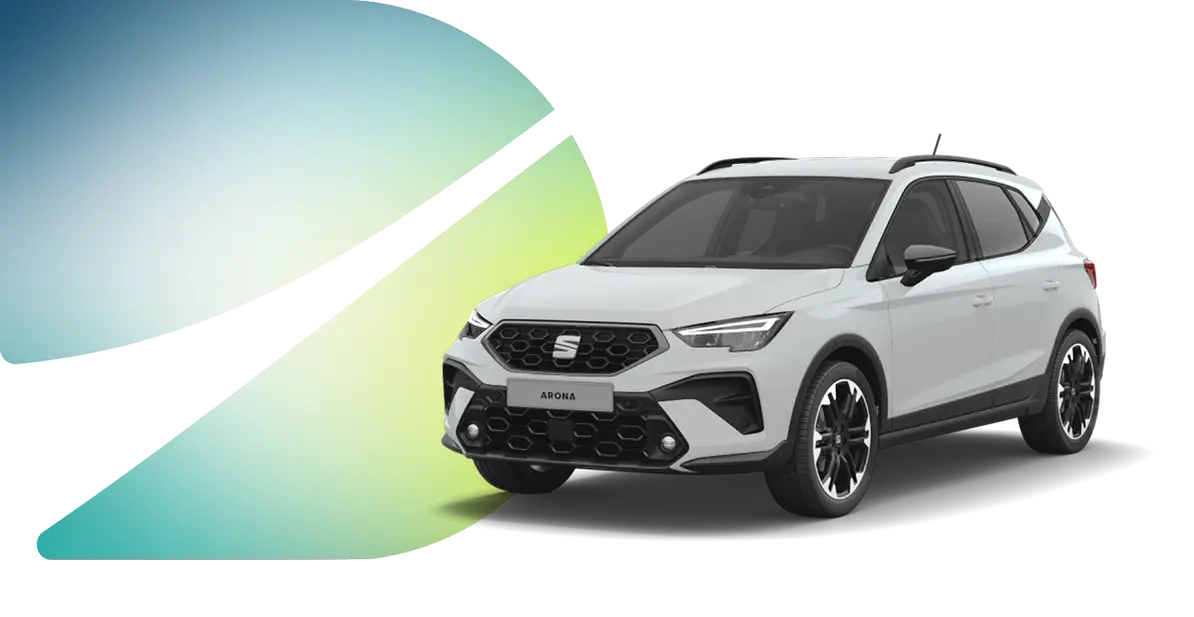
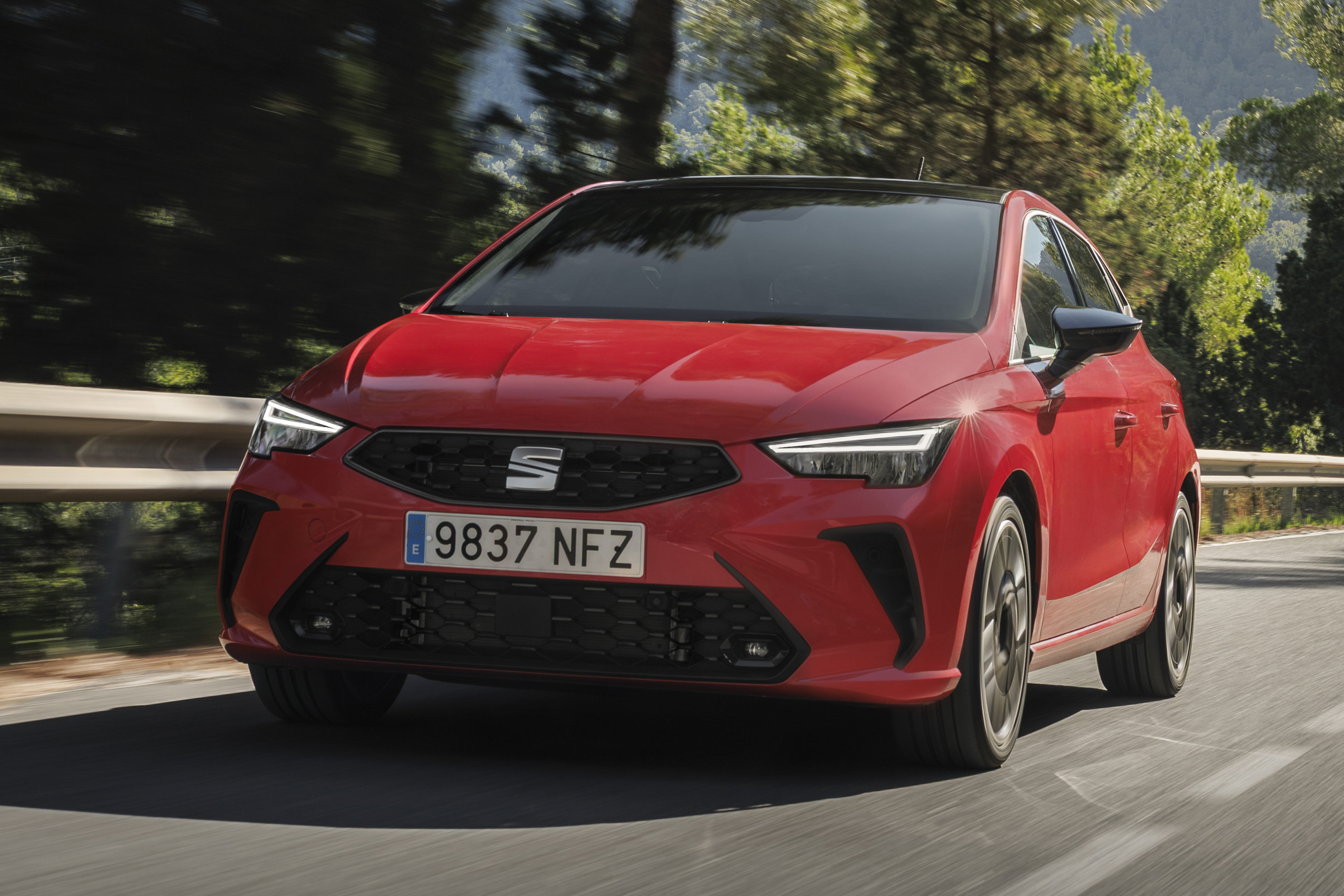
The SEAT Ibiza is the sharper-looking and slightly more youthful alternative. Again, it’s mechanically related to the Fabia and as a slightly lower starting price, so it’s certainly worth a look if style matters more than practicality.
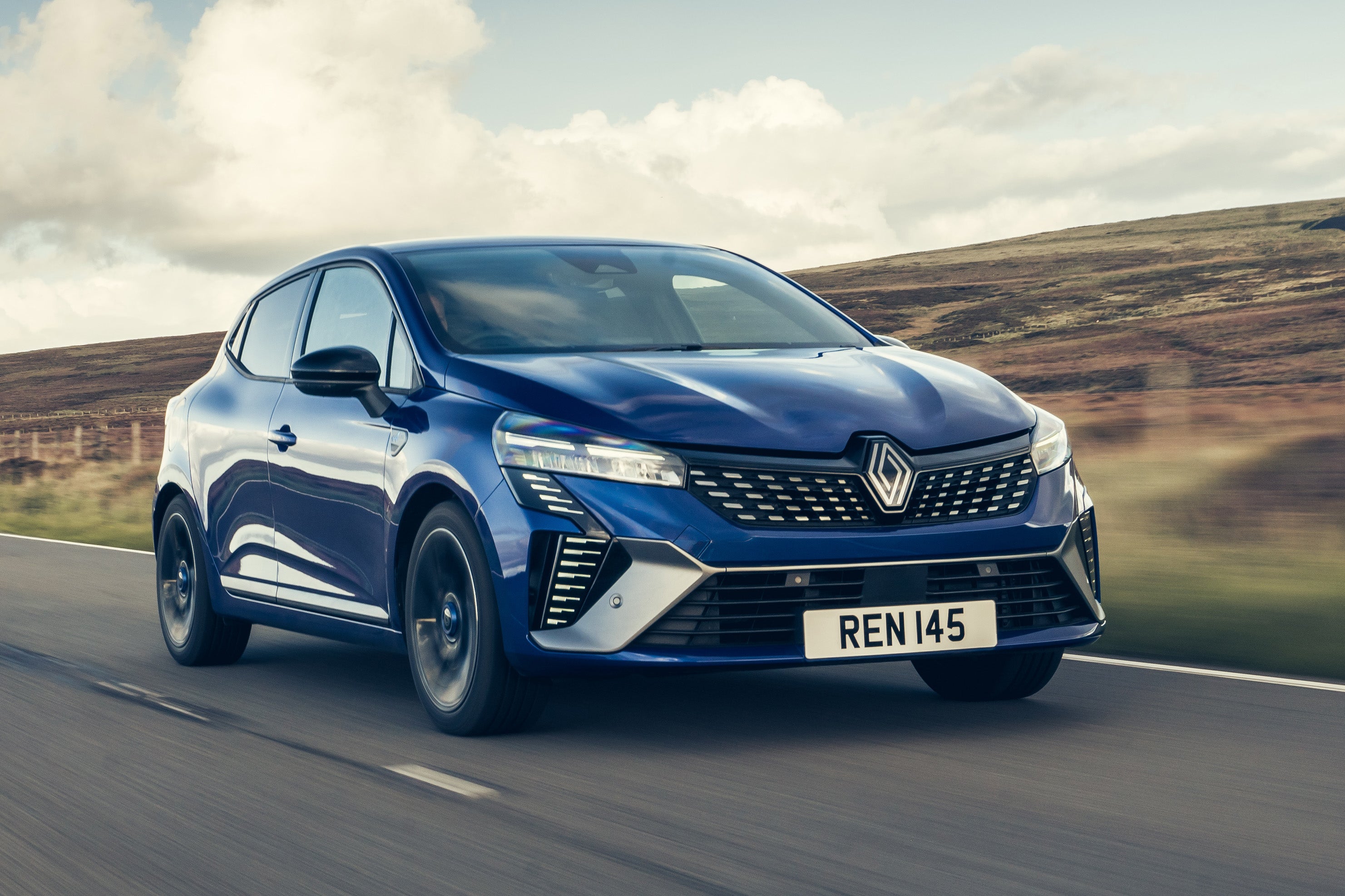
The Renault Clio is one of the strongest rivals. Its starting prices are much lower, it looks smart inside and out, is good to drive, and in petrol form offers a larger 391-litre boot, although it’s not as roomy as the Fabia in the back seats. If you want a small car with a bit more flair, the Clio is very easy to shortlist.
What's the interior like in the Skoda Fabia?
The Fabia’s interior is not flashy, but it is easy to get along with. It has mostly sensible ergonomics and more passenger space than most small hatchbacks manage. It looks conservative next to a Renault Clio, but it wins back ground with its practical passenger compartment and useful boot.
Skoda Fabia boot space and practicality
Practicality is one of the Skoda Fabia’s biggest selling points. Up front, the driving position is easy to get comfortable in, the visibility is good and the cabin layout is simple enough that you are not constantly hunting through menus for too many basic functions, unlike many cars. That said, while there are physical buttons and dials for controlling the air-con, some elements of the system still have to be controlled through the screen, such as changing the fan speed or switching the direction of the airflow.
The even better news is that rear-seat space is among the best in the class. The Skoda Fabia’s 2564mm wheelbase helps here, giving it enough legroom to work as a genuine small family car rather than just a city runabout. Adults will be happier in the back than they are in many rivals, and the car’s boxy shape means headroom is good, too.
Then there is the boot. At 380 litres with the rear seats up, the Skoda Fabia matches or beats many larger hatchbacks from the class above, and this remains one of the most persuasive reasons to buy a Fabia. It has a clear advantage over the Volkswagen Polo’s 351-litre boot, while even the Renault Clio’s impressive 391-litre figure is only slightly ahead. In real life, the Fabia is the sort of supermini that can cope with pushchairs, weekend luggage and a proper weekly shop without drama.
Skoda’s trademark ‘Simply Clever’ features help with practicality, too, as these are small practical touches that genuinely make life easier. As usual, there’s an umbrella concealed in the door and an ice-scraper - complete with tyre tread depth gauge - hidden under the fuel filler flap.
Skoda Fabia dimensions
The standard Fabia measures 4,108mm long, 1,780mm wide and 1,459mm high, with a 2,564mm wheelbase. That makes it usefully larger than many other superminis, but without making the car become awkward to park or thread through town.
For context, a Volkswagen Polo is 4074mm long with a 2552mm wheelbase, so the Fabia has a small but worthwhile size advantage. That helps explain why it feels so roomy inside and why the boot is such a strong point.
Tech and infotainment in the Skoda Fabia
SE Edition gets an 8.25-inch infotainment display, an 8.0-inch digital instrument display and wireless Smartlink for Apple CarPlay and Android Auto. That is a solid starting point and enough for plenty of buyers. Move up to the Design edition, and those digital dials are replaced by a larger 10.25-inch system called Virtual Cockpit.
Upgrading to the SE L Edition earns you a larger 9.2-inch central display with in-built navigation, and from then on, the infotainment offering stays broadly the same through Monte Carlo and 130 trims.
The good news is that the Fabia still feels easier to use than many newer rivals. It does not bury absolutely everything in the screen, and the interface is much less fussy than the systems in a lot of cars these days. It’s not especially glitzy to look at, but it is tidy, logical and functional, and in our book, that’s more important.
Materials available on the Skoda Fabia
You may expect Skoda’s cheapest model to feel like it, but if that’s the case, you’ll likely be pleasantly surprised. Sure, there are some hard plastics dotted around the place, but that’s the case in pretty much every rival, and in the Skoda, they still manage to look smart, with nice texturing and a tasteful mix of colours. And, even-entry-level SE Edition cars come with leather finished for the steering wheel, gearknob and handbrake, those being your main touchpoints.
All the switches, buttons and dials have a nice solid feel, and you’ll notice no squeaks or rattle on the move, either, so the quality of the assembly feels just as good as the materials. All in all, we’d actually place the Fabia at the posher end of the class for cabin quality.
What's the Skoda Fabia like to drive?
The Fabia is comfortable, secure and easy to drive. It is not the sharpest supermini on a twisting road, but it rides well, feels stable at speed and has a grown-up motorway character that many small hatchbacks still struggle to match. That makes it a better all-rounder than a lot of rivals.
Skoda Fabia range and performance
The first thing you notice about the Skoda Fabia range is what there isn't. And that's no electric version, no plug-in hybrid and not even a regular hybrid. Instead, Skoda is sticking to a straightforward petrol-only line-up. Hurrah for simplicity.
The Skoda Fabia has always been a sensible small hatch and that's not changing any time soon. So the engine range is made up mostly of various 1.0-litre models, all of which have modest performance but are cheap to run.
Initially, the entry-level engine was the 1.0 MPI with a modest 65PS and a five-speed manual gearbox. It was desperately slow and was not really up to the job, and has now been discontinued, which is probably a good thing.
That leaves the 1.0 MPI 80PS as the current entry-level engine. It’s better, but it’s still pretty slow and only really suitable for town use, as it feels decidedly breathless and underpowered on the motorway.
If your driving is more mixed, we'd recommend one of the turbocharged 1.0 TSI engines. The 95PS version is quick enough and lively enough for most driving situations, and thanks to the fact it's a three-cylinder engine, not only is it particularly nippy at low speeds, but it also has a bit of character.
If you do more motorway work, though, then we’d say it’s worth upgrading another step to the 1.0 TSI 116PS (a 110PS version of this was offered previously). It’s only a little more powerful, but the extra urge allows it to go about its business in a generally much more calm and relaxed way. Motorway refinement is also helped by the fact it comes with a six-speed manual gearbox, rather than the five-speeder that comes with all the other engines we’ve talked about up to now. You can also specify this engine with a DSG automatic gearbox, but you'll pay a hefty premium to do so, so unless you must have an auto, we'd stick to the positive-shifting and enjoyable-to-use manual.
There’s a pokier option on offer in the form of the 150PS 1.5 TSI engine. This was originally only offered in the Fabia Monte Carlo, but has now been extended out to some of the other trims. It's still not particularly brisk, mind, with the 0-62mph sprint taking a leisurely eight seconds. It doesn’t feel a whole lot more urgent than the pokiest 1.0-litre, in fact, and the price premium is considerable, and we don’t think it’ll be worth it for most buyers.
Skoda hasn’t made a vRS version of this generation of Fabia, but it has recently introduced a new range-topping sporty version called the Fabia 130, to celebrate the 130-year anniversary of the company. This has a 177PS version of the 1.5-litre engine, paired with a DSG automatic gearbox. With a 0-62mph figure of 7.4 seconds, it’s best to think of the Fabia 130 as a warm hatch, rather than an out and out hot hatch. It’s quick, but not properly fast, but that should suit a lot of potential buyers.
Performance data
| Model | Engine/battery size | Power | 0-62mph | Range/MPG |
|---|---|---|---|---|
1.0 MPI 80 | 1.0-litre | 80PS | 15.7 seconds | Up to 54.9mpg |
1.0 TSI 95 | 1.0-litre | 95PS | 10.7 seconds | Up to 56.5mpg |
1.0 TSI 116 | 1.0-litre | 116PS | 9.3 seconds | Up to 55.5mpg |
1.0 TSI 116 DSG | 1.0-litre | 116PS | 9.7 seconds | Up to 53.6mpg |
1.5 TSI 150PS DSG | 1.5-litre | 150PS | 8.0 seconds | Up to 53.0mpg |
1.5 TSI 177PS DSG | 1.5-litre | 177PS | 7.4 seconds | Up to 51.7mpg |
Skoda Fabia driving and refinement
The Fabia’s biggest strength is that it generally behaves like a bigger car. Around town, it’s easy to place, the controls are light, and visibility is decent. On rougher roads, it rounds off bumps better than most rivals at all speeds, making it one of the most comfortable cars in the supermini class.
It’s also one of the class-leaders for motorway work, provided you choose one of the pokier engines: the least powerful ones can become undeniably buzzy at 70mph. Wind- and road noise are detectable but well subdued, and the car feels both comfortable and stable at the national limit.
Find yourself a country road, and the Fabia won’t exactly rock your world, but it’s utterly competent. Grip is strong, and the body control is good enough that the car changes direction neatly, predictably and responsively. The steering can feel a bit artificial, which robs you of a bit of engagement, but that's the case in most rivals, too. A Clio is more fun and the Polo feels a touch neater, but if you prioritise comfort and ease, the Fabia is hard to beat.
How safe is the Skoda Fabia?
The Fabia has a five-star Euro NCAP rating from crash tests that took place in 2021, and the car was also named Euro NCAP’s ‘Best in Class’ small family car that year. The standard safety roster is pretty much the same across the range, and includes automatic emergency braking, lane assist, traffic sign recognition, three Isofix child seat mounting points, driver monitoring, and six airbags, while another three ‘bags can be added as an optional extra. Adaptive cruise control is a cost option across the range, too.
Running costs: What it's like to live with a Skoda Fabia
The Skoda Fabia should be relatively affordable to run regardless of which of the petrol engines you pick, because they're all quite sensible. Insurance is low in the entry-level versions, and you certainly won’t be troubled by higher-rate VED tax. The only caution is that the car is no longer especially cheap to buy, so choosing the right version is important so that you get the right balance of abilities without paying too much.
Skoda Fabia fuel economy
According to official WLTP combined fuel economy figures, the entry-level 1.0 MPI engine can achieve up to 54.9mpg, while the 1.0 TSI 95PS engine does a little better with up to 56.5mpg. That makes it the most frugal choice, albeit by only a smidgen. The 116PS engine can achieve up to 55.5mpg when fitted with a manual gearbox, although specifying the DSG automatic takes that figure down to 53.6mpg. These precise figures are for the entry-level SE Edition car, and when combined with higher-up trim levels, these engines have fractionally worse efficiency (and we do mean fractionally) due to larger wheels and more weight.
The best that the 1.5 TSI 150 engine has a combined figure of up to 53.0mpg, while even the most powerful range-topping 130 model achieves a figure of up to 51.7mpg. With the official economy of the entire range sitting above the 50mpg, you can be pretty much assured of low petrol bills. There are no hybrid- or plug-in-hybrid models to get fuel bills even lower, but with numbers like these, do you really need them?
Skoda Fabia warranty and servicing
Skoda’s warranty is less generous than you get with many Japanese, Korean, and Chinese brands these days. It’s a bog-standard three-year arrangement, made up of two years with unlimited mileage and a third year capped at 60,000 miles. If you want more cover than that, then optional extended warranty packages can be had at extra cost.
Servicing on the Fabia is done in one of two ways. Low-mileage drivers who do mainly short journeys in urban areas, plus those who tow, should keep to a fixed regime of a service every year or 10,000 miles. However, higher-mileage drivers who do more motorway work can instead opt for a flexible regime where the car will tell you when it needs attention. This can allow anything between 9,000 miles and 24,000 miles between services, or a maximum of 24 months.
Skoda Fabia insurance groups
Insurance groups run from 4 for the entry-level 1.0 MPI SE Edition up to 22 for the Fabia 130. Most mainstream 1.0 TSI versions sit in the low-to-mid teens, while the 1.5 TSI 150PS cars fall into group 20. That is a sensible spread and helps keep the Fabia appealing to younger drivers and cost-conscious households, especially in the cheaper trims.
How much does it cost to tax a Skoda Fabia?
The Fabia’s pricing is low enough that it doesn’t get anywhere near the threshold for higher-rate VED road tax liability, so that won’t be of any concern whatsoever, even on high-end versions loaded with extras. That means you’ll only pay the annual standard flat rate, which is currently charged at £200 per year.
What trims are available with the Skoda Fabia?
The Fabia’s trim levels - and the amount of kit that came with each one - have chopped and changed a bit over the time it’s been on sale, but these days, the trims available are SE Edition, Design Edition, SE L Edition, Monte Carlo and 130.
The range kicks off with SE Edition. This gets 15-inch alloy wheels, an 8.25-inch infotainment screen, wireless smartphone mirroring, keyless start, LED headlights, rear parking sensors, rain-sensing wipers, four powered windows, cruise control, and dual-zone air-conditioning. It’s hardly bare-bones, then, but it is best paired with at least the 95PS engine, rather than the slower 80PS unit, if your budget allows.
Design Edition sits above that and adds extra visual appeal without becoming too expensive. You get privacy glass, metallic paint, extra interior embellishments and a set on 10.25-inch digital dials.
SE L Edition feels like a significant step up in luxury, and is where the Fabia starts to feel properly swanky. It adds different 16-inch alloy wheels, a 9.2-inch navigation display with wireless Smartlink and voice control, a rear-view camera, ambient cabin lighting and posher interior trim.
Monte Carlo Edition trim adds a whole heap of aesthetic-enhancing extras, such as 17-inch black alloy wheels, full LED lighting, sports bumpers and sporty interior details. You also get sports seats, automatic high beam control, part-manmade-leather upholstery, front parking sensors, and selectable drive modes.
Then there is the Fabia 130. As well as its uprated 177PS 1.5 TSI engine and lowered suspension, it also has 18-inch wheels, aerodynamic tweaks, black twin exhausts, a contrast black roof and red brake calipers.
Ask the Drive experts: common questions
How much does the Skoda Fabia cost?
What is the best Skoda Fabia engine?
How big is the Skoda Fabia boot?
Is the Skoda Fabia a good family car?
Get our latest advice, news and offers
Keep me updated by email with the latest advice, news and offers from Drive.