Mazda 6e Review

Written By Matt Robinson
- 2026
- Hatchback
- Electric
What we love
Handsome exterior design
Competitive range and rapid charging
Generous standard equipment
Things to consider
Unsettled ride and vague steering
Too many controls are buried in the touchscreen
High insurance group
The DRIVE take on the Mazda 6e, is it the right car for you?
The Mazda 6e offers plenty of range, equipment and visual appeal for less money than most comparable electric cars. Its 348-mile official range, 200kW charging and practical hatchback body make it a credible long-distance EV, but the poor ride and touchscreen-heavy controls are disappointing from a brand normally known for engaging handling and excellent ergonomics.
The Mazda 6e in more detail
There's an expectation of what a Mazda should feel like to drive. The Japanese firm has long prided itself on making all of its products, not just the Mazda MX-5 sports car, great to drive. Elements such as steering weight and feedback, well-balanced handling and pleasant to use controls that fall in easy reach from the driver's seat. The company seems to be moving away from that with the 6e.
Even before you set off, alarm bells start to ring when you learn that turning on the windscreen wipers or adjusting the door mirrors requires multiple prods of the massive central touchscreen – it seems very un-Mazda and more Tesla-like (sadly, the company has gone a similar direction with the updated CX-5). And then you drive the 6e and experience its vague steering and suspension that's somehow both floaty and quite uncomfortable. Again, that's not very Mazda.
If you've owned a recent-ish Mazda, then you need to forgo any expectations of the 6e being similar beyond its badging and styling. That's because technically, it's not a 'proper' Mazda, but the product of the firm's joint-venture with Chinese car firm Changan, being based on a model not sold here called the Deepal L07.
The car's already been on sale for a while in China as the Mazda EZ-6, before heading to Europe with additional development to make it more suitable for the market here. It received further tweaks before landing in the UK, including a change of battery pack, but we reckon it could do with a bit more.
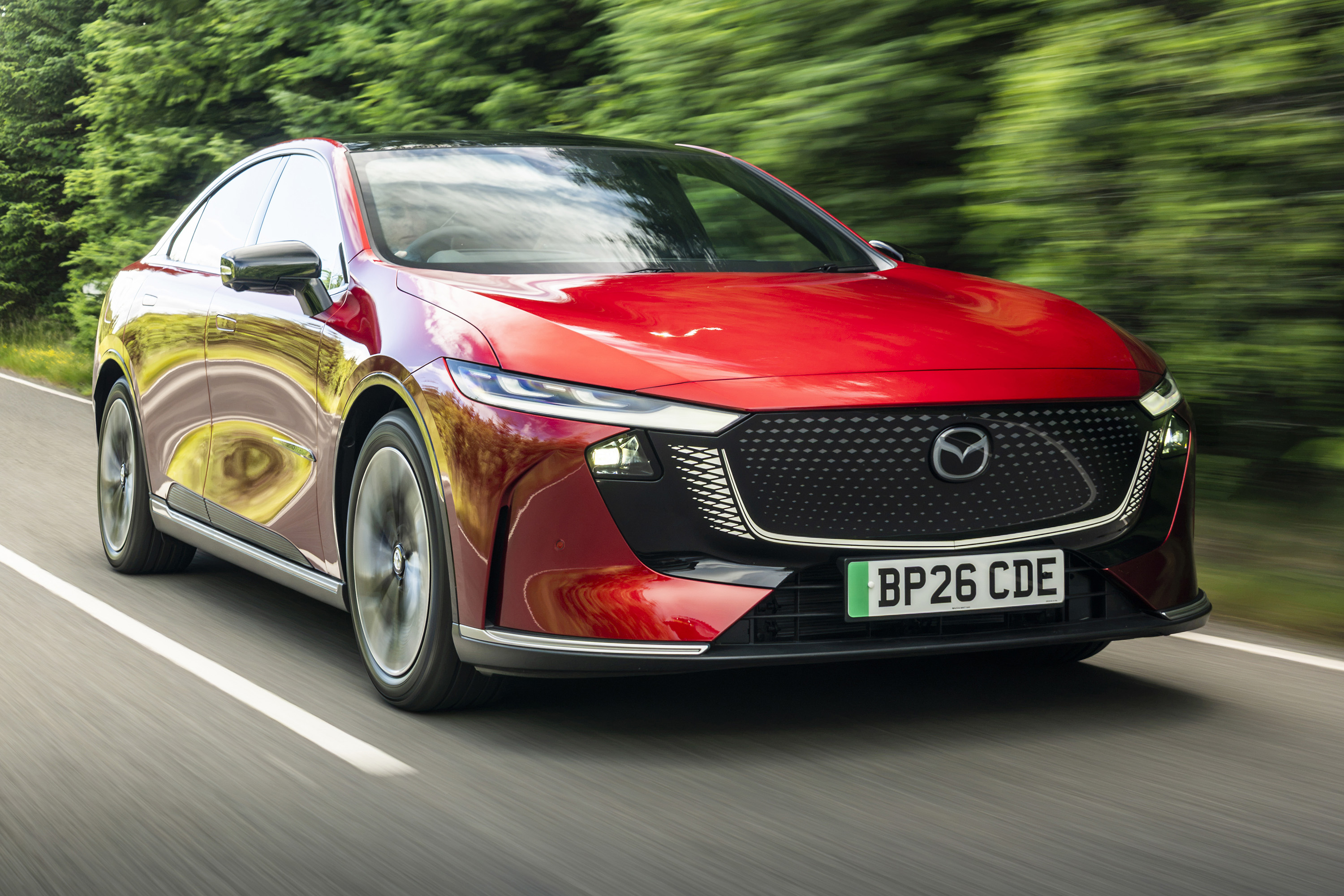
Although it doesn't feel very Mazda-like to drive, it definitely looks like a Mazda. The front end ties in well with Mazda's Kodo design philosophy, although it's less distinctive at the rear, looking more similar to the Deepal it's based on. The interior has a minimalistic design, but it's gone too far with this and the absence of physical controls, as already alluded to, plus the tan suede upholstery option makes a welcome alternative to blacks and dark greys.
We really wish it drove a bit better (and more like a Mazda, frankly), and its overreliance on the central touchscreen is a real turn-off. But it's difficult to ignore the range, rapid charging ability and standard equipment you're getting for the price, which is much less than rivals, including some also built in China. It helps that the car is handsome, too. Whether or not all that is enough to offset the car's mixed driving experience and tech frustrations is up to you.
What's the best Mazda 6e trim and battery option?
The Mazda 6e Takumi is the best version because it provides the same battery, motor, range and charging performance as Takumi Plus for £1,000 less.
Standard equipment is already extensive. Takumi includes 19-inch alloy wheels, a panoramic glass roof, keyless entry, a powered tailgate and a 360-degree parking camera.
Inside, it has electrically adjustable front seats, heated door mirrors, faux-leather upholstery and 64-colour ambient lighting. The technology package includes a 14.6-inch touchscreen, a 10.2-inch digital instrument display, wireless Apple CarPlay and Android Auto, a wireless phone charger and a 14-speaker Sony audio system. Adaptive cruise control, blind-spot monitoring, autonomous emergency braking and lane-keeping assistance are also standard.
Takumi Plus adds tan Nappa leather and suede-style upholstery, along with an electrically operated sunshade for the panoramic roof. The upgraded interior looks warmer and more distinctive than the predominantly dark Takumi cabin, but it does not improve the car’s range, performance or practicality. The £1,000 increase is reasonable for buyers who prefer the richer upholstery, although Takumi remains the stronger value.
What’s the price of the Mazda 6e?
The Mazda 6e Takumi costs £38,995, while Takumi Plus is priced at £39,995.
That narrow £1,000 spread makes the range easy to understand and places both versions below many comparable electric cars.
A Volkswagen ID.7 costs considerably more in an equivalent specification, while the BMW i4 and Hyundai Ioniq 6 also start at higher prices. Even the Chinese-built BYD Seal is more expensive in some comparable forms.
Mazda has not reduced the standard specification to achieve the lower price. Features such as a panoramic roof, premium audio, electrically adjustable seats, adaptive cruise control and a 360-degree camera are included from the outset.
Both trims also remain below the £50,000 electric-car threshold for the Expensive Car Supplement, even after allowing for the £1,000 difference between them.
Paint and dealer-fitted accessories can still increase the final invoice, but the Expensive Car Supplement is based on the original taxable list price and factory options rather than finance interest or retailer-added products.
Alternatives to the Mazda 6e
Not many, is the answer to that. While large family hatchbacks were once all the rage, they’ve now been overtaken by SUVs in the affections of family car buyers, and very few remain as a result. Even fewer exist in all-electric form.
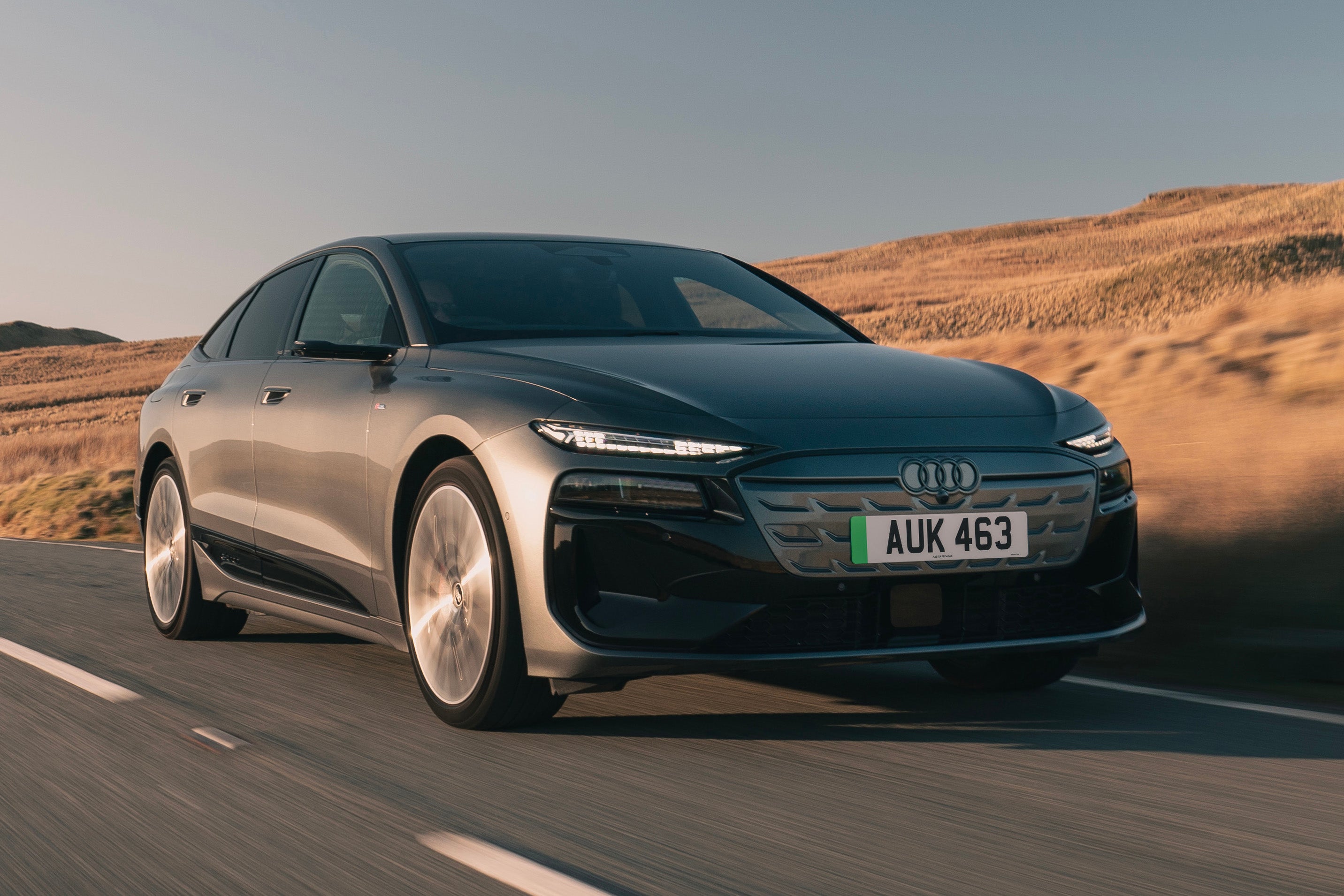
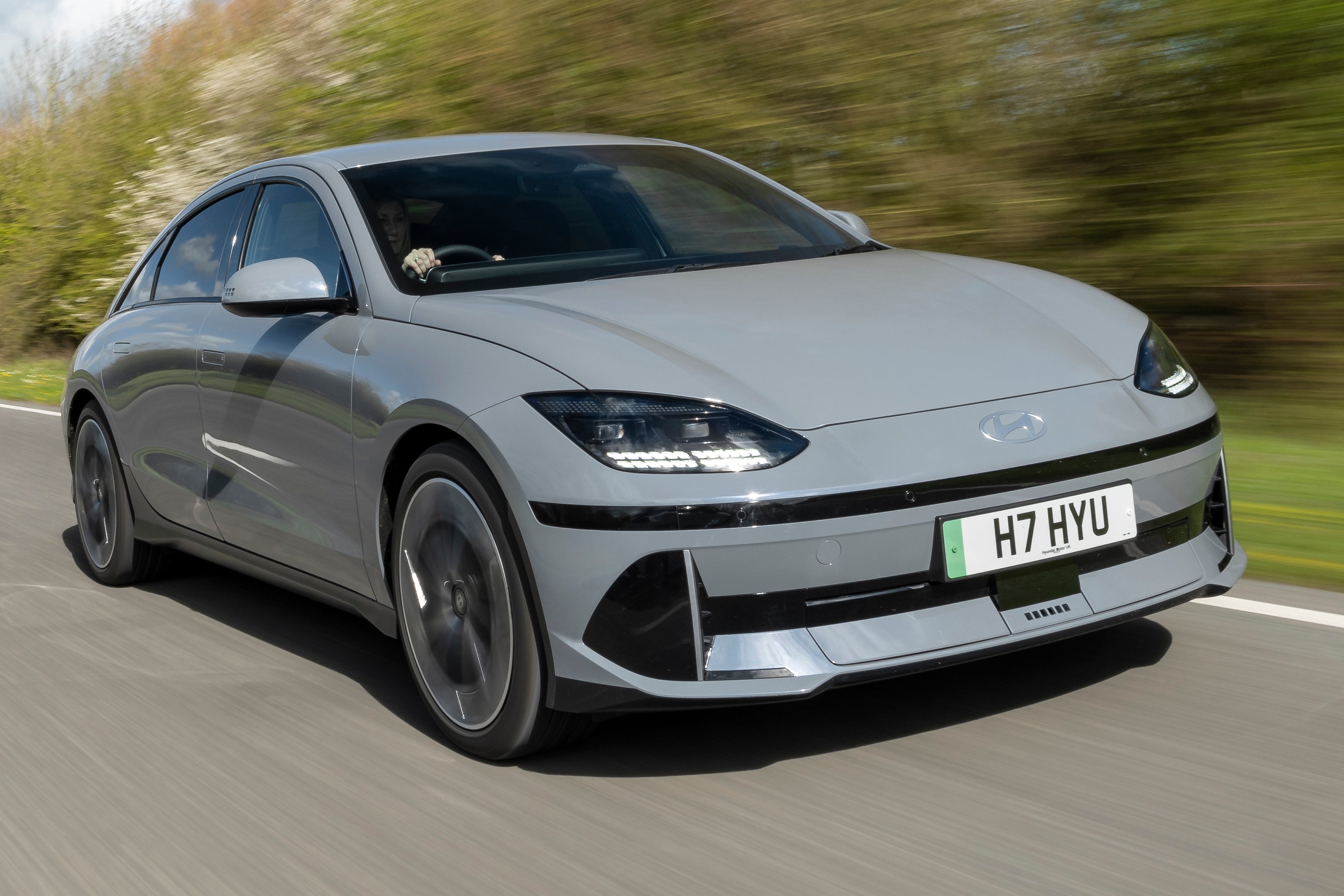
The most direct rivals we can see are probably the Volkswagen ID.7, which is a similar size and shape, and maybe the Hyundai Ioniq 6, which is a similar size, but a rather different shape, and has a saloon boot rather than a hatchback one. Otherwise, electric family hatchback/saloon offerings tend to be a little smaller. We’re thinking of cars such as the BYD Seal, Tesla Model 3 and BMW i4.
What's the interior like in the Mazda 6e?
Mazda 6e boot space and practicality
The Mazda 6e's 466-litre boot is small compared with the Volkswagen ID.7's 532-litre load space but it's not far off what you get in a BMW i4. You also get something not available in either — a storage area under the bonnet, or a frunk if you don't mind the Americanism. It offers 72 litres of storage space and has a drain plug at the bottom, so you can chuck wet charging cables in it and not worry about water accumulating.
Like the i4 and ID.7, the 6e is a five-door car with a tailgate to access the boot. It's an arrangement that proves more practical than the saloon-style separate boot lid arrangement found on the Hyundai Ioniq 6. Usefully, the Mazda's load space isn't compromised by the rear suspension intruding into the sides of the boot, as seen in the BMW i4.
The Mazda's folding rear bench seat only folds in a 60/40-split when 40/20/40 is the norm for other cars of this size. When folded, the total volume is 1074 litres.
Rear legroom is very generous, and headroom is decent, but the floor is high, which could make longer journeys uncomfortable for any taller passengers back there.
Mazda 6e dimensions
The Mazda 6e measures 4,921mm long, 1,890mm wide & 1,485mm high.
It is a large car, but light steering, standard parking sensors and a 360-degree camera make it manageable at low speeds. The long body still requires care in short parking bays and older multi-storey car parks.
Tech and infotainment in the Mazda 6e
All versions of the Mazda 6e come with a 14.6-inch touchscreen infotainment system. It has more of a feel of a tablet than a system specifically designed for a car, with a bewildering array of applications and many submenus.
Mazda has been lauded for resisting the trend of integrating climate control functions within its infotainment screen, instead keeping physical buttons from them, but that's unfortunately changed with the 6e and the updated CX-5.
You need to use its screen for many more functions, including controlling the headlights, the door mirror adjustments and even the windscreen wipers. Such nonsense should be left to Tesla — it makes for an annoying and distracting time from behind the wheel. At least the screen quickly responds to touch, but ideally, it should be used a lot less on the move than you're forced to.
We also experienced issues when connecting a phone to Android Auto on our first drive of the car, with the system telling us every few minutes that the battery on the device was running low, despite being at over 70% at all times and placed on the car's own wireless charging pad. Thankfully, this issue was not present when we tested the car more recently with Apple CarPlay enabled.
In better news, the 14-speaker Sony sound system is decent, although the exterior speaker behind the front bumper is an odd choice.
To the side of the infotainment screen is a 10.2-inch digital instrument cluster, which is nothing particularly special in terms of graphical features, and like so many other Chinese-made cars, it loses a large portion in the middle to a needless digital representation of the road ahead and the cars being picked up by the 6e's various sensors. You know, the sort of thing you can see with your eyes if you look out the windscreen. Displaying electrical energy consumption in Wh/mi rather than the more usual mi/kWh is another odd choice.
Materials available on the Mazda 6e
Throughout our initial drive, there was a persistent but, thankfully, fairly muted rattle coming from somewhere further back in the cabin, which didn't fill us with confidence about the Mazda 6e's build quality. We didn't have any such issue when we revisited a UK-spec model more recently, though.
More immediate surroundings appear to be made from decent enough materials, but how well that suede-like fabric will wear over the miles is an unknown at this early stage.
What's the Mazda 6e like to drive?
Mazda 6e range and performance
While the 6e was initially launched elsewhere in Europe with two different batteries, the choice of which affected charging tech and power output as well as range, the car is coming to the UK with just the one drive system.
This combines a 78kWh battery pack with a single, rear-mounted motor. The motor develops 258PS, which is comparable to a lot of rival cars, but the torque is curiously low at 290Nm. It's dwarfed by the 545Nm offered by a Volkswagen ID.7.
The 0-62mph time is respectable enough at 7.3 seconds, though. Sure enough, the Mazda 6e feels brisk enough once it gets going, but that's the issue — the time that takes. There's a frustrating pause between putting your foot down and anything happening, which you need to bear in mind before committing to a modest gap when pulling onto a roundabout or out of a side turning.
It's slightly more responsive in Sport mode, but the delay is still there. There's also a disconcerting feeling of the car continuing to accelerate for a moment when you lift off the throttle pedal, and although you can remedy this by turning up the brake regeneration, there's no dedicated button for this. Instead, you have to put the Individual driving mode on and fiddle with the settings in there. Most rivals let you play around with this using a set of steering wheel-mounted paddles, but there's no such luck in the 6e.
Performance data
| Model | Engine/battery size | Power | 0-62mph | Range/MPG |
|---|---|---|---|---|
Mazda 6e | 78kWh | 258PS | 7.3 seconds | Up to 348 miles |
Mazda 6e driving and refinement
This brand's approach to making every car in its range drive brilliantly unfortunately ends with the Mazda 6e. You can tell it's a product of its Changang Mazda joint venture, built using a platform sourced from elsewhere, because it doesn't feel anything like any other wholly Mazda-developed car on sale.
The suspension offers a strange mix of being both floaty and wallowy yet also uncomfortable, with the ride never settling down, tackling larger imperfections in the road surface with a particular lack of grace. There's a constant jiggling feeling that just never goes away.
Drive it quickly, and the Mazda 6e soon feels out of its depth in a way that the Volkswagen ID.7 or the BMW i4 simply won't. It always feels as though the car takes a moment or two to react to your inputs.
Not everyone is interested in driving in a spirited manner, of course, but it's not like the 6e is rewarding to drive sedately and not just because of the ride problems. Refinement at speed is sub-par and the brake pedal is not well-calibrated, with the first part of its travel not doing much at all before the brakes bite sharply. This makes it difficult to smoothly come to a stop.
Mazda says it further developed the Chinese-market version before bringing it to Europe as the 6e, which begs the question 'how poor was it previously?'.
How safe is the Mazda 6e?
The Mazda 6e received five stars from Euro NCAP when tested in 2025.
It scored 93 per cent for adult occupant protection, 93 per cent for child occupant protection, 74 per cent for vulnerable road-user protection and 77 per cent for safety assistance.
The passenger compartment remained stable in the frontal-offset test, while protection was good or adequate across the major impact assessments.
A centre airbag helps reduce contact between the front occupants during a side impact, while the front and rear seats provided good protection against whiplash injuries.
Standard equipment includes nine airbags, autonomous emergency braking, adaptive cruise control, lane-keeping assistance, blind-spot monitoring and driver-attention monitoring.
The assistance systems provide broad coverage, although some interventions remain inconsistent and the speed-limit recognition can display incorrect information.
The driver-monitoring system is less intrusive than those in many other Chinese-built cars, giving the driver more reasonable leeway before issuing a warning.
Running costs: What it's like to live with a Mazda 6e
The Mazda 6e combines a long driving range with competitive rapid charging and a comprehensive warranty, although insurance is likely to be expensive.
Mazda 6e charging times and costs
The 6e has a maximum AC charging speed of 11kW, and as such, Mazda quotes charging times at 7.3 hours for the Standard Range Car and 8.4 hours for the Long Range. Don’t expect your home hookup to deliver a charge that quickly, though.
That’s because, whatever the car’s capabilities, the vast majority of UK homes don’t have the three-phase electrics needed to facilitate charging of that speed. The most that the majority of homes will be able to muster is 7.4kW, and on that more conventional type of hookup, a full charge through your home wallbox charger will be delivered in more like 11 hours on the Standard Range and 12 hours on the Long Range.
Assuming that your domestic electricity is billed at the UK’s national average price, those charges will cost you around £18 and £21, respectively. If you own an electric car, though, you’d be bonkers not to get yourself on a tariff that allows you to charge your car overnight on heavily discounted off-peak power. Do so, and you can easily slash the price of a full charge by more than half.
Conversely, you can pretty much treble that figure - and often more - if you need to utilise a DC public rapid charger. That’s because the power that comes out of those is delivered a lot more quickly, but is a lot more expensive as a result. If you’re paying a fairly typical rate of 90p per kWh to use one of these chargers, then a 10-80% charge of the Standard Range car will likely cost £58, or around £67 for the Long Range.
The bigger difference, though, is in the amount of time that rapid charge takes. Unconventionally, the Standard Range car has a maximum DC charging speed of 165kW, which makes it capable of taking on that 10-80% charge in 24 minutes. The Long Range, meanwhile, can only charge at a maximum of 90kW, and so you’ll be waiting around for a minimum of 47 minutes, plus paying a slice more for the pleasure. And those are both best-case scenarios: if your car or the charger - or both - are not running at their optimal charging rates, which they often don’t, then you’ll be waiting even longer.
Mazda 6e warranty and servicing
The Mazda 6e is covered by a six-year or 100,000-mile new-vehicle warranty, whichever comes first.
The traction battery has separate cover, subject to Mazda’s battery warranty terms and minimum-capacity conditions.
Servicing requirements are simpler than those of a petrol or diesel car, but regular maintenance is still required for the brakes, tyres, suspension, cabin filters and cooling systems.
Owners should follow Mazda’s stated service schedule to preserve warranty cover.
Mazda 6e insurance groups
Both Mazda 6e trims sit in insurance group 44. That is high for a car with relatively modest performance and places it above many versions of the Volkswagen ID.7.
The rating reflects factors including the purchase price, battery, advanced lighting, sensors and potential repair costs.
Buyers should obtain a quote before ordering, particularly younger drivers or those living in higher-risk postcode areas.
How much does it cost to tax a Mazda 6e?
The Mazda 6e pays the standard £200 annual Vehicle Excise Duty rate from the second licence.
Electric cars with an original list price above £50,000 are also liable for the £440 annual Expensive Car Supplement for five years from the second licence. Both Takumi and Takumi Plus are priced comfortably below that threshold, so the supplement does not apply to the standard range.
What trims are available with the Mazda 6e?
Takumi is the entry trim and includes 19-inch alloy wheels, a panoramic roof and a powered tailgate.
Keyless entry, heated and electrically adjustable door mirrors, faux-leather upholstery and 64-colour ambient lighting are also standard. The technology package includes a 14.6-inch touchscreen, a 10.2-inch digital instrument display, wireless Apple CarPlay and Android Auto, wireless phone charging and a 14-speaker Sony audio system.
A 360-degree camera, adaptive cruise control, blind-spot monitoring and autonomous emergency braking are included.
Takumi Plus adds tan Nappa leather and suede-style upholstery, together with an electric sunshade for the panoramic roof. The upgraded materials brighten the cabin and give it a more distinctive appearance, but the battery, motor, range and charging performance remain unchanged.
Takumi offers the strongest value, while Takumi Plus is worthwhile for buyers who prefer its warmer and more luxurious interior finish.
Ask the Drive experts: common questions
What is the range of the Mazda 6e?
Is the Mazda 6e a saloon?
How big is the Mazda 6e’s boot?
Get our latest advice, news and offers
Keep me updated by email with the latest advice, news and offers from Drive.
.jpg)
.jpg)
.jpg)