MINI Countryman Review

Written By Ivan Aistrop
- 2024
- Small SUV
- Petrol, petrol mild-hybrid
What we love
Massive cabin space for this class
Strong visual appeal inside and out
Well equipped across the range
Things to consider
Cabin quality is mixed in places
Many rivals ride more comfortably
Infotainment isn't the easiest to use
The DRIVE take on the Mini Countryman, is it the right car for you?
The MINI Countryman is best thought of as a family SUV with MINI style rather than a traditional MINI that happens to have grown a bit. It's much bigger than older versions, and that's good news if your priorities are cabin space, rear-seat room and day-to-day usefulness.
That added size means the Countryman no longer feels especially mini in the usual sense. It isn't as playful or as instantly charming to drive as smaller MINIs, and some rivals are more comfortable and feel more polished inside. But it counters with real personality, a huge amount of passenger space and a cabin design that looks far more interesting than most alternatives.
So the MINI Countryman makes the strongest case for buyers who want a practical family SUV that still feels stylish and a bit different. If you can live with the firm edge to the ride and the occasionally fussy infotainment, there's a lot to like here.
The Mini Countryman in more detail
The latest MINI Countryman is a much bigger thing than the car it replaces. That's obvious the first time you see it, and even more obvious once you climb inside. MINI has pushed it further towards the heart of the family SUV market, which means it now competes more directly with cars such as the Audi Q3, the BMW X1 and the Volvo XC40 than ever before.
That size increase has transformed the Countryman’s practicality. The rear seats are genuinely roomy, the boot is usefully sized and the whole cabin feels much more accommodating than the old car. For buyers who need a family SUV first and foremost, that's the biggest reason to take the MINI seriously.
Browse used MINI Countrymans for sale →
The Countryman is also one of the more distinctive options in this class. The exterior styling is chunky and purposeful, while the interior leans hard into the latest MINI look with its circular OLED display and pared-back dashboard. It feels modern and a bit theatrical in a way that many rivals simply do not.
Not every part of the execution is perfect, though. Some materials are not as rich as the MINI badge and price might lead you to expect, and the infotainment looks more impressive than it is intuitive. The driving experience is good rather than exceptional as well, because the Countryman is now a relatively large and heavy SUV by MINI standards.
Even so, there's a clear appeal here. The Countryman has character, presence and a huge amount of family-friendly space. If you want something more cheerful and design-led than the average premium compact SUV, it deserves a close look.
What's the best Mini Countryman trim and engine option?
We think that most buyers will be more than happy with the entry-level engine choice, the Countryman C, because it’ll have enough performance, refinement and fuel economy to keep the vast majority of drivers satisfied.
On the trim front, all versions are pretty well equipped, but even so, we’d still recommend spending the extra it costs to upgrade to Sport trim. It doesn’t offer much more in the way of luxury equipment, but it looks better, and importantly, the upgrade earns you an adaptive suspension system that makes the Countryman a good bit more comfortable to drive.
What’s the price of the Mini Countryman?
The MINI Countryman range starts at £29,345 in the UK for the Countryman C, while the John Cooper Works Countryman starts at £44,030. There are also plenty of used MINI Countrymans for sale for considerably less.
That means the Countryman isn't cheap, but it isn't wildly out of step with the premium compact SUV class either. There's enough standard equipment and enough sheer space to make the asking price look broadly fair.
The issue is that, as with most MINIs, the cost can rise quickly once you move up trims, engines and option packs. A Countryman that starts off looking fairly sensible can become expensive in a hurry.
Alternatives to the Mini Countryman
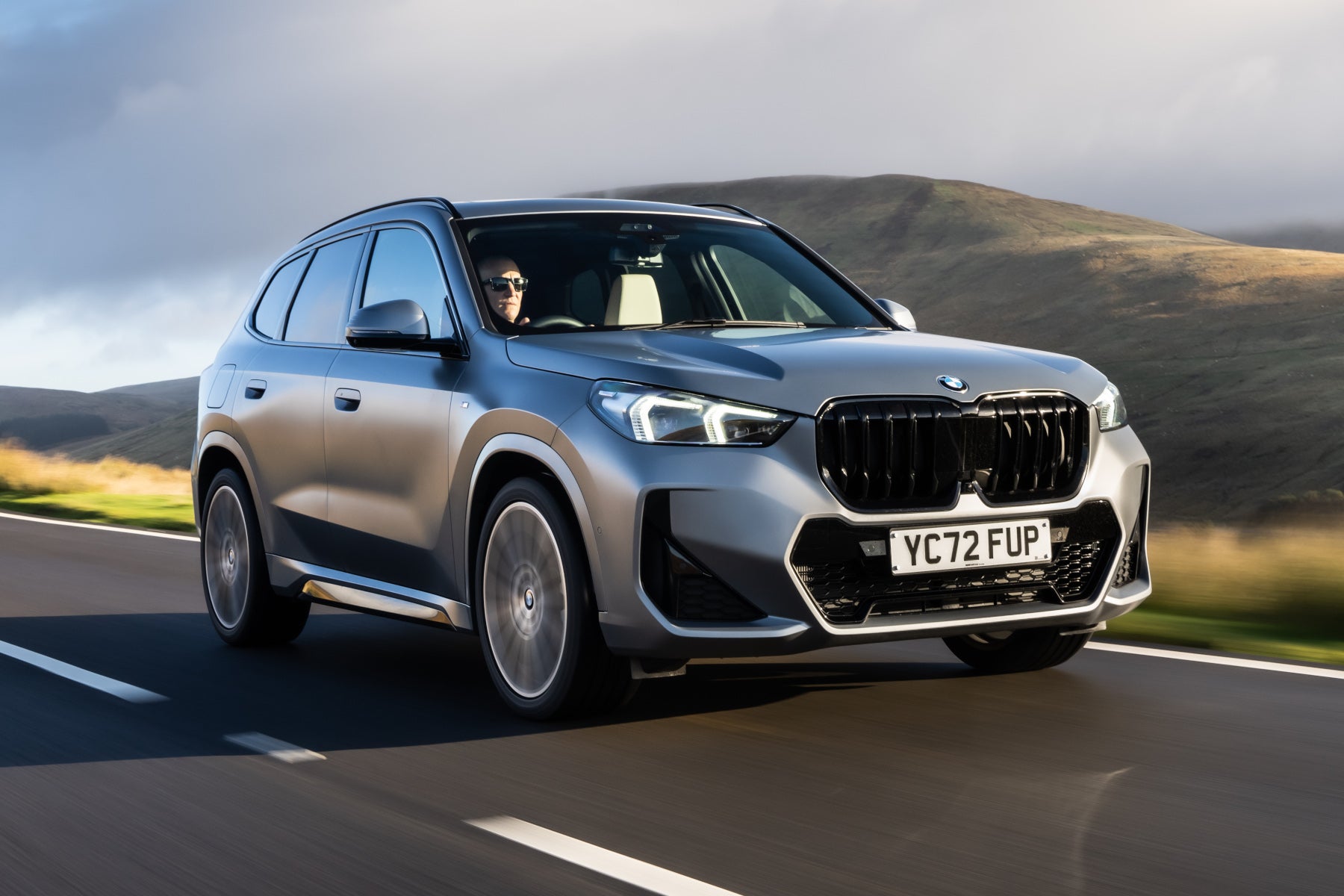
The BMW X1 is one of the most obvious alternatives, because it offers a similarly spacious cabin with a more polished and premium feel. It's also a little sharper to drive, though it doesn't have the same sense of character.
The Audi Q3 is another direct rival if you want a premium badge and a more conventional cabin layout, while the Mercedes-Benz GLA is worth a look if image matters more than outright rear-seat space.
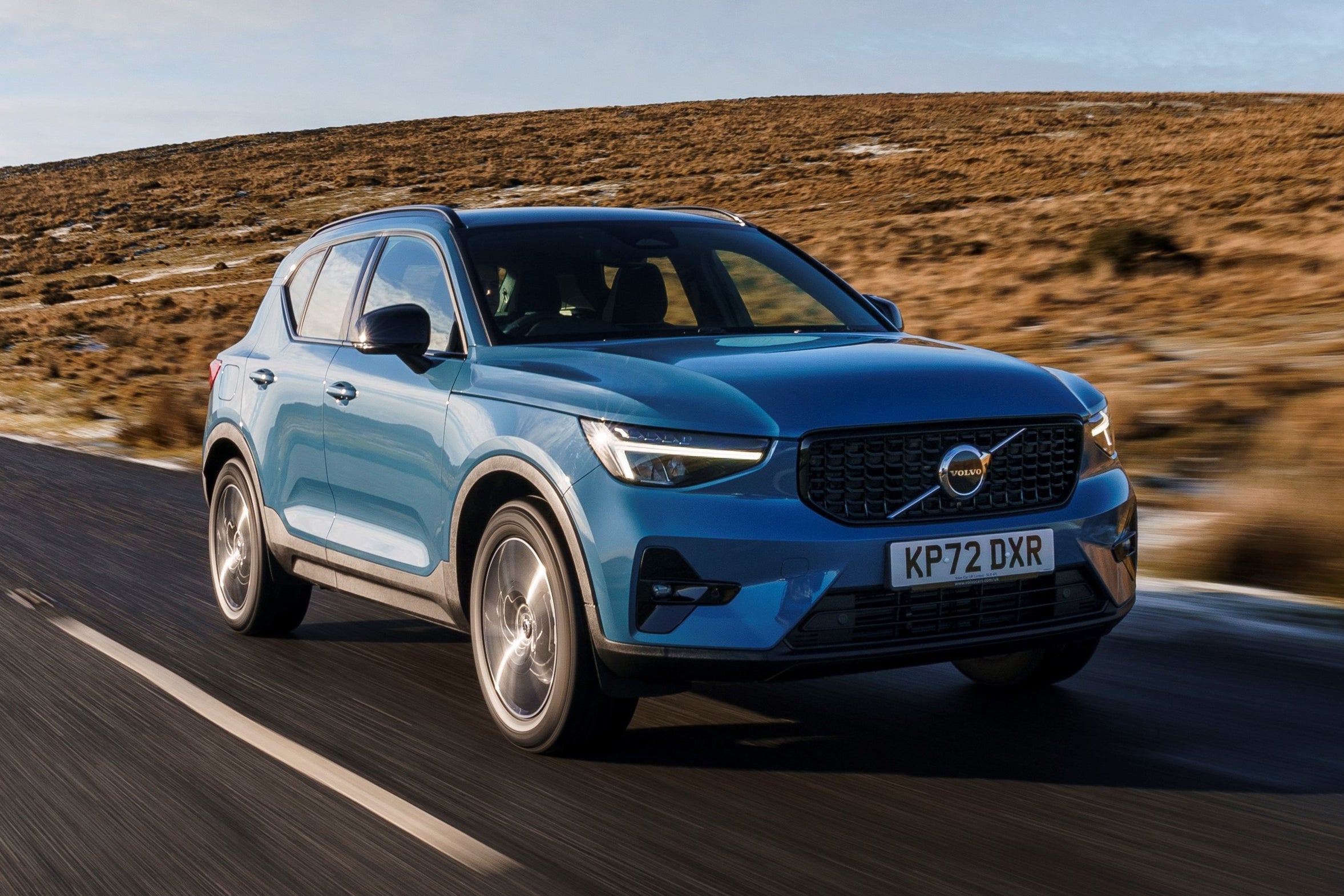
The Volvo XC40 remains an appealing alternative for comfort and style, though it isn't as roomy in the back as the Countryman. The Lexus UX is another left-field premium option, while the Alfa Romeo Tonale adds flair if you want something more unusual.
If you're less bothered about badge prestige, a Skoda Karoq or the Volkswagen Tiguan make a lot of sense because both are practical, comfortable and easier to justify on value.
What's the interior like in the Mini Countryman?
The MINI Countryman’s cabin is one of the main reasons to consider it. It's spacious, interesting to look at and full of the sort of detail that gives MINI its showroom appeal.
Mini Countryman boot space and practicality
Space is the Countryman’s biggest strength. Up front, the high driving position and generous adjustment make it easy to get comfortable, while visibility is strong for this kind of SUV.
The rear seats are where the latest Countryman really makes its case. There's loads of legroom, plenty of headroom and enough width for the cabin to feel properly family-friendly, even if three adults across the back will still be a squeeze.
Some versions can also be fitted with sliding rear seats, which add useful flexibility. Even when they are slid forwards to free up extra boot room, rear passengers still have enough space to sit comfortably.
Boot space stands at 450 litres, which is competitive rather than class-leading. It's large enough for family use, and the underfloor storage is handy, but there are rivals with bigger headline numbers. Fold the rear seats and capacity rises to 1,450 litres, with a flat load floor that makes the space genuinely useful.
So the MINI Countryman isn't just roomy for a MINI. It's roomy full stop, and that's a big part of its appeal.
Mini Countryman dimensions
The MINI Countryman measures 4,444mm long, 1,843mm wide & 1,661mm high, with a 2,692mm wheelbase.
Those dimensions make it one of the bigger cars in this class, which goes a long way to explaining why it feels so spacious inside. It's a substantial vehicle by MINI standards, but not so large that it becomes awkward to manoeuvre in town.
Tech and infotainment in the Mini Countryman
The circular OLED touchscreen is the headline act. Visually, it's hugely impressive, with sharp graphics, slick animations and plenty of wow factor.
MINI has packed a lot into it, too. Navigation, Apple CarPlay, Android Auto, voice control and over-the-air updates are all there, and on paper it feels every inch a modern premium system.
The problem is usability. Because the screen handles both infotainment and much of the driver information, it can feel cluttered. Key information is always there, but there's still a lot for your eyes to process at a glance, and some icons are not especially intuitive.
The removal of physical climate controls doesn't help. Changing the temperature is simple enough, but anything more involved means diving into menus. So the MINI Countryman looks cutting-edge inside, but it'sn't the easiest system to use on the move.
Materials available on the Mini Countryman
The MINI Countryman makes a strong first impression, thanks to the big screen, neat trim details and the textured fabric covering large parts of the dash and doors.
Look more closely, though, and some of the illusion fades. There are harder, scratchier plastics in places where you might expect richer materials in a premium SUV. That doesn't ruin the cabin, but it does mean the MINI Countryman is more impressive for design than for outright material quality.
What's the Mini Countryman like to drive?
The MINI Countryman is capable and tidy to drive, but it isn't a shrunken hot hatch in SUV form. Its size and weight mean it feels more like a competent family SUV with a bit of MINI attitude than a genuinely playful crossover.
Mini Countryman range and performance
The MINI Countryman is available in a couple of all-electric forms, but we’ve reviewed those independently in our MINI Countryman Electric review, so here, we’ll concentrate solely on the combustion-engined versions of the car.
The range kicks off with the Countryman C, and this uses a 1.5-litre three-cylinder petrol engine - aided by a small mild-hybrid electric motor - to deliver 170PS to the front wheels through a dual-clutch automatic gearbox. On paper, the 0-62mph sprint is dispatched in 8.3 seconds, and in reality, the level of performance provided will be entirely adequate for most drivers.
There’s enough low-down punch to allow you to build up a decent amount of speed without working the engine to its limits, which is just as well because it does get rather shouty when you do, and that noise is accompanied by quite a few vibrations through the steering wheel and pedals. The gearbox in the C could perhaps be a little bit quicker and smoother in the way it goes about its business, but it’s unobtrusive enough most of the time.
Sitting in the middle of the range is the Countryman S, which uses a 2.0-litre four-cylinder petrol engine and the same mild hybrid system as the C to deliver a total of 218PS, this time to all four wheels. The 0-62mph time is given by BMW at 7.1 seconds, but because we haven’t tried this variant yet, we can't tell you what it feels like.
The Countryman range is topped by the John Cooper Works variant, or JCW for short. There’s no mild-hybrid trickery here, just a 2.0-litre, four-cylinder petrol engine that dishes out 300PS, again to all four wheels. The 0-62mph dash is trimmed to 5.4 seconds and a top speed of 155mph can be theoretically reached. And sure enough, the car feels decidedly rapid, and the power delivery is muscular and eager at all times. Having said all that, though, it’s also true that the JCW doesn’t quite feel as ballistically fast as the power output would suggest.
Performance data
| Model | Engine/battery size | Power | 0-62mph | Range/MPG |
|---|---|---|---|---|
MINI Countryman C | 1.5-litre petrol mild hybrid automatic | 170PS | 8.3 seconds | Around 47mpg |
MINI Countryman S ALL4 | 2.0-litre petrol mild hybrid automatic | 218PS | 7.1 seconds | Around 42mpg |
MINI JCW Countryman ALL4 | 2.0-litre petrol automatic | 300PS | 5.4 seconds | Around 36mpg |
Mini Countryman driving and refinement
As is usually the case with BMW Group products, the Countryman’s behaviour in this area depends greatly on how you spec it. Specify the C or S models in either the Classic or Exclusive trim levels, and you’ll get the standard passive suspension setup. On this arrangement, the ride is decidedly firm. It can feel rather jittery on surfaces with high-frequency ripples and grainy, patched-up finishes, and you’ll also feel a bit of a thump over larger potholes. The car stops short of being uncomfortable most of the time, but it’s also true that many rivals are more cosseting.
Of course, you can’t talk about any MINI product without talking about ‘go-kart-like handling’, especially when MINI has doubled down on this part of the brand’s traditional appeal by naming the sportiest of its driving modes the ‘Go-kart mode’.
In truth, the go-kart comparison isn’t as convincing in the Countryman as it is with other MINI models (and never has been), but it’s not entirely without basis. The steering is super-quick, both to respond and to turn, but it doesn’t feel twitchy. There’s plenty of grip and traction, too, even in the front-wheel-drive C version.
The body feels reasonably well controlled through shallower bends, too, but in tighter ones, the MINI's height causes the body to lean over more, while in swift switchbacks, the resulting weight transfer can have a slightly unsettling effect. All in all, the car generally feels pointy and direct, but without feeling all that nimble or agile.
However, specify your Countryman in Sport trim, or choose the JCW, which only comes in Sport trim, and your suspension is upgraded to an adaptive setup. This has a beneficial effect on how your Countryman drives, but perhaps not in the way you might expect.
Like with many such systems, the adaptive dampers become firmer when you select the sportiest driving mode, although in truth, you’ll barely notice, even if you’re really concentrating, because the difference is absolutely minuscule. However, the suspension is also adaptive in the sense that it constantly alters its behaviour according to road conditions and driving behaviour in order to maximise the balance between ride and handling. And it’s this bit that’s really effective: it makes the JCW feel a teeny bit more tied down and sharper under more severe cornering loads, but more importantly, it also improves the ride comfort by quite a bit. It’s still a firm-but-fair experience, but is appreciably more forgiving.
Like we said earlier, the three-cylinder petrol engine in the C version can sound a bit thrummy and coarse when you really work it, but there’s enough urge low down in the rev range that you don’t often have to, so it stays subdued most of the time.
We haven’t tried the 2.0-litre turbocharged petrol engine in the mid-range S model yet, so we can’t tell you what that’s like for refinement, but the more powerful one in the JCW version is good, staying quiet and peaceful when you want it to, and sounding nice and throaty when you’re in a more playful mood. You don’t get the pops and bangs from the exhaust that you do in JCW models of the past, but in a family SUV, that’s probably a good thing.
Wind noise is pretty well isolated for such a tall car, but whichever model you pick, you will be subjected to a fair amount of road noise, even at moderate speeds.
There’s also the effect of the ‘MINI Sounds’ to consider. These are a series of different sound effects and jingles that are piped into the cabin through the stereo speakers according to which of the eight ‘Experience’ modes you select (the modes also vary what you see on the central screen in terms of colour, content and layout, and also alter the colour and intensity of the ambient cabin lighting). For some people, this will be an appealing augmentation to the driving experience of their car, while for others, it’ll be a step too far on the gimmick scale. If you sit in the latter camp, it can be switched off.
How safe is the Mini Countryman?
The latest MINI Countryman comes with a very decent amount of safety kit as standard. This includes autonomous emergency braking, lane-keep assist, blind spot detection, rear collision prevention, speed limit recognition and assist, adaptive cruise control, and emergency call.
Unsurprisingly, the MINI Countryman scored a full five star when subjected to Euro NCAP crash tests.
Running costs: What it's like to live with a Mini Countryman
The MINI Countryman isn't a bargain SUV, but the regular petrol versions should be manageable to run if you pick carefully.
Mini Countryman fuel economy
There’s quite a spread throughout the MINI Countryman range when it comes to fuel consumption. The C does best, managing a combined WLTP fuel figure of up to 47.9mpg, while for the more powerful S, that drops to 42.8mpg. These figures are no great shakes, especially when compared with the figures of rivals, and that’s doubly surprising given that both these versions have 48-volt mild hybrid technology. Go for the JCW, meanwhile, and you’ll be down to an official average of around 36.2mpg.
Mini Countryman warranty and servicing
MINI covers the Countryman with a three-year, unlimited-mileage warranty. That's decent enough by premium-brand standards, even if it'sn't especially generous next to the best mainstream rivals.
Routine servicing should be straightforward to budget for, and MINI offers Service Inclusive plans if you want more predictable maintenance costs.
Mini Countryman insurance groups
The Countryman C sits in insurance groups 19 or 20 depending on what trim level you choose, while if you upgrade to the S, it’ll be in groups 24 or 25. Buyers of the JCW will pay most due to a group 30 classification. Premiums won’t be massively cheap on any version, then, but they shouldn’t be too painful on most, and given its level of power, it’s perhaps a little surprising that the JCW’s grouping isn’t a little higher.
How much does it cost to tax a Mini Countryman?
The petrol-engined versions of the MINI Countryman are subject to the same flat-rate of VED tax payments as every other petrol and diesel car currently on the market. As such, you'll pay £200 per annum when it reaches its first birthday.
That’s not the full story, though, because cars that cost more than £40,000 when brand new, including any optional extras added, are also subject to an additional £440 surcharge on top of that for a period of five years, between years two and six of the car’s life. The JCW costs more than the threshold, so all of those will be liable, while several versions of the S get quite close to that threshold on price, so adding one of the various options or packs available could well take it over and land you with the extra hit. It’s worth doing an online check with the registration of any used example you’re considering just to make sure you know exactly what you’re looking at.
What trims are available with the Mini Countryman?
The MINI Countryman is offered in Classic, Exclusive and Sport trims.
Classic already comes with a lot of kit, including alloy wheels, ambient lighting, dual-zone climate control, roof rails, parking sensors, a reversing camera, a powered tailgate and a heated steering wheel.
Exclusive is the more polished and design-led version, with its own colours, trim finishes and interior details. It's the trim to choose if you want the Countryman to feel more boutique than sporty.
Sport is the trim many buyers should focus on. It looks sharper, and more importantly it adds the adaptive suspension that makes the MINI Countryman noticeably easier to live with.
In simple terms, Classic covers the essentials, Exclusive is the style-led choice and Sport is the best all-round pick.
Ask the Drive experts: common questions
How much does the MINI Countryman cost?
Is the MINI Countryman a good family SUV?
What is the best MINI Countryman version to buy?
Is the MINI Countryman bigger than before?
Get our latest advice, news and offers
Keep me updated by email with the latest advice, news and offers from Drive.
.jpg)
.jpg)
.jpg)