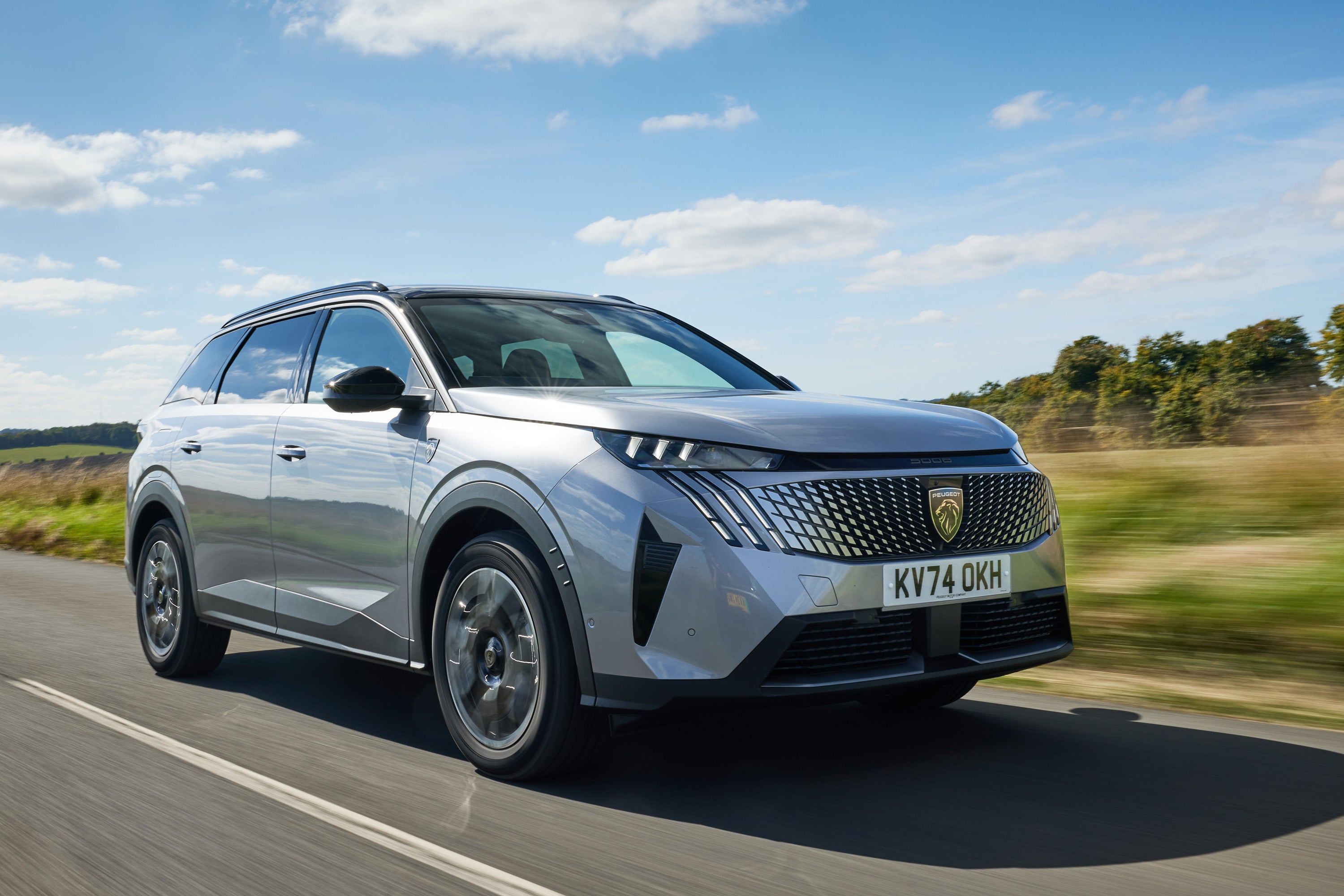
Peugeot 5008 Review

Written By Ivan Aistrop
- 2024
- SUV
- Hybrid, plug-in hybrid
What we love
Impressive seven-seat practicality
Lovely interior and strong perceived quality
Plentiful standard equipment
Things to consider
Hybrid 145 is not especially refined or eager
Ride is firmer and lumpier than some rivals
Higher-spec versions risk expensive-car-tax territory
The DRIVE take on the Peugeot 5008, is it the right car for you?
The Peugeot 5008 is one of the most appealing mainstream seven-seat SUVs if cabin design, quality and equipment matter as much to you as pure practicality. It is spacious, very well presented and usefully more interesting inside than many family rivals. The downside is that the Hybrid 145 powertrain does not feel especially strong or refined, and the driving experience is merely average rather than memorable. Even so, if you want a seven-seater that feels a little more special than the norm, the Peugeot 5008 is easy to shortlist.
The Peugeot 5008 in more detail
Peugeot's successfully hauled itself out of the doldrums with a succession of sharp-looking models that haven't been compromised when it comes to practicality. Typifying this trend thanks its attention-grabbing SUV styling and classy seven-seater cabin is under our scrutiny here — read our full Peugeot 5008 review to find out if its talents are more than skin-deep.
As part of a manufacturing group of no less than 15 brands, with all sorts of component-sharing going on between them, it's hard to differentiate your products. Ignoring the fancy-pants offerings of Maserati and the only sold outside of the UK, it's Peugeot which is consistently doing the best job of standing out from the massive Stellantis empire.
Browse used Peugeot 5008s for sale →
Just look at the latest Peugeot 5008. Yes, from the side it looks similar to the closely related Vauxhall Grandland and — by extension — the incoming Citroen e-C5 Aircross, but from the front? Oh là là! The way the grille blends into the bumper looks fantastic, in a way that just might make you forget all about how rubbish mid-to-late noughties models such as the Peugeot 207 were.
Its surprise and delight mantra continues inside where there's a sharply styled, fabric-trimmed dashboard and a Y-shaped centre control that looks like it's been taken from Tony Stark's lounge. Meanwhile, Peugeot's i-Cockpit layout is stubbornly present. This involves a high-set instrument sceen which is viewed over the top of a small steering wheel. At least, that's the intention. Depending on your height you might find that in your usual driving position some of the display is obscured. Peugeot insists its customers love it.
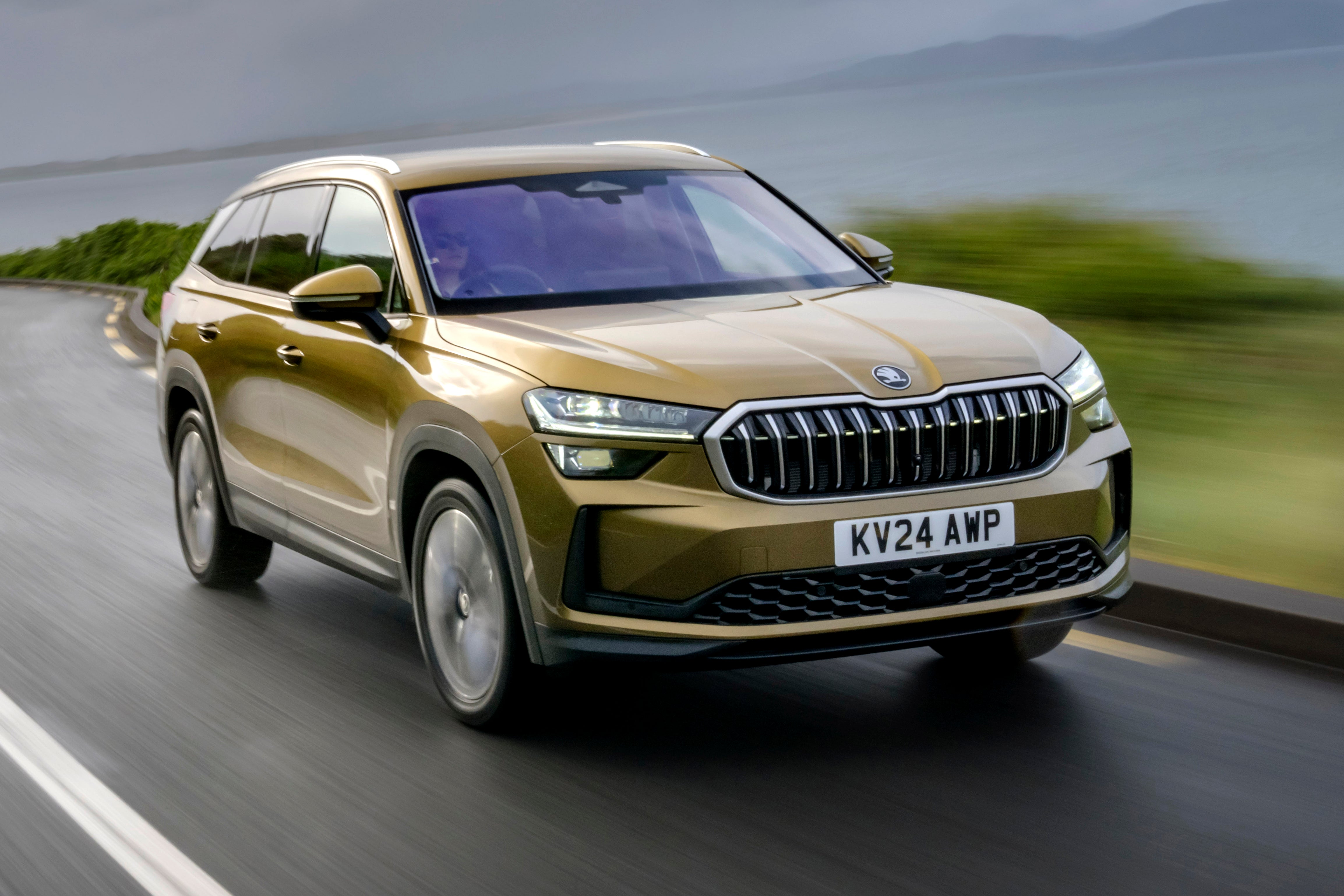
Further back, you'll find a third row of seats. They're not massive but that's usual for seven-seater SUVs of this size, including the Skoda Kodiaq and the Volkswagen Tayron. If you need a more spacious back row you'll need to go for a larger alternative — the Hyundai Santa Fe fits that bill.
Drop the 5008's back seats down into the floor and you'll have a massive load space and five seats, while also folding the middle row will give you a carrying capacity that'll be the envy of the Ikea car park.
It all sounds good so far but start to drive it and things take a turn for the mediocre. It's a shame that Peugeot has done so well in making the 5008 so stylish and practical only to lumber it with the same lacklustre 1.2-litre mild hybrid engine that blights so much of Stellantis's models.
It's unrefined and underpowered for a car of this size and weight, with your only alternative being to spend a lot more on the plug-in hybrid version, the suitability of which is very much going to depend on how you're going to use it and if you're able to charge it at home.
It's because of the poor engine choice that we rate electric Peugeot E-5008 higher overall.
What's the best Peugeot 5008 trim and engine option?
For most buyers, the best Peugeot 5008 is likely to be the Plug-in Hybrid 225 in Allure trim if the budget stretches far enough and you can charge regularly. On paper, it looks like the powertrain that best suits the 5008’s size and weight, while also giving you useful electric-only range for shorter daily trips.
The problem is that the plug-in hybrid is expensive, and unless you can make proper use of that charging capability, the Hybrid 145 still makes the cleaner financial case for many private buyers. It is not especially quick or especially smooth, but it is the model most people will end up considering because it keeps the price a little more grounded.
As for trim, Allure already comes with a very strong amount of kit, including the dramatic panoramic display, tri-zone climate control, navigation and reversing camera. GT adds worthwhile visual and convenience upgrades, but you do not need it to get the 5008’s core appeal.
In simple terms, Allure is the smartest buy, GT is the style-led choice and the plug-in hybrid is the powertrain to aim for if your budget and charging setup allow.
What’s the price of the Peugeot 5008?
The Peugeot 5008 currently starts from £37,045 in Hybrid 145 Allure form. Move to GT and the Hybrid 145 rises to £40,045. The Plug-in Hybrid 225 starts from £43,045 in Allure trim. There are also plenty of used Peugeot 5008s for sale for considerably less.
That means the Peugeot 5008 is not a bargain seven-seater. It sits well above the likes of the Dacia Jogger and nudges into territory occupied by some very strong established rivals. However, the quality of the interior and the level of standard equipment do help justify that positioning.
The key point is that you are paying as much for the design, ambience and cabin experience as you are for the seven-seat practicality itself. Whether that feels worthwhile depends on what you value most.
Alternatives to the Peugeot 5008
The Skoda Kodiaq is one of the clearest alternatives because it offers seven-seat usability in a more straightforward, family-first package. It is not as dramatic inside as the Peugeot 5008, but it is spacious, easy to recommend and still one of the best all-rounders in this class.
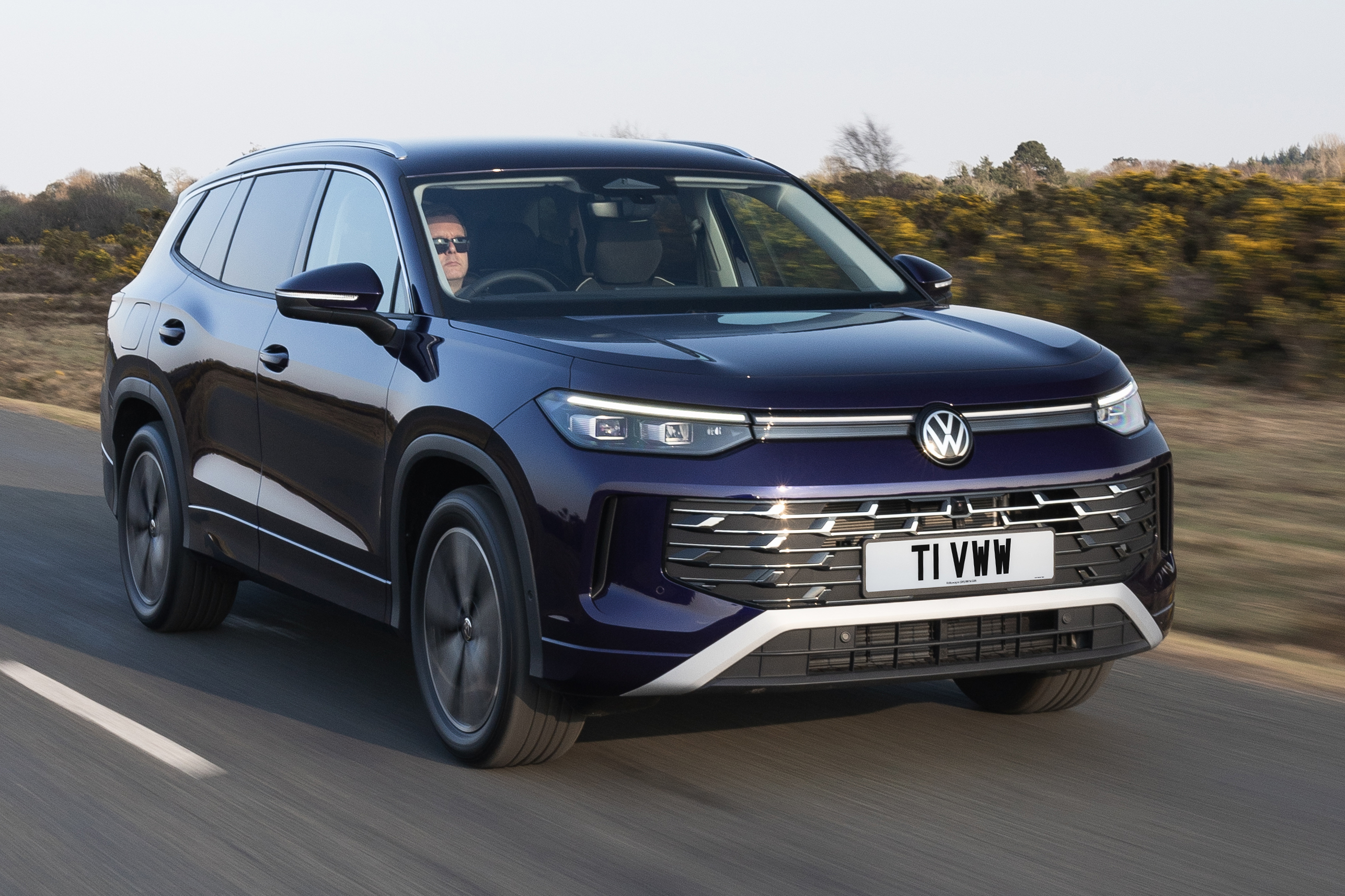
The Volkswagen Tayron is another key rival if you want a seven-seat SUV with a more polished, mature feel. It makes a stronger case on straightforward usability and everyday refinement than the Peugeot, even if it cannot quite match the 5008 for cabin theatre.
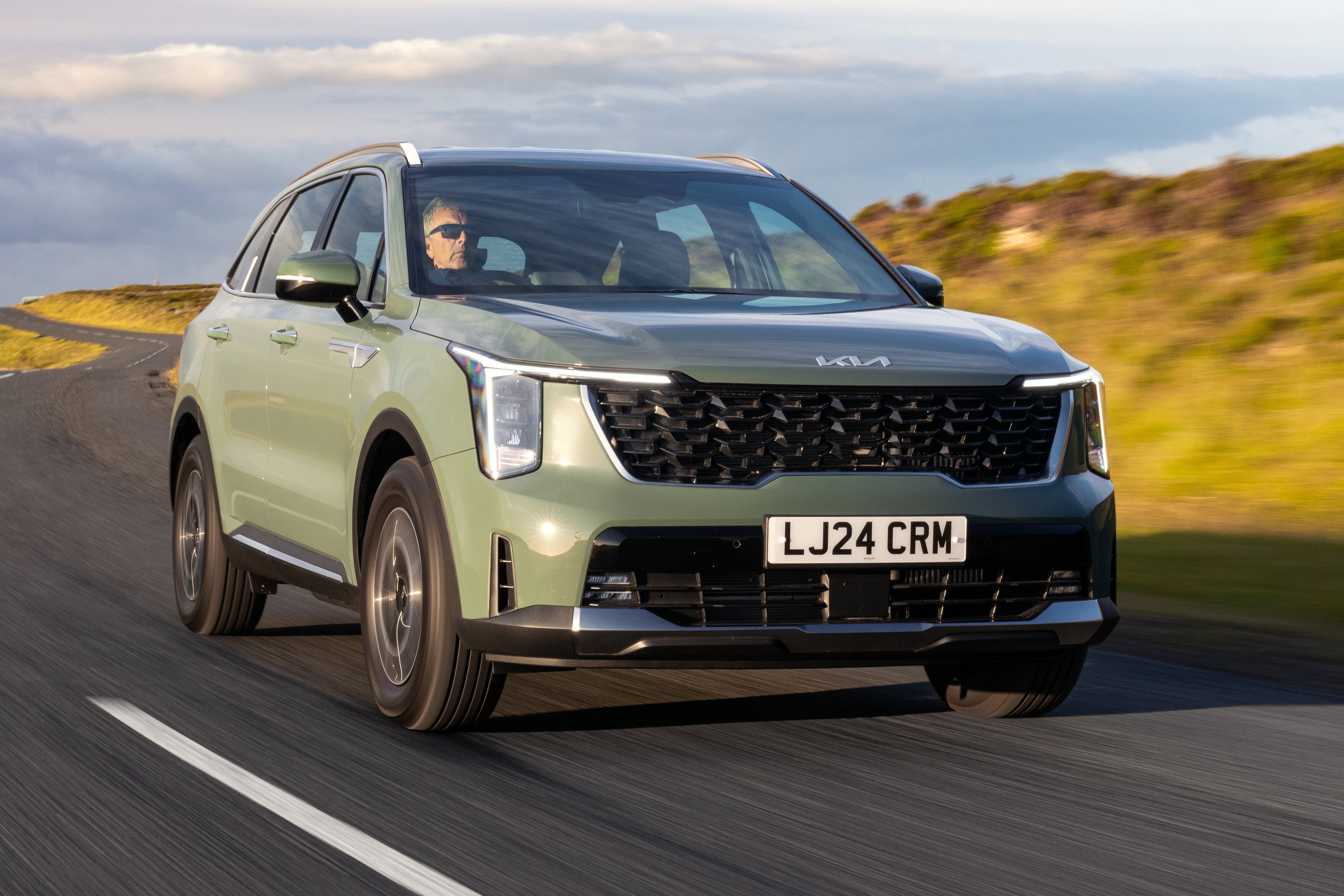
The Kia Sorento is a strong rival if you want a seven-seat SUV that feels substantial and well equipped. It is bigger, more overtly SUV-like and available with a broader mix of powertrains, making it a very persuasive family option.
Beyond those three, the Hyundai Santa Fe remains worth a look if you want something roomy and a little more adventurous in design, while the Land Rover Discovery Sport still has showroom appeal if you want a more premium-badged option. The Peugeot 5008 makes most sense if you want your seven-seater to feel more design-led and more special inside than the class norm.
What's the interior like in the Peugeot 5008?
The Peugeot 5008’s interior is one of its strongest selling points. It feels modern, dramatic and unusually rich for a mainstream seven-seat SUV, while still delivering the flexibility family buyers need.
Peugeot 5008 boot space and practicality
All too often, we see seven-seaters whose boot capacities largely disappear once the third row of seating is deployed — just look at the Kia Sorento which in PHEV guise offers all of 175 litres with all seats in place. The Peugeot 5008 isn't one of those cars, with a more useful 348 litres of luggage space even when seats six and seven are out. That's also eight litres more than in the cavernous Skoda Kodiaq provides.
The 5008's rearmost seats aren't massive,so larger teens and adults might not be happy there for longer journeys. It's also worth noting that they also lack Isofix mounting points for child seats.
Folding the third row is easy to do plus there's a removable floor panel for a flat load area that's near enough flush with the boot's loading lip. All told, there's 916 litres of space back there loaded up to the window line. The middle row split-folds in a 40/20/40 configuration, although the seatbacks aren't entirely flat once stowed. The total volume when loading to the ceiling is 2232 litres.
Cubbyhole storage is decent, making up for the fact that the unusual dashboard shape only leaves room for a tiny glovebox. There's a large, lidded cubby under the armrest, which is linked to the air conditioning circuit, so you can chill drinks inside.
There's a further lidded cubby in front of the cupholders but that stylish Y-shaped centre console structure makes it difficult to reach from the driver's side.
Peugeot 5008 dimensions
The Peugeot 5008 measures 4,791mm long, 1,895mm wide & 1,694mm high. That gives it proper family-SUV presence and helps explain why it offers usefully more room than smaller seven-seat alternatives.
In practical terms, it is a substantial car, but not an intimidating one. It is bigger than many mid-size SUVs yet still easier to manage than some full-size seven-seaters. That should suit buyers who want plenty of space without stepping into something that feels too cumbersome every day.
Tech and infotainment in the Peugeot 5008
Technology is a major selling point. Every Peugeot 5008 gets Peugeot’s dramatic 21.0-inch panoramic i-Cockpit display, combining the driver instruments and central infotainment screen into one sweeping panel.
The good news is that it is not just there for theatre. The system is logically laid out, looks slick and is helped enormously by Peugeot’s configurable i-Toggles shortcuts lower down the dashboard. These make it much easier to jump quickly to the functions you use most often.
Wireless Apple CarPlay and Android Auto, native navigation, voice control and a wireless charger are all part of the package, so the 5008 does not feel short-changed even in entry trim. There are still a few irritations, including some slightly slow screen responses and over-animated transitions, but overall this is one of Peugeot’s better infotainment systems.
Materials available on the Peugeot 5008
The Peugeot 5008’s materials and finish do a lot to justify the car’s price. Soft-touch surfaces, textile dashboard trims and metallic detailing all help the interior feel richer than many mainstream rivals.
GT versions add even more visual drama with extended ambient lighting and extra trim flourishes, but even Allure feels smart and well considered. Lower down you can still find some harder plastics, but the overall impression remains strong.
This is one of those cabins that genuinely helps sell the car. If showroom appeal matters to you, the Peugeot 5008 has plenty of it.
What's the Peugeot 5008 like to drive?
The Peugeot 5008 is more convincing as a seven-seat family SUV in the showroom than it is on the road. It is perfectly acceptable to drive, but it does not shine dynamically.
Peugeot 5008 range and performance
The Peugeot 5008 line-up centres on two petrol-electric options: the Hybrid 145 and the Plug-in Hybrid 225. The Hybrid 145 uses a 1.2-litre three-cylinder petrol engine with mild-hybrid assistance, while the plug-in hybrid uses a 1.6-litre petrol engine and a much stronger electric motor.
The Hybrid 145 is the entry point, but it is not a particularly convincing one. It has enough performance for everyday family driving, yet it rarely feels eager, and the gearbox and throttle response can make it feel clumsy when you ask for a burst of acceleration.
The Plug-in Hybrid 225 looks much more promising on paper. Peugeot quotes up to 55 miles of electric range and significantly stronger performance, which should make it much better suited to the 5008’s size and weight. It is also the version that is more likely to feel properly modern in the way buyers now expect.
There is an electric version too, but our Peugeot E-5008 review covers that in more detail.
For most buyers, the plug-in hybrid looks like the more convincing drivetrain, even if the Hybrid 145 is the more affordable one.
Performance data
| Model | Engine/battery size | Power | 0-62mph | Range/MPG |
|---|---|---|---|---|
5008 Hybrid 145 | 1.2-litre | 145PS | 11.3 seconds | Up to 52.5mpg |
5008 Plug-in Hybrid 225 | 1.6-litre | 225PS | 8.3 seconds | Up to 122.8mpg / 55 miles |
Peugeot 5008 driving and refinement
The Peugeot 5008’s road manners are acceptable rather than impressive. Ride comfort is not poor, but there is a firmness and slight restlessness over rough surfaces that feels at odds with the car’s family brief. Several rivals are more settled and more forgiving.
Handling is similarly average. Grip levels are fine and body roll is reasonably controlled, but there is not much satisfaction to be had from the steering or the way the car changes direction. It feels heavier and less tidy than some alternatives, and the small steering wheel creates a slightly artificial sense of agility at first.
Refinement is also a mixed bag. In Hybrid 145 form, the three-cylinder engine has to work hard, and that means more noise and vibration than you would really want in a big family SUV. At motorway pace, road and wind noise are acceptable rather than troublesome, but the powertrain is the limiting factor.
In short, the Peugeot 5008 is not unpleasant to drive, but nor is it a class standout once you are behind the wheel.
How safe is the Peugeot 5008?
The latest Peugeot 5008 has not yet been tested by Euro NCAP, so there is no independent crash-test rating to quote at the time of writing.
Standard safety kit is still solid, with automatic emergency braking, lane-keep assistance, speed-limit recognition and driver attention alert all included. Adaptive cruise control is standard on GT trim and optional on Allure via a pack.
You also get a broad spread of airbags, including curtain airbags that extend across all three rows. The disappointment is that there are only two Isofix mounting points, which is not especially generous in a seven-seat family SUV.
Running costs: What it's like to live with a Peugeot 5008
Running costs vary significantly depending on whether you choose the Hybrid 145 or the Plug-in Hybrid 225. The former is simpler, while the latter has much greater efficiency potential if used in the right way.
Peugeot 5008 fuel economy
The Hybrid 145 is officially rated at up to 52.5mpg, which is respectable for a large seven-seat SUV. In the real world, something in the mid-40s looks more realistic if you drive with a little restraint.
The Plug-in Hybrid 225 is a much more complicated proposition. Official economy is quoted at up to 122.8mpg, but as with any PHEV, that only really reflects the best case if the battery is charged regularly and you do plenty of shorter journeys.
Peugeot says the Plug-in Hybrid 225 can travel up to 55 miles on electric power alone. Used that way, it could be very cheap to run. Used as a heavy petrol SUV with a flat battery, it will be far less impressive.
Peugeot 5008 warranty and servicing
Peugeot’s standard warranty is three years from first registration. In the first two years it is unlimited mileage, while the third year is capped at 60,000 miles.
Servicing intervals are every 12 months or 16,000 miles for the Hybrid 145, and every 12 months or 16,000 miles for the Plug-in Hybrid 225. The plug-in hybrid traction battery is covered separately for up to eight years or 100,000 miles.
That is respectable enough, but it still does not make the Peugeot 5008 especially generous by the standards of this class.
Peugeot 5008 insurance groups
Insurance groups for the Peugeot 5008 are clearly split by powertrain. The Hybrid 145 sits in groups 23 to 24 depending on trim, while the Plug-in Hybrid 225 rises to groups 35 to 36.
That means the mild-hybrid is manageable enough by large-family-SUV standards, but the plug-in hybrid is a much pricier car to insure. As ever, real quotes matter more than the group alone.
How much does it cost to tax a Peugeot 5008?
The Peugeot 5008 now costs £200 a year in VED after year one, but the other thing to watch is the Expensive Car Supplement. This applies if the list price is more than £40,000. If a Peugeot 5008 crosses that threshold, you pay an extra £440 a year for five years from the second year of registration, on top of the standard £200 annual VED rate. That means a qualifying car costs £640 a year for those five years.
What trims are available with the Peugeot 5008?
The Peugeot 5008 line-up is centred on Allure and GT.
Allure already comes very well equipped. Standard highlights include keyless entry, tri-zone climate control, rear parking sensors, a reversing camera, ambient lighting, part leather-effect trim, 19-inch alloys and the panoramic i-Cockpit display. It does not feel like a stripped-out base model in any meaningful sense.
GT is the more design-led choice. It adds 20-inch alloys, smarter exterior detailing, Pixel LED rear lights, a heated steering wheel, heated front seats, adaptive cruise control, front parking sensors and the hands-free powered tailgate. It also gets the more dramatic cabin lighting package that best shows off the interior design.
In simple terms, Allure covers the essentials and already feels plush, while GT is the one to choose if you want the full visual and tech effect.
Ask the Drive experts: common questions
Is the Peugeot 5008 a good seven-seat SUV?
Which Peugeot 5008 is best?
Is the Peugeot 5008 practical enough for a large family?
Does the Peugeot 5008 pay the Expensive Car Supplement?
Get our latest advice, news and offers
Keep me updated by email with the latest advice, news and offers from Drive.
.jpg)