Peugeot e-Traveller Review

Written By Ivan Aistrop
- 2021
- MPV
- EV (previously diesel)
What we love
Space and practicality are sensational
User interfaces not overly complicated
Very solid build quality
Things to consider
Warranty could be better
So could the electric range of EV
Not cheap
The DRIVE take on the Peugeot Traveller, is it the right car for you?
With their boxy dimensions, commercial vehicles (vans, in other words) make the ideal basis for ultra-practical people carriers. Cars like the Peugeot Traveller prove precisely why. If you’re the owner of either a very large family or a private hire taxi business, then there’s plenty to recommend the Peugeot Traveller. It’s supremely spacious and practical, well-built, and decent enough to drive. Used car buyers can have it with diesel power, while if you're buying brand new, your Traveller will be electric. The suitability of the latter will depend on whether you’re exclusively a short-haul driver. If you’re not, then the limited EV range could be a problem.
The Peugeot Traveller in more detail
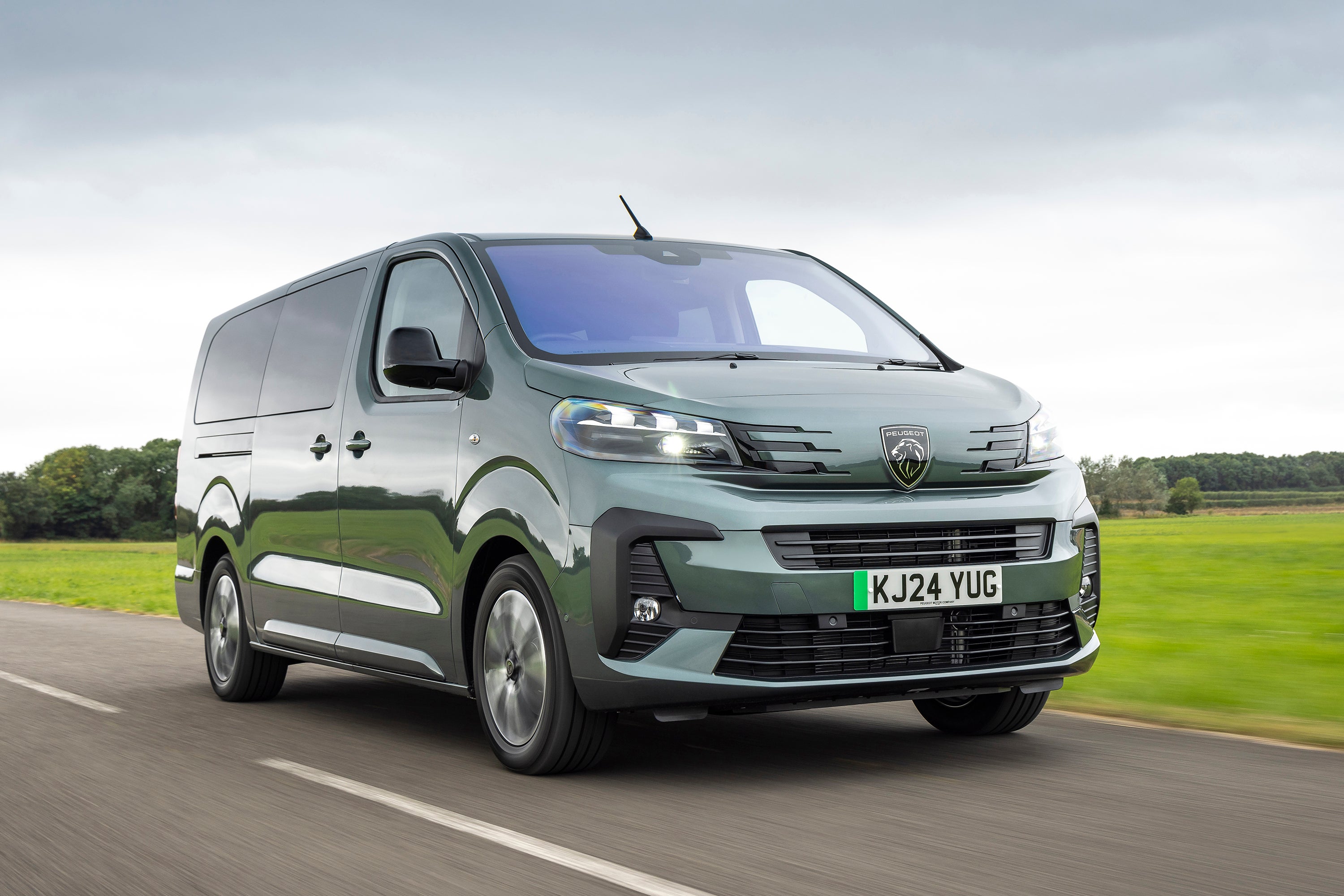
Yes, you may experience a small sense of deja vu when you clap eyes on the Peugeot Traveller for the first time. Ignore the windows and the extra seats that sit behind them, and it looks all but identical to the Peugeot Expert van that you see buzzing along British streets, making deliveries and hauling cargo. And that’s because it pretty much is identical. Here, however, the purpose is to ferry passengers rather than payload.
It’s a vehicle that’s undergone quite a bit of change throughout its life. When the Peugeot Traveller MPV was first offered for sale way back in 2016, it was offered with a range of diesel engines, but in 2021, an all-electric version came along to join the range. Not that long afterwards, Peugeot took the decision to discontinue the combustion-engined versions of the Traveller, leaving only the all-electric e-Traveller on sale as a new car, and that remains the case today. We'll touch on them all in this review, but most of our focus will sit with the all-electric e-Traveller.
Those diesel engines include 1.5-litre units and 2.0-litre units with between 95PS and 180PS, with the mid-range 150PS version being the most popular, so that's what you'll find most of on the used market. Both manual and automatic gearboxes were offered, depending on engine choice.
When the all-electric E-Traveller first arrived, it was offered with a 50kWh battery giving an official range of just 148 miles. Later on, it was joined by a larger 75kWh battery option, which extended the range to 217 miles. Either way, that's pretty limited (it's actually very limited by the standards of most EVs, let alone combustion-engines cars), and real-world returns will likely be considerably worse, so the e-Traveller will probably be unsuitable for many drivers who can’t charge at home or regularly cover long distances. The smaller battery has since been discontinued, and due to changes elsewhere in the e-Traveller, the official range of the larger battery now stands at between 212- and 215 miles.
Otherwise, there’s much to recommend the Peugeot Traveller. It’s about as spacious and as practical as cars get, it’s very solidly built, and higher-end versions have a fairly posh-feeling cabin and lots of luxury equipment. It rides smoothly enough to keep those on board comfortable, and the electric version has the potential to be very cheap to run if used and charged in the right way.
Granted, it’s not the most polished car you’ll ever drive, performance is very leisurely in most forms, it’s not cheap to buy, and some of the cabin plastics might feel a little basic. But if you can overlook these foibles, and just want the most practical vehicle you can get with space for up to eight or nine people, then the Traveller is certainly worth a look.
What's the best Peugeot Traveller trim and battery option?
If you're buying used, then you can have the Peugeot Traveller with a diesel engine. That's certainly the way to go if you regularly do long distances. Of the diesel engines available, we'd recommend the mid-range 150PS option, as it delivers the best balance of performance, fuel economy and purchase price. Happily, it was the most popular choice when it was new, so it will be the most plentiful option that you'll find on the used market.
Early versions of the e-Traveller came with a 50kWh battery that only gave an official electric range of 148 miles, while later examples got the option of a larger 75kWh battery that upped the range to 217 miles, according to WLTP figures. We’d stretch to the latter if your budget will allow.
On the trim level front, it depends on what you want. The entry-level trims come with enough to suit most buyers but do feel a little low-rent due to their fabric upholstery and plastic floor. Upgrading to the higher-end trims brings leather seats and carpets for a far more luxurious feel, plus plenty of other desirable luxury kit, but these versions are a lot more expensive.
What’s the price of the Peugeot Traveller?
The Traveller has never been a particularly affordable car to buy, but when it's this big and this versatile, you probably wouldn't expect it to be. The thing is, because it's now only available in all-electric e-Traveller form, new-car prices are even more expensive.
The entry-level Combi versions cost around £37,000 and £38,000 depending on whether you go for the standard wheelbase of the long wheelbase, but these versions qualify for a £1,500 discount thanks to the Government's Electric Car Grant, dropping prices to around £35,500 and £36,500, respectively.
Go for the mid-spec Active trim or the top-end Allure trim, and list prices become too high to qualify for the grant, extending the price difference between these and the entry-level models. The Actives cost around £43,000 and £44,000 depending on wheelbase, while the sums are around £48,000 and £49,000 for the Allures. Whichever way you cut it, that's a lot of dough, even for something that can carry so many people.
Alternatives to the Peugeot Traveller
Compare the Peugeot e-Traveller to the Citroen e-SpaceTourer and the Vauxhall Vivaro Life Electric, and you can’t get much more similar. That’s because, beneath the metaphorical skin, all three cars are mechanically identical.
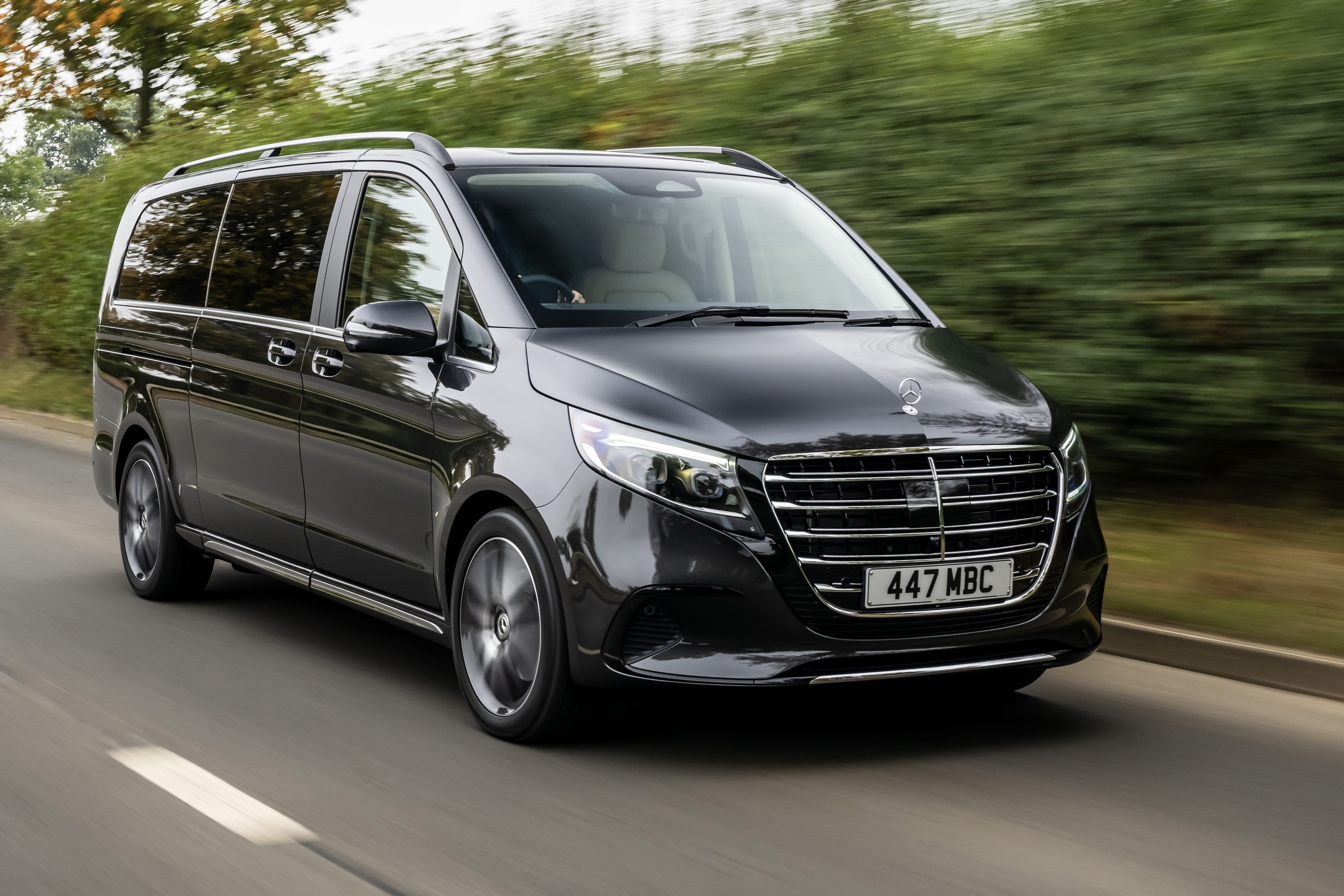
There are other large van-based MPVs to consider as well. The Volkswagen Multivan and Mercedes V-Class are posher alternatives, while the Ford Tourneo Custom will probably be on your list of targets, as might the Renault Trafic Passenger, provided that you’re not absolutely set on your MPV being all-electric. If you are, then both the Mercedes and the Ford can be had in all-electric form, and you would also probably consider the long-wheelbase version of the VW ID.Buzz.
What's the interior like in the Peugeot Traveller?
The Peugeot Traveller is all about maximum space and seating capacity. The seat count totals up to nine, each of which is surrounded by masses of space thanks to the car's boxy body. And, provided you buy the right version, these seats can slide and fold in all sorts of clever ways. Cars don't come any more versatile than this.
Peugeot Traveller boot space and practicality
When you first climb into the driver's seat, life feels pretty good. The high seating position gives you a clear view of the road ahead as you look out over the top of most other cars on the road. The large glass area surrounding you gives you a pretty good view out in other directions, too.
The central infotainment screen sits high up on the dashboard, so you don’t have to divert your eyes too far from the road in order to glance at it. And thankfully, you don’t have to glance at it at all to operate your air-conditioning system because there are separate physical controls for that just below it, so there’s no rooting around in endless submenus just to change the direction of the airflow, thank goodness.
By modern design standards, there are a lot of buttons scattered around the cockpit, but despite looking slightly untidy, this is actually a good thing from a usability point of view, and the buttons are all big and clearly marked, making things even more user-friendly.
And talking of cockpits, the e-Traveller is one of the only Peugeot models that doesn’t adopt the i-Cockpit driving position, where you have a small steering wheel and you look at your driving instruments over the top of it, rather than through it. Instead, everything feels very conventional, which a lot of drivers will prefer.
There’s lots of adjustment in the steering column to help drivers of all shapes and sizes get comfy, and there’s plenty of adjustment in the driver’s seat, too. In low-spec cars, this seat adjustment is manual, while in higher-spec cars, it’s electric.
Now to the really important bit with this car: the space on offer. The Traveller comes in two different body types. There’s a standard version that measures just under five metres long, while there’s also an extended version - called the Long - which measures 350mm longer, all of which is housed in the rear overhang. When it first went on sale, there was a third choice - the Compact - which was shorter than the standard version, but it wasn't long before that version was discontinued.
If you go for an entry-level example of the Traveller (known as Active in early cars, Business in later cars, and Combi in even later cars) , then your car would come with up to nine seats. Next to the individual driver's seat sat an extended-width passenger seat bench capable of carrying two people (it’s a squeeze, mind), and behind those, there were a further two rows of three seats. These three-seater benches are split 60/40 and are foldable and reclinable, while in the higher-end trim level, they’re also mounted on runners so you can slide them backward and forward.
The posher model would also dump the ‘jump seat’ up front in favour of a more conventional single passenger seat, while the rest of the seating layout would remain the same, meaning a total of eight seats.
However, you could meddle with this further by raiding the options list. In both rows two and three, you could swap the three-seater bench seats for two individual chairs that had more room and greater support for extra luxury. Again, these individual chairs were mounted on rails, giving you the ability to slide them back and forth.
In any eventuality, the seats can be removed completely, provided that you’re strong enough to cope with their substantial weight and have somewhere to store them. And what’s more, however cumbersome they are to remove, they’re three times more cumbersome to put back in.
Whatever the makeup of your seating configuration, and regardless of which length of Traveller you choose, interior space is super-impressive, which is no surprise given the car’s commercial vehicle roots and boxy dimensions. Every one of the seats has headroom and legroom to spare, and in rows two and three, there’s enough width in the cabin for three fully grown adults to sit across the bench seats in comfort. That’s the case whether you go for the shorter Standard version or the Long version, and if you choose the higher-end trim level, the sliding seats give you even greater control over how you divvy-up the space available.
The sliding rear side doors make getting in and out a doddle, too, especially in tight parking spaces, and in higher-end Allure/Business VIP trim, these have a powered opening and closing mechanism.
The boot space you get is a little difficult to quantify accurately because it depends on such a huge variety of variables: which body style you have, where the sliding seats are set, how many seats you have installed, and so forth. However, just be advised that in any eventuality, the boot space is massive and more than you’re ever likely to need.
The one slight issue you might have is that the top-hinged tailgate is extremely long, so it’ll be difficult - nay, impossible - to open if you’re backed right up to a wall or another car. The Allure trim level comes with a rear window that opens separately, though, which allows you to drop smaller items in without having to open the whole thing. This feature later became an optional extra, unfortunately, but it's definitely one worth having.
Peugeot Traveller dimensions
The Traveller comes in two sizes. The standard-length version is 4,981mm long, 2,204mm wide (including door mirrors) and 1,890mm tall. There's also a longer version, imaginatively called the Long, which is identical for width and height, but measures 350mm longer at 5,331mm long. Early on in the car's life, another version was offered, called the Compact, which was smaller than the others. This was identical for with, but was 4,606mm long and 1,905mm tall. It wasn't long before this version was discontinued, though.
Tech and infotainment in the Peugeot Traveller
Early examples of the e-Traveller had a 7.0-inch central touchscreen through which to control the infotainment system, and this system included functionality such as Bluetooth, DAB radio, and, importantly for many, Apple CarPlay and Android Auto. If you upgraded to the higher-end trim level, then you also got native navigation thrown in as well. The system was a little basic, but was easy enough to work as a result thanks to its simplicity.
During the e-Traveller’s 2024 facelift, the infotainment system was overhauled to bring a 10.0-inch digital instrument panel behind the steering wheel and a 10-inch central touchscreen. ‘OK Peugeot’ voice commands were also added, and again, higher-spec Allure trim gains built-in navigation. Allure also gains extra USB ports in the back, in addition to the two in the front of the Active. Either way, the system looks a little more sophisticated than before but is still quite simple compared with the horrendously over-complicated systems found in some cars, so usability is still comparatively good.
Materials available on the Peugeot Traveller
There’s quite a big difference in the interior ambience of the e-Traveller depending on which trim level you go for. Regardless, the quality and finish of the plastics you find inside is similar to what you’ll find in most commercial vehicles - not surprising given the car’s roots - so there are lots of surfaces on show that are hard-wearing and durable, rather than being particularly touchy-feely. Most of them look smart enough, though.
Go for the lower-end (Active, Business or Combi dpending on the age of your Traveller) trim level, and that no-frills feel is continued by cloth seat upholstery and a plastic floor lining, while the polyurethane steering wheel also feels rather basic. Upgrade to the higher-end trim (Allure or Business VIP), though, and these are replaced by full leather upholstery, a carpeted floor and a leather-wrapped steering wheel. This gives a much plusher feel and transforms the e-Traveller from a bargain-basement carry-all into a fairly luxurious executive shuttle.
What's the Peugeot Traveller like to drive?
Regardless of whether you go for one of the old diesel versions, or the electric version that's still available today, the performance of most versions of the Traveller is modest. That's not an issue in this sort of car, though: what's more important is comfort. And although there isn't the level of dynamic polish you get from most passenger cars - it is based on a van, after all - it is comfortable enough to keep your many passengers happy.
Peugeot Traveller range and performance
As we've mentioned, the Traveller has been offered with diesel engines in the past, but these days it's only available as the all-electric e-Traveller. We'll start by talking about the electric version first.
Depending on the age of your Peugeot e-Traveller, it came with either a 50kWh battery pack or a 75kWh one. Whatever battery your e-Traveller has, it’ll have the same electric motor, which sends up to 136PS to the front wheels. We say ‘up to’ because it doesn’t always. For the full amount, you have to switch the car into the ‘Power’ driving mode. And even then, 136PS isn’t a vast amount, especially in a car as big and as heavy as the e-Traveller, so performance is still fairly leisurely. It gets off the mark okay, but don’t expect to be embarrassing hot hatches the way some EVs can, and your on-the-move acceleration is more leisurely still.
Stick in ‘Normal’ mode, which the car defaults to when you switch it on, and you’re served up a bit less power in the interests of preserving more of the car’s driving range. You can just about feel the deficit, but it makes little difference to your overall rate of progress, so it’s probably worth sticking with this mode most of the time. Select ‘Eco’ mode, and you’re served up less power still to maximise range. Here, the deficit is more noticeable: it’s fine for pottering around town, but if you need to go any faster than that, then one of the pokier modes will be needed.
Initially, the e-Traveller came with a 50kWh battery pack, which gave a WLTP driving range of 148 miles. Later on, this was upgraded to a 75kWh pack, which upped the range to 217 miles, but these days, Peugeot gives the e-Traveller's official range figure at between 212 miles and 215 miles. In any case, none of those figures are great compared with those of many electric passenger cars, even big ones. Also, bear in mind that these figures are an absolute best-case scenario. In actual real-life use, figure on getting around 20% less than that in normal use, even in seemingly optimal driving conditions. Attempt a long motorway slog at high speed in cold temperatures, and watch as your range readout drops like a piano off a balcony.
If you need more range than the electric version can muster, you can get it by raiding the used car market for one of the now-defunct diesels. These have taken various forms over the years.
Initially, the range contained a mixture of 1.6s and 2.0-litres. The 1.6s came with either 95PS and an automated manual gearbox, or 115PS and a proper six-speed manual gearbox: the former really struggled to shift the Traveller's bulk and the gearbox was hopelessly dim-witted, and while the latter was a bit better for performance, it was still pretty slow.
The 1.6s were later replaced by a new 1.5 litre engine with 120PS and a six-speed manual transmission. It coped a bit better than its predecessors, and didn't struggle as much to pull the Traveller up hills, but it was far from fast, with a 0-62mph time of around 12 seconds.
The 2.0-litre versions were offered in a variety of different outputs over time: 120PS, 145PS, 150PS and 180PS. The mid-range ones are the ones you want, delivering a good balance of easy and muscular performance, decent fuel economy and affordable purchase price. The lowest-powered version, which came with an automatic gearbox, still felt a bit too weedy, while the most powerful option wasn't enough of an improvement in performance over the mid-range options to justify the considerable amount more you'd pay to buy it, and this still applies on the used market.
Happily, it's those mid-range options that proved most popular with new-car buyers of the time, so the used car market now contains more of those than anything else.
Performance data
| Model | Engine/battery size | Power | 0-62mph | Range/MPG |
|---|---|---|---|---|
1.5 BlueHDi 120 | 1.5 diesel | 120PS | 12.0 seconds | Around 47mpg |
2.0 BlueHDi 150 | 2.0 diesel | 150PS | 10.3 seconds | Around 42mpg |
2.0 BlueHDi 180 | 2.0 diesel | 180PS | 8.8 seconds | Around 40mpg |
e-Traveller | Electric 75kWh | 136PS | 14.3 seconds | Around 215 miles |
Peugeot Traveller driving and refinement
The Peugeot Traveller shares its mechanical bits and bobs with the Peugeot Expert panel van. Armed with that knowledge, you probably won’t be expecting a level of dynamic polish to rival the likes of BMW or Mercedes. It’s entirely excusable, then, that you don’t get that, but what you do get is an entirely acceptable level of everyday comfort.
Okay, so many more conventional passenger cars will feel a wee bit more polished because the Traveller’s ride can feel a fraction fidgety over scruffy surfaces, especially at low urban speeds, but it’s certainly not uncomfortable. When faced with bigger bumps and potholes, the Traveller actually does a very admirable job: you do feel them, but the softly sprung suspension takes the edge off them enough so that the effects aren’t jarring.
The handling is also a bit better than you might expect given the Traveller’s commercial-vehicle roots. Okay, so this isn’t a car that relishes direction changes, but neither is it fearful of them. Keep your speed reasonable, and it feels stable and secure when turning corners, with very decent grip and not too much body roll. Drivers coming from more conventional passenger cars might not like the extremely slow steering, which is a characteristic of vehicles like this, but they should like the fact that it’s also very light, which helps immeasurably with low-speed parking manoeuvres.
The Traveller's now-defunct diesel engines are mostly pretty good on refinement: you can hear that characteristic diesel clatter, but it's not too loud and there aren't too many vibrations emanating from under the bonnet. Electric motors are obviously far quieter than diesel engines, so all you hear as you pull away - and occasionally when you accelerate - is a faint whirr instead of combustion clatter. That immediately makes the e-Traveller a fairly peaceful way to get around.
The example we drove was pretty good on wind- and road noise, too, but there is a small caveat to mention here. The car we drove came in a higher-end trim level, which has extra sound insulation over the base version. So, while the range-topper is pretty quiet at a cruise, we can’t guarantee that the same will be true of the base car.
How safe is the Peugeot Traveller?
In early examples of the Peugeot Traveller, you got front-, side- and head airbags for those in the front seats, but there was no airbag coverage for those in any of the rear seats, which seems a little stingy in a car designed to carry the maximum amount of people, You could add curtain airbags for rows two and three as an option, but it cost you extra on all trim levels. Later on, these curtain airbags were added as standard across the range. Later still, when a new entry-level 'Combi. trim level was added, this version missed rear curtain 'bags, while they were standard on Active and Allure models.
It was a similar story on electronic driver aids. All models got driver attention alert as standard and the range-topping model also had a blind spot monitor, but if you wanted anything more sophisticated - such as automatic emergency braking, speed limit recognition, lane departure warning or adaptive cruise control - then you again have to head to the options list and spend extra on pricey option packs. Again, most of this stuff was added as standard across the range later on, with the exception of adaptive cruise control, which remains on the options list.
The Traveller was awarded a five-star (out of five) safety rating by Euro NCAP, but that was way back in 2015 when it was offered only with combustion engines. What’s more, the tests are way more difficult now than they were then, so don’t expect a five-star performance by today’s standards.
Running costs: What it's like to live with a Peugeot Traveller
Combustion-engined cars of the size of the Traveller will always be a bit juicy, but fuel costs shouldn't be too unreasonable. The electric version has the potential to be much cheaper to run, but you'll have to be sure you can live with its very limited range.
Peugeot Traveller charging times and costs
If you’re in a massive hurry, the e-Traveller supports 100kW DC rapid charging speeds, making it capable of taking on a 5% to 80% charge in 45 minutes. This will be by far and away the most expensive method of charging your vehicle, though: expect to pay at least three times what you would for an equivalent charge at home, and maybe even more.
Such chargers should only be used when unavoidable, because using them on a regular basis will result in you paying just as much to fuel your car than you would with an equivalent petrol or diesel car. Charge at home or at work, though, and there are substantial savings to be made.
Get yourself a 7.4kW home wallbox charger installed, and you can take on a full charge in a little over 11 hours. We recommend that you do, because if you try and take on the same charge through a regular three-pin domestic socket, it’ll take upwards of 36 hours. You’ll also have to pay extra for the cable that allows you to do it.
Either way, a charge at home should cost you around £14 if your e-Traveller has the 50kWh battery or around £21 if it has the 75kWh pack. That’s assuming your domestic power is billed at the UK’s national average rate. However, get yourself on a domestic power tariff that allows you to charge your car overnight on heavily discounted off-peak electricity, and you’ll cut those figures in half, perhaps even more.
Peugeot Traveller fuel economy
With so many different diesel engine choices offered over time, there has been plenty of change where the Traveller range's fuel economy is concerned. This has been made even more confusing by the fact that during the car's long lifespan, the motor industry has switched from the old NEDC testing protocols to the newer WLTP ones, so many of the published numbers for the older engines aren't comparable to those of the later ones.
The most reliable-looking numbers we've found suggest that the 1.5 diesels are the most frugal, being capable of up to 47mpg. The 150PS 2.0-litre diesel can manage up to 42mpg, meanwhile, while the 180PS version is a little further behind at around 40mpg.
Peugeot Traveller warranty and servicing
You can take some confidence from the fact that the Traveller shares its mechanicals with a commercial vehicle, and these are designed to be as hardy as possible in order to spend as little time as possible off the road.
You'll probably take less confidence from the standard warranty offered with the Traveller. You get two years of unlimited-mileage manufacturer cover, followed by a third year of retailer-supplied cover, limited to 60,000 miles, and that’s a very bog-standard arrangement. That becomes even more galling when you learn that the Peugeot Expert van - which is essentially mechanically identical underneath - comes with a three-year, 100,000-mile arrangement.
Buy a brand new e-Traveller, though, or a used one registered after 1st May 2025, and you'll be eligible for something called Peugeot Care (this currently only applies to electric Peugeots). This gives you the same initial three-year warranty, but after that time, your warranty is topped up every time you have your car serviced at an authorised Peugeot dealer, up to a maximum of eight years or 100,000 miles. That's more like it.
Peugeot Traveller insurance groups
All versions of all cars are classified in an insurance group of between 1 and 50, with group 1 cars being the cheapest to insure and group 50 being the most expensive. Diesel-engined versions of the Traveller range between groups 11 and 30, while the all-electric e-Traveller versions range between groups 34 and 39.
How much does it cost to tax a Peugeot Traveller?
Most diesel versions of the Traveller will be taxed at the standard flat rate of VED, currently charged at £200 per year. The exceptions will be the ones that cost more than £40,000 when brand new, which will incur the luxury car surcharge, which adds another £440 onto your annual road tax bill between years two and six of the car's life. Although not many versions are affected by this, a handful are, so it's worth clarifying before you buy. A quick Google search of the reg of any used example should make it clear what you're looking at pretty quickly.
If the Traveller you buy was registered before April 2017, then it'll face a different set of tax rules, and the amount you pay will be based on your vehicle's CO2 emissions. Again, a Google search of the reg will clarify things.
As of April 2025, EVs are no longer exempt from VED road tax, so buyers of the e-Traveller will now face the same charges as buyers of diesel ones. It should also be noted that at current prices, only the most basic Combi versions are priced below £40,000, meaning that all other versions will also be stung for the steep luxury car surcharge.
What trims are available with the Peugeot Traveller?
The trim levels available in the e-Traveller range have chopped and changed a bit over the years. Initially, the trims were called Active and Allure, then they changed to Business and Business VIP, and then they changed back to Active and Allure again. Those trims remain today, but there now also a new Combi trim level beneath them.
There have been some minor changes in equipment spec along the way, but the basic offering has remained broadly similar throughout.
We’ll take the latest versions of the car as our examples here. The base-level Combi comes with steel wheels, heated and electrically adjusting door mirrors, electric front windows, automatic headlights with high-beam assist, rain-sensing wipers, rear parking sensors, a vinyl floor, manual air-conditioning, cruise control, nine seats and the 10.0-inch infotainment screen and digital dials.
The Active cuts the seat count to eight, but also adds front foglights, extra soundproofing, rear curtain airbags, and power folding door mirrors.
Allure trim costs a lot more, but adds a lot, too. This includes alloy wheels, front seats with heating, electric adjustment and a massage function, leather upholstery, front parking sensors, a 180-degree reversing camera, keyless entry and start, hands-free powered sliding side doors, dual-zone climate control, and a heated leather steering wheel.
Ask the Drive experts: common questions
Is the Peugeot e-Traveller electric?
Is the Peugeot e-Traveller the same as the Citroen SpaceTourer and Vauxhall Vivaro Life Electric?
Is the Peugeot e-Traveller a seven-seater?
Get our latest advice, news and offers
Keep me updated by email with the latest advice, news and offers from Drive.