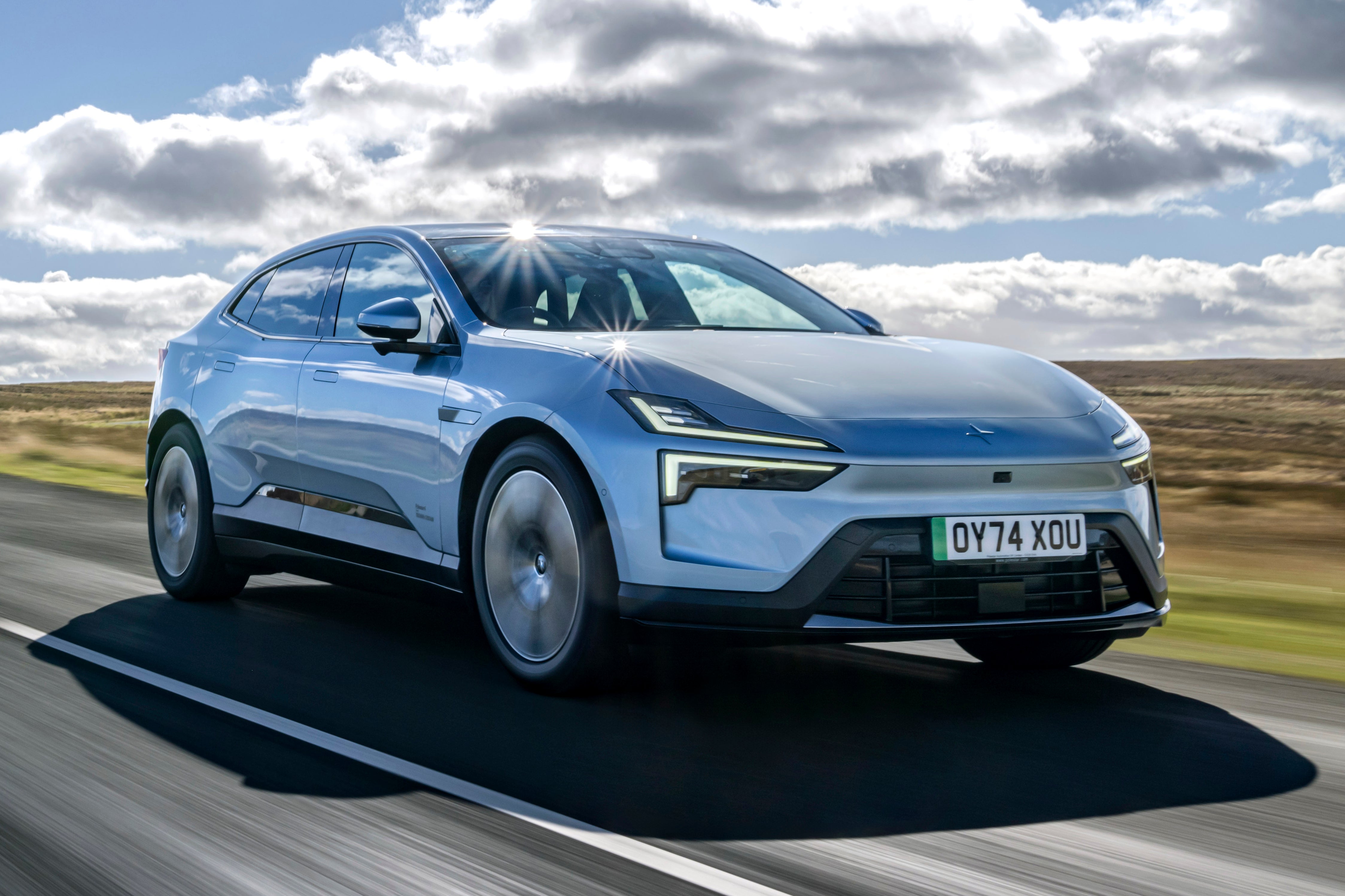
Polestar 4 Review

Written By Ivan Aistrop
- 2024
- SUV
- Electric
What we love
Distinctive design inside and out
Spacious and impressively well made
Fast, quiet and very easy to like
Things to consider
Infotainment system is still too complicated
The missing rear window will not suit everyone
Expensive to buy and insure
The DRIVE take on the Polestar 4, is it the right car for you?
The Polestar 4 is one of the most distinctive premium EVs around. Its dramatic coupé-SUV styling hides a genuinely spacious cabin, while the rear-drive model combines strong performance with up to 385 miles of official range. The interior feels suitably special and there’s plenty of luggage space, too.
Its minimalist approach won’t appeal to everyone. Too many functions live in the central touchscreen and replacing the rear window with a camera takes some acclimatisation. A Porsche Macan Electric is more polished to drive, while an Audi Q6 Sportback e-tron offers a more conventional premium experience. The Polestar fights back with character, space and value. For buyers who want something less predictable than the usual German premium EV, the rear-drive Polestar 4 makes a compelling case.
The Polestar 4 in more detail
The Polestar 4 occupies a slightly confusing position in the brand’s range. Polestar names its cars in the order they’re launched rather than according to size, which is why the 4 is actually smaller than the Polestar 3 despite wearing the higher number.
There’s now another complication, too. The car launched in Britain in 2024 as simply the Polestar 4 is officially called the Polestar 4 coupé from the 2027 model year. That’s because a second version, the Polestar 4 SUV, went on sale in September 2026. This review covers the original coupé – the distinctive one without a conventional rear window.
The new SUV uses the same basic platform and powertrains but has a longer roof, physical rear window, slightly more headroom and a larger luggage compartment. It starts at a lower price, too. It’s sufficiently different that it makes more sense treated as a separate model rather than simply another trim. Both sit between the Polestar 2 and Polestar 3 in size. At 4.84 metres long, the 4 coupé is a substantial car, and is built on Geely’s SEA electric platform rather than the SPA2 architecture shared by the Polestar 3 and Volvo EX90.
Its most controversial design feature remains the complete absence of a rear window. Polestar argues that removing it allowed the roofline and rear structure to be designed around passenger comfort rather than conventional visibility. A roof-mounted camera feeds an image to the digital rear-view mirror instead. Whether you consider that ingenious or needlessly complicated is likely to depend on how quickly you adapt to it.
The current range consists of Rear motor and Dual motor versions, replacing the Long range Single motor and Long range Dual motor names used on earlier cars. Both use a 100kWh battery and offer impressive range. Rear motor manages up to 385 miles, while the significantly more powerful Dual motor still achieves 367 miles.
The 2027 model year also brought some mechanical changes. Both current versions now use passive dampers as standard, with adaptive ZF suspension reserved for the Performance pack. Earlier Dual motor cars had adaptive suspension as standard.
Despite its size and weight, the Polestar 4 remains one of the more rewarding large EVs to drive. Combine that with excellent passenger space, a premium interior and useful luggage capacity and it’s much more than a piece of unusual design.
What's the best Polestar 4 trim and battery option?
For most buyers, the Rear motor is the Polestar 4 to choose. There’s only one battery size, so both versions use the same 100kWh gross battery, with around 94kWh available to the driver, so the decision is really about whether you need the Dual motor’s enormous additional performance.
The rear-drive car produces 272PS and 343Nm, reaches 62mph in 7.1 seconds and manages up to 385 miles between charges. It doesn’t provide the violent acceleration associated with some performance EVs, but it’s comfortably quick enough for everyday driving.
The Dual motor produces 544PS and 686Nm and slashes the 0–62mph time to 3.8 seconds. It’s spectacularly fast, but that ability isn’t particularly necessary in a large luxury SUV coupé. Its current £63,750 starting price is £7,000 higher than the Rear motor, although that gap is substantially smaller than it was on earlier cars.
Specification is handled through option packs rather than a traditional trim hierarchy. The standard car already gets plenty of equipment, so we’d add the Pilot pack if its extra driver assistance matters to you and consider Plus for its upgraded cabin equipment. If you want several packs anyway, Prime combines Pilot, Comfort and Plus with privacy glass.
Performance is strictly for Dual motor buyers who actively want the 22-inch wheels, Brembo brakes and adaptive suspension.
What’s the price of the Polestar 4?
The current Polestar 4 coupé starts at £56,750 for the rear-wheel-drive Rear motor. The Dual motor costs £63,750, making it £7,000 more expensive before options. That pricing has changed considerably for the 2027 model year – the rear-drive car has increased slightly in price, while the Dual motor has become substantially cheaper.
Options can still push either car considerably higher. The Plus, Pilot, Comfort and Prime packs add different combinations of luxury and assistance equipment, while Dual motor buyers can also specify the Performance pack. Nappa leather, larger wheels, an electrochromic roof and other individual upgrades are available.
The new Polestar 4 SUV starts lower, at £54,750, but it’s a separate body style rather than a cheaper trim of the coupé.
Alternatives to the Polestar 4
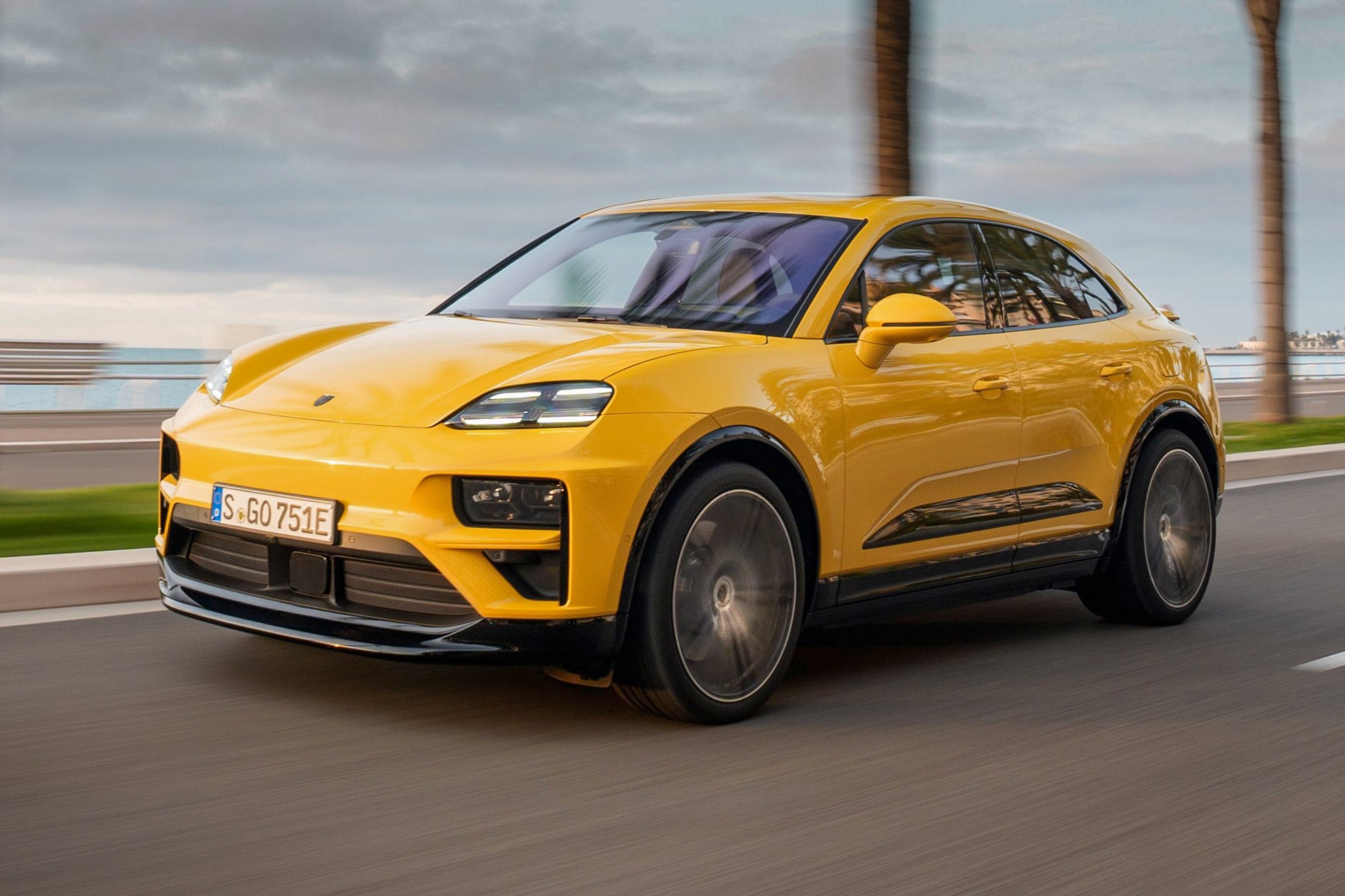
The Porsche Macan Electric is one of the Polestar 4’s clearest rivals if you want a premium electric SUV with a genuinely sporting driving experience. It feels more polished dynamically and carries a more prestigious badge, although prices rise rapidly once you start adding Porsche options.
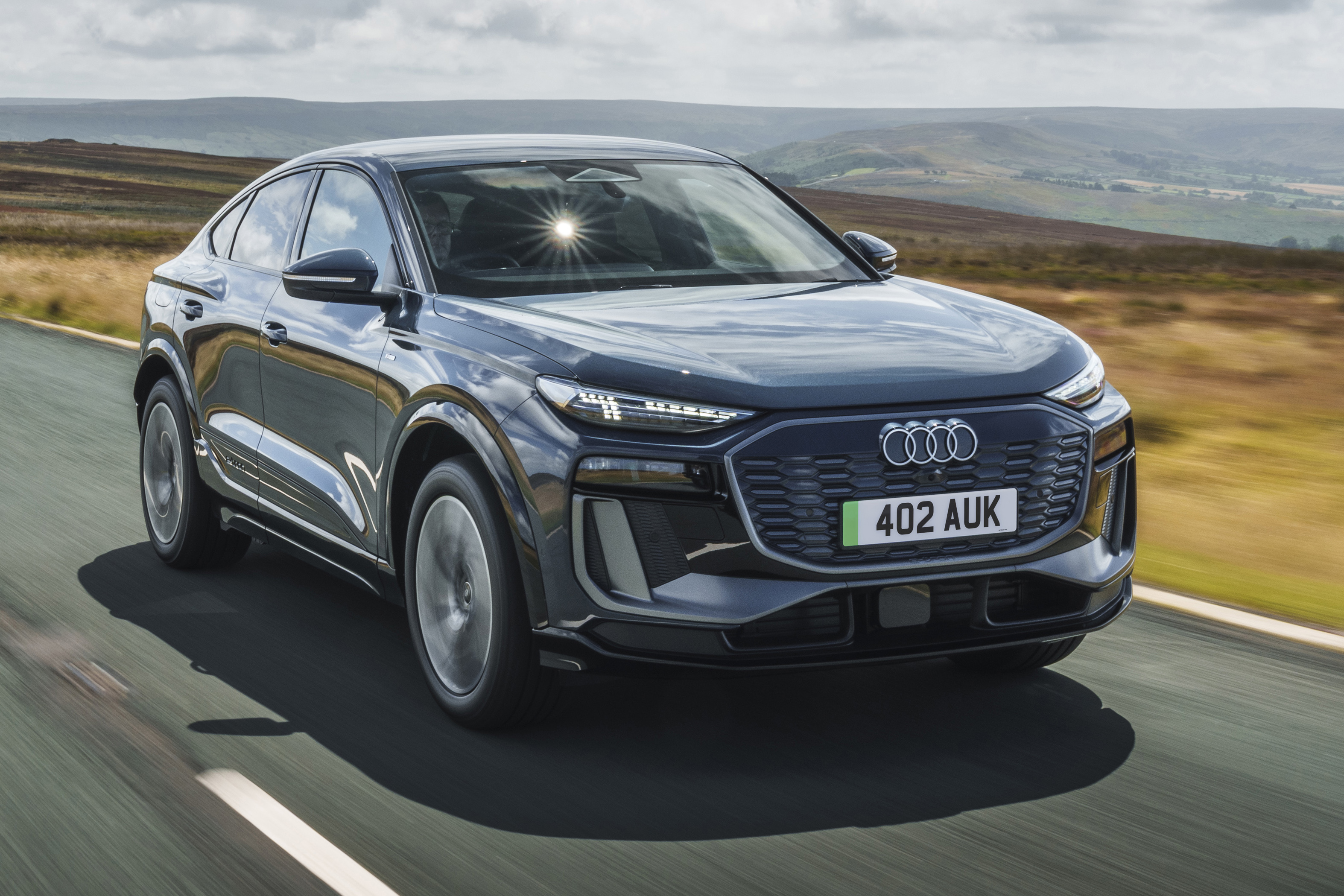
The Audi Q6 Sportback e-tron is perhaps the most obvious Volkswagen Group alternative. It follows a similar SUV-coupé formula but gives you a more conventional cabin, a physical rear window and much faster 800-volt rapid charging. It feels less unusual than the Polestar, but that could be a benefit for some buyers.
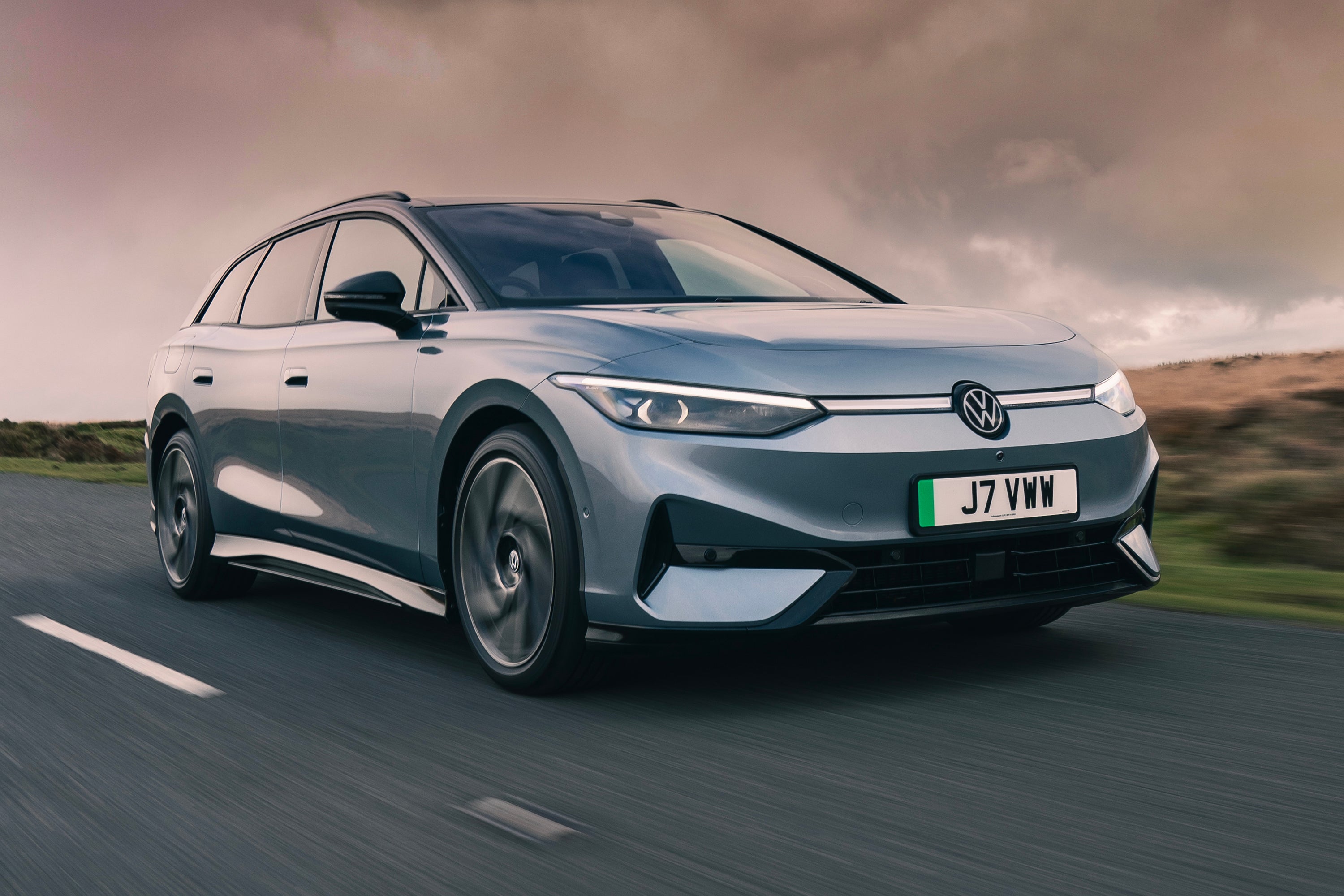
The Volkswagen ID.7 Tourer is worth considering if space matters more than SUV styling. It isn’t as dramatic to look at but has an enormous boot, excellent long-distance comfort and strong electric range.
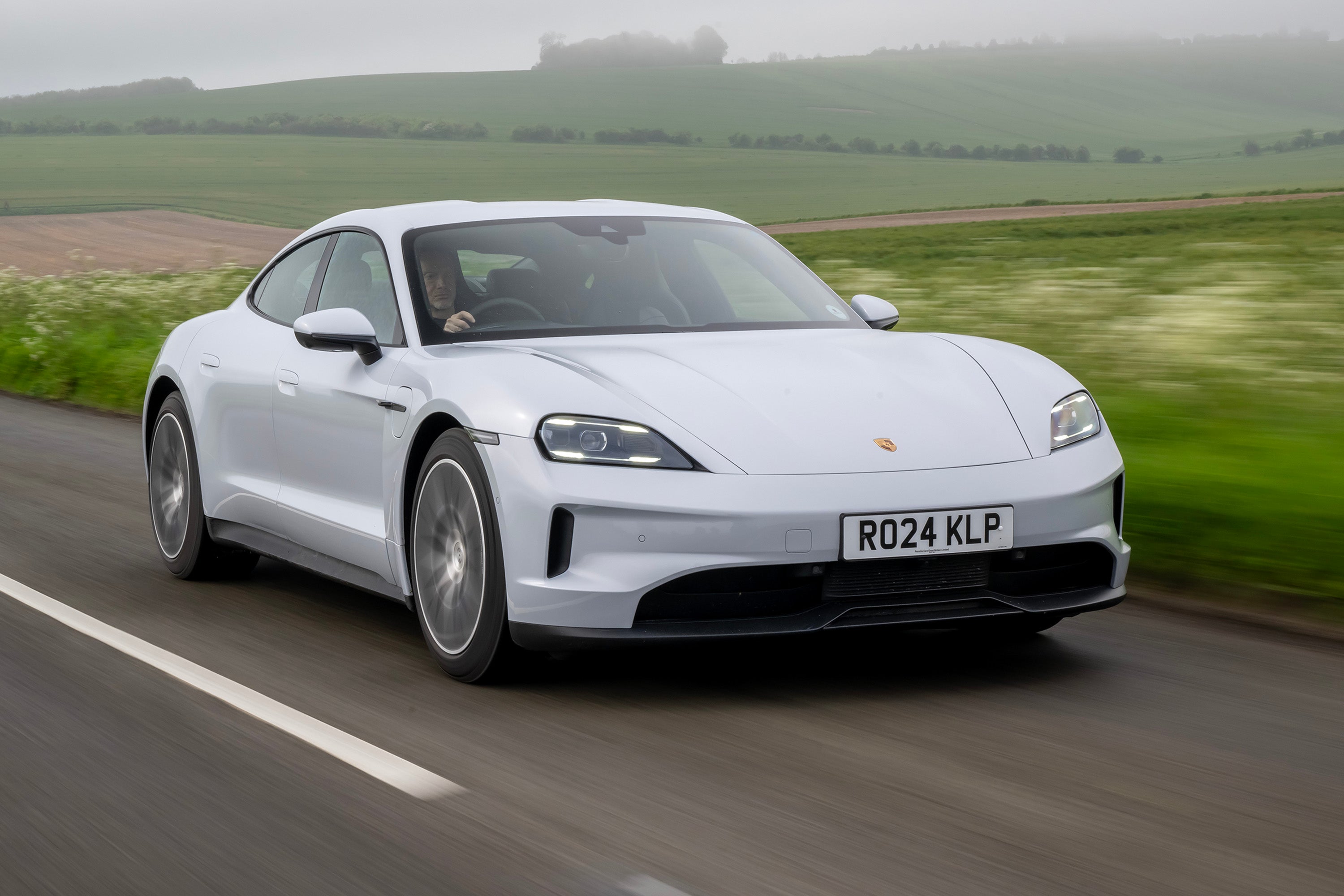
The Porsche Taycan is another possibility if you’d rather have a low-slung performance EV than an SUV. It’s considerably less spacious in the rear but much more engaging to drive.
The Kia EV6 and Hyundai Ioniq 5 N offer strong charging performance and plenty of equipment for less money, although neither feels as overtly premium.
The Polestar’s appeal lies in combining unusual design with genuine passenger space and long-distance range.
What's the interior like in the Polestar 4?
The Polestar 4’s cabin is one of its strongest selling points. It looks modern without copying the familiar German premium formula, with a minimalist horizontal dashboard, unusual materials and a large landscape touchscreen taking centre stage. There’s a proper 10.2-inch driver display ahead of the steering wheel, so Polestar hasn’t taken minimalism quite as far as some rivals. Build and material quality are convincing, while the enormous wheelbase creates much more space than the sloping body suggests.
The main drawback is usability. Physical buttons are scarce and a huge number of functions have been moved into the central screen. It looks impressive parked up, but simple adjustments can demand too much attention when you’re driving.
Polestar 4 boot space and practicality
One of the cleverest things about the Polestar 4 is that its dramatic coupé profile doesn’t ruin the passenger compartment. The 2,999mm wheelbase is enormous for a car of this overall length, allowing plenty of the footprint to be devoted to passengers rather than engine hardware.
There’s ample space up front and plenty of seat adjustment. Current cars have an eight-way electrically adjustable driver’s seat and six-way powered passenger seat as standard, with further adjustment included in the Comfort and Plus packs.
Rear space is particularly impressive, with masses of legroom, plenty of shoulder room and a completely flat floor. Headroom is much better than you’d expect given the sloping exterior profile. Removing the conventional rear window plays a part here. Rather than allowing the glass and roof structure to dictate the shape of the cabin, Polestar extended the panoramic roof behind the heads of the rear passengers. Plus-equipped cars go further with electrically reclining rear backrests and a 5.7-inch control screen for media and climate settings.
The downside is that you can’t simply turn around and look through the back window. Instead, an HD camera mounted on the roof feeds an 8.9-inch digital rear-view mirror. The display gives a wider, unobstructed view than a conventional mirror would, but your eyes need to refocus at a much closer distance. Some drivers will adapt immediately, while others may never prefer it to glass.
Boot space is very respectable at 526 litres with the rear seats in use, including the underfloor compartment. Fold the 60:40 rear backrests and capacity increases to 1,536 litres. The load floor is usefully flat, although a three-way rear-seat split would make carrying longer loads while retaining two rear seats easier. There’s also a 15-litre front compartment under the bonnet, which is ideal for charging cables.
The newly introduced Polestar 4 SUV is more practical still, but for such a sleek car the coupé is impressively useful.
Polestar 4 dimensions
The Polestar 4 coupé measures 4,840mm long, 2,139mm wide including the door mirrors and 1,534mm high. With the mirrors folded, it’s still 2,067mm wide. The length contributes to its excellent rear-seat room, but the width is the figure you’ll notice most in everyday use. Older multi-storey car parks and narrow country lanes require more care than they do in something like a BMW i4.
Tech and infotainment in the Polestar 4
The centrepiece of the Polestar 4’s dashboard is a 15.4-inch landscape touchscreen running Android Automotive OS. Google software is integrated directly into the car, so Google Maps handles navigation, Google Assistant provides voice control and compatible apps can be downloaded through Google Play. That shouldn’t be confused with Android Auto. The infotainment system itself is Android-based rather than mirroring an Android phone. iPhone users get wireless Apple CarPlay.
The system looks excellent. Graphics are sharp, animations are slick and the powerful underlying hardware means it generally reacts quickly.
The problem is the sheer quantity of functionality packed into it. Climate settings, drive modes, assistance systems, mirrors and numerous convenience features all require interaction with the screen. The menus are logically presented once you’ve learned them, but finding an unfamiliar setting can involve too much hunting around.
Thankfully, there’s a separate 10.2-inch driver display directly ahead of you for essential information. Standard cars also get an 8.9-inch digital rear-view mirror, wireless phone charging, four USB-C connections, 5G connectivity, over-the-air software updates and an eight-speaker sound system.
The Plus pack adds a 14.7-inch head-up display, 5.7-inch rear passenger control screen and a powerful 12-speaker, 1,320W Harman Kardon stereo. Adding the Nappa upgrade expands the audio system to 16 speakers, including four speakers integrated into the front headrests.
Wireless device integration is good, but the fundamental reliance on the touchscreen remains the car’s biggest ergonomic weakness.
Materials available on the Polestar 4
The Polestar 4 uses unusual materials to create its premium feel rather than simply covering everything in conventional leather. Standard cars use bio-attributed MicroTech in Charcoal, paired with Zinc decorative trim. MicroTech is a synthetic material that uses pine-oil-derived ingredients and a recycled textile backing.
With the Plus pack, buyers can also choose Tailored Knit in Mist. Its knitted construction allows material to be produced closer to the required shape, reducing waste during manufacturing.
The most luxurious choice is the Nappa upgrade. This uses perforated Bridge of Weir Nappa leather in Zinc or Charcoal and brings ventilated and massaging front seats, additional rear comfort headrests, brushed textile headlining and four extra Harman Kardon speakers built into the front headrests.
Performance pack cars use a darker Charcoal decorative treatment alongside the familiar Swedish-gold detailing.
Whatever you choose, the cabin avoids the generic glossy-black-and-leather formula found in many premium cars and gives the Polestar a distinct identity.
What's the Polestar 4 like to drive?
The Polestar 4 manages to feel more agile than its size and weight suggest. Steering is direct, grip is strong and the rear-drive model in particular has a nicely balanced character. It’s still a heavy electric SUV coupé rather than a sports car, but there’s enough precision to make a twisting road enjoyable without ruining comfort on the motorway.
Polestar 4 range and performance
Every current Polestar 4 coupé uses the same large 100kWh lithium-ion battery, with roughly 94kWh of usable capacity. The Rear motor has a single electric motor driving the back wheels, producing 272PS and 343Nm and reaching 62mph in 7.1 seconds. Top speed is electronically limited to 124mph.
That acceleration figure sounds almost ordinary by modern EV standards, but there’s still instant torque and enough performance for effortless motorway joining and overtaking. Its bigger advantage is range. Polestar quotes up to 385 miles under the WLTP test, making it the longest-range version of the coupé.
The Dual motor adds another 272PS motor at the front, giving four-wheel drive and a combined output of 544PS and 686Nm. That cuts the 0–62mph time to a dramatic 3.8 seconds. It’s genuinely startling in a car weighing well over two tonnes, although repeated demonstrations of that acceleration are likely to become uncomfortable for passengers long before the performance stops being impressive.
The Dual motor can disconnect its front motor when it isn’t needed, helping preserve efficiency. That’s why its official range is only 18 miles behind the rear-drive version despite having twice as many motors and double the peak power.
Earlier cars used the names Long range Single motor and Long range Dual motor but offered the same headline 272PS and 544PS outputs.
For most buyers, the Rear motor makes far more sense. It has all the usable performance you need and the best range, while costing £7,000 less.
Performance data
| Model | Engine/battery size | Power | 0-62mph | Range/MPG |
|---|---|---|---|---|
Polestar 4 Rear motor | 100kWh | 272PS | 7.1 seconds | Up to 385 miles |
Polestar 4 Dual motor | 100kWh | 544PS | 3.8 seconds | Up to 367 miles |
Polestar 4 driving and refinement
The Polestar 4 feels surprisingly composed considering its considerable size and weight. The steering is quick and accurate, with three assistance settings allowing you to alter its weight. There’s enough feedback to give you confidence on a fast country road, although it never disguises the fact that more than two tonnes of car are changing direction beneath you.
Grip is strong and the rear-drive layout gives the 272PS version a pleasingly balanced feel. The suspension provides enough control to keep the body in check without turning every poor surface into an event. It’s firmer than the softest luxury SUVs, but it doesn’t feel needlessly harsh.
There’s an important distinction between new and earlier Dual motor cars. The original Long range Dual motor launched with semi-active suspension as standard. For the 2027 model year, both Rear and Dual motor versions use high-capacity passive dampers. The latest passive setup has been retuned and still suits the car well, but buyers specifically wanting adjustable suspension now need the Performance pack. That pack is available only with Dual motor and adds specially tuned ZF adaptive dampers, stiffer springs and anti-roll bars, 22-inch wheels and larger Brembo brakes. Its three suspension settings are Standard, Nimble and Firm. Firm remains best reserved for very smooth roads. It controls body movement aggressively but can become unnecessarily busy on typical British surfaces. Nimble gives the better compromise for quicker driving.
Around town, the Polestar’s sheer width is more noticeable than its weight. The steering is light enough and the standard 360-degree camera is useful, but this isn’t a small car to squeeze through tight gaps.
Motorway refinement is excellent. Wind noise is well suppressed and road noise is generally subdued, particularly on the standard 20-inch wheels.
The camera rear-view system remains the unusual element. It gives a clear view in darkness or with passengers and luggage behind you, but looking at a screen rather than into the distance requires an adjustment that some drivers will find easier than others.
How safe is the Polestar 4?
The Polestar 4 received a full five-star rating from independent safety organisation Euro NCAP in 2025. It scored 92% for adult occupant protection, 85% for child protection, 81% for vulnerable road users and 79% for safety assistance. Euro NCAP gave it maximum points in both its side-barrier and side-pole occupant tests, while its automatic emergency braking systems also performed strongly.
Seven airbags are standard, including a centre airbag between the front occupants. Standard driver assistance includes adaptive cruise control, blind-spot monitoring with steering intervention, lane-keeping assistance, cross-traffic braking, exit warning, driver monitoring and collision avoidance.
Pilot Assist isn’t standard, though. It comes through the optional Pilot pack, along with Lane Change Assist and Park Assist Pilot.
Overall, it has both the equipment and the independent crash-test result expected of a premium family EV.
Running costs: What it's like to live with a Polestar 4
The Polestar 4 is expensive to buy and insure, but day-to-day energy costs can be reasonable if you charge at home. Its huge battery means a complete charge will inevitably consume plenty of electricity, although the rear-drive version is impressively efficient for such a large car.
Routine servicing is relatively infrequent, and the first three years of scheduled maintenance are included.
Tax is less generous than it once was for EV owners. Every Polestar 4 costs enough to attract the Expensive Car Supplement, although company-car drivers still benefit from a low 4% Benefit-in-Kind rate during 2026/27.
Polestar 4 charging times and costs
The Polestar 4 uses a 400-volt electrical architecture and can accept up to 200kW from a DC rapid charger. Polestar quotes around 30 minutes for a 10–80% charge in suitable conditions. That’s perfectly respectable, but newer 800-volt rivals including the Porsche Macan Electric and Audi Q6 e-tron can add energy considerably faster.
There’s an important difference between new and earlier Polestar 4s on AC charging. Cars originally sold in Britain were specified with 22kW AC charging, allowing a full charge in around 5½ hours from a suitable three-phase supply. Polestar’s current UK specification lists 11kW AC charging, with a 0–100% time of around 11 hours. However, few UK homes can provide either rate. On a normal 7.4kW domestic wallbox, expect roughly 17 hours for a complete charge from empty, although most owners will normally be topping up rather than starting from 0%.
Battery preconditioning is available to improve rapid-charging performance when a charger is entered into the navigation system.
Polestar 4 warranty and servicing
The Polestar 4 comes with a three-year or 60,000-mile vehicle warranty, whichever comes first. Its high-voltage battery receives separate cover for eight years or 100,000 miles.
Polestar also guarantees the battery against qualifying degradation below 70% of its original state of health during that period, repairing or replacing it if necessary. Corrosion perforation cover runs for 12 years.
Routine servicing is considerably less frequent than it is for most combustion cars. Polestar says the 4 generally won’t need scheduled maintenance more often than every two years or 18,750 miles, although its onboard diagnostics can request attention sooner if required. Polestar currently includes scheduled servicing for the first three years or 31,250 miles fron new, along with three years of roadside assistance.
The whole-car warranty isn’t as generous as the five- or seven-year cover offered by some manufacturers, but the included servicing helps offset that slightly.
Polestar 4 insurance groups
Insurance is one of the Polestar 4’s more significant running costs. The rear-wheel-drive version generally sits around group 45 (of 50), although some lower specifications are listed from group 43. The much faster Dual motor is typically group 48E. That puts the Polestar towards the expensive end of the insurance scale, although that’s hardly surprising for a premium EV with between 272PS and 544PS.
The Dual motor’s performance in particular is firmly in sports-car territory, so it’s worth obtaining a quotation before assuming its relatively modest price premium over the Rear motor makes it the obvious upgrade.
How much does it cost to tax a Polestar 4?
The Polestar 4 now costs £200 a year in VED (Vehicle Excise Duty or road tax) after year one. The Expensive Car Supplement only applies to electric cars with a list price of more than £50,000, and every Polestar 4 sits above that threshold. That means you pay the extra £440 a year for five years from the second year of registration, on top of the standard £200 annual rate. In other words, a new Polestar 4 costs £640 a year in VED for those five years.
What trims are available with the Polestar 4?
The Polestar 4 has no conventional trim levels. Instead, you choose between Rear motor and Dual motor versions, then add equipment through optional packs.
Standard specification is already strong, with 20 inch alloy wheels, a 15.4-inch touchscreen, 10.2-inch driver display, Google built in, wireless Apple CarPlay, heated front seats, a heat pump, 360-degree camera, adaptive cruise control, blind spot monitoring and a panoramic glass roof.
The Pilot pack adds more advanced driver assistance, including Pilot Assist, Lane Change Assist and Park Assist Pilot, making it worth considering if you do plenty of motorway driving.
Comfort focuses on the seats and driving position, adding 12 way powered front seats, extendable seat cushions, heated rear seats, a heated steering wheel and an electrically adjustable steering column.
The Plus pack gives the cabin a more upmarket feel with a 12 speaker Harman Kardon stereo, 14.7-inch head up display, rear control screen, three zone climate control, Pixel LED headlights and electrically reclining rear seats.
Prime bundles the Pilot, Comfort and Plus packs together, while also adding rear privacy glass. It makes most sense if you were already planning to add several packs individually.
Available only on the Dual motor, the Performance pack adds 22-inch forged wheels, Pirelli P Zero tyres, adaptive ZF dampers, uprated suspension, larger Brembo brakes and Polestar Engineered chassis tuning.
Finally, the Nappa pack brings perforated Bridge of Weir Nappa leather, ventilated and massaging front seats, upgraded rear headrests and a 16 speaker Harman Kardon audio system.
For most buyers, the standard Polestar 4 is already well equipped. Plus is the most worthwhile upgrade for extra luxury, while Prime is the better choice if you want several of the available packs together.
Ask the Drive experts: common questions
Is the Polestar 4 a good electric car?
Which Polestar 4 is best?
Is the Polestar 4 practical enough for a family?
Does the Polestar 4 pay the Expensive Car Supplement?
Get our latest advice, news and offers
Keep me updated by email with the latest advice, news and offers from Drive.
.jpg)