Volkswagen California Review

Written By Phil Hall
- 2025
- Campervan
- Diesel, petrol, plug-in hybrid
What we love
Still the most complete all-round compact campervan
Easy to drive and realistic to use every day
Ingenious factory-fitted camping solutions
Things to consider
eHybrid suits regular charging and shorter journeys best
The powered pop-up roof is limited to Coast and Ocean
Beach, Coast and Ocean suit quite different types of buyer
The DRIVE take on the Volkswagen California, is it the right car for you?
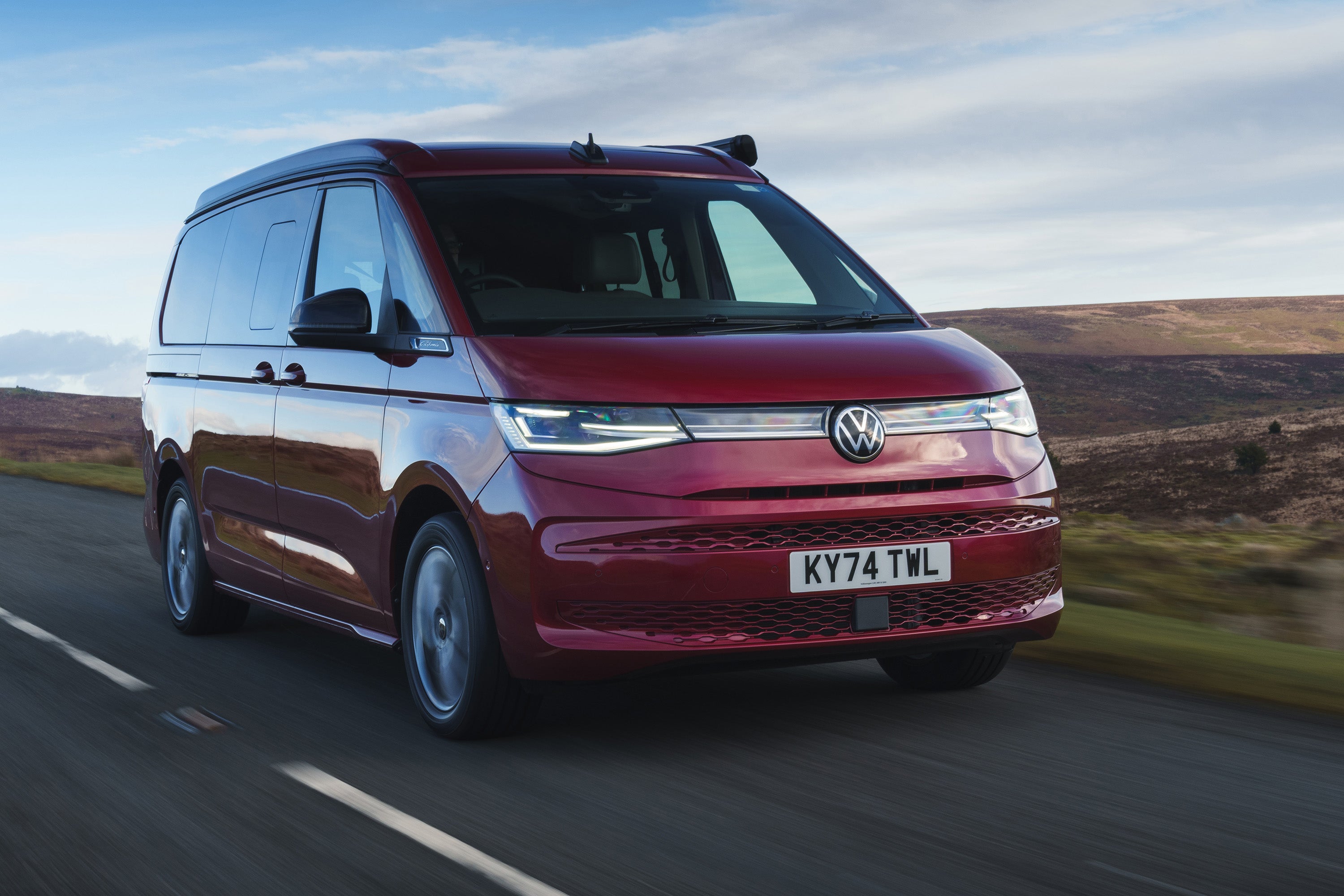
The Volkswagen California remains the benchmark compact campervan because it still does the all-round job better than almost anything else. It’s expensive, and there are cheaper conversions that will get you into the camping lifestyle for much less, but few alternatives feel as thoroughly thought through or as easy to live with. The latest Volkswagen California is roomier, more flexible and more family-friendly than before, while still being civilised enough to use like a big MPV during the week. If you want a campervan that can genuinely cover daily driving, family duties and weekends away without feeling like a compromise in every direction, the Volkswagen California still makes an exceptionally strong case.
The Volkswagen California in more detail
The California has had a very simple role for a long time. It has to be the campervan that everyone else measures themselves against. That sounds like marketing fluff until you actually look at how these vans are used in the real world. On campsites across the UK and Europe, the California is not some niche curiosity. It’s the default answer for buyers who want a factory-built camper that feels polished, dependable and easy to live with.
That reputation is exactly why this latest Volkswagen California matters. Volkswagen could have played things safe and produced something that looked like a T6.1 California with a light update, but it went further than that. The new Volkswagen California is based on the long-wheelbase Multivan rather than on a van-derived Transporter, which changes the character of the whole thing.
That shift shows up on the road because the Volkswagen California now feels more car-like in the way it drives, and it shows up on site because the whole interior concept has been rethought. The headline change is the move to two sliding side doors, which sounds like a small thing until you start using it. It makes access easier, improves day-to-day family practicality and allows the kitchen to be set further back so it can be used more effectively from outside.
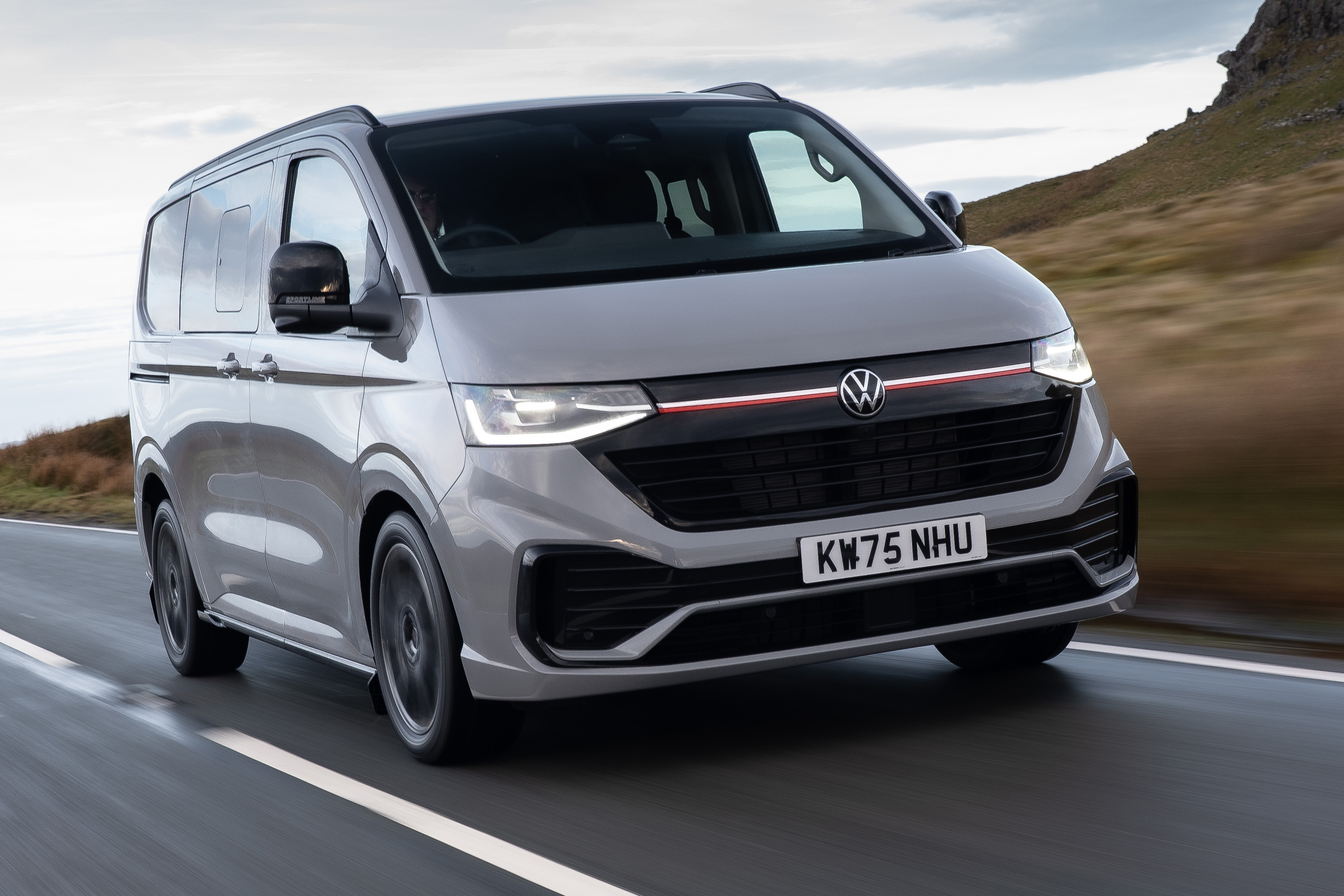
The current Volkswagen California range is split neatly into three trims. The Beach Camper is the more flexible, slightly simpler entry point and the only one with five seats in regular diesel form. The Coast is the point where the Volkswagen California starts to feel like a fully integrated compact home on wheels, thanks to its proper side kitchen and more complete camping kit. The Ocean adds more comfort and more polish, and it’s the version many buyers will naturally gravitate towards.
What the new Volkswagen California does particularly well is avoid feeling like a crude compromise between a van and a holiday cabin. It’s still compact enough to use regularly, still low enough to fit under most height barriers, and still refined enough that long motorway slogs do not feel like a chore. That combination is why the Volkswagen California remains such a hard act to follow.
What's the best Volkswagen California trim and engine option?
For most buyers, the best bet is the Volkswagen California Coast 150PS 2.0 TDI. It gets the proper side kitchen, proper four-berth camper layout and the best-value engine in the range.
The 150PS diesel remains the most natural fit for the Volkswagen California because it suits the van’s relaxed touring character, has enough torque to cope when fully loaded and is still the easiest choice to justify if you cover distance.
The Ocean will probably be the one most buyers want, because it adds the extra polish and convenience features that make a campervan like this feel especially special. But the Coast is the more rational answer.
The Beach Camper makes sense if you want a simpler, more family-friendly layout or think you will use it more often as everyday transport, while the eHybrid is the one to look at if your usage includes lots of shorter trips and regular charging.
What’s the price of the Volkswagen California?
The current Volkswagen California range starts at £64,432 for the Beach Camper 150PS 2.0 TDI and rises to £86,698 for the California Ocean eHybrid 4MOTION.
The Coast sits in the middle of the range, from £71,740 in diesel form to £79,690 as an eHybrid, while the Ocean spans £78,748 to £86,698 depending on engine.
That is serious money, and it pushes the Volkswagen California firmly into premium-camper territory. But the reason buyers keep paying is that Californias tend to hold their value strongly, and there is still very little else on sale that offers this exact blend of factory-finished polish and camping usability.
Alternatives to the Volkswagen California
The most obvious direct alternatives are the Mercedes-Benz Marco Polo and Ford Transit Custom Nugget, both of which chase the same blend of factory-developed campervan usability and everyday drivability.
The Citroen Holidays is the budget-minded challenger, while countless specialist converters can turn a Transporter, Transit Custom or similar van into something tailored more specifically to your needs.
The Volkswagen California’s edge is that it still feels like the most complete all-rounder. It’s not the cheapest and not always the most exciting, but it’s usually the one with the fewest weak spots.
What's the interior like in the Volkswagen California?
The Volkswagen California’s interior is where the money starts to make sense. It doesn’t simply throw camping furniture into the back of a van. It feels properly engineered as a camper from the start.
Volkswagen California boot space and practicality
Practicality is one of the Volkswagen California’s greatest strengths, though exactly how practical it is depends heavily on which version you choose.
The Beach Camper is the more family-friendly option in day-to-day use. In diesel form, it gets three individual rear seats, which makes it the five-seat version of the range and the easiest one to justify as a do-everything family vehicle. The trade-off is that it gives away some of the interior storage and side-kitchen sophistication of the Coast and Ocean.
The Coast and Ocean both seat four and sleep four. They feel more complete as campervans because they use the space more effectively, with the kitchen moved to the passenger side, better integrated cupboards and more thought given to living rather than just travelling.
Both sliding side doors are a genuine improvement. They make access easier in everyday use, and on-site, they make the Volkswagen California feel more flexible than older versions did. The left-hand side kitchen in Coast and Ocean models can now be accessed from outside more naturally, which is exactly how many owners will use it.
ISOFIX deserves a proper mention because it reinforces how realistic the Volkswagen California is as family transport. The Coast and Ocean have two rear seats with ISOFIX, while the Beach Camper’s extra rear seat makes it the more flexible family option overall. That means the California can genuinely double up as an everyday vehicle rather than just a weekend toy.
Volkswagen doesn’t quote a simple luggage figure in litres in the way a car brochure does, and that makes sense because what matters more here is the shape and versatility of the space. There is a good amount of room beneath and behind the rear bed, and plenty of useful storage in the cupboard systems of the Coast and Ocean. The Beach gives away some of that cupboard space in exchange for its more flexible rear-seat arrangement.
Volkswagen California sleeping space and camping layout
All three versions of the Volkswagen California sleep four. The upper roof bed is standard across the line-up and has a maximum load of 200kg.
The Beach Camper is the one with the largest downstairs bed, measuring 1,980 x 1,330mm, which will appeal to buyers who want a simpler, more family-oriented sleeping layout.
The Coast and Ocean use a slightly narrower lower bed because of the side kitchen, but the trade-off is a much more complete campervan feel once you are parked up.
The key point is that the Volkswagen California still manages to feel like a compact campervan rather than a bulky motorhome. It’s not a vast vehicle inside, and four adults will know each other very well by the end of a weekend away, but as a cleverly packaged four-berth it remains hugely impressive.
Volkswagen California dimensions
The Volkswagen California measures 5,173mm long, 1,941mm wide and 1,972mm high, or 2,252mm wide including mirrors.
That keeps it just under the magic two-metre height barrier, which matters hugely in everyday use because it means most height-restricted car parks remain accessible.
It’s undeniably a large vehicle on the road, but not an intimidating one. The big windows, elevated driving position and relatively car-like cabin all help make it feel more approachable than its size suggests.
Tech and infotainment in the Volkswagen California
All Volkswagen California models get a digital instrument display and a 10-inch infotainment touchscreen, plus smartphone connectivity and plenty of USB-C charging points.
The main irritation is that the system is not Volkswagen’s very best current setup, so it can feel a little clunky at times. The touch-sensitive sliders beneath the screen are also hard to love, especially at night.
The more interesting bit is the California-specific technology. Coast and Ocean models get the dedicated 5-inch camping control unit mounted in the C-pillar, which gives access to water levels, lighting, cool box controls, power supply status and the auxiliary heater. It’s useful and generally easy to understand, though not always especially quick to respond.
Materials available on the Volkswagen California
The California’s switch to the Multivan-based platform brings a more car-like mix of cabin materials than older versions. Up front, you get passenger-car style dashboard and door trims rather than a traditional van-style finish, while the living area combines harder-wearing plastics, seat fabrics and the camper-specific cabinetry materials you would expect in something designed for regular use.
The trim split also affects what you get. Coast keeps things simpler and more utilitarian with durable seat fabrics and straightforward cabin finishes, while Ocean adds more decorative trim details and a plusher upholstery treatment. Beyond that, the California’s character is shaped as much by its camper fittings as by its dashboard materials, with the table, cupboards, work surfaces and storage units all forming a big part of what you actually see and use day to day.
What's the Volkswagen California like to drive?
One of the Volkswagen California’s greatest strengths is that it doesn’t feel remotely intimidating from behind the wheel. For something that can sleep four and carry a kitchen, it’s astonishingly easy to drive.
Volkswagen California range and performance
There are three engine choices in the current line-up.
The key one is the 150PS 2.0-litre TDI diesel, paired with a seven-speed DSG automatic. This is the engine that best suits the Volkswagen California’s brief. It has enough torque to cope with a full holiday load, enough performance to avoid feeling strained and the best fuel economy in the range. Officially, it returns between 40.7mpg and 42.2mpg, with 0-62mph taking 12.4 seconds in the Beach Camper and 12.6 seconds in the Coast and Ocean.
Above that sits the 204PS 2.0-litre petrol, also with a seven-speed DSG. This is available in Coast and Ocean only. It’s smoother and quicker than the diesel, reaching 62mph in 10.0 seconds, but it’s also markedly thirstier at 30.2 to 31.0mpg.
Then there’s the 245PS eHybrid 4MOTION. This combines a 1.5-litre TSI petrol engine with plug-in hybrid assistance and four-wheel drive. It’s the most technically interesting Volkswagen California, and on paper, it’s also the efficiency hero, with up to 95.6mpg and an electric range of up to 53.4 miles in Beach Camper form. That makes it very appealing if your camping and daily driving patterns involve lots of shorter journeys and reliable charging.
Performance data
| Model | Engine/battery size | Power | 0-62mph | Range/MPG |
|---|---|---|---|---|
VW California TDI DSG | 2.0-litre diesel automatic | 150PS | 12.4 to 12.6 seconds | Around 42mpg |
VW California TSI DSG | 2.0-litre petrol automatic | 204PS | 10.0 seconds | Around 31mpg |
VW California eHybrid 4MOTION DSG | 1.5-litre plug-in hybrid petrol | 245PS | 10 seconds | Around 95mpg |
Volkswagen California driving and refinement
The move from Transporter roots to the Multivan platform has clearly helped the Volkswagen California. It still gives you the elevated driving position and commanding visibility you want in a camper, but it feels noticeably more MPV-like and more relaxed than some older van-based campers did.
The steering is accurate and light enough that the Volkswagen California never feels cumbersome. You do notice the height and mass when fully loaded, particularly if you rush into roundabouts or tighter bends, but that is true of any campervan of this type. The important thing is that the California feels predictable and easy.
Ride quality is generally good, though not especially plush on all surfaces. Around town, there can be a touch of firmness, but once you settle onto an A-road or motorway, the Volkswagen California becomes a very easy thing to cover distance in.
Refinement is another strength. The petrol is the quietest when worked hard, the diesel will likely remain the best fit for touring, and the plug-in hybrid should be the smoothest and quietest at lower speeds when it has charge. More broadly, there is not much in the way of road noise, and the Volkswagen California feels impressively solid, with no obvious rattles from the camping furniture if everything is properly secured.
How safe is the Volkswagen California?
The Volkswagen California itself has not yet been separately Euro NCAP tested, but the closely related Multivan achieved a five-star Euro NCAP rating.
Standard safety equipment is generous and includes Front Assist autonomous emergency braking with pedestrian and cyclist detection, Lane Assist, adaptive cruise control, front and rear parking sensors and a wide spread of airbags. Coast and Ocean models also add a reversing camera as standard.
Running costs: What it's like to live with a Volkswagen California
The Volkswagen California is not cheap, but the running-cost story is a little more nuanced than the purchase price suggests.
Residual values have historically been very strong, and that helps justify the premium. The diesel should remain the most straightforward option for touring mileage, while the plug-in hybrid makes the strongest case if you can genuinely exploit its electric range.
The real difference versus many conversions is that the Volkswagen California feels engineered as a complete product. For some buyers, that peace of mind and that tidier ownership experience will be worth a great deal.
Volkswagen California fuel economy
The 150PS diesel remains the engine to choose if fuel efficiency matters most in real-world touring use, with official combined figures between 40.7mpg and 42.2mpg depending on version.
The 204PS petrol drops well behind that at 30.2 to 31.0mpg, and that makes it harder to justify unless you really prefer petrol refinement and do not cover especially big distances.
The eHybrid is the wildcard. Officially, it returns between 89.7mpg and 95.6mpg, with an electric range of up to 53.4 miles. Those figures are impressive, but as with any plug-in hybrid, they only make sense if you keep it charged and actually drive in a way that uses the electric capability properly.
Volkswagen California warranty and servicing
The Volkswagen California currently comes with Volkswagen Commercial Vehicles’ 5+ Promise. That includes five services, three MOTs, five years of warranty cover and five years of roadside assistance.
Volkswagen quotes the warranty as up to five years or 124,000 miles, which is a genuinely useful reassurance on a vehicle that many owners will use heavily and keep for a long time.
That generous cover is one of the arguments for buying a Volkswagen California rather than a third-party conversion, because it reinforces the sense that this is a factory-developed product rather than an aftermarket conversion.
Volkswagen California insurance groups
Specialist campervan insurance is worth considering here. A Volkswagen California is not simply a big MPV or a van with windows, and a proper camper policy can be better aligned with how owners actually use one. That can mean cover for camping equipment, awnings, gas bottles and personal kit, as well as more realistic agreed-value or market-value treatment on a vehicle that tends to hold onto its money unusually well.
It can also be more competitive than mainstream car or van insurance, particularly if the insurer understands seasonal mileage, campsite use and the way a factory-built camper differs from a converted van. On a vehicle this expensive, it’s well worth getting specialist quotes rather than defaulting to a standard comparison site policy.
How much does it cost to tax a Volkswagen California?
After the first year, tax is set at £200, but because the Volkswagen California starts at well over £40,000, the Expensive Car Supplement becomes applicable. This means that an additional £440 a year on top of the road tax bill between years two to six, bringing the annual total to £640.
What trims are available with the Volkswagen California?
The Volkswagen California range is neatly divided into Beach Camper, Coast and Ocean.
The Beach Camper is the entry point and the most flexible as everyday transport. It gets the mini rear kitchen, the largest downstairs bed and, in diesel form, five seats. It’s the version for buyers who want a more stripped-back camper and more MPV-like usefulness.
The Coast is where the Volkswagen California really becomes the classic, fully integrated VW camper. It adds the proper side kitchen, powered pop-up roof, extra camping batteries, better blinds, an outdoor shower connection and more of the details owners will value once they are actually away.
The Ocean builds on that with more comfort kit, heated front seats, upgraded lighting, nicer finishes and a richer overall feel. It’s the luxury choice, and probably the one most buyers will naturally want.
Ask the Drive experts: common questions
Does the Volkswagen California have a toilet?
Which Volkswagen California is best?
Is the Volkswagen California eHybrid worth it?
Can you use a Volkswagen California every day?
Get our latest advice, news and offers
Keep me updated by email with the latest advice, news and offers from Drive.
.jpg)
.jpg)
.jpg)