Volkswagen ID.7 GTX Review

Written By Matt Robinson
- 2024
- Hatchback and estate
- Electric
What we love
High quality interior
Very refined at speed
Healthy range figure
Things to consider
Its extra pace comes with a small range penalty
Better suited to open roads than tight urban use
GTX remains more comfort-focused than overtly sporty
The DRIVE take on the Volkswagen Id7, is it the right car for you?
The Volkswagen ID.7 GTX is easy to like because so many of the standard car’s best qualities remain intact. It is spacious, refined and generously equipped, and the extra performance gives it stronger straight-line pace than the rest of the range. The problem is that it never really feels as thrilling or as special as the GTX badge suggests it should. If you want the most powerful ID.7, this is the one to go for, but judged as a performance EV, it might not hit the mark for you. It still makes more sense as a fast, comfortable cruiser, but so does the standard ID.7, which is much cheaper.
The Volkswagen Id7 in more detail
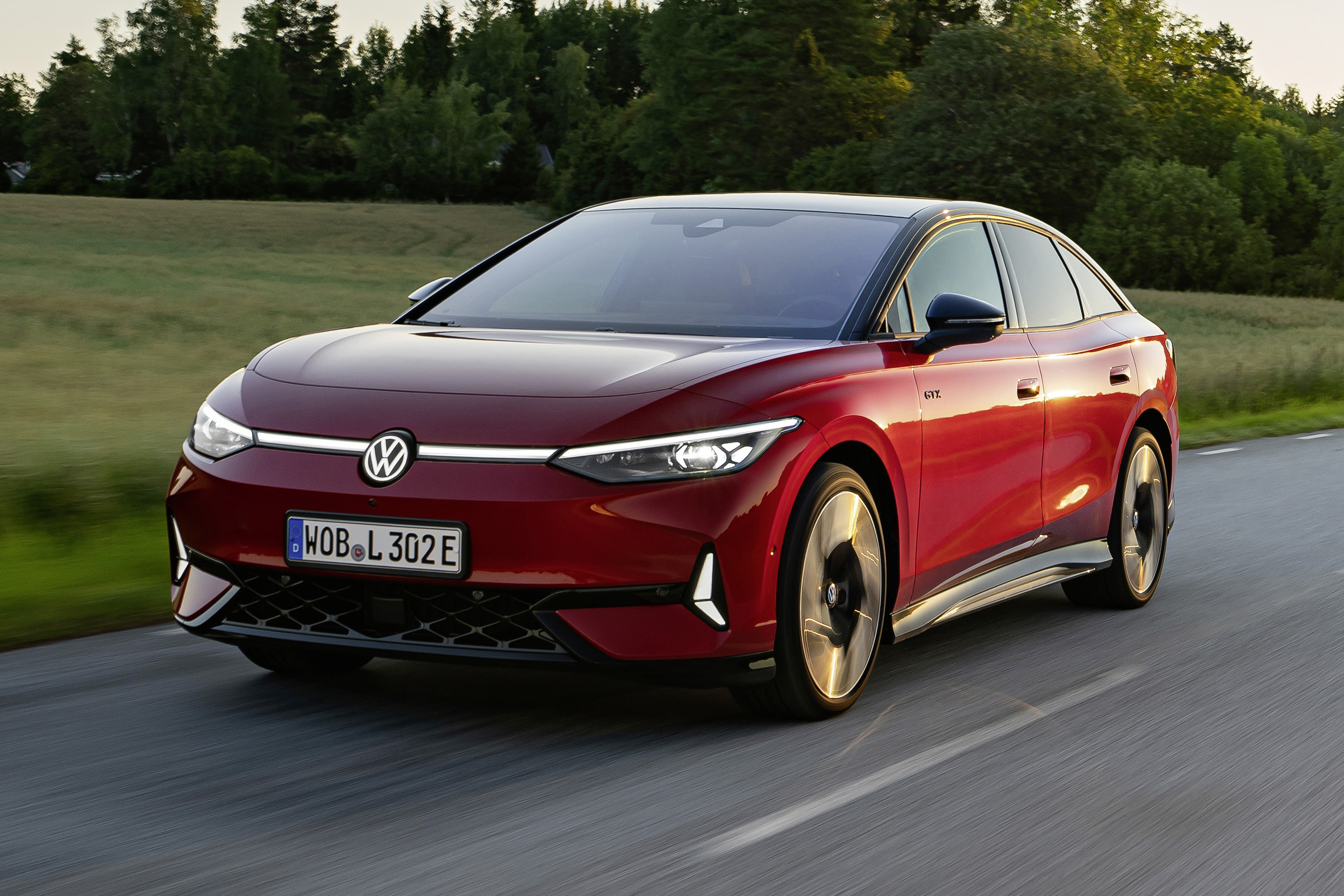
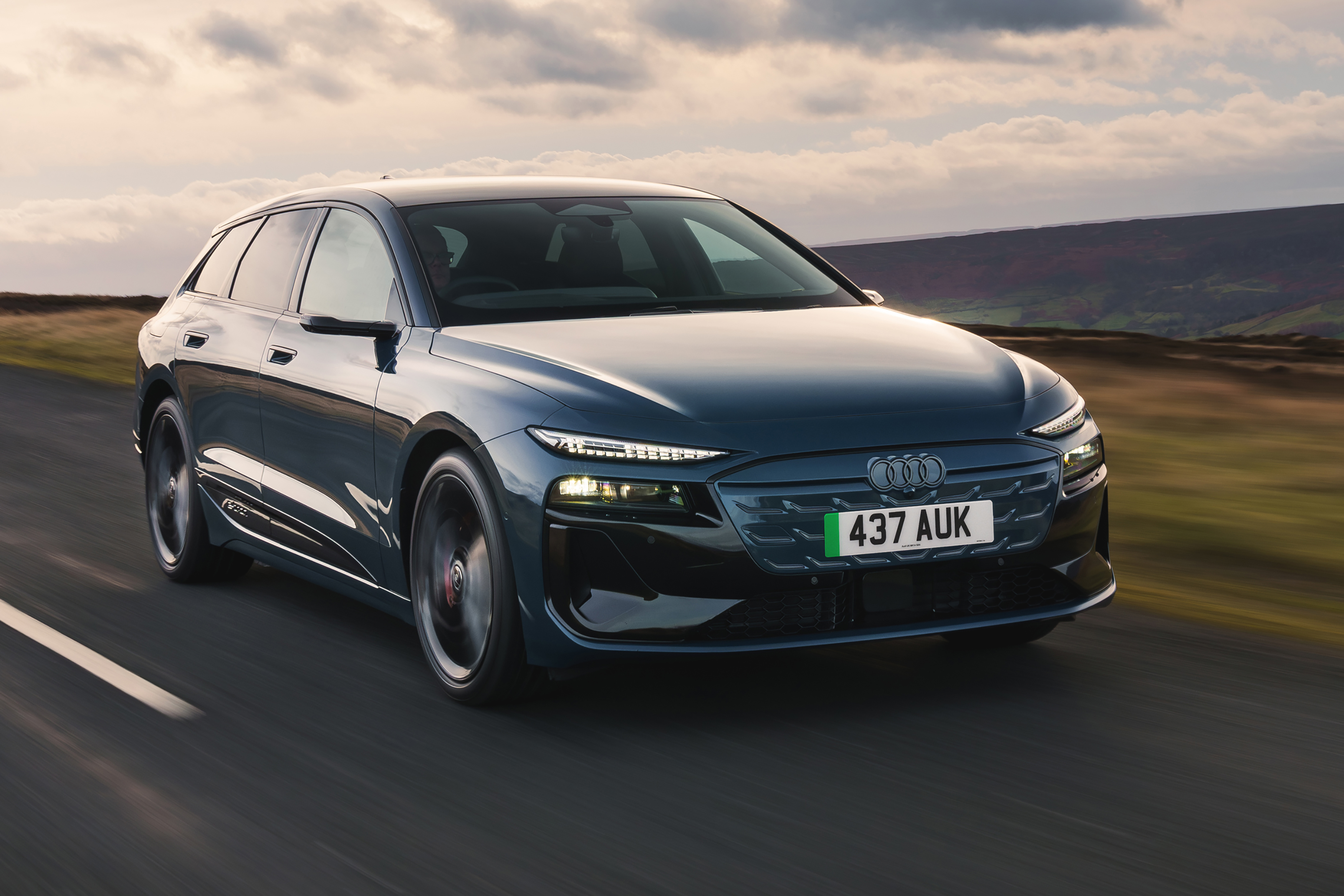
The Volkswagen ID.7 GTX Plus sits at the top of the ID.7 range and is meant to bring a little extra spice to Volkswagen’s most mature EV. That means more power, four-wheel drive and a modest visual upgrade over the standard car, but it does not radically alter the ID.7’s basic character.
That is both the GTX’s strength and its weakness. On the one hand, it inherits all the qualities that make the regular ID.7 such a good long-distance electric car. It’s roomy, pretty classy inside, very refined on the move and impressively comfortable. On the other hand, it never quite feels like a proper performance flagship in the way a GTI, R or a genuinely quick rival might.
The current UK line-up is simple. The only real choice you have to make is whether you want the regular hatchback version or the estate version, known as the Tourer. Both get the same dual-motor, four-wheel-drive powertrain producing 340PS, fed by an 86kWh battery. The 0-62mph dash takes 5.4 seconds in the hatchback and 5.5 seconds in the Tourer, while the official range figures are 371 miles and 364 miles, respectively.
In practice, the GTX feels quick rather than startling. It gets off the line strongly and has no trouble covering ground at a proper pace, but it does not deliver the sort of explosive acceleration or sharp-edged dynamic attitude that some buyers may expect of a performance EV. It feels more like an upgraded trim-level step than a true high-performance standalone model.
And that’s an important point, because the standard ID.7 is already such a polished thing. The regular Pro Match Plus and Pro S Match Plus deliver most of the same comfort, quality and long-distance appeal, while also offering more range and costing less money. So the GTX needs to justify itself with something a bit more compelling than simply being the fastest one.
There are some reasons to want it. The four-wheel-drive powertrain adds extra traction and security to the driving experience (not that the standard car is lacking in either department), the extra kit count is tempting, and the GTX-specific details inside and out do enough to make it feel a little different to the more modest models. But those changes are subtle rather than transformative.
Ultimately, the Volkswagen ID.7 GTX makes the most sense if you already like the standard ID.7 and simply want the one with more pace and more equipment. If you are expecting a sharp, genuinely thrilling electric sports saloon, you may be left wanting.
What's the best Volkswagen Id7 trim and battery option?
This is an easy one, once you’ve decided whether you want the regular hatchback or the Tourer estate version. Bodystyle aside, choosing the GTX Plus means you’ll be getting the same powertrain, battery, and trim level. It comes with the 340PS dual-motor four-wheel-drive powertrain, the 86kWh battery, and the expected range-topping equipment provision.
That means there is no meaningful trim or battery dilemma here. The real decision is whether you want the GTX at all, or whether a cheaper Pro Match Plus or Pro S Match Plus would suit you better. If the appeal lies in having the quickest, best-equipped hatchback ID.7, then the GTX Plus is the straightforward answer.
What’s the price of the Volkswagen Id7?
The Volkswagen ID.7 GTX hatchback currently starts at £59,640, while the Tourer estate version raises the price to £60,400. That makes it by far the most expensive car in the ID.7 range and places it firmly into premium EV territory.
At this sort of money, the challenge is obvious. The regular ID.7 Pro S Match Plus is cheaper and goes further on a charge, while rivals such as the Tesla Model 3 Performance and BYD Seal Excellence bring stronger performance credentials for less. If anything, the ID.7 Tourer estate actually makes a little more sense in this regard: its closest rivals are the Audi A6 Avant E-Tron and the BMW i5 Touring, and it’s significantly cheaper than either of those when in most the comparable spec.
The GTX does at least come well equipped, so it’s not quite a case of paying more for only a badge and a power hike. But it is difficult to avoid the sense that you are spending a lot on a car whose extra edge is fairly subtle in day-to-day use.
Alternatives to the Volkswagen Id7
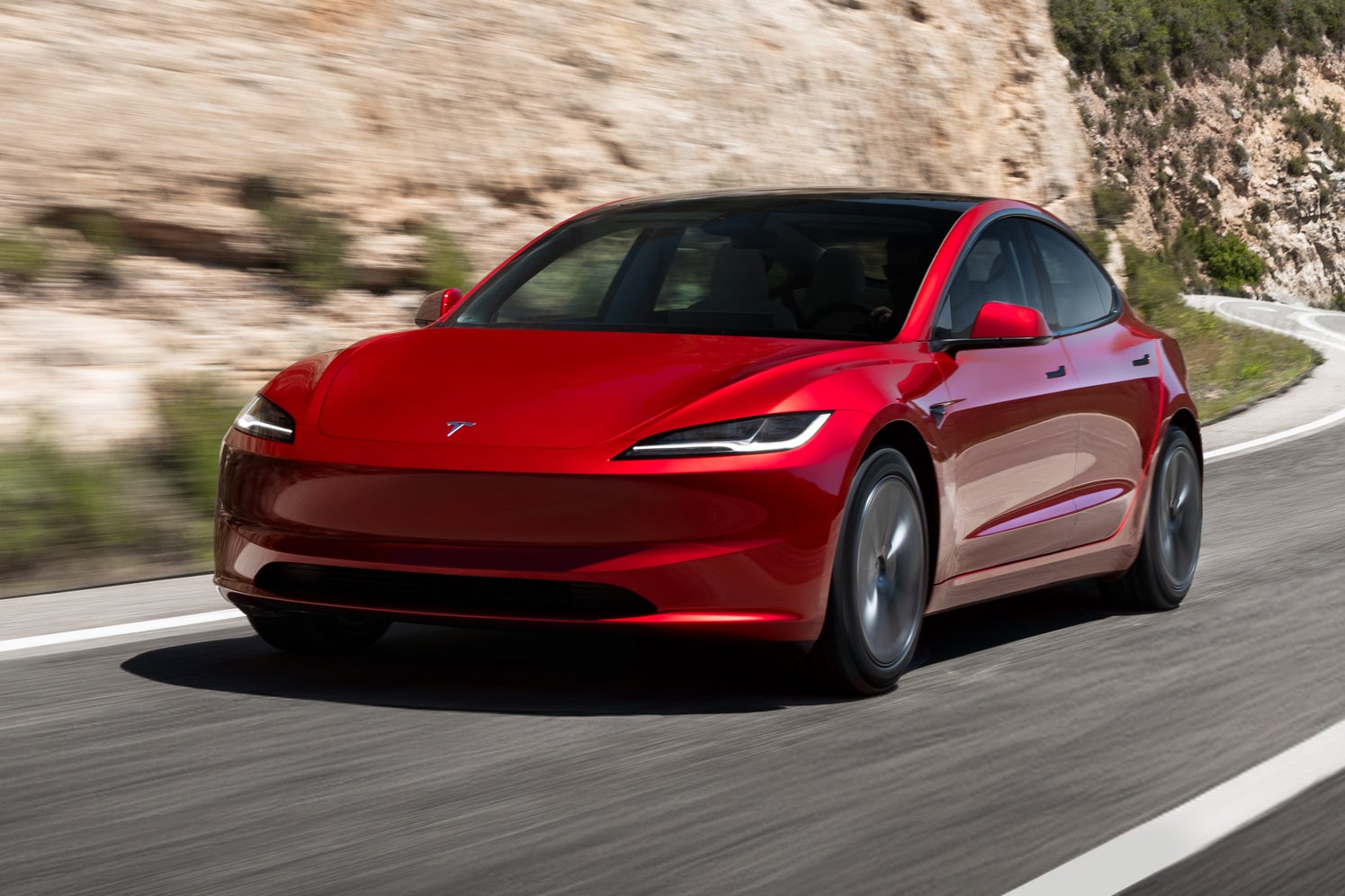
The Tesla Model 3 Performance is one of the clearest alternatives to the hatchback version. It is only a little more expensive in some specs, much quicker in a straight line and carries a more obvious high-performance EV identity. The downside is that it is smaller and its minimalist cabin will not appeal to everyone.
The BYD Seal Excellence is another strong rival. It is faster than the Volkswagen ID.7 GTX and usually significantly cheaper, which makes it hard to ignore. The question is whether you prefer the Volkswagen’s more mature character and broader sense of polish.
The BMW i4 is also worth a look, particularly if you want something more engaging from behind the wheel. It is a little smaller inside than the Volkswagen, but it feels more like a driver’s car. If you want more size again, the BMW i5 is closer in spirit, but it is more expensive.
If you want a genuinely high-drama EV, the Hyundai Ioniq 6 N is another step entirely. It costs a little more, but it is a lot more focused on entertainment than the Volkswagen.
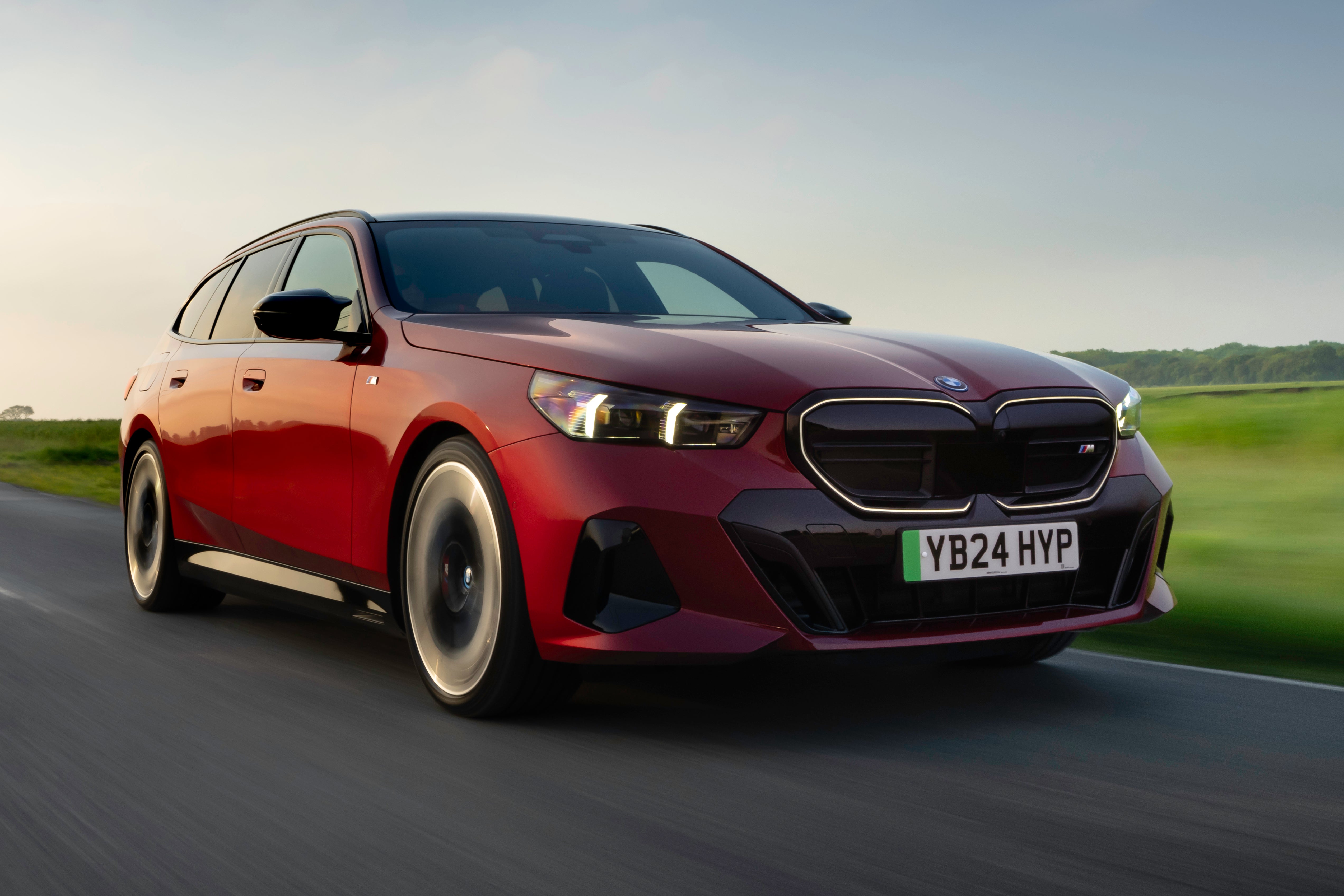
The ID.7 Tourer has fewer rivals. Its most direct ones are the Audi A6 e-tron Avant and the BMW i5 Touring, but it’s significantly cheaper than either.
Within the wider ID.7 line-up, the most awkward alternative is the Pro S Match Plus. It shares the same 86kWh battery, offers more range and will feel very similar most of the time, which makes it arguably the GTX’s most dangerous challenger.
What's the interior like in the Volkswagen Id7?
The Volkswagen ID.7 GTX has one of the best cabins of any current Volkswagen EV. It is roomy, classy and properly comfortable, and the GTX-specific details add just enough visual distinction without being garish.
Volkswagen Id7 boot space and practicality
The good news is that the GTX Plus is just as practical as any other ID.7, and that is to say, it’s very practical indeed.
Life is sweet up front, where you get high-mounted seats with bags of electric adjustment as standard, so drivers of all shapes and sizes will easily be able to easily get comfortable behind the wheel. The generous width of the cabin means you and your front passenger won’t feel like you're sitting on top of each other, and it helps lend an airy feel, too. The only limiting factor up front is the steeply angled windscreen pillars, which create some blind spots at junctions.
Rear-seat space is one of the biggest highlights, however. There’s limousine levels of legroom, and headroom is also very generous in both bodystyles, so even the tallest of adults will travel perfectly happily. That generous cabin width we mentioned a moment ago pays even bigger dividends here, because it means that three passengers can sit across the rear bench more comfortably than they will in most cars, and the almost-flat floor in the back helps, too.
Both bodystyles have a big boot. The hatchback’s stands at 532 litres, while predictably, the Tourer estate does even better with 605 litres. Those are both impressive figures compared with their respective rivals, and in both boots, the space is usefully square and access is brilliant.
The rear seats in both fold down to leave a level load area, but the folded seats do lie at a slight angle, so there’s a gentle slope in your extended load area.
All in all, as family EVs go, this is one of the practical options there is.
Volkswagen Id7 dimensions
The Volkswagen ID.7 GTX hatchback measures 4,961mm long, 1,862mm wide and 1,536mm high. The Tourer estate version is identical in length and width, but a little taller at 1,551mm. That makes it a large car, which partly explains its very generous interior space.
The trade-off is that you’ll need to take a little more care in town and in tighter parking spaces than some of the lower, shorter performance EVs you might also be considering.
Tech and infotainment in the Volkswagen Id7
The Volkswagen ID.7 GTX uses the same 15.0-inch touchscreen infotainment system as the rest of the range, and that is largely a good thing. It is a clear improvement over older Volkswagen systems, with a more logical layout, better shortcut integration and a screen that is large enough to make the interface feel less cramped.
It still relies too heavily on touch inputs, mind you. Too many functions have to be operated through the central screen, while the touch-sensitive slider-style controls for the cabin temperature and stereo volume are fussy and inaccurate. The haptic steering-wheel controls are annoying, too, because it’s too easy to brush them by mistake and operate or adjust a function you never meant to.
The GTX does gain one particularly worthwhile upgrade: the 12-speaker Harman Kardon sound system, which is excellent and helps the cabin feel more special. Otherwise, you get the same infotainment package as in other ID.7s, including smartphone connectivity, navigation DAB and wireless smartphone charging.
Materials available on the Volkswagen Id7
The quality of the materials in the ID.7 is much improved over most other Volkswagen EVs. There are plenty of soft-touch surfaces, pleasant finishes and a generally more swanky feel to the cabin, particularly on the upper parts of the dashboard and doors.
There are still a few harder plastic panels to be found lower down in the cabin, so the interior still doesn’t quite cut it compared to those found in premium rivals, but the car does feel mature, well assembled and classy.
What's the Volkswagen Id7 like to drive?
The Volkswagen ID.7 GTX is quick, composed and very easy to drive fast, but it does not quite deliver the level of excitement that some might be expecting. It feels very close in character to the rest of the ID.7 range, just a bit faster.
Volkswagen Id7 range and performance
The Volkswagen ID.7 GTX comes with a single powertrain whether you go for the hatchback or the estate. It’s a dual-motor arrangement, with a motor on either axle to deliver four-wheel drive, producing a combined output of 340PS. It’s fed by an 86kWh battery.
That makes it quick: the 0-62mph sprint takes 5.4 seconds in the hatchback, or 5.5 seconds in the Tourer, and top speed is limited to 124mph in both cases. But, while the GTX is appreciably quicker than the other versions of the ID.7, it doesn’t feel like a massive amount. That’s probably because the unfurling of the pace is so lacking in drama: instead, your acceleration is quiet, smooth and serene. As a result, it doesn’t feel a whole lot racier in character than the rest of the range. That’s not a bad thing if you want that refined and sophisticated demeanour, but you get that from other ID.7s for less cash. And, if you’re after a proper performance EV, that shortage of theatre might well put you off.
And bearing in mind that the extra performance doesn’t make much of a difference to the overall experience, you have to sacrifice plenty of range to get it. In the hatchback, for instance, the Pro S Match Plus version, which has the same 86kWh battery pack, gets 433 miles of range according to official figures, while the GTX gets just 371 miles. That’s only just ahead of the 368 miles of range you get from the entry-level Pro Match Plus version with its smaller 77kWh battery. The corresponding figures where the Tourer is concerned stand at 420 miles for the Pro S Match Plus and 364 miles for the GTX (that’s 4 miles better than the entry-level smaller-batteried version).
Performance data
| Model | Engine/battery size | Power | 0-62mph | Range/MPG |
|---|---|---|---|---|
GTX Plus Hatchback | 86kWh | 340PS | 5.4 seconds | 371 miles |
ID.7 GTX Plus Tourer | 86kWh | 340PS | 5.5 seconds | 364 miles |
Volkswagen Id7 driving and refinement
The GTX Plus version of the VW ID.7 gets adaptive suspension as standard. This has no fewer than 15 levels of adjustment between its softest setting and its hardest, allowing you to change the car’s attitude according to your mood. You probably won’t notice the difference between each and every setting, but you'll certainly notice the difference between the extremes, which to be fair, isn’t always the case with such systems.
With the suspension in its softest setting, the ride is properly cosseting, gliding over any road surface in a supremely smooth and sophisticated manner. Body control is better than you might expect in this mode, too, so the car doesn’t bounce around on speed bumps and undulating roads.
Switch to the suspension’s hardest setting, and like we said, you’ll notice the change in the car’s behaviour, but in truth, the ride is still impressively comfortable, making this a relaxing and tranquil car at all times. And while the sportiest setting does tighten up the body control a smidgen as you tackle corners, it doesn’t make a massive amount of difference to the overall character of the car. It’s still a car that suits a calm and relaxed approach, and is at its best when smoothing out scruffy road surfaces or cruising on the motorway.
Yes, it can get down a country lane with fearsome speed, thanks to the generous power output and the immense grip and traction provided by the four-wheel drive, and you’ll even feel a little bit of sensation through the steering and pedals in the process. However, this is still not a car that ever really comes alive like you might expect a proper performance EV to. You’re always aware of its size and heft, and it’s just generally better when you sit back and enjoy its inherent comfort and refinement. Trouble is, cheaper versions of the ID.7 deliver that comfort and refinement just as well as the GTX does, meaning you might struggle to justify the range-topper’s extra cost.
How safe is the Volkswagen Id7?
Euro NCAP tested the regular Volkswagen ID.7, and the car scored a maximum five-star rating, with very strong scores for adult- and child occupant protection, as well as a good spread of assistance technology. That rating also applies to the GTX.
Standard safety equipment is comprehensive. You get the expected autonomous emergency braking, along with various levels of lane support, front- and rear cross traffic alert, adaptive cruise control, driver monitoring, and road sign recognition. The augmented-reality head-up display also keeps you abreast of what the various assistance systems are up to.
You also get three Isofix child seat mounting points - two on the outer rear seats and one on the front passenger seat - and an extensive collection of airbags.
Running costs: What it's like to live with a Volkswagen Id7
The Volkswagen ID.7 GTX should be affordable enough to live with if you can charge at home, but it is not the best-value car in the range. Purchase price is high, range is down versus the Pro S, and insurance is more expensive.
Volkswagen Id7 charging times and costs
Most GTX buyers will charge their car at home on a 7.2kWh wallbox charger, and charging up the car’s 86kWh battery pack from empty to full on such a hookup will take around 12 hours. Assuming that you pay for your domestic electricity at the UK’s national average rate, that charge will cost around £24, which is already significantly cheaper than fueling a petrol or diesel car.
Things will get considerably better, however, if you get yourself on a variable home power tariff that allows you to charge your car overnight on heavily discounted off-peak electricity. Do so, and you’ll easily cut that cost in half, maybe even down to as little as a third.
By contrast, the power that comes out of public DC rapid chargers will likely cost you around three times more than the average cost of home power, because you’re paying for the convenience of a super-quick charge. As such, don’t rely on such connections on a regular basis, and only use them as a last resort in an emergency. The GTX has a maximum DC charging speed of 185kW, so you’ll be able to get a 10% to 80% top-up in 28 minutes in perfect conditions.
Volkswagen Id7 warranty and servicing
The Volkswagen ID.7 GTX comes with a three-year, 60,000-mile vehicle warranty. That’s the minimum any new-car buyer should expect these days, and several rival brands do a bit better.
The battery is covered separately for eight years or 100,000 miles, which guarantees at least 70% of its original capacity during this period.
Servicing will be simpler than on an equivalent combustion-engined car because there are fewer moving parts to maintain, but don’t expect an individual service to be any cheaper. You will likely go longer between services, however, as routine work is only needed every two years, with no mileage limit.
Volkswagen Id7 insurance groups
Both the hatchback and Tourer estate versions of the Volkswagen ID.7 GTX sit in group 41 - out of 50 - for insurance. That’s higher than for the other versions of the ID.7, but not by a vast amount, and it’s not outrageous for an EV of this power and price.
How much does it cost to tax a Volkswagen Id7?
Both hatchback and estate versions of the ID.7 GTX Plus have a list price that’s well above the £50,000 threshold at which an EV becomes liable for higher-rate tax. So, as well as the lower-rate sum of £200 per year, you’ll also pay an additional sum of £440 per year on top, for a five-year period between years two and six of the car’s life.
What trims are available with the Volkswagen Id7?
The Volkswagen ID.7 GTX is effectively a single, range-topping trim in both hatchback and estate forms, and it comes very well equipped.
Like the more modest versions of the car, the GTX gets LED matrix headlights, rain-sensing wipers, a heated windscreen, front- and rear parking sensors, a reversing camera, rear privacy glass, a powered tailgate, keyless entry and start, powered and heated front seats with massaging function, three-zone air-conditioning, 30-colour ambient lighting, adaptive cruise control, a heat pump, a self-parking feature, and the augmented-reality head-up display. And that’s on top of all the safety and infotainment kit we talked about earlier.
On top of that little lot, the GTX also gets GTX-specific bumpers, 20-inch alloy wheels, subtle interior and exterior design detailing, the Dynamic Chassis Control adaptive suspension, ventilation for the front seats, heating for the rear seats, and a 12-speaker Harman Kardon sound system with a total output of 700W.
Ask the Drive experts: common questions
How much range does the Volkswagen ID.7 GTX have?
Is the Volkswagen ID.7 GTX worth it over a Pro S?
Is the Volkswagen ID.7 GTX a real performance EV?
Get our latest advice, news and offers
Keep me updated by email with the latest advice, news and offers from Drive.
.jpg)
.jpg)