- Home
- …
- Electric Cars
- Fastest electric cars 2026: The quickest EVs on sale in the UK
09/08/2026
Fastest electric cars 2026: The quickest EVs on sale in the UK

Written By Mark Nichol
Whatever your thoughts on electric cars, it’s undeniable that they’ve changed the game at both ends of the car spectrum. On one hand they’ve made runabouts quieter, smoother and cheaper to run, while on the other, they’ve made supercar-beating acceleration available to someone buying a moderately priced family hatchback. See the MG 4 EV XPower for details.
Electric cars deliver their performance differently to petrol- and diesel-engined alternatives. Instead of waiting for engine revs to build, turbochargers to spool and gears to drop down a ratio or two, electric motors produce maximum torque almost instantly. It's a strange sensation the first time you experience it because your brain expects drama, but the noise doesn’t come as your body is pinned to the seat. That lack of theatre tends to be one of the biggest criticisms of fast EVs, but we’d argue that everything on this list is dramatic in its own particular way.
When it comes to high performance cars, the 'fastest' and 'quickest' are easily mixed up – they aren't the same thing. Top speed determines how fast a car is, while its 0-62mph acceleration time tells you how quickly it gets there. Unless you regularly drive on the autobahn – or happen to own a runway – it's the latter that you'll notice every single day.
We’ve ranked the quickest production electric cars here based on their 0-62mph times – the standard yardstick for measuring acceleration. To keep it relevant, you won't find million-pound electric hypercars here, plus we've limited ourselves to the single quickest model per manufacturer. Otherwise, Porsche and Tesla would dominate the rankings – where's the fun in that?
So, with those parameters in mind, these are the quickest accelerating electric cars you can buy in 2026.
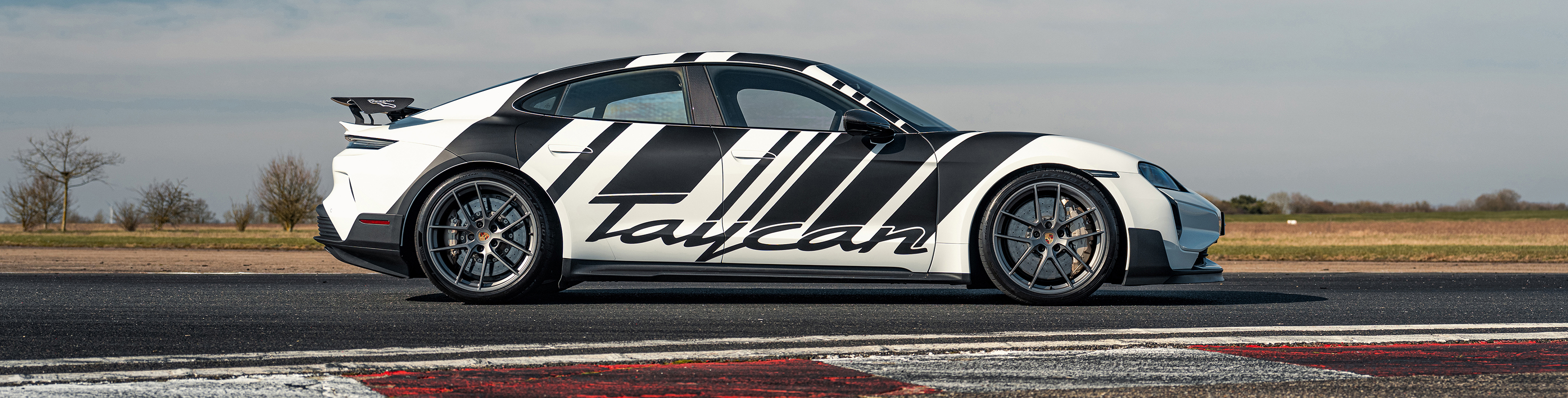
1. Porsche Taycan Turbo GT with Weissach Package
0-62mph: 2.2 seconds | Power: 1034PS
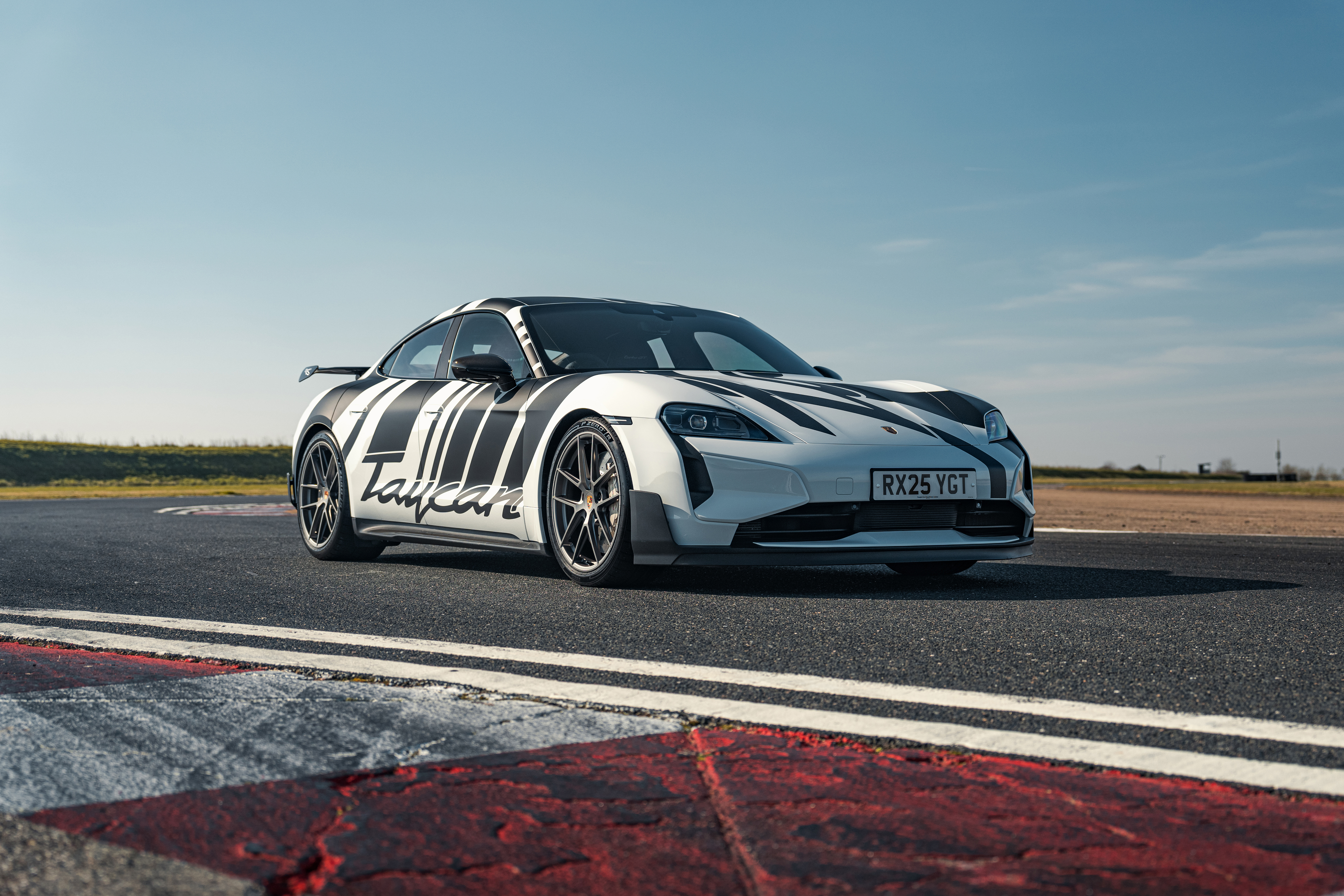
Having already made one of the world's best electric cars with the Porsche Taycan, it then decided that wasn't quite enough. The Turbo GT with Weissach Package isn't just the fastest Taycan ever built, it's one of the quickest production cars of any kind. Launch Control unlocks the full 1034PS and 1270Nm of torque for short bursts, allowing it to blast from 0-62mph in just 2.2 seconds, which is quicker than the near-mythical Bugatti Veyron. And the Taycan has a proper boot, although the Weissach Package means no rear seats – if you want those you'll need to downgrade to the 'regular' Taycan Turbo GT and blast to 62mph from a standstill a tenth of a second slower.
What's truly remarkable is that Porsche engineered the Taycan to deliver maximum performance again and again. Its battery, motors and cooling systems are all designed to cope with repeated hard acceleration, making it just as comfortable on a track day as it is driving to work. Most electric cars only need a single gear because electric motors have such a broad power band, but Porsche added a second ratio to improve both brutal standing-start acceleration and high-speed efficiency, giving the Taycan the best of both worlds.
Inside, it still feels unmistakably Porsche. The driving position is spot on, build quality is exceptional and despite its supercar performance, it's perfectly civilised around town. If you're lucky enough to afford one, this isn't simply one of the quickest electric cars you can buy. It's one of the finest all-round performance cars, full stop.
2. Audi RS e-tron GT performance
0-62mph: 2.5 seconds | Power: 925PS
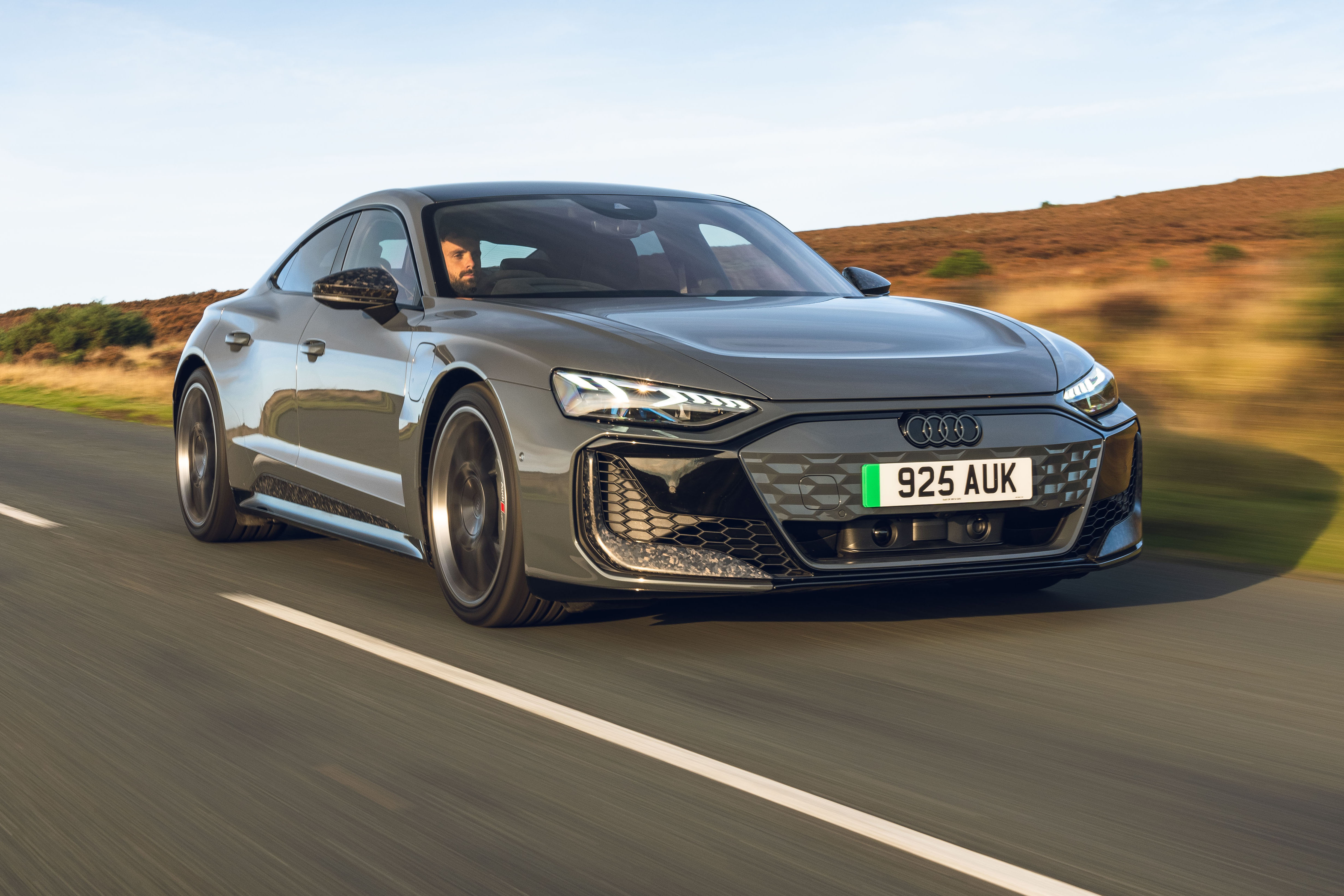
If you know a bit about Volkswagen Group parts sharing, it’ll be no surprise to you that the Audi e-tron GT is behind the Porsche Taycan in this list, despite using many of the same parts. The Audi couldn’t possibly be as quick at the Porsche – that would be a PR disaster. The RS e-tron GT performance has a totally different personality to the Porsche, anyway, with much more emphasis on refinement and long-distance comfort. That means you can cover hundreds of motorway miles in near silence before embarrassing a supercar away from the next set of traffic lights courtesy of its 1027Nm of torque.
Like the Porsche, it uses an 800-volt electrical system, which allows it car to charge at incredibly high speeds while reducing heat build-up in the cables, meaning shorter charging stops and better efficiency. On a powerful enough charger, adding hundreds of miles of range takes less time than drinking an unpronounceable Starbucks.
It’s arguably a nicer place to sit in than the Porsche is, although that’s not a hill we’d die on. Every interior surface feels expensive, the seats are superbly supportive and visibility is more like a family hatchback than a Ferrari-baiting hypercar.
That the Audi RS e-tron GT performance's £166,475 list price looks reasonable-ish at more than £22k cheaper than the Taycan, is a useful additional point when trying to convince your partner that buying one is a good idea.
3. Maserati GranTurismo Folgore
0-62mph: 2.7 seconds | Power: 761PS
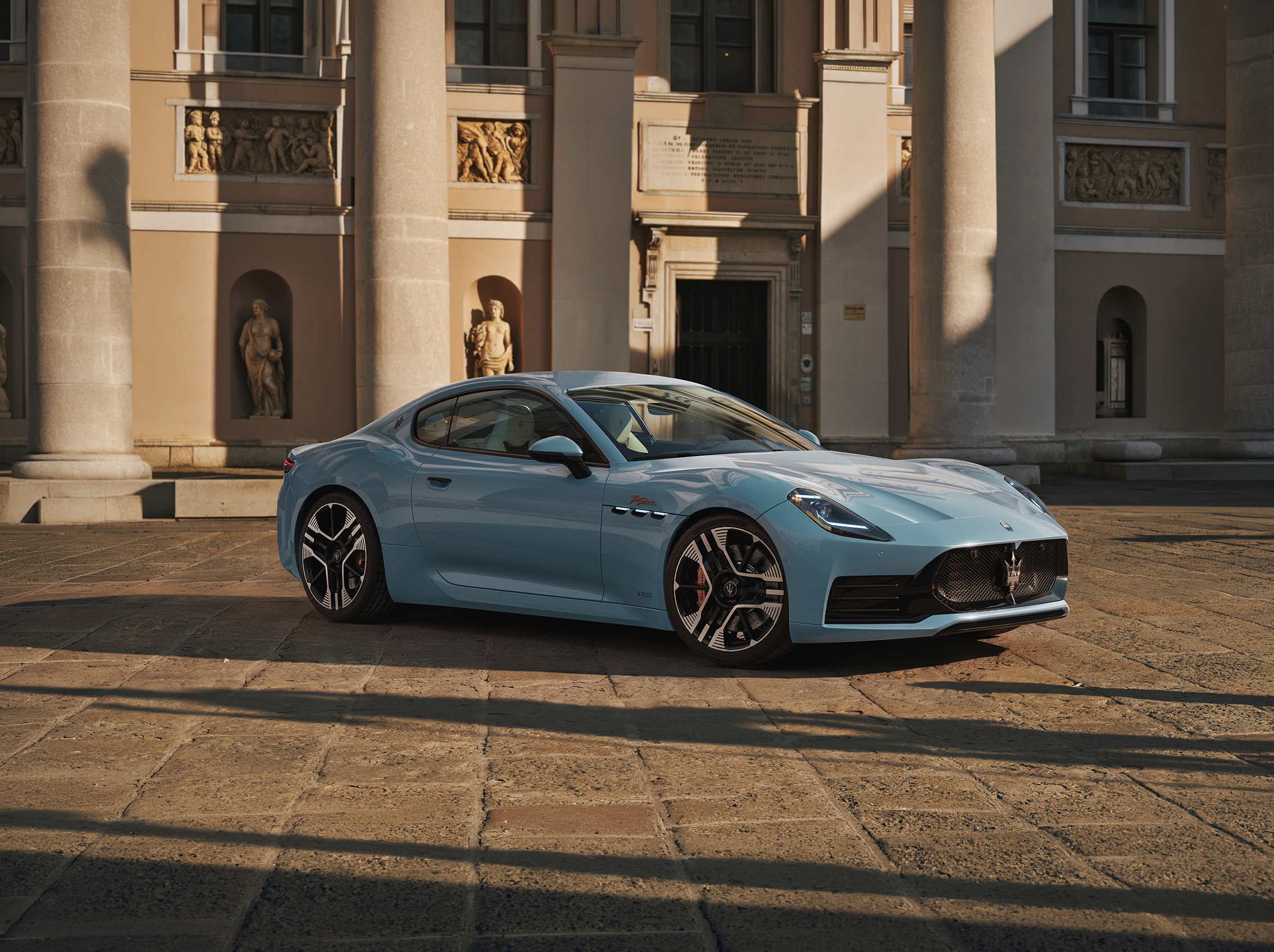
You might worry that the GranTurismo Folgore doesn’t feel like a proper Maserati, what with its distinct lack of a V8 engine. Don’t, though. While most high-performance EVs are all about brutal acceleration, the Maserati mixes astonishing pace with genuine long-distance comfort, gorgeous styling and an interior that feels truly special.
Its steering is sharp, the ride is beautifully judged and despite the lack of exploding fuel noise, it has real character. It doesn’t match the Porsche Taycan for outright driver involvement – Maseratis never do – but it’s that bit more exotic and that bit more comfy.
Obviously, it’s also very quick. Its three electric motors produce a combined 761PS and 1350Nm, resulting in a 0-62mph time of just 2.7 seconds – but not at the expense of top speed. At 202mph, it’s not only one of the quickest EVs in the world, it’s also one of the fastest.
Fun fact: The Maserati GranTurismo Folgore's battery has been packaged in a distinctive T-bone layout, keeping its seating positions low and preserving the proportions of a traditional sports car. That means you sit in it rather than on it – another characteristic that makes this feel about as 'traditional' as an electric sports car possibly can. And all this for a mere £129,605. Gulp!
4. Lotus Emeya 900 Sport
0-62mph: 2.8 seconds | Power: 918PS
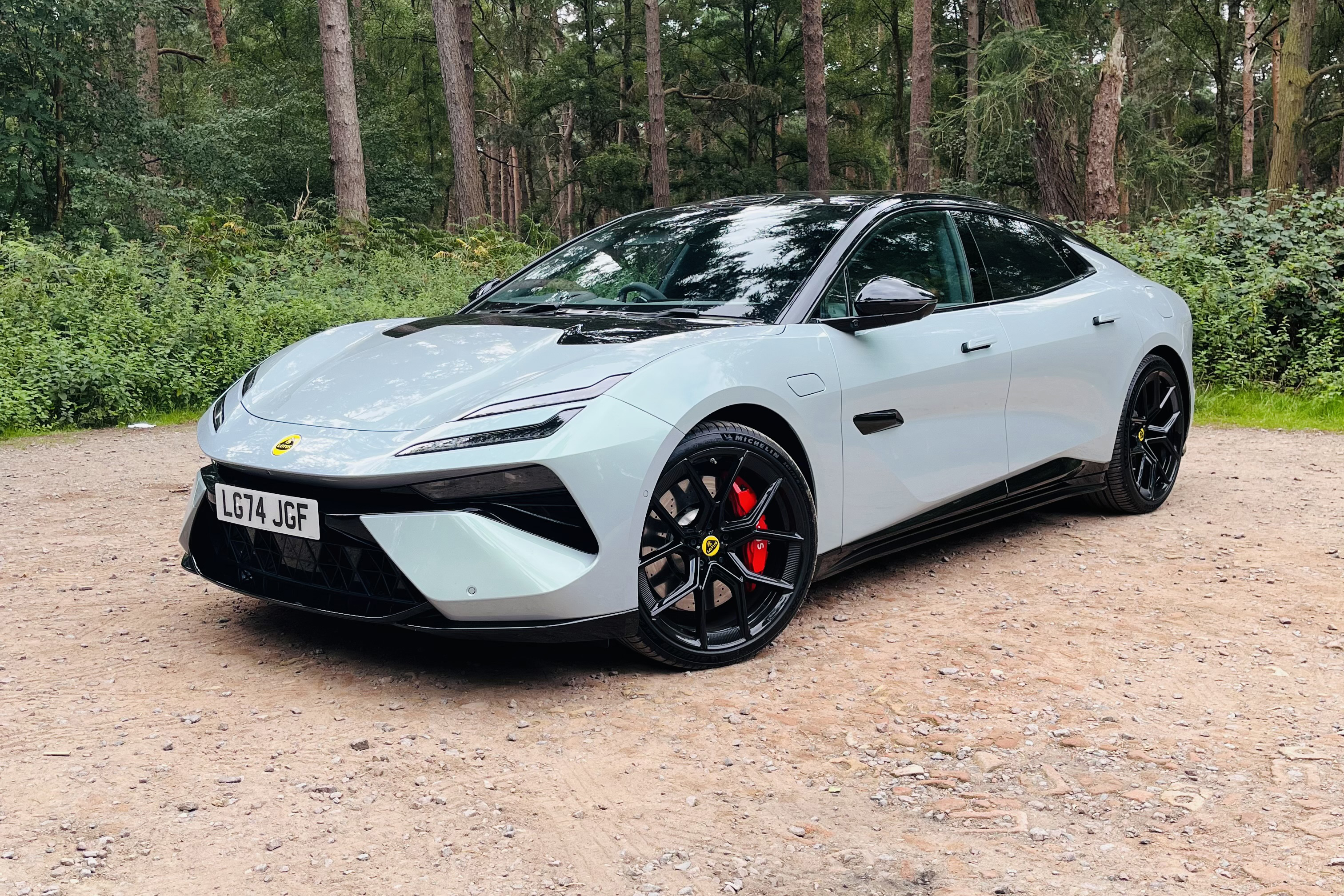
Lotus built its reputation making tiny, lightweight sports cars that lived by founder Colin Chapman's famous mantra: 'Simplify, then add lightness'. The Lotus Emeya 900 Sport couldn't be more different, tipping the scales at 2650kg. Internet forums are running wild – how could 985Nm of torque remotely be enough..?
Stick with it though, because the Emeya 900 Sport is a remarkable feat of modern engineering. It’s a large and luxurious electric grand tourer, yet it somehow still feels like a Lotus to drive. That's because the company has obsessed over how it changes direction, how the steering feels in your hands and how the suspension controls all of that weight.
It’s built in Wuhan, China – Lotus is majority owned by Geely – but the ride, handling and steering were extensively developed by Lotus engineers at Hethel in Norfolk, where the company has been based since the 1960s.
The interior marks a huge step forward for Lotus, with beautifully finished materials, seats that support rather than clamp you in as the Elise's did, with a sense of technology that’s clearly designed to appeal to Audi, BMW and even Bentley drivers.
Like the its Audi and Porsche rivals on this list, the Lotus Emeya 900 Sport isn't cheap at almost £130,000, but it's comparatively good value while still feeling very special.
5. Tesla Model 3 Performance AWD
0-62mph: 3.1 seconds | Power: 460PS
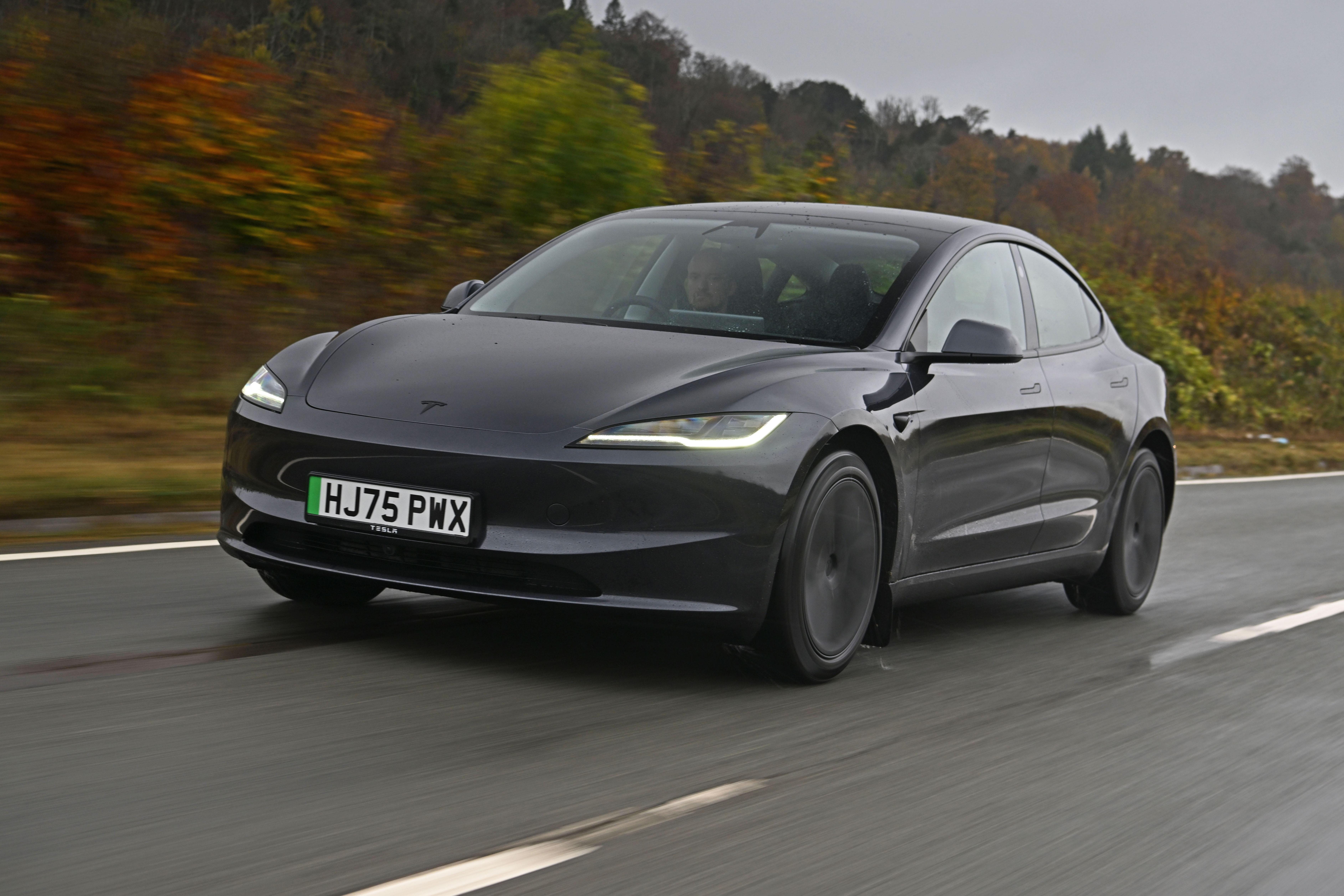
Right, we’re into 'affordable' now – albeit, we know that a £60k Tesla Model 3 isn’t cheap. Still, you could buy three of these for the price of the Taycan and still have nine grand change. You probably don’t need us to tell you that Tesla is synonymous with extremely quick electric cars – in fact, if the Model S Plaid was still on sale it would be nearer the top of this list.
It’s actually remarkable that the Model 3 Performance even makes this top 10 given how relatively low on power and torque – 460PS and 741Nm respectively – it is compared with the other nine. It does so by making clever use of its dual-motor, all-wheel drive system, which constantly adjusts how much power goes to each wheel depending on traction levels. That means the Tesla launches with astonishing consistency, even in wet weather, happily leaving many six-figure supercars staring at its ugly, common-as-muck behind.
Thankfully, gone are the days when the Model 3 really did feel like a computer on wheels, all rock hard ride and unsophisticated handling. Now it’s got adaptive suspension, lightweight alloy wheels, proper brakes and seats that actually hold you in place when you’re driving. As opposed to being something to get comfortable on while you watch Netflix in a lay-by.
The minimalist and screen-focussed interior isn’t to everyone's taste, but there's no denying that the Tesla Model 3 Performance AWD delivers extraordinary pace in a package that's easy to live with every day. Not least because of the Supercharger Network – still the best rapid charging infrastructure in the UK.
6. MG IM5 100 Performance
0-62mph: 3.2 seconds | Power: 751PS
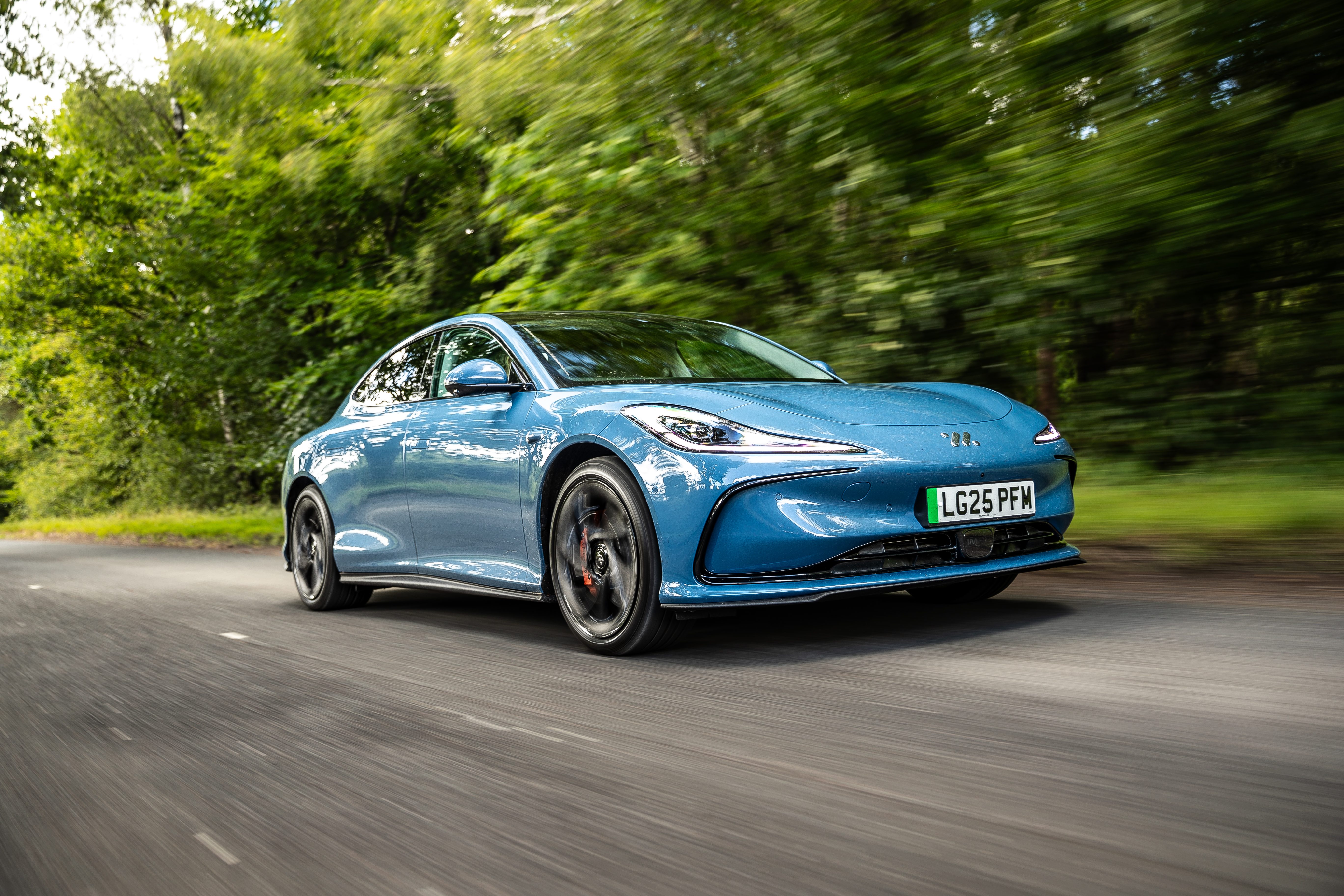
You probably weren't expecting to see an MG rubbing shoulders with Porsche, Audi and Maserati – and definitely not a sub-£50k MG family car, but these are the times we now live in. Its outputs of 751PS and 1016Nm of torque are certainly leagues ahead of the the punchiest versions of the last British-built MG ZT sports saloon.
Developed with technology from Chinese EV giant SAIC, the first time you put your foot down in the IM5 100 Performance is genuinely shocking. Mainly because it feels like a Lamborghini or something, but you’re actually sat in a big, plush family car with a giant boot and a lovely set of screens. PPorsche might have something to say about the MG's screen layout and Tesla about IM5's the exterior design… But still, it's a lovely car.
The battery is massive at 100kWh, meaning the range follows suit: 441 miles on a single charge, claimed. It’s also proper cutting edge, with a 396kW rapid charging capability that’s way beyond what most DC charging stations can actually manage. All round, just a brilliant (and reasonably affordable) family car – and one of the best reasons not to buy a Tesla Model 3 that there is.
7. Hyundai Ioniq 6 N
0-62mph: 3.2 seconds | Power: 650PS
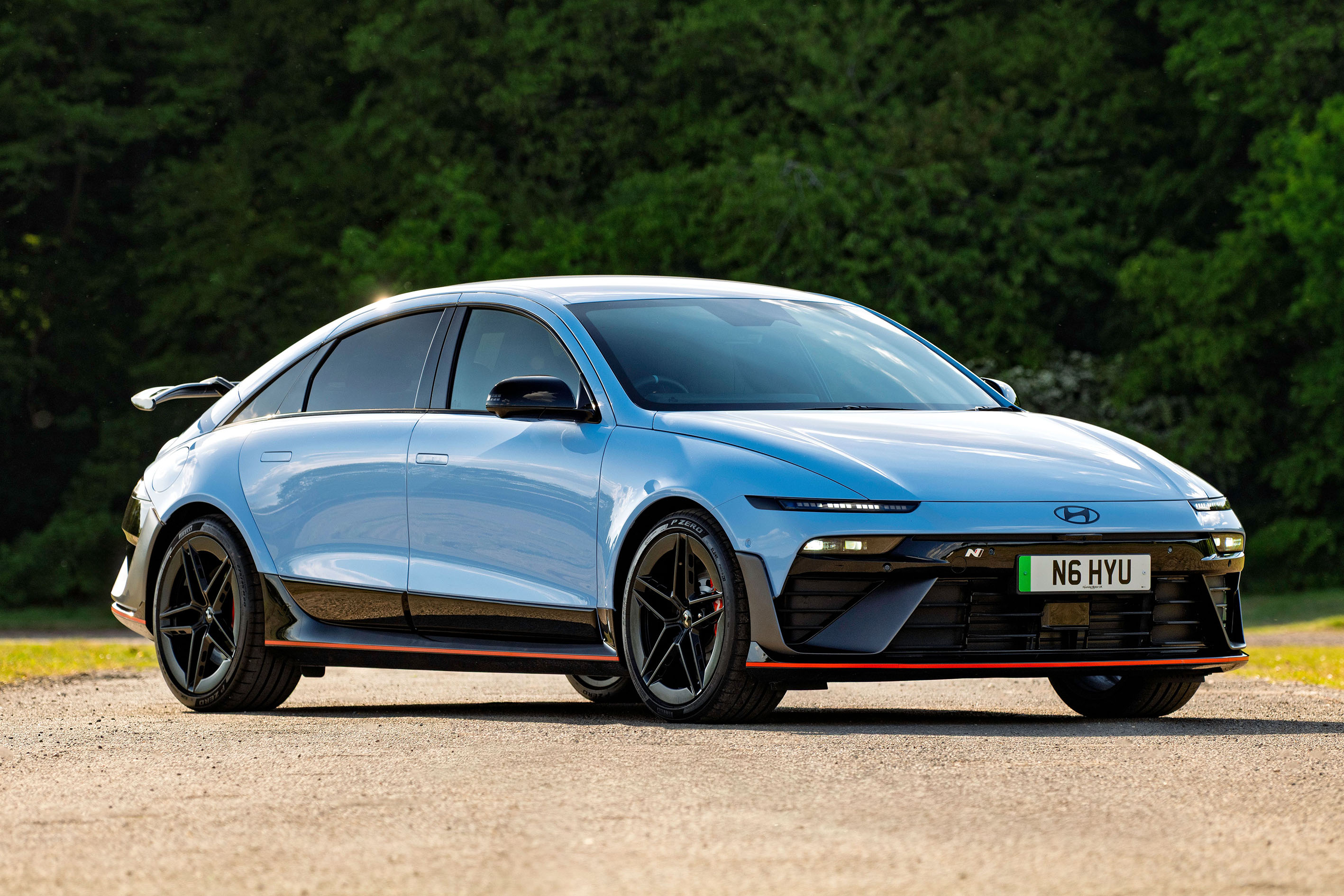
Hyundai has spent the last few years proving that fast electric cars don't have to be clinical and the Ioniq 6 N might be its greatest achievement yet. While plenty of rivals can match its 3.2-second sprint to 62mph from a standstill courtesy of 770Nm of torque, very few deliver the same level of driver involvement. In fact, the only one that truly does is its own car, the Hyundai Ioniq 5 N. Like that car, this is an EV engineered to put a smile on your face, not just pin you to the seat. It’s unbelievably good.
Also just like its sibling, the Ioniq 6 N features a host of clever software designed to mimic the sensations of driving a petrol performance car. There are simulated gearshifts, an artificial engine soundtrack and multiple performance modes that genuinely change the car's character. It sounds gimmicky on paper, but together they make the driving experience far more engaging than most – arguably all – electric cars.
It’s not quite as practical as the Ioniq 5 N, owing to its ‘streamliner’ styling that robs rear headroom, especially in the back, and the boot is also more restrictive. However, in exchange it looks better… Or if not 'better', at least more original. The low slung, curvy styling means it seems to wear its the mad N bodykit more comfortably than the Ioniq 5, we’d suggest. Plus its more slippery shape is perhaps why the Hyundai Ioniq 6 N is that bit quicker, too.
8. Kia EV6 GT
0-62mph: 3.5 seconds | Power: 650PS
.jpg)
If somebody told you ten years ago that Kia would build a car capable of embarrassing Ferraris away from the traffic lights, you'd have laughed. Yet that's exactly what the Kia EV6 GT can do.
And yet, aside from bright green brake calipers and a few subtle styling tweaks, most people wouldn't realise they're looking at one of the quickest family crossovers on sale. That's part of its appeal. You can load shopping into the boot, collect the kids from school and head off on holiday with all the practicality you'd expect from a family SUV. Then, when the road opens up, the EV6 GT unleashes all 650PS and 770Nm of torque with astonishing force, reaching 62mph in just 3.5 seconds.
Kia has also resisted the temptation to make the suspension unbearably firm. It's certainly more focused than a regular EV6, but it's still comfortable enough for everyday use. It’s thoughtful, too, featuring a dedicated GT button on the steering wheel. Press it and the car instantly unlocks its most aggressive power, steering and suspension settings without needing to scroll through endless touchscreen menus.
And like the Ioniq 5 N with which it shares parts, it benefits from an 800-volt electrical architecture, allowing ultra-rapid charging when connected to suitably powerful chargers. Under ideal conditions, you can recharge from 10% to 80% in less than 20 minutes.
9. Mercedes-AMG EQE 53
0-62mph: 3.3 seconds | Power: 687PS
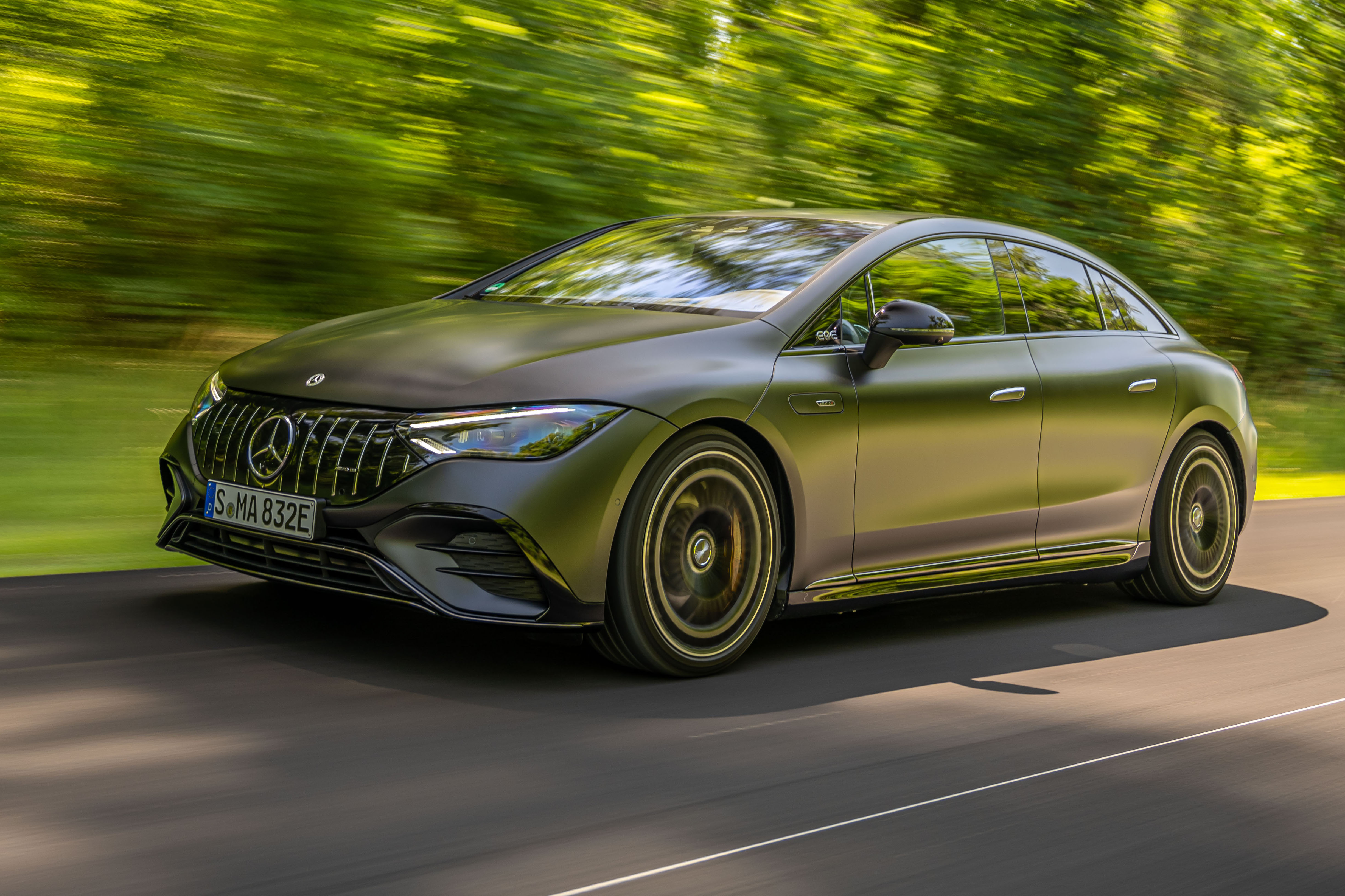
AMG has spent decades building thunderous V8 performance cars that announce their arrival long before you see them. The Mercedes-AMG EQE 53 had a difficult job replacing all that noise with... The gentle whirr of an electric motor. Damn.
But instead of trying to imitate a petrol engine exactly – which is a common approach these days, with mixed results – Mercedes went all in on the future with the AMG Sound Experience. Using the stereo speakers, bass shakers and an external sound generator, it produces everything from subtle electric whirring to much deeper synthetic performance sounds. Honestly, it’s not as successful as the Hans Zimmer soundtrack that BMW uses, nor as dramatic as an actual V8 engine, but it’s unique, at least.
A more impressive trick, aside from the EQE 53's outright speed, is how well it disguises its size. Rear-wheel steering – which turns the back wheels by up to 10 degrees – helps it feel remarkably agile in town by effectively shortening the wheelbase at low speeds. It makes tight parking spaces and multi-storey car parks much less intimidating than you'd expect. And it's quick, thanks to packing 950Nm of torquiness.
Inside it’s properly luxurious, with plush materials contrasted with a modern twin-screen dashboard and generally comfy ride quality make it a lovely place to be. Very… Mercedes, then.
10. BMW i4 M60 xDrive
0-62mph: 3.7 seconds | Power: 601PS
.jpg)
The BMW i4 M60 xDrive doesn't shout about its performance. In fact, parked next to a petrol-powered BMW 4 Series Gran Coupe, most people would struggle to spot the differences. That's exactly how many buyers like it. It still feels very much like a traditional BMW, based on a platform that was designed to accommodate both combustion engines and electric drive systems. That means you sit low behind the wheel, the driving position feels familiar and it retains the balanced proportions that BMW has always been known for.
But the electric motors make it blistering: two of them, producing 601PS and 795Nm of torque, giving the car all-wheel drive. It still, somehow, feels biased towards the rear, so it’s fun to drive, but it also effortlessly blends speed with comfort. Wind noise is minimal, the ride is composed and the cabin is one of the best-finished cars on this list, irrespective of price.
It's less theatrical than some might want, especially at nudging £72k, but there’s something uniquely appealing about a car this subtle being this quick. Its technology is really cool too, such as the adaptive regenerative braking system. It uses information from the integral navigation and onboard cameras to predict junctions, roundabouts and slower traffic ahead, automatically adjusting how strongly the car slows when you lift off the accelerator.
If we're basing this on acceleration and money being no object, then the Aspark Owl is the fastest electric car at the moment, with a 0-62mph time of just 1.69 seconds. This is closely followed by the Rimac Nevera with a 0-62mph time of 1.85 seconds. Neither are exactly affordable, mass-market models, making the Tesla Model 3 Performance AWD's 3.1-second time the quickest for an EV costing sub-£100,000.
The electric car producing the most power the Lotus Evija – how it gets by with a measly 2039PS beggars belief.
If you're talking about cars you can actually buy from a dealer today, the Porsche Taycan Turbo GT with Weissach Package currently tops the list. With Launch Control activated, it can sprint from 0-62mph in just 2.2 seconds, making it quicker than the vast majority of petrol-powered supercars.
Howeverm it won't hold the crown for much longer as order books have opened for the Denza Z Racing, which claims it can squirt from a standstill to 62mph in 1.96 seconds.
The biggest advantage an electric car has over combustion-powered models is that its motors produce maximum torque almost instantly – it's torque, rather than power, which is needed for accelerating.
Combustion engines need to build revs before they reaches peak performance, with most also needing to change gear several times during hard acceleration. An electric motor doesn't – as soon as you press the accelerator, almost all of its pulling power is available immediately, resulting in a hefty shove in the back from the quickest types.
Add all-wheel drive and sophisticated traction control, and modern performance EVs can launch with incredible consistency, even in wet weather.
Not necessarily. A quick 0-62mph time makes for an impressive headline figure, but it doesn't tell you how enjoyable or practical a car is to own. Ride comfort, driving range, charging speed, interior quality and running costs are often far more important if you're using the car every day. That's why many buyers choose models including the Hyundai Ioniq 5 N, Tesla Model 3 Performance or BMW i4 M60. They combine astonishing acceleration with everyday usability, rather than focusing solely on outright speed. A car that's enjoyable to drive every day is usually more rewarding than one that's simply quickest away from the traffic lights.
Find an electric car for sale
Volkswagen ID.Buzz250kW Commerce 79kWh Auto 4Motion
20263,051 milesElectric£39,440
inc. VATYO304WWVolkswagen Golf99kW e-Golf 35kWh 5dr Auto
201952,490 milesElectric£9,961
LE111APVolkswagen ID.Buzz250kW GTX Pro 86kWh 5dr 4MOTION LWB Auto [7 Seat]
20269,200 milesElectric£52,990
WR99AUVolkswagen ID.Buzz210kW Commerce 79kWh Auto
20262,989 milesElectric£32,989
inc. VATL249PBVolkswagen ID.Buzz210kW Style Pro 79kWh 5dr Auto
20255,989 milesElectric£49,900
GL24NEVolkswagen ID.Buzz210kW Style Pro 86kWh 5dr LWB Auto [7 Seat]
20261,723 milesElectric£54,991
OL12BBVolkswagen ID.Buzz150kW Style Pro 77kWh 5dr Auto
202317,618 milesElectric£34,700
CW15XNVolkswagen ID.Buzz210kW Commerce Plus 79kWh Auto
20259,750 milesElectric£30,500
BS43QB
More electric car guides
From choosing the right EV to understanding charging, running costs and more, our guides can help.