BMW X7 Review

Written By Lawrence Allan
- 2019
- SUV
- Petrol mild hybrid, diesel mild hybrid
What we love
Massive, beautifully made cabin
Arguably the best infotainment system in the business
Refined and powerful engine range
Things to consider
Not cheap, either to buy or to run
Its size is a real issue in town
Electric rear-seat folding is painfully slow
The DRIVE take on the Bmw X7, is it the right car for you?
The BMW X7 is for buyers who want the biggest, most luxurious and most imposing SUV BMW makes, and who are not remotely interested in apologising for it. It is enormous, expensive and visually unapologetic, but it also backs that up with a vast, beautifully made cabin, serious long-distance comfort and enough seven-seat usefulness to justify its footprint. Most buyers would be better served by an X5, because it is cheaper, easier to manage and still very spacious. But if you want the full-size luxury-SUV treatment in a BMW, the X7 makes a strong case.
The Bmw X7 in more detail
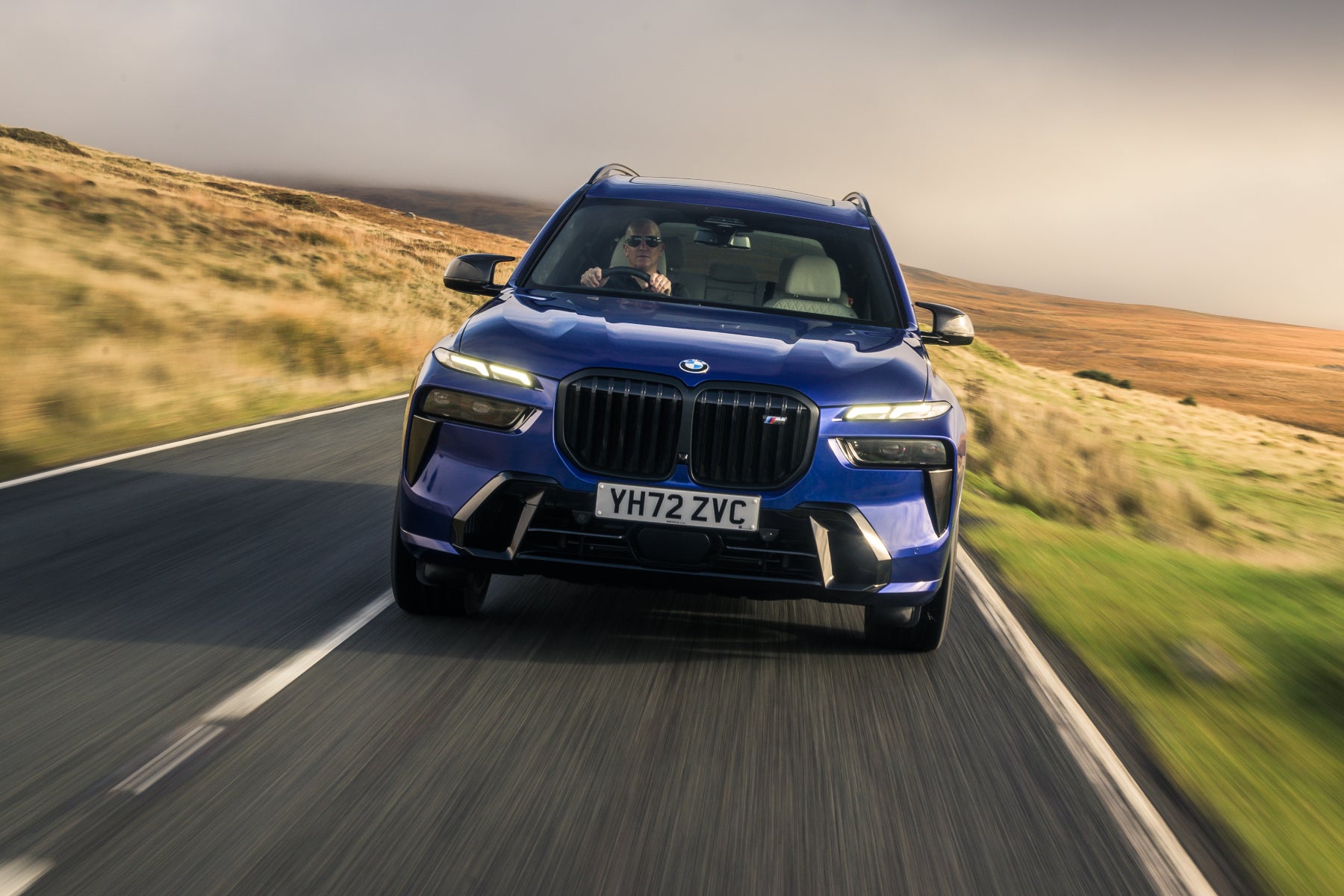
If you're a proponent of 'might is right' then you'll probably like the BMW X7. If you think a 5.2-metre long, 2600kg SUV is overkill on European roads, then you probably won't. But what matters here is whether it's a good car or not, and in this BMW X7 review we'll find out.
The seven-seat X7 is BMW's largest SUV on the market, and it's the flagship of the 'traditional' range alongside the similarly priced, smaller but more futuristic BMW iX electric SUV. It makes a good case for itself as one of the better big luxury SUVs on the market. And we do mean big. Even next to its massive competitors such as the Range Rover, the X7 looks like a complete beast thanks to its epic proportions and that gigantic grille at the front. This car is no wallflower, that’s for sure.
It's even more, erm, distinctive thanks to the 2022 facelift, which brought a redesigned front-end including new split-level headlights, plus some interior and technology upgrades. There's also a BMW X7 M60i topping the range with a potent (and ridiculously thirsty) twin-turbo V8, if that's your thing.
Browse used BMW X7s for sale →
The BMW X7’s size brings more benefits than just on-road presence. All of the seven seats are surrounded by absolutely loads of space, making this one of the roomiest people-movers you’ll ever encounter. All the seats fold down and flip back up electrically, but while this makes the process very easy, it also makes it painfully slow. There's a split tailgate (both parts electrically operated, naturally) and a huge boot along with a standard-fit electrically-operated panoramic glass roof.
Trademark BMW quality is evident throughout, but the cabin has an even more luxurious feel than the smaller BMW X5, with sumptuous materials everywhere you look. There's plenty of cutting edge technology, too, including a fully-digital instrument cluster. That said, we don't think it looks or feels quite as special as a Range Rover.
The engine line-up comprises two petrols and a diesel, although they changed a bit in 2022. They’re all superb, with a brilliant mix of power and refinement, but for used buyers it’s the entry-level diesel, the 30d, that delivers the best combination of price, efficiency and performance for the majority of people. If you're buying a BMW X7 new, then sadly that engine's been ditched, so either the 40i petrol or 40d diesel would be our choice.
Of course, the sheer size and weight of the BMW X7 counts against it a bit on the road. As a long-distance cruiser it's superb, and it's less wallowy than you might think, but you're never going to enjoy trying to thread it down a tight, twisty road without knocking the mirrors off. It's also rather cumbersome around town. But in the context of big SUVs it's smooth, quiet and effortless.
If you're after a mammoth SUV, there are some brilliant choices, with very fine margins between them. However, the X7 makes a really strong case for itself, not least thanks to its refinement and performance along with its spacious, high-quality cabin.
What's the best Bmw X7 trim and engine option?
For most buyers, the X7 xDrive40d is the one to have. It has all the performance a car like this needs, suits the X7’s effortless long-distance character and should be easier to live with than the petrols if you do meaningful mileage.
The xDrive40i is still a very appealing option. It is smoother and quieter in the way a big six-cylinder petrol should be, and it makes a compelling case if your use is mostly shorter journeys or you simply prefer petrol power in a luxury SUV.
The M60i xDrive is the indulgent one. There is no denying the appeal of a V8-powered X7 with 530hp, but it is expensive, thirsty and more car than most people really need. It exists because this part of the market expects such a thing to exist, not because the regular six-cylinder cars feel lacking.
Trim-wise, even the standard X7 feels lavishly equipped, so this is less a car where you chase a specific trim ladder and more one where you decide how much visual aggression or extra luxury garnish you really want.
What’s the price of the Bmw X7?
The BMW X7 starts at £94,375 for the xDrive40d Excellence in the current UK line-up, with the range stretching to £118,305 for the M60i xDrive.
That is a huge amount of money, but the X7 at least feels like a substantial luxury product in return. This is not a car where the price runs obviously ahead of the engineering, materials or sense of occasion. Spend any time with it and the money has clearly gone somewhere tangible. There are also plenty of used BMW X7s for sale for considerably less.
The bigger issue is the options list. Like many big BMWs, the X7 can be turned into a very expensive machine very quickly, and it does not take much for a well-specced six-cylinder car to start nudging into M60i money.
Still, judged against its main luxury-SUV rivals, the X7 is not unusually expensive. It is just playing in a brutally expensive class.
Alternatives to the Bmw X7
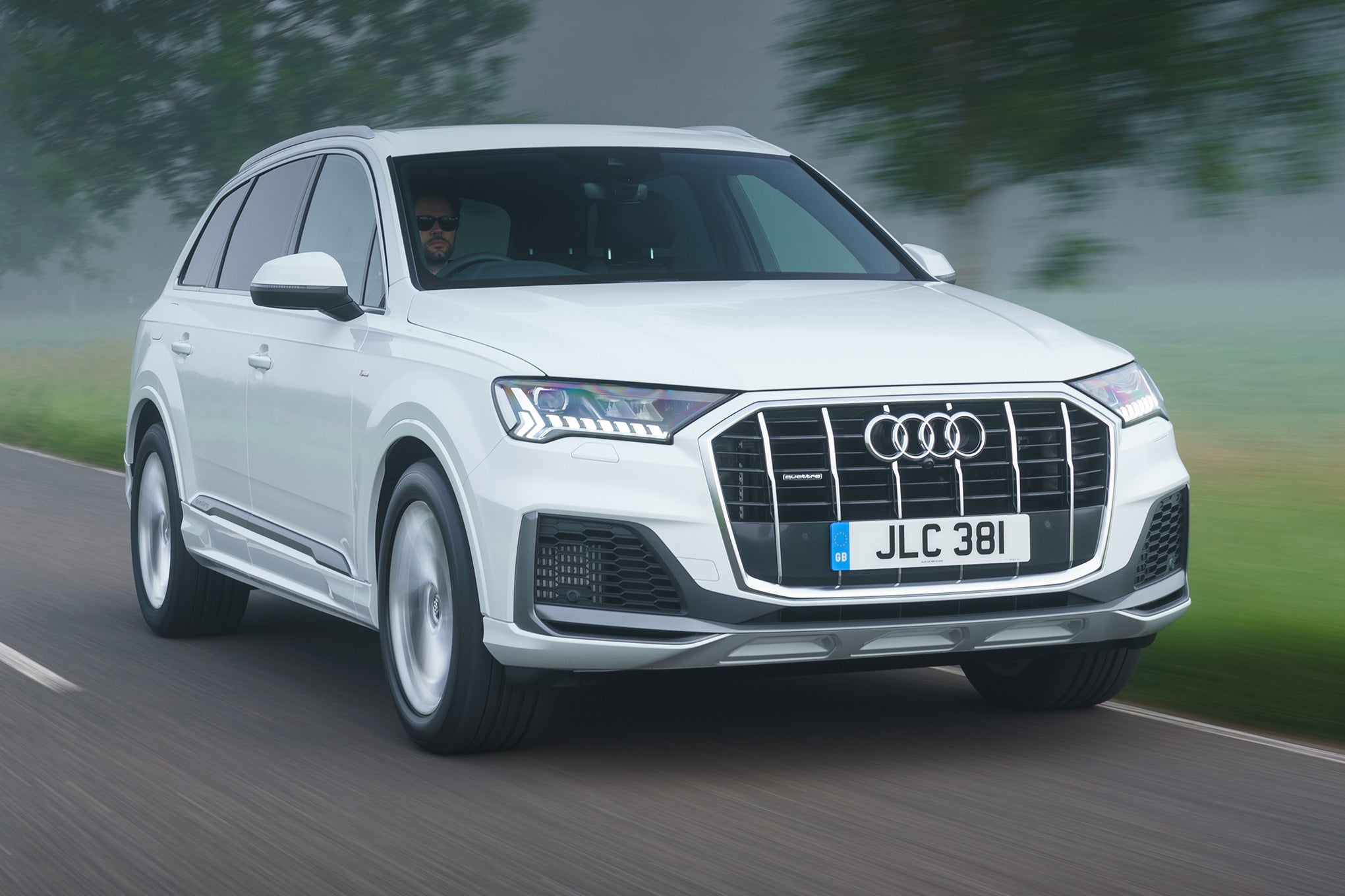
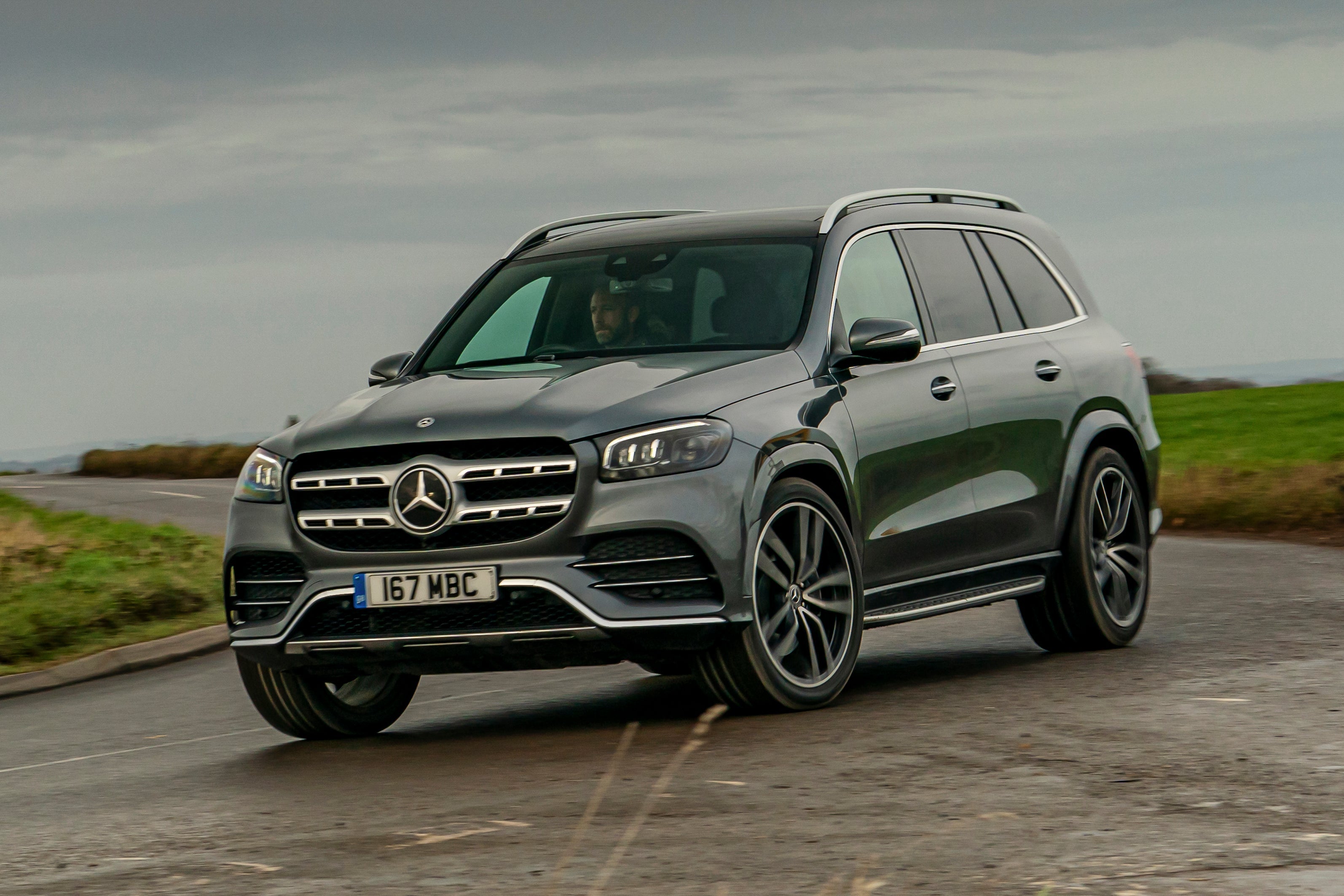
As a luxury seven-seat SUV, and an enormous one at that, the X7’s rivals come in the form of the Audi Q7, Mercedes-Benz GLS and Volvo XC90. A cheaper, but similarly spacious, option is also the Land Rover Discovery. You might also look at the Porsche Cayenne. However, arguably the car that the big BMW is gunning for most isn’t even a direct rival, and that’s the five-seat Range Rover.
The thing is, at this end of the market, the important thing isn’t how many seats a car has or how versatile it is, although those things are admittedly important. No, it’s about how special the car makes you feel, and what message it conveys to others about your success. That’s why these cars are so desirable, that’s why people pay so much for them, and that’s why the imperious X7 is aimed right down the Range Rover’s throat. Game on.
What's the interior like in the Bmw X7?
A few updates have added to the BMW X7's high quality and high tech driving environment. It might be very similar to smaller BMW models but there's no doubting the finish, equipment and logical layout.
Bmw X7 boot space and practicality
You’d rightfully expect a seven-seater on the scale of the X7 to be hugely practical and versatile, and you won’t be disappointed by the X7. There’s a huge amount of space up front, and again in the middle row of seats, there’s a massive amount of headroom and legroom, allowing even tall passengers to stretch out luxuriously. The enormous width of the cabin, plus the flat rear floor, allows you to seat three across the rear bench in relative comfort, too, not something that all cars of even this size can achieve.
The third row of seats is also very roomy indeed, roomy enough for even tall adults to travel comfortably. In fact, the rearmost seats are some of the roomiest in the class, so if you need a posh team bus for your five-a-side team plus substitutes, this is it. Access is also good thanks to huge rear doors and a large gap between the seats to clamber through.
All of the seats behind the front ones can be raised or lowered - and in the case of the middle ones, slid and reclined - electrically. This has both positives and negatives. On the plus side, it’s very easy, but on the negative side, it’s very, very slow. If you’re trying to get lots of people into the car when it’s raining, you won’t want to be waiting around for the seat mechanisms to finish doing their thing. Your kids, meanwhile, will probably run off out of sheer boredom waiting to get in.
With all seven seats in place the BMW X7's boot can carry 326-litres of luggage – enough for a few shopping bags or a couple of carry-on cases, but about the same size as a small hatchback. However in five-seat mode the load area is massive at 750-litres.
The split tailgate arrangement also provides a handy shelf to make loading heavy items easier, or to act as a bench while removing muddy boots. Turn your X7 into a two-seater, and there’s enough room to carry a moderately sized sofa. All the chairs fold flat into the floor, leaving you with a flush load area, too.
BMW also offered the option of replacing the three middle seats with two individual chairs offering their own armrests and a huge range of electrical adjustment for extra luxury. Bear in mind, though, that if your car has these fitted, you won’t be able to fold these chairs down flat.
Bmw X7 dimensions
The BMW X7 measures 5,181mm long, 2,000mm wide and 1,835mm high. It is absolutely massive, and you feel that from the moment you climb into it.
The upside is obvious. There is a huge amount of cabin space, tremendous road presence and the kind of long-wheelbase calm you expect from a proper luxury SUV. The downside is that it is cumbersome in tighter environments and never especially relaxing on narrow urban roads.
Tech and infotainment in the Bmw X7
Effectively, all versions of the BMW X7 get the same infotainment system, and the good news is that it’s one of the best in the business. Importantly, it’s got the majority of important functionality covered. There’s navigation, Bluetooth, DAB radio, a WiFi hotspot, wireless phone charging and a whole bunch of clever connected services. Apple CarPlay is also supported, and although Android Auto wasn't initially it is now.
The 2022-on BMW X7 benefitted from a redesigned dash with slimmer air vents. More importantly, that allowed for a larger and more up-to-date infotainment screen. The screen size is a mammoth 14.9-inches, with an adjoining 12.3-inch screen in one panel.
What’s great about BMW's infotainment system, though, is that it’s so easy to use. Like every other system under the sun, it has touchscreen functionality, but what marks out the BMW is that it can also be operated using shortcut buttons and a scrolling wheel on the centre console, which is much simpler and much less distracting on the road. Despite the complexity of the system, it’s hugely intuitive to use, with logically arranged menus and easy-to-find features. The graphics are sharp and fast, so it’s nice to look at and slick to use. This really is as good as it gets.
The voice control functionality is also better than most, and if you so choose, you can also operate the system using gesture control; you basically wave your hand in front of the dashboard in a certain way to control certain functions. To use a popular phrase, gesture control is where BMW ‘jumped the shark’ with its infotainment, because it’s a completely pointless gimmick. The rest of the system, though, is wonderful.
Materials available on the Bmw X7
The X7 feels properly expensive inside. The materials are rich, the assembly quality is superb and the overall sense of fit and finish is exactly where it needs to be in a car costing this much.
It may not be quite as showy or overtly theatrical as a Range Rover or Mercedes-Benz GLS in places, but in terms of tactile quality and solidity it is right up there. It feels built to a very high standard.
What's the Bmw X7 like to drive?
You are never going to mistake an X7 for a sports SUV, nor should you want to. The engineers have rightly prioritised comfort, refinement and effortlessness, and on those terms it works very well.
Bmw X7 range and performance
In 2022 for the facelift, the BMW X7's engine range changed quite a bit. Our favourite 30d diesel bowed out because most well-heeled buyers wanted even more performance, so there's an xDrive40d six-cylinder diesel model with a punchy 352PS.
Diesel isn't the choice du jour for new car buyers, though, so we expect the BMW X7 xDrive40i petrol would be the most popular choice. Power is boosted over the old 40i engine up to a potent 381PS, and with 0-62mph coming up in 5.8 seconds we can't see why you need any more performance from a huge SUV like this. It's smooth and effortless when you want it to be, and makes a great noise when you don't.
Certainly the xDrive40i makes the new BMW X7 M60i look faintly ridiculous. Despite the name boost from 'M50i' to M60i it still puts out the same 530PS from its 4.4-litre twin-turbo V8, but the new engine is is mated to a mild-hybrid system to boost efficiency and responses. It's a bit of a monster, with 0-62mph coming up in 4.7 seconds and a burbling, hairy-chested soundtrack. But it's expensive and still pretty inefficient, as we'll come onto in a bit.
All cars come with a cracking eight-speed gearbox that swaps cogs pretty quickly and smoothly. There is a tiny delay when you really put your foot down, but it’s nowhere near as ponderous on that score as rivals such as the Audi Q7 and Range Rover.
Performance data
| Model | Engine/battery size | Power | 0-62mph | Range/MPG |
|---|---|---|---|---|
X7 xDrive40i | 3.0-litre petrol | 387PS | 5.8 seconds | Up to 29.4mpg |
X7 xDrive40d | 3.0-litre diesel | 352PS | 5.9 seconds | Up to 36.2mpg |
X7 M60i | 4.4-litre petrol | 530PS | 4.7 seconds | Up to 23.3mpg |
Bmw X7 driving and refinement
The BMW X7 pretty much pummels most bumps into submission, and the standard air suspension does a pretty good job of isolating you from the effects of bigger ones.
Perhaps we're being picky, but the ride isn't as consistent as we'd like. It floats along nicely the majority of the time, but sharper potholes and undulating surfaces cause it to shudder and wobble around a bit. It's not a dealbreaker, and generally speaking the X7 is a plush luxury SUV, but we're only judging it next to the immensely high standards of the Audi Q7.
Considering the size and weight of this car, it does a pretty decent job in the corners, too. Granted, it doesn't feel anything like as sporty and tied down as a BMW iX, but it doesn't wallow and list over like a cross-channel ferry in a storm either. We reckon the Audi Q7 might be more athletic still, however.
The steering is quick enough and nicely weighted, and if you regularly use your X7 in town, you might want to find an example with the optional four-wheel steering fitted. This turns the rear wheels in the same direction as the fronts at high speed to aid stability, and in the opposite direction at low speeds to aid manoeuvrability, and it’s really effective. Don't go thinking it'll make it a doddle to park and thread through city traffic, though, because it won't - this is still a massive, cumbersome car.
The BMW X7 M60i gets four-wheel steering as standard, but other than the massive 23-inch wheels it doesn't handle that much differently than the standard car. Those wheels do make more of a meal of really sharp bumps, but it's hardly uncomfortable.
The real strength is refinement. The engines are subdued, motorway noise is well suppressed and the whole car has the sort of long-distance ease that buyers at this end of the market expect.
How safe is the Bmw X7?
The X7 has not been separately crash-tested by Euro NCAP, but the related X5 achieved a five-star result in 2018, with strong scores for adult and child occupant protection.
The X7 also comes with an extensive suite of standard safety kit, including autonomous emergency braking, lane-departure warning, speed-limit information, cameras, parking sensors and a wide spread of active-safety systems. More advanced semi-autonomous assistance is available through optional packs.
Running costs: What it's like to live with a Bmw X7
No version of the X7 is going to be inexpensive to own. The good news is that the six-cylinder engines are better behaved than the size of the thing might lead you to expect.
Bmw X7 fuel economy
The xDrive40d is the efficiency choice, with BMW quoting up to 36.2mpg. The xDrive40i manages up to 29.4mpg, which is respectable enough for a large petrol luxury SUV. The M60i xDrive is where reason leaves the room, with up to 23.2mpg on paper and the promise of considerably worse if you use the performance with any enthusiasm.
Bmw X7 warranty and servicing
BMW covers the X7 with a three-year, unlimited-mileage warranty. There are no surprises there, but it is in line with what you would expect from the premium class.
Bmw X7 insurance groups
Easy one, this. All versions of the BMW X7 sit in group 50 for insurance. Which is the most expensive one there is. Which is a shame. But come on, are you really surprised? Yes, insurance costs will be high, but so will all other costs where the X7 is concerned. If you can afford to buy a car like this, then your annual insurance premium will probably be a drop in the well.
How much does it cost to tax a Bmw X7?
For 2026 to 2027, the standard annual VED rate after the first year is £200. Because every current X7 sits above the £40,000 threshold, all versions also attract the Expensive Car Supplement.
That means an extra £440 a year for five years from the start of the second licence, leaving most buyers looking at £640 a year during that period.
What trims are available with the Bmw X7?
There’s very little that’s basic about the BMW X7 in its basic form. Aside from all the safety and infotainment kit we’ve already talked about, all X7s come with four-zone climate control, a panoramic roof, heated front and rear seats, soft-close doors, leather upholstery, ambient lighting and automatic lights and wipers. In this spec, BMW now calls this trim Excellence.
Aside from upgraded brakes, the step up to BMW X7 M Sport trim only really earns you aesthetic upgrades inside and out. Despite that, this will still probably be the best-selling trim.
It’s a similar story with the range-topping M models in 50i and 50d (or, from 2022, M60i) forms. Most of the difference are aesthetic ones, although you do get a performance differential and uprated Harman Kardon speakers. Plus, of course, these versions have even greater performance from their potent engines.
Ask the Drive experts: common questions
Is the BMW X7 a good luxury SUV?
Which BMW X7 engine is best?
Is the BMW X7 better than the BMW X5?
Does the BMW X7 have a big boot?
Get our latest advice, news and offers
Keep me updated by email with the latest advice, news and offers from Drive.
.jpg)