Ford Kuga Review

Written By Andrew Brady
- 2020
- SUV
- Petrol, hybrid, plug-in hybrid
What we love
Roomy and flexible interior
Tidy, confidence-inspiring handling
Efficient hybrid options
Things to consider
Cabin materials trail the best rivals
ST-Line models have a firmer ride
No seven-seat option
The DRIVE take on the Ford Kuga, is it the right car for you?
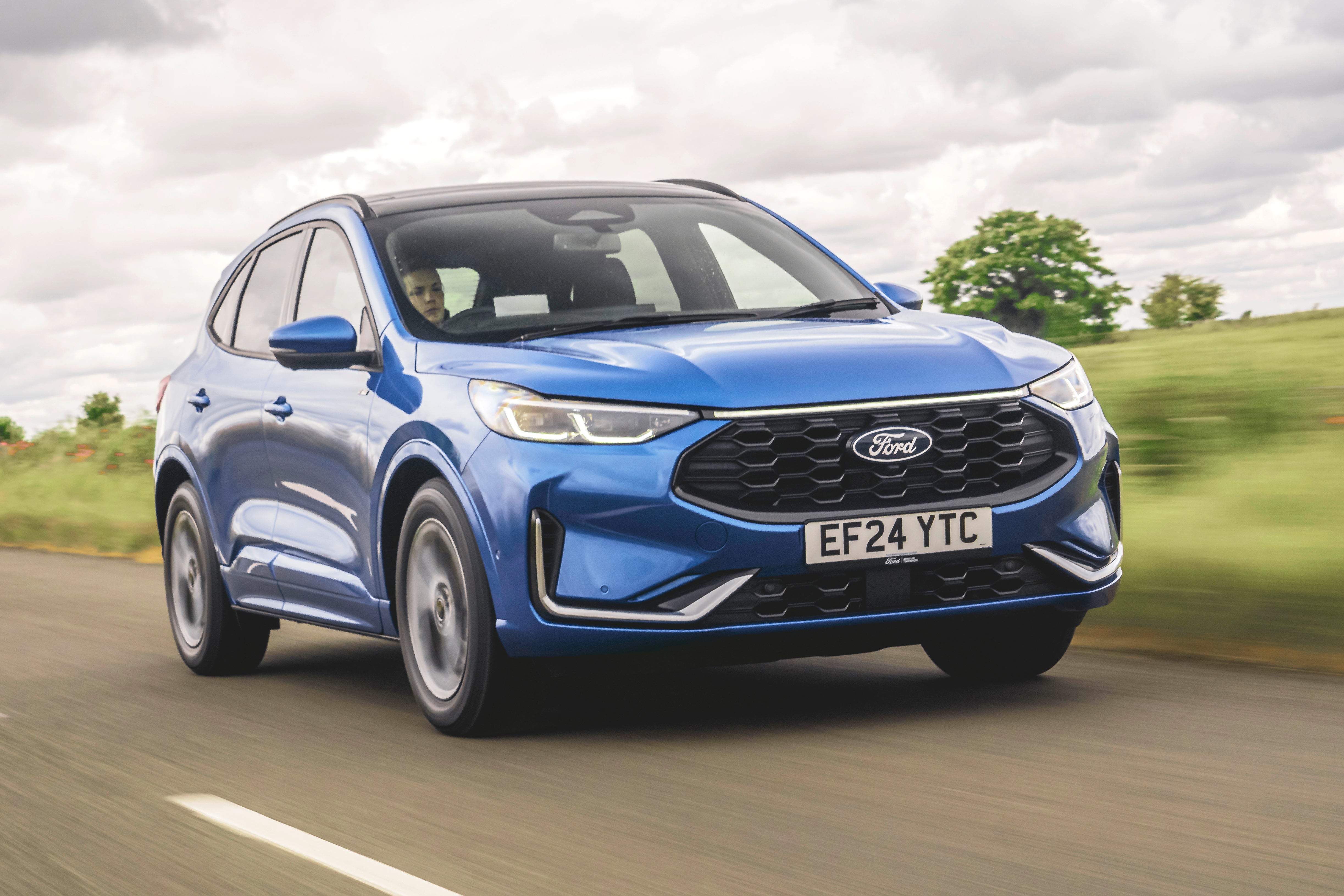
The Ford Kuga is a strong family SUV if you want plenty of space, generous equipment and a choice of petrol, hybrid or plug-in hybrid power. Its sliding rear bench is genuinely useful, while the latest SYNC 4 infotainment system gives the cabin the technology expected of a modern family car.
It's also one of the more enjoyable SUVs in its class to drive, although ST-Line models trade some ride comfort for sharper responses. Cabin materials aren't as plush as those in some newer rivals, either.
For most buyers the full hybrid is the sweet spot, combining respectable performance with economy of more than 50mpg without requiring a charger. Overall, the Kuga remains a practical and likeable all-rounder.
The Ford Kuga in more detail
The Ford Kuga sits in one of the most competitive parts of the car market, facing family SUVs including the Volkswagen Tiguan, the Kia Sportage, the Hyundai Tucson and the Nissan Qashqai. Its response is to offer plenty of interior space, useful flexibility and a wider choice of powertrains than many rivals.
The current Kuga was extensively updated in 2024, bringing redesigned exterior styling and, more importantly, a much more contemporary interior technology package. Every version now gets a 12.3-inch digital instrument display alongside Ford's large SYNC 4 touchscreen.
Browse used Ford Kugas for sale →
There are three basic powertrain choices. The 150PS 1.5-litre EcoBoost petrol is the cheapest route into the range and comes exclusively with a six-speed manual gearbox. Above it sits a 2.5-litre full hybrid, producing 180PS with front-wheel drive or 183PS with four-wheel drive. Finally, the 243PS plug-in hybrid combines a 2.5-litre petrol engine with a 14.4kWh battery and can travel up to 42.9 miles on electricity according to the official test.
Practicality is another strength. There's plenty of passenger room and the second-row seats slide backwards and forwards, letting you prioritise legroom or luggage space. Depending on the powertrain you choose, and the seat position, boot capacity ranges from 395 to 553 litres.
The Kuga is also more enjoyable to drive than many mainstream SUVs. Its steering is responsive and body movement is well controlled, although the sportier suspension fitted to ST-Line-based versions gives them a firmer ride over broken roads.
Its interior isn't quite as richly finished as the best rivals, but the Kuga gets the fundamentals right: it's spacious, versatile, well equipped and available with several genuinely useful powertrain options.
What's the best Ford Kuga trim and engine option?
For most private buyers, the Ford Kuga 2.5 FHEV ST-Line is the version to have. The 180PS front-wheel-drive full hybrid suits the Kuga particularly well. It can return up to 52.3mpg, comes with an automatic transmission and doesn't require plugging in, while its 9.1-second 0–62mph time is perfectly adequate for a family SUV.
ST-Line is also a strong equipment sweet spot. It gets 18-inch wheels, sports suspension, a powered driver's seat, hands-free tailgate, 360-degree camera and 700W B&O sound system, along with Ford's Driver Assistance Pack as standard. At £38,725 for the FHEV, it avoids some of the expensive extras of ST-Line X.
The plug-in hybrid is well worth considering if you can charge regularly. It has 243PS, reaches 62mph in 7.3 seconds and offers up to 42.9 miles of electric range. In ST-Line form it costs only £595 more than the equivalent full hybrid. Company-car drivers also benefit from a 10% Benefit-in-Kind rate in 2026/27.
Titanium makes sense if you simply want the cheapest Kuga, but it's now petrol-only.
What’s the price of the Ford Kuga?
The current Ford Kuga starts at £33,335 for the 150PS 1.5 EcoBoost Titanium. ST-Line costs £37,735 with the same petrol engine, while the ST-Line FHEV is £38,725 and the PHEV £39,320. Active starts at £39,125 as a front-wheel-drive FHEV, while ST-Line X begins at £40,485 on the road. Above that sit the ST-Line X Black Package and limited-run BlueCruise Edition. The most expensive standard combination is the BlueCruise Edition FHEV AWD at £44,330. There are also plenty of used Ford Kugas for sale for considerably less.
That puts the Kuga squarely in mainstream family-SUV territory.
Alternatives to the Ford Kuga
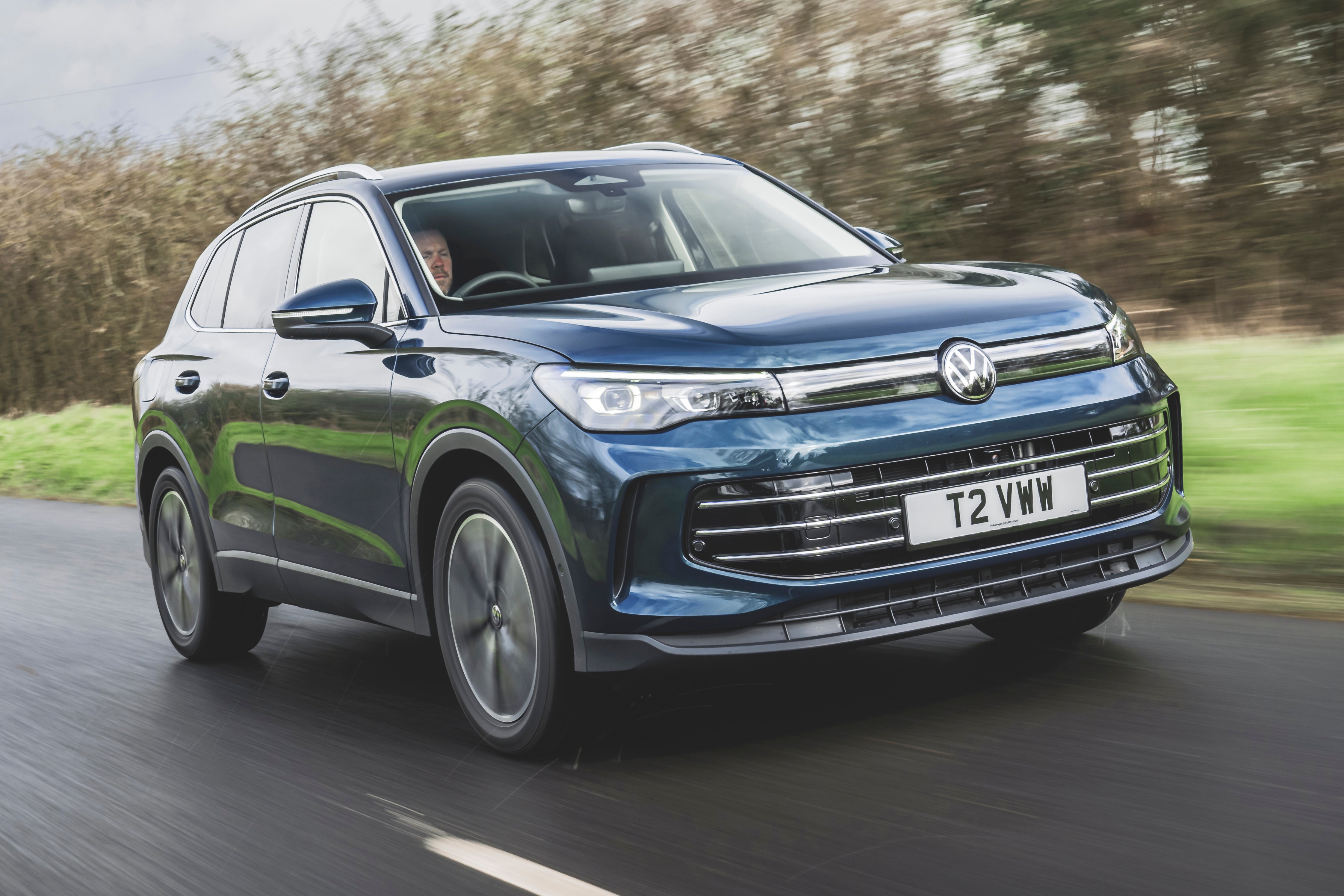
The Volkswagen Tiguan is one of the Kuga's closest alternatives. It has a more polished cabin and a broad spread of engines, although prices can rise quickly once you add equipment.
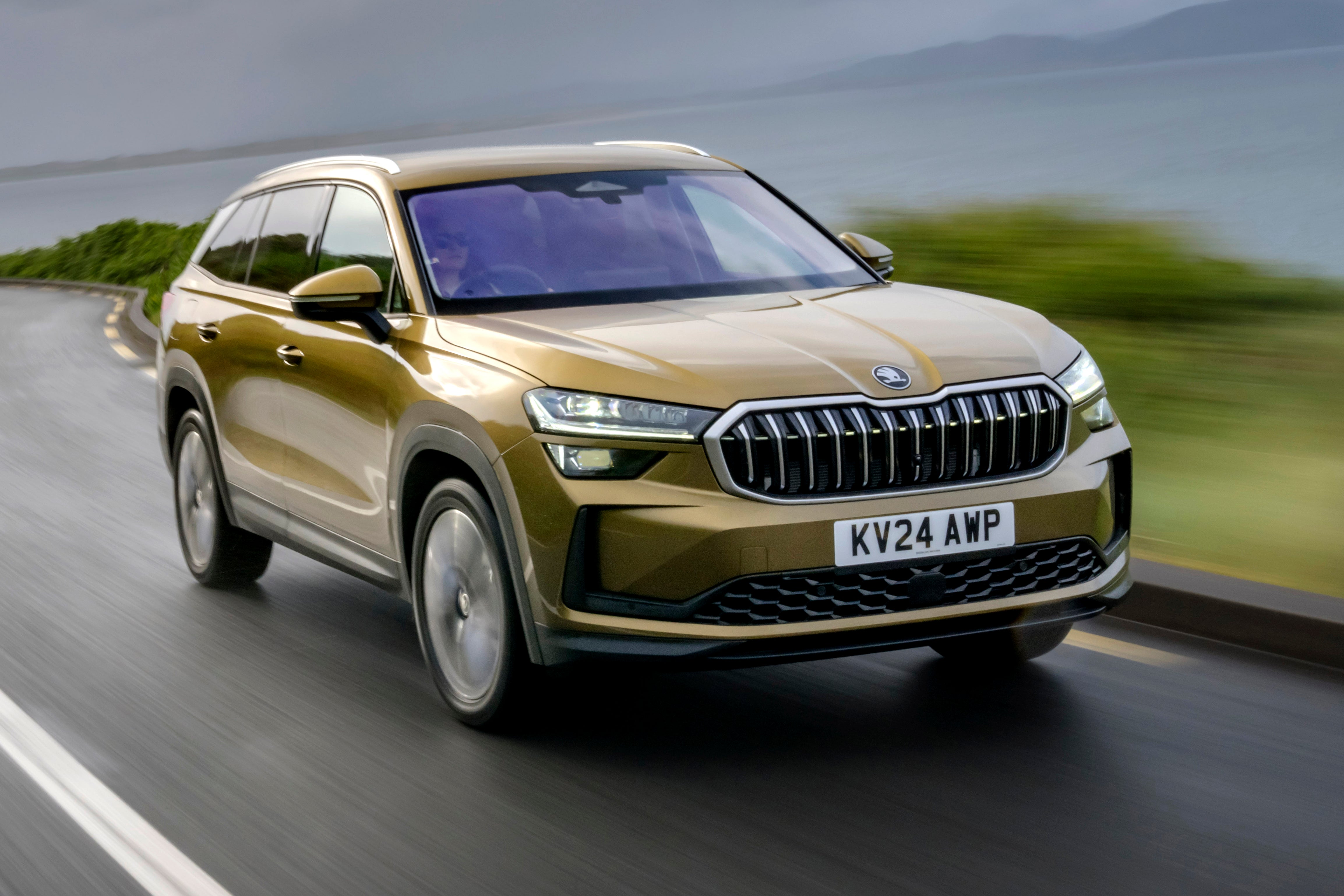
The Skoda Kodiaq is worth considering if practicality takes priority. It's larger than the Kuga and offers seven seats, making it a better option for buyers who regularly need to carry more than five people.
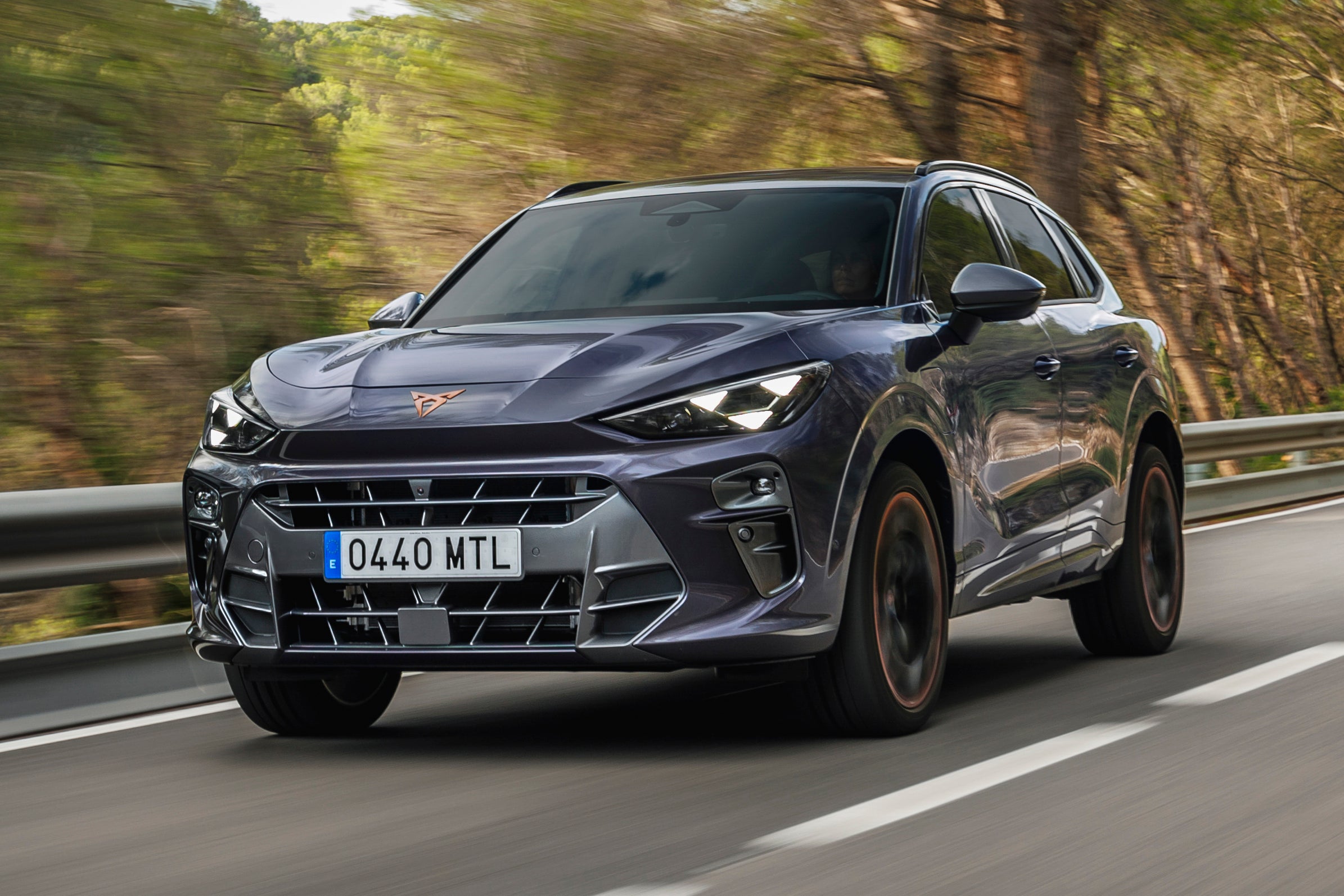
The Cupra Terramar is a more style-led Volkswagen Group alternative and combines a sportier appearance with petrol and plug-in hybrid choices.
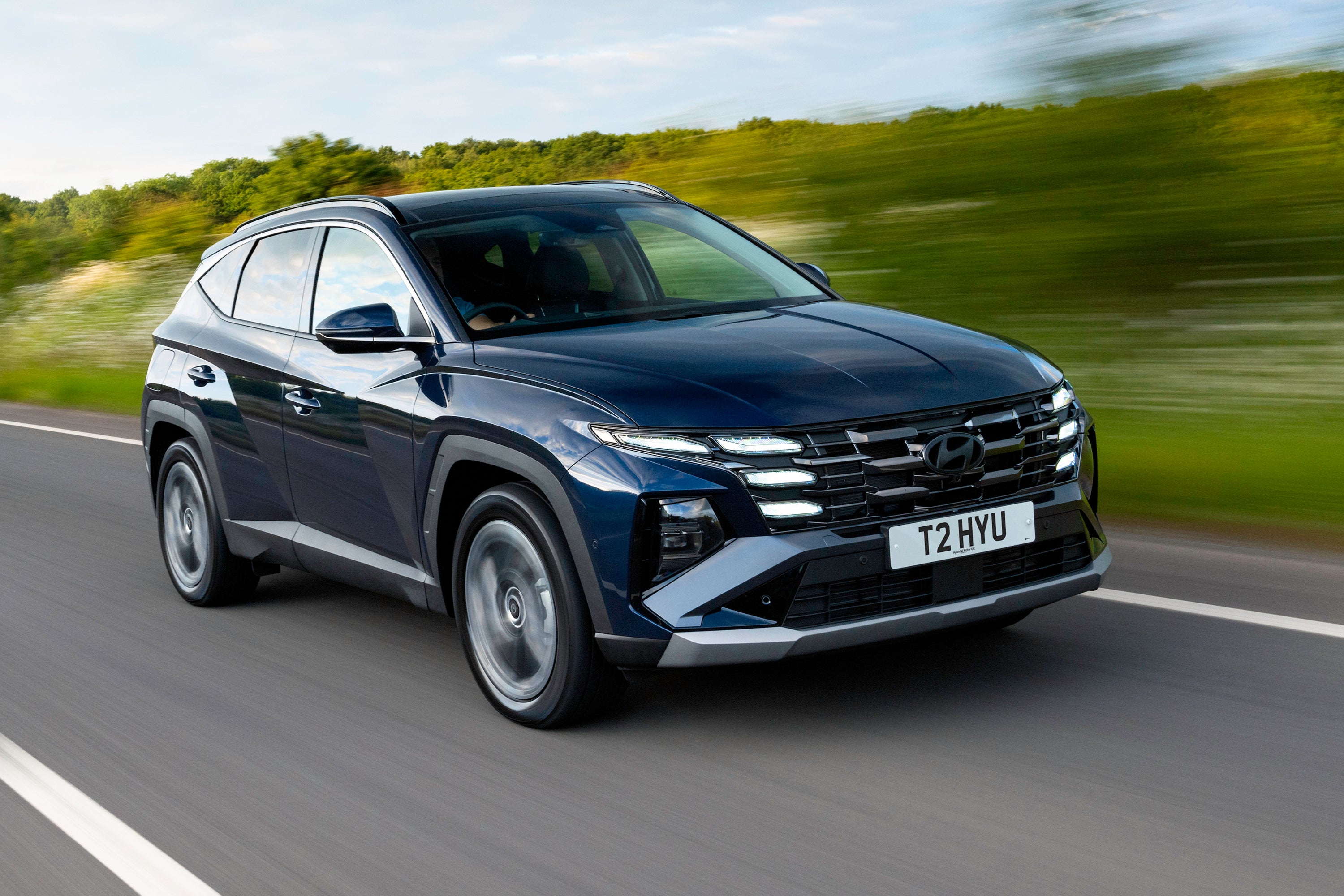
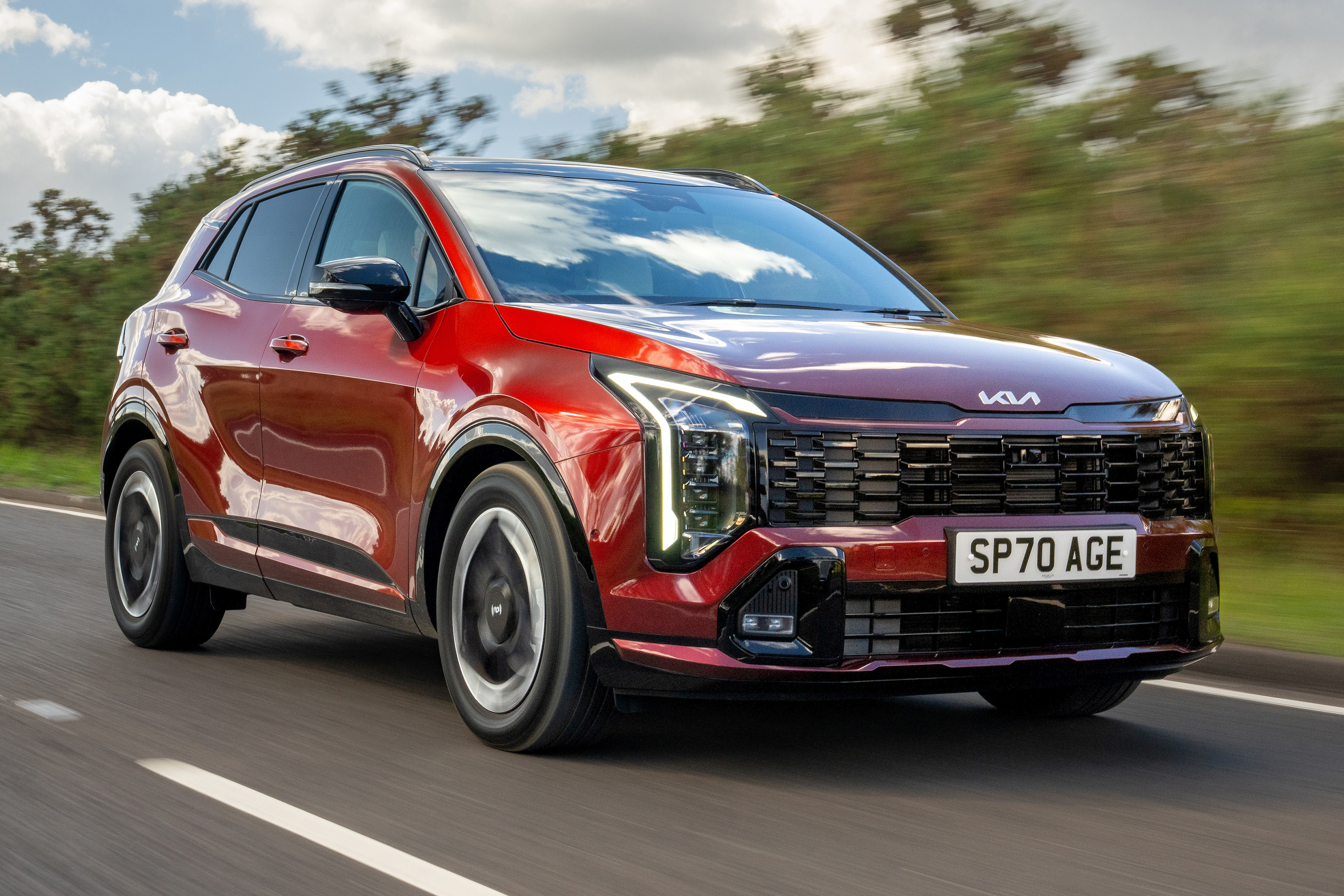
The Kia Sportage and Hyundai Tucson are particularly strong all-rounders, with smart interiors and longer warranties than the Ford. The Toyota RAV4 remains another obvious choice for buyers specifically interested in hybrid power.
The Kuga's strongest responses are its sliding rear bench, broad powertrain choice and relatively engaging road manners. It's particularly appealing if you want a practical SUV without completely sacrificing driving enjoyment.
What's the interior like in the Ford Kuga?
The Ford Kuga has a spacious, straightforward interior dominated by its large central touchscreen and 12.3-inch digital instrument display. The overall design isn't as dramatic as a Peugeot 3008 or quite as polished as some newer rivals, and there are harder plastics in places where the best family SUVs use softer finishes.
Usability is generally good, though. The driving position has plenty of adjustment, visibility is decent and storage is generous enough for normal family life. The main ergonomic compromise is that the current infotainment system incorporates more functions into the touchscreen than earlier Kugas did, including climate controls.
Ford Kuga boot space and practicality
The Kuga's interior space remains one of its strongest selling points. There's plenty of room in the front and a broad range of adjustment for the driver's seat and steering wheel, so most drivers should find a comfortable position without difficulty.
Rear passengers are well served, too. The second-row bench slides backwards and forwards, giving you the choice of prioritising legroom or luggage capacity. Ford's technical data quotes between 986mm and 1,035mm of rear legroom depending on where the seat is positioned.
With the rear seats in their most passenger-friendly position, the conventional petrol Kuga provides 412 litres of boot space, rising to 553 litres with them moved forwards. The full hybrid and plug-in hybrid lose a little space because of their electrified hardware, providing 395–536 litres. Fold the rear seats and maximum capacity is around 1,534 litres in the petrol or 1,517 litres in the hybrid versions.
The ability to vary the luggage and passenger space is more useful in practice than chasing a single headline capacity figure, particularly for families whose requirements change from one journey to another.
The boot itself is a useful shape and has a relatively wide opening. What the Kuga cannot offer is a third row of seats. Anyone needing seven-seat flexibility will need to look at a larger alternative such as the Skoda Kodiaq.
Ford Kuga dimensions
The Kuga's exact dimensions depend on the trim. Titanium is 4,604mm long, ST-Line models are around 4,615mm, while the more ruggedly styled Active stretches to 4,645mm. All are 1,882mm wide excluding the mirrors and 2,177mm with them extended. Maximum height ranges up to around 1,683mm, while the wheelbase is 2,711mm. You're therefore looking at a conventional mid-size family SUV: substantial enough to provide plenty of interior room without being unwieldy in normal UK parking spaces.
Tech and infotainment in the Ford Kuga
Every current Ford Kuga gets a 12.3-inch digital instrument display and Ford's SYNC 4 infotainment system with a 13.2-inch screen, which represents a major part of the current cabin design. Wireless Apple CarPlay and Android Auto are included, along with a 5G modem and over-the-air software updates. Navigation is also built in, although some connected services can require subscriptions once introductory periods expire.
Titanium uses a six-speaker audio system, while ST-Line, Active and higher versions step up to a 700W B&O system with 10 speakers and a subwoofer. The system itself is relatively clear and responsive, with large graphics and familiar smartphone connectivity. The drawback is that Ford moved more secondary controls into the screen during the facelift. In particular, adjusting climate settings isn't as immediately intuitive as using conventional physical switches. Higher specifications also introduce considerably more technology. ST-Line and Active upwards get a 360-degree camera as standard, while automatic versions can support Ford BlueCruise, which allows hands-off, eyes-on driving on approved sections of motorway.
The BlueCruise Edition includes the system and connected navigation as standard, along with Dynamic Matrix LED headlights.
Materials available on the Ford Kuga
The materials used in the Kuga vary quite noticeably with trim. Titanium uses conventional black cloth upholstery with grey stitching. ST-Line and ST-Line X switch to partial Sensico synthetic leather upholstery with black neosuede inserts and contrasting red stitching, while Active uses a similar combination with its own seat design and grey stitching. The ST-Line X Black Package retains the sportier black and red treatment, while the BlueCruise Edition gets distinctive dark-blue cloth inserts with grey stitching.
The overall finish is perfectly serviceable for a family SUV, but some harder plastics remain conspicuous lower down the dashboard and doors. That's one area where rivals such as the Volkswagen Tiguan and Peugeot 3008 can create a more upmarket first impression.
What's the Ford Kuga like to drive?
The Kuga is one of the more agile family SUVs. Its steering is responsive, body movement is well controlled and it feels less cumbersome on a country road than its size might suggest.
There is a compromise, though. ST-Line versions use sports suspension and can feel noticeably firmer over broken roads, while larger wheels make that more obvious. Titanium and Active have a more comfort-oriented set-up.
The hybrids are smooth and quiet when running electrically, although their CVT transmissions can make the petrol engine sound strained during hard acceleration.
Ford Kuga range and performance
There are three basic powertrain choices in the current Kuga range, plus a four-wheel-drive version of the full hybrid. The entry point is the 1.5 EcoBoost, a turbocharged three-cylinder petrol engine producing 150PS and 240Nm. It drives the front wheels through a six-speed manual gearbox and reaches 62mph in 9.5 seconds, with a 121mph maximum speed. It's the only current Kuga that isn't electrified and the only one available with a manual gearbox.
Next comes the 2.5 FHEV, or full hybrid. The front-wheel-drive version produces 180PS and reaches 62mph in 9.1 seconds, while the four-wheel-drive model increases output slightly to 183PS and cuts that time to 8.3 seconds. Both use an automatic CVT and a small 1.1kWh battery, which allows short periods of electric running without plugging in.
At the top of the performance hierarchy is the 2.5 PHEV. It combines petrol and electric power for 243PS, reducing the 0–62mph time to 7.3 seconds. Its 14.4kWh battery provides between 41.0 and 42.9 miles of official electric range depending on trim.
The PHEV is front-wheel drive only. Buyers wanting four-wheel drive need the 183PS full hybrid, which is offered with Active, ST-Line X, Black Package and BlueCruise Edition.
For most private buyers, the front-wheel-drive FHEV strikes the best balance. The PHEV becomes more attractive if you can recharge it frequently or benefit from its lower company-car taxation.
Performance data
| Model | Engine/battery size | Power | 0-62mph | Range/MPG |
|---|---|---|---|---|
Ford Kuga 1.5 EcoBoost | 1.5-litre petrol manual | 150PS | 9.5 seconds | Up to 44.1mpg |
Ford Kuga 2.5 Hybrid FWD / AWD | 2.5-litre full hybrid auto | 180PS / 183PS | 9.1/8.3 seconds | Up to 52.3mpg |
Ford Kuga 2.5 PHEV | 2.5-litre plug-in hybrid auto | 243PS | 7.3 seconds | Up to 43 miles EV range |
Ford Kuga driving and refinement
The Kuga feels more responsive than many family SUVs, with tidy body control and steering that reacts quickly to inputs. You don't need to drive quickly to notice that it changes direction neatly and disguises its size reasonably well.
Suspension specification makes a significant difference. Titanium uses the standard set-up, while Active also retains conventional suspension despite its slightly more rugged appearance. ST-Line, ST-Line X, Black Package and BlueCruise Edition use Ford's firmer sports suspension.
That gives the sportier versions tighter body control but creates a firmer ride. RST-Line models are noticeably busier over poor urban surfaces, while larger 19- and 20-inch wheels can make sharp bumps more obvious. At motorway speeds it settles down better, although tyre noise is more noticeable than in some rivals.
The powertrains also have different personalities. The manual petrol is straightforward enough but requires more driver input than either hybrid. The FHEV suits relaxed everyday driving particularly well. It can pull away and travel short distances on electric power, with the petrol engine joining in automatically. The PHEV can perform much more of a normal journey electrically provided the battery has been charged.
Both hybrids use CVT automatic transmissions. They work smoothly when you're driving gently, but hard acceleration can send engine revs climbing and introduce a sustained drone.
Overall, the Kuga retains a useful degree of driver appeal, but buyers prioritising comfort should think carefully before choosing one of the sportier versions on the largest wheels.
How safe is the Ford Kuga?
The Ford Kuga was awarded five stars by independent safety organisation Euro NCAP in 2019, scoring 92% for adult occupants, 86% for children, 82% for vulnerable road users and 73% for safety assistance.
However, that rating expired at the start of 2026, reflecting Euro NCAP's increasingly stringent test standards rather than a new test in which the Kuga performed poorly. Current Kugas include autonomous emergency braking, lane-keeping assistance and front and rear parking sensors, while the Driver Assistance Pack fitted as standard from ST-Line and Active upwards adds features including adaptive cruise control and blind-spot monitoring.
Running costs: What it's like to live with a Ford Kuga
Running costs depend heavily on which Kuga you choose. The petrol is cheapest to buy but officially manages only up to 4.1mpg. The front-wheel-drive full hybrid can exceed 50mpg without requiring a charger, making it the straightforward option for many private buyers.
The PHEV has the greatest potential for low fuel use, but only if it's charged regularly. It can travel around 43 miles electrically and attracts a 10% company-car Benefit-in-Kind rate for 2026/27.
Servicing intervals are unusually long at two years or 18,000 miles, although Ford's oil-life monitoring system can call for an oil change sooner depending on use.
Ford Kuga charging times and costs
The Kuga PHEV uses a 14.4kWh battery and has a relatively modest maximum AC charging rate of around 3.7kW. It doesn't support DC rapid charging, which is fairly typical for a plug-in hybrid of this generation. Ford quotes three hours and 30 minutes for a full charge from a 7kW home wallbox and around six hours from a domestic socket.
As of late 2026, a full charge at the average UK electricity rate of 26.32p costs about £3.80. Your actual cost could be considerably lower on an off-peak EV tariff.
Ford Kuga fuel economy
The 150PS 1.5 EcoBoost petrol officially returns up to 44.1mpg, depending on specification. The front-wheel-drive 180PS full hybrid is considerably better at up to 52.3mpg, while adding four-wheel drive reduces that to 48.7mpg.
The PHEV has an electric range of up to 42.9 miles, which can allow many routine journeys to be completed without starting the petrol engine. For company-car users, the PHEV currently sits at 10% BIK for 2026/27.
Ford Kuga warranty and servicing
Ford covers the Kuga with a three-year/60,000-mile warranty and includes one year of Ford Assistance. Extended warranties are available up to five years/100,000 miles.
Hybrid models get additional cover for their electrified components. Ford covers high-voltage components for five years/60,000 miles, while the high-voltage battery is covered for eight years/100,000 miles.
The scheduled service interval for the current 1.5 EcoBoost, full hybrid and PHEV is two years or 18,000 miles, whichever comes first. Ford notes that the oil-life monitoring system can request an earlier oil change depending on how the vehicle is used.
Ford Kuga insurance groups
Current Ford Kuga models sit in insurance groups 16 to 26, with the 1.5-litre petrol models at the lower end of the range, and the 243PS PHEV in group 26. That's broadly competitive for a family SUV of this size and performance, although the actual premium will depend much more heavily on the driver, postcode and insurer.
How much does it cost to tax a Ford Kuga?
The standard VED rate from the second year onwards is £200 a year for all versions of the Kuga. However, some Kuga versions now sit above the £40,000 list-price threshold, which means the £440 Expensive Car Supplement can apply for five years from the second year of taxation.
In practice, some Kugas will cost £640 a year in VED from years two to six, while cheaper versions stay on the standard £200 rate.
What trims are available with the Ford Kuga?
The current Ford Kuga range consists of Titanium, ST-Line, Active, ST-Line X, ST-Line X Black Package and BlueCruise Edition.
Titanium opens the range and is now available only with the 1.5-litre EcoBoost petrol engine. Despite being the entry point, it comes well equipped, with 17-inch alloy wheels, the 13.2-inch SYNC 4 touchscreen, a 12.3-inch digital driver display, front and rear parking sensors, a reversing camera, keyless entry, a Quickclear heated windscreen and sliding rear seats.
ST-Line is the sweet spot for most buyers and is available with petrol, full hybrid and plug-in hybrid power. It brings sportier exterior styling, 18-inch alloy wheels, sports suspension and a more athletic interior treatment. It also adds useful equipment including a powered driver’s seat, hands-free tailgate, 360-degree camera, B&O audio system and Ford’s Driver Assistance Pack.
Active takes a more rugged-looking approach and is offered with full hybrid or plug-in hybrid power. It gets its own exterior detailing and 18-inch wheels, while retaining a more comfort-focused suspension set-up rather than the firmer sports suspension fitted to ST-Line models. Equipment levels are otherwise similarly generous.
ST-Line X builds on ST-Line with 19-inch alloy wheels, a panoramic roof, heated front and rear seats and a heated steering wheel. It feels noticeably more luxurious, although several hybrid versions cross the £40,000 Expensive Car Supplement threshold.
Above that, the ST-Line X Black Package adds 20-inch black Ford Performance alloy wheels and extra black exterior detailing.
Finally, the BlueCruise Edition sits at the top of the range. It comes with 19-inch black alloy wheels, Dynamic Matrix LED headlights, panoramic roof, B&O audio, a 360-degree camera and Ford BlueCruise hands-off driving technology included as standard.
Ask the Drive experts: common questions
How much does the Ford Kuga cost?
What is the best Ford Kuga version to buy?
Is the Ford Kuga a good family SUV?
Should I buy the Ford Kuga plug-in hybrid?
Get our latest advice, news and offers
Keep me updated by email with the latest advice, news and offers from Drive.