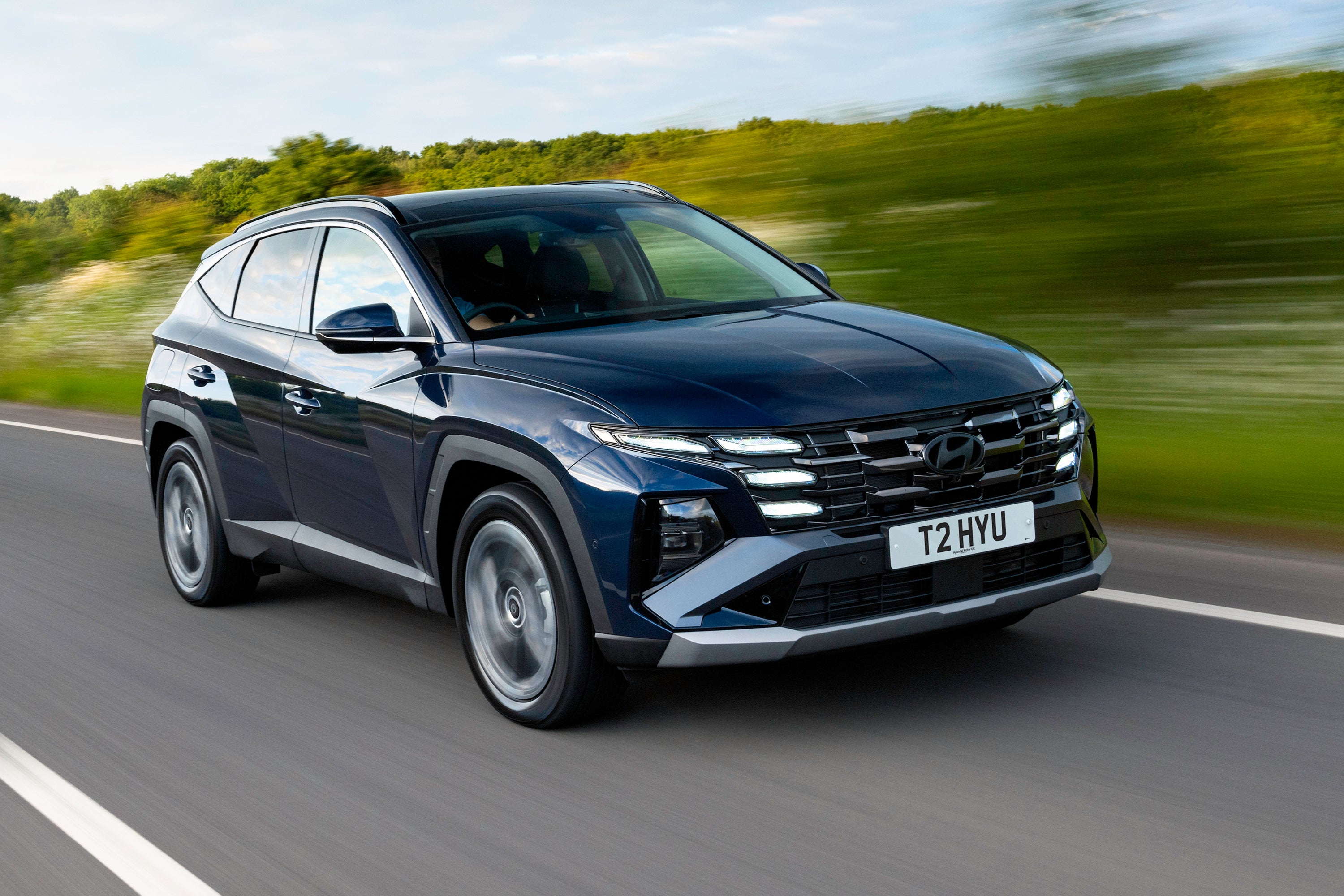
Hyundai Tucson Review

Written By Ivan Aistrop
- 2021
- SUV
- Petrol, hybrid, plug-in hybrid
What we love
Spacious and practical interior
Strong hybrid powertrains
Generous standard equipment
Things to consider
Ride can be firm on larger wheels
Petrol engine gearbox can hesitate at low speeds
Higher-spec versions are expensive
The DRIVE take on the Hyundai Tucson, is it the right car for you?
The Hyundai Tucson is one of the most convincing family SUVs on sale if you want plenty of room, strong technology and a design that stands out from the crossover crowd. It’s no longer the bargain choice that it once was, but Hyundai has backed up the higher prices with generous equipment and a much more sophisticated cabin than you might expect. The 239PS full hybrid is particularly convincing, combining brisk performance with fuel economy of around 50mpg without requiring a charger.
There are smoother-riding alternatives and the petrol dual-clutch automatic isn't the most polished transmission around, but the Tucson’s combination of practicality, equipment, warranty cover and powertrain choice makes it very easy to shortlist.
The Hyundai Tucson in more detail
The Hyundai Tucson competes in one of the busiest parts of the car market, facing everything from the Kia Sportage and the Ford Kuga to the Volkswagen Tiguan, the Nissan Qashqai and the Toyota RAV4.
Its design remains one of its most obvious distinguishing features. The current generation arrived in 2021, while a substantial 2024 facelift revised the front-end styling and transformed much of the dashboard. It remains unmistakably a Tucson, but the interior in particular now feels much more contemporary.
Browse used Hyundai Tucsons for sale →
There's also plenty of choice beneath the bonnet. The starting point is a 150PS 1.6-litre turbocharged petrol engine, available with either a six-speed manual or seven-speed dual-clutch automatic gearbox. The full hybrid combines the same basic engine with electric assistance for a much healthier 239PS, while the latest plug-in hybrid produces 288PS.
The PHEV is available with either front- or four-wheel drive depending on specification. Hyundai's current technical data quotes up to 40.7 miles of electric range for the front-wheel-drive version and 38.2 miles for AWD.
Practicality is strong whichever version you choose. Petrol models provide 620 litres of luggage capacity, the hybrid has 616 litres and even the PHEV retains a very useful 558 litres. Passenger space is generous in both rows.
Current trims are Element, Black Line, N Line Edition, N Line S and Ultimate. Even Element brings plenty of equipment, although it's worth noting that the upper specifications push the Tucson well beyond £40,000. The end result is a family SUV that no longer relies primarily on value. Instead, its appeal lies in combining plenty of space with distinctive design, useful technology and a particularly strong selection of electrified powertrains.
What's the best Hyundai Tucson trim and engine option?
For most buyers, the Hyundai Tucson Hybrid Black Line makes the strongest case. The current full hybrid produces 239PS and is considerably more convincing than the basic petrol engine in a car of this size. It reaches 62mph in 8.2 seconds while returning as much as 50.4mpg officially, and its six-speed automatic means there’s no need to worry about plugging it in.
Black Line is also a worthwhile step up from Element. You get 19-inch alloy wheels, heated front seats and steering wheel, cloth and leather upholstery, rear privacy glass, 64-colour ambient lighting and, importantly, the full 12.3-inch digital instrument display rather than Element's smaller 4-inch screen.
The 288PS PHEV is worth considering if you can charge regularly. It is significantly quicker and can cover around 40 miles electrically, while its company-car taxation is substantially lower.
N Line Edition adds plenty of desirable kit, but Black Line gives you most of the equipment that matters without pushing the Tucson too far up the price ladder.
What’s the price of the Hyundai Tucson?
The current Tucson starts at £30,985 for the 150PS manual Element. Adding the seven-speed DCT takes that to £32,685, while the 239PS Hybrid Element costs £34,875 and the 288PS Plug-in Hybrid Element starts at £36,680. Black Line starts at £33,485 with petrol power or £36,990 as a hybrid. N Line Edition begins at £36,235, while N Line S and Ultimate start at £38,735.
Once you start combining the highest trims with electrified powertrains, prices rise considerably. N Line S and Ultimate PHEVs cost £44,705 with front-wheel drive and £46,305 with four-wheel drive. There are also plenty of used Hyundai Tucsons for sale for considerably less.
So the Tucson is no longer a budget alternative to a Volkswagen Tiguan or a Ford Kuga, although its generous standard equipment goes some way towards justifying the prices.
Alternatives to the Hyundai Tucson
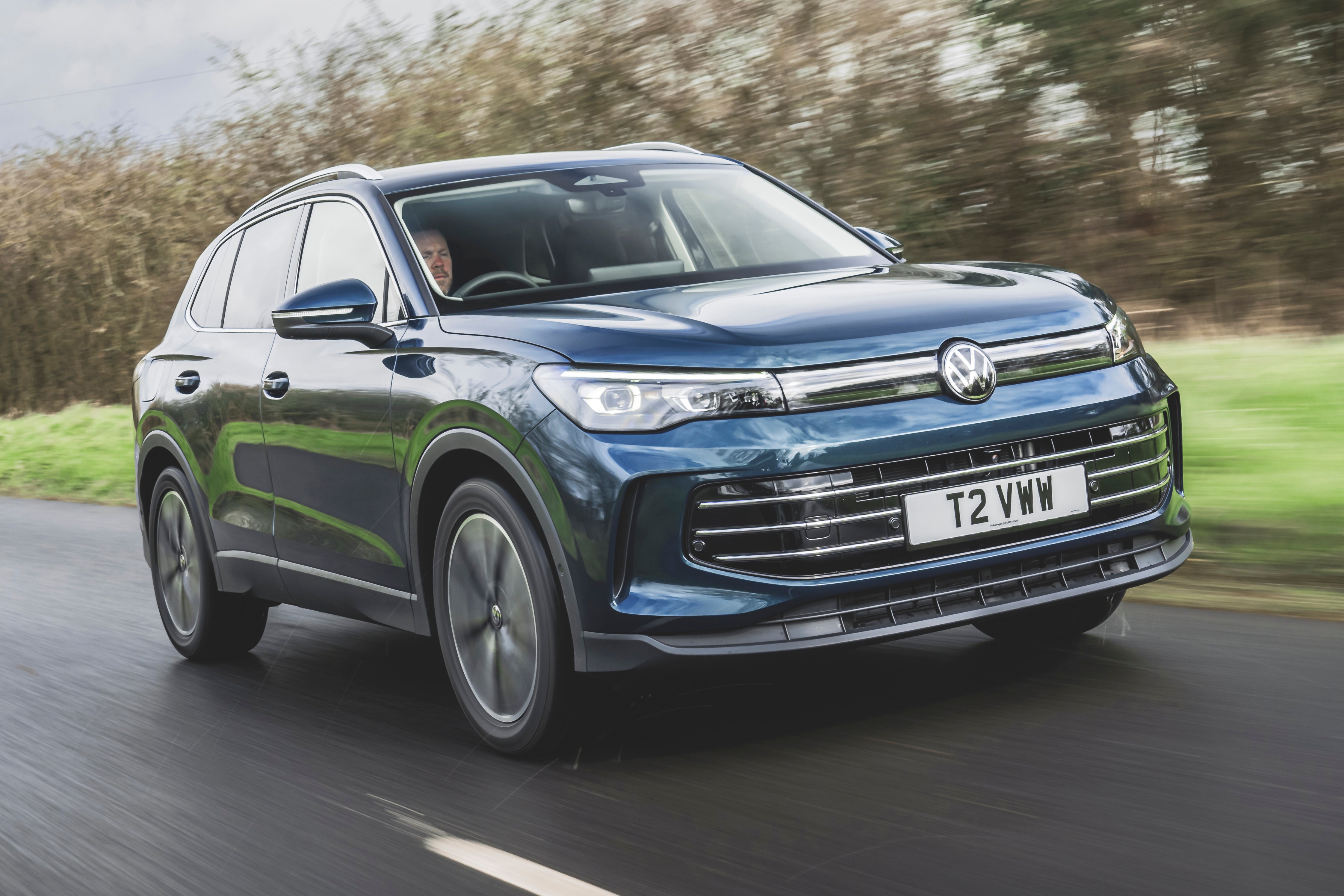
The Volkswagen Tiguan is one of the most obvious alternatives, taking a more restrained approach to styling and feels polished on the road, while offering its own wide choice of powertrains.
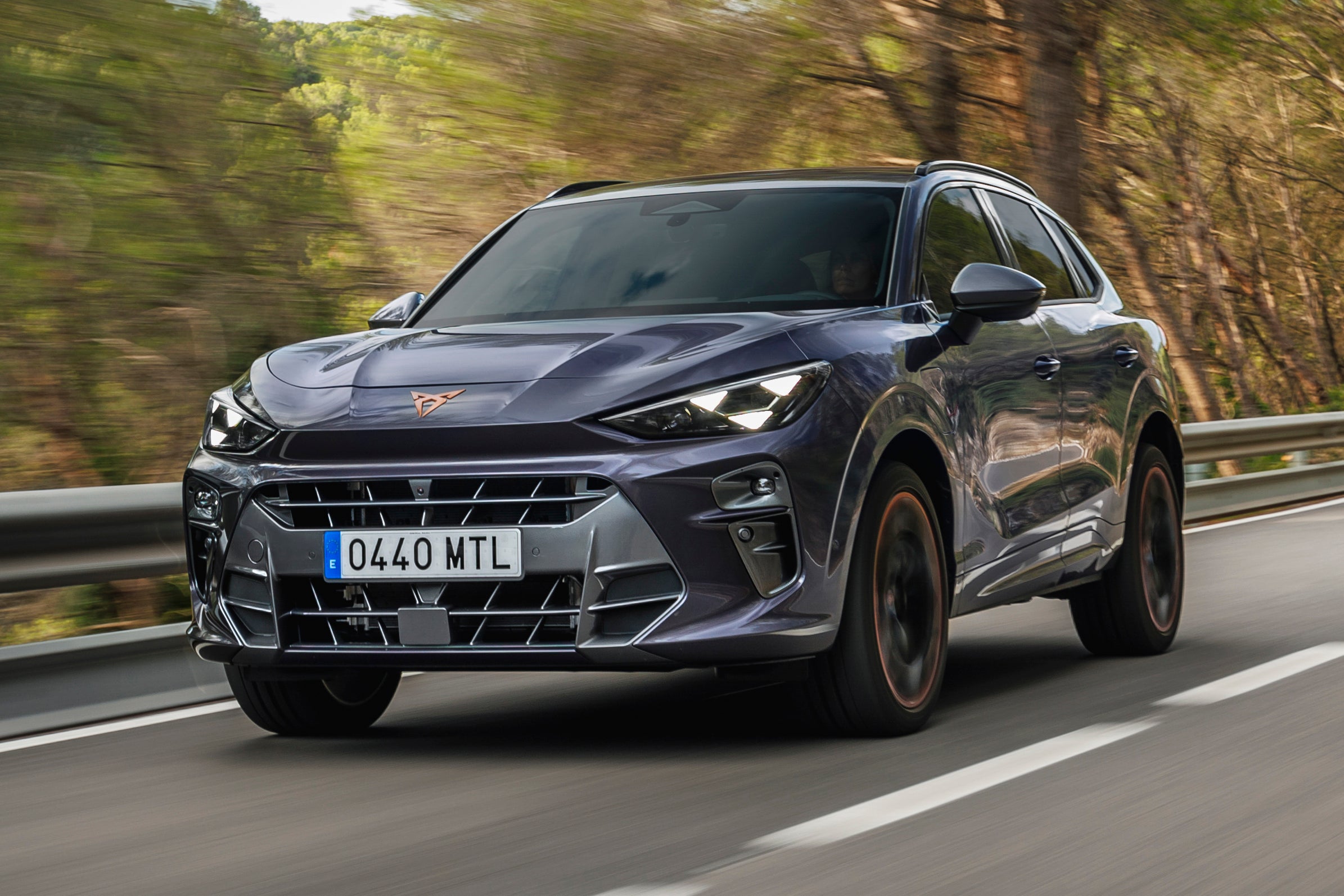
The Skoda Karoq is smaller and now feels less technologically advanced, but remains worth considering if straightforward usability and value matter more than the latest cabin design. The Cupra Terramar is another alternative and takes a sportier, more design-led approach, with petrol and plug-in hybrid power available.
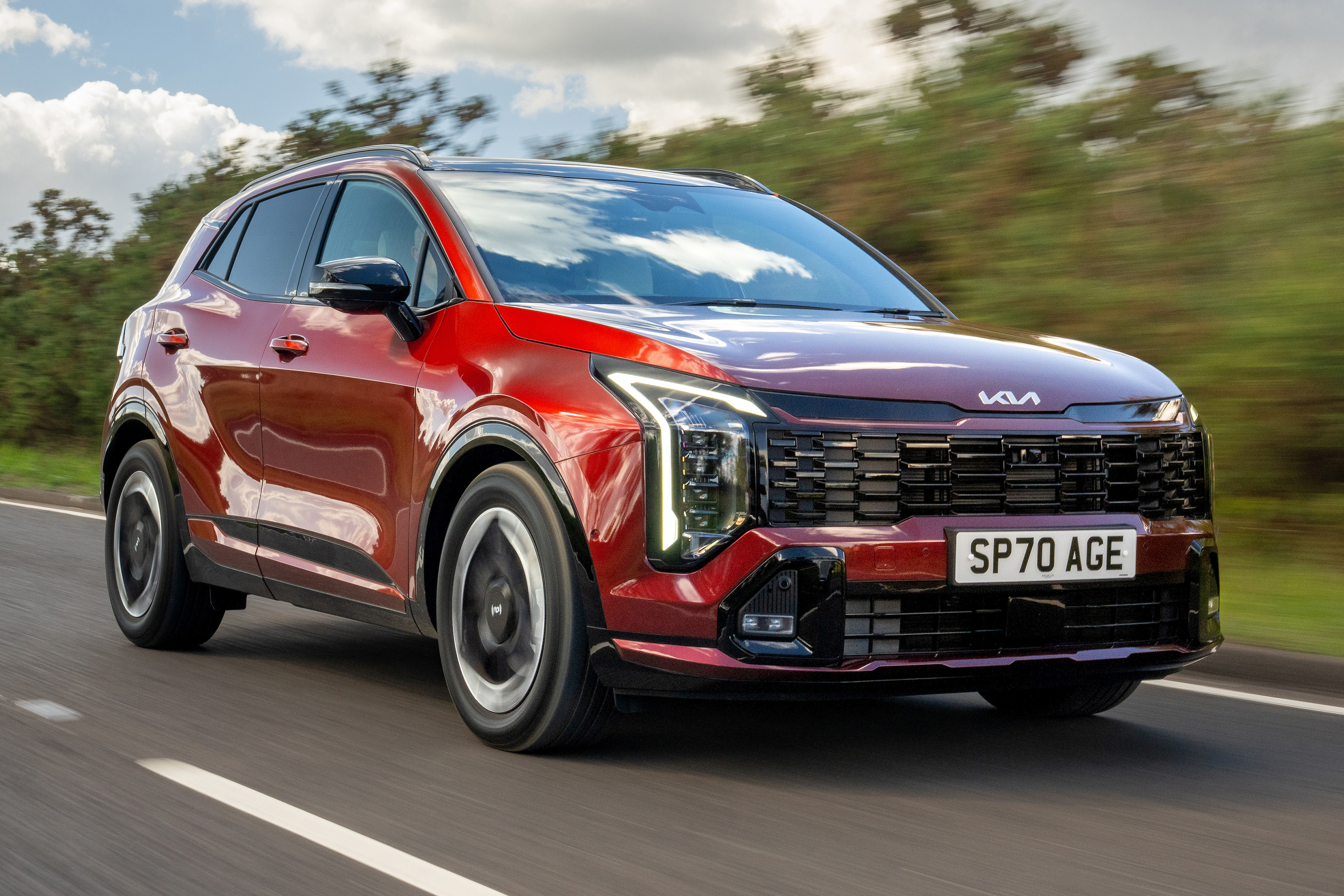
The Kia Sportage is perhaps the Tucson's closest overall rival. It shares some underlying technology and offers similar hybrid choices, but has its own interior and exterior character.
The Ford Kuga is another strong hybrid option, while the Toyota RAV4 majors on electrification and reliability reputation. Buyers looking at higher-spec Tucsons may also find themselves comparing them with entry versions of the BMW X1 or the Audi Q3.
What's the interior like in the Hyundai Tucson?
The Hyundai Tucson has a modern, spacious and user-friendly cabin. The 2024 redesign made a particularly big difference to the dashboard, with a cleaner layout and a more conventional centre console. Every Tucson now gets a large 12.3-inch infotainment display, but Element uses a 4-inch driver information screen rather than the 12.3-inch digital instrument display fitted to Black Line and above.
Material quality is generally good, although there are still some harder plastics lower down. Higher specifications add more sophisticated upholstery, ambient lighting and extra technology, giving the Tucson a suitably upmarket feel without abandoning practicality.
Hyundai Tucson boot space and practicality
The Tucson is a genuinely spacious family SUV, with generous accommodation in both rows and plenty of useful storage around the cabin. There's a broad range of adjustment in the front seats and steering column, while the relatively upright seating position gives a good view forwards. The redesigned dashboard also helps create a greater sense of space than the old layout.
Adults are well catered for in the rear. Legroom and headroom are both generous, while the relatively wide cabin means carrying three people across the rear bench is more realistic than in many smaller SUVs. The backrest is split 40:20:40, making it easier to carry longer loads without sacrificing both outer rear seats.
Boot capacity varies with powertrain. The petrol Tucson provides 620 litres with the rear seats up and 1,799 litres with them folded. The full hybrid loses very little space despite all its battery packaging, offering 616 litres with the seats up and 1,795 litres with them down. The PHEV sacrifices more capacity to its larger battery but still provides 558 litres, expanding to 1,721 litres with the rear seats folded.
Those are strong figures for the class, particularly given that electrification doesn't dramatically compromise the hybrid's practicality.
The load area is wide and easy to access, and higher trims add remote seat-folding levers in the luggage compartment. N Line Edition upwards also gets an electrically powered tailgate.
There may be rivals with slightly more outright luggage room, but the Tucson's combination of passenger space and boot capacity makes it one of the more useful family SUVs.
Hyundai Tucson dimensions
The Tucson's dimensions vary slightly according to powertrain and trim. Overall length ranges from 4,510 to 4,535mm, while every version is 1,865mm wide excluding the door mirrors and has a 2,680mm wheelbase. Height is generally 1,650mm, rising to 1,653mm on some Ultimate petrol and hybrid versions.
That makes the Tucson broadly typical for a mid-size family SUV. It's usefully spacious inside without being dramatically larger than rivals such as the Kia Sportage, Ford Kuga or Volkswagen Tiguan. An 11-metre turning circle also means it's reasonably manageable in tighter urban spaces.
Tech and infotainment in the Hyundai Tucson
Every current Tucson gets a 12.3-inch touchscreen infotainment system with satellite navigation, Bluelink connectivity, wireless Apple CarPlay and Android Auto and over-the-air software updates.
Element models combine the 12.3-inch touchscreen with a simpler 4-inch instrument display, while Black Line and every trim above it gets the full 12.3-inch digital driver's display.
The infotainment system itself is relatively straightforward to navigate, with crisp graphics and sensible menus. Wireless smartphone mirroring means many owners may rarely need to use Hyundai's native software beyond vehicle settings. Hyundai hasn't abandoned separate controls completely, either. The climate panel uses touch-sensitive switches but retains physical temperature dials, which makes routine adjustments easier than in cars that bury everything inside the central screen.
N Line Edition and above add a head-up display and an eight-speaker KRELL premium audio system, while N Line S and Ultimate introduce surround-view and blind-spot camera systems. It's a strong package overall and one of the areas where the current Tucson feels most competitive.
Materials available on the Hyundai Tucson
Materials differ quite noticeably as you move through the range. Element uses premium cloth upholstery, while Black Line combines cloth and leather and adds ambient interior lighting, helping the cabin feel richer without moving into the expensive upper trims.
N Line Edition and N Line S take a sportier approach with a combination of leather and suede-style upholstery, together with N Line-specific trim and detailing.
Ultimate takes the more conventional luxury route. Leather seat facings are standard, with black upholstery joined by no-cost Moss Grey and Cypress Green alternatives.
The Tucson still uses conventional hard plastics in less visible areas, but the combination of different fabrics, large displays and neatly finished high-contact surfaces gives the cabin a convincing mainstream-upmarket feel.
What's the Hyundai Tucson like to drive?
The Hyundai Tucson is an easy and reassuring family SUV rather than an overtly sporting one. Steering is accurate, grip is plentiful and the chassis remains composed on faster roads, but comfort and ease of use take priority over entertainment.
Larger 19-inch wheels can introduce a firmer edge over rough surfaces, particularly compared with the Element model's 17-inch wheels.
The full hybrid suits the Tucson especially well, with stronger performance and smoother low-speed progress than the basic petrol. The petrol model's seven-speed dual-clutch automatic can hesitate at lower speeds, whereas the hybrids use a more conventional six-speed automatic.
Hyundai Tucson range and performance
The current Tucson range is based around a 1.6-litre turbocharged petrol engine, offered with several levels of electrification.
The entry 1.6 T-GDi petrol produces 150PS and 250Nm. It's available with either a six-speed manual gearbox or seven-speed dual-clutch automatic, both driving the front wheels. The manual reaches 62mph in 9.5 seconds, while the DCT cuts that fractionally to 9.4 seconds.
Next is the full hybrid, which combines the petrol engine with a 47.7kW electric motor for 239PS and 379Nm. A six-speed automatic gearbox is standard and 0–62mph takes 8.2 seconds.
The most powerful option is now the 288PS plug-in hybrid. It uses a more powerful 79kW electric motor alongside the petrol engine and also produces 379Nm. Front-wheel-drive versions reach 62mph in 7.5 seconds, while the four-wheel-drive PHEV takes 7.6 seconds
The PHEV's 13.8kWh battery gives an official electric range of 40.7 miles in current front-wheel-drive MY27 specification, falling to 38.2 miles with four-wheel drive. There is no DC rapid charging, so the battery is intended primarily for home or workplace AC charging.
For most private buyers, the full hybrid is the easiest option to recommend. It is noticeably quicker and more economical than the standard petrol but requires no change in how you refuel the car.
Performance data
| Model | Engine/battery size | Power | 0-62mph | Range/MPG |
|---|---|---|---|---|
Hyundai Tucson 1.6T | 1.6-litre petrol manual | 150PS | 9.5 seconds | Up to 39.8mpg |
Hyundai Tucson 1.6T | 1.6-litre petrol auto | 150PS | 9.4 seconds | Up to 40.4mpg |
Hyundai Tucson 1.6T Hybrid | 1.6-litre full hybrid auto | 265PS | 8.2 seconds | Up to 50.4mpg |
Hyundai Tucson 1.6T Plug-In Hybrid | 1.6-litre plug-in hybrid auto | 265PS | 7.5 seconds | Up to 40.7 miles EV range |
Hyundai Tucson driving and refinement
The Hyundai Tucson handles tidily for a family SUV. There's plenty of grip, body movement is well controlled and the steering is accurate enough to make placing the car straightforward. It doesn't have the slightly more eager responses of a Ford Kuga, but neither does it feel cumbersome or disconnected. Its priorities are clearly family-car usability rather than driver entertainment.
Ride comfort is more mixed. Element's 17-inch wheels give it the greatest opportunity to absorb poor surfaces, while most higher trims move to 19-inch wheels. Those larger wheels give the Tucson a firmer edge over potholes and sharp expansion joints, although it settles reasonably well on smoother roads and motorways.
Powertrain choice makes a significant difference to how relaxed the car feels. The basic petrol is adequate but needs to work harder when the Tucson is heavily loaded or accelerating onto faster roads. The seven-speed dual-clutch automatic available with the petrol can also hesitate during low-speed manoeuvring. It improves once you're moving, but buyers expecting a completely seamless conventional automatic may notice its characteristics.
The full hybrid is more convincing. Electric assistance gives it stronger initial response, and its six-speed automatic is generally smoother at lower speeds. The PHEV builds on that with substantially more power and the ability to drive meaningful distances electrically when charged.
Refinement is generally good. Road and wind noise are reasonably well suppressed at motorway speeds, while the hybrid models can make urban driving particularly quiet when their petrol engines are switched off.
For everyday family use, the Tucson therefore makes most sense in hybrid form rather than as the basic petrol.
How safe is the Hyundai Tucson?
Independent safety organisation Euro NCAP awarded the current-generation Hyundai Tucson five stars in 2021, with scores of 86% for adult occupants, 87% for children, 66% for vulnerable road users and 70% for safety assistance.
Current cars include autonomous emergency braking, lane-keeping and lane-follow assistance, a centre airbag and front and rear parking sensors. Black Line adds more advanced junction collision avoidance, while N Line Edition and above gain Highway Drive Assist on suitable automatic and hybrid versions.
Running costs: What it's like to live with a Hyundai Tucson
The Tucson's running costs vary considerably according to powertrain. The conventional petrol is cheapest to buy but struggles to break 40mpg in some specifications. The full hybrid can exceed 50mpg officially without requiring charging and is likely to be the best compromise for many private owners.
The PHEV makes most sense if it can be charged regularly. It offers around 40 miles of electric driving and substantially lower company-car tax than the petrol or full hybrid.
Hyundai Tucson charging times and costs
Only the plug-in hybrid needs charging externally. Its 13.8kWh battery uses AC charging and doesn't support DC rapid charging. Hyundai quotes roughly four hours from 15–100% on an appropriate AC charger.
At an electricity rate of 26.11p/kWh (the average in late 2026), 13.8kWh of electricity costs roughly £3.60 before charging losses. A cheaper overnight EV tariff can reduce that significantly.
The front-wheel-drive PHEV offers up to 40.7 miles of electric range, while the four-wheel-drive version manages 38.2 miles.
Hyundai Tucson fuel economy
The entry 150PS petrol Tucson manages between 39.2 and 40.9mpg, depending on gearbox and trim. That's adequate for a large petrol family SUV, but hardly exceptional.
The 239PS full hybrid is considerably more efficient, returning between 48.7 and 50.4mpg officially. Its strongest figures come on smaller wheels, with higher specifications losing a little efficiency.
Officially, the PHEV will return from around 235 to 257mpg, but that assumes substantial electric running and regular charging. Running one with an empty battery will produce nothing like those numbers. Company-car drivers have another reason to look at the PHEV: current front-wheel-drive versions sit as low as the 10% BIK band, whereas the full hybrid is around 31–32%.
Hyundai Tucson warranty and servicing
Hyundai covers every new Tucson with its five-year, unlimited-mileage warranty, one of the strongest standard warranties offered by a mainstream manufacturer. High-voltage batteries in hybrid and plug-in hybrid models get separate cover for eight years or 100,000 miles.
The Tucson's 1.6 T-GDi petrol engine, which features in all versions, an oil and filter change is due every 12 months or 10,000 miles, whichever comes first.
Hyundai Tucson insurance groups
Current Hyundai Tucson insurance groups range from 16 to 28, with the manual petrol Element sits in group 16, while most conventional petrol models fall into groups 17 or 18. The full hybrid ranges from 20 to 23, while PHEVs occupy groups 26 to 28, with the four-wheel-drive versions sitting at the top.
That's broadly typical for a modern family SUV with this level of performance and equipment rather than being an obvious strength or weakness.
How much does it cost to tax a Hyundai Tucson?
After the first year, the current standard Vehicle Excise Duty rate is £200 a year. The Expensive Car Supplement is the bigger consideration on higher-spec cars. For petrol, hybrid and PHEV vehicles, a list price above £40,000 brings an additional £440 a year from the second to sixth tax payments. Current N Line S and Ultimate hybrids have retail prices above £40,000, as do N Line Edition PHEVs and the higher PHEV specifications.
What trims are available with the Hyundai Tucson?
The current Hyundai Tucson range consists of Element, Black Line, N Line Edition, N Line S and Ultimate.
Element opens the range and comes with 17-inch alloy wheels, a 12.3-inch touchscreen with navigation and wireless Apple CarPlay and Android Auto, a 4-inch driver information display, dual-zone climate control, smart key, front and rear parking sensors and a reversing camera. It isn't sparsely equipped, although the small instrument display makes it look noticeably less sophisticated than the higher trims.
Black Line is the strongest value trim for many buyers. It moves to 19-inch alloys and adds cloth and leather upholstery, heated front seats, a heated steering wheel, rear privacy glass, 64-colour ambient lighting and, importantly, the full 12.3-inch digital driver's display. It gives the Tucson most of the equipment that materially changes the everyday experience without pushing the price towards £40,000 in hybrid form.
N Line Edition takes a sportier approach, with distinctive N Line exterior and interior styling, leather and suede-style upholstery, 19-inch wheels and metal pedals. It also adds a head-up display, three-zone climate control, KRELL premium audio, Matrix LED headlights and a powered tailgate, making it much more than a cosmetic package.
N Line S adds the luxury equipment that N Line Edition leaves out, including an electric panoramic sunroof, electrically adjustable and ventilated front seats, heated rear seats and the more advanced surround-view and blind-spot camera systems. It retains the sportier N Line treatment and suede-style upholstery.
Ultimate costs broadly the same as N Line S but takes a less overtly sporting approach. It swaps the N Line presentation for leather seat facings and a more conventional exterior treatment, while retaining features including the panoramic roof, electrically adjustable and ventilated front seats, heated rear seats, Matrix LED headlights, head-up display and surround-view camera. It also adds driver-seat memory.
Ask the Drive experts: common questions
How much does the Hyundai Tucson cost?
Is the Hyundai Tucson a good family SUV?
What is the best Hyundai Tucson version to buy?
Is the Hyundai Tucson still good value?
Get our latest advice, news and offers
Keep me updated by email with the latest advice, news and offers from Drive.
.jpg)
.jpg)