Kia Sportage Review

Written By Matt Robinson
- 2022
- SUV
- Petrol, hybrid, plug-in hybrid
What we love
Spacious and practical interior
Strong hybrid power options
Excellent seven-year warranty
Things to consider
Ride can feel firm
Hybrid gets noisy when worked hard
Higher-spec versions are expensive
The DRIVE take on the Kia Sportage, is it the right car for you?
The Kia Sportage remains one of the easiest family SUVs to recommend. It’s roomy, well equipped and offered with a wide enough spread of engines to suit almost any kind of buyer, while the 2025 update keeps its styling and technology looking fresh. It’s not the softest-riding car in the class, and the hybrid powertrain can sound gruffer than you might expect under hard acceleration, but the Sportage still gets the big family-car jobs right. There’s lots of passenger and boot space, the cabin feels polished and Kia’s seven-year warranty remains a major attraction. As an all-rounder, it sits right in the thick of this class.
The Kia Sportage in more detail
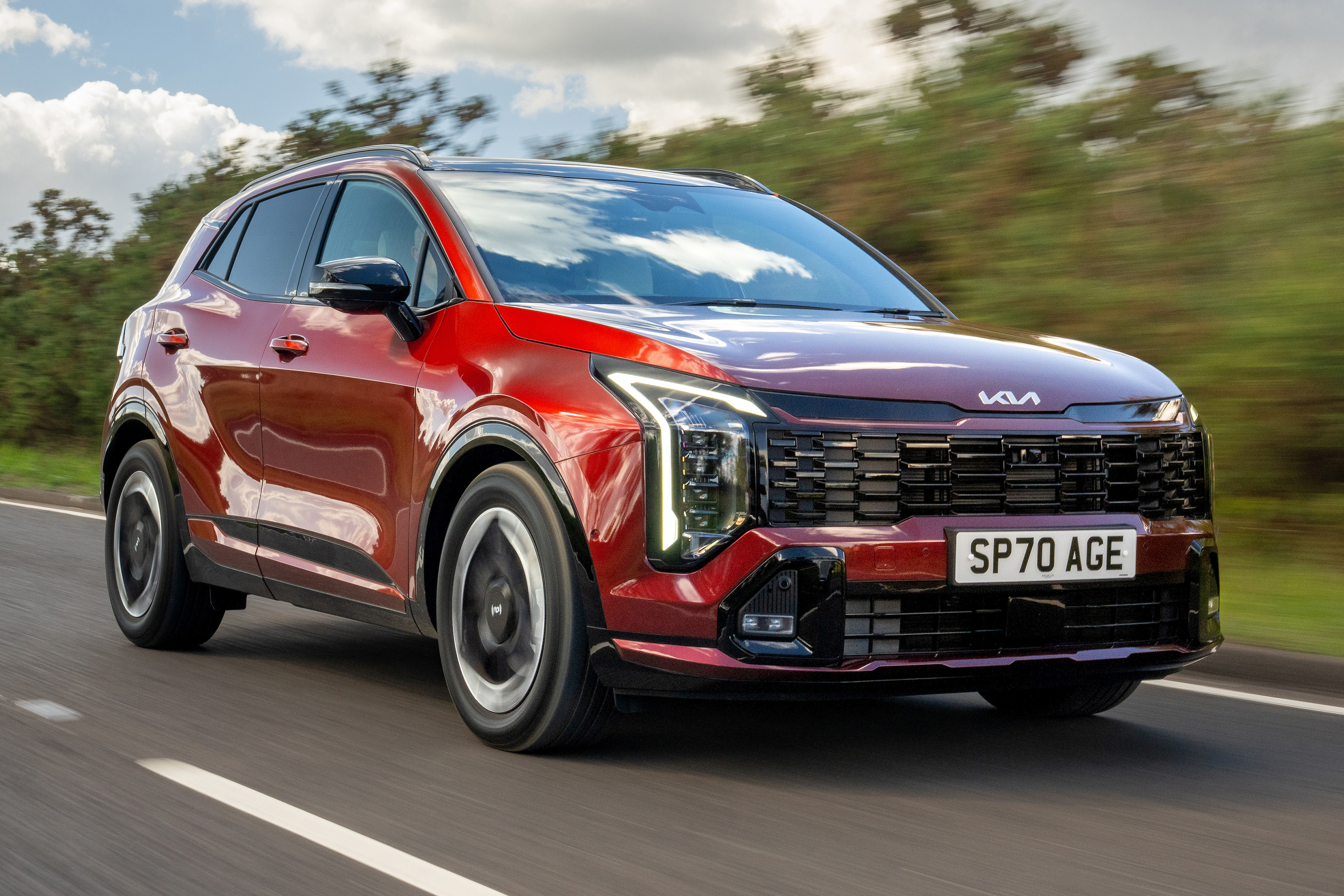
The Sportage used to trade heavily on value, as the sensible family SUV you bought because it gave you plenty of space and a long warranty without making too big a dent in your bank balance. That basic appeal remains, but the latest Sportage has moved well beyond that role. It now feels like a more aspirational product, with much bolder styling, a higher-quality interior and a broader range of powertrains.
Browse used Kia Sportages for sale →
The fifth-generation model arrived in the UK in 2022, before receiving a substantial update during 2025. That brought revised styling, updated technology and a simplified trim structure to keep it fresh in a class where there are very few weak cars. The Sportage is up against everything from mainstream staples such as the Nissan Qashqai and the Volkswagen Tiguan to close relative the Hyundai Tucson and more style-led alternatives such as the Peugeot 3008.
Fortunately, the latest Kia Sportage has plenty going for it. Its cabin feels modern, passenger space is strong and the boot is one of the biggest in the class. The engine range is another major selling point. Alongside the regular petrol model, there’s a full hybrid and a plug-in hybrid, giving buyers more flexibility than some rivals offer.
The regular petrol suits buyers who want to keep things simple, while the full hybrid offers stronger performance and efficiency without requiring a plug. The PHEV makes sense if you can charge regularly and want to cover local journeys on electric power.
The Sportage isn’t flawless. It rides more firmly than a Skoda Karoq, while the hybrid can sound quite vocal under hard acceleration. Some buyers will also find the styling a bit too much compared with more restrained alternatives. Even so, it remains one of the most convincing all-rounders in the class.
What's the best Kia Sportage trim and engine option?
For most buyers, the Sportage Hybrid is the version to focus on, while the recently introduced Storm trim looks particularly appealing.
The Hybrid produces 238PS and suits the Sportage’s character particularly well. It feels punchier than the regular petrol, is noticeably more economical in stop-start driving and doesn’t require you to change your routine around home charging.
At current prices, Storm Hybrid looks like the sweet spot. It costs £37,895 – just £500 more than the GT-Line Hybrid – but adds a 12.3-inch digital driver display, electrically adjustable front seats, ventilated front seats, heated rear seats, wireless charging and an eight-speaker Harman Kardon sound system. Premium paint is included, too.
GT-Line remains worth considering if you prefer its sportier styling, while Pure is the value option.
The plug-in hybrid can make sense if you can charge at home and regularly make shorter journeys, but it costs considerably more to buy. For the broadest range of buyers, Hybrid Storm is the strongest combination.
What’s the price of the Kia Sportage?
The current Kia Sportage starts at £31,395 for the Pure 1.6 T-GDi petrol manual. GT-Line starts at £33,895 and Storm at £34,395, while the petrol GT-Line S automatic costs £40,785.
Hybrid prices begin at £34,895 for Pure, rising to £37,395 for GT-Line and £37,895 for Storm. GT-Line S costs £42,595 with front-wheel drive or £44,195 with all-wheel drive.
The plug-in hybrid starts at £38,595 for Pure. GT-Line costs £41,095 with front-wheel drive or £42,695 with all-wheel drive, while the range-topping AWD GT-Line S costs £47,895. There are also plenty of used Kia Sportages for sale for considerably less.
That puts the Sportage firmly in mainstream family-SUV territory rather than at the bargain end of the market, although equipment levels remain generous.
Alternatives to the Kia Sportage
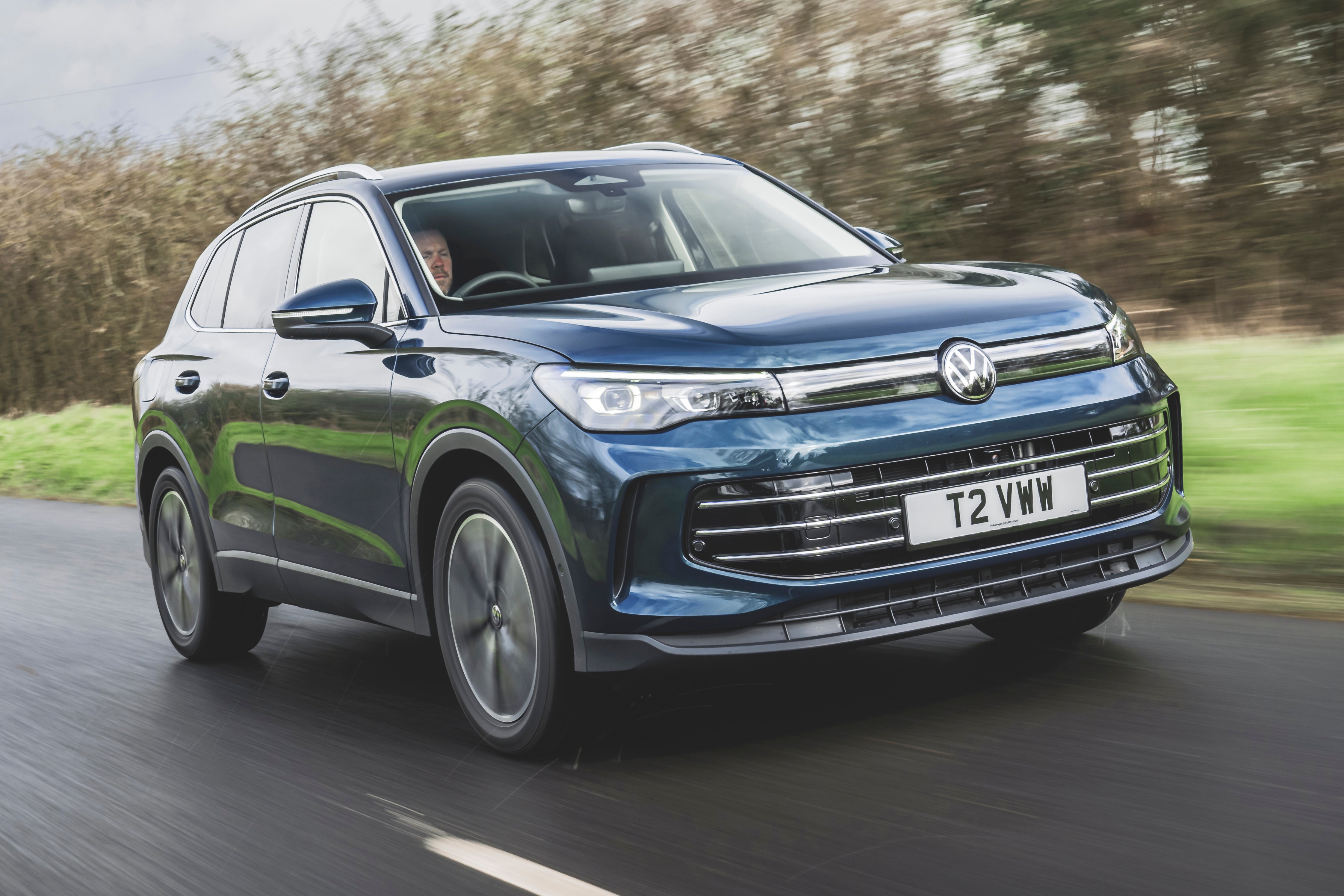
The Volkswagen Tiguan is one of the clearest alternatives if you want a similarly polished family SUV with a more restrained design and a slightly more mature feel. It’s comfortable and refined, although prices rise quickly as you move through the range.
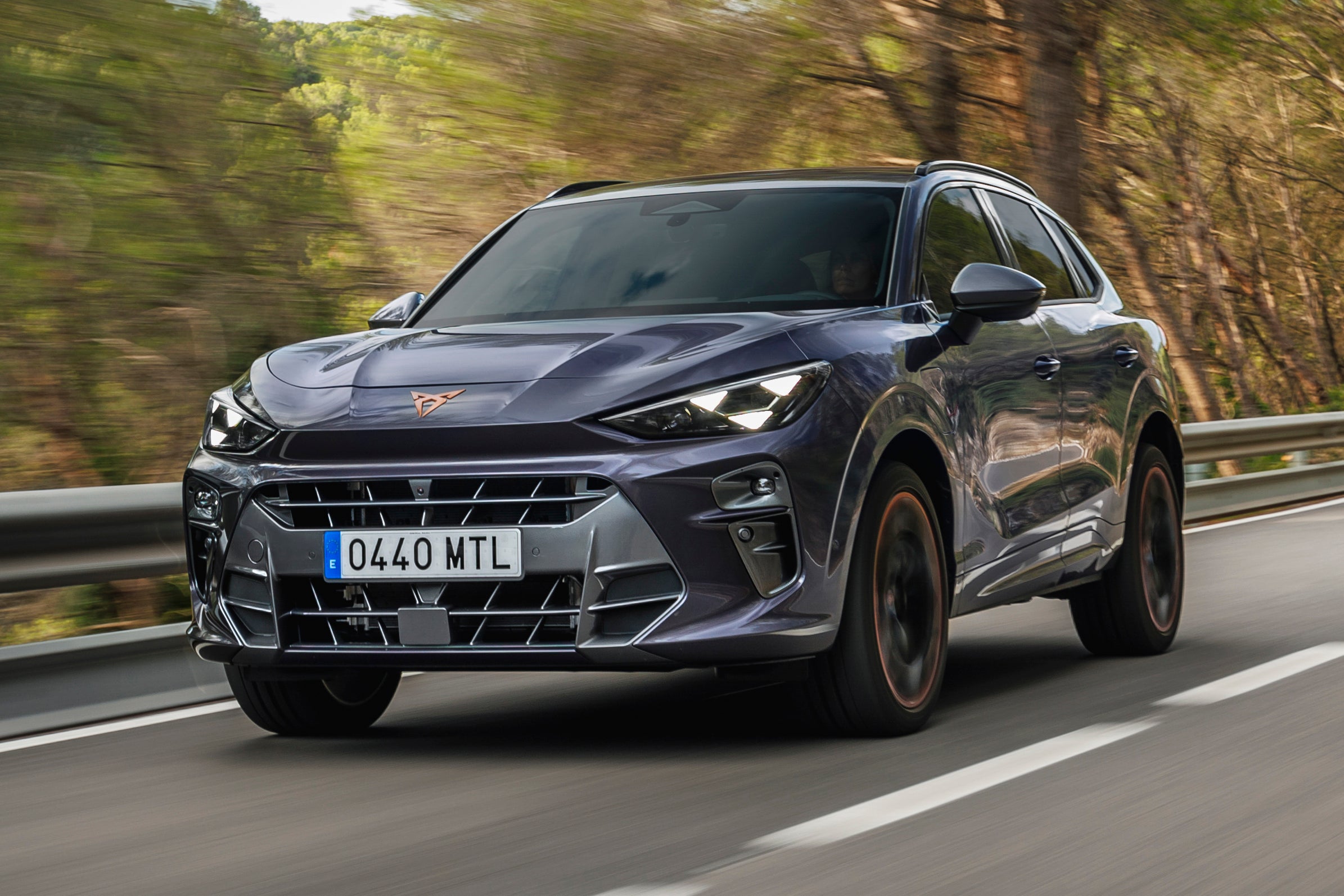
The Skoda Karoq is another strong choice if straightforward usability matters most. It isn’t as flashy or as technologically impressive inside, but it remains roomy, comfortable and easy to live with. The Cupra Terramar provides a more style-led alternative, with a sportier cabin and a broader range of electrified powertrains.
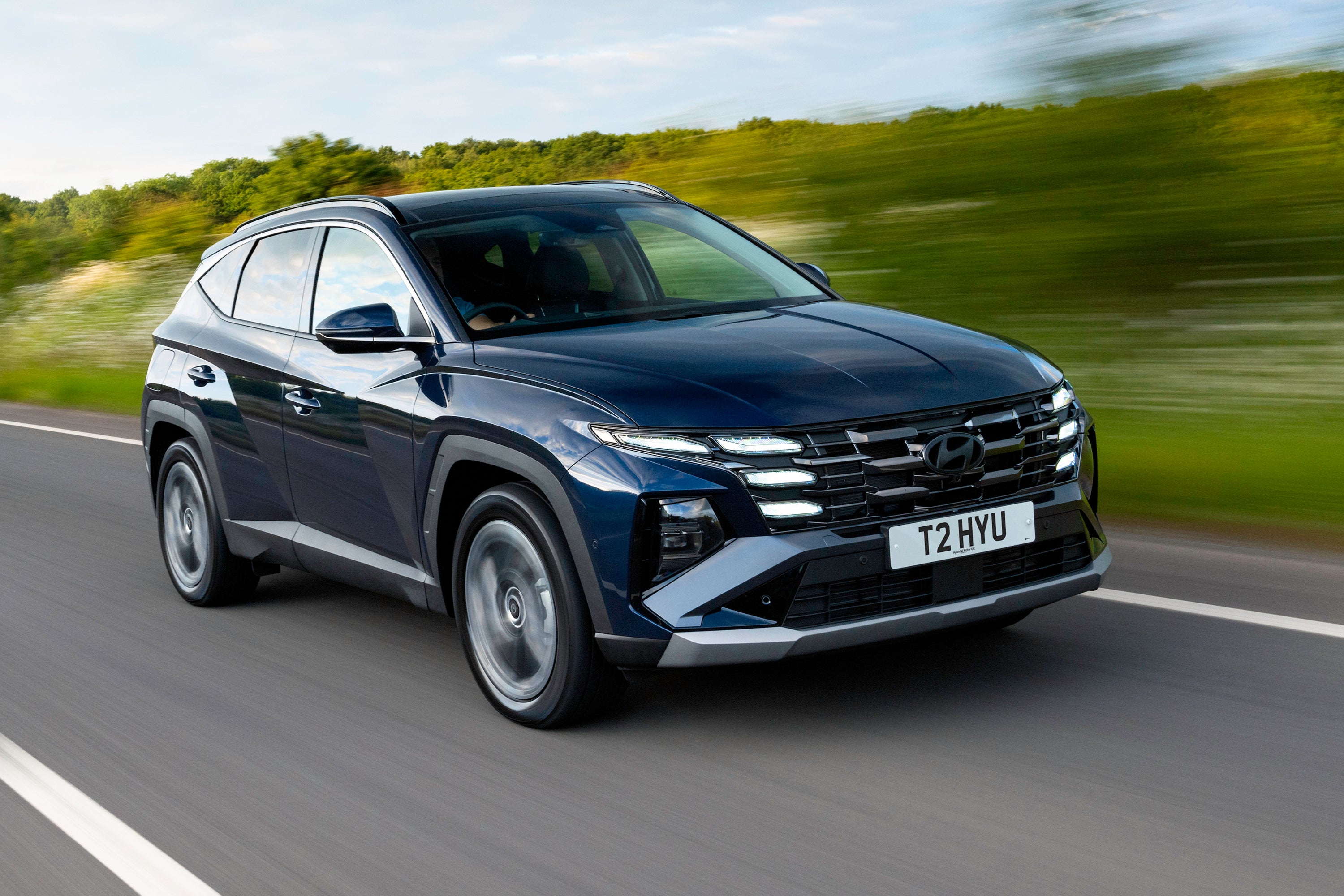
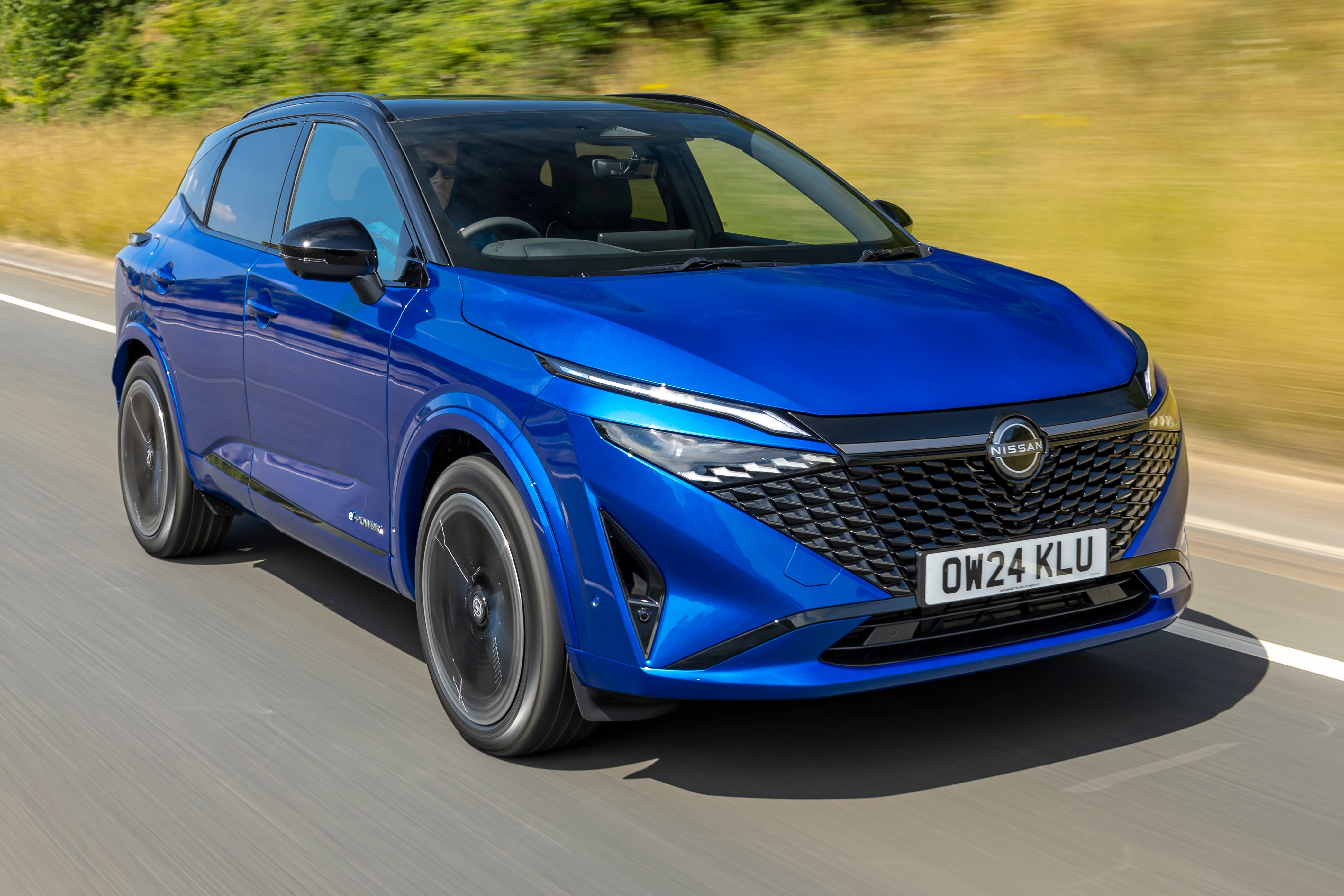
The Hyundai Tucson remains the Sportage’s closest rival in spirit, with similarly generous interior space and a wide choice of petrol, hybrid and plug-in hybrid versions, while the Nissan Qashqai is slightly more compact and particularly convincing with its latest e-Power system, while the Peugeot 3008 offers a much more design-led interior.
The Sportage’s strength is that it rarely feels narrowly focused. It scores well across most of the areas that matter to family-SUV buyers.
What's the interior like in the Kia Sportage?
The Kia Sportage’s cabin is one of the biggest reasons it makes sense. It looks modern, feels well finished and has clearly been designed with family use in mind. Every current version gets a 12.3-inch central touchscreen, although Pure and GT-Line have a smaller 4.2-inch driver display. Storm and GT-Line S upgrade that to a full 12.3-inch digital instrument screen.
There are still some harder plastics lower down, but the areas you see and touch most are smartly finished. Physical space is generous too, while the driving position feels suitably SUV-like without putting you excessively high above the road.
Kia Sportage boot space and practicality
The Sportage is a genuinely practical family SUV. There’s plenty of room in the front, and rear-seat space is good enough for adults to sit comfortably behind adults. The rear seats also recline, adding a little extra flexibility on longer trips.
It feels roomier in the back than a Nissan Qashqai and is broadly on a par with a Hyundai Tucson, while the cabin is more family-friendly than some style-led alternatives that sacrifice rear headroom or visibility. The middle rear seat isn’t perfect because of the floor hump, but it’s usable enough for a third passenger when needed.
The rear seats split 40:20:40, while useful storage around the cabin adds to the Sportage’s family-friendly feel.
Boot space varies slightly with powertrain. The regular petrol has the largest luggage area at 591 litres, expanding to 1,780 litres with the rear seats folded. The Hybrid is barely compromised, with 587 litres behind the rear seats and 1,776 litres with them folded.
The PHEV loses more space because of its larger battery, but still offers 540 litres, increasing to 1,715 litres with the seats down. That means even the least spacious Sportage remains comfortably usable as a family car.
Kia Sportage dimensions
The facelifted Kia Sportage measures 4,540mm long, 1,865mm wide and 1,645mm high, with a 2,680mm wheelbase. Those dimensions put it right in the middle of the family-SUV class. It’s a substantial car, but its relatively square body shape and good visibility make it easier to judge than some more dramatically styled rivals. Parking sensors and a reversing camera are standard, while GT-Line S adds a 360-degree Around View Monitor.
Tech and infotainment in the Kia Sportage
Technology is one of the Sportage’s stronger areas. Every current model gets a 12.3-inch touchscreen navigation system, wireless Apple CarPlay and Android Auto, Kia Connect services and over-the-air functionality.
There’s an important distinction between trims, though. Pure and GT-Line use a 4.2-inch driver display, while Storm and GT-Line S get the full 12.3-inch digital instrument display. Pure and GT-Line also have a six-speaker stereo. Storm upgrades to an eight-speaker Harman Kardon system and adds wireless phone charging, while GT-Line S gets the same audio system plus a head-up display and Digital Key 2.0.
Kia’s touch-sensitive media and climate panel still divides opinion. It switches function depending on what you’re adjusting, which keeps the dashboard tidy but means you sometimes need to look down to check what the controls are doing.
Overall, though, the system looks modern, responds quickly and avoids making the Sportage feel overly screen-dependent.
Materials available on the Kia Sportage
The Sportage’s material choice varies noticeably by trim. Pure uses black cloth upholstery, while GT-Line gets black-and-white Bio PU synthetic leather and suede, along with its sportier interior treatment.
Storm gets black leather and suede upholstery, while GT-Line S returns to the black-and-white Bio PU leather and suede combination.
There are harder plastics lower down in the cabin, but most of the prominent surfaces are neatly finished and the overall design feels convincingly modern.
What's the Kia Sportage like to drive?
The Kia Sportage is more about comfort, security and ease than anything overtly sporty, despite its name. It’s easy to place on the road, the steering is light but accurate enough, and there’s plenty of grip. The suspension is firmer than some rivals, particularly on bigger wheels, so rough urban roads can occasionally make themselves felt.
The Hybrid is the most convincing all-rounder thanks to its stronger low-speed response, while the PHEV feels particularly smooth when it’s able to use electric power.
Kia Sportage range and performance
The current Sportage range offers petrol, full-hybrid and plug-in hybrid power.
The entry-level 1.6-litre T-GDi petrol produces 149PS and drives the front wheels. A six-speed manual gearbox is offered on Pure, GT-Line and Storm, while a seven-speed dual-clutch automatic is also available. The manual reaches 62mph in 9.7 seconds, with the DCT taking 9.4 seconds.
The Hybrid combines a 1.6-litre turbocharged petrol engine with an electric motor for 238PS. It uses a six-speed automatic gearbox and is front-wheel drive in most trims, although GT-Line S can also be ordered with all-wheel drive. Front-wheel-drive versions reach 62mph in 7.9 seconds, with the AWD model taking 8.1 seconds.
The updated plug-in hybrid produces 287PS. Pure and GT-Line can be ordered with front-wheel drive, while GT-Line is also available with AWD and GT-Line S is AWD-only. The PHEV reaches 62mph in 7.5 seconds with front-wheel drive or 7.8 seconds with AWD. Kia’s UK price guide identifies the current 283bhp PHEV derivatives, equivalent to 287PS.
Its 13.8kWh battery provides an official electric range of up to 44 miles in front-wheel-drive form or 40 miles with AWD.
Performance data
| Model | Engine/battery size | Power | 0-62mph | Range/MPG |
|---|---|---|---|---|
Kia Sportage 1.6 T-GDi manual | 1.6-litre petrol manual | 149PS | 9.7 seconds | Around 40mpg |
Kia Sportage 1.6 T-GDi DCT | 1.6-litre petrol automatic | 149PS | 9.4 seconds | Around 40mpg |
Kia Sportage Hybrid FWD | 1.6-litre full hybrid automatic | 238PS | 7.9 seconds | Around 50mpg |
Kia Sportage Hybrid AWD | 1.6-litre full hybrid automatic | 238PS | 8.1 seconds | Around 44mpg |
Kia Sportage Plug-in Hybrid FWD | 1.6-litre plug-in hybrid automatic | 287PS | 7.5 seconds | Up to 44 miles electric range |
Kia Sportage Plug-in Hybrid AWD | 1.6-litre plug-in hybrid automatic | 287PS | 7.8 seconds | Up to 40 miles electric range |
Kia Sportage driving and refinement
On the move, the Sportage feels easy and reassuring rather than especially characterful. You get a good view out, the controls are light enough for town driving and there’s plenty of grip available. It’s not especially entertaining on a twisty road, but it feels secure and predictable, which is what most buyers will want.
The steering is accurate enough, if not full of feel, and the front end responds cleanly when you turn in. It never feels cumbersome, which is important in a family SUV that’ll spend much of its life in tight urban traffic and supermarket car parks.
The downside is ride quality. The Sportage is firmer than some key rivals, especially on larger wheels, and it can feel a little sharp over broken surfaces. A Skoda Karoq or Citroen C5 Aircross does a better job of smoothing out poor urban roads.
That firmer set-up does at least keep body movement under control. The Sportage feels tidy and predictable rather than soft or wallowy. Refinement is more mixed. The regular petrol is fairly quiet in normal driving, while the Hybrid is smooth around town but gets noticeably more vocal when the petrol engine is working hard.
The PHEV is generally the smoothest version when it’s running electrically or gently blending its two power sources. At motorway speeds, all versions settle down well, with reasonably low wind and tyre noise and supportive seats for longer journeys.
How safe is the Kia Sportage?
Independent safety organisation Euro NCAP awarded the Kia Sportage a maximum five-star rating in 2022. It scored 87% for adult occupant protection, 86% for child occupant protection, 66% for vulnerable road-user protection and 72% for safety assist.
Current cars come with a broad range of assistance technology, including autonomous emergency braking with pedestrian and cyclist detection, lane-keeping assistance, lane-following assistance and intelligent speed-limit assistance. GT-Line S adds Kia’s more advanced Forward Collision-Avoidance Assist 2.0, blind-spot collision avoidance, blind-spot camera views and additional parking assistance.
Running costs: What it's like to live with a Kia Sportage
The Sportage should be straightforward to own, especially if you choose the right powertrain for your mileage and driving pattern. The regular petrol is the cheapest to buy but returns only around 40mpg. The Hybrid is likely to make most sense for general family use, with official figures of up to 50.4mpg without the need to charge. The PHEV can be particularly useful if it’s plugged in regularly and you can make good use of its 40–44-mile electric range, while Kia’s seven-year warranty remains a significant ownership advantage.
Kia Sportage charging times and costs
Only the plug-in hybrid Sportage needs charging. Its 13.8kWh battery can accept AC charging at up to 7.2kW, with Kia quoting around 1 hour 45 minutes from 15–95% using a suitable charger. A 2.3kW domestic supply takes around 5 hours 27 minutes for the same charge. There’s no DC rapid charging. For owners who can charge at home overnight, the PHEV’s relatively small battery means a full recharge should cost only a few pounds, depending on electricity tariff.
Kia Sportage fuel economy
The regular petrol Sportage returns around 39.2–40.4mpg officially, depending on gearbox and specification. That’s respectable rather than exceptional for a family SUV of this size.
The Hybrid is substantially more economical. Front-wheel-drive versions return 48.7–50.4mpg, while the heavier all-wheel-drive GT-Line S drops to around 44.1mpg.
For PHEV buyers, the more useful figures are its 40–44-mile official electric range. You'll need to charge it regularly to get the best out of it. If much of your daily mileage falls within that range and you have convenient home charging, it can cover a significant proportion of local journeys without using much petrol.
Company-car drivers also have a reason to consider it: the PHEV at comes in at 9% Benefit-in-Kind, compared with 31–35% for the Hybrid and 37% for the petrol versions.
Kia Sportage warranty and servicing
Kia covers the Sportage for seven years or 100,000 miles. Mileage is unlimited during the first three years, with the 100,000-mile cap applying thereafter.
Current Sportage servicing is required every 12 months or 10,000 miles, whichever comes first and the interval is the same across the petrol and electrified versions.
The long warranty remains one of the Sportage’s biggest ownership advantages and transfers with the car, making it particularly useful to used buyers as well as those buying new.
Kia Sportage insurance groups
The Sportage range spans insurance groups 19 to 29 (of 50). The petrol Pure and GT-Line manuals are group 19, the petrol DCT starts at 20E and GT-Line S is 22. Hybrid versions range from 23 to 26, while the current PHEV runs from 27 for Pure to 29 for GT-Line S. Groups for Storm versions haven't been confirmed at the time of writing.
Earlier fifth-generation Sportages can be cheaper to insure, with diesels as low as group 15. Earlier Hybrid versions were generally 24–25 and the original PHEV 24–26. That makes checking the exact derivative particularly important if you’re buying used.
How much does it cost to tax a Kia Sportage?
From the second year onwards, a Kia Sportage costs £200 a year to tax in standard form. The bigger cost issue is the Expensive Car Supplement. If your Sportage had a list price of more than £40,000 when new, including options and before discounts, you pay an extra £440 a year on top of the standard rate for five years, from years two to six. That means affected cars cost £640 a year over that period, before dropping back to the standard rate afterwards.
In practice, a lower-spec Sportage will usually cost £200 a year, while pricier hybrid and plug-in hybrid versions can cost £640 a year for five years. It's worth checking the original list price carefully, because a higher trim or a few options can be enough to tip a car over the threshold.
What trims are available with the Kia Sportage?
The Kia Sportage range is split across Pure, GT-Line, Storm and GT-Line S, with each step adding either more visual appeal, extra comfort or a broader spread of technology.
Pure is the entry-level version, but it is no longer a stripped-back starting point. Standard equipment includes 17-inch alloy wheels, a 12.3-inch touchscreen navigation system and wireless Apple CarPlay and Android Auto. You also get a 4.2-inch driver display, black cloth upholstery, automatic air conditioning, front and rear parking sensors and a reversing camera. A smart key and start system is included, too, along with electric lumbar adjustment for the driver.
GT-Line adds a sportier look inside and out. It gets larger alloy wheels and the usual GT-Line exterior styling upgrades, while the cabin switches to black-and-white Bio PU leather and suede upholstery. Heated front seats and a heated steering wheel are standard, along with privacy glass, alloy pedals and a black headlining. It is the trim to choose if you want the Sportage to look a little sharper without moving too far up the range.
Storm is arguably the sweet spot because it combines a more upmarket specification with useful everyday equipment. Premium paint is standard, while the interior gets black leather and suede upholstery and a larger 12.3-inch digital driver display. Heated and ventilated front seats, heated outer rear seats and electric adjustment for the front seats all feature, along with a heated steering wheel. An eight-speaker Harman Kardon audio system and wireless phone charging are also included, while automatic versions add ambient lighting.
GT-Line S sits at the top of the range and brings together the Sportage’s most desirable comfort, technology and driver assistance features. It gets the 12.3-inch driver display, a panoramic opening sunroof and electrically adjustable front seats with a driver’s memory function. Heated and ventilated front seats, heated outer rear seats, Harman Kardon audio and wireless phone charging are all standard.
The extra technology is where GT-Line S really separates itself. It adds a head-up display, smart powered tailgate, Digital Key 2.0, a 360-degree camera and Blind-spot View Monitor. Highway Driving Assist 2.0 and more advanced parking assistance are also included, making this the most sophisticated Sportage in the line-up.
For most buyers, Storm is the strongest all-round choice. Pure already covers the essentials and GT-Line adds useful style and comfort upgrades, but Storm brings many of the features you are likely to appreciate every day without pushing all the way to GT-Line S pricing. The range-topper makes more sense if you specifically want its panoramic roof, head-up display and extra driver assistance technology.
Ask the Drive experts: common questions
How much does the Kia Sportage cost?
Is the Kia Sportage a good family SUV?
What is the best Kia Sportage version to buy?
Is the Kia Sportage bigger than a Nissan Qashqai?
Get our latest advice, news and offers
Keep me updated by email with the latest advice, news and offers from Drive.
.jpg)