Hyundai i30 Review

Written By Andrew Brady
- 2017
- Hatchback
- Petrol mild hybrid
What we love
Comfortable ride quality
Plenty of standard safety kit
Strong warranty and decent value
Things to consider
Not as sharp to drive as the best rivals
Cabin still lacks a bit of character
No longer the bargain it once was
The DRIVE take on the Hyundai I30, is it the right car for you?
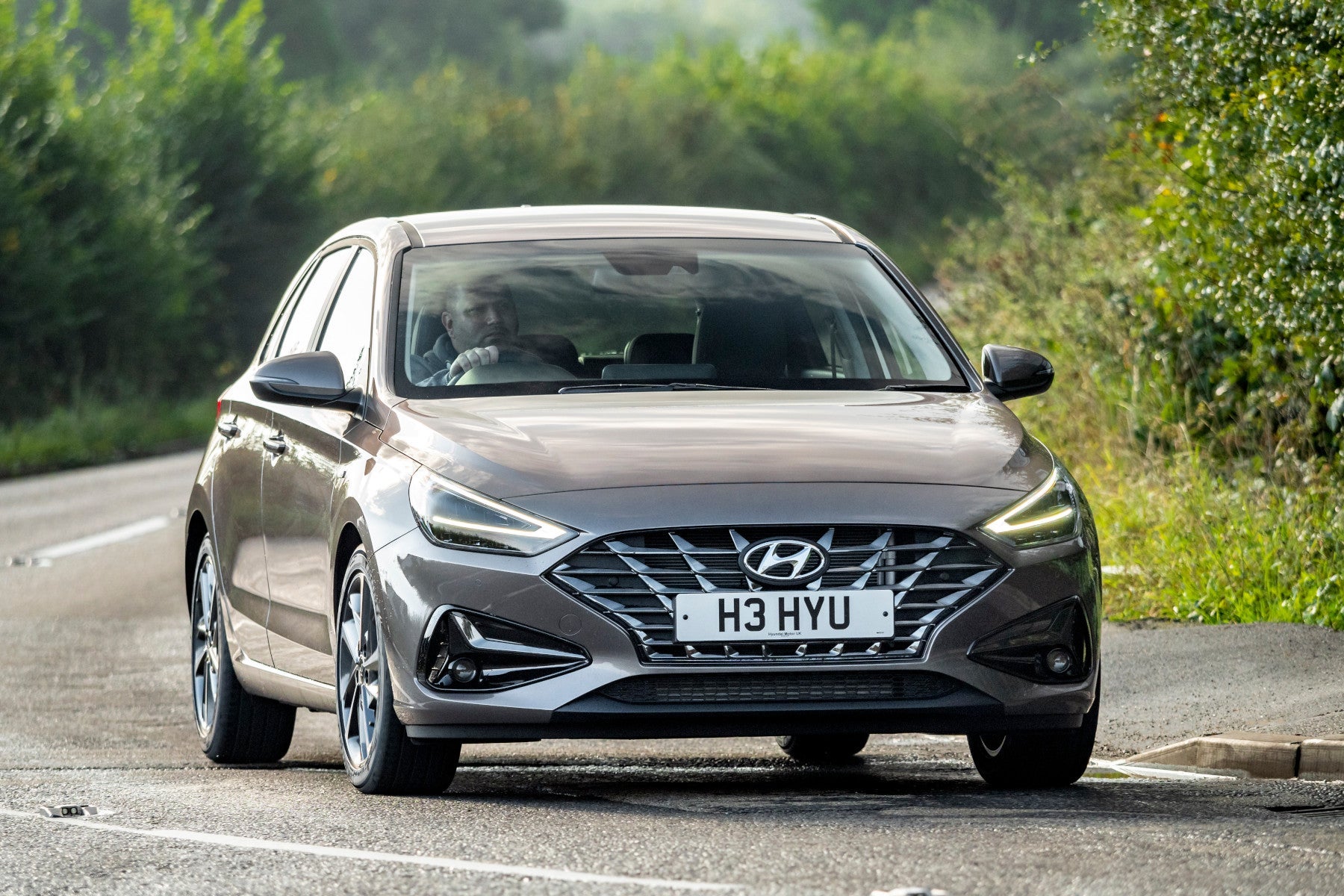
The Hyundai i30 is still a solid, comfort-focused family hatchback that makes sense for buyers who care more about value, equipment and ease of ownership than showroom glamour. It is not the most exciting choice in this class, but it is comfortable, decently roomy and now comes with a strong amount of kit across the range.
That is really the i30’s appeal. It quietly gets on with the job, offers a reassuring five-year unlimited-mileage warranty and avoids any major weaknesses. The problem is that the family-hatch class is full of talented alternatives, and some of them feel classier, more practical or more rewarding to drive. So the i30 is easy to recommend on sensible grounds, even if it is unlikely to be the car you fall in love with.
The Hyundai I30 in more detail
Hyundai has been churning out some exciting new models of late, with the superb i20N hot hatchback and the striking Tucson SUV being the most notable additions. It's no surprise, then, that the humble i30 hatchback can go a little unnoticed.
It's not that the Hyundai i30 is a bad car - far from it, in fact. It's just that it's never been particularly interesting. It's also easy to forget in a sea of desirable and talented rivals such as the Ford Focus, Volkswagen Golf and Mazda 3.
Still, the i30 is worthy of your consideration, and the updates added in late 2020 give it more up-to-date technology, refreshed styling, and some more efficient mild-hybrid engines.
Previously, the i30 undercut its platform-sharing sibling, the Kia Ceed, on list price terms. Now, however, Hyundai has removed the cheapest trim levels due to lack of popularity, and it's a little bit more expensive than the Ceed. While that means it isn't the value offering it once was, it does mean that even the entry-level car has plenty of equipment - and those cheap base models weren't exactly desirable.
The i30's interior definitely looks more modern and upmarket thanks to the updates, particularly on higher spec models with the new 10.25in infotainment touchscreen mated to a digital instrument display. It's well-made with decent materials, but is still a bit dark and lacking character.
Hyundai has also altered the i30's engine range, with the 1.6-litre diesel no longer offered. Instead, a pair of petrols - the 1.0-litre three-cylinder and a 1.5-litre four-cylinder - come with 48-volt mild hybrid tech, which allows the engine to be switched off when coasting or coming to a stop to save fuel.
The Hyundai i30 is pretty soft in the way it drives, soaking up bumpy road surfaces and wafting along in comfort. Even bigger wheels won’t really upset the ride. On the downside, it doesn’t feel very agile in the bends, but it’s fairly planted and feels safe to drive.
Talking of safety, the i30 scores highly on that front. There are loads of safety assist systems fitted as standard, even on the most affordable models. Lane guidance systems will nudge your steering if you stray from your lane and keep you centred within the lane, while a driver attention alert will tell you to take a break if you appear to be getting tired. There's also the usual autonomous emergency braking, and even a feature that bongs to let you know that the car in front has moved off.
There are Isofix points for fitting child seats in the back of the Hyundai i30, which is pretty easy thanks to wide-opening rear doors. Space in the back is decent enough, but there are roomier alternatives such as the SEAT Leon. The boot is slightly bigger than the class average, however, while an adjustable boot floor and dropping rear seats help versatility.
No one’s going to get excited about the Hyundai i30, but it’s a very competent car that puts the focus on comfort and value for money. A transferable five-year, unlimited mileage warranty makes it a sensible used proposition, too.
While the Hyundai i30 perhaps doesn’t excel in any particular area, it also isn’t sub-par. It just quietly does the job, saving you money thanks to its low running costs and affordable used prices. We like how comfortable it is and the amount of kit you get as standard. It’s certainly an easy car to recommend, even if it lacks the showroom appeal of a Volkswagen Golf.
What's the best Hyundai I30 trim and engine option?
The sweet spot in the current range is the Advance with the six-speed manual. It is the cheapest version, but because Hyundai has pushed the i30 range more upmarket, it no longer feels like a sparse entry-level model. You still get the big touchscreen, digital driver’s display, front and rear parking sensors, rear-view camera and a healthy spread of safety kit.
The manual keeps the price sensible and suits the i30’s calm, no-nonsense character well. The dual-clutch automatic is there if you spend a lot of time in traffic, but the manual is the better-value choice and should be all the car most buyers need.
Premium is the trim to target if you want a more comfort-led feel. Heated front seats and steering wheel, dual-zone climate control and the extra convenience kit make it feel more complete, and this is probably the trim that best reflects the i30’s strengths as an easy-going everyday hatchback. N Line and N Line S add some visual appeal, but they do not fundamentally change the car’s character.
What’s the price of the Hyundai I30?
The current Hyundai i30 Hatchback range starts at £24,575 for the Advance 1.5T 140PS 48V mild hybrid manual. The Advance DCT is £25,775, the Premium manual is £27,525 and the Premium DCT is £28,725.
The sportier-looking N Line manual starts at £27,110, with the N Line DCT at £28,310. At the top of the range, the N Line S is £28,720 with the manual gearbox and £29,510 with the DCT.
That means the i30 is no longer the bargain-basement option it once was, but it does still make a decent value case once you consider the standard equipment. The catch is that some rivals now feel more polished or more desirable at similar money, so the Hyundai’s old value advantage is not quite as clear-cut as it used to be.
Alternatives to the Hyundai I30
The Kia Ceed is the most obvious alternative because it shares much of the i30’s underlying engineering but wraps it in a slightly different package and still makes a strong value case. It is also backed by Kia’s seven-year warranty, even if that is mileage-limited.
The Volkswagen Golf remains the class benchmark for all-round polish, while the SEAT Leon offers a slightly sharper look and similar Volkswagen Group quality for less money. If driving enjoyment matters most, the Ford Focus is still the family hatch to beat, while the Mazda 3 feels more premium inside and out than the Hyundai.
If practicality is a bigger priority, the Skoda Octavia is the one to beat, and even the Skoda Scala deserves a look if you want a roomy hatchback without paying over the odds. So the i30 has no shortage of good rivals, which is why it needs to be judged on its sensible, rounded nature rather than any one standout quality.
What's the interior like in the Hyundai I30?
The i30’s interior is more functional than flashy, but it is well laid out, easy to use and much better equipped than some buyers might expect. It still lacks the richer feel of a Golf or Mazda 3, yet it gets the ergonomics right and does not feel cheap.
Hyundai I30 boot space and practicality
The driving position is one of the Hyundai i30’s strengths. The seats are supportive, there is plenty of adjustment and the overall layout makes it easy to get comfortable. Premium trims add electric driver’s seat adjustment, which is a useful extra if the car is shared.
Storage up front is decent too, with generous cupholders, sizeable door bins and useful central stowage. This is a car that feels designed by people who understand everyday use, even if it is not especially imaginative in the way it presents those basics.
Rear-seat space is adequate rather than class-leading. There is enough room for adults, and the near-flat floor helps if someone has to sit in the middle, but it is not one of the more spacious family hatches in the back. A SEAT Leon or Skoda Octavia feels airier.
The boot measures 395 litres with the rear seats in place, which is slightly better than class average and usefully more than you get in a Golf or Focus. Fold the rear seats and capacity rises to 1301 litres. The load area is also a good shape, with a low lip and a variable-height boot floor helping day-to-day practicality. It is also worth noting that the i30 continues to offer a space-saver spare wheel on the mainstream hatchback range, which is becoming increasingly rare and could save a lot of hassle after a puncture.
Hyundai I30 dimensions
The Hyundai i30 measures 4,340mm long, 1,795mm wide & 1,455mm high, with a wheelbase of 2,650mm. That puts it right in the thick of the family-hatch class, broadly in line with cars such as the Ford Focus and Volkswagen Golf.
Those dimensions help make it easy enough to place on the road and straightforward to park, while still giving it enough cabin and boot space to work well as an everyday family car.
Tech and infotainment in the Hyundai I30
All current Hyundai i30 Hatchback models get a 10.25-inch touchscreen navigation and media system plus a 10.25-inch digital driver’s display, which is a decent standard for a mainstream hatchback at this price point. Apple CarPlay and Android Auto are included, along with front and rear USB-C charging points.
The system itself is easy enough to use, with clear menus and a sensible layout. Hyundai has not made the mistake of burying everything in touchscreen sub-menus, so the car remains intuitive to operate on the move.
Advance already comes with the essentials, while Premium adds more comfort features and N Line trims bring the sportier visual treatment. The overall impression is not as slick or as configurable as the very best Volkswagen Group systems, but it is more than good enough and unlikely to frustrate.
Materials available on the Hyundai I30
The i30’s cabin materials are decent, but not especially rich. The design is neat and the fit and finish feel solid enough, yet there is still a slightly dark, conservative feel to the interior that stops it feeling truly inviting.
Advance models use black cloth trim, while Premium adds black cloth and artificial leather upholstery, along with more of the comfort kit that lifts the ambience. N Line models bring their own styling touches, including sportier upholstery, red stitching and metal pedals, while N Line S adds black leather and artificial suede trim with red stitching.
So while the i30 never feels especially plush, it does feel durable and well assembled, which arguably matters more in a car of this kind.
What's the Hyundai I30 like to drive?
The Hyundai i30 takes a comfort-first approach, and that still feels like the right call. It is not especially entertaining on a twisty road, but it rides well, feels secure and has the sort of relaxed character that suits everyday driving.
Hyundai I30 range and performance
Every current Hyundai i30 Hatchback uses a 1.5-litre turbocharged petrol engine with 48-volt mild-hybrid assistance and 140PS. You can have it with either a six-speed manual or a seven-speed dual-clutch automatic.
The manual covers 0-62mph in 9.6 seconds, while the DCT takes 9.8 seconds. In real terms, both are easily quick enough for everyday family-hatch duties, with enough shove for motorway joining and overtaking without ever feeling particularly fast.
That means the old 1.0-litre and diesel discussions are now largely a used-car concern rather than a new-car one. For new buyers, the decision is really just manual or automatic.
Performance data
| Model | Engine/battery size | Power | 0-62mph | Range/MPG |
|---|---|---|---|---|
i30 1.5T 140PS 48V 6MT | 1.5-litre | 140PS | 9.6 seconds | Up to 46.3mpg |
i30 1.5T 140PS 48V 7DCT | 1.5-litre | 140PS | 9.8 seconds | Up to 45.6mpg |
Hyundai I30 driving and refinement
On the move, the Hyundai i30 feels composed and comfort biased. The suspension deals with rougher roads well, and even bigger wheels do not upset the ride too much. This is one of those cars that feels happiest when driven smoothly rather than pushed hard.
That does mean it gives away some agility to the best cars in the class. A Ford Focus feels more alert and engaging, while a Golf carries itself with a little more polish. The Hyundai leans a bit in corners and does not invite enthusiastic driving, but it remains predictable, stable and reassuring.
Around town, it is easy to drive. Visibility is decent enough, the steering is light without being vague and the standard parking sensors and rear-view camera make manoeuvring simple. On the motorway, the i30 settles down nicely and feels like a mature, easy-going long-distance companion.
Refinement is acceptable rather than exceptional. Road and wind noise are more noticeable than in the quietest class rivals, but the current 1.5-litre engine is civilised enough and suits the car better than the smaller, noisier three-cylinder options that used to sit lower in the range.
How safe is the Hyundai I30?
The Hyundai i30 received a five-star Euro NCAP rating when tested in 2017, and the rating was carried over through subsequent updates before expiring in January 2024. So the headline result is strong, but it is no longer current.
The better news is that the current i30 still comes with a good amount of standard safety equipment. Hyundai includes Forward Collision Avoidance Assist with car, pedestrian and cycle detection, Lane Follow Assist, Lane Keep Assist, Intelligent Speed Limit Assist, tyre pressure monitoring and eCall across the range.
Premium adds a broader Forward Collision Avoidance Assist setup with junction detection, while the overall safety offering remains one of the i30’s stronger selling points.
Running costs: What it's like to live with a Hyundai I30
Running costs should be one of the Hyundai i30’s stronger areas. The current engine is reasonably efficient, insurance is sensible and Hyundai’s five-year unlimited-mileage warranty remains a meaningful ownership advantage.
Hyundai I30 fuel economy
Official combined fuel economy ranges from 46.3mpg for the manual N Line to 45.6mpg for the DCT versions in sportier trim, with the mainstream range sitting broadly in the same mid-40s bracket. In simple terms, the i30 is reasonably efficient without being class-leading.
That means it should be affordable enough to run, but rivals with smaller engines or full-hybrid powertrains can still do better if economy is your top priority. The Hyundai’s strength is more that it avoids being expensive to fuel while still feeling like a grown-up family hatchback.
Hyundai I30 warranty and servicing
Hyundai’s five-year unlimited-mileage warranty remains one of the i30’s best selling points. It is more generous than the standard cover offered by many rivals and adds some welcome reassurance whether you are buying new or nearly new.
Hyundai also has a good reputation for reliability, and the i30’s straightforward, unshowy character suggests it should continue to be a dependable choice. It may not be exciting, but cars like this often earn their keep by simply being trouble-free.
Hyundai I30 insurance groups
Current insurance groups run from 11 for the Advance and Premium trims up to 16 for the N Line manual, with the broader range sitting in the low-to-mid teens. That is pretty reasonable for a family hatchback of this size and performance.
In short, insurance should not be a nasty surprise unless you are specifically chasing one of the sportier-looking trims.
How much does it cost to tax a Hyundai I30?
After year one, the Hyundai i30 falls under the standard annual VED rate, currently £200.
All versions sit comfortably below the £40,000 Expensive Car Supplement threshold for petrol cars, so there is no extra annual charge to worry about between years two and six.
What trims are available with the Hyundai I30?
The current Hyundai i30 Hatchback line-up consists of Advance, Premium, N Line and N Line S.
Advance is the entry point, but it already comes well equipped. Standard kit includes 16-inch alloy wheels, the 10.25-inch touchscreen navigation system, 10.25-inch digital driver’s display, front and rear parking sensors, rear-view camera, cruise control, LED lighting, electric folding door mirrors, manual air conditioning and 2-way adjustable driver lumbar support.
Premium builds on that with 17-inch alloy wheels, heated front seats, a heated steering wheel, dual-zone climate control, electric driver’s seat adjustment, keyless entry and start, rear privacy glass and an upgraded forward collision system with junction detection. This is the trim that best suits the i30’s comfort-led character.
N Line brings the sportier visual treatment, including the N Line exterior design package, 18-inch alloy wheels, black door mirrors, metal pedals and black N Line cloth seats with red stitching. It looks sharper, but it does not turn the i30 into a genuine hot hatch.
N Line S sits at the top of the hatchback range and adds a panoramic sunroof plus black N Line leather and artificial suede seats with red stitching. It is the most eye-catching version, though it is also harder to justify on value grounds than the simpler Advance or Premium models.
Ask the Drive experts: common questions
How much does the Hyundai i30 cost?
Is the Hyundai i30 a hybrid?
Is the Hyundai i30 a good family hatchback?
What is the best Hyundai i30 version?
Get our latest advice, news and offers
Keep me updated by email with the latest advice, news and offers from Drive.
.jpg)
.jpg)
.jpg)
.jpg)