Skoda Scala Review

Written By Phill Tromans
- 2019
- Hatchback
- Petrol
What we love
Huge boot for a hatchback
Sensible prices and low running costs
Easy, comfortable car to live with
Things to consider
Cabin prioritises practicality over luxury
Rear visibility is limited by the thick rear pillars
Engine range focuses on petrol power but no hybrid option
The DRIVE take on the Skoda Scala, is it the right car for you?
The Skoda Scala is one of the smartest choices in this part of the market if your priorities are value, space and ease of use. It's not the most exciting family hatchback to drive, and if you want the most desirable badge or the sharpest handling, you would probably look at a Volkswagen Golf or SEAT Leon instead. But the Skoda Scala’s combination of a big boot, generous passenger space, efficient petrol engines and affordable pricing means the car still has plenty going for it. For families, commuters, and anyone downsizing from a larger car without wanting to give up practicality, it is well worth shortlisting.
The Skoda Scala in more detail
Skoda has developed a well-deserved reputation over recent years for producing cars that focus on the most important aspects that a customer wants. The Scala is the second smallest car in the Czech brand's range (it's slightly bigger than the Fabia), and it very much follows the same philosophy as larger models, such as the Octavia and Superb. It's not trying to be sexy or scintillating to drive, or to be crammed with the latest gimmicky tech – rather it wants to nail the basics and add a few more treats that make the everyday motoring experience as straightforward, as we'll find out in this review.
You'll want to consider the Scala alongside myriad established rivals, such as the Ford Focus and Vauxhall Astra, the Volkswagen Golf and maybe even more premium options like the Audi A3 and Mercedes-Benz A-Class. Where the Scala excels is in its size, with loads of interior space and a sizeable boot, and in its pricing, with purchase prices that undercut much of the opposition.
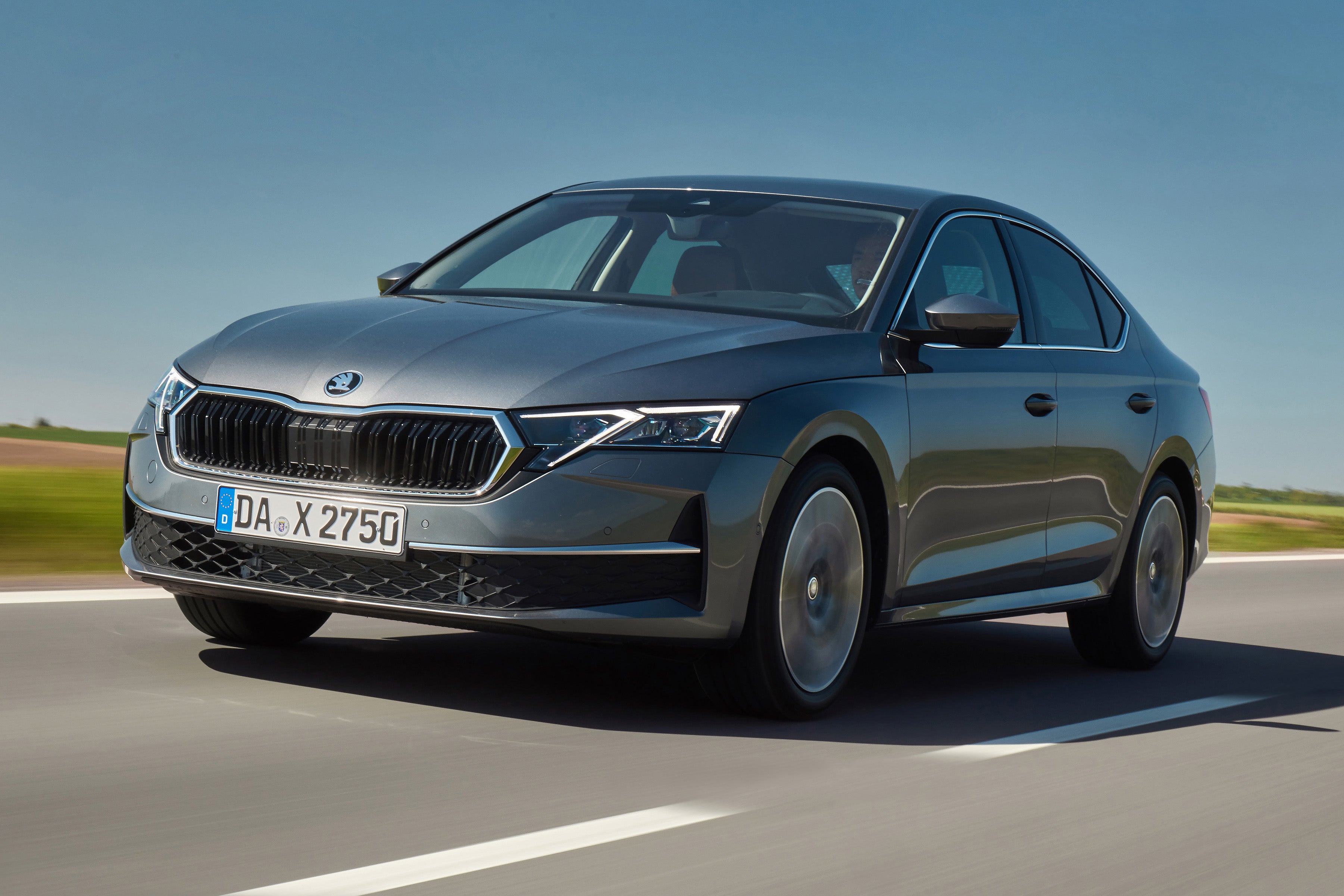
Early Skoda Scalas were a little on the under-equipped side as standard, meaning you'd want to avoid the entry-level S model unless you were really on a tight budget. But the Scala was given a facelift in 2024, giving it a more up-to-date look with new, slimmer headlights, LED fog lamps and redesigned grille.
At the same time, the trim levels were slimmed down so the current entry-level model – the SE Edition – now has more standard equipment than before, while higher trim levels have more advanced features, such as matrix LED headlights.
To drive, the Scala doesn't have the feeling of agility that you'll get with some rivals. Rather, it gives you a more mature, comfort-focused experience. If you want something a bit more dynamic, then the top-spec Monte Carlo Edition model adds a hint of sportiness, but it's no hot hatch. That said, the Scala feels confident through corners and stable on the motorway.
The engine line-up is straightforward, with a selection of efficient petrols in new cars, while used buyers have the added option of diesel engines. There's a choice of manual and automatic gearboxes, too, but there's no electrification here, which some rivals will offer, but it does help to keep purchase costs down.
You’ll enjoy fantastic all-round visibility from the driver's seat, the user-friendly nature of all the various controls, plenty of space, and the peace of mind that comes with the car's good safety record.
What's the best Skoda Scala trim and engine option?
For most buyers, the best choice is a Skoda Scala SE L Edition with the 1.0 TSI 116PS engine. That version has enough performance to avoid feeling strained on faster roads, while still delivering sensible fuel economy and a lower purchase price than the 1.5-litre car.
The entry-level 95hp engine is adequate enough, especially if most of your driving is around town, but the 116PS engine definitely makes the Scala feel more rounded. It is noticeably better suited to motorway work and carrying passengers, without a big penalty at the pumps.
As for trim, the SE Edition covers the basics well, but SE L Edition is the better balance of price and equipment. It adds the sort of features that make a family hatchback feel easier to live with every day, including heated front seats, front- and rear parking sensors, keyless entry and metallic paint. The Monte Carlo is the most eye-catching version, but unless you particularly want the sportier styling, bigger wheels and a slightly more distinctive cabin, the SE L is the more sensible choice.
If you want an automatic, the 1.0 TSI 116 DSG is the most logical choice. The 1.5 TSI is punchier, but it's harder to justify unless you regularly carry a full load or spend a lot of time on faster roads.
What’s the price of the Skoda Scala?
The Skoda Scala starts at £24,035 for the 1.0 TSI 95PS SE Edition and rises to £32,385 for a 1.5 TSI Monte Carlo Edition DSG. In the middle of the range, the SE L Edition spans roughly £25,865 to £29,490 depending on engine and gearbox.
That pricing is a big part of the Skoda Scala’s appeal. It undercuts a comparable Volkswagen Golf by quite a bit, and generally looks like better value than most mainstream hatchback rivals once equipment and practicality are taken into account. The Scala is especially convincing in lower and mid-spec forms, where the gap to more expensive alternatives can be significant without feeling like a major sacrifice in day-to-day use.
If you are buying new, the value case is strongest in SE Edition and SE L Edition form. If you are shopping used, meanwhile, the higher trims don’t cost all that much more.
Alternatives to the Skoda Scala
The most obvious alternative is the SEAT Leon. The two cars are very close in size, although they’re built on slightly different mechanical platforms. The Leon feels a little more stylish inside and out, and is slightly more engaging to drive, but it’s not as strong on practicality as the Scala. The Volkswagen Golf is the more polished all-rounder, and still the class benchmark in some respects, yet it costs considerably more for less space and kit.
The Volkswagen Golf costs buyers a little bit more, and bridges the gap to more premium offerings like the Audi A3, BMW 1 Series and Mercedes A-Class.
Within Skoda’s own range, the Octavia is the step up if you want even more rear-seat room and boot space. The Fabia is cheaper and still surprisingly roomy, but it's definitely behind the Scala for overall practicality and doesn’t feel quite as grown-up.
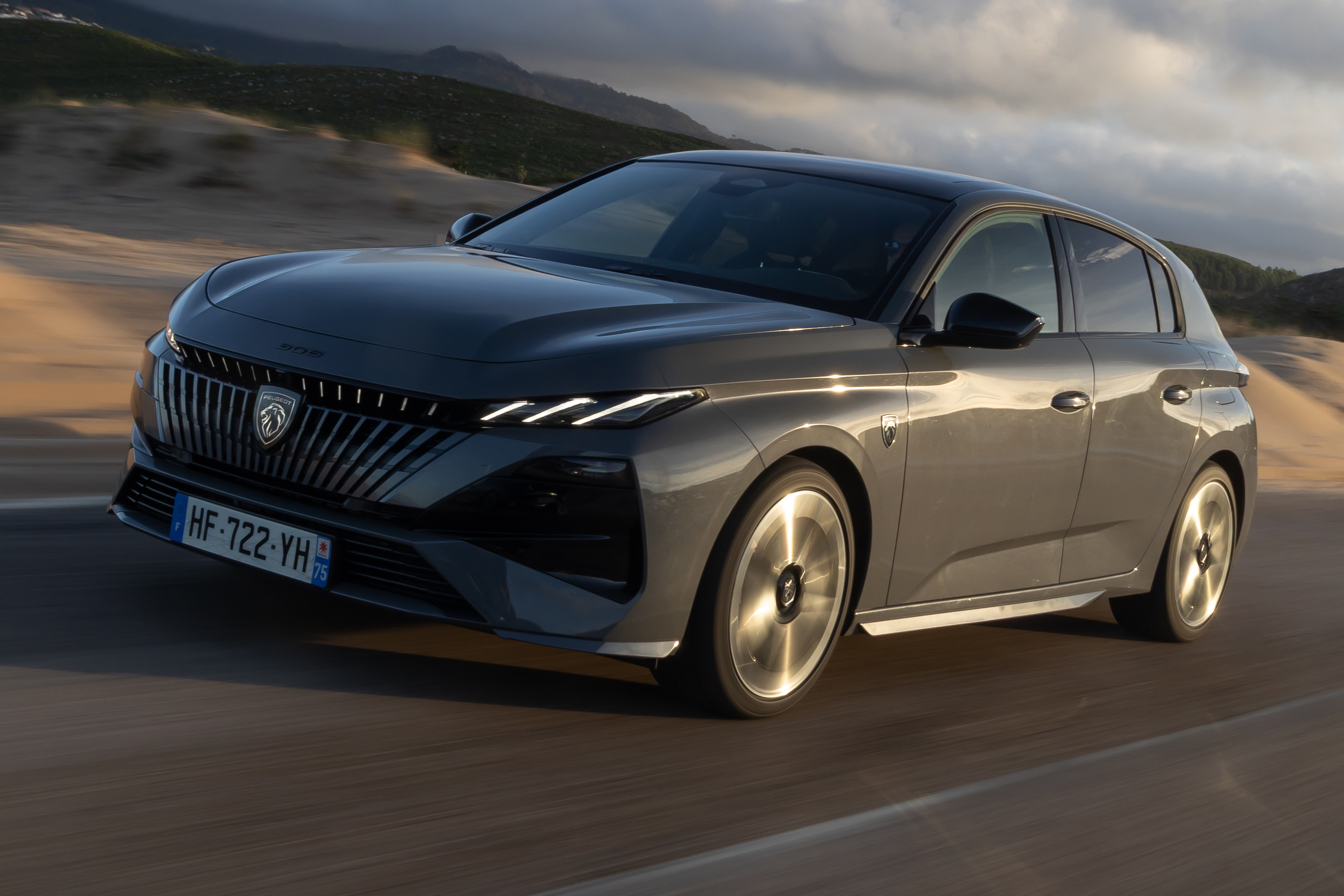
Other alternatives in the class include the Peugeot 308 and Honda Civic, which both have their strengths, but they cost considerably more than the Scala.
What's the interior like in the Skoda Scala?
The Scala’s cabin will not wow you in the way an Audi A3 might, but it gets the important things right. It feels roomy, visibility is good and the controls are mostly straightforward, which matters more in daily use than flashy design.
Skoda Scala boot space and practicality
Providing maximum space for minimum money has always been Skoda's party piece, and the Scala is no different. Nobody's going to struggle for space in the front seats, there's loads of adjustment and the clean dashboard feels logical rather than fussy.
There’s also more rear-seat space than in most rivals, with generous headroom and loads of legroom that allows lofty passengers to stretch out. A pair of bulky child seats will fit with no bother, too.
The cabin is narrower than it is in some rivals, making it a bit of a squeeze to carry three people across the rear bench, but the same can be said of pretty much every car in this class. At least the middle seat is wide and not raised up too much, and because the central transmission tunnel is relatively narrow, it’s not uncomfortable to sit with your feet on either side of it.
With 467-litres of luggage space, the Skoda Scala's boot is also considerably bigger than you get in most rivals. The Octavia has more still, but the Scala has almost every other rival beaten on this score. The space is also a regular square shape, and the rear seats fold in a 60:40 split to allow you to boost your load-carrying capacity to as much as 1410 litres.
However, those seats lie at a slight angle when folded, and there’s a sizeable step between them and the boot floor, not to mention a sizeable load lip at the boot opening. This can be levelled off by using the variable boot floor, but it’s a bit disappointing that this is an optional extra on all versions.
Skoda Scala dimensions
The Skoda Scala is 4,362mm long, 1,793mm wide and between 1,471mm and 1,474mm tall depending on trim. That makes it longer than some traditional family hatchbacks, which helps explain the generous rear space and big boot. It's still compact enough to be manageable in town, though, and its 10.2-metre turning circle helps in tighter car parks.
Tech and infotainment in the Skoda Scala
These days (since the 2024 facelift), all versions of the Skoda Scala come with the same 9.2-inch central touchscreen, along with ‘Virtual Cockpit’, which is a highly configurable 10.25-inch screen behind the steering wheel to act as your driving instruments.
It supports all the expected functionality, including Bluetooth, DAB radio, navigation and wireless Apple CarPlay and Android Auto. Monte Carlo Edition models also get wireless smartphone charging on top.
Compared with many such systems these days, the touchscreen is pretty intuitive and easy to find your way around. Being a touchscreen, it’s a little more distracting than some other types of interface because you have to stare at the screen so intently to make sure you hit the right bit, but as touchscreens go, it’s not bad at all. And the fact that there are separate physical controls for the air-conditioning system means the screen isn’t too overloaded with functionality.
If you’re buying a used Scala, bear in mind that things were a little different before the 2024 facelift. The entry-level Skoda Scala S made do with a very basic system with a tiny 6.5-inch touchscreen, analogue dials, and no navigation or smartphone integration. The SE version added smartphone connectivity along with a bigger 8.0-inch screen, while SE L and Monte Carlo versions added the 9.2-inch screen and built-in navigation.
Materials available on the Skoda Scala
The interior ambience in the Skoda Scala depends on the trim level you go for. Even the entry-level SE Edition version looks smart and grown up, with fabric on the dashboard, and grey and black cloth upholstery. SE L Edition cars also have fabric on the dash, but the seat upholstery is swapped for a fabric and microsuede finish. The Monte Carlo Edition has sports seats with a stripey design, while the dashboard finish turns from fabric to a less-than-convincing carbon effect.
The plastics used inside the Scala are generally fine: some of them are a little hard and scratchy, but this is to be expected given the car’s low price, and Skoda has done a good job of confining the rougher surfaces to the lower-down areas of the cabin that you don’t interact with too often. All the materials feel robust, too, and the solid way everything is assembled gives the feeling of a quality product.
What's the Skoda Scala like to drive?
The Skoda Scala is set up to be easy and undemanding rather than especially entertaining. That suits its brief well. It is light to drive, comfortable over distance and settled enough that it never feels out of its depth as everyday transport.
Skoda Scala range and performance
Skoda Scala buyers going down the new car route have the choice of three turbocharged TSI petrol engines: a pair of 1.0-litre three-cylinder engines with either 95PS or 116PS, and a four-cylinder 1.5 TSI with 150PS.
The entry-level engine, which comes exclusively with a manual gearbox, has a nice perky feel initially, and it’s fine for urban and suburban use. It does start to run out of puff as you go faster, though, and can feel a little strained on the motorway, so those regularly venturing out of town might want to consider the upgrade to the more powerful 116PS engine.
And we’d thoroughly recommend that upgrade, because the pokier engine is an absolute belter. With impressive low-down pull, it feels responsive and surprisingly strong from anywhere on the rev range, so not only is your progress adequately brisk, it’s also easy and effortless, giving you the flexibility that the smaller engine misses. It’s a more pleasant companion, regardless of whether you spec it with the standard manual gearbox or the optional twin-clutch automatic.
The 1.5 TSI, which is also available with a choice of manual or twin-clutch automatic transmissions, is a fraction quicker against the stopwatch and has a similarly perky character. However, in 90% of driving situations, it doesn’t feel a whole lot faster than the smaller engine, so we’d probably save the extra cost to buy.
All the manual gearboxes we’ve tried are pretty slick, while the automatics are also pretty good, slurring through the gears effectively, keeping your progress easy, smooth and responsive.
If you’re buying used, you can also choose a now-discontinued diesel engine offered on the pre-facelift car. It’s a 1.6 TDI with 115PS, and it gives decent pace, but it doesn’t feel as lively or as eager as the mid-range petrol, and overall, it doesn’t suit the car as well.
Performance data
| Model | Engine/battery size | Power | 0-62mph | Range/MPG |
|---|---|---|---|---|
1.0 TSI 95PS | 1.0-litre | 95PS | 10.8 seconds | Up to 55.1mpg |
1.0 TSI 116PS | 1.0-litre | 116PS | 9.5 seconds | Up to 55.4mpg |
1.0 TSI 116PS DSG | 1.0-litre | 116PS | 10.1 seconds | Up to 53.2mpg |
1.5 TSI 150PS | 1.5-litre | 150PS | 8.2 seconds | Up to 52.6mpg |
Skoda Scala driving and refinement
The Skoda Scala's greatest strength is how comfortable and easy it is to drive. The standard suspension does a really good job, with a soft, forgiving set-up that keeps life impressively cosseting, and that’s regardless of whether you're crawling along craggy urban streets or steaming along motorways. The light steering, consistently weighted control and excellent visibility make it an easy car to place on the road and pootle about in, too.
Despite the Skoda Scala's impressive comfort, there’s still enough control in the suspension to keep the body from bouncing up and down too much on undulating country roads, or from leaning over too much in bends, making the car feel secure and tidy.
Okay, it's not the sharpest-handling hatchback you'll ever drive – a SEAT Leon will provide more thrills for keen drivers – but its mixture of civility and security is arguably more important, and certainly worth the trade-off.
Good refinement complements the Scala’s generally relaxed nature. Even the smaller three-cylinder engines don’t get too loud or thrashy, even when worked hard, although it has to be said that the 1.5 four-cylinder engine is smoother and quieter still. Next to some rivals, there’s a touch more wind- and road noise to be heard in the Scala at high speed, and you hear a fraction more from the Skoda’s suspension as it goes about its work, but it’s far from raucous and still feels perfectly civilised.
How safe is the Skoda Scala?
The Scala received a five-star Euro NCAP safety rating when it was rated back in 2019, but as these ratings only apply for six years to account for the progression in car safety technology, this rating is now considered to have expired.
The safety kit you get as standard includes six airbags, automatic emergency braking, lane assist and automatic emergency calling. However, lots of other stuff that rivals might provide as standard cost extra on the Scala: a driver’s knee airbag and rear side airbags are part of an options pack in all models, and so are front parking sensors for the SE Edition. Buyers also have to pay extra for adaptive cruise control on all models, and blind-spot detection is only offered as an option on the top-spec Monte Carlo model.
Running costs: What it's like to live with a Skoda Scala
This is another area where the Skoda Scala makes a lot of sense. Fuel economy is strong, insurance groups are relatively modest, and purchase prices remain sensible by modern family-car standards. The lack of a hybrid option is a weakness, but the petrol engines are efficient enough that the Scala should still be affordable to run.
Skoda Scala fuel economy
Go for either of the three-cylinder petrol engines paired with a manual gearbox, and official WLTP fuel figures sit well north of 50mpg. There’s a small penalty to pay if you specify the DSG automatic gearbox, but we’re only talking about 2mpg or thereabouts. The 1.5-litre engine sits around the 50mpg mark according to official figures, and in this case, speccing the DSG actually improves fuel economy a fraction.
Compared with rivals, the Scala is competitive rather than class-leading, but you still shouldn’t have any complaints about how much fuel you’re getting through.
Skoda Scala warranty and servicing
Skoda’s new-car warranty is three years, made up of two years with unlimited mileage, and a third year capped at 60,000 miles.
Servicing on the Scala can be dealt with in two ways. You can either go for a fixed regime of every one year or 10,000 miles, whichever happens first. This is recommended for those who drive less than 10,000 miles annually, and who mainly operate in low-speed urban environments, or those who tow regularly.
Alternatively, you can choose flexible servicing, where the car lets you know when it needs maintenance. This can occur anywhere between 9,000 miles and 20,000 miles, up to a maximum of two years between services. This approach is recommended for those whose regular driving is at a more constant speed and who do more than 25 miles per day.
Skoda Scala insurance groups
Insurance groups run from 12 to 21 across the current Scala range. Those groupings are fairly modest for the class, even at the top of the spectrum, and so insurance premiums should be eminently reasonable across the range.
How much does it cost to tax a Skoda Scala?
No version of the Scala gets anywhere near the £40,000 price barrier that saddles you with higher-rate VED tax, so you’ll never have to worry about that. As such, you’ll only have to pay the standard flat rate of £200 per year.
What trims are available with the Skoda Scala?
There are three main trim levels in the current Skoda Scala range: SE Edition, SE L Edition and Monte Carlo Edition.
Scala SE Edition is the entry point to the current Scala range, but it's not sparse. Standard equipment includes metallic paint, 16-inch alloy wheels, full LED headlights, rear LED lights, rear-view camera, rear parking sensors, dual-zone climate control, cruise control, keyless start, the 9.2-inch infotainment screen, 10.25-inch Virtual Cockpit, and wireless Apple CarPlay and Android Auto. For many buyers, that has the essentials covered.
Scala SE L Edition builds on SE Edition with 17-inch alloy wheels, heated front seats, front parking sensors, keyless entry and start, rear privacy glass, upgraded upholstery, ambient cabin lighting, automatic lights and wipers, and door mirrors with heating, electrical adjustment and power-folding. In our book, this is the version that feels most complete without becoming expensive enough to undermine the Scala’s value-led appeal.
Scala Monte Carlo Edition is the range-topper and the most style-focused model. It adds sportier exterior details, a more distinctive cabin treatment, wireless phone charging, and sports seats. However, it’s a little pricey, so we think the SE L Edition is the better bet for most.
Ask the Drive experts: common questions
How much does the Skoda Scala cost?
What is the best Skoda Scala engine?
How big is the Skoda Scala boot?
Is the Skoda Scala bigger than a Volkswagen Golf?
Get our latest advice, news and offers
Keep me updated by email with the latest advice, news and offers from Drive.
.jpg)
.jpg)
.jpg)