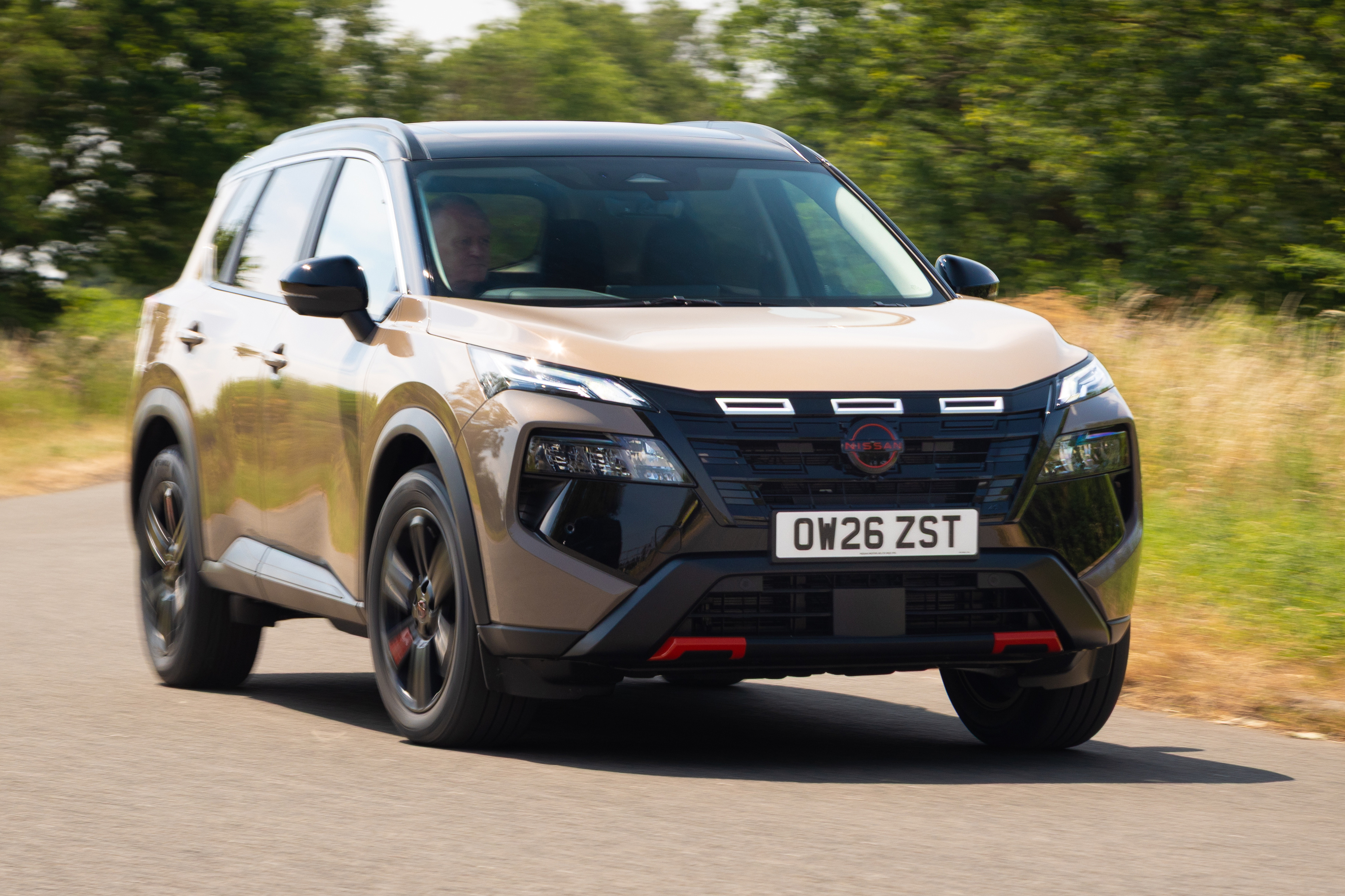
Nissan X-Trail Review

Written By Andrew Brady
- 2022
- SUV
- Hybrid (new), Mild hybrid (used)
What we love
Spacious, well-thought-out family cabin
e-Power hyrbrid system is smooth and impressively refined
Plenty of standard driver-assistance kit
Things to consider
Not a true full-size seven-seater
e-Power is not as cheap to run as the best diesels or plug-in hybrids
Most versions attract the Expensive Car Supplement
The DRIVE take on the Nissan X Trail, is it the right car for you?
The Nissan X-Trail is a likeable large family SUV that does a very good job of balancing comfort, practicality and ease of use. Its e-Power hybrid setup gives it a smoother and more EV-like feel than many rivals, while the cabin is thoughtfully designed for family life.
The refreshed 2026 hybrid-only model builds on those strengths with revised styling, improved materials, as well as improved infotainment. A mild-hybrid petrol option is available if you buy used.
The trade-off in the X-Trail is that it isn’t as spacious as the best seven-seaters and it isn’t especially cheap once you move up the trim ladder. Even so, if you want a family SUV with a slightly different take on hybrid power, the Nissan X-Trail is easy to recommend.
The Nissan X Trail in more detail
The current Nissan X-Trail was launched in the UK in 2022 and received a substantial update for 2026.
The cabin remains one of the X-Trail’s strongest points. It has a premium look and feel without sacrificing the sort of usability family buyers actually care about. There are still plenty of physical controls, lots of storage and a straightforward layout that feels designed by people who understand that life with children, bags and muddy boots doesn’t always suit minimalist design trends.
Browse used Nissan X-Trails for sale →
The big talking point is the X-Trail’s e-Power hybrid system. Unlike a conventional parallel hybrid, there’s no mechanical connection between the petrol engine and the wheels. The petrol engine generates electricity, while an electric motor does the work of moving the car. The result is a driving experience that feels smoother and quieter than many rival hybrids, especially around town, while still avoiding the need to plug in.
The refreshed range uses the same basic powertrains as before. The front-wheel-drive e-Power produces 204PS, while e-4ORCE adds a second motor at the rear and has a combined output of 213PS. Unlike the updated Qashqai, the X-Trail hasn’t yet adopted Nissan’s newer third-generation e-Power hardware.
The 163PS mild hybrid previously provided a cheaper alternative. It used the same 1.5-litre variable-compression petrol engine but drove the front wheels through an Xtronic automatic gearbox in a more conventional way. It’s no longer available new, but worth looking for as a used model.
That clever hybrid powertrain gives the Nissan X-Trail a clear identity, but it doesn’t make the rest of the class disappear. The Skoda Kodiaq remains the benchmark for value and practicality, the Volkswagen Tayron offers a more polished and mature edge, and the Hyundai Santa Fe and Kia Sorento still make a stronger case if you need proper seven-seat family ability.
Still, the Nissan X-Trail is a very rounded SUV. It’s comfortable, practical enough for most households and distinctive without feeling eccentric.
What's the best Nissan X Trail trim and engine option?
For most new-car buyers, the best Nissan X-Trail is the 204PS e-Power in N-Connecta trim. The e-Power hybrid system is the main reason to choose this car over some of its rivals, because it gives the X-Trail a smoother, more refined and more EV-like character than conventional petrol alternatives.
The two-wheel-drive version will be enough for most buyers. It provides the refinement and response that make the system appealing without the extra purchase price, weight and fuel consumption of the e-4ORCE all-wheel-drive model.
As for trim, Acenta Premium covers the basics unusually well. However, N-Connecta is where the X-Trail starts to feel properly modern. It brings Google built-in, ProPILOT Assist with Navi-link, synthetic leather upholstery and the 3D Around View Monitor, which is especially useful in a car of this size.
N-Trek adds an opening panoramic roof, water-resistant upholstery, heated front and rear seats, a heated steering wheel and rugged-looking exterior details. Tekna is the plush option, with powered front seats, a head-up display, Bose audio, ProPILOT Park, a smart rear-view mirror and 20-inch wheels.
If you’re buying used, the discontinued 163PS mild hybrid may appeal because it’s cheaper and was available with five or seven seats. It isn’t as smooth or economical as e-Power, though. Earlier Tekna+ models are also worth considering if you want quilted leather, massage seats and plenty of luxury equipment without paying the price of a new upper-trim car.
What’s the price of the Nissan X Trail?
The refreshed Nissan X-Trail range starts at £38,235 for the five-seat e-Power Acenta Premium. N-Connecta costs £40,945, N-Trek is £43,330 and Tekna is £44,405.
The five-seat e-4ORCE range starts at £40,540 for Acenta Premium. N-Connecta costs £43,250, N-Trek is £45,530 and Tekna is £46,605.
Adding the third row costs £1,000. Seven-seat e-4ORCE prices therefore start at £41,540 for Acenta Premium, rising through £44,250 for N-Connecta and £46,530 for N-Trek to £47,605 for Tekna. There are also plenty of used Nissan X-Trails for sale for considerably less.
That means the X-Trail is no longer an affordable route into large-SUV ownership. It now sits firmly in the territory where buyers will also be considering cars such as the Skoda Kodiaq, Volkswagen Tayron, Hyundai Santa Fe and Kia Sorento. It still looks competitive on equipment, but it isn’t a bargain.
Alternatives to the Nissan X Trail
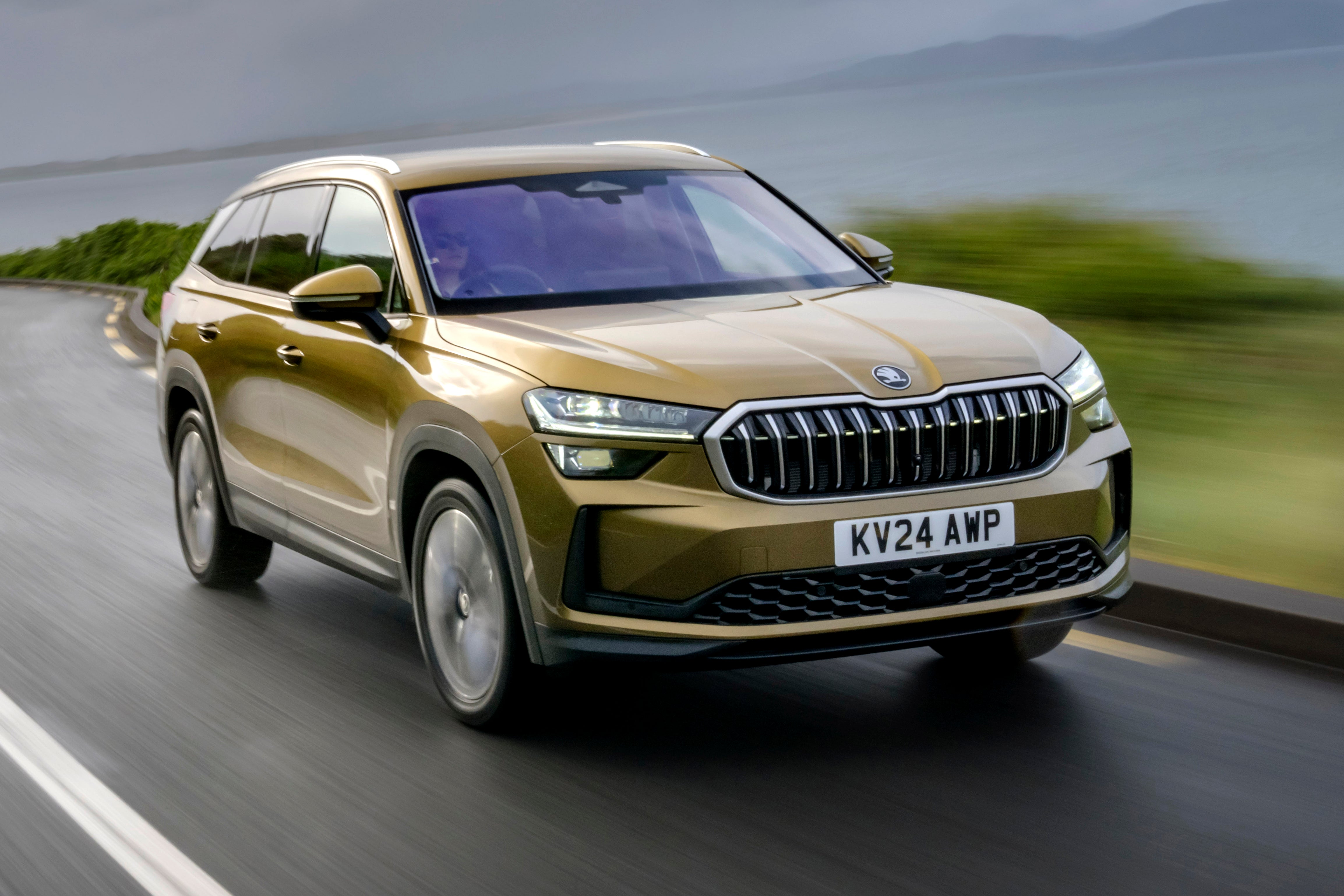
The Skoda Kodiaq is still one of the X-Trail’s clearest rivals because it offers more convincing seven-seat practicality and an even stronger sense of value. If you need your large SUV to handle proper family-hauling duties regularly, the Kodiaq remains a benchmark.
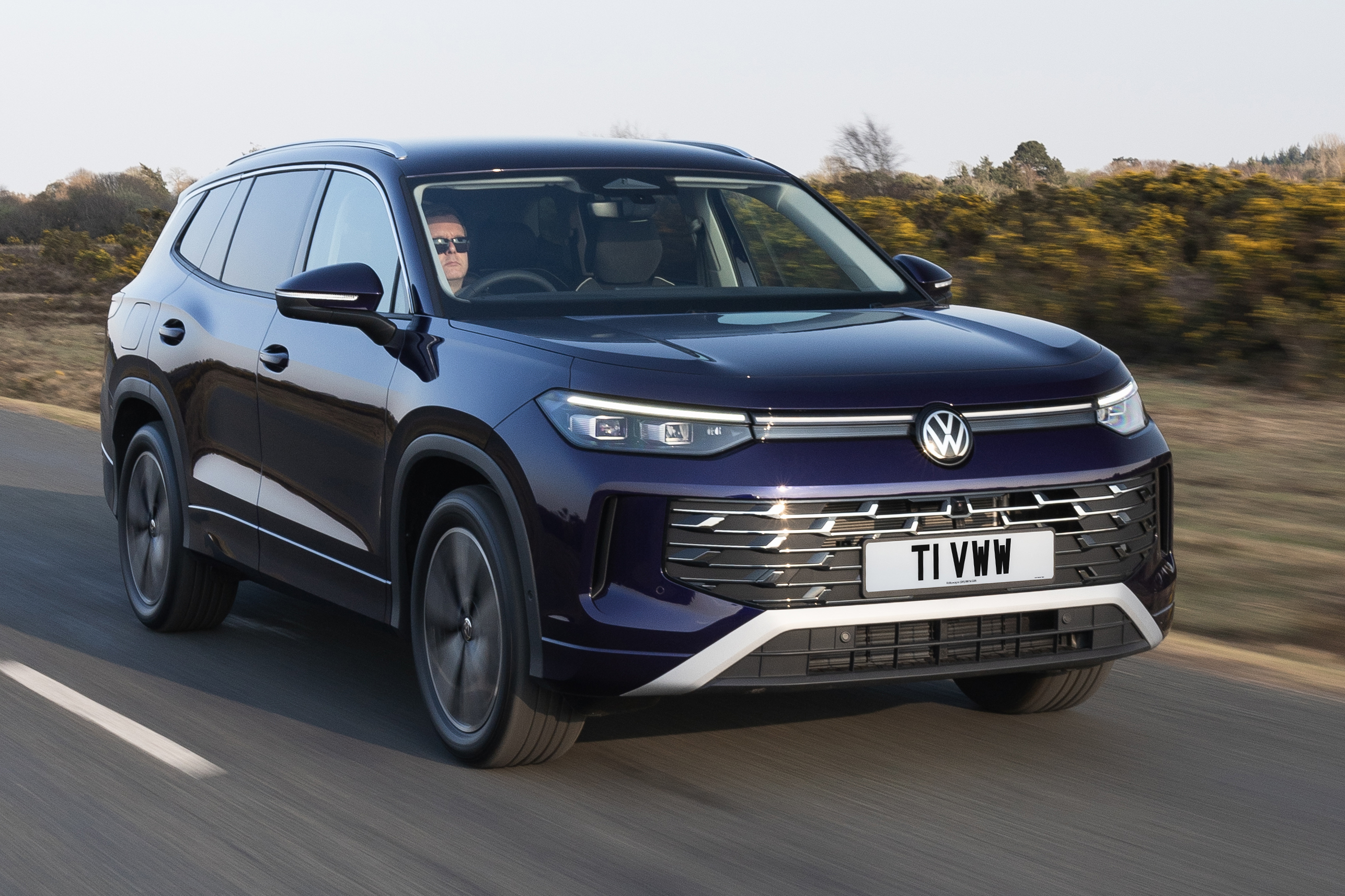
The Volkswagen Tayron is another key rival because it offers the same broad family-SUV brief with a more polished, slightly more premium edge. It suits buyers who want something roomy and mature-feeling but don’t need a prestige badge to get there
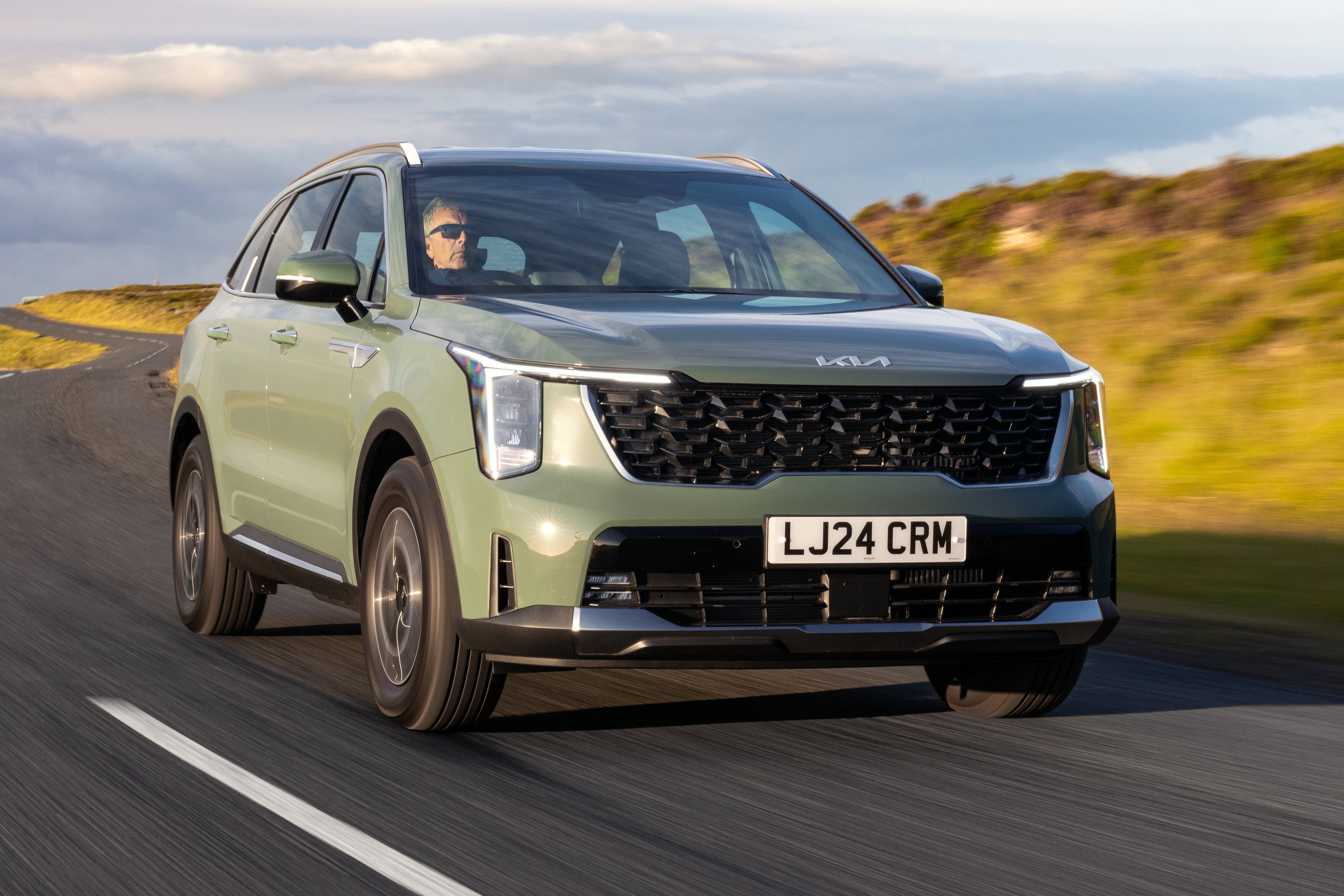
The Hyundai Santa Fe and Kia Sorento are the alternatives to choose if space and long-distance family usability matter most. Both feel larger and more accommodating in the third row, and both have a stronger case if you regularly carry six or seven people.
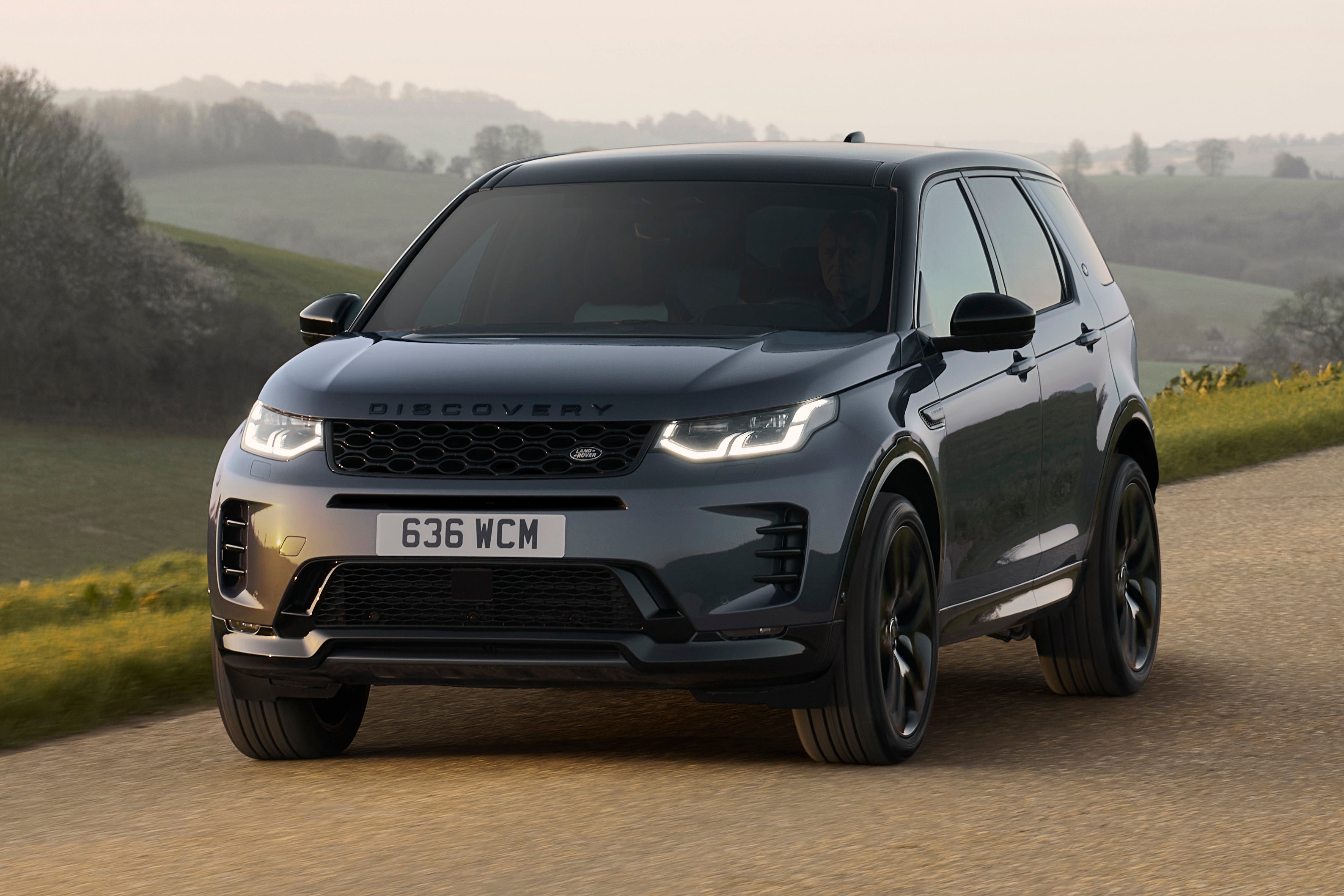
A Land Rover Discovery Sport still has appeal if badge image or off-road ability matters, while plug-in hybrid alternatives such as the Mazda CX-60 may suit company-car users better. The Nissan X-Trail makes most sense if you want a large SUV that feels easy to live with and like the idea of a hybrid that behaves more like an EV than a conventional petrol-electric model.
What's the interior like in the Nissan X Trail?
The Nissan X-Trail’s cabin is one of its strongest points. It feels modern, sensibly laid out and upmarket enough to justify its positioning, while still keeping the sort of practical touches family buyers actually use.
The 2026 update doesn’t radically alter the basic architecture, but it introduces revised trim materials, Google-based connectivity and the option of chestnut-brown quilted leather on Tekna. Used pre-facelift cars have the same fundamental layout, although their infotainment and trim details differ.
Nissan X Trail boot space and practicality
The Nissan X-Trail does a good job of making everyday family life easy. Up front, there’s loads of room, the seats are set high enough to give a commanding view out and the storage around the cabin is genuinely useful. The floating centre console opens up extra space beneath it, while the door bins and glovebox are sensibly sized.
The second row is one of the better parts of the X-Trail’s interior. Access is easy thanks to rear doors that open particularly widely, and the sliding rear bench lets you trade legroom against luggage space depending on what the day demands. That flexibility is genuinely useful in family life.
The current five-seat e-Power and e-4ORCE models have 575 litres of luggage space with the rear seats upright, rising to 1,396 litres with them folded. The seven-seat e-4ORCE has 485 litres behind its second row and up to 1,298 litres with the passenger seats folded.
Earlier five-seat mild-hybrid versions had a slightly larger 585-litre boot because they didn’t need to accommodate the e-Power hardware. The five-seat e-Power and e-4ORCE figures were broadly the same as they are now, while seven-seat cars had 485 litres with the third row folded.
You can have the current Nissan X-Trail as a seven-seater, but only with e-4ORCE. It’s best thought of as an occasional seven-seater rather than a true one. The third row is handy for children or emergency lift-giving, but it isn’t especially spacious or comfortable.
Used buyers may also find seven-seat mild-hybrid versions. These are no longer offered in the refreshed range but may provide a cheaper route into an X-Trail with three rows.
If you need seven proper seats regularly, a Hyundai Santa Fe, a Kia Sorento or a Skoda Kodiaq will suit better.
Nissan X Trail dimensions
The facelifted Nissan X-Trail measures 4,690mm long (10mm longer than the pre-facelift version), 1,840mm wide & 1,725mm high. That makes it noticeably larger than a Qashqai and puts it firmly into the large family SUV bracket.
In practical terms, the size gives it proper SUV presence and helps cabin space, but it’s still manageable enough for typical family use rather than feeling cumbersome. It’s not especially enormous for this class, which is good for ease of use but also part of the reason why the third row is more occasional than generous.
Tech and infotainment in the Nissan X Trail
Technology is one of the refreshed Nissan X-Trail’s strengths. Every current model gets a 12.3-inch digital instrument display and a 12.3-inch central touchscreen, along with a wireless charging pad, wireless Apple CarPlay and wired Android Auto.
N-Connecta and above add Google built-in, including Google Maps, Google Assistant and access to compatible apps through Google Play. Those versions also get over-the-air updates and Nissan’s 3D Around View Monitor, with extra viewing modes including Invisible Hood View and a T-junction view.
The infotainment itself is good rather than dazzling. It’s easy enough to use, looks smart and includes the sort of smartphone integration buyers now expect. The higher-grade digital driver display is clear, and the head-up display in Tekna is a worthwhile extra rather than a gimmick.
Pre-facelift X-Trails don’t have Google built-in. Most Acenta Premium models have an 8-inch touchscreen, while N-Connecta and above use the earlier 12.3-inch NissanConnect system. Wireless Apple CarPlay was available, but Android Auto generally required a cable. The older setup is perfectly usable, but the refreshed system is more modern and better connected.
Materials available on the Nissan X Trail
The Nissan X-Trail’s materials are well judged for this sort of car. You’ll still find some harder plastics lower down, but the main touchpoints, trim finishes and general build quality do enough to make it feel more premium than a typical mainstream family SUV.
Current Acenta Premium models have cloth upholstery, while N-Connecta upgrades to synthetic leather. N-Trek gets water-resistant CellCloth upholstery, designed to be easier to clean after muddy or wet family activities. Tekna has premium synthetic leather as standard.
Quilted leather is now part of an optional £1,000 Premium Seat Pack on Tekna, available in black or chestnut brown. Earlier Tekna+ models included quilted leather as part of their standard luxury specification, so used buyers should be aware that the trim structure has changed. Even so, the X-Trail avoids feeling fussy or overstyled. It still feels like something built for family use rather than showroom theatre.
That balance works in its favour. The cabin feels smart enough to justify the asking price but still robust enough to cope with the reality of family life.
What's the Nissan X Trail like to drive?
The Nissan X-Trail majors on comfort and refinement rather than entertainment. It feels like a large SUV designed to make family journeys easier rather than more exciting, and that’s exactly the right approach.
The 2026 update doesn’t bring major mechanical changes, so its fundamental driving character and performance are similar to those of earlier e-Power versions.
Nissan X Trail range and performance
The current Nissan X-Trail line-up is centred around the e-Power hybrid. In two-wheel-drive form, its front electric motor produces 204PS and 330Nm, getting the car from 0–62mph in 8.0 seconds. That’s plenty for a car of this size and more than enough to make slip roads and overtakes feel straightforward rather than strained.
There’s also the e-4ORCE four-wheel-drive version, which adds a second electric motor at the rear axle. Total output is 213PS, with 330Nm at the front and 195Nm at the rear. The five-seater reaches 62mph in 7.0 seconds, while the slightly heavier seven-seater takes 7.2 seconds.
These outputs haven’t changed significantly since the current generation was launched. Earlier e-Power and e-4ORCE models therefore provide much the same straight-line performance as the refreshed car, although equipment, emissions figures and official economy vary slightly by model year and trim.
The discontinued mild-hybrid version used a 1.5-litre turbocharged petrol engine producing 163PS and 300Nm. It drove the front wheels through an Xtronic automatic gearbox and covered 0–62mph in around 9.6 seconds.
For most new-car buyers, the two-wheel-drive e-Power is the one to go for. It has the character that makes the X-Trail appealing without the extra cost and fuel penalty of four-wheel drive.
Used buyers who want a lower purchase price may still find the mild hybrid worthwhile, but it isn’t as smooth, responsive or efficient as either e-Power version.
Performance data
| Model | Engine/battery size | Power | 0-62mph | Range/MPG |
|---|---|---|---|---|
Nissan X-Trail e-Power 2WD | 1.5-litre series hybrid automatic | 204PS | 8.0 seconds | Around 49mpg |
Nissan X-Trail e-4ORCE AWD | 1.5-litre series hybrid AWD automatic | 213PS | 7.0 seconds | Around 45mpg |
Nissan X Trail driving and refinement
The Nissan X-Trail is softly sprung by the standards of many large SUVs, and that’s to its advantage. It rides with a welcome sense of pliancy, dealing with broken surfaces better than some firmer-riding alternatives.
Wheel size still matters. Current Acenta Premium and N-Connecta models now use 19-inch alloy wheels, as does N-Trek with its unique design. Tekna has 20-inch wheels, which add a firmer edge over rough surfaces. Earlier versions were available with a broader mixture of 18-, 19- and 20-inch wheels, so used buyers who prioritise comfort may prefer a lower trim.
Handling is tidy enough, but this isn’t a sporty car. There’s good body control and decent grip, yet the X-Trail’s real strength is that it feels secure, calm and unintimidating. For the target buyer, that matters more than a touch of extra cornering sharpness.
The e-Power system helps refinement further. Around town, it feels very smooth and can move off with the quiet, immediate response of an EV. Even when the petrol engine is running to generate power, it stays relatively subdued.
The mild hybrid feels more conventional. Its engine is directly responsible for driving the car and can become more vocal when asked to accelerate hard. It’s perfectly usable, but it doesn’t give the X-Trail the same distinctive, electrically driven character.
The overall result is a large SUV that feels easy and undemanding. It isn’t one for enthusiastic drivers, but it’s a pleasant one for family life.
How safe is the Nissan X Trail?
The Nissan X-Trail received a full five-star rating from independent safety organisation Euro NCAP in 2022. Its structure is closely related to the Qashqai’s, so Euro NCAP carried over relevant Qashqai results and performed additional X-Trail-specific tests where necessary.
Protection was generally rated as good or adequate, although the rear passenger’s chest protection in the full-width frontal test was described as marginal. The X-Trail scored maximum points in the side-barrier and side-pole tests and has a central airbag between the front occupants.
Safety kit remains strong across the current range. Autonomous emergency braking with pedestrian, cyclist and junction detection, rear automatic braking, blind-spot intervention, lane-departure prevention, driver-attention monitoring and front and rear parking sensors are standard.
N-Connecta and above add ProPILOT Assist with Navi-link and lane-keeping assistance, while Tekna includes ProPILOT Park and adaptive LED headlights.
Used buyers should check the specification of the individual car, because trim equipment changed with the 2026 refresh and earlier models don’t necessarily have all the latest camera, connectivity and assistance features.
Running costs: What it's like to live with a Nissan X Trail
The Nissan X-Trail isn’t a cheap large SUV to buy, and it isn’t the lowest-cost one to run either, but e-Power makes a respectable case for itself if you want hybrid smoothness without plugging in.
Running costs depend heavily on whether you choose the front-wheel-drive e-Power, the heavier e-4ORCE or one of the discontinued mild-hybrid cars.
Nissan X Trail fuel economy
Nissan quotes the current two-wheel-drive X-Trail e-Power at between 46.3 and 49.6mpg. CO2 emissions range from 129–139g/km, depending on trim. The e-4ORCE four-wheel-drive version returns between 42.8 and 45.6mpg.
Earlier e-Power cars were generally quoted at around 45.6 to 48.7mpg, while e-4ORCE managed approximately 42.2 to 44.8mpg. The small change in the latest figures reflects the revised range, equipment and homologation rather than a fundamentally different powertrain.
The discontinued 163PS mild hybrid returned around 37.2 to 39.8mpg, depending on trim and seating configuration. Its lower purchase price may make it attractive used, but it doesn’t offer a meaningful economy advantage.
Around town and in mixed use, the e-Power system should make it easier to drive economically than a conventional petrol SUV because the electric motor does the work of moving the car. On a long motorway run, though, some diesel rivals will still use less fuel.
That makes the X-Trail strongest as an all-rounder rather than a dedicated long-distance mile-muncher.
Nissan X Trail warranty and servicing
Nissan covers the X-Trail with a three-year or 60,000-mile manufacturer warranty. That’s acceptable, but it isn’t especially generous by modern standards, particularly alongside the seven-year cover offered by Kia.
Current e-Power models have a variable oil-change monitoring system, but Nissan specifies that the interval mustn’t exceed one year or 9,000 miles. Dealer specification data also lists a 12-month or 9,000-mile service interval.
Earlier mild-hybrid and pre-refresh e-Power cars may have different servicing requirements, so used buyers should follow the schedule for the exact model year and check that its service history is complete.
Nissan offers fixed-price service plans and an extended warranty once the original manufacturer cover expires. The extended warranty needs to be purchased separately, rather than being automatically activated by routine servicing as it is on some of Nissan’s newer EVs.
The X-Trail shares plenty of its underlying engineering with the Qashqai, and Nissan now has several years of experience with this generation of e-Power. Even so, the system is more complex than a conventional petrol drivetrain, which makes a complete service history and suitable warranty cover particularly worthwhile on a used car.
Nissan X Trail insurance groups
Insurance groups for the Nissan X-Trail run from 21 or 22 for simpler lower-spec versions up to around group 35 for high-spec e-Power e-4ORCE versions. That makes sense for a large family SUV with plenty of standard safety kit and, in e-Power form, a relatively strong performance output.
In practice, the X-Trail should be manageable enough by class standards, but it's not a cheap car to insure in the way a smaller SUV might be. The four-wheel-drive and upper-trim versions are the ones most likely to push quotes up.
How much does it cost to tax a Nissan X Trail?
The Nissan X-Trail costs £200 a year in VED after its first year, however, the Expensive Car Supplement applies to petrol and hybrid cars with a list price of more than £40,000 and currently adds £440 a year for five years, from the second to the sixth year after registration. That brings the annual bill to £640 during that period.
The relevant figure is the retail list price before first-year tax and the registration fee, not simply the final on-the-road price. On the current range, only the five-seat e-Power Acenta Premium and five-seat e-4ORCE Acenta Premium sit below £40,000 before options.
Every other current version crosses the threshold as standard. The five-seat e-4ORCE Acenta Premium has a retail price of £39,925, so even its £760 optional paint could push it over.
What trims are available with the Nissan X Trail?
The current Nissan X-Trail line-up is centred on Acenta Premium, N-Connecta, N-Trek and Tekna.
Acenta Premium is the entry point and covers the essentials well. You get 18-inch alloys, LED lights, dual-zone climate control, front and rear parking sensors, a rear-view camera and the expected safety kit. It isn’t lavish, but it gives the X-Trail’s core family-SUV qualities without feeling bare.
N-Connecta is the sweet spot. It adds the dual 12.3-inch screen setup, around-view parking camera, roof rails, privacy glass and extra cabin detailing that make the X-Trail feel more modern and more expensive inside. This is the trim most buyers should target.
N-Trek is the more rugged-looking choice. It builds on N-Connecta with chunkier styling details, water-resistant upholstery, heated seats and tri-zone climate control. It’s the one to choose if you want the X-Trail to look a little more adventurous.
Tekna sits at the top of the regular range with a panoramic roof, electric tailgate, head-up display, quilted leather trim and other luxury-focused upgrades. It looks and feels plush, but it‘s also where the X-Trail starts to get expensive enough to overlap with more premium alternatives.
In simple terms, Acenta Premium covers the basics, N-Connecta is the smartest buy, N-Trek is the style-led choice and Tekna is the plush option.
Ask the Drive experts: common questions
Is the Nissan X-Trail a good family SUV?
Is the Nissan X-Trail a proper seven-seater?
Which Nissan X-Trail is best?
Is the Nissan X-Trail e-Power economical?
Get our latest advice, news and offers
Keep me updated by email with the latest advice, news and offers from Drive.
.jpg)