Toyota Prius Review

Written By Al Suttie
- 2024
- Hatchback
- Plug-in hybrid
What we love
Striking design inside and out
Impressively efficient if you charge it
Better to drive than any Prius before it
Things to consider
Rear headroom is tight
Boot is small for a family hatch
Petrol engine still gets vocal if you push it
The DRIVE take on the Toyota Prius, is it the right car for you?
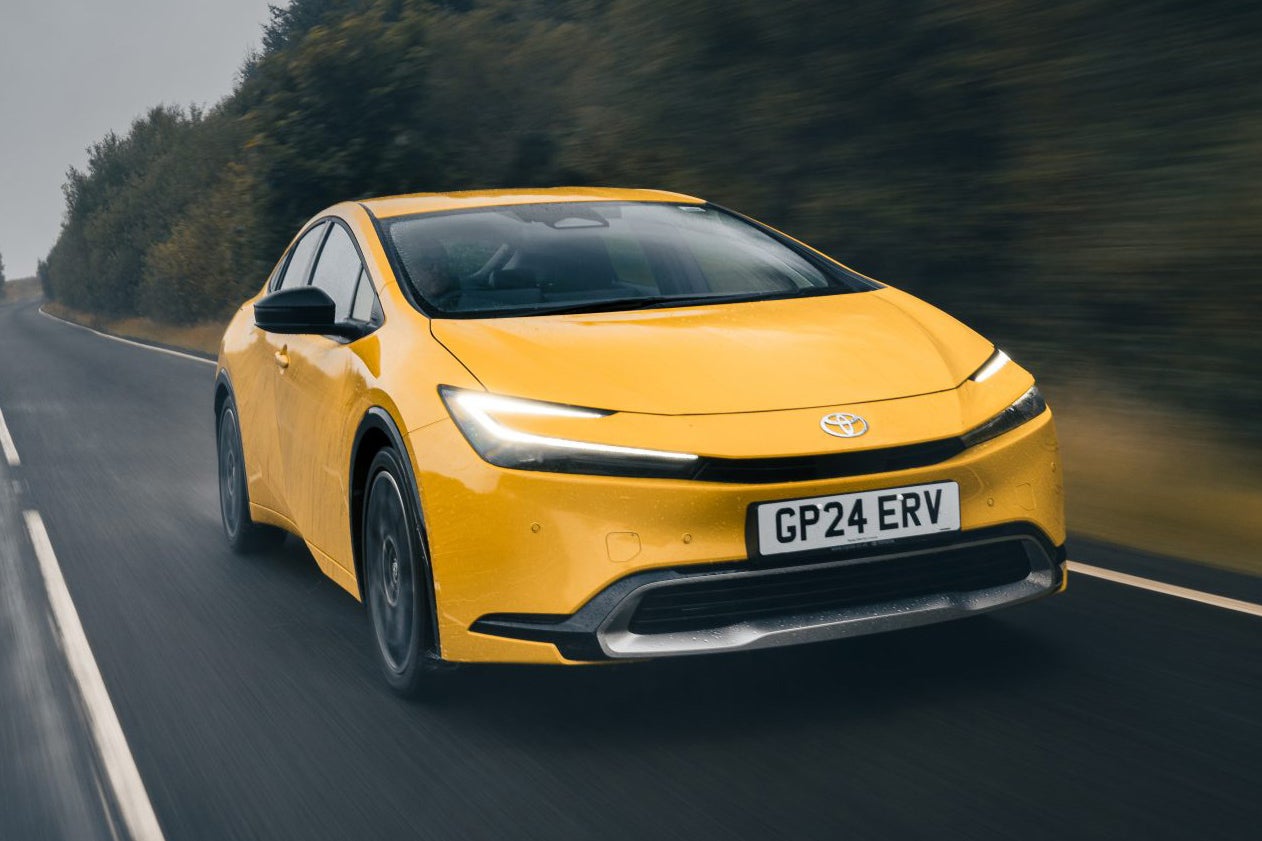
The latest Toyota Prius is a major shift in tone for a car that spent decades being bought with the head rather than the heart. It is still ruthlessly efficient, still easy to live with and still a very convincing stepping stone between conventional petrol power and a full EV, but now it also looks sleek, feels desirable and drives with more polish than any Prius before it. That does not mean it is perfect. Rear headroom and boot space are both compromised by the low, dramatic shape, and the hybrid powertrain still sounds coarse if you ask for everything at once. Even so, this is the best Prius yet by a comfortable margin and one of the more convincing plug-in hybrids on sale.
The Toyota Prius in more detail
The Prius does not need much introduction. Few cars have done more to normalise electrified driving, and for years it became shorthand for hybrid motoring in the public imagination. That visibility helped Toyota enormously, but it also trapped the Prius in a slightly awkward role. It was respected rather than desired, admired for its efficiency more than its appeal.
This generation changes that. Toyota has deliberately pushed the Prius away from worthy eco-appliance territory and towards something that buyers might genuinely covet. The proportions are much lower and sleeker than before, the nose is sharper, the cabin is more focused and the powertrain is significantly stronger.
Browse used Toyota Prius models for sale →
The result is a car that finally feels as though it has moved beyond simply being the hybrid one. The Prius is now a proper design statement in its own right, and that matters because the plug-in hybrid market is increasingly populated by cars that either look like ordinary hatchbacks with a charging flap or crossovers trying to do everything at once.
Toyota has also simplified the UK proposition. The current Prius is plug-in hybrid only, which keeps its role nice and clear. If you want a regular self-charging hybrid, Toyota will happily sell you a Corolla or C-HR. The Prius is the one for buyers who can plug in and want meaningful electric-only range without committing fully to an EV.
That is a sensible position. Plug-in hybrids can look compromised if they barely offer enough battery range to justify their extra complexity, but the Prius gets much closer to making the concept feel worthwhile. In the right usage pattern, it can cover most daily journeys electrically, while the petrol engine remains there as a safety net for longer runs.
This is why the Prius now makes more sense than it has in years. It is not simply relevant because of its history. It is relevant because the product itself is finally compelling again.
What's the best Toyota Prius trim and engine option?
The good news is that Toyota has kept the line-up simple. Every Prius in the UK uses the same 2.0-litre plug-in hybrid system with 223PS, front-wheel drive and an automatic transmission.
That means the main decision is trim. For most buyers, the best Toyota Prius is the Design. It is the cheaper of the two versions, it still comes generously equipped, and it also delivers the strongest official electric range because of its smaller 17-inch wheels.
That matters more than it might in some cars. The whole point of a Prius is to make the most of its plug-in ability, so if one trim gives you more EV distance and costs less to buy, that is a very persuasive combination.
Excel does make a case for itself if you want more luxury kit. It adds power-adjustable seats, heated and ventilated front chairs, a powered tailgate, digital rear-view mirror and a handful of other refinements. But the Prius is already a fairly expensive car, and Design is the one that keeps the brief feeling clearest.
In simple terms, Design is the sweet spot and Excel is the plush one.
What’s the price of the Toyota Prius?
The Toyota Prius currently starts at £38,845 for the Design. The Excel rises to £42,245. There are also plenty of used Toyota Prius models for sale for considerably less.
That is a lot of money for a Toyota hatchback, even one this advanced, and it does place the Prius into a part of the market where buyers will naturally look at premium-badged alternatives as well as more ordinary plug-in hatchbacks.
The Toyota Prius therefore has to justify its price on more than badge appeal. It does so partly through equipment, partly through efficiency and partly through the fact it now feels like something of a halo product for Toyota rather than a basic eco special.
Residual values should help, too. Earlier Prius generations tended to hold onto their money well, and the latest car’s stronger design appeal ought to support that. So while the list price is punchy, the broader ownership picture may be more favourable than it first appears.
Alternatives to the Toyota Prius
The Volkswagen Golf eHybrid is one of the Prius’s clearest rivals because it tackles the same basic brief from the other direction. It looks more conventional, feels more familiar and has a stronger practicality story, but it cannot match the Toyota’s sense of individuality.
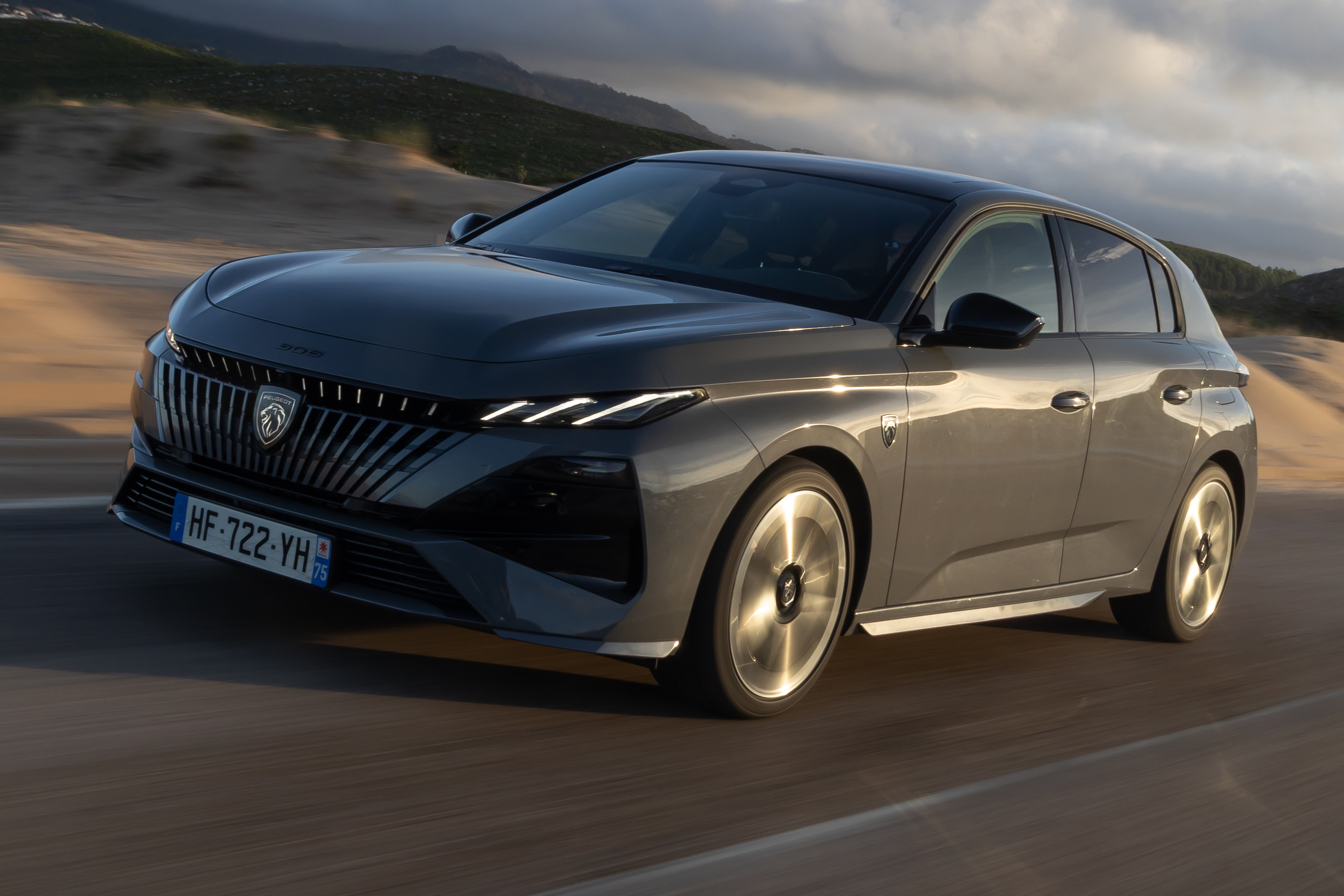
The Peugeot 308 Plug-in Hybrid is another obvious alternative if you want a stylish electrified family hatch. It has plenty of visual appeal and a more dramatic cabin, though Toyota’s reputation for reliability and hybrid know-how remain powerful advantages.
The BMW 330e is not a direct hatchback rival, but it does sit in similar pricing territory and will tempt buyers who want plug-in efficiency with a premium badge and stronger performance. It is a different kind of proposition, yet not an irrelevant comparison when the Prius starts above £38,000.
The Mercedes-Benz C300e makes a similar argument from the other side of the German premium market. It is larger, more luxurious and more overtly premium, though again it comes with a different shape and a different set of compromises.
Beyond those, the Mazda MX-30 R-EV deserves a look if you want something electrified and unusual, while some buyers may simply end up weighing the Prius against a full EV instead. The Toyota makes most sense if you want meaningful electric commuting ability but are not quite ready to give up the certainty of a petrol engine altogether.
What's the interior like in the Toyota Prius?
The Prius cabin is more modern and more driver-focused than before, but it also reveals exactly where Toyota has traded practicality for style.
Toyota Prius boot space and practicality
The biggest compromise is the boot. At 284 litres, the Prius offers luggage space more in line with a small hatchback than a roomy family car.
That does not make it unusable. The opening is wide enough, the hatchback body style still gives it some flexibility and the 60:40 split-folding rear seats add a bit of versatility. But if you come to the Prius expecting Corolla levels of usefulness, you will be disappointed.
Rear-seat accommodation tells a similar story. Legroom is acceptable, and shoulder room is decent enough, but the low roofline means headroom is noticeably compromised for taller passengers. Children will be fine, but adults in the back will be more aware of the Prius’s dramatic silhouette than those in front.
This is a car that has deliberately swapped some practicality for visual appeal. That trade-off may well be worth it for many buyers, but it is still a trade-off.
Up front, things are much better. There is good room, plenty of adjustment and a much more cocooned driving position than older Prius generations offered. The one mild irritation is that the steering wheel can still cut across the lower part of the driver display depending on how you like to sit.
Toyota Prius dimensions
The Toyota Prius measures 4,599mm long, 1,782mm wide & 1,430mm high. That gives it a noticeably lower and sleeker stance than the typical family hatchback, which is part of the reason it looks so much more dramatic than its predecessor.
The low roof contributes heavily to the car’s visual success, but it is also exactly what pinches rear headroom and underlines the Prius’s move away from pure practicality.
Tech and infotainment in the Toyota Prius
Toyota has done a good job of making the Prius feel more up to date inside. A 12.3-inch central touchscreen is fitted across the range, mounted high on the dash where it is easy to see.
The system is clear enough, with sensibly sized icons and straightforward menus, and standard-fit navigation helps reinforce the sense that the Prius is a fully loaded modern product rather than a pared-back eco special. Wireless Apple CarPlay is included, while Android Auto still requires a cable.
That is a slight annoyance, and the lack of a wireless charging pad feels like a surprising omission in a car that is otherwise keen to present itself as technologically advanced. Even so, the overall usability is good enough, and Toyota’s software now feels far less clunky than it once did.
Materials available on the Toyota Prius
The Prius’s material quality is strong, as you would expect of a modern Toyota. The colour palette is a little sombre and the overall feel is more serious than plush, but the fit and finish are excellent.
Nothing feels flimsy, and the buttons and controls all move with a precise, solid action that reinforces the impression of durability. This may not be an interior that dazzles with warmth or extravagance, but it does feel built to last.
That suits the Prius’s character. It is stylish now, yes, but still rooted in the Toyota tradition of doing the fundamentals properly.
What's the Toyota Prius like to drive?
The biggest surprise about the latest Prius is not that it is efficient. It is that it is genuinely pleasant to drive.
Toyota Prius range and performance
Every UK Prius uses the same 2.0-litre plug-in hybrid system with a total output of 223PS. That gives the car a useful amount of punch, and Toyota quotes 0-62mph in 6.8 seconds.
That is much quicker than most people will associate with the Prius badge, and it is quick enough to make the car feel properly modern rather than merely adequate. More importantly, it gives the Prius the sort of flexibility that suits real-world driving, where fast slips, quick overtakes and brisk merges are part of daily life.
The 13.6kWh battery also delivers a very credible electric-only range. Toyota quotes up to 53 miles for the Design and up to 50 miles for the Excel, depending on wheel size and specification.
That range is a major part of what makes the Prius work. It is long enough that many commuters will be able to do the vast majority of their weekday mileage without waking the petrol engine at all.
Performance data
| Model | Engine/battery size | Power | 0-62mph | Range/MPG |
|---|---|---|---|---|
Design | 13.6kWh | 223PS | 6.8 seconds | Up to 53 miles |
Excel | 13.6kWh | 223PS | 6.8 seconds | Up to 50 miles |
Toyota Prius driving and refinement
Toyota has transformed the way the Prius feels on the road. Earlier versions often felt as though they tolerated driving rather than encouraged it, but this one is composed, tidy and unexpectedly enjoyable.
Ride comfort is very good, and the Prius now glides over rough surfaces with a calm, well-damped feel that suits its efficient character perfectly. Yet it also corners neatly, with a surprising amount of composure and little of the slightly awkward, reluctant feel older Priuses could have.
The steering is not overflowing with feedback, but it is accurate enough, and the whole car feels lower, lighter and more coherent than before. That makes it easier to choose with your heart as well as your head.
Refinement is strongest when the Prius is operating electrically or under light hybrid load. In those conditions it is hushed and very easy to live with. Ask for more, though, and the familiar Toyota hybrid soundtrack returns, with the petrol engine taking on a harder edge as the transmission holds revs. It is not a disaster, but it does remind you that this is still a CVT-based hybrid powertrain at heart.
How safe is the Toyota Prius?
The current Toyota Prius has not yet been tested by Euro NCAP.
That said, it comes with a comprehensive safety package as standard. Toyota includes front, side and curtain airbags, a driver’s knee airbag, a centre airbag between the front occupants, Isofix child-seat mountings, adaptive cruise control, lane assistance, traffic sign recognition, blind-spot monitoring, front and rear cross-traffic alert, automatic emergency braking and parking sensors all round.
So while the official crash-test result is still absent, the standard safety equipment list is strong and very much in line with what buyers should expect from a car at this price.
Running costs: What it's like to live with a Toyota Prius
The Prius’s running costs depend heavily on how you use it. Treat it like a genuine plug-in hybrid and it makes a lot of sense. Ignore the charging cable and much of its advantage disappears.
Toyota Prius fuel economy
Toyota quotes up to 564.9mpg for the Design and up to 470.8mpg for the Excel under the current WLTP plug-in hybrid test cycle. Those numbers are achievable only if you charge regularly and make the most of the electric-only range.
In the real world, buyers who plug in consistently and use the Prius for lots of shorter journeys should see very impressive results. Buyers who rarely charge it and simply run it like an ordinary hybrid will see far lower numbers, though it should still remain reasonably efficient.
A realistic mixed-usage figure in the mid-50s mpg range is a fair expectation if you are using the car more casually, which still compares well with many conventional petrol rivals.
Charging is straightforward enough. The battery is not especially large by EV standards, which means topping it up at home is not a major chore. That helps the Prius’s case enormously because the whole concept works best when charging feels easy rather than like a constant burden.
Toyota Prius warranty and servicing
Toyota’s ownership proposition remains one of the Prius’s biggest strengths. New cars come with a three-year manufacturer warranty, and Toyota then adds an extra 12 months or 10,000 miles of cover every time the car has a qualifying service at an approved dealer, up to 10 years or 100,000 miles.
Servicing schedule is the more useful day-to-day detail. Toyota’s current UK guidance points owners to a 12-month or 10,000-mile interval, whichever comes first, and that is the pattern Prius buyers should budget around.
That servicing cadence is not unusually generous, but it is straightforward and fits neatly with Toyota’s service-activated warranty setup.
Toyota Prius insurance groups
Both Prius trims sit in insurance group 31.
That is broadly in line with many plug-in hybrid rivals and reflects the car’s price, performance and complexity. It is not outrageously high, but neither is it the sort of group that will make the Prius feel like a cheap option for younger drivers.
How much does it cost to tax a Toyota Prius?
The Toyota Prius now costs £200 a year in VED after year one, which is the current standard annual rate for petrol and hybrid cars.
The Expensive Car Supplement applies above £40,000, and that’s something to be aware of when looking at a Toyota Prius. Design stays below the threshold, but Excel sits above it in current UK form, so that higher trim attracts the surcharge in years two to six. This is currently an extra £440 per year.
What trims are available with the Toyota Prius?
The Toyota Prius line-up consists of Design and Excel.
Prius Design is the version most buyers should choose. It rides on 17-inch wheels and comes with automatic headlights and wipers, heated folding mirrors, keyless entry and ignition, the 12.3-inch touchscreen, 7-inch digital driver display, adaptive cruise control and the full core safety package.
Prius Excel adds 19-inch alloys, gloss black exterior trim, powered tailgate, heated and ventilated front seats, electric front-seat adjustment with memory, extra noise-reducing glass and a digital rear-view mirror.
The equipment gains are welcome, but Design already gives you the essentials, preserves the best EV range and keeps the Prius just this side of a more painful tax threshold.
Ask the Drive experts: common questions
Is the Toyota Prius a good plug-in hybrid?
Which Toyota Prius is best?
What is the electric range of the Toyota Prius?
Does the Toyota Prius get the Expensive Car Supplement?
Get our latest advice, news and offers
Keep me updated by email with the latest advice, news and offers from Drive.
.jpg)
.jpg)