- Home
- …
- Electric Cars
- Kia electric cars: Every EV explained
03/09/2026
Kia electric cars: Every model explained

Written By Keith WR Jones

Kia now boasts one of the broadest line-ups of electric cars available in the UK. This isn’t the result of a sudden strategy switch, but instead reflective of the expertise the Korean brand has accumulated by being one of the pioneers of the modern EV age.
Any car brand which sold an electric car between 2010 and 2015 can rightfully claim to have been at the forefront of the technology, as Kia was in 2014 with its first Soul EV.
As with the Kia e-Niro which followed it, they were electric versions of combustion-engined models, but it’s the newer EV-only models which has cemented the firm’s reputation as a manufacturer of spacious, efficient and desirable electric cars.
Kia’s 2026 electric car line-up comprises a host of models in different size and price brackets, from compact SUVs, capable family cars and two different takes on how to transport seven people at the same time.
If you’re looking for an electric Kia, today’s line-up looks like this:
Kia EV2
Launched in: 2026
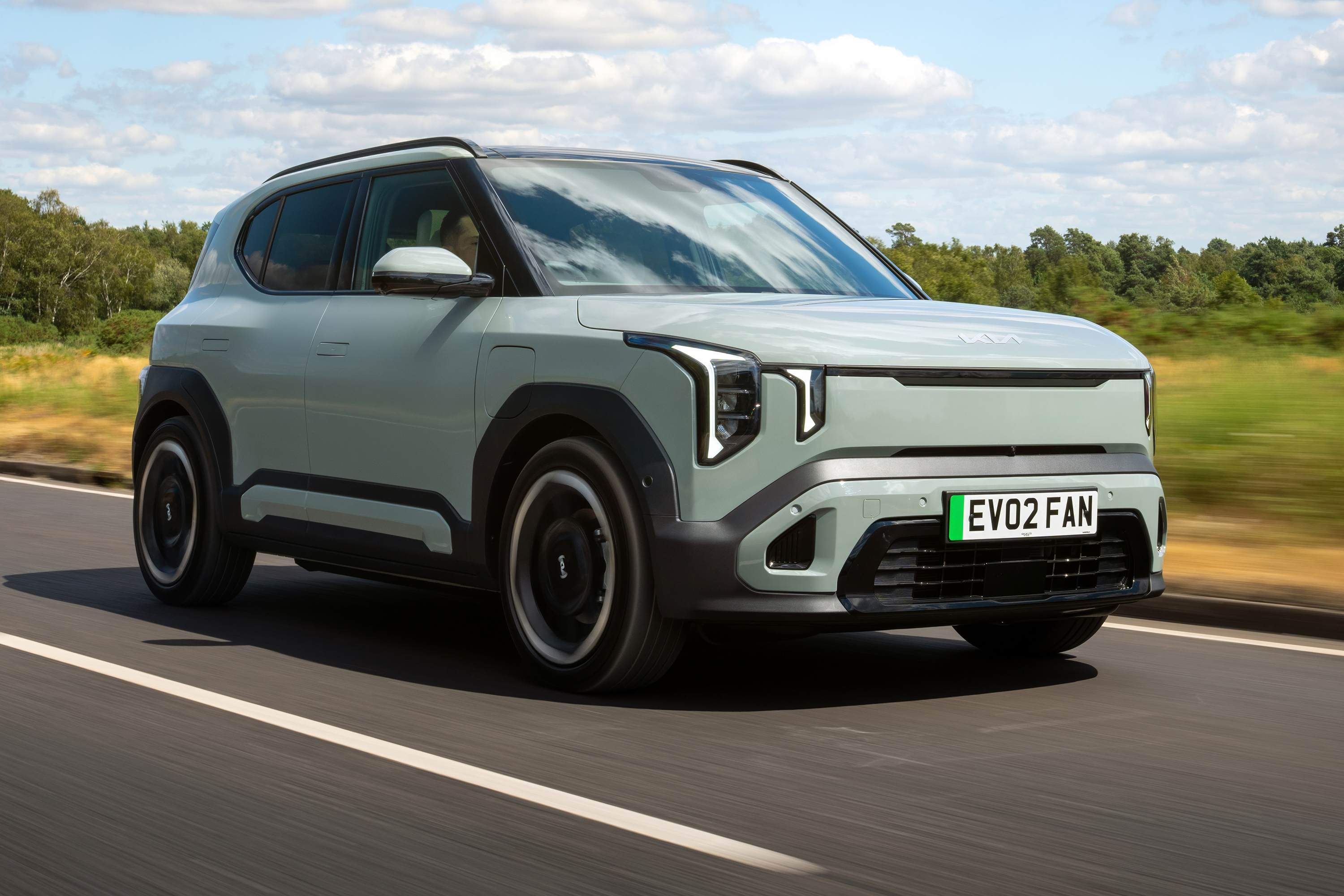
Not only is the Kia EV2 the most recent addition to its electric car range, it’s also the smallest. And yes, that also means it’s the least expensive, with prices starting a little over £24k with the government’s Electric Car Grant (ECG) discount applied.
Despite that being for the entry-level Air specification, its 136PS motor is supplied with energy from a 61.0kWh battery, for a potential driving range of up to 275 miles, comfortably outdoing its Renault 4 E-Tech rival by 26 miles, although the Skoda Epiq is just three miles behind.
Recharging the EV2 is a swift task, with a DC energy flow of up to 118kW being possible, resulting in a 10-80% top-up taking just 30 minutes.
Although the little Kia is just 4060mm long, there’s a generous amount of space inside for four adult passengers, five at a push. Behind the rear seats is a 362-litre boot, which is significantly shy of the Epiq’s 475-litre vastness — the EV2’s extra 15 litres of storage for cables under the bonnet doesn’t exactly make up the shortfall.
Generous equipment levels ensure that you won’t feel short-changed by opting for the EV2 Air, either. Its standard kit includes LED lights front and rear, climate control, heated front seats and steering wheel, keyless entry and wireless Android Auto and Apple CarPlay phone connectivity.
Build quality is excellent and — as is the case with all Kias — the EV2 has the reassurance of a seven-year/100,000-mile warranty.
Kia EV3
Launched in: 2024
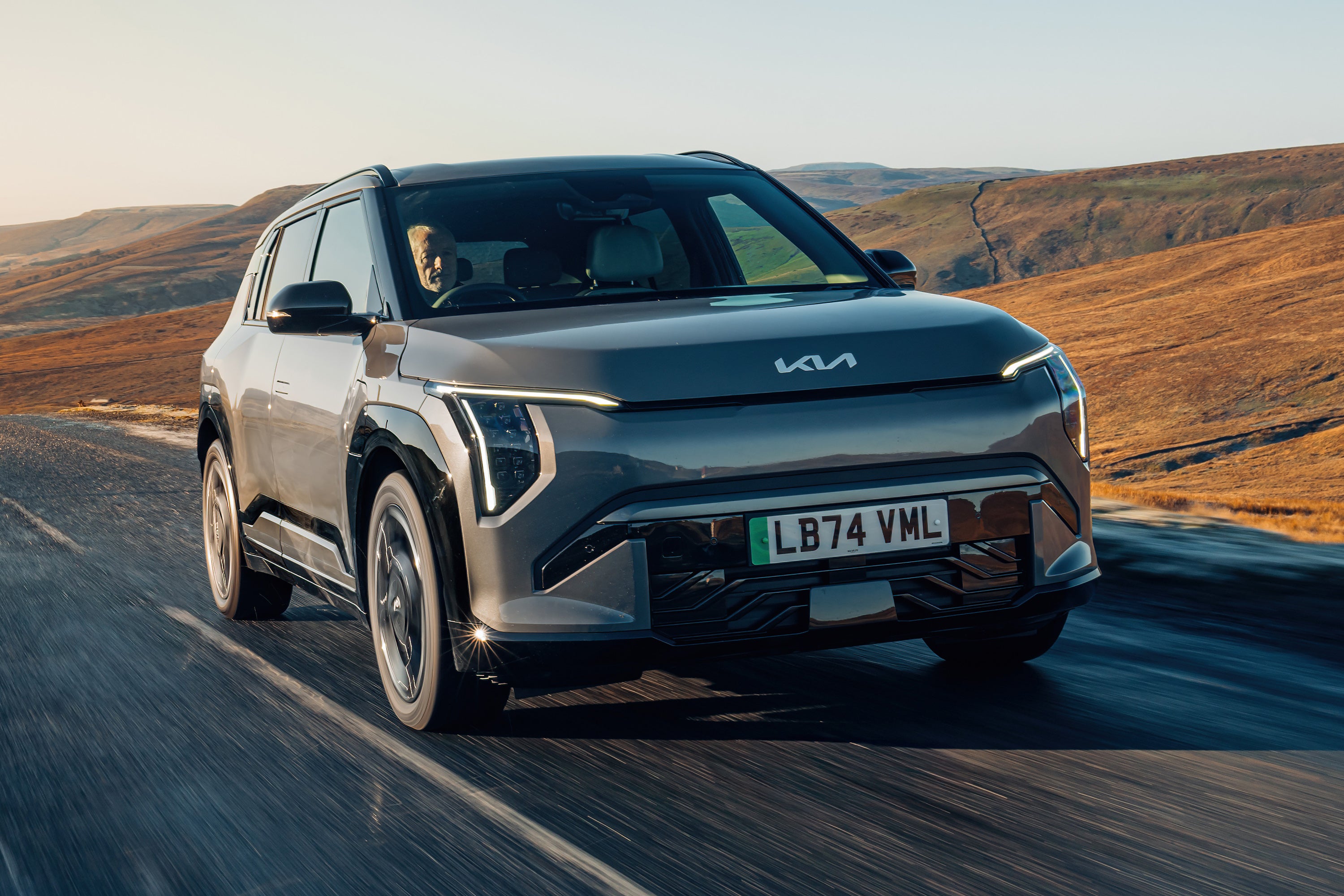
It’s no great surprise to discover that the Kia EV3 is made to a similar recipe to the smaller EV2, albeit just in slightly larger quantities. The result is a larger, yet still compact, five-seater SUV, with a 460-litre boot and a further 25 litres of storage space hidden under the bonnet.
That’s 10 litres shy of the Skoda Elroq’s boot capacity, despite the fact the EV3 is 188mm shorter overall at 4300mm. A well-packaged, erm, package, then.
With prices starting at around £31,500, the Kia is also the best part of a grand less than the Skoda, although the EV3’s 270-mile range is nine miles short of the Elroq’s when you stick with the smaller 58.3kWh battery, which is only available in conjunction with Air specification.
There is a larger 81.4kWh alternative, which extends the EV3’s driving potential between plug-ins to 375 miles, now besting the equivalent Elroq by five miles, but Kia charges an extra £3k for the extra battery capacity. That’s still £1000 less than the 84kWh-batteried Skoda, mind you.
EV3 DC recharging is at 101kW for the 58.3kWh battery and 128kW with the 81.4kWh version, resulting in 10-80% plug-in durations of 29 and 31 minutes respectively.
Whichever battery size EV3 you opt for, drive is provided by a 204PS electric motor generating 283Nm of torque, but remember it weighs a chunky 1800kg. As a result, performance is brisk rather than break-neck, with a 0-62mph time of 7.5 seconds for the 58.3kWh battery. There’s an 85kg weight penalty with the larger battery dulling its acceleration by two-tenths of a second.
Still, it pulls sufficiently well that you’ll quickly gain confidence darting for gaps in traffic on roundabouts or making safe overtaking manoeuvres. Overall, the EV3 focuses on being comfortable and efficient, rather than sporty.
As with the EV2, you’re likely to find that the EV3 Air has the vast majority of the equipment you desire without forking out an extra £3400 for the glitzier GT-Line trim.
Kia EV4
Launched in: 2025
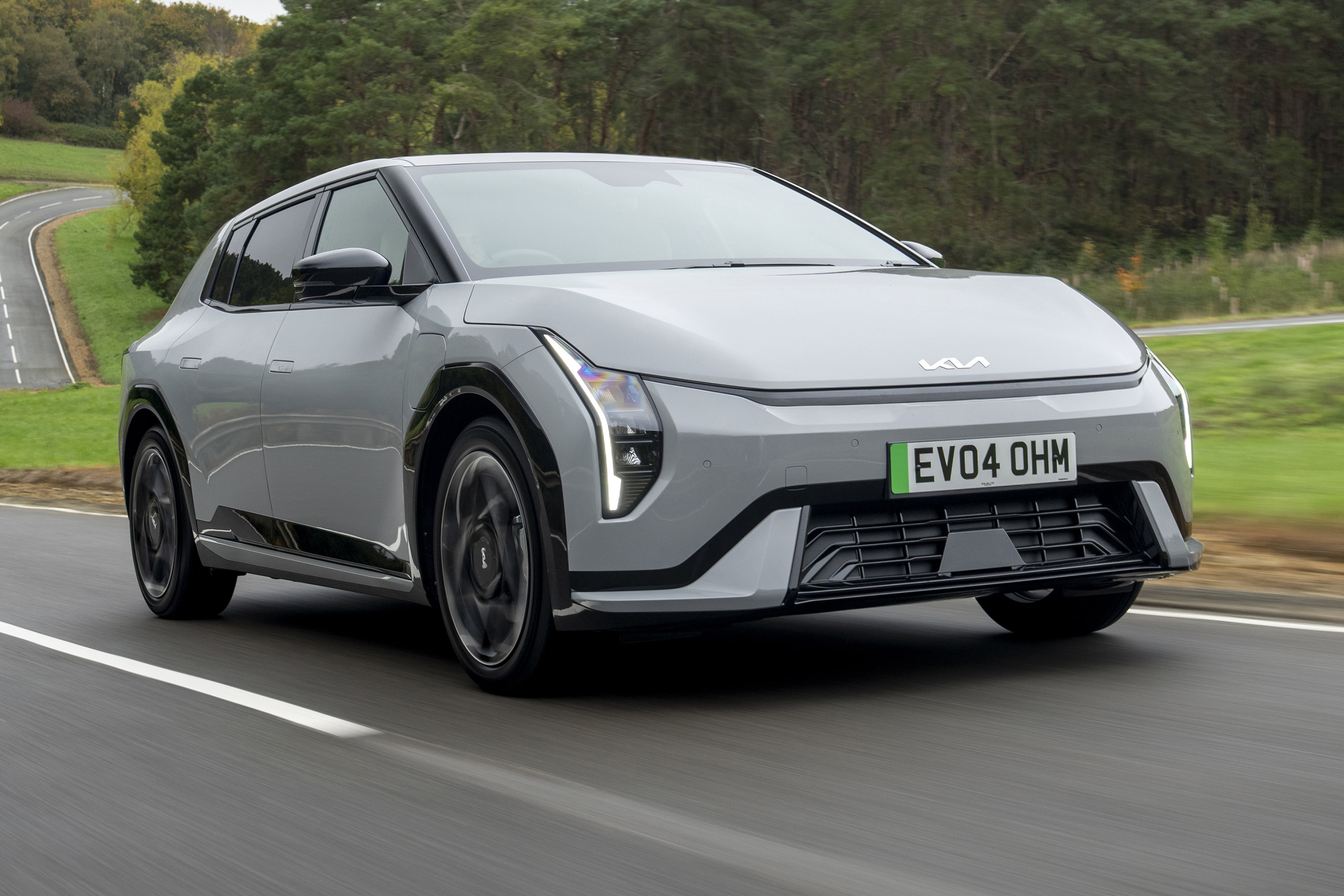
Longer and lower than the EV3, the Kia EV4 is a five-door family hatchback using the same platform, electric drive system and battery pack. Consequently, it’s very similar to drive, with near-identical performance.
Where the EV4 has an advantage is that it’s more aerodynamically efficient — by cleaving the air with greater ease, its potential driving range figures are even more impressive. There’s 273 miles theoretically available from the 58.3kWh battery and 388 miles if you go for the 81.4kWh alternative. Once again, the smaller pack is only sold with Air specification.
Both of those are shy of what’s available from the equivalent Volkswagen ID.3 Neo versions, though. With a 58kWh battery, the VW yields 305 miles, the 79kWh pack up to 390 miles.
Still, the Kia’s 435-litre boot out-volumes the VW’s by 52 litres and it’s significantly cheaper to buy as well. EV4 prices start at a smidgen under £31k inclusive of the ECG discount, while the ID.3 Neo can be had for just £500, but with an even smaller 50kWh battery.
Once again, the EV4 Air is likely to feature the vast majority of the equipment — if not significantly more — without having to upgrade to the GT-Line version.
Kia EV4 Fastback
Launched in: 2025
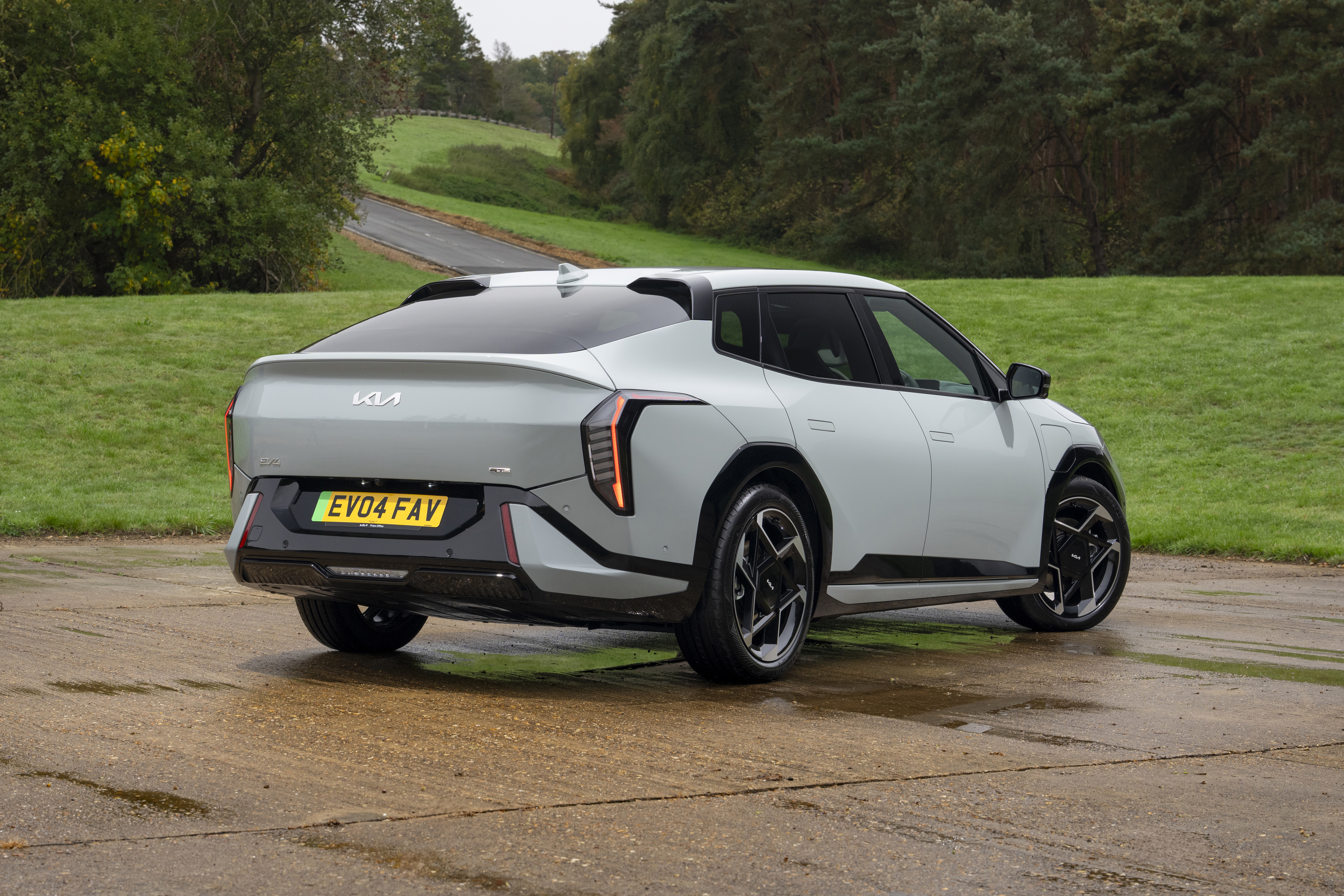
There’s more to the Kia EV4 Fastback than simply the novelty value of it being a saloon. That said, given its rakish silhouette, you’d be forgiven for wondering if it was more of a four-door coupe — considering that rear-seat headroom is a little compromised compared with the EV4 hatchback and the boot opening’s impression of a letterbox, it is a leftfield choice.
Assuming you only intend to post relatively slender luggage into the EV4 Fastback’s boot, you’ll find it more generously accommodating than the hatchback’s at 490 litres versus 435.
Also improved due to the Fastback’s even better aerodynamic advantage thanks to that sloping tail, is driving range. It’s only available with the larger 81.4kWh battery and in GT-Line or higher trim levels, but its 380-mile potential is 18 miles greater than the five-door versions.
There’s a financial penalty for all of this, of course, with the least expensive EV4 Fastback weighing in at just under £41k, a £1500 jump compared with the equivalent hatchback.
Looked at another way, the Kia’s a little over £1000 more than the MG IM5 75 Standard Range, but that will only cover 304 miles before needing plugging in. Similarly, you can buy an entry-level Tesla Model 3 Rear-Wheel Drive for less than £38k, yet it will only get you 332 miles of driving in.
It’s a model of niche interest, certainly, but one worth considering if an electric saloon’s what you crave.
Kia EV5
Launched in: 2025
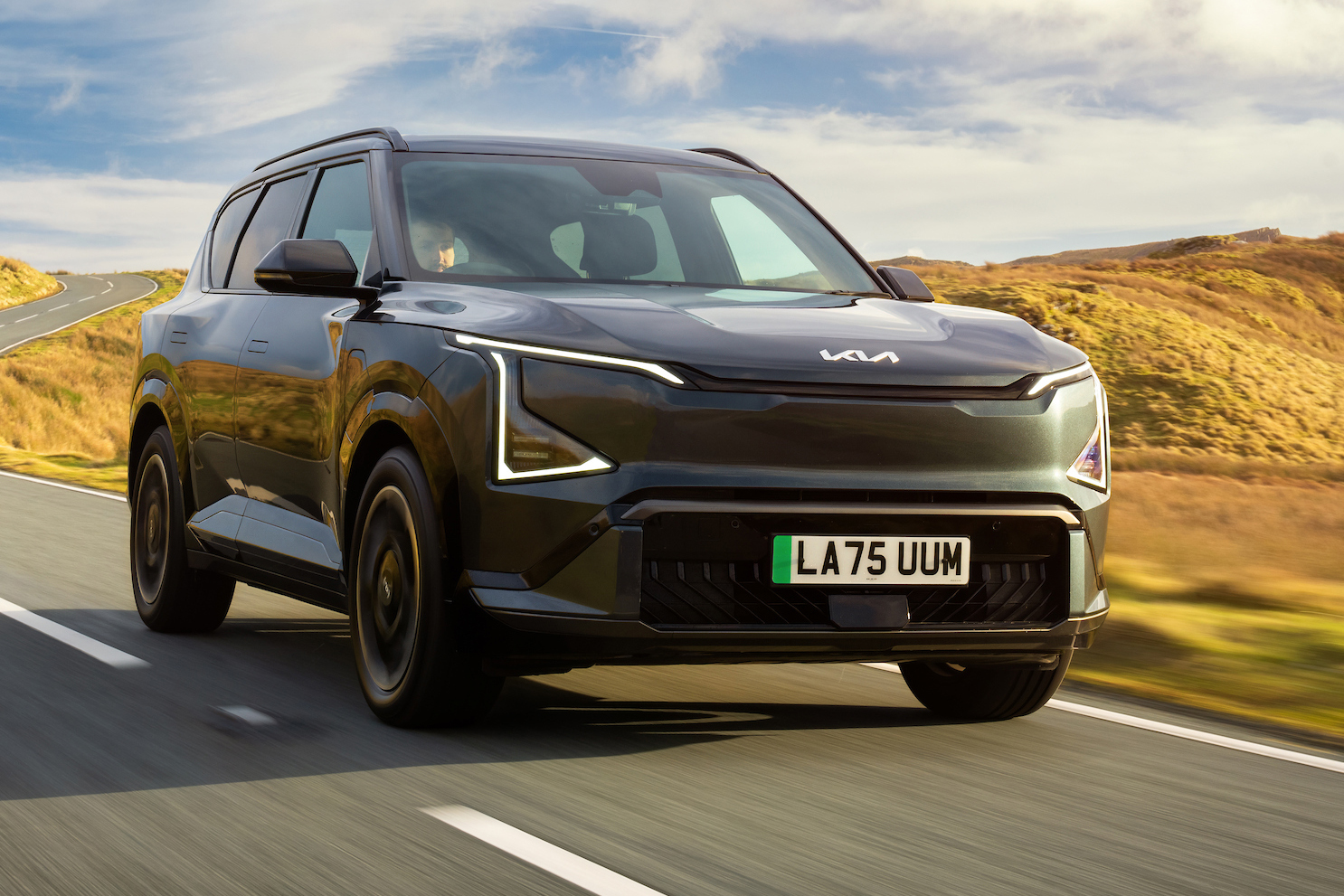
Logically enough, the Kia EV5 uses an enlarged version of the EV3 and EV4’s platform, topped with an angular and capacious body, making it a great potential choice as an electric family SUV.
There’s oodles of space inside for five adults, with a commodious 566-litre boot behind and a further 44 litres available under the bonnet. Those figures certainly put the Volkswagen ID.4’s 533-litre boot to shame.
All EV5s come with the familiar 81.4kWh battery pack, with DC recharging quoted at 30 minutes when plugged into a 150kW charger. Where there’s a difference is with its choice of electric drive systems.
The most sensible choice is the front-wheel drive 217PS, which can be paired with all three of the EV5’s trim levels. In entry-level Air guise it delivers a theoretical driving range of up to 329 miles — significantly shy of the 351-mile best of the 79kWh-equipped VW ID.4.
With the addition of a rear-mounted electric motor, the EV5 all-wheel drive sees power upped to 265PS, but range dropping to a peak of 305 miles, not helped by it only being available in GT-Line and upwards specifications. By comparison, the ID.4 4Motion has a slightly smaller 77kWH battery, let still claims a 341-mile range.
Prices for the Kia EV5 also look out of sync with the VW, starting at £39,345 compared with £34,495. However, the ID.4 gets a £1500 ECG discount whereas the EV5 doesn’t, plus in Essential specification its kit count doesn’t compare with the Kia’s Air trim.
Go for the VW in more generous Match specification and the price leaps to almost £42,500 — almost the same as the racier-looking EV5 GT-Line.
Kia EV6
Launched in: 2021
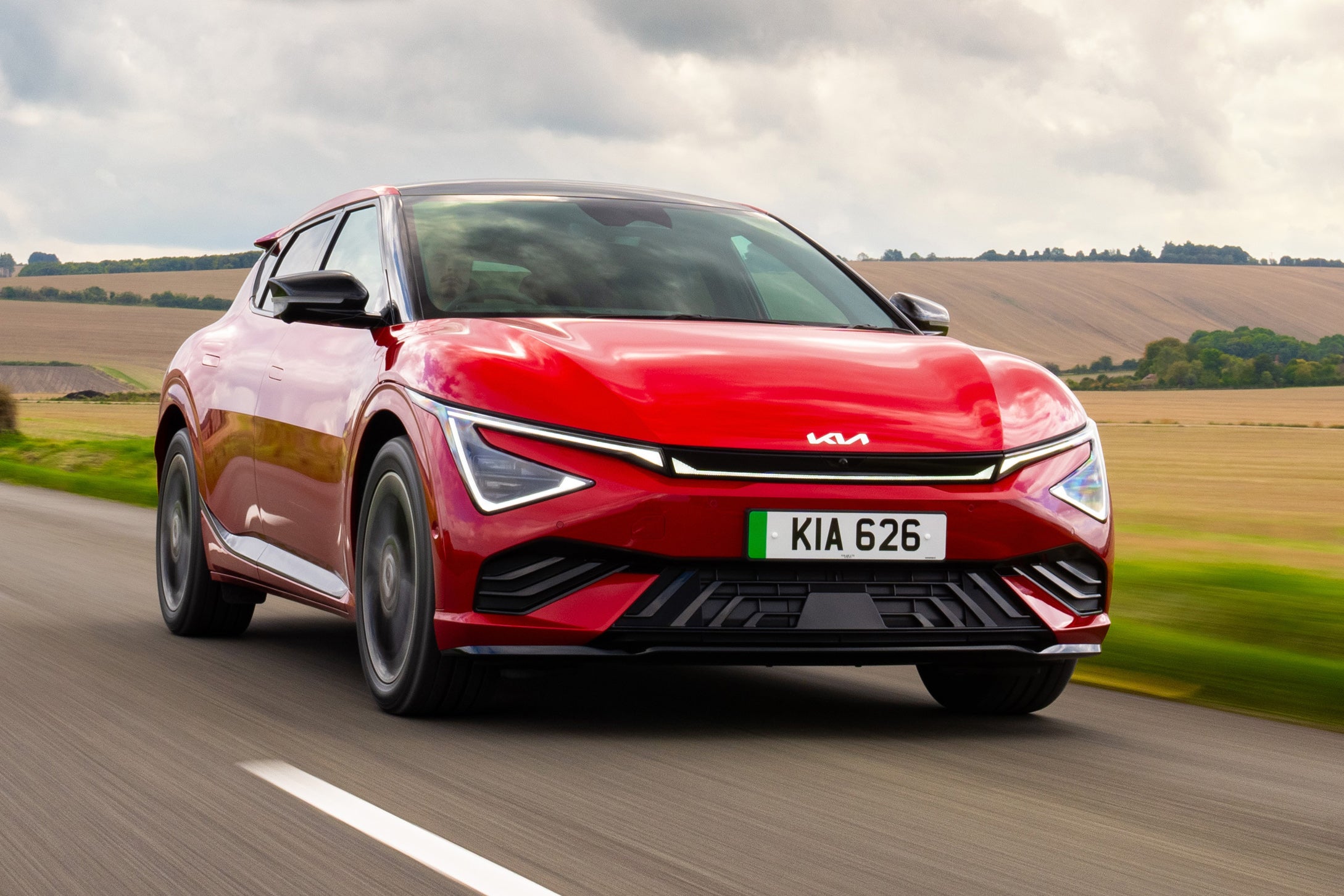
It seems scarcely believable that the Kia EV6 has been around for five years already given how fresh and bold it looks, although its mid-life facelift in 2025 brought is front-end styling into line with the Kia’s smaller electric models, helping it look current.
It’s a tall-yet-slinky five-door hatchback, similar in essence to the Volkswagen ID.7, although the Kia’s interior doesn’t feel as palatial. In fact, those sat in the rear of the EV6 will lament the lack of footroom under the front seats, in particular.
Behind the rear bench, the EV6 is also less capacious than the ID.7, with a maximum boot capacity of 490 litres versus 532 litres. Mind you, add a further 52 litres of extra space under the bonnet of front-wheel drive EV6s — 20 litres in all-wheel drive variants — and the VW’s toppled.
All Kia EV6s come with an 84.0kWh battery which can be recharged at an appropriately powerful DC public station at up to 350kW. That means a 10-80% top-up takes just 18 minutes. How far it can go between plug-ins depends on which of the three levels of electric motor power you choose, of course.
Stick with the rear-wheel drive 228PS version for the greatest potential range at up to 361 miles, which is seven miles short of the ID.7’s figure with a smaller 77kWh battery.
Dialling the Kia’s power up to 325PS, with a second motor powering the front wheels, trims the range down to 339 miles. That’s quite a bit down on the ID.7 GTX Plus 4Motion’s 371-mile potential, but that does come with a larger 86kWh battery.
Then there’s the Kia EV6 GT, also with AWD, packing a colossal 650PS and 770Nm of torque, sufficient for a 3.5-second 0-62mph time. That punch pummels its range down to 279 miles, though.
Remarkably, at £60k, the EV6 GT is just £1400 pricier than the ID.7 GTX Plus, despite the Kia’s 310PS power advantage.
Running the risk of sounding like a stuck record, we’d instead go for the entry-level EV6 Air with rear-wheel drive. It still strikes an appealing blend of being comfortable and sporty to drive, is packed with equipment and costs a little over £45,500. That’s a £5000 saving over the cheapest ID.7.
Kia EV9
Launched in: 2023
.jpg)
Tapping directly into the aggressively styled and enormous SUV zeitgeist is the Kia EV9 — the firm’s largest electric model to date at 5015mm long. It positively dwarfs the 4874mm Skoda Peaq, plus at 1780mm tall the Kia also has a 116mm height advantage.
All EV9s are equipped with a 99.8kWh battery, capable of being DC recharged at up to 210kW. Connected to such a charger, you’ll be looking at 24 minutes for a 10-80& state of charge increase.
As with the comparatively lithe EV6, how far the EV9 can be theoretically driven between charges depends on which of its trio of drive systems you opt for.
Only available with the entry-level EV9 Air is the rear-wheel drive 203PS option yielding a maximum range of 349 miles. Opting for all-wheel drive and a minimum of GT-Line specification, sees power increase to 383PS but the driving range fall to a high of 316 miles.
Curiously, choosing the most expensive Kia EV9 GT with its 507PS output doesn’t result in a further reduction of driving range.
So far, the Skoda Peaq has only been confirmed with a 91kWh battery, with, erm, peak range figures of 395 miles for rear-wheel drive versions and 373 miles for those with all-wheel drive.
Up to seven adults can sit comfortably in the EV9, with a swish six-seater layout also available, swapping the middle-row bench for a pair of captain’s chairs which can swivel to face backwards. All Peaqs have seven seats, but the rearmost of those are best-suited to children.
Behind the third row, the Kia provides 333 litres of boot space, expanding to 828 litres in five-seater mode. By comparison, the Skoda’s stats in those configurations are 299 and 890 litres respectively. Under the Peaq’s bonnet is a 37-litre frunk, which is outranked by the EV9’s 52 litres for AWD versions and 90 litres on the RWD choice.
Focusing very much on comfort, the EV9 does feel enormous to drive and can seem unwieldy in tighter, urban environments, but it soaks up mile after mile of long-distance driving with ease.
What might surprise you, given it’s a Kia, is the EV9’s price. We’d — again — go for the cheapest iteration, but that’s still £66,645, with the dearest topping out at £84,595. The Skoda Peaq? £51,980-£60,380.
Kia PV5 Passenger
Launched in: 2025
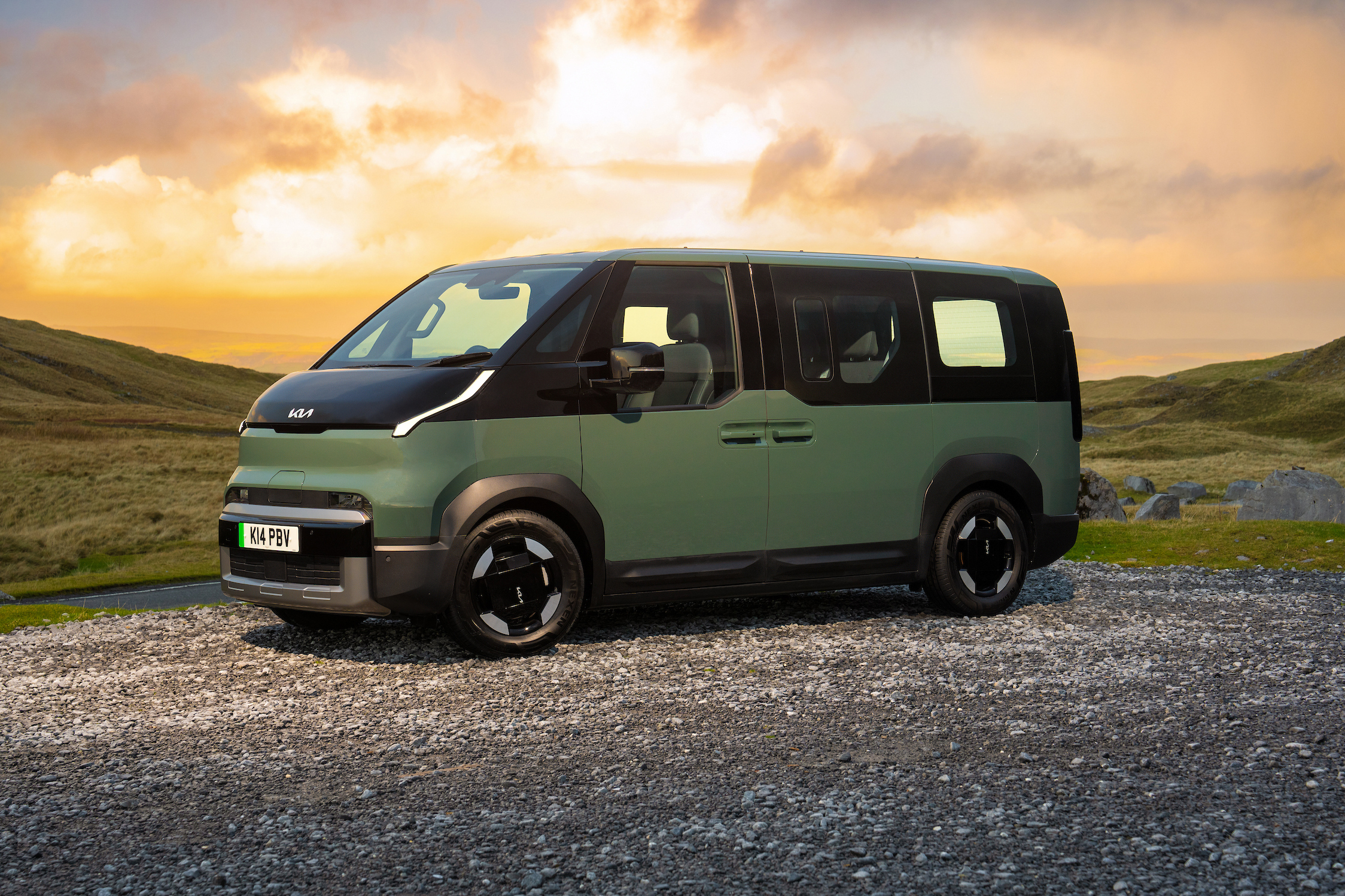
As you can tell from its cuboid form, the Kia PV5 Passenger is based on the design of a van, yet the result is one of the most radical looking MPVs of all time. Those perpendicular lines liberate masses of interior space for either five or seven passengers depending on which version you choose.
Despite being 320mm shorter than the EV9, the PV5 Passenger has 318 litres of cargo space behind its third-row seats, or 785 litres aft of the second-row, when loaded to the window line. Pile your gear to the roof and that grows to 1330 litres, with up to 3615 litres with all the rear seats folded away. Very van-like, obviously.
Kia’s also employed a seven-seater layout that boosts convenience by making the second-row a two-seater bench, with space to get to the three-seater back row left free when you open the sliding side door. A really positive touch if you have childseats anchored in the middle row.
Although the PV5 Passenger is ostensibly a rival for the Volkswagen ID. Buzz, its specifications and pricing confirm a different state of affairs.
While the cheapest VW has a 79kWh battery for a 282-mile range, 286PS of power and starts at £59,405, the Kia has a choice of 51.5kWh and 71.2kWh packs for ranges of 183 and 256 miles, respectively, with 122PS or 163PS and is priced from £31,695, inclusive of the ECG discount. Both of the Kia’s batteries can be DC recharged from 10-80% in around 30 minutes.
Yes, the PV5 Passenger’s low price and commercial vehicle origins ensure that the interior plastics are of the hard and functional variety, yet that somehow adds to the Kia’s charm rather than detracting from it.
If your budget stretches to it, we’d recommend going for the bells and whistles of the PV5 Passenger in range-topping Elite trim, which includes conveniences such as two-tone faux leather trim, air-conditioned front seats, a 360-degree parking cameras and electrically sliding side doors. The five-seater’s £39,675 with the ECG discount and the seven-seater will be £40,475 when its ECG discount is approved.
Launched in the UK in 2014, the Kia Soul EV was the brand’s first electric car to go on sale in this country. It was an electric version of the then new combustion-engined second-generation Kia Soul.
Compared with Kia’s 2026 electric cars, the Soul EV’s statistics look modest at best. Power peaked at 111PS, although it produced a healthy 285Nm of torque, so felt reasonably nippy around town. That said, its 10.8-second 0-60mph time isn’t exactly sparkling.
Energy was stored in a battery with a 27kWh capacity, which could be DC recharged at up to 50kW. Doing so meant a 0-80% top-up would take 33 minutes.
Driving range? Officially 132 miles, but that was under the older NEDC testing methodology which was more favourable than today’s WLTP alternative. In the real world, 100 miles is more likely.
And its price in 2014? After the government’s then £5000 Plug-in Car Grant (PiCG) had been deducted, it still cost £24,995 — that’s approaching £35,000 today.
Yes, there will be. Within the next few months, both the Kia EV3 GT and EV4 GT will be launched with power increased to 292PS, with the EV5 GT to follow, boasting 305PS.
Official driving range figures are yet to be published but expect them to be lower than existing GT-Line S derivatives with the 81.4kWh battery.
Unlike other manufacturers, Kia has not made a public announcement about when it plans to be an EV-only brand. Expect it to simply follow legislation, such as the UK and EU ban on new cars sold with combustion engines from 2035.
How long a recharge takes any electric car depends on a number of variables, including the battery capacity and the charger's power.
Kia typically quotes 10-80% recharge times for its EVs when using DC public chargers, meaning a plug-in duration of 18-30 minutes depending on the model.
At home, using a common 7kW domestic wallbox charger, a flat-to-full recharge will likely take between eight and 16 hours.
Find an electric Kia for sale
Kia EV6166kW Air 77.4kWh 5dr Auto
202336,366 milesElectric£20,495
CF313NBKia Niro150kW 3 65kWh 5dr Auto
202214,532 milesElectric£18,725
LS197BZKia Niro150kW 3 65kWh 5dr Auto
202356,474 milesElectric£17,495
CF313NBKia Niro150kW 3 65kWh 5dr Auto
202361,624 milesElectric£16,995
CF313NBKia Niro150kW 3 65kWh 5dr Auto
202358,260 milesElectric£17,495
CF313NB- Images coming soon!0
Kia Niro150kW 3 65kWh 5dr Auto
202413,000 milesElectric£22,373
DN24NU - Images coming soon!0
Kia e-Niro150kW First Edition 64kWh 5dr Auto
202053,300 milesElectric£13,000
LS197BZ Kia EV3150kW Air 81.4kWh 5dr Auto
20252,549 milesElectric£28,000
WF104RS