06/07/2026
What is a hybrid car and how does it work?

Written By Mark Nichol

Hybrid cars have become a very popular alternative to more conventional petrol and diesel cars. Fundamentally it’s because they promise lower fuel bills and reduced emissions, but without any change to your driving habits at all. In theory that makes them an effortless stepping stone towards an electric car, but without the need to plug it in to charge.
Here we’ll explain the difference between the different types of hybrids, but we’ll primarily focus on the variety that you don’t plug in – often called self-charging hybrids.
In reality, driving a hybrid feels barely different to a traditional petrol car with an automatic gearbox – save for the addition of an electric motor and battery pack, they aren't much different. Here we'll explain how hybrid cars work, the different types available and whether a hybrid, plug-in hybrid or fully electric car makes the most sense for you.
What is a hybrid car?
A hybrid combines an engine – in most instances a petrol one – with an electric motor and a battery pack. These all work together to power the car as efficiently as possible.
Unlike a fully electric car, a hybrid still uses pump petrol or diesel from any filling station. However, the system also recovers energy that would otherwise be wasted when slowing down or braking.
In most modern hybrids, the car automatically decides when to use the petrol engine, the electric motor or a combination of both. There's usually nothing for the driver to do. Some of them have hybrid driving modes to choose between, but if you press the EV mode button and the car decides you haven’t got enough battery for electric-only driving, it will override you. The main goal of a hybrid system is to improve fuel economy and reduce emissions.
Hybrid cars have been around in the UK since 2000, but they've become increasingly popular more recently as manufacturers look for ways to improve efficiency during a time when many people remain unsure about making the switch to a fully electric vehicle.
How does a hybrid car work?
At its simplest, a hybrid car uses two sources of power. The engine provides most of the driving range and performance, while the electric motor helps reduce fuel consumption by assisting the engine or taking over entirely in certain situations.
When you slow down or apply the brakes, the hybrid system captures some of the energy that would normally be lost as heat. This process is known as regenerative braking, with the recovered energy being stored in the battery as electricity.
The stored electricity can then be used to help move the car away from a standstill, drive at low speeds and support the engine when accelerating. In everyday driving, the process is largely unnoticeable.
Many hybrids will seamlessly switch to electric power when manoeuvring, sitting in traffic or travelling slowly through urban areas – once more power is required, the engine starts automatically. This is why hybrid cars tend to achieve their biggest fuel-saving benefits in stop-start traffic and urban driving rather than on long motorway journeys.
In the best systems you’ll only notice that there’s a complexity of the hybrid drive system when you realise there’s no engine running, because the car is unusually quiet. And when the engine kicks in, it does so without sending a jolt through the car.
What are the different types of hybrid car?
The term 'hybrid' is often used to describe several different technologies, which can be confusing for buyers. Here are the main types of hybrid:
Self-charging hybrid
When most people talk about hybrid cars, they're referring to a self-charging hybrid – or HEV – which are what we’re talking about here. These use an engine – typically petrol – an electric motor and a battery that charges itself while driving. The battery is topped up through regenerative braking and by the petrol engine itself. You never need to plug the car into a charging point.
Popular examples include the Honda Jazz, the Renault Clio E-Tech and the Toyota Corolla. For drivers who mainly cover short-to-medium distances and spend a lot of time in towns or cities, self-charging hybrids can offer noticeably better fuel economy than a non-hybrid equivalent model.
Mild hybrid
A mild hybrid (MHEV) uses a smaller electric motor and battery, which isn't sufficiently powerful enough to drive the car alone, except for tiny bursts. Instead, it assists the petrol or diesel engine during acceleration and allows certain systems to operate more efficiently.
Fuel-saving benefits are generally smaller than those offered by a full self-charging hybrid, but mild hybrid systems are often cheaper and simpler as a result. Popular mild-hybrids include the Ford Puma, the Volkswagen Golf and the Volvo XC40.
Plug-in hybrid
A plug-in hybrid (PHEV) combines elements of a self-charging hybrid and an electric car. Like a HEV, it has both an engine and an electric motor, but it uses a much larger battery that can be charged from an external power source, hence the plug in element of its name.
Many PHEVs can travel between 50 and 80 miles on electricity alone with the latest generation models now exceeding 90 miles. This can be enough for many daily commutes without using any fuel at all. However, plug-in hybrids only deliver their full efficiency benefits when they're charged regularly. If the battery is rarely charged, they can end up using more fuel than HEV equivalents due to the extra weight they carry.
If you're specifically considering a PHEV, it's worth reading our dedicated guide to plug-in hybrid cars and how they differ from self-charging hybrid. The Audi Q5 e-hybrid , the Ford Kuga PHEV and the Skoda Kodiaq iV are all plug-in hybrids.
Range extender electric cars
Less common, but technically a sort of hybrid, a range extender EV is basically a battery electric car but with an engine that acts purely as a generator to charge the battery and not to drive the car. The Range Extender versions of the original BMW i3 are an early example.
The idea is that the car mostly feels like an electric car to drive – the wheels are only ever driven by an electric motor – but the generator means that range anxiety isn’t a thing. It’s a neat principle, but they can feel very unusual when the engine kicks in to charge the battery as the revs don't feel in sync with the road speed.
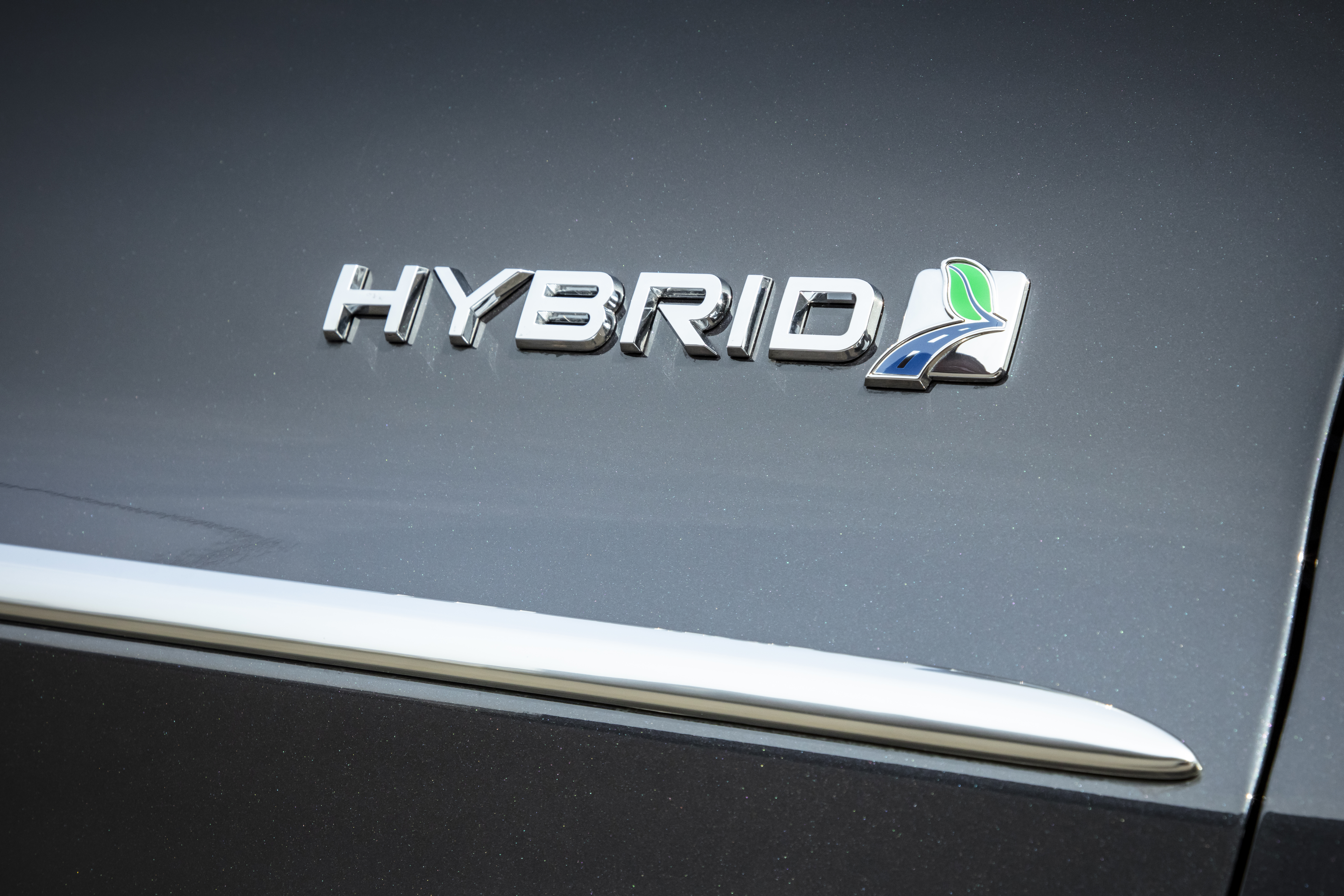
What are the advantages and disadvantages of a hybrid car?
It’s important to look honestly at the good and the not-so-good when thinking about getting a self-charging hybrid. Some will find that jumping straight from a traditional car to an EV is actually the best move.
Advantages
Good fuel economy in town: Hybrid systems excel in stop-start traffic, where the electric motor can do much of the work.
No plugging in required: You get some of the benefits of electrification without worrying about charging points, cables or home charger installation.
Lower emissions: Because the engine works less hard, hybrid cars typically produce fewer CO2 emissions than non-hybrid equivalents.
Smooth and quiet driving: Because many hybrids spend time operating on electric power at low speeds, they’re especially refined around town.
They feel ‘normal’: For drivers who aren't ready to commit to a fully electric vehicle, a hybrid can feel like a natural stepping stone.
Disadvantages
Higher purchase price: Hybrid versions often cost more than equivalent petrol models, although the gap has narrowed in recent years.
Less benefit on motorways: At higher speeds, the engine does most of the work.
Not as efficient as an EV: While hybrids reduce fuel consumption, they still burn petrol and diesel to drive.
Smaller gains for high-mileage drivers: If most of your driving involves long-distance motorway travel, a hybrid may not deliver the savings you want.
What this means for you
The right choice depends largely on how and where you drive. A self-charging hybrid is often a good fit for drivers who want lower fuel bills but don't want to change their routine. There's no charging to think about and ownership feels much like driving a conventional petrol car.
A plug-in hybrid can make sense if you have somewhere convenient to charge and most of your journeys fall within its electric driving range. Used correctly, a PHEV can dramatically reduce fuel consumption. However, if charging regularly isn't realistic, a self-charging hybrid is often the better choice.
A fully electric car may be the best option if you can charge at home and regularly cover predictable daily distances. Running costs are often lower, maintenance requirements can be reduced and there are no tailpipe emissions.
For many buyers in 2026, the decision comes down to charging access. If you can charge easily, an EV is worth serious consideration. If you can't, a self-charging hybrid remains one of the most practical and straightforward ways to reduce fuel consumption without changing how you use your car.
Mild (MHEV) and self-charging hybrid (HEV) cars do not need charging. That’s what distinguishes them from plug-in hybrids (PHEVs) cars. All hybrids generate and store their own electricity through regenerative braking and via the engine. You simply fill them with fuel and drive as normal.
Yes, many self-charging hybrids can drive using electricity alone for short periods. This usually happens at low speeds, when manoeuvring or in slow-moving traffic. However, the battery is relatively small, so the engine will start automatically when more power is needed. You’ll generally find that a hybrid can travel for a mile or so, at speeds up to 30mph, before the engine kicks in.
In many cases, yes. Hybrid cars typically use less fuel than equivalent non-hybrid models, particularly in urban driving where the electric motor can contribute more frequently. The exact savings will depend on your driving style, annual mileage and the type of journeys you make.
For many drivers, it is. A hybrid remains one of the easiest ways to reduce fuel consumption and emissions without relying on public charging infrastructure. They're especially appealing to drivers who mainly cover urban or mixed-use journeys and aren't yet ready to switch to a fully electric car.
However, if you have reliable access to charging at home and your lifestyle suits electric motoring, it's worth comparing a hybrid against a modern EV before making a final decision.