Citroen C3 Review

Written By Matt Robinson
- 2024
- Small hatch
- Petrol, petrol hybrid
What we love
Exceptionally comfortable ride and seats
Spacious cabin for a small car
Strong value and useful standard equipment
Things to consider
Infotainment system feels dated
Hybrid is not a full hybrid
Cabin could use more colour
The DRIVE take on the Citroen C3, is it the right car for you?
The Citroen C3 is an appealing small car for buyers who value comfort, space and affordability more than sharp handling or rapid performance. Its soft suspension and supportive seats make it unusually relaxing, while the tall body provides enough room for four adults and a useful 310-litre boot. The touchscreen falls behind the best rival systems and the C3 is not especially exciting to drive. Those are reasonable compromises in a small hatchback that gets the fundamentals right and is more comfortable than many larger cars.
The Citroen C3 in more detail
The disappearance of the Ford Fiesta prompted plenty of speculation that the traditional small hatchback was becoming obsolete. In reality, compact cars remain popular with buyers who want something affordable, efficient and easy to park.
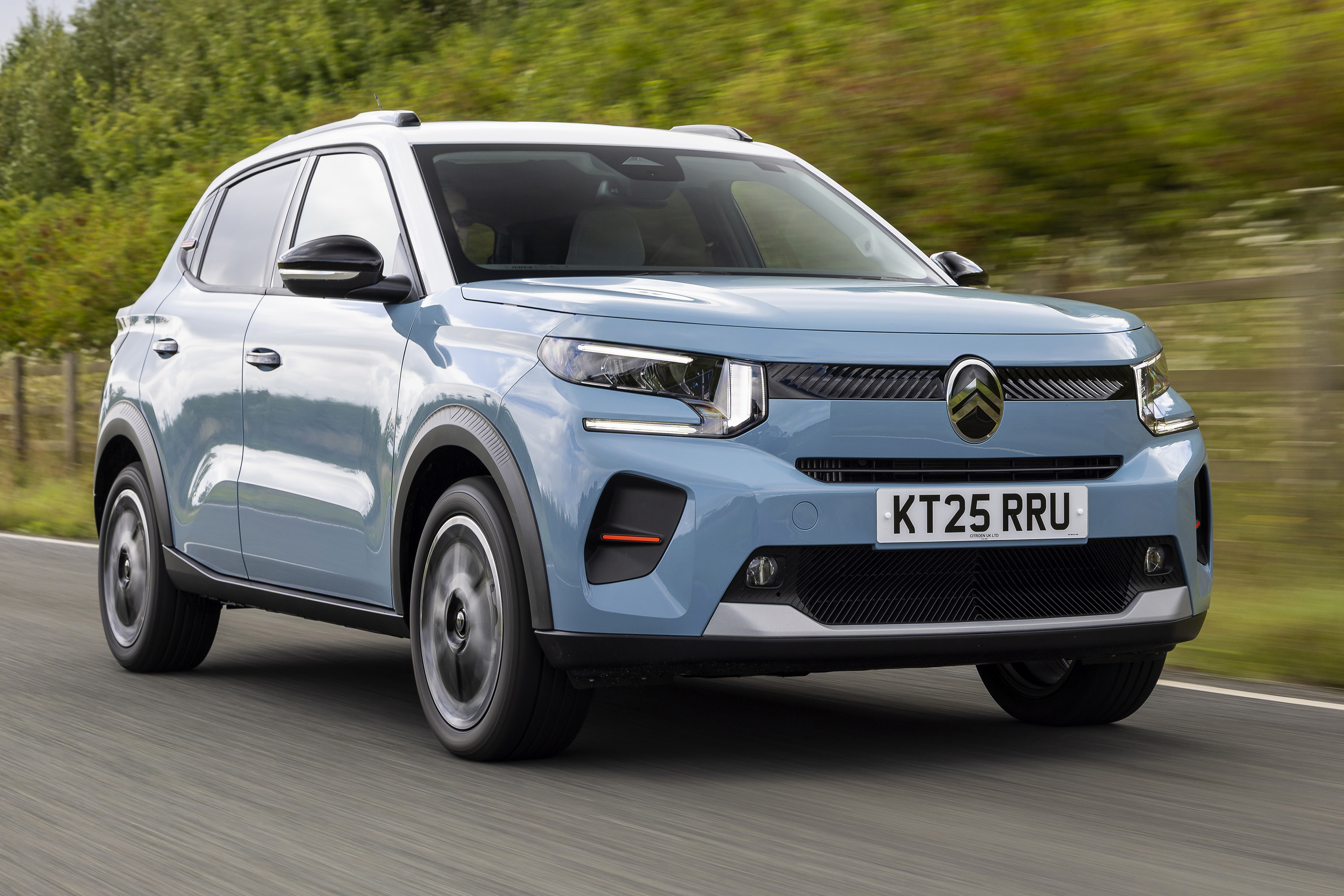
The Citroen C3 is aimed squarely at that market. It is still a five-door hatchback, but its upright proportions, raised ride height and chunky body protection borrow heavily from compact SUVs. Black plastic runs around the lower body and wheelarches, while decorative skidplates and roof rails reinforce the crossover influence. The C3 also sits noticeably higher than a conventional supermini, improving access and giving the driver a slightly more elevated view.
Browse used Citroen C3s for sale →
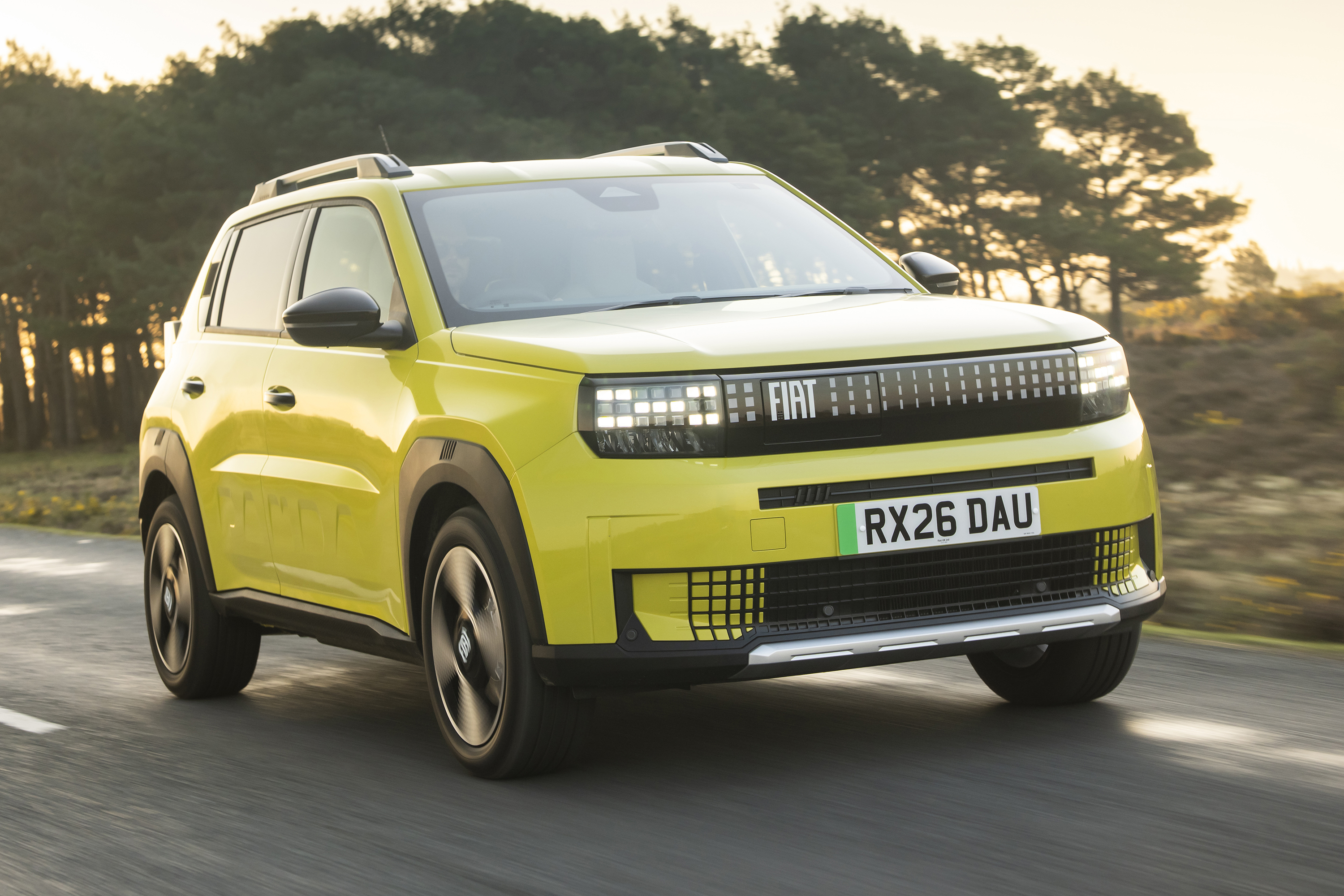
That does not turn it into an SUV. It remains shorter and narrower than the C3 Aircross, and its compact footprint makes it easy to use in urban areas. The petrol C3 shares its body, cabin and underlying architecture with the electric e-C3. It also has much in common beneath the surface with the Fiat Grande Panda, although the two cars have sufficiently different styling and interiors to feel like separate products.
The Citroen’s focus is comfort. The C3 uses the brand’s Advanced Comfort Suspension with Progressive Hydraulic Cushions, combined with seats containing several densities of foam. This gives the car a softer and more forgiving character than most small hatchbacks. Poor road surfaces are absorbed with an ease that many larger and more expensive cars fail to match.
Citroen has resisted the temptation to make the C3 feel artificially sporty. The steering is light, the suspension is compliant and the controls require little effort. That makes it well suited to commuting, shopping trips and everyday family use.
The current UK range centres on Collection trim, with a choice between the Turbo 100 manual and Hybrid 110 automatic. Both use a turbocharged 1.2-litre three-cylinder petrol engine. The Turbo 100 relies on the engine alone, while the Hybrid 110 combines it with a small electric motor, battery and six-speed dual-clutch automatic gearbox. The hybrid system can move the car using electric power for short periods at low speeds, although this is not a conventional full hybrid capable of travelling meaningful distances without the petrol engine.
Impressively comfortable, the latest Citroen C3 provides a spacious, sound-value option for small hatchback buyers who aren’t yet ready to move away from the petrol engine.
What's the best Citroen C3 trim and engine option?
The Hybrid 110 is the best version for most buyers. Its 110PS output is only a modest increase over the Turbo 100’s 101PS, but the electric assistance gives it a stronger response at lower speeds. It reaches 62mph in 9.8 seconds, compared with 10.6 seconds for the manual petrol model.
The hybrid also includes a six-speed dual-clutch automatic gearbox. That makes it more relaxing in congested traffic and better suited to the C3’s easy-going character.
Official fuel economy is stronger, too, with up to 56.5mpg compared with around 50.4 to 52.0mpg for the Turbo 100. The Turbo 100 still has a clear role. It costs £2,110 less and provides adequate performance, making it the sensible choice for buyers who cover lower annual mileages and are happy to change gear themselves.
Its six-speed manual gearbox is straightforward to use, and the engine has enough low-speed pull for urban driving. It becomes noisier when worked hard, particularly on motorway slip roads or steeper hills. The current Collection specification includes the main equipment most buyers will want, so choosing a C3 is now largely a question of powertrain rather than trim. The Hybrid 110 is our recommendation if budget allows. The Turbo 100 remains the better-value choice for buyers prioritising the lowest purchase price.
What’s the price of the Citroen C3?
The Citroen C3 starts at £18,870 for the Collection Turbo 100 with its six-speed manual gearbox. The Collection Hybrid 110 automatic costs £20,980. That represents a £2,110 premium for the hybrid assistance, stronger fuel economy, improved performance and automatic transmission. There are also plenty of used Citroen C3s for sale for considerably less.
Both prices are competitive by current small-car standards. The C3 is not dramatically cheaper than every mainstream alternative, but it includes a reasonable level of equipment and does not feel like an aggressively stripped-back budget car.
The Dacia Sandero remains cheaper, although lower versions have a much more basic specification. A well-equipped Sandero closes some of the price gap. The MG3 is another affordable alternative and offers full-hybrid power in its higher versions. It is considerably quicker than the Citroen Hybrid 110, but the C3 has the more settled and comfort-focused character.
The closely related Fiat Grande Panda is also worth comparing. Its styling is more playful and its interior contains more visual detail, while the Citroen feels calmer and more restrained. Citroen finance offers and retailer discounts may affect the final amount paid, but the official on-the-road price remains the best basis for comparing models.
Alternatives to the Citroen C3
The Dacia Sandero remains the obvious value alternative. It is roomy, straightforward and cheaper to buy, while its 328-litre boot is slightly larger than the Citroen’s. The C3 feels more comfortable and more distinctive, with a stronger standard equipment level.
The MG3 is available with a powerful full-hybrid system that delivers much quicker acceleration. It is generously equipped and competitively priced, although the Citroen rides more comfortably.
The Fiat Grande Panda shares much of the C3’s engineering. It has similarly upright proportions and is also available with hybrid and electric power. The Fiat’s cabin is more colourful, while the Citroen has the softer and more restrained character.
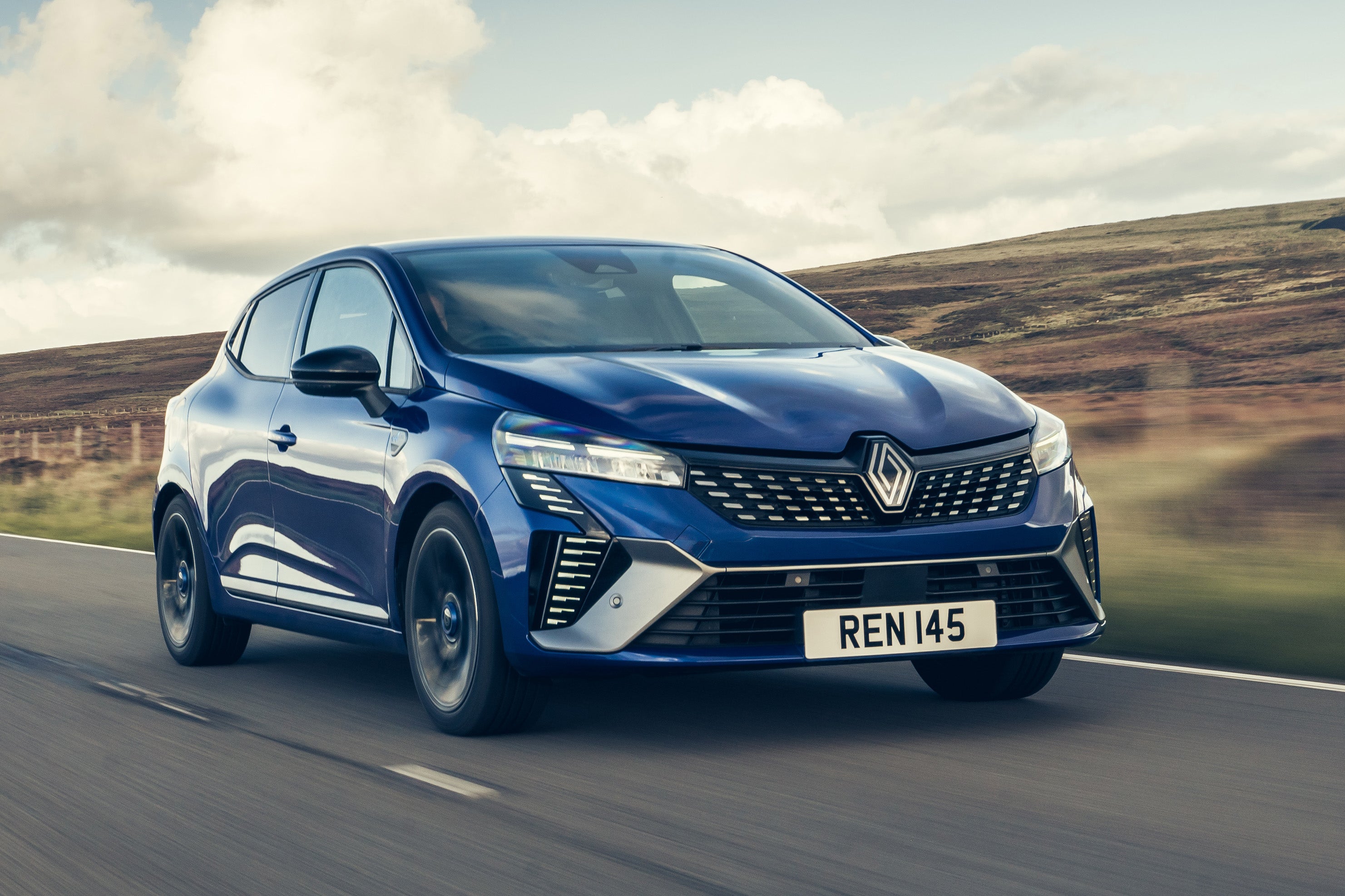
The Renault Clio feels more polished and offers an efficient full-hybrid option. It is better to drive than the C3, although its lower body does not provide the same ease of access.
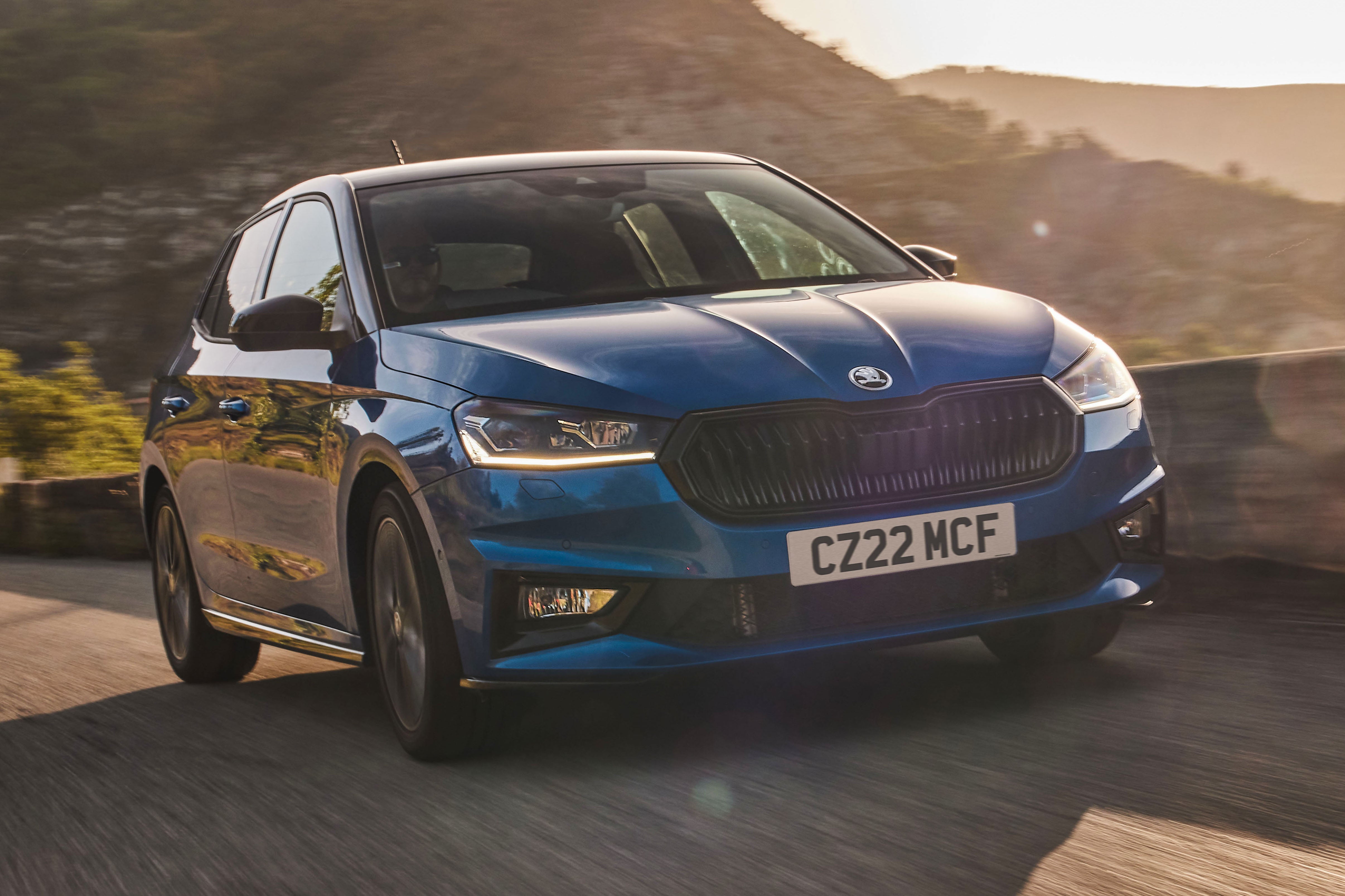
The Skoda Fabia has a large boot, a neatly finished cabin and a mature motorway feel. It lacks the Citroen’s distinctive comfort-focused suspension but is a more conventional and polished all-rounder.
The Suzuki Swift is lighter, more efficient and easier to place on narrow roads. It is less spacious and does not isolate its occupants from poor surfaces as effectively.
What's the interior like in the Citroen C3?
The Citroen C3 has a clean, practical and comfortable interior. It is not especially luxurious or colourful, but there is enough design detail to stop it feeling entirely utilitarian.
Citroen C3 boot space and practicality
Whether sat in the front or rear of the Citroen C3, four above average height adults should find there’s plenty of space for their limbs, with enough margin above their heads for elevated hairstyles and Fedoras.
As part of Citroen’s Advanced Comfort system, the multi-density seat foam is especially comfy, feeling as though you’re sat on some kind of mattress topper, minimising aches associated with long spells in a car. The pair up front have a good range of adjustment while the rear bench angle is fine, even though the cushion’s ill-pitched to provide optimal under-thigh support for taller passengers.
The middle rear seat in any car is rarely the one anyone would choose to use, especially in a smaller, narrower car, yet here it doesn’t feel too slender compared with the outer positions and the floor’s reasonably flat for plenty of foot room. That said, if two bulky child seats are installed in the back, you’re unlikely to fit a passenger between them.
Fellow Stellantis brand Peugeot has long-advocated a driving arrangement called i-Cockpit. In essence it consists of a small-diameter steering wheel set lower than usual, with the instruments viewed over the top of it rather than through it. Something similar has been installed in the C3, yet it feels more natural than it has in any Peugeot to date. The Citroen’s wheel isn’t circular, although it’s pleasant to hold with a particularly thick rim.
With the rear seats in place the Citroen C3’s boot volume is 310 litres, extending to 1188 litres when the 60/40-split backrest is folded over. It doesn’t lie horizontally, plus there’s a chunky step up from the height of the boot floor, something to bear in mind when hauling in heavy loads.
Despite being 73mm shorter overall than the Dacia Sandero, the C3’s not hugely disadvantaged when it comes to boot space. Seats-up the Sandero’s capacity is 18 litres more, but 80 litres fewer when folded. Conversely the MG 3 is 98mm lengthier than the Citroen, yet less commodious overall — 293 litres seats up, 983 litres down.
In-cabin storage solutions are useful but not exceptional. A pair of cupholders are easily accessed towards the base of the dashboard, together with a smartphone-sized space that’s fitted with a wireless charging pad on Max versions. Each door can hold a litre-sized water bottle, plus the textile-clad horizontal plane of the dashboard can be used as an open shelf.
Citroen C3 dimensions
The Citroen C3 measures 4,015mm long, 1,755mm wide and 1,577mm high.
Those figures make it shorter than a Dacia Sandero and MG3, while its additional height creates the slightly raised driving position and generous headroom.
Its compact length is useful when parking in town or fitting into a small garage. The relatively square body also makes it easier to judge where the corners are.
Rear parking sensors are fitted, while the high-set driving position and large windows provide a useful view in most directions.
The decorative roof rails and raised body contribute to the crossover look, but the C3 remains much easier to manoeuvre than a conventional compact SUV.
Tech and infotainment in the Citroen C3
Protruding from the centre of the Citroen C3’s dashboard is a 10.25-inch multimedia touchscreen. There are some useful touch-sensitive shortcuts on either side of the display, although they don’t include any for the air-con system. Why? Because it has specific physical controls for its operation lower down on the dashboard — hurrah!
Resolution is acceptable but is far from pin-sharp, with the responsiveness to finger dabbing being similar — fine most of the time, with an occasional second attempt required. Wireless Android Auto and Apple CarPlay are standard although our test of the latter saw the rendered images frequently breaking up — plugging the phone into the cable solved it, but it also rather undermines the wireless nature of it.
Key driving information is viewed through a slot in the dashboard just below the windscreen. Graphics are small but sufficiently clear and are kept to a minimum. It’s a neat, simply solution that looks elegantly sophisticated despite its low cost. Bravo.
Materials available on the Citroen C3
Given its low price, you won’t expect the Citroen C3 to represent the last word in automotive quality — what you will find yourself asking is ‘how have they made it feel this good for such a low price’. It surpasses expectations, in other words, and that’s more than good.
Fabric on the dashboard is a welcome touch to reduce the plasticky nature which would otherwise prevail, although we’d also like to see the fingerprint-collecting glossy black finishes ditched. Why car makers think such elements look classy remains a mystery.
You will find harder, less pleasant-feeling plastics in the lower reaches of the C3’s interior, but we encountered no sharp or unfinished edges there. More importantly, everything felt and sounded well-assembled with no early signs of ill-fitting trim with associated squeaks and rattles.
What's the Citroen C3 like to drive?
The C3 is designed to be comfortable and easy to drive rather than sporty. Its soft suspension and light controls suit everyday use particularly well.
Citroen C3 range and performance
There are two drive systems available for the Citroen C3, both of which feature the same turbocharged, three-cylinder 1.2-litre petrol engine driving the front wheels.
In the C3 Turbo 100, the engine works alone, with its performance accessed via a six-speed manual transmission. Peak power is rated at 101PS — Citroen’s 100hp is a marketing-influenced rounded-down figure — while maximum torque is 205Nm. In performance terms, they equate to a 99mph top speed and a modest 10.6-second 0-62mph time.
Fitted with a six-speed dual-clutch automatic is the alternative C3 Hybrid 110. Citroen, as with other Stellantis brands, uses the H-word here in relation to a mild hybrid-assistance system, rather than a more conventional self-charging hybrid with a larger battery and the ability to drive a handful of miles on electric power alone.
Total power increases to 110PS although maximum torque and the top speed remain unchanged. There’s a notable improvement on the 0-62mph front with the benchmark time falling to 9.8 seconds.
Being small and light, the Hybrid 110 feels pleasantly zesty in the way it delivers its performance — it’s hardly hot hatch territory, yet it feels more than capable of holding its own both getting up to motorways speeds and allowing for swift, safe overtaking manoeuvres on single-carriageways.
The slick-shifting automatic allows you to access the extra torque available from lower gear ratios rapidly, the three-cylinder engine pulling strongly, if a little noisily as it goes about its business.
For the most part the C3’s mild hybrid system blends in and out seamlessly, although on occasion when lifting off the accelerator to allow engine braking to slow the car down, the regenerative energy recovery aspect of the process is audible as the motor harvests power for the battery. There’s no jolting in the system as it does so and it’s less noisy than the engine is, it’s just something you don’t expect to hear at first.
Performance data
| Model | Engine/battery size | Power | 0-62mph | Range/MPG |
|---|---|---|---|---|
C3 Turbo 100 | 1.2-litre turbo petrol, manual, front-wheel drive | 101PS | 10.6 seconds | Up to 52.0mpg |
C3 Hybrid 110 | 1.2-litre turbo petrol hybrid, automatic, front-wheel drive | 110PS | 9.8 seconds | Up to 56.5mpg |
Citroen C3 driving and refinement
Time was when forebears of small cars such as the Citroen C3 handled perfectly fine at urban speeds, but out on undulating B-roads they bounced around like a powerball in a school playground, while at motorway speeds their strained engines generated a more unpleasant din than an episode of Loose Women. This car is not like that.
Citroen has sensibly eschewed any notion of making the C3 sporty. That’s not what its for, so instead its focused on its Advanced Comfort mantra, which means super-comfy seat with different densities of foam within and trick dampers for the suspension. It sounds a tad convoluted yet the overall effect is impressive.
While the C3 feels planted and secure, its occupants are nevertheless more isolated from the road’s imperfections in a manner that outperforms many larger cars with longer wheelbases. Good job, done well.
Interestingly, this impressive degree of soft compliance isn’t at the expense of comedic lolling around and exaggerated angles of body lean when the C3’s taken through a series of faster bends sweeping this way and that. It remains composed, tracing corner trajectories as you’d wish, albeit with little communication about grip levels through its tiny steering wheel.
Inevitably, there’s a degree of cost-cutting involved when making any car, let alone a relatively inexpensive one. From a driving perspective that’s noticeable through the unwanted sounds transferred into the passenger area, which are at odds with its otherwise serenely comfy nature. Noise generated by the tyres plus wind rushing around its windscreen pillars and the roof rails’ leading edges disrupt the harmony, but the addition of an engine note don’t make them seem as obvious as they are in the electric Citroen e-C3.
How safe is the Citroen C3?
The Citroen C3 hasn’t been crash-tested by Euro NCAP so far, so it will be interesting to see how this value-centric small hatchback fares when it is.
All C3s come with an impressive amount of safety kit as standard, especially so considering its low price, including LED headlights and automatic main beam, six airbags, hill-start assist, cruise control, Active Safety Brake for emergencies, Active Lane Departure Warning System and a Driver Attention Alert. Max models additionally feature a reversing camera.
Running costs: What it's like to live with a Citroen C3
The C3 should be inexpensive to fuel, insure and service by modern new-car standards. Citroen’s service-activated extended cover also improves the ownership proposition.
Citroen C3 fuel economy
The Turbo 100 returns up to 52.0mpg under the official combined test, although the current Collection specification is listed at around 50.4mpg.
The Hybrid 110 improves that to as much as 56.5mpg.
During testing, the hybrid returned between 48 and 50mpg without requiring especially gentle driving. That suggests the official figure should be reasonably approachable in mixed use.
The hybrid should be most effective in urban and suburban conditions, where it can recover energy frequently and switch the petrol engine off at low speeds.
Its advantage is likely to shrink during steady motorway driving, where the electric assistance has fewer opportunities to contribute.
Neither version requires external charging. The hybrid battery is replenished through regenerative braking and by the petrol engine.
Citroen C3 warranty and servicing
The C3 has a three-year manufacturer warranty, with no mileage limit during the first two years and a 60,000-mile limit in the third year.
New Citroen passenger cars are also eligible for Citroen We Care. This can provide up to five additional years of service-activated cover after the standard warranty expires.
The cover is renewed when the car is serviced at a participating Citroen authorised repairer in line with the manufacturer’s schedule.
Subject to the programme terms, protection can continue until the car reaches eight years old or 100,000 miles.
This is not the same as an unconditional eight-year warranty, because owners must continue using the participating Citroen service network and follow the required schedule.
The arrangement still gives the C3 a stronger long-term ownership proposition than its basic three-year warranty suggests.
Citroen C3 insurance groups
The Citroen C3 falls into insurance group 23.
That is relatively high for a small hatchback with modest performance, so premiums may be more expensive than buyers expect. The final cost will still depend on the driver’s age, postcode, claims history and chosen cover.
It is worth obtaining a quote for the exact car before ordering, particularly for younger drivers or anyone moving from a model in a lower insurance group.
How much does it cost to tax a Citroen C3?
For 2026 to 2027, the standard annual Vehicle Excise Duty rate after the first year is £200. The C3 is far below the threshold for the Expensive Car Supplement, so neither the Turbo 100 nor Hybrid 110 attracts the additional annual charge.
What trims are available with the Citroen C3?
The current UK C3 range centres on Collection trim.
Collection includes 17-inch alloy wheels, black wheelarch extensions, decorative skidplates, roof rails, LED lighting and contrasting exterior details.
Inside, it features Citroen Advanced Comfort seats trimmed in cloth and leather-effect material, coloured dashboard and door inserts, air conditioning and a leather-effect steering wheel.
The 10.25-inch touchscreen includes wireless Apple CarPlay and Android Auto, DAB radio, Bluetooth connectivity and a six-speaker audio system.
Safety and convenience equipment includes cruise control, autonomous emergency braking, lane-departure warning, driver-attention monitoring, speed-limit recognition and rear parking sensors.
Equipment varies slightly by powertrain, particularly where the Hybrid 110’s automatic gearbox requires different controls.
Earlier examples were sold in Plus and Max trims. Plus provided the core equipment, while Max added heated seats, climate control, navigation, wireless phone charging and a reversing camera.
Buyers shopping from dealer stock may therefore still encounter Plus and Max cars even though the current factory-order range centres on Collection.
Ask the Drive experts: common questions
Is the Citroen C3 a good small car?
Is the Citroen C3 a full hybrid?
How big is the Citroen C3 boot?
Get our latest advice, news and offers
Keep me updated by email with the latest advice, news and offers from Drive.
.jpg)