Skoda Kamiq Review

Written By Andrew Brady
- 2019
- SUV
- Petrol
What we love
Spacious cabin for a small SUV
Comfortable ride and easy driving m manners
Strong value across the range
Things to consider
No hybrid or four-wheel-drive option
95PS engine is best suited to town driving
Some wind noise is noticeable at motorway speeds
The DRIVE take on the Skoda Kamiq, is it the right car for you?
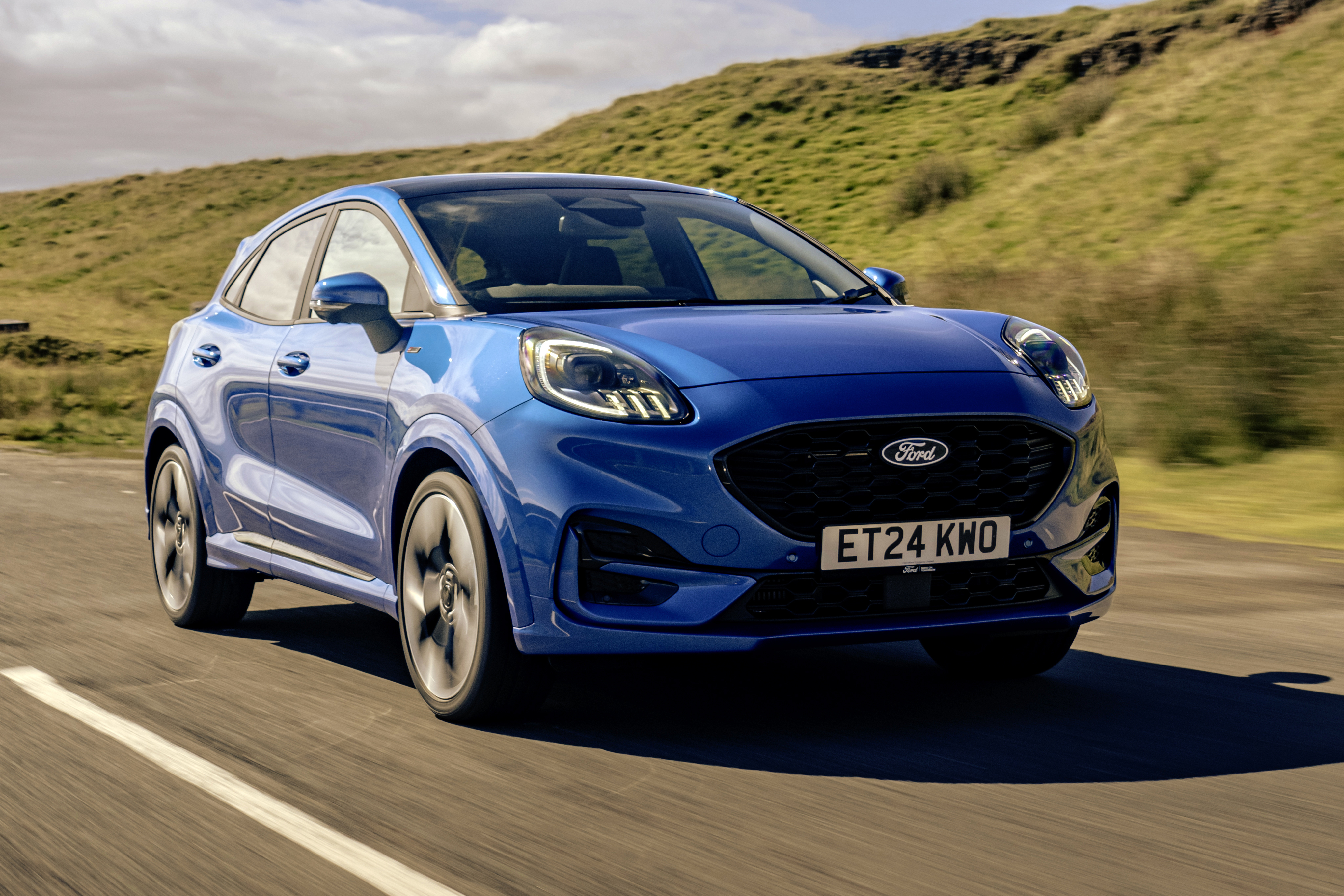
The Skoda Kamiq is one of the most convincing small SUVs on sale because it gets so many of the basics right. It’s roomy without feeling bulky, comfortable without feeling soggy, and sensibly priced without feeling stripped-out. If you want a family crossover that’s easy to live with every day, the Skoda Kamiq deserves to be high on your shortlist. It’s perhaps not the most eye-catching option in the class, and it’s not the sharpest driver’s car, either, but it is one of the easiest to recommend because there are so few glaring weak spots. If you want more style, a Peugeot 2008 will appeal more, and if you want a livelier driving experience, a Ford Puma is the better bet. For most buyers, though, the Skoda Kamiq’s all-round ability will be just the ticket.
The Skoda Kamiq in more detail
The Skoda Kamiq arrived in 2019 as Skoda’s answer to the small SUV boom, sitting above the Fabia and Scala in the firm’s model range, and below the larger Karoq. It shares much of its engineering and hardware with the SEAT Arona and Volkswagen T-Cross, but it has always leaned harder into the more family-friendly qualities that Skoda does so well: cabin space, comfort, ease of use and straightforward value.
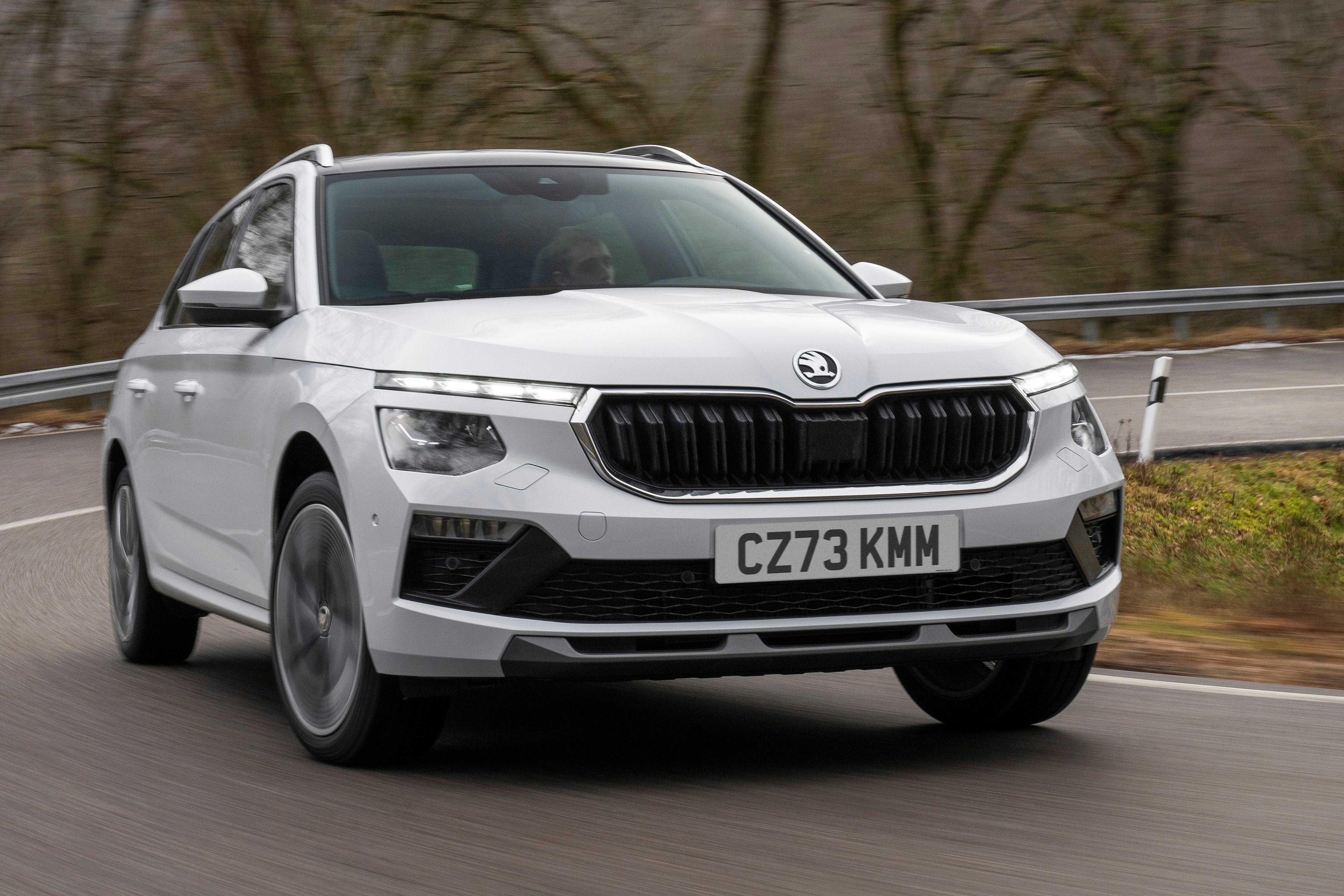
And happily, that formula still works in 2026. The 2024 facelift sharpened the looks, upgraded the standard equipment and simplified the range, so the current car feels fresher and posher than the older versions you’ll see on the used market. New Kamiqs are now petrol-only in the UK, with a choice of 1.0-litre three-cylinder engines or a more powerful 1.5-litre four-cylinder. Diesel has disappeared from the new-car line-up, and there is still no hybrid, plug-in hybrid, or four-wheel-drive version.
What makes the Skoda Kamiq stand out is not any one headline figure or feature: it’s the way the whole package hangs together. The cabin is roomy enough to make it feel like a sensible family car, but the compact is still compact. The boot is a useful shape and big enough for most family duties. The ride is impressively forgiving for this class, especially on the broken town roads that can make some small SUVs feel fidgety. Even the interior, while not the most exciting to look at, feels solid, mature and thoughtfully laid out.
The facelifted range also benefits from a much healthier standard specification than before. Even the SE Edition now gets metallic paint, a rear-view camera, a 9.2-inch navigation display, a 10.25-inch Virtual Cockpit and dual-zone climate control, so the Kamiq no longer feels like a car you need to climb the trim ladder to make sense of.
That does not mean every version is equally appealing. The 95PS engine is fine for lighter-duty use, but the 116PS 1.0 TSI is the sweet spot for most people and gives the Kamiq the kind of easy, flexible performance that suits the car’s relaxed character. Spend more and the 1.5 TSI adds useful punch, but the Kamiq is at its best as a sensible, mid-range family SUV rather than an expensive near-premium crossover.
What's the best Skoda Kamiq trim and engine option?
The best-value Skoda Kamiq for most buyers is the 1.0 TSI 116PS SE Edition. It has enough performance to avoid feeling strained, returns a strong official economy, and comes with a level of standard kit that would once have pushed you much higher up the trim ladder. This is the version that best captures what the Skoda Kamiq does well: sensible price, sensible running costs and very little sense of compromise.
If you want a bit more visual interest, the Design Edition is worth a look. It adds black exterior detailing, privacy glass, sportier seats and a more distinctive cabin treatment without pushing the price too far.
SE L Edition trim adds more comfort and convenience kit, including heated front seats, front parking sensors and keyless entry. It’s easy to like, but it nudges the Kamiq into territory where you may want to think harder about whether you would rather save money or move up to a slightly larger car.
At the top, Monte Carlo Edition is the most desirable rather than the most rational. It gets a sporty styling pack, panoramic roof, automatic lights and wipers, adaptive cruise control and Matrix LED headlights, but by this point you are spending enough that the value-led case for the Kamiq starts to unravel.
What’s the price of the Skoda Kamiq?
The Kamiq range opens at £25,535 for the SE Edition 1.0 TSI 95PS and rises to £33,525 for the Monte Carlo Edition 1.5 TSI 150PS DSG. In between sit the Design Edition from £26,660, SE L Edition from £28,710 and Monte Carlo Edition from £30,780 before engine upgrades.
That means the Skoda Kamiq still looks keenly priced against many rivals, especially once you factor in the amount of standard equipment now fitted across the range. Even the base-level SE Edition does not feel sparse, which helps the entry price look more credible than it does with some rival small SUVs.
There is a strong used-car case here, too. Older, pre-facelift Kamiqs can still represent good value if you buy carefully.
Alternatives to the Skoda Kamiq
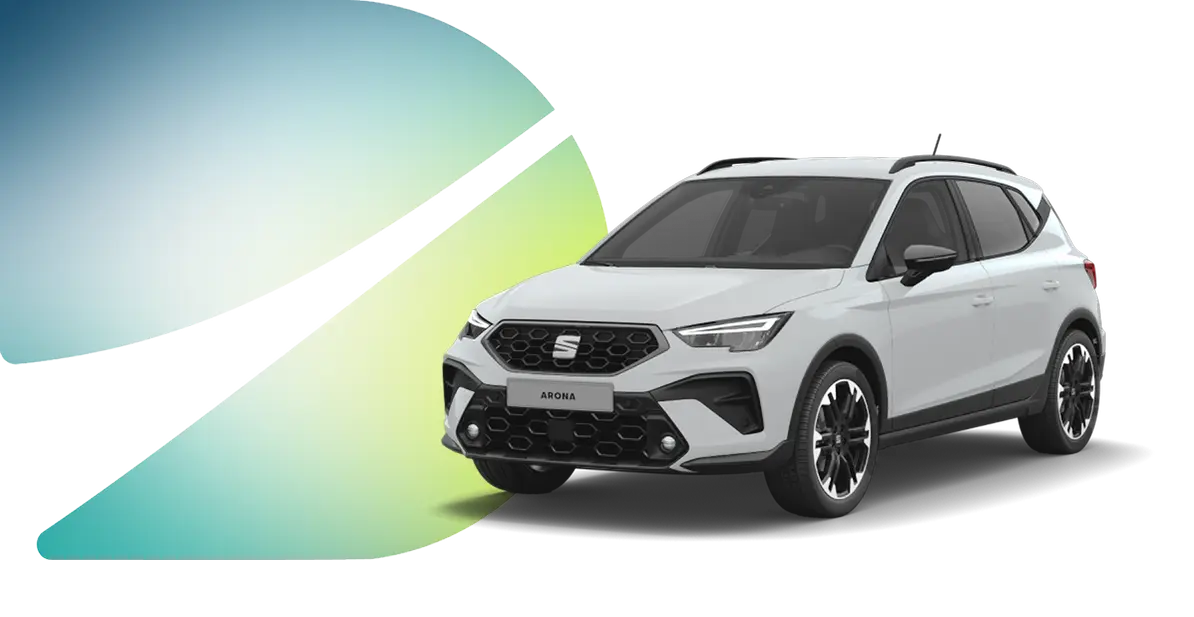
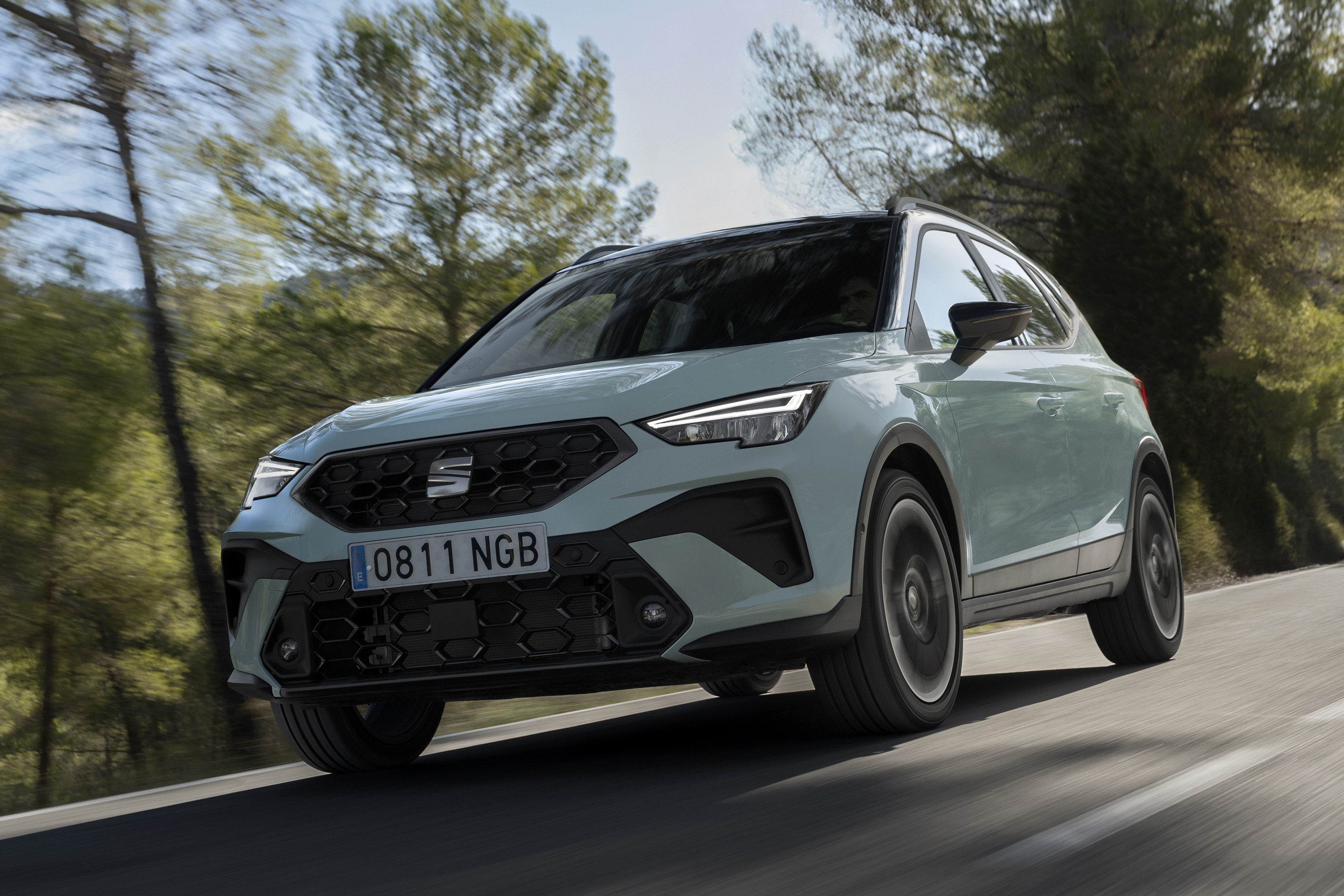
If you’re looking at the Skoda Kamiq, the most obvious alternatives are the SEAT Arona and Volkswagen T-Cross. The Arona has a slightly more youthful flavour, while the T-Cross counters with a sliding rear bench and a more flexible rear cabin. The slightly larger Volkswagen T-Roc is also worth considering if you are willing to spend a little more for a more substantial-feeling car.
The Ford Puma is still the choice if driving enjoyment is what you’re after. It feels keener and more engaging, although it is not as settled as the Kamiq over poor surfaces. The Ford’s huge boot, complete with ‘Megabox’ storage compartment, means it’s a class-leader for practicality, too.
The Peugeot 2008 is the stylish option, with its flamboyant design and a more interesting interior, but the Kamiq is easier to see out of and generally simpler to live with. A Renault Captur is worth a look if rear-seat flexibility matters, while the Nissan Juke might also be on your mind, as it’s one of the most popular cars in the class.
The Skoda Kamiq’s advantage is that it does not chase any single headline strength at the expense of everything else. It is not the most stylish, the sportiest or the cheapest, but it is one of the most complete all-rounders.
What's the interior like in the Skoda Kamiq?
The Skoda Kamiq’s cabin is roomy, sensible and easy to get along with. It’s not full of visual drama, but it feels solid, offers more space than most rivals, and makes everyday family use pleasingly straightforward.
Skoda Kamiq boot space and practicality
One of the Skoda Kamiq’s strengths is that it feels bigger inside than its exterior footprint suggests. At just over 4.2 metres long it’s easy to place in town, but the cabin packaging is good enough to make it feel like a genuine family car rather than just an elevated supermini.
The driving position is comfortable and there’s enough adjustment in the seat and steering column for most drivers to settle in quickly. You don’t sit especially high by SUV standards, but that’s not really a problem unless you’re buying a crossover specifically for that towering view out. If that’s the case, the larger Karoq may suit you better.
Space in the front is generous, as you’d expect, and rear passengers fare well, too. Adults fit more comfortably in the back than they do in many small SUVs, and the wide-opening rear doors make strapping kids into child seats a little easier. It’s not quite as versatile as a T-Cross because there’s no sliding rear bench seat, but the Kamiq still feels one of the more family-friendly options in this class.
Boot capacity is 400 litres with the rear seats in place, and the space is usefully square and easy to load even if the boot lip does get in the way a little when loading heavier items. Fold the seats down and capacity rises to 1,395 litres. That’s enough for pushchairs, a decent family shop or a weekend away without having to think too hard about how you pack. The basic figure may not dominate the class, but the shape of the load bay and Skoda’s usual thoughtful touches help in day-to-day use.
And those touches really are part of the appeal. Depending on trim and options, there are useful storage areas, boot nets and other small details that make the Kamiq feel well thought through rather than merely roomy on paper.
Skoda Kamiq dimensions
The Skoda Kamiq is 4,241mm long, with a wheelbase of 2,651mm. It’s 1988mm wide including door mirrors, or 1793mm wide without. Most versions are 1,531mm high, rising slightly to 1,534mm in Monte Carlo trim, or 1,559mm and 1,562mm respectively if you include the roof rails.
In practical terms, it sits in the sweet spot of the class. It’s compact enough for urban use and tight car parks, but long enough in the wheelbase to deliver genuinely useful rear-seat space. That’s a large part of why the Kamiq feels more grown-up than some smaller-feeling rivals.
Tech and infotainment in the Skoda Kamiq
The infotainment outlook is better than it used to be, because the current trim line-up gives every new Kamiq a 9.2-inch navigation display and a 10.25-inch Virtual Cockpit. That immediately makes the entry-level car feel far more modern and better equipped than older S and SE models.
The touchscreen itself is straightforward to use and includes wireless SmartLink smartphone mirroring, so Apple CarPlay and Android Auto will be the easiest interface for many drivers. That’s no criticism: the standard native navigation is useful to have, but phone mirroring remains the cleaner and more familiar system for lots of buyers.
The digital driver display is one of the better systems in this class. It looks smart, the graphics are clear and it adds a more upmarket feel to the cabin without making the Kamiq seem over-complicated.
What helps most is that the Skoda Kamiq doesn’t rely too heavily on the touchscreen. There are physical buttons, dials and switches for a variety of functions, the key parts of the ventilation system included, so you don’t have to root around in reams of on-screen menus as often as you do with some rivals.
Monte Carlo adds wireless phone charging, but that aside, the infotainment offering is pretty much the same throughout the range. And as well as the Apple CarPlay and Android Auto connectivity, that includes DAB radio, Bluetooth and four USB-C ports.
Materials available on the Skoda Kamiq
The Skoda Kamiq does not try to feel premium like an Audi, but the range of materials and trims is still interesting. SE Edition cars use the Loft interior treatment with black and grey upholstery. Design Edition adds a sportier look with black upholstery, sports seats, black microsuede decorative inserts and red dashboard trim.
SE L Edition moves the atmosphere on with the Lodge interior treatment, which uses black cloth and grey microsuede upholstery, and grey microsuede dashboard inserts. Monte Carlo is the most distinctive version, bringing its own sportier upholstery, carbon-look trim, red highlights and a darker cabin ambience.
Importantly, the cabin looks strong on quality, with most of the surfaces in your direct eyeline looking and feeling suitably sophisticated. There are some harder plastics lower down in the cabin, but that’s entirely normal in this class, and all the materials generally feel durable and sensibly chosen.
What's the Skoda Kamiq like to drive?
The Skoda Kamiq is one of the most comfortable small SUVs on sale. It’s easy to drive, easy to park and well suited to most British roads, even if rivals such as the Ford Puma are a bit more entertaining on a twisty road.
Skoda Kamiq range and performance
The current UK range is now petrol-only, and all engine options are turbocharged. The line-up starts with a 1.0-litre TSI three-cylinder producing 95PS, and there’s also a more powerful 116PS version of the same engine, while the range tops out with a 1.5-litre four-cylinder TSI producing 150PS.
The 95PS car manages 0-62mph in 11.0 seconds. It’s fine for bimbling around town, but on faster routes and when the car’s loaded up with people and stuff, it can start to feel a little out of its depth. You can put up with it if your budget is tight, but if you often venture out of town and have the money to spend, then the upgrade to the 116PS version is well worth the cash.
The 116PS 1.0 TSI is the pick of the range, in fact. In manual form it covers 0-62mph in 9.7 seconds, while when specified with the DSG automatic, the same sprint takes 10.2 seconds. That doesn’t sound especially fast on paper, and it isn’t, but what matters more is how much easier and more relaxed your progress is. Its impressive low-down punch and mid-range muscle means it picks up speed eagerly without you having to work its socks off, and it’s just a far calmer, more chilled-out experience. It suits the Kamiq really well.
The 1.5 TSI 150PS is available in SE L Edition and Monte Carlo Edition trim, with either a manual or DSG gearbox. Regardless of transmission, it cuts the 0-62mph time to 8.3 seconds, and gives the Kamiq a marginally more effortless, longer-legged feel on faster roads, making it arguably the best option for regular motorway work or full-car family trips. However, for most people, we’d say that its advantage over the 116PS 1.0-litre isn’t big enough to justify the extra money it costs, which is considerable.
Performance data
| Model | Engine/battery size | Power | 0-62mph | Range/MPG |
|---|---|---|---|---|
Kamiq 1.0 TSI 95 | 1.0-litre | 95PS | 11.0 seconds | Up to 52.0mpg |
Kamiq 1.0 TSI 116 | 1.0-litre | 116PS | 9.7 seconds | Up to 52.4mpg |
Kamiq 1.0 TSI 116 DSG | 1.0-litre | 116PS | 10.2 seconds | Up to 51.0mpg |
Kamiq 1.5 TSI 150PS | 1.5-litre | 150PS | 8.3 seconds | Up to 49.3mpg |
1.5 TSI 150PS DSG | 1.5-litre | 150PS | 8.3 seconds | Up to 49.6mpg |
Skoda Kamiq driving and refinement
The Skoda Kamiq’s standout quality is ride comfort. It deals with poor surfaces more effectively than many small SUVs and has the kind of settled, forgiving character that makes it feel utterly at home on battered urban streets and patchy B-roads.
Around town, it feels light, manoeuvrable and unintimidating. Visibility is good, the controls are light and easy, and the car’s compact footprint makes it simple to thread through traffic or slot into tighter parking spaces. Rear parking sensors are standard and the rear-view camera fitted across the current range is genuinely useful.
On dual-carriageways and motorways, the Kamiq feels stable, settled and grown-up. Comfort is excellent at 70mph, and refinement is good, too, with decent suppression of wind-and road noise, and not too much engine noise. The 1.5 TSI is the quietest and most relaxed engine overall, although the 1.0-litre unit is still smooth enough for everyday use. The Kamiq’s mature feel is a big plus if you regularly combine school-run duty with longer motorway trips.
Put the Kamiq on a winding road and push it a little harder, and it remains tidy and secure, but it’s true that rivals such as the Ford Puma are better for keen drivers. The Skoda thrives on a calmer, more measured driving style, and that’ll suit most people who are likely to buy it just fine.
How safe is the Skoda Kamiq?
Euro NCAP awarded the Skoda Kamiq a five-star rating back in 2019. Because these ratings only last for six years due to the constant improvement of testing standards, this result is now considered to be expired, but it still provides some reassurance.
Standard safety kit on the current range includes Front Assist (Skoda’s name for autonomous emergency braking), Lane Assist, traffic sign recognition, driver monitoring, emergency call and ISOFIX points on the rear seats. Rear parking sensors and a rear-view camera are standard across the line-up, while Monte Carlo trim also gets adaptive cruise control.
Running costs: What it's like to live with a Skoda Kamiq
The Kamiq should be affordable to run by the standards of the class. Fuel economy is competitive, insurance groups are sensible, and the current car avoids the higher-rate tax trap that catches more expensive petrol SUVs.
Skoda Kamiq fuel economy
The most efficient Kamiq on paper is the 1.0 TSI 116PS manual, which can achieve up to 52.4mpg according to the official WLTP combined figures. The 95PS version isn’t far behind, mind, with a figure of up to 52.0. The next rung down the ladder is the 116PS engine again, this time fitted with the DSG automatic gearbox. This transmission dents economy a little, but not by much, with a still impressive figure of up to 51.0mpg.
Even the least efficient engines don’t exactly have the most voracious of thirsts. These are the 150PS 1.5 petrols, which return up to 49.3mpg when fitted with a manual gearbox, and up to 49.6mpg when fitted with the DSG. Broadly speaking, then, there’s no version of the Kamiq that’s going to bankrupt you at the fuel pumps, and the Skoda’s figures are very competitive with those of rivals.
The old 1.6 TDI diesel remains the MPG champion if you are buying used and doing very high mileage, but new-car buyers no longer have that choice.
Skoda Kamiq warranty and servicing
The Skoda Kamiq comes with a three-year vehicle warranty. The first two years have no mileage limit, while the third year is capped at 60,000 miles. There is also a three-year paint warranty and up to 12 years of body protection. Extended warranty packages can be purchased at extra cost, though.
In terms of servicing, buyers have two choices: a fixed service regime or a flexible one. Fixed servicing is every year or 10,000 miles, and is recommended for drivers who cover less than 10,000 miles a year and mainly do short journeys in stop-start traffic, plus those who tow. Flexible servicing is allowed for those who do higher mileages at more constant speeds. Sensors in the car activate a service light to let you know when your vehicle needs attention. This can happen anywhere between 9,000 and 20,000 miles, up to a maximum of 24 months apart.
Skoda Kamiq insurance groups
Insurance groups run from 12 to 21 in the current range, which is entirely reasonable for a small petrol SUV. The cheapest versions to insure are the lower-powered SE Edition and Design Edition cars, while it’s the 1.5 TSI engine in higher trims that sit at the upper end. Only a handful of versions tip over the group 20 mark, though.
How much does it cost to tax a Skoda Kamiq?
You can buy a Skoda Kamiq safe in the knowledge that you won’t be bothered by the higher rate of VED road tax. The car’s pricing is such that even if you buy a top-of-the-range Monte Carlo Edition 1.5 TSI DSG and spec it up with every available option, it still won’t bust the £40,000 price barrier that brings liability for higher rate tax.
What trims are available with the Skoda Kamiq?
There are four trim levels in the current Kamiq range: SE Edition, Design Edition, SE L Edition and Monte Carlo Edition.
SE Edition is a really high-value proposition, and a much better starting point than the older, more basic trim levels ever were. It gets 17-inch alloy wheels, full LED headlights, metallic paint, rear LED lights, a rear-view camera, rear parking sensors, dual-zone climate control, cruise control, a 9.2-inch navigation display, a 10.25-inch Virtual Cockpit and wireless SmartLink. For most buyers, that’s plenty.
Design Edition builds on that with mainly aesthetic touches, including 17-inch aero wheels, a black roof and mirrors, privacy glass, sports seats, black microsuede trim, red dashboard highlights, ambient lighting, aluminium pedals and a rear centre armrest.
SE L Edition adds a few more comfort and convenience features. It adds 18-inch alloy wheels, chrome exterior detailing, rear LED lights with dynamic indicators, heated front seats, front parking sensors, electrically adjustable and folding heated mirrors, keyless entry and start, part-microsuede upholstery and automatic lights and wipers. It feels grown-up and plush, but you pay handsomely for that.
Monte Carlo Edition is the range-topper and the most distinctive version. It gets black exterior styling, an even sportier cabin, a panoramic glass roof, wireless smartphone charging, adaptive cruise control, heated sports steering wheel and Matrix LED headlights. Again, it looks the part, but it’s too pricey to make sense for most Kamiq buyers, for whom the SE Edition will probably suffice.
Ask the Drive experts: common questions
Is the Skoda Kamiq a good car?
Which Skoda Kamiq engine is best?
How big is the Skoda Kamiq boot?
Is the Skoda Kamiq available as a hybrid or 4x4?
Does the Skoda Kamiq make sense used?
Get our latest advice, news and offers
Keep me updated by email with the latest advice, news and offers from Drive.
.jpg)