- Home
- …
- Electric Cars
- Cupra electric cars: Every model explained
24/07/2026
Cupra electric cars: Every model explained

Written By Keith WR Jones
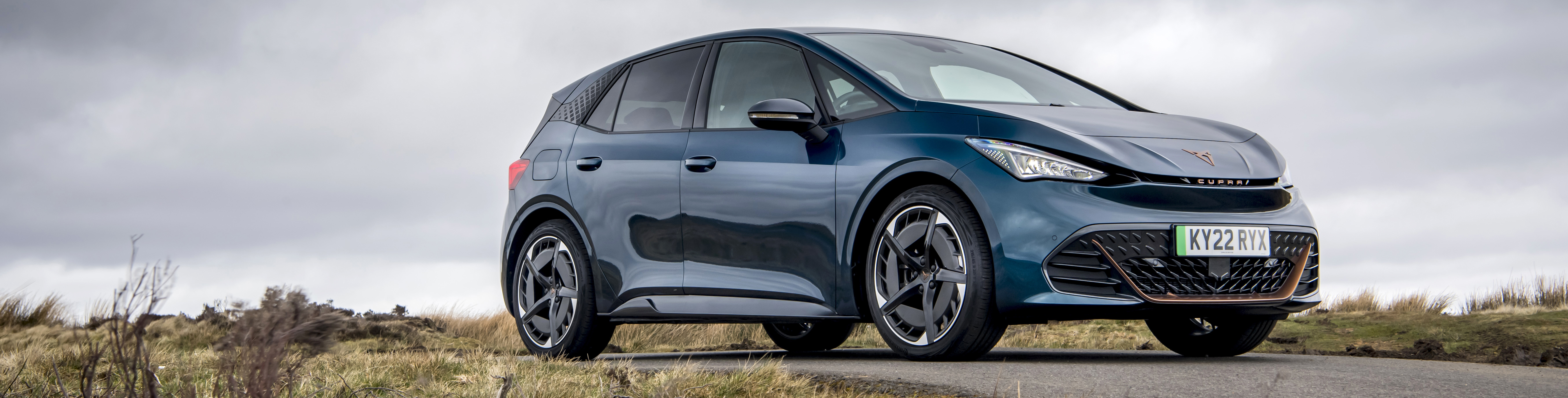
When the whole reason for a brand’s existence relates to its sporty, driving enthusiast-focused background, it can then prove tricky for consumers to also equate those traits to EVs. Yet, if the first three Cupra electric cars are anything to go by, it’s managing the transition well so far.
Cupra started off life as SEAT’s most performance-oriented trim level, before being separated away to form a standalone marque in 2018. As its model range has continued to expand in scope and price range at both ends of the market, SEAT’s has shrunk. So far – and for the foreseeable – the SEAT Mii Electric has been the only EV in its lineup and it went off sale in 2021.
SEAT’s loss is Cupra’s gain, though. Its Born family hatchback – which was also originally due to be badged as a SEAT – is well-established, while the Tavascan SUV coupe is pitched as a premium-priced EV.
Newest in the range is the Cupra Raval small hatchback which aims to wrestle attention away from the increasingly popular Renault 5 E-Tech.
Only a trio of electric Cupras to choose from, but each is worthy of being on your EV shortlist.
Cupra Raval
Launched in: 2026
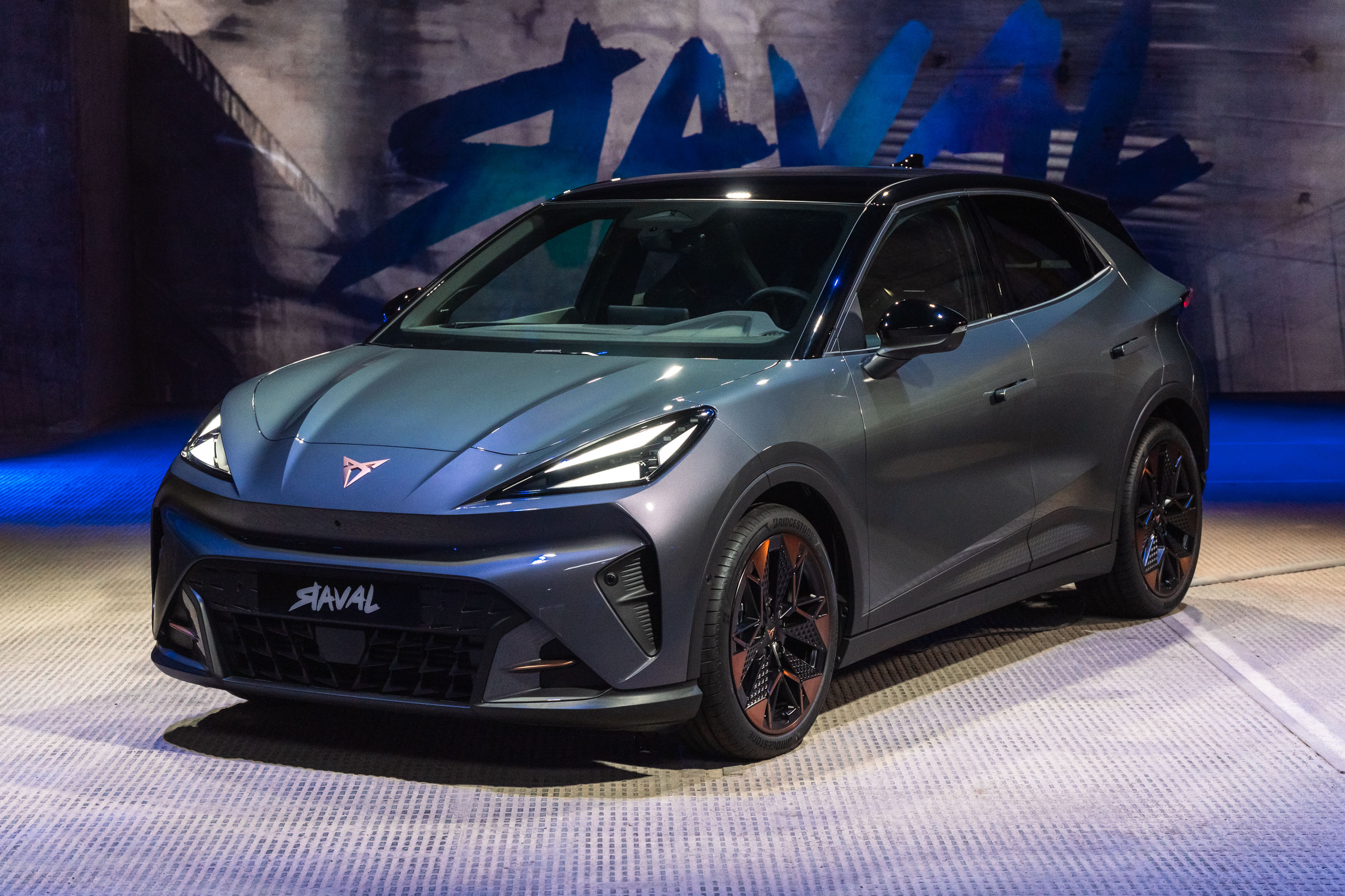
Demand for small electric cars is on the increase right now, making the timing of the Cupra Raval’s launch seem impeccably timed. Built in Spain using the same MEB Entry EV platform which also underpins the Skoda Epiq, Volkswagen ID. Polo and its ID. Cross sibling, the Raval is pitched as the sportier, more rebellious choice.
Presumably those rule-breaking buyers will also have deep pockets as barring the entry-level, sub-£24k Raval Origin, the remainder of the range is priced from £26,995 to £34,810. Mercifully, equipment levels are drenched in generosity: LED head and tail lights, power-folding door mirrors, climate control and a 12.9-inch Google-powered multimedia touchscreen with wireless Android Auto and Apple CarPlay are standard features of the Origin version.
It’s also capaciously room, with ample space for a quartet of taller-than-average adults, while out back the Raval’s 441-litre boot is 56 litres more commodious than the Cupra Born’s. That’s not magic – the Raval’s electric motor is under the bonnet rather than beneath the boot floor.
Ravals are available in two battery capacities, each available in a pair of power outputs. For the 37kWh pack you’ve a choice of 115PS and 135PSm, while the 52kWh alternative comes in 210PS and 225PS forms. The latter’s sufficient to enable the Cupra to zap from 0-62mph in 6.8 seconds.
Official driving range figures have only been confirmed for the 52kWh battery so far, with a best of 272 miles with the 210PS motor. Recharging speeds are up to 105kW with a sufficiently powerful public charger, replenishing the battery from 10-80% energy levels in 24 minutes.
Cupra Born
Launched in: 2022
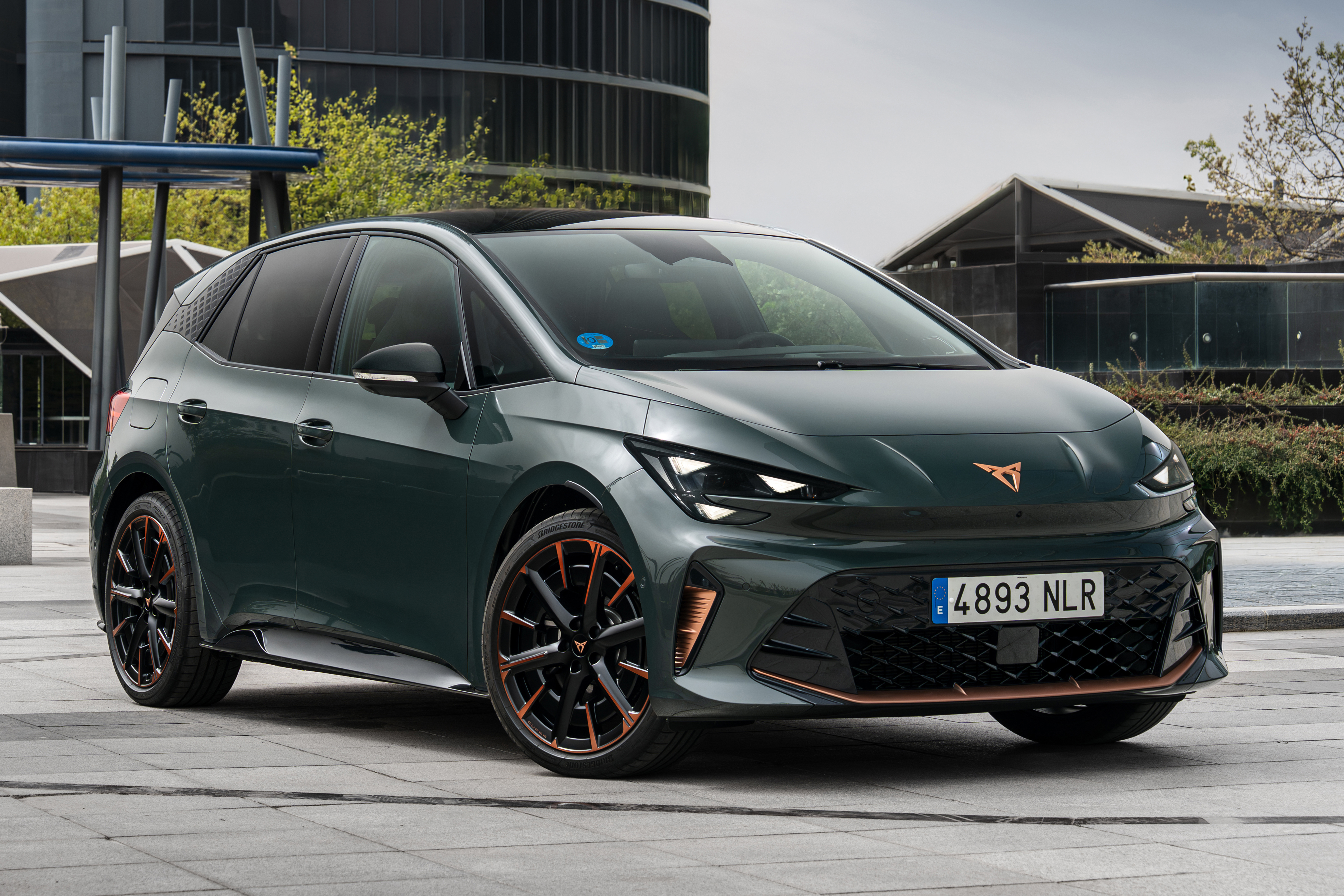
Not only does the Cupra Born share its rear-wheel drive MEB underpinnings with the Volkswagen ID.3 and its facelifted ID.3 Neo replacement, large sections of its bodywork and interior are also common with its VW cousin. Yet, the Born feels like an elevated product – more satisfying to drive and be in, especially with increased levels of plushness for the Cupra’s cabin.
In Spring 2026 the Born was facelifted, bringing the front and rear LED lights into line with other Cupras, while the interior benefitted from upgraded display screens and an increased physical button count. Those touch-sensitive climate control temperature adjusters remain, but their operation’s been refined to make them less annoying. The result is a roomy-yet-compact family hatch with a 385-litre boot, which is fun to drive that also happens to be electric.
Today’s Cupra Born line-up has been slimmed down, with V1 and V2 trim levels both available for the 58kWh 190PS battery and motor combination as well as the 79kWh 231PS alternative, costing from £34,500-£38,500. You can also have the larger battery in VZ specification with 326PS – only 5.6 seconds for the standstill to 62mph blast if you want to spend £46k on the privilege.
Up to 389 claimed miles of driving range can be eked from the 79kWh battery, which also recharges at speeds of up to 183kW, raising the battery’s energy from 10-80% in 29 minutes.
All Cupra Borns have impressive equipment rosters, but if you want electrically adjustable and massaging front seats upholstered in faux suede, extra-dark-tinted rear windows, a 360-degree parking camera system and a slick augmented reality head-up display system, you’ll need the V2 grade.
Cupra Tavascan
Launched in: 2024
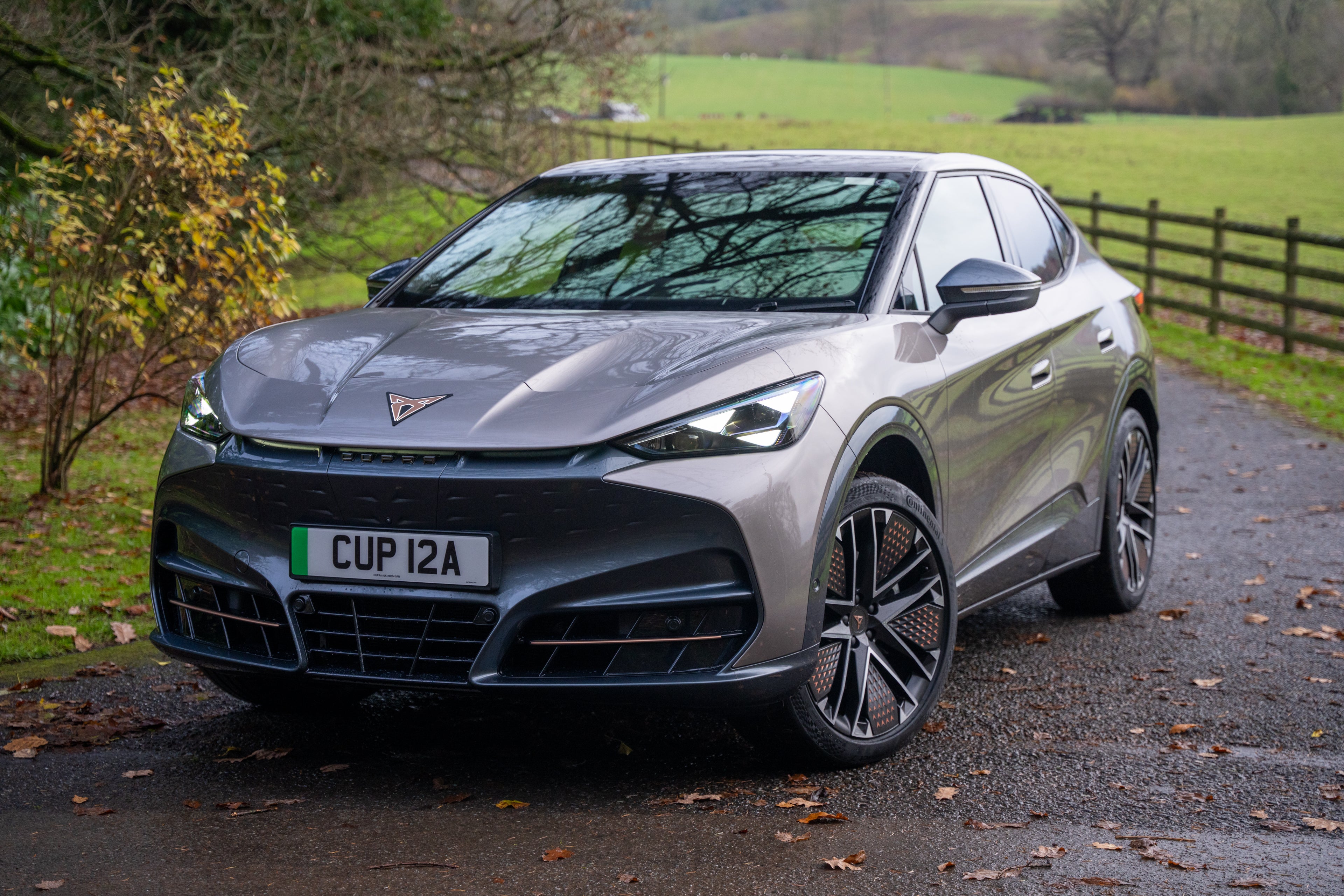
Unlike the Raval and the German-assembled Born, the Cupra Tavascan is manufactured in China, a market in which it has a near-identical twin in the guide of the Volkswagen ID. Unix 06. For UK buyers that means the Tavascan is further removed stylistically from the Volkswagen ID.5, inside and out, although it still makes use of the electric car-specific MEB platform.
Cupra pitches the Tavascan as an SUV coupe, which essentially means it’s a taller than usual five-door hatchback, complete with a 540-litre boot with the rear seats in use. Spaciousness isn’t an issue inside, with decent headroom even in the back as the roofline doesn’t start tapering too far forwards.
Three battery and motor combinations are available for the Tavascan: 58kWh with190PS, 77kWh and 286PS or 77kWh feeding 340PS. Unsurprisingly, it’s the middle of those permutations with longest driving range potential, claiming up to 345 miles between charges. A peak recharge speed of 135kW is off the pace of the likes of the Kia EV6, but is sufficient to increase the energy stored from 10-80% in 29 minutes.
With five trim levels, each of which can also be had with an optional Winter Pack comprising a battery heat pump, an electrically heated windscreen and heated front seats (or heated rear ones if the fronts already have that feature), deciding which version to go for is trickier than it ought to be.
We think the smart choice is the Cupra Tavascan V1 Winter Pack 77kWh 286PS for the longest driving range, plus desirable features such as triple-zone climate control, a heated steering wheel, automatic LED main beams and the ability to use your smartphone as the car’s digital key. At £47,000 that’s approaching £7k more than the entry-level version, but the extra equipment and less frequent charging justify the extra cost.
Officially, Cupra will have phased-out sales of its combustion-engined models by 2030. Whether that remains the case when brand new plug-in hybrids will still be legally offered for sale until 2035 will depend on how quickly demand for EVs revs up over the next few years.
That was the Cupra Born in 2022, although it was originally intended to be also sold as a SEAT. In fact, when the near-production-ready concept car was shown in 2019 it was badged SEAT el-Born.
SEAT’s first EV was the Mii Electric, but there was no Cupra equivalent of it.
You can place an order right now for the Cupra Raval Origin 37kWh 115PS which has a retail price of £23,785.
However, that might well become even more affordable by the time deliveries begin because the level of government-funded Electric Car Grant (ECG) has yet to be confirmed 37kWh-batteried Ravals. If it’s the same Band 2 discount which the 52kWh versions benefit from then its price could drop down to £22,285.
This ultimately depends on the size of the battery fitted to the car and the capabilities of the charger you've plugged into it.
As a broad rule of thumb, when using public chargers, Cupra's EVs can typically increase from a 10-80% state of charge in under 30 minutes. At home using a 7kW domestic wallbox charger, a flat to full total recharge will typically take anywhere from eight to 15 hours.
Find an electric Cupra for sale
Cupra Born170kW e-Boost V1 59kWh 5dr Auto
20256,477 milesElectric£328 p/m (PCP)*£23,368
LS126ANCupra Born169kW e-Boost V3 77kWh 5dr Auto
202331,035 milesElectric£507 p/m (HP)*£22,460
LS126ANCupra Born150kW V1 58kWh 5dr Auto
202220,569 milesElectric£17,492
BN126FHCupra Born170kW e-Boost V1 59kWh 5dr Auto
20254,485 milesElectric£332 p/m (PCP)*£23,607
LS126ANCupra Born170kW e-Boost V1 59kWh 5dr Auto
20266,023 milesElectric£311 p/m (PCP)*or £22,750£24,268
£1,518 offS61TFCupra Born170kW e-Boost V1 59kWh 5dr Auto
20251,539 milesElectric£325 p/m (PCP)*£23,904
BS20UBCupra Born169kW e-Boost V3 77kWh 5dr Auto
202216,848 milesElectric£325 p/m (PCP)*£22,985
CV32ANCupra Born169kW e-Boost V3 58kWh 5dr Auto
202226,451 milesElectric£312 p/m (PCP)*£20,985
CV32AN
More electric car guides
From choosing the right EV to understanding charging, running costs and more, our guides can help.