- Home
- …
- Electric Cars
- Volkswagen electric cars: Every model explained
05/08/2026
Volkswagen electric cars: Every model explained

Written By Mark Nichol
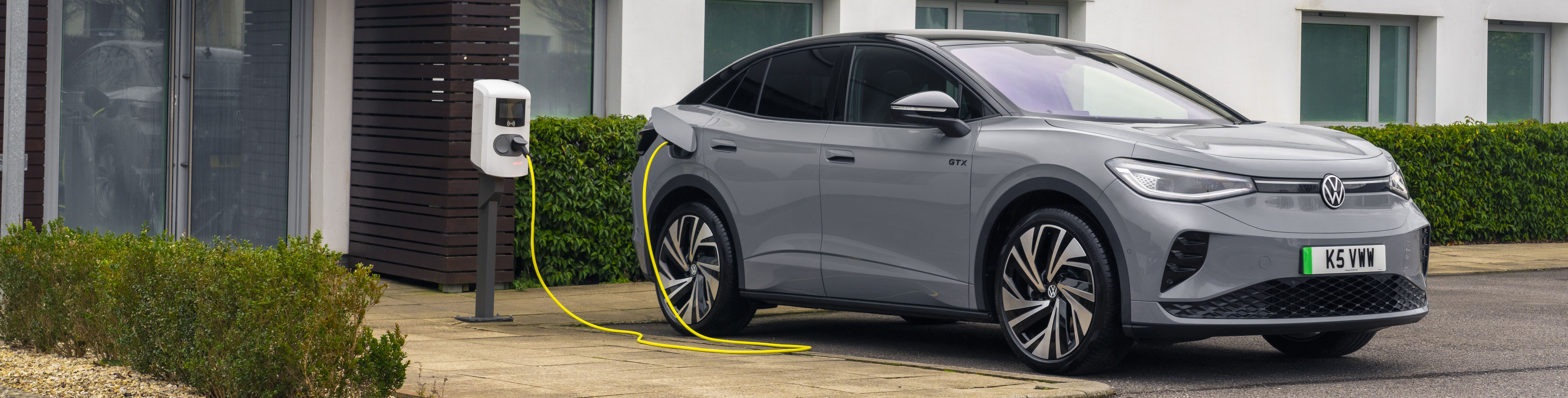
Volkswagen was a little late to the electric car party. While rivals including Tesla, Hyundai and Kia were already into their second generation of EVs, Volkswagen was cautiously producing plug-in hybrids and diesels. But VW has more than made up for lost time.
Today, Volkswagen offers one of the broadest electric car ranges on sale in the UK, from the compact ID.3 Neo hatchback to the spacious ID. Buzz and long-distance ID.7 Tourer. They all share the same family traits: comfortable ride quality, solid build quality, sensible ergonomics and an emphasis on making the switch to electric feel reassuringly familiar.
Not everything has been perfect. Early versions of Volkswagen's ID models were criticised for clunky infotainment systems and frustrating touch-sensitive controls, but software updates and recent facelifts have addressed many of those complaints. The latest cars feel considerably more polished than the originals – proper Volkswagens, but powered by electricity.
Volkswagen also understands that not every electric car needs to be outrageously fast. Instead, it has concentrated on efficiency, refinement and everyday usability, creating EVs that are easy to live with rather than headline-grabbing performance machines.
Whether you're looking for an affordable family hatchback, a practical SUV, a mile-munching motorway cruiser or a retro people carrier, Volkswagen's electric line-up now covers all the bases.
Volkswagen ID. Polo
Year launched: 2026
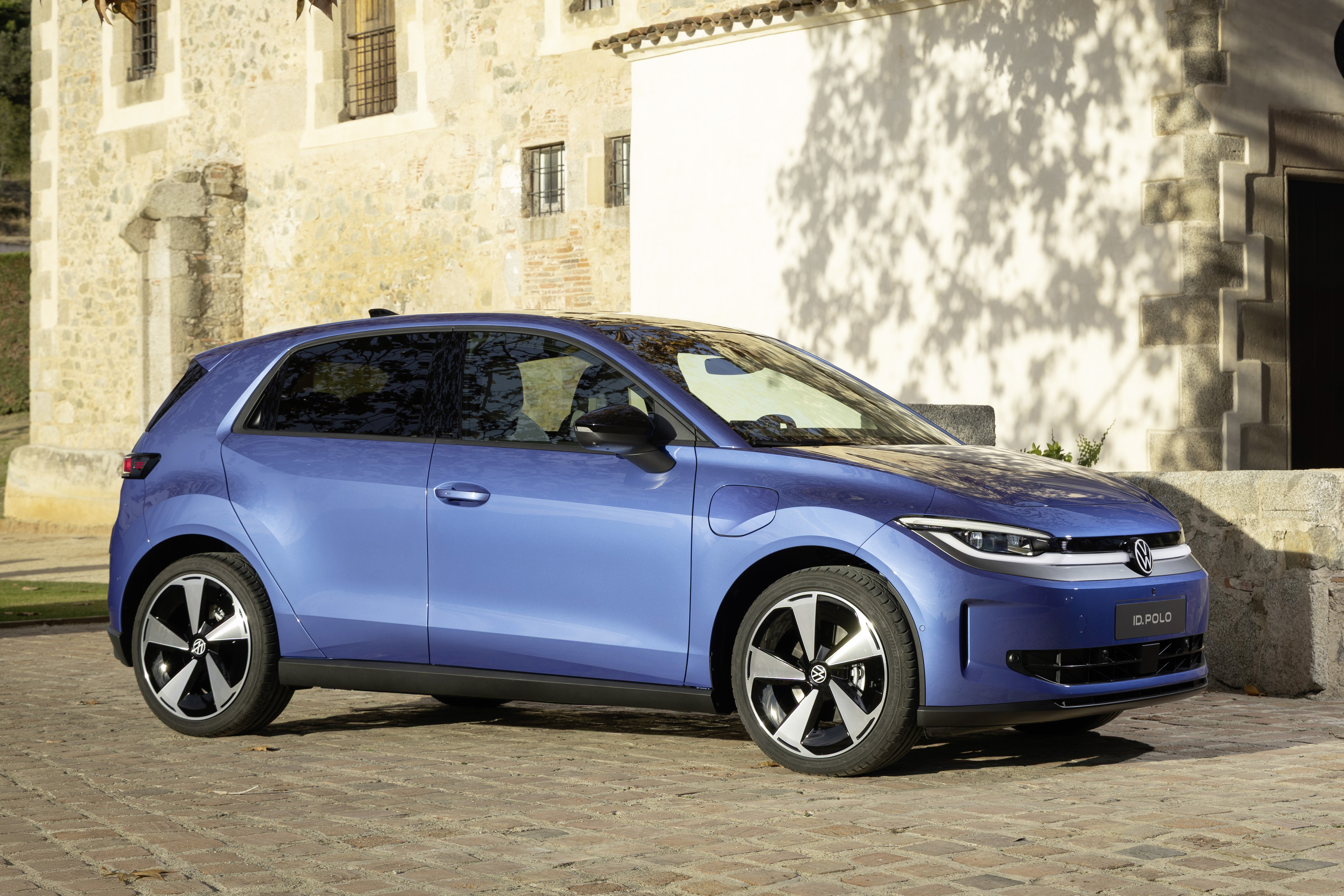
The Volkswagen ID. Polo is arguably the brand's most important electric car yet. Designed to complement rather than replace the long-serving VW Polo, prices are expected to start from around £22,000, putting it in direct competition with the Citroen e-C3, Fiat Grande Panda Electric and Renault 5 E-Tech.
Unlike the slightly quirky-looking ID.3 Neo, the ID. Polo has a more familiar hatchback shape and uses Volkswagen's new front-wheel-drive MEB Entry platform. Volkswagen claims rear passenger room will rival larger cars, while the boot is also bigger than the petrol Polo's.
Battery sizes are expected to range from around 38kWh to 56kWh, with the longest-range versions targeting around 280 to 300 miles of claimed range. Rapid charging, modern software and Volkswagen's latest infotainment system should make the ID. Polo one of the most significant affordable EVs to arrive on the market.
Volkswagen ID.3 Neo
Year launched: 2026
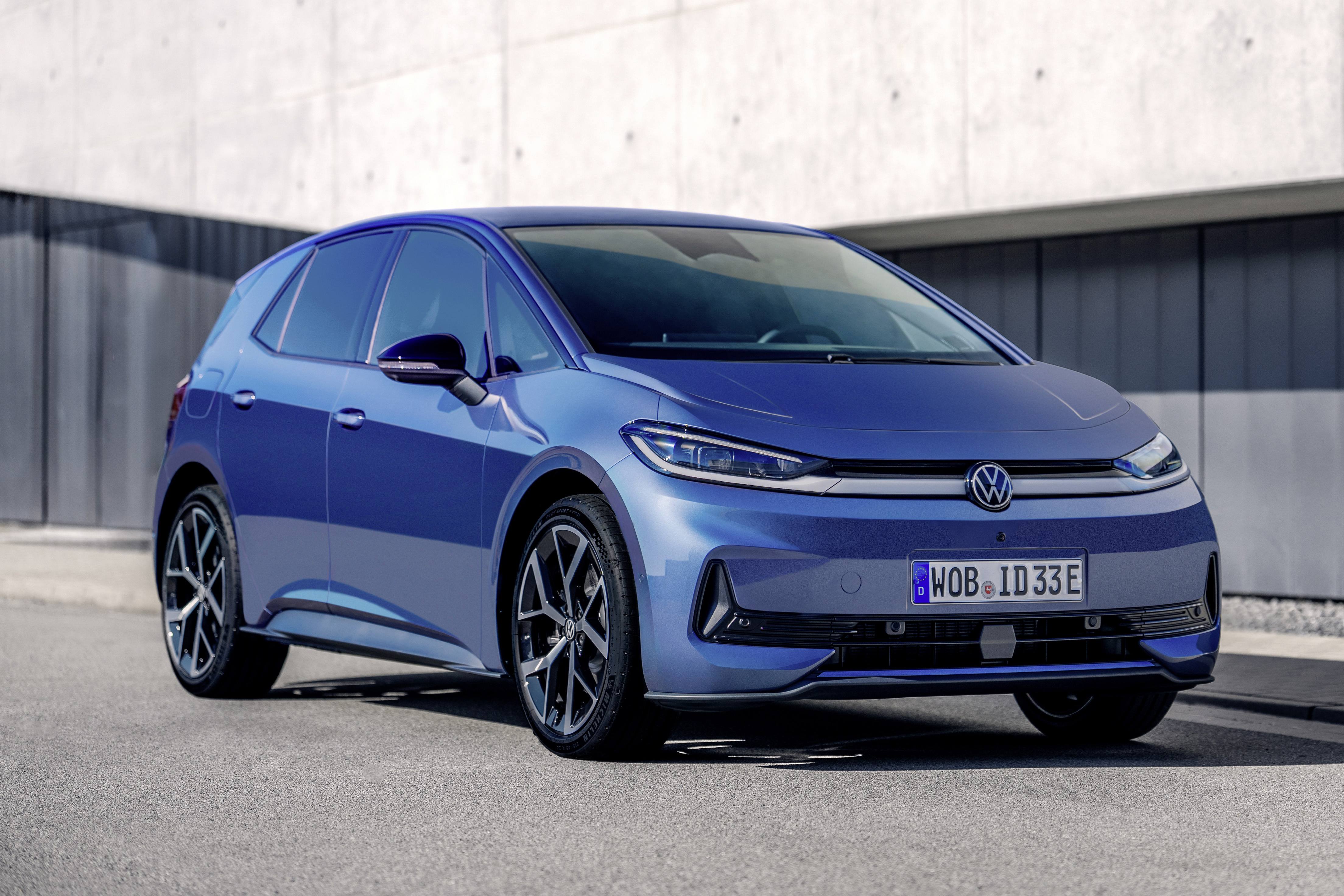
The Volkswagen ID.3 was this marque's first bespoke electric car and remains the spiritual successor to the Golf, despite not actually replacing it. The facelifted version, now called ID.3 Neo, is a family hatchback designed to make switching to electric feel effortless, offering generous interior space, a comfortable ride and impressively low running costs.
It isn't especially sporty, but it's quiet, refined and remarkably easy to drive. The longest-range versions can officially travel up to 390 miles on a charge, while models with the larger 79kWh battery support ultra-rapid charging at up to 185kW. Find a powerful enough charger and a 10-80% top-up takes around 25 to 30 minutes.
Unlike almost every other family hatchback on sale, the ID.3 Neo is rear-wheel drive. That frees up the front wheels to concentrate solely on steering, while also allowing them to turn through a tighter radius. The result is a surprisingly small turning circle, making the ID.3 Neo much easier to thread through multi-storey car parks and narrow city streets than its dimensions suggest.
Volkswagen ID.4
Year launched: 2021
.jpg)
Think of the Volkswagen ID.4 as an electric VW Tiguan and you'll immediately understand its appeal. It delivers all the things family SUV buyers actually want: a commanding driving position, generous passenger space, a large boot and a reassuringly comfortable driving experience.
But mainly, it’s not frustrating. In a world where loads of new SUVs have over-sensitive safety systems that spend most of the time distracting you by reminding you not to be distracted, the ID.4 feels calm and normal.
Like every Volkswagen EV, refinement is one of its greatest strengths. The suspension does an excellent job of smoothing poor road surfaces, while light steering makes town driving unexpectedly easy for such a substantial car; like the ID.3 Neo, most ID.4s are rear-wheel drive, which is a benefit for cabin space and low speed manoeuvrability. 4Motion all-wheel drive versions are available, while long-range models offer up to 351 miles between charges. Although Volkswagen’s vast array of trim levels and options can be confusing, every car is well-equipped.
Volkswagen ID.5
Year launched: 2022
.jpg)
If the VW ID.4 is sensible shoes, the Volkswagen ID.5 is… Slightly fancier sensible shoes. Underneath, the two cars are almost identical, but the ID.5 swaps the upright silhouette for a rakish coupé-style roofline that's nicer to look at.
The good news is that the sloping roof barely compromises practicality. Rear passengers still have plenty of space, while the 539-litre boot is actually six litres larger than the ID.4's, expanding to more than 1,551 litres with the rear seats folded.
It drives exactly as you'd expect: quietly, comfortably and without ever trying to convince you it's a sports car. Even the GTX Edition version, which adds 4Motion all-wheel drive and 340PS from twin electric motors, is more 'grand tourer' than 'sports SUV'.
It costs a few thousand pounds more than an equivalent ID.4, though, despite offering near-identical space, performance and range. You're paying almost entirely for the styling.
Volkswagen ID.7
Year launched: 2023
.jpg)
The Volkswagen ID.7 is probably the most interesting car in VW's line-up because it's quietly brilliant. It doesn't shout about itself, but it's arguably the best all-round electric Volkswagen has made so far. A sleek five-door hatchback, it’s aimed at drivers who spend serious time on the motorway and would rather arrive feeling relaxed than having won an imaginary race against a Tesla. And it’s not an SUV. How unusual.
It's also much bigger than it looks – at 4961mm long, the ID.7 offers limousine-like rear legroom, while its 532-litre boot easily swallows the luggage for a family holiday. Its large tailgate opening is another bonus, making it far easier to load bulky items than a conventional saloon.
Range is one of its biggest selling points. The Pro S version can officially cover up to 433 miles on a full charge, putting it among the longest-range electric cars on sale in the UK. Better still, it can rapid charge at up to 200kW, adding hundreds of miles of range during a coffee stop.
Volkswagen ID.7 Tourer
Year launched: 2024
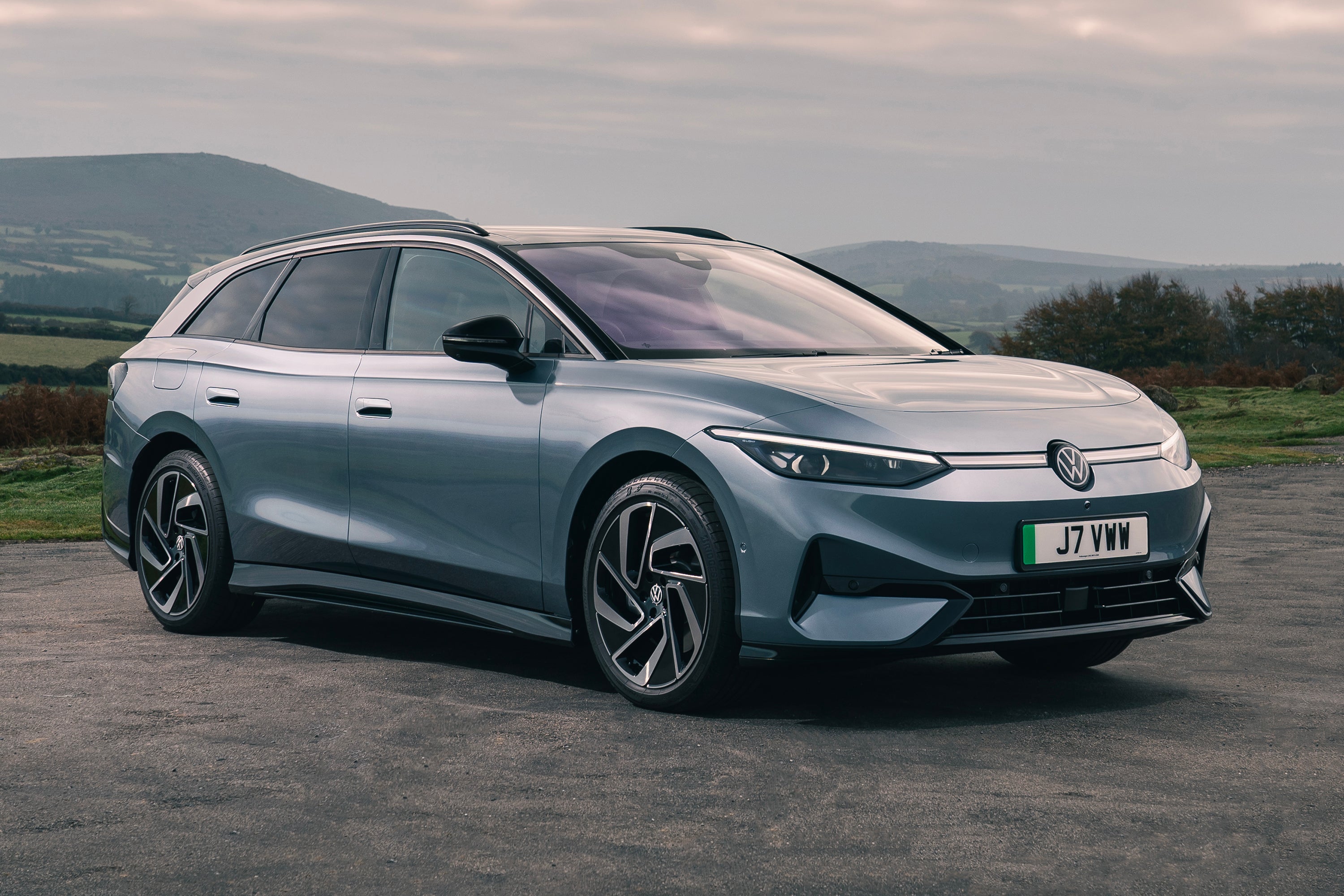
While everyone else seems obsessed with SUVs, in the Volkswagen ID.7 Tourer has quietly built one of the best long-distance EVs on sale. It's everything that's good about the ID.7, just with a much bigger boot.
And by bigger, we mean 605 litres, expanding to 1,714 litres when the back seats are folded. That's enough for bikes, dogs, flat-pack furniture or the sort of family holiday that puts you on the edge of the plane’s baggage allowance. The wide opening and low load lip help, too – much easier to haul those massive cases into the boot.
Mechanically, it's almost identical to the ID.7 hatchback. Because it’s a little bigger and heavier, range isn’t quite the same: the aforementioned Pro S version quotes 422 miles here, for instance. But that’s a difference which, in reality, makes no difference.
The only downside is the price. From just over £52,000, it’s one of the most expensive Volkswagens you can buy. But if your life demands this much space, it's a far more satisfying car to drive than a similarly sized SUV.
Volkswagen ID. Buzz
Year launched: 2022
.jpg)
The Volkswagen ID. Buzz had an impossible job. It wasn't just replacing a people carrier, it was reinventing one of the most iconic Volkswagens ever made – the original Type 2 Microbus, which became everything from a symbol of the 1960s hippie movement to a builder’s van. Somehow, the ID. Buzz nods to all that history without feeling like a nostalgia act.
It's unlike anything else on the road. Two-tone paint, an enormous VW badge and those unmistakable proportions mean people smile, wave, or even reminisce about the campervan they once owned. Few modern cars attract this much attention without costing Ferrari money.
Thankfully, it isn't all style. It’s massive, so it’s flexible, visibility is superb and the 1,121-litre boot is genuinely vast. It drives with surprising composure – the sort of van you might call 'car-like' – and it's ridiculously easy to manoeuvre thanks to its tight turning circle. It isn’t Volkswagen's longest-range EV with up to 301 miles claimed, but it's comfortably its most charming.
The Volkswagen ID series is a range of battery-powered Volkswagen electric cars. We’re told ID stands for intelligent design. Oh, plus identity and visionary technologies.
The first production Volkswagen electric car was the Golf CityStromer, which was sold between 1992 and 1996. Only around 120 were built, but 50 remain on the road. Volkswagen UK even has one in the reception of its offices, although it wasn't officially sold in this country.
Volkswagen has vowed to go purely electric in Europe and the UK by 2035. By 2030, the company predicts 70% of its new cars sold in the region will be EVs.
Charging times depend on the model and charger you use. On a rapid DC charger, most Volkswagen EVs can recharge from 10-80% in around 25 to 30 minutes. Using a typical 7kW home wall box, a full charge usually takes between eight and 12 hours, making overnight charging the most convenient option.
The Volkswagen ID.3 Neo is currently the most affordable fully electric Volkswagen on sale in the UK. It combines a competitive purchase price from just over £33,000, with generous equipment levels, low running costs and enough space to serve as a practical family hatchback. However, the VW ID. Polo is going on sale imminently and that's set to start from around £22,000.
No. Production of the Volkswagen e-Golf ended in 2020 and it has been replaced by the Volkswagen ID.3, which was designed from the ground up as an electric car. The ID.3 offers more interior space, significantly longer range and much faster charging than the old e-Golf.
Find an electric Volkswagen for sale
Volkswagen ID.Buzz250kW GTX Pro 86kWh 5dr 4MOTION LWB Auto [7 Seat]
20263,838 milesElectric£54,500
GL24NEVolkswagen ID.Buzz150kW Style Pro 77kWh 5dr Auto
202412,620 milesElectric£40,273
HU139PBVolkswagen ID.Buzz250kW GTX Pro 86kWh 5dr 4MOTION LWB Auto [6 Seat]
20261,215 milesElectric£56,990
LL114YLVolkswagen ID.Buzz250kW GTX Pro 86kWh 5dr 4MOTION LWB Auto [7 Seat]
202610 milesElectric£63,540
WR99AUVolkswagen ID.Buzz250kW Commerce Plus 79kWh Auto 4Motion
20256,080 milesElectric£39,589
inc. VATB64RGVolkswagen ID.Buzz150kW Life Pro 77kWh 5dr Auto
202423,000 milesElectric£33,995
CF104BBVolkswagen ID.Buzz150kW Life Pro 77kWh 5dr Auto
202325,534 milesElectric£30,000
BD48RJVolkswagen ID.Buzz210kW Commerce Plus 79kWh Auto
20261,000 milesElectric£44,340
WR99AU
More electric car guides
From choosing the right EV to understanding charging, running costs and more, our guides can help.