- Home
- …
- Electric Cars
- Skoda electric cars: Every model explained
27/07/2026
Skoda electric cars: Every model explained

Written By Keith WR Jones
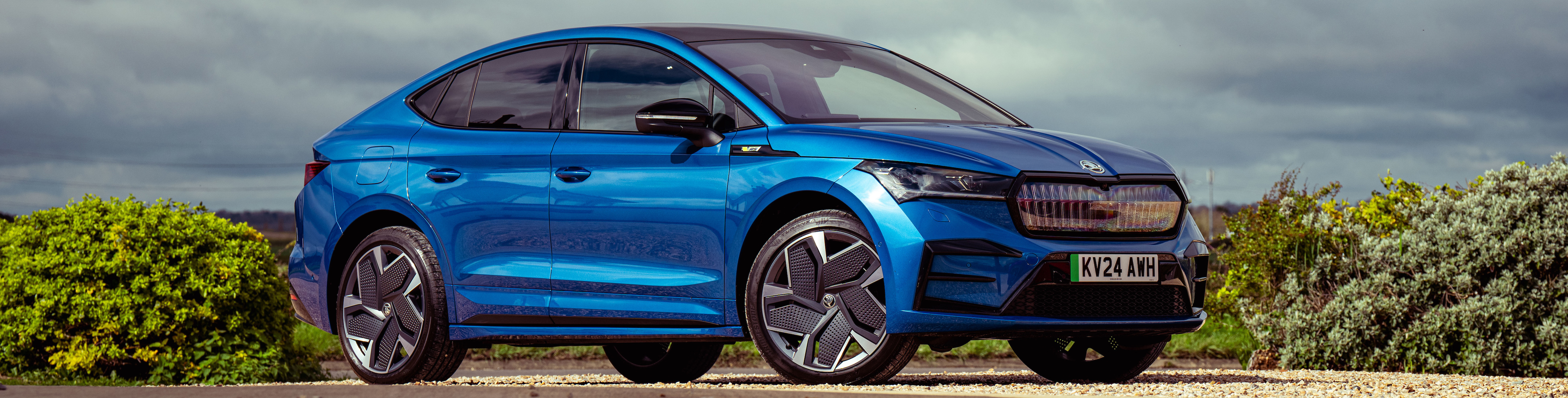
Skoda’s brand values are amplified by its electric models which are underpinned by EV-specific platforms. They’re efficient and inexpensive to run as well as majoring on spaciousness and practicality.
Barring the short-lived Skoda Citigo-e, the Czech brand’s assortment of EVs have all been SUVs, although a battery-powered model with similar dimensions to today’s Octavia Estate is nearing the end of the pipeline. Given SUVs’ continued popularity, it’s not remotely unsurprising that Skoda’s concentrated its efforts here.
Joining the well-established Enyaq and popular Elroq ranges in 2026 are the bookends of the line-up. At the smaller end of the scale is the Skoda Epiq providing a much lower entry cost for EV buyers, while serving the needs of seven-seater buyers at the opposite end is the Skoda Peaq. Expect to see both becoming popular sights during 2027.
Whichever size of electric Skoda SUV you’re considering, all are deserving of a place on your next car shopping list.
Skoda Epiq
Launched in: 2026
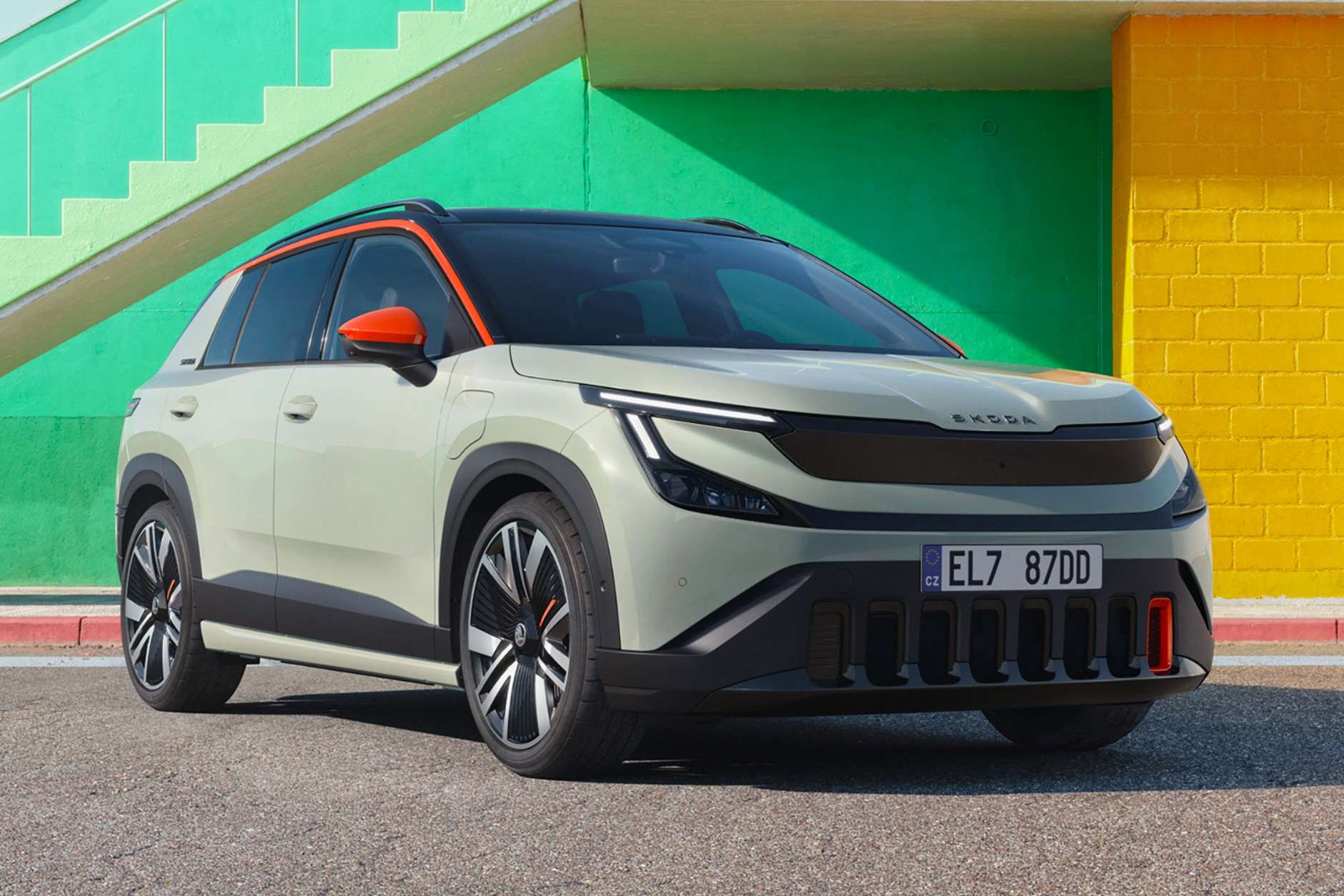
Although orders for the new Skoda Epiq opened in summer 2026, deliveries won’t get underway for UK buyers until February next year. We strongly suspect this car’s going to be in high demand given it offers many of the attractions of the larger Skoda Elroq, but at a much lower price point.
Assembled in Spain alongside the Cupra Raval and Volkswagen’s ID. Polo and ID. Cross, the Epiq shares those cars’ new front-wheel drive MEB Entry platform, promising masses of interior space despite being relatively compact. It’s shorter – but wider and taller – than the excellent Skoda Kamiq, yet has 75 litres more boot space with the rear seats in use.
Epiq 55 models – with a 52kWh battery – will be available first, with a provisionally quoted battery range of up to 270 miles, capable of being recharged from 10-80% on an appropriately quick 105kW public charger in 25 minutes. No range figures have yet been suggested for the Epiq 40, but we expect its 37kWh battery to still yield around 200 miles of range before needing to be plugged in.
Only SE L, Edition and limited availability First Edition trim levels have been confirmed so far, with all Epiqs featuring a 13-inch multimedia touchscreen with wireless Android Auto and Apple CarPlay, plus climate control, adaptive cruise control and rear parking sensors. Oh! And there are physical buttons on the dash and steering wheel.
With the government’s Electric Car Grant (ECG) discount applied, prices for the Skoda Epiq 40 begin at £23,450, with the rangier Epiq 55 starting at a very reasonable £26,200. Expect it to be one of 2027’s best-selling EVs.
Skoda Elroq
Launched in: 2024
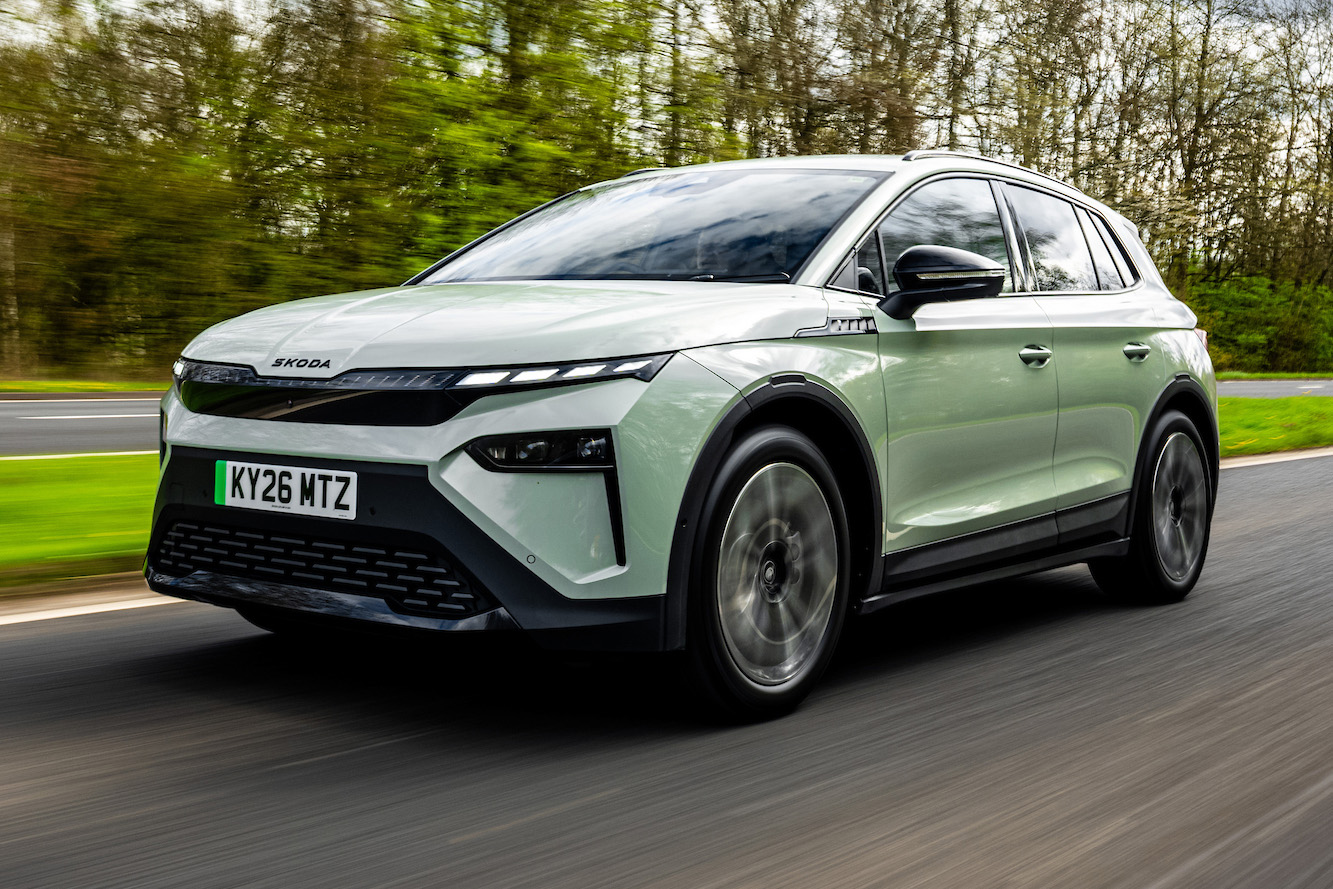
Just as the Karoq has proven to be at hit with combustion-engined SUV buyers over the past decade, the similarly sized Skoda Elroq is already proving to be a sales success across Europe. Viewed from the front and side, its closeness to the larger Skoda Enyaq is self-evident, yet the Elroq’s truncated tail hasn’t been to the detriment of its capabilities as a practical family car.
Sure, the Elroq’s boot space is 115 litres less commodious than the Enyaq’s, but at 470 litres with the spacious rear seats still in use, it’s hardly lacking in capacity back there. Even more impressive, that’s with the electric motor nestled under the boot floor, because as with the Audi Q4 e-tron and VW ID.4 among others, the Elroq uses Volkswagen Group’s MEB platform.
Within the core Skoda Elroq line-up are two battery sizes of 61kWh (badged 60) and 84kWh (with the 85 label) capacities, with claimed driving ranges of up to 279 and 370 miles respectively. Either option can be zapped from 10-80% energy level when connected to appropriately capable public chargers in under 30 minutes.
Trim level choices have been pared-back since the Elroq’s launch with the former mid-range SE L now being the Skoda’s entry grade, with Edition and SportLine being the more expensive alternatives. Prices start at just under £32,500 for the Elroq SE L 60, with standard kit including a heated steering wheel and front seats, dual zone climate control and a reversing camera.
Skoda Elroq vRS
Launched in: 2025
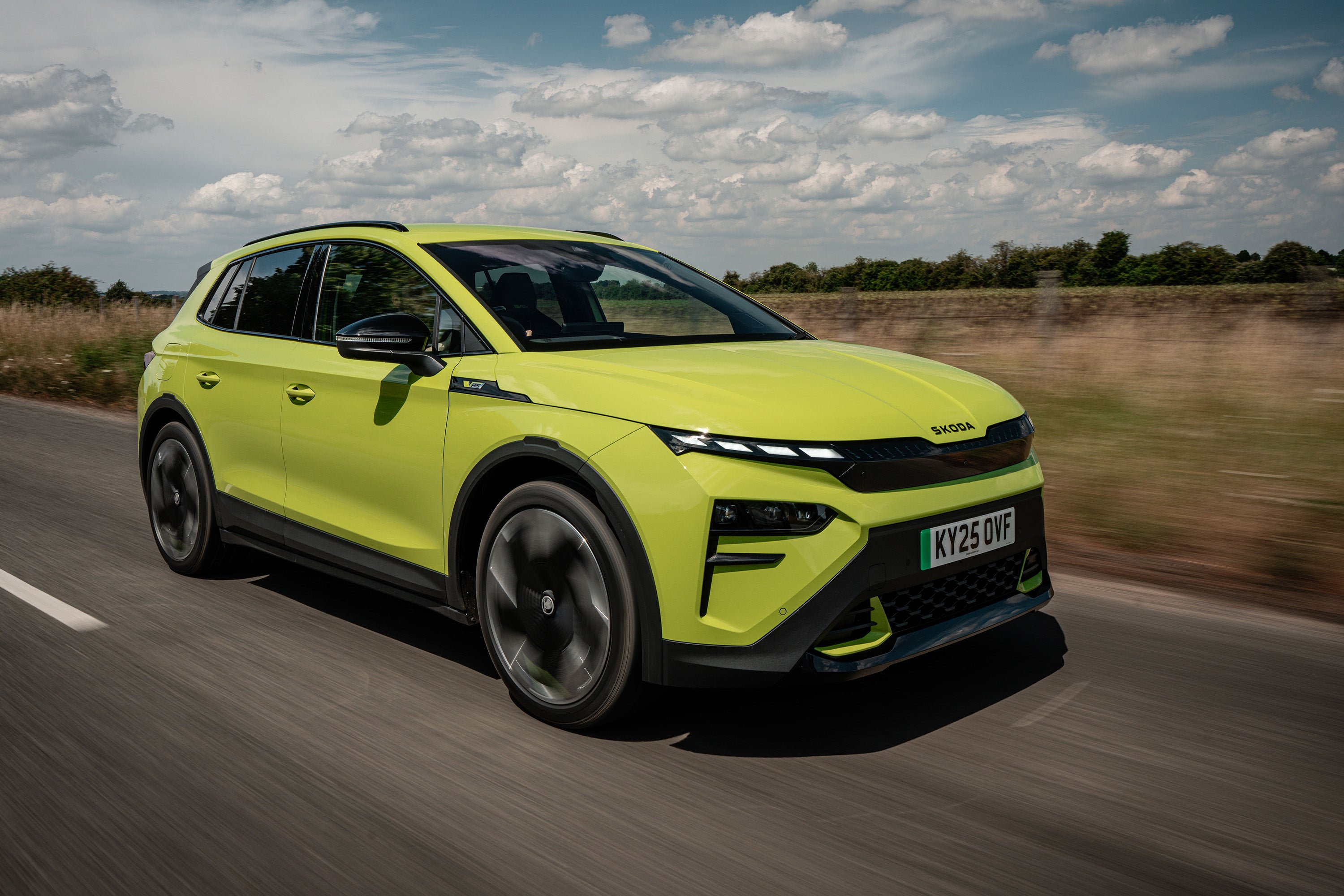
As per tradition with sportier derivatives, we’ve reviewed the Skoda Elroq vRS separately, but – spoiler alert – it’s not as convincing a performance model transformation as other Skodas which have worn the vRS badge.
On paper, the Elroq vRS has the necessary credentials with a dual-motor set-up providing all-wheel drive traction for its 340PS power and 679Nm torque outputs – healthy increases over the ‘regular’ Elroq 85’s 286PS and 545Nm figures. They’re sufficient to shave the 0-60mph acceleration time down from 6.4 seconds to 5.2.
But neither that extra urgency nor the Elroq vRS’s standard Dynamic Chassis Control package, which enables drivers to sharpen up the Skoda’s responsiveness, has transformed it into a sports SUV. In the real world, the Elroq 85 is almost as brisk, a little comfier, can travel further on a charge and is cheaper.
So, what are we talking, exactly? With its 82kWh battery the vRS’s claimed range of 344 miles is 26 shy of the Elroq 85’s best, while its near-£47k price tag is five grand punchier than the next most expensive SportLine derivative.
Still, there are no practicality sacrifices by opting for the Skoda Elroq vRS, so it’s geared up for being fit for family life. Just don’t expect it to push your driving enthusiast buttons.
Skoda Enyaq
Launched in: 2021
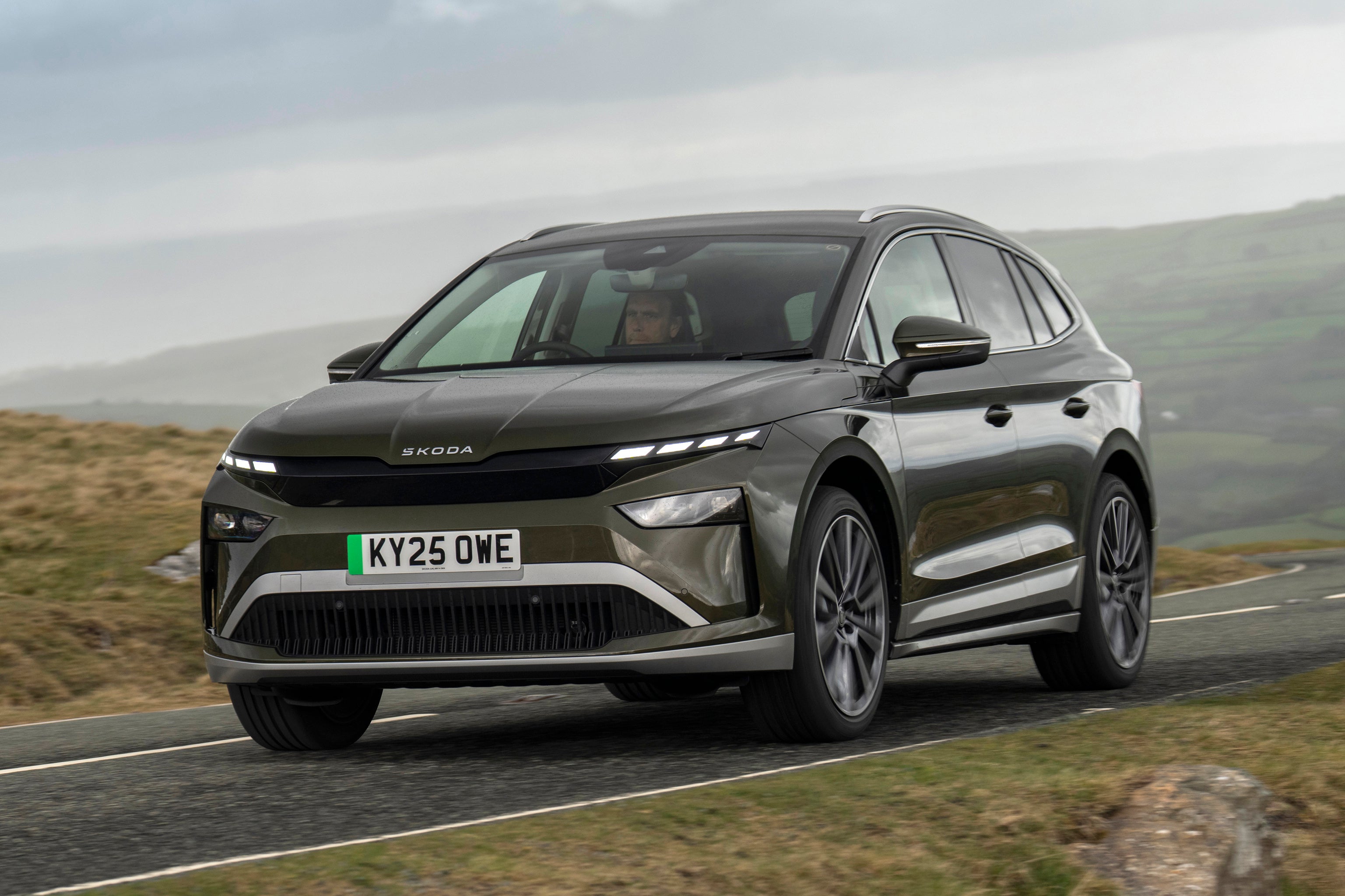
Few will take exception to the claim that of the first wave of Volkswagen Group MEB-platform cars, the Skoda Enyaq was the one which felt like the best all-rounder. Fine value for money, a truly cavernous and plushly finished interior and decent driving range potential. Cover the steering wheel badges up and you would be forgiven for wondering if the Enyaq’s dashboard had been mixed-up with the Volkswagen ID.4’s.
For a large, five-seater SUV, its cabin space almost feels too vast, with ample room for occupants’ limbs and heads, front and rear, plus 585 litres of boot space with the second-row bench in use – that’s almost large enough for two washing machines.
Skoda gave the Enyaq a mid-life facelift in summer 2025, which made its nose look sleeker, yet also less distinctive – not helped by the smaller Elroq effectively looking identical front-on. The line-up was also revised resulting in the Enyaq 60 (61kWh battery) and 85 (84kWh) each being available in SE L and Edition specifications. If you fancy a racier-looking SportLine you can choose between the 85 and 85x, the latter having two motors, all-wheel drive and a slightly smaller 82kWh battery.
It’s the rear-wheel drive Enyaq 85 that has the longest driving range potential with an official figure of up to 373 miles, while all battery options can be taken from a 10-80% state of charge in under 30 minutes with an appropriately powerful public connection.
Sticking with SE L grade nets you goodies such as three-zone climate control, LED lights front and rear, a 13-inch multimedia touchscreen with wireless Android Auto and Apple CarPlay connectivity plus an electrically operated tailgate. Inclusive of the ECG discount, the Enyaq 60 weighs in at £38,000, the longer range 85 for a further £2500.
Skoda Enyaq Coupe
Launched in: 2022
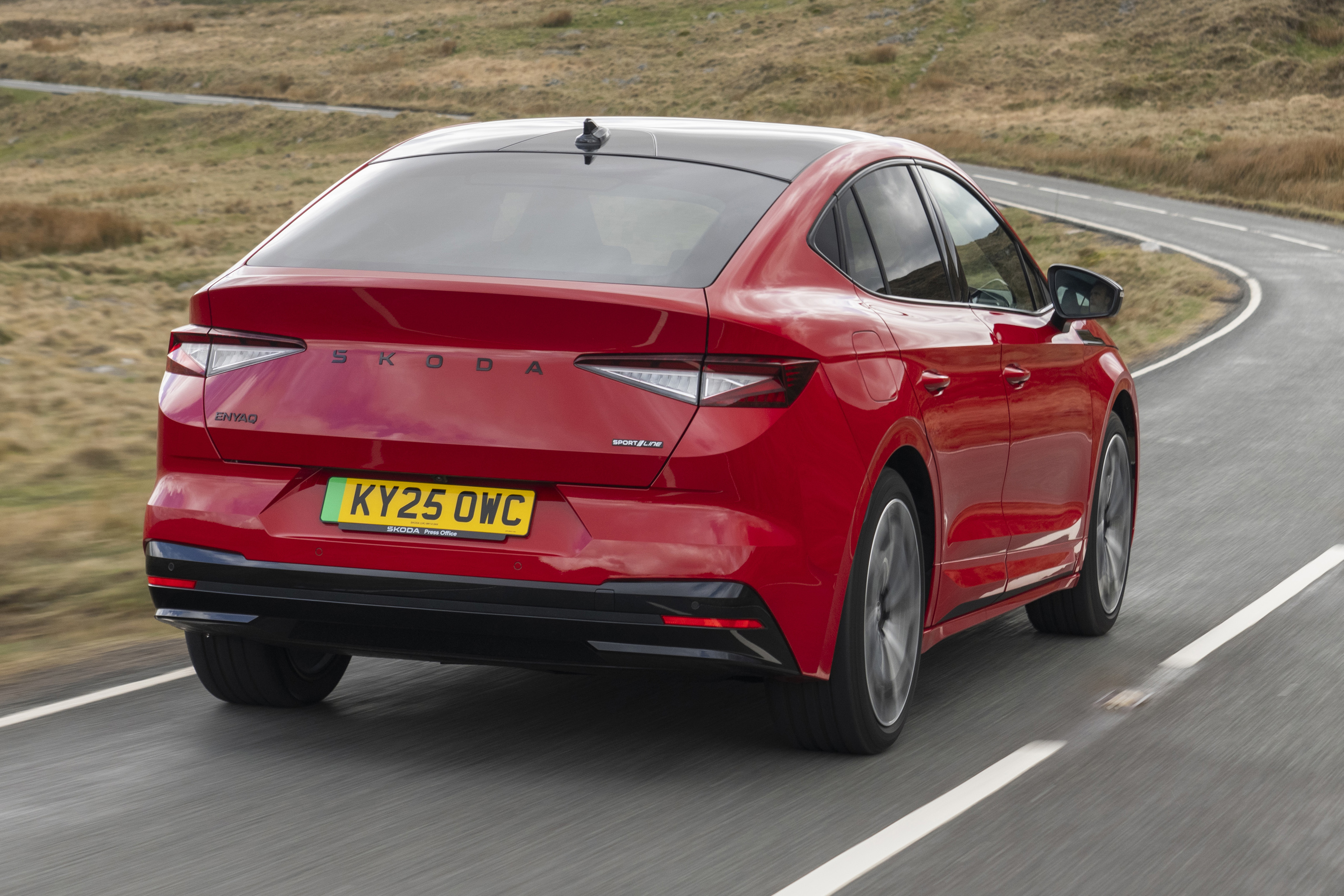
Naysayers dismiss the notion of cars such as the Skoda Enyaq Coupe as pointless, but if that were true, nobody would buy them. Ultimately, not everyone needs such voluminous cargo-carrying capabilities afforded by the more upright tail of the regular Enyaq, while aesthetically the Coupe’s slinkier roofline makes it look less bulky.
Splitting hairs to a degree, we take exception to Skoda calling this Enyaq bodystyle Coupe – not because it’s got rear doors or because its ride height confirms it’s an SUV – but because coupes have lower, sleeker heights to reinforce their sportier aspirations, impinging rear headroom in the process. Yet at 990mm, the Enyaq Coupe’s rear seat is just as accommodating as its SUV twin.
Okay, some practicality has been sacrificed by dint of its shape – remove its parcel shelf and the height of what’s in the boot is going to be restricted, so consider that in depth if your canine companion travels back there. Overall though, the Enyaq Coupe’s seats-up boot capacity of 570 litres is still mighty impressive and represents just a 15-litre reduction over the SUV alternative.
Enyaq Coupes are only available in 85 and 85x battery guises, with Edition being the lowest-ranking trim level. Its visual sleekness hasn’t translated into genuine wind-cheating if the maximum driving range figure is to be believed: 367 miles is a six-mile reduction over the equivalent Enyaq SUV’s best.
Also be prepared to shell out a further £1900 model-for-model by opting for the Enyaq Coupe, with prices for starting at an unSkoda-like £46,720. Yet, you can spend significantly more…
Skoda Enyaq vRS
Launched in: 2022
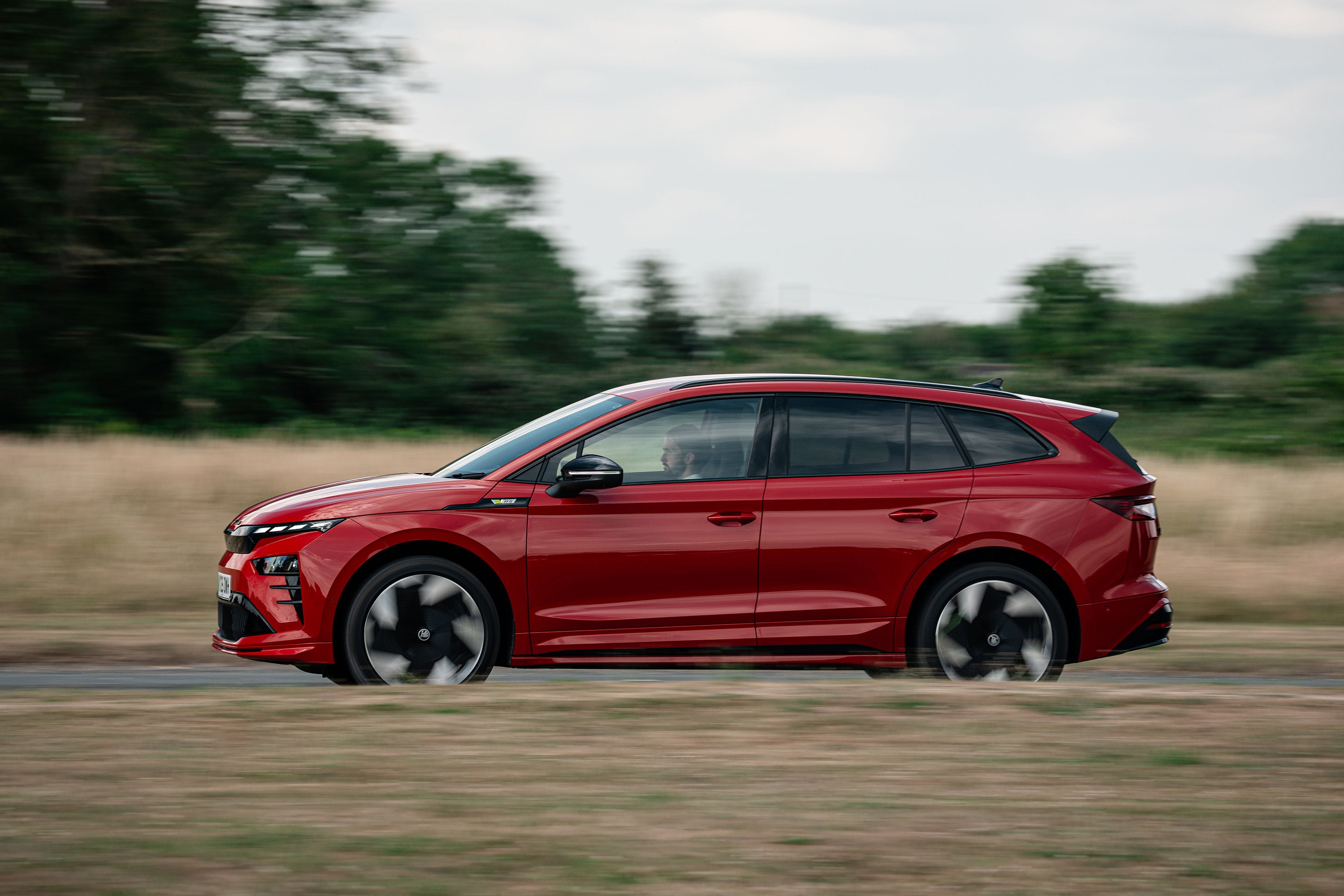
If you opt for the flagship Skoda Enyaq vRS then you have a choice of both the regular SUV and Coupe bodystyles, the latter maintaining its £1900 price premium at £54,370. In truth, the additional performance and Dynamic Chassis Control-enhanced agility are noticeable, but they don’t feel like sufficient upgrades over an Enyaq 85 or 85x in SportLine specification. However, if you need a two-and-a-quarter-tonne SUV in your life that’s painted in eye-popping Hyper Green, the vRS is the only way to go.
Their 340PS and 679Nm power and torque outputs mirror those of the smaller Elroq vRS, with the Enyaqs’ greater heft adding a tenth of a second to their 0-60mph times at 3.9 seconds apiece. Curiously, they will travel a little further on a full charge than the Elroq – its 344-mile claim is bested by the Enyaq vRS at 347 miles with the Enyaq Coupe vRS better still at 351 miles.
Neither suffers any practicality trade-off as part of the transition to vRS status, but ultimately both are more about the show than the go.
Skoda Peaq
Launched in: 2026
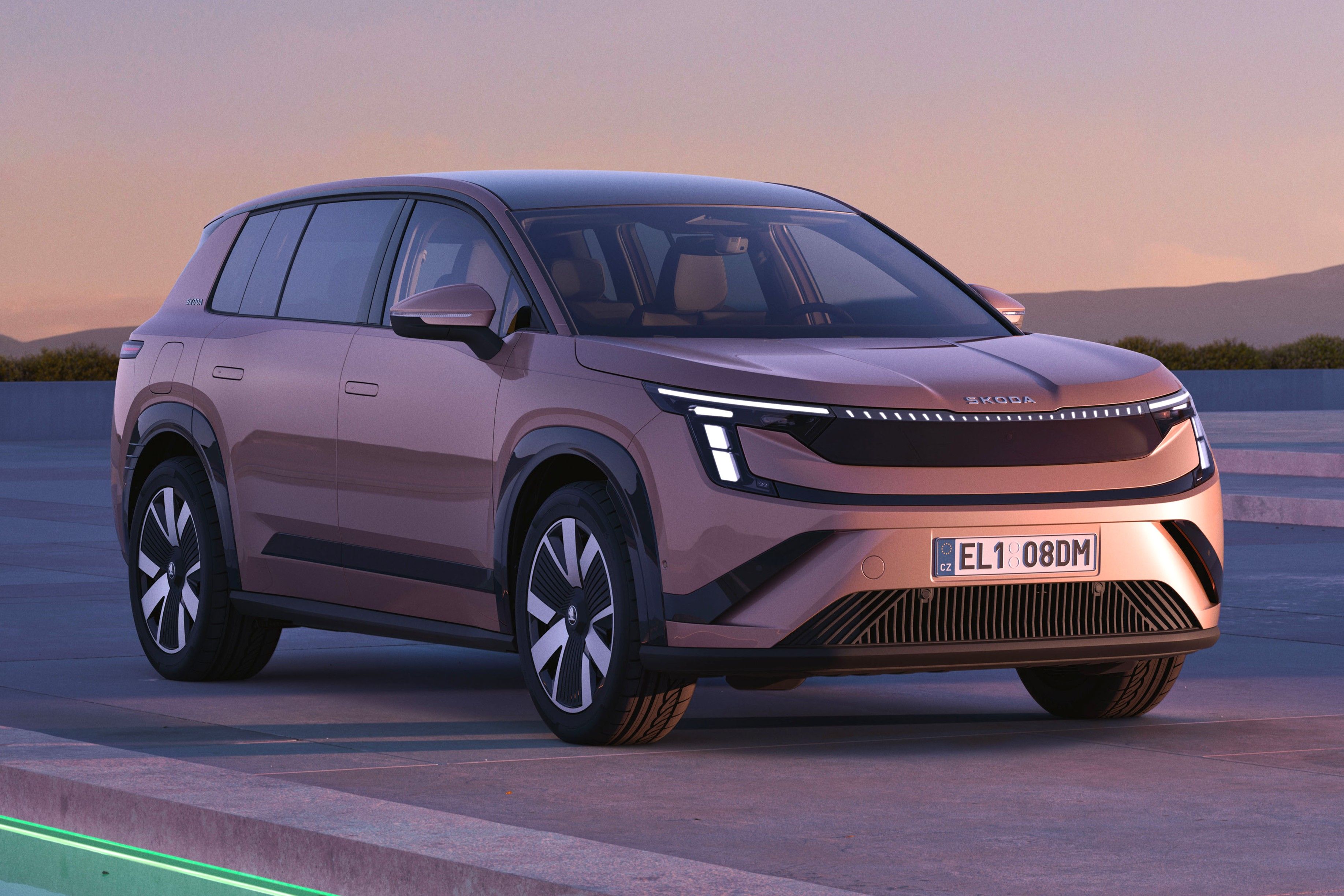
If you need proof of how important Skoda’s array of electric SUVs is within the whole of the Volkswagen Group, look no further than this. It’s the new Skoda Peaq, available to order from the end of summer with deliveries commencing in 2027 – and the first seven-seater electric SUV from any of the group’s brands. Impressive.
Its pricing is also a clear indication of the esteem in which Skoda’s customers regard it, with the least expensive Peaq costing a smidgen under £52,000. It’s going to have to be good to justify that with the seven-seater Tesla Model Y being in the same ballpark and the Peugeot E-5008 available for considerably less.
From the get-go there are two drive systems available for the Skoda Peaq – the rear-wheel drive 90 and the all-wheel drive 90x. Both have a 91kWh battery pack delivering a provisional claimed driving range of up to 395 miles for the Peaq 90.
As a family-focused seven-seater, Peaq practicality is all, although as with its Peugeot rival, the Skoda’s rearmost row of seats look best-suited to children and more petite adults for shorter journeys. It’s not short on cargo space, though: 299 litres behind row three, 890 litres when used as a five-seater, with a van-like 2075 litres loaded to the roof with just the front seats in use. And all within a 4874mm-long footprint.
Simply Clever features abound, with the Peaq offering not just hooks and dividers in the boot, but also a QR code to illustrate how best to make use of its capacity and an electrically sliding parcel shelf for extra convenience.
Expect the Skoda Peaq to do for electric seven-seater SUV sales what the Skoda Kodiaq has achieved with combustion-engined equivalents.
Unlike some other Volkswagen Group brands, Skoda has yet to put a definitive date on when it intends to phase-out its combustion-engined models, meaning that they could be dictated by different legislation in its global markets. That could mean 2035 within the EU and the UK.
What the brand has stated is that it hopes by 2030 somewhere between 50% and 70% of its models sold are fully electric.
That was the sadly short-lived Skoda Citigo-e from 2019, the Czech brand’s equivalent to the Volkswagen e-Up which was sold over a longer time span.
Its first model sold purely as an EV was the Skoda Enyaq launched in 2021.
It will in time, yes. The first of these is an electric estate which is likely to be available from 2028. We expect it to be similar in size to today’s Skoda Octavia Estate.
Whether other bodystyles will become available of it or other electric Skodas will be dictated by demand. It’s not difficult to imagine that if sales of the Cupra Raval and Volkswagen ID. Polo small hatchbacks prove popular, a similarly proportioned model, sitting below the Skoda Epiq SUV would make a lot of sense.
That honour goes to the Skoda Epiq SE L 40 which – after the government's ECG discount has been deducted – starts at £23,450.
This depends on a variety of factors including the size of the battery fitted to the car and the power of the charger you've plugged into it.
As a general rule, when using public chargers, Skoda's EVs can typically increase from a 10-80% state of charge in under 30 minutes. When using a 7kW wallbox charger at home, a 0-100% recharge will typically take anywhere from eight to 15 hours.
Find an electric Skoda for sale
Skoda Enyaq132kW 60 ecoSuite 62kWh 5dr Auto [120kW]
202226,178 milesElectric£18,995
TN240GASkoda Enyaq210kW 85x Sportline 82kWh 4x4 5dr Auto
202616 milesElectric£38,990
ST57NLSkoda Enyaq210kW 85x Sportline 82kWh 4x4 5dr Auto
202616 milesElectric£38,990
CW15XNSkoda Enyaq150kW 80 Sportline 82kWh 5dr Auto
202138,927 milesElectric£21,795
CF313NBSkoda Enyaq195kW 80x Sportline 82kWh 4x4 5dr Auto
202334,604 milesElectric£25,995
TN240GASkoda Enyaq210kW 85 Edition 82kWh 5dr Auto
20263,830 milesElectric£37,250
TN23ELSkoda Enyaq210kW 85x Sportline 82kWh 4x4 5dr Auto
202518,693 milesElectric£34,250
LL319AYSkoda Enyaq220kW 85x Sportline 82kWh 4x4 5dr Auto
20261,500 milesElectric£38,590
ST57NL
More electric car guides
From choosing the right EV to understanding charging, running costs and more, our guides can help.