- Home
- …
- Electric Cars
- Porsche electric cars: Every EV explained
29/07/2026
Porsche electric cars: Every model explained
Written By Keith WR Jones
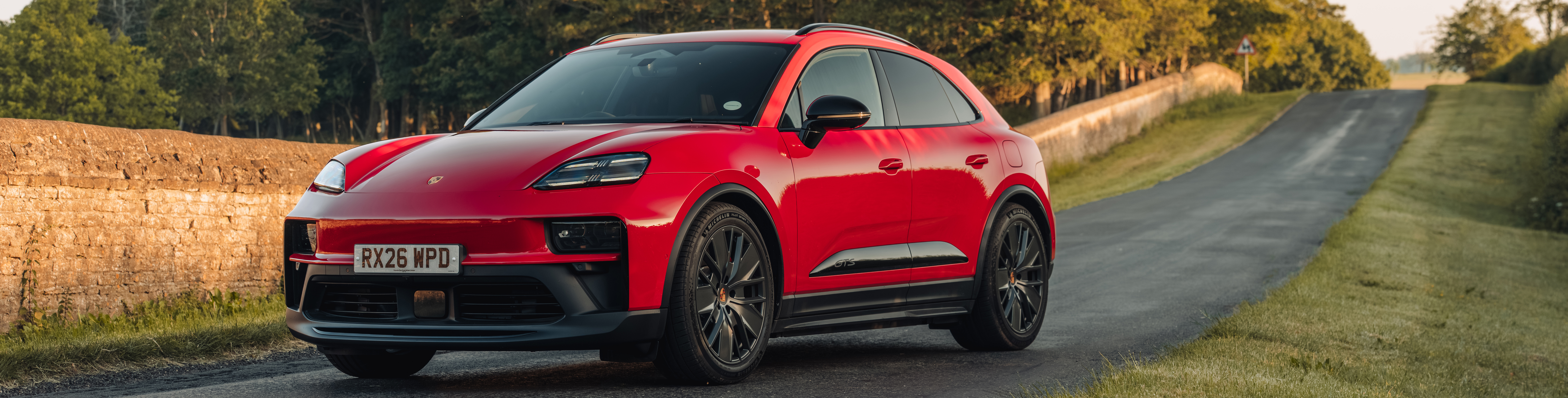
Porsche – one of the most storied automotive brands whose models are instantly recognisable to people regardless of whether or not they have any interest in cars at all. If Porsche could bottle the essence of that recognition, it would make even more money than it does from its assortment of sports cars.
Not that slinky coupes and cabriolets are all the German firm produces, of course, having taken flack when it diversified into selling SUVs and larger saloon-like models, Yet, arguably, had the original Porsche Cayenne and Panamera models not been successful, perhaps Porsche might not be around at all today.
Despite its historical tapestry being woven from threads of various configurations of combustion engines, Porsche has also been at the forefront of high-performance electric drive systems, initially with the Taycan, followed by the second-generation Macan and the recently released Cayenne.
All are exquisitely engineered and provide the sort of enthusiast driver satisfaction that its rivals daren’t even dream of imagining for their EVs. But, it’s not all as rosy as it could be – had everything gone to plan, by now you should have been able to buy the electrically propelled replacements for the Porsche 718 Boxster and 718 Cayman. You can’t because they were cancelled close to their expected launch date.
While Porsche felt the world wasn’t yet ready for EV sports cars after all, it continues to enjoy success with its established electric models.
Porsche Taycan Sport Saloon
Launched in: 2019
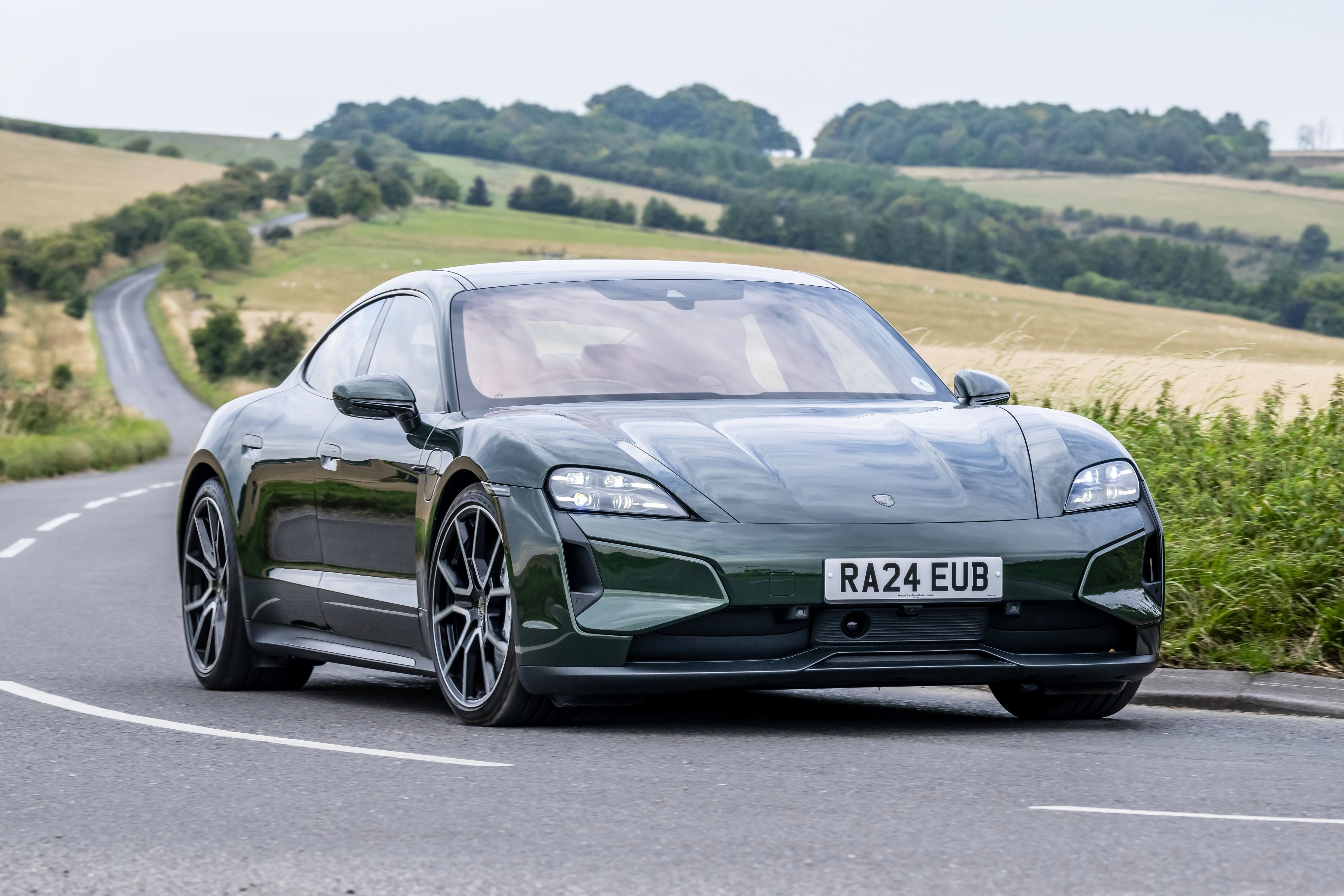
Given how lithe and fresh the Porsche Taycan Sport Saloon – to give it its full title – looks, the brand’s first electric model appears to be ageing in reverse, an automotive Dorian Gray if ever there was one. Okay, it had a facelift in 2024, but still…
That Sport Saloon label is Porschespeak to indicate that the four-door Taycan is much more a slightly more practical coupe than it is a comfy limo. Yes, you can carry a fifth passenger in most of them, but given how narrow and uncomfy that central rear seat is, save yourself a few quid and don’t tick that option box.
Today’s Taycan line-up is far less complex than it was originally, although several of the derivatives occupy performance gaps in the range so slender as to wonder ‘why bother?’. All Taycans are quick – even the slowest darts from a standstill to 62mph in 4.8 seconds, while the two-seater, flagship Turbo GT with Weissach Package requires just 2.2 seconds courtesy of its 1034PS and 1270Nm outputs.
Our pick of the line-up is the rear-wheel drive, entry-level version, simply named Porsche Taycan. Power and torque of 435PS and 420Nm respectively ensure there’s pace aplenty, yet its 105kWh Performance Battery Plus provides a claimed driving range of up to 434 miles. Ultra-rapid DC charging at up to 320kW can zap 203 miles into the battery in 10 minutes.
All you need now is the £88,400 purchase price and an iron will not to add all manner of appealing extra-cost options… £1436 for Frozenberry Metallic paint, for instance.
Porsche Taycan Sport Turismo
Launched in: 2021
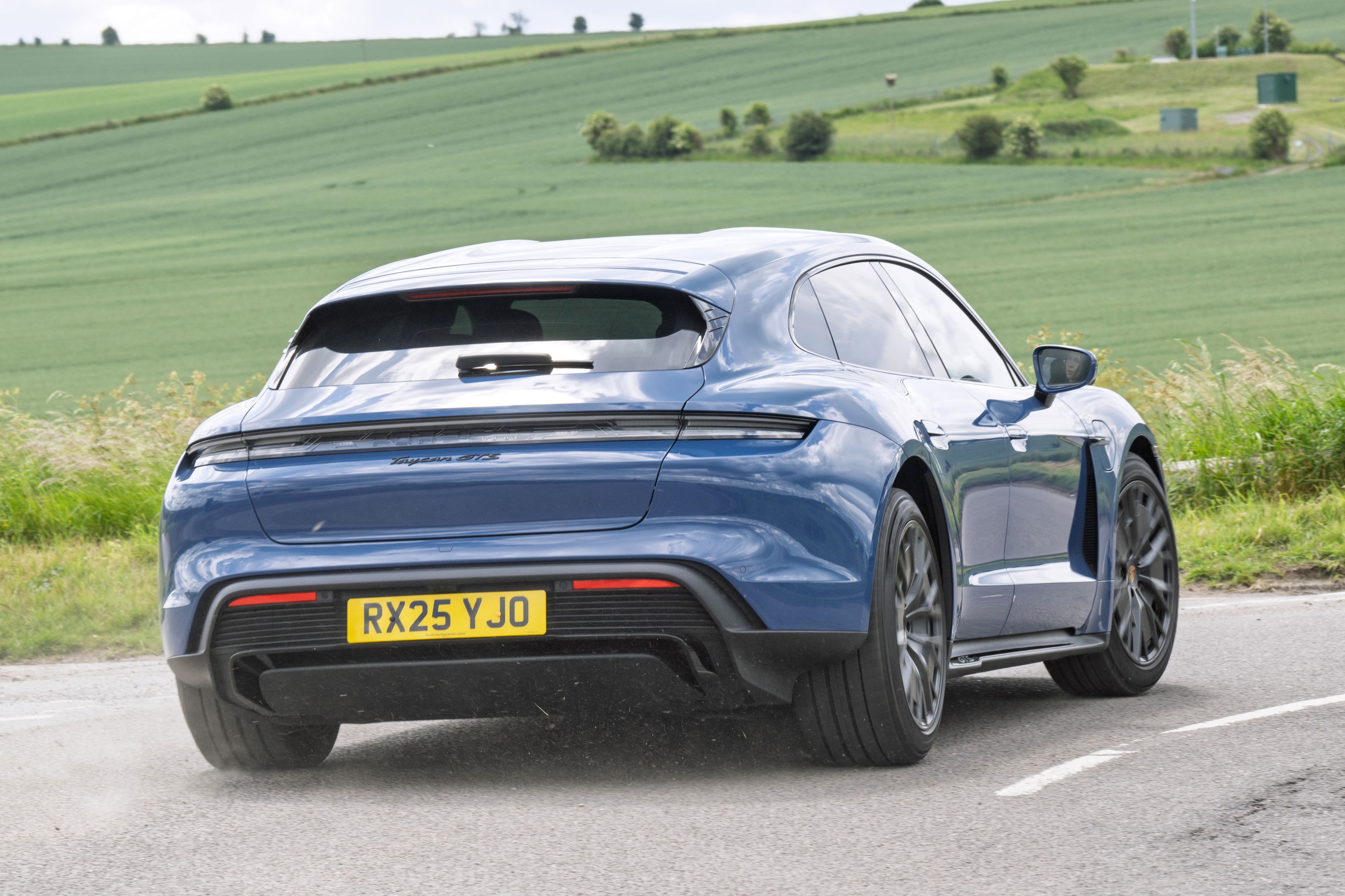
Launched as this model’s third bodystyle, the Porsche Taycan Sport Turismo is technically the Sport Saloon’s estate twin, although given its low roofline and tailgate angle it’s best to think of it as a spacious hatchback than a commodious load-lugger. Its existence further differentiates the Taycan from the closely-related Audi e-tron GT, which is only sold in low-slung, four-door saloon form.
With the standard and snug two rear seats in use, the Taycan Sport Turismo’s 446-litre boot has a 39-litre advantage over the saloon, plus they can be folded over to provide up to 1212 litres of cargo-carrying capacity when loaded to the ceiling. Brave enough to use it for a tip run? There’s also 81 litres of additional space under the bonnet for smaller items.
Aside from the Turbo GT range-toppers, the Taycan Sport Turismo’s line-up mirrors its four-door siblings, albeit with slight performance and driving range reductions due to its extra weight and different aerodynamic characteristics.
Again, sticking with the entry-level version, the Taycan Sport Turismo is only £1000 pricier than the Sport Saloon equivalent, matching its 4.8-second 0-62mph time but with a claimed driving range figure pared back to 416 miles. Let’s face it, that’s hardly a disgraceful figure and one which few people regularly even cover half of in a single sitting.
Porsche Taycan Cross Turismo
Launched in: 2021
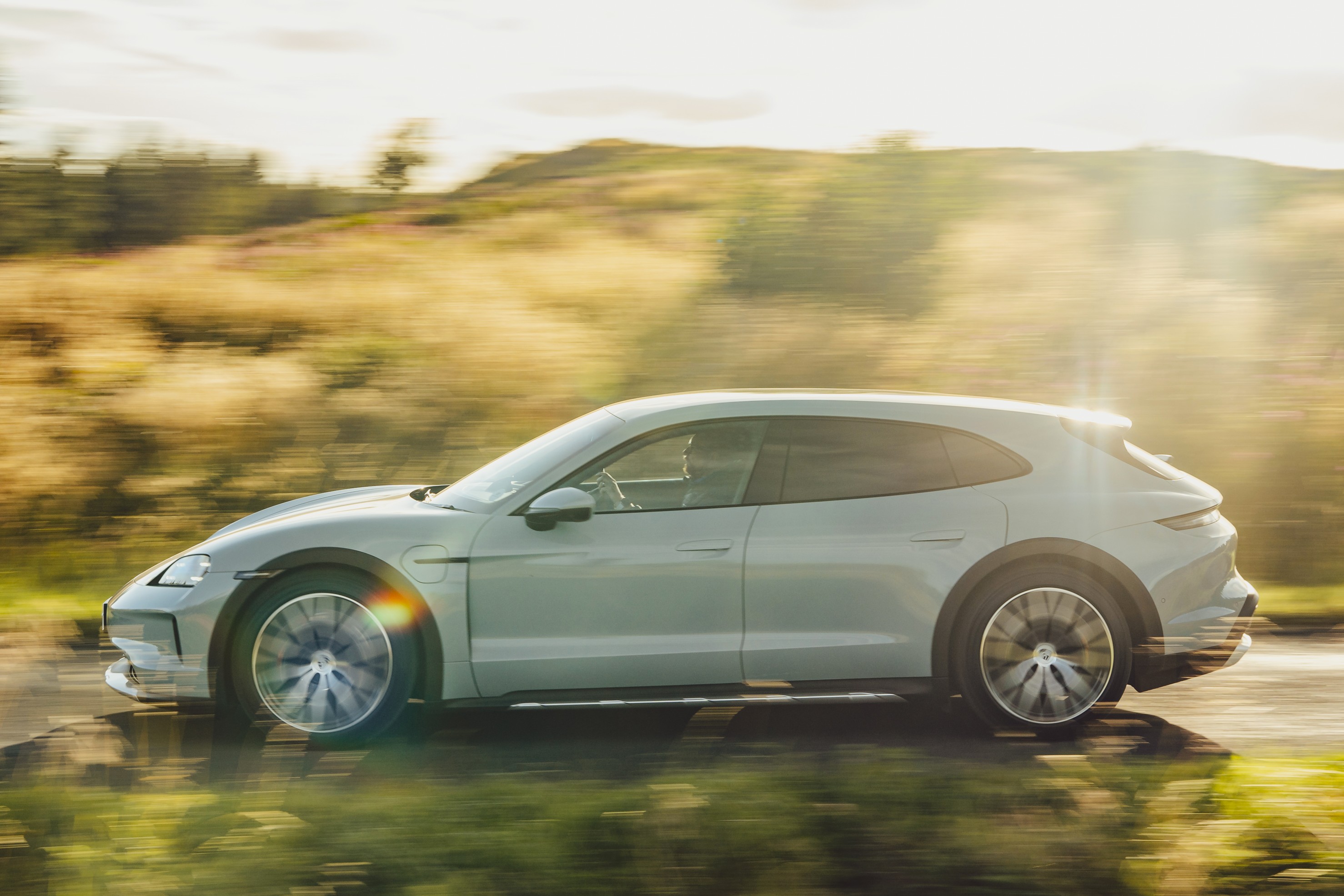
Although it was only by a few months, the Porsche Taycan Cross Turismo pre-dated the Sport Turismo with which it shares its fundamental bodywork, albeit presented in an intriguing guise. It’s a genuine crossover in that it marries the form of the donor estate, applying SUV-aping addenda to its bodywork as well as elevating its standard ride height by 19mm.
That doesn’t sound a great deal if you intended to do a little light green-laning, but the Taycan Cross Turismo has another trick up its wheelarches for that. While all Taycans now feature height-adjustable air suspension, the Cross Turismo’s goes one step further with an Extra Off-Road level, adding a further 30mm. Okay, you’re hardly going to traverse the challenging terrain in one, but then Porsche can cover those bases electrically, too.
Only three derivatives make up the model range – 4S, Turbo and Turbo S – with all-wheel drive standard across the board. Okay, £99,400 is hardly inexpensive – and it’s a £2k step up from the equivalent Sport Turismo – but the least-costly Taycan 4S Cross Turismo makes a very strong case for itself as the version to go for.
It scorches from nothing to 62mph in 3.8 seconds and despite its dual-motor set-up cranking out 598PS, its 105kWh battery is theoretically capable of providing up to 380 miles of driving potential before you’ll need to plug it in again. Find a 320kW ultra-rapid public charger and you’ll go from a 10% to 80% state of charge in just 18 minutes.
Porsche Macan Electric
Launched in: 2024
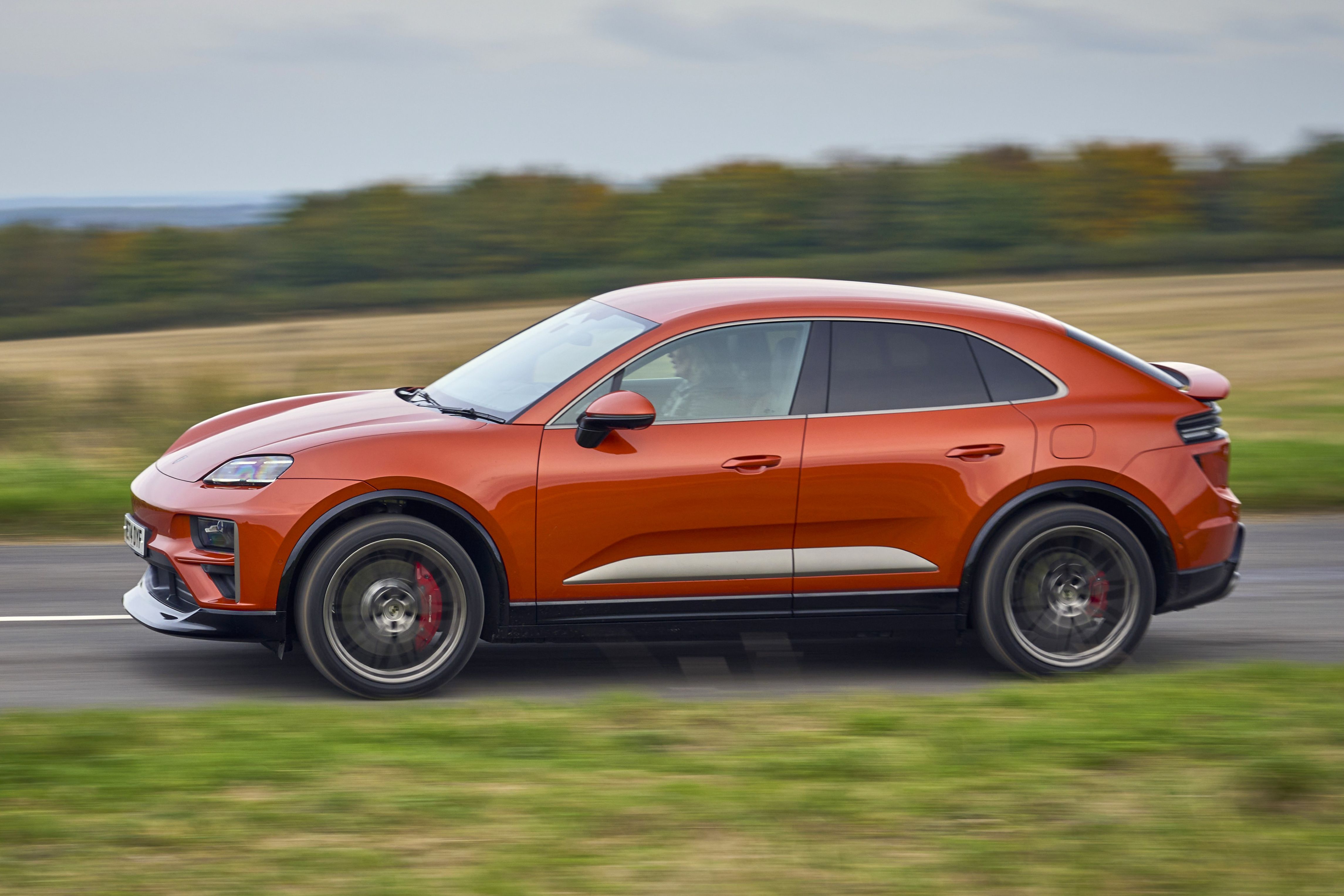
Although combustion-engined versions are in the pipeline for the second-generation model, so far it’s been battery power alone for the Porsche Macan Electric. So far it’s sold alongside its petrol-fuelled predecessor – while it evidently makes business sense for Porsche to do so, it also means the Mk2 Macan Electric shares showroom space with the Mk1 Macan. Beauty’s in the eye of the beholder and all that, but there’s no escaping that the newer EV looks heavier and less athletic.
It is both according to the statistics, too, but that doesn’t mean it isn’t enjoyable to drive – its appreciably more engaging to thread along a winding ribbon of cross-country A-road than the Audi Q6 e-tron with which it shares its platform.
A quintet of Macan Electrics are available to choose between from the otherwise nameless, rear-wheel drive version up to the flagship Turbo, but our pick of this Porsche line-up is the mid-ranking 4S. At £78,300 it’s £8500 costlier than the entry-level option, but a chunky £11k less than the dearest.
With 516PS the Macan 4S Electric darts from 0-62mph in 4.1 seconds – 1.6 seconds quicker than the cheapest version – yet its claimed 379-mile driving range is only 21 miles fewer despite sharing the same 100kWh battery. Connect it to a 270kW-capable public charger and you’ll increase the battery’s energy reserves from 10-80% in just 21 minutes.
Despite all that go, the Porsche Macan Electric is a capable, plush family SUV. Ample space for five adults, plus 540 litres of luggage space behind. Fold the rear bench over and that expands to 1348 litres, while there’s a further 84 litres available below the bonnet.
Porsche Cayenne Electric
Launched in: 2026
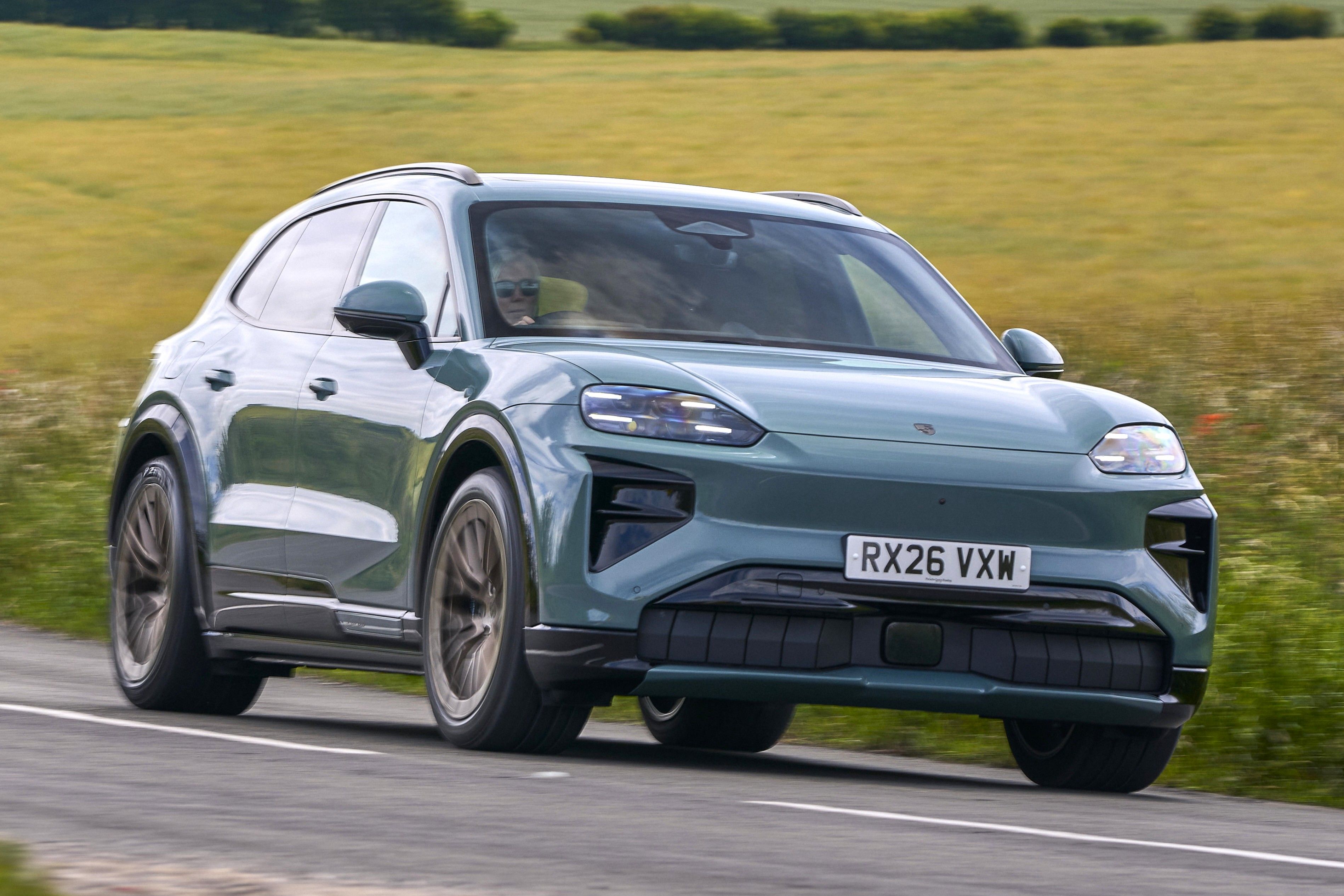
It’s not accidental that the all-new Porsche Cayenne Electric’s styling has a vibe of a taller, chunkier Taycan Cross Turismo – it’s translated well and makes this enormous SUV look far for svelte than any of the three generations of Cayenne which have preceded it. Talking of which, just as with the smaller Macan, the previous iteration of combustion-engined Porsche Cayenne continues to sell alongside it.
As the Cayenne Electric is a relative newcomer, the choice of variants is currently limited to three – Porsche’s usual playbook is to expand the permutations in stages during its cars’ production cycles. Each of the nameless entry-level version, the S and Turbo have all-wheel drive as standard and mark a first for EVs sold in this country by being able to tow up to 3500kg of braked trailer weight.
Okay, in order for that to be possible, you need to tick a couple of extra-cost options – an electrically extending towbar at £1041 and the £2036 Offroad Package. If you don’t bother with the latter, you’re restricted to a still-impressive 3000kg maximum. And naysayers claim electric cars can’t haul…
Prices start at £83,200, but even at £100 shy of £100k, the mid-range Cayenne S Electric is the variant with the greatest all-round appeal. It pulls itself along smartly thanks to dual-motor arrangement producing 666PS and 1080Nm – 0-62mph takes 3.8 seconds in spite of its 2555kg heft.
A 113kWh battery stores the energy to propel this longest-range version, with automatically deployed aerodynamic devices helping it cleave the air with less drag, boosting its claimed potential to 405 miles. If you can find a 390kW ultra-rapid charger then increasing the battery’s reserves from 10-80% will require just 16 minutes – you’ll be longer queuing at M&S’s self-service tills.
Inside the Cayenne Electric you’ll enjoy a high-quality finish throughout – the dashboard features a multimedia touchscreen unusually curved on its horizontal axis. Masses of space for five adults complements the enormous 781-litre boot with the rear bench occupied, expanding to 1588 litres when folded over, with a further 90 litres’ storage beneath the bonnet.
Porsche Cayenne Coupe Electric
Launched in: 2026
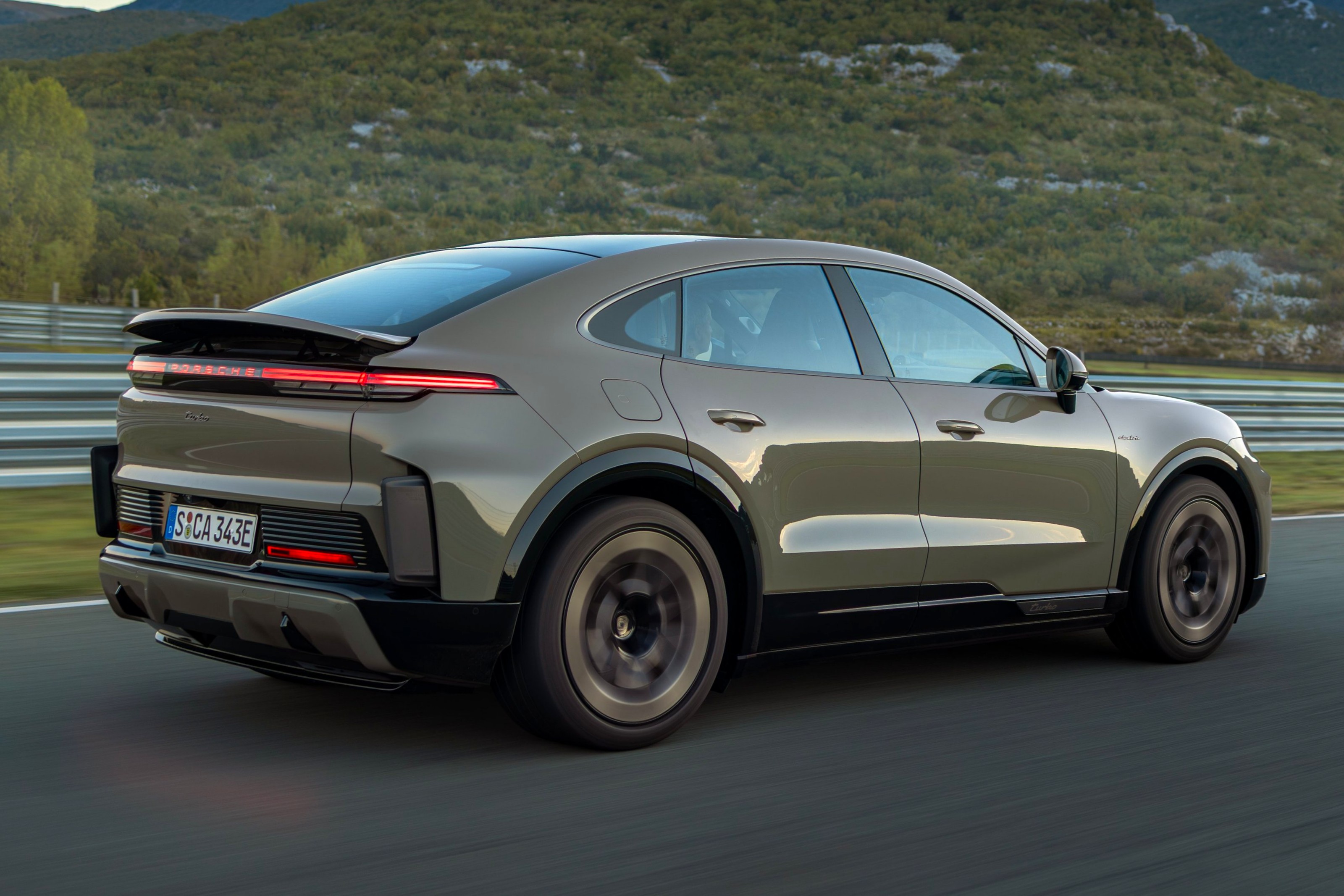
Since 2019, the previous-generation Porche Cayenne Coupe has provided an alternative, less bulky bodystyle for those discerning buyers who don’t need outright practicality from their gargantuan SUV. It’s a recipe that’s been reworked for battery power with the latest Porsche Cayenne Coupe Electric – a model which cuts through the air with greater ease than its name trips off the tongue.
Sticking with the mid-ranking Cayenne S Coupe Electric derivative, you’ll pay £3200 for the privilege of that racier roofline, at £103,100, with the least expensive version weighing in at £86,200.
There’s no outright performance advantage for going for the Coupe over the regular SUV body, but its reduced aerodynamic drag means it can eke a further 10 miles of claimed driving range, pumping the maximum to 415 miles.
While the Cayenne Coupe Electric can also tow as impressively as its more upright-tailed twin – providing you spend extra on the requisite options, natch – there is a penalty in terms of its cargo carrying credentials. No surprise that the sub-bonnet frunk is unchanged at 90 litres, but at the back you’re scaled back to 534 litres with the seats up and 1347 litres when they’ve been folded over –247- and 241-litre reductions respectively.
High performance Turbo derivatives of Porsches have been familiar to – and coveted by – UK car buyers since March 1975 when the model with 930 internal designation code was available to order. Essentially, it was a turbocharged version of the already sought-after 911 Coupe, but so strongly was its additional performance marketed that it was initially badged simply as Porsche Turbo.
As a turbocharger is a turbine used to extract exhaust gases from engines quicker than would happen naturally, thus increasing power and torque in the process, self-evidently electric motors can’t be fitted with them – they have no exhaust.
So, when it comes to the Porsche Taycan, Macan Electric and Cayenne Electric, instead think upon the contracted word ‘Turbo’ as a trim level, not a reference to a go-faster mechanical device.
Officially, Porsche hasn’t confirmed that it will be going all-electric, but clearly legislation set out across the EU and the UK implies that it will have to. Combustion-engined models can only be sold new until 2030, with plug-in hybrids set to be given a reprieve for five years beyond that.
But here’s the thing, while Porsche’s current electric models have appeal, each also has a combustion-engined alternative still on sale. Furthermore, Porsche has already cancelled the electric-only replacements for the 718 Boxster and 718 Cayman, making the 911 family its only sports car range on sale. Given the company felt demand wasn’t remotely sufficient for electric Boxsters and Caymans, there’s going to have to be a seismic shift in consumer tastes before a 911 EV will see the light of day.
Porsche isn’t alone in that regard, though – expect much lobbying to be going on in the corridors of the EU parliament seeking exemptions for a limited number of combustion-engined sports and specialist cars to remain on sale beyond 2035. Time will tell if those discussions prove successful.
That was the Taycan Sport Saloon in 2019, a pre-facelifted version of the model still on sale today. It was joined in 2021 first by the Taycan Cross Turismo, then the Taycan Sport Turismo estates.
Its EV portfolio expanded again in 2024 with the introduction of the Macan Electric, with both the Cayenne Electric and Cayenne Coupe Electric arriving in 2026.
If you pick out the very specialist, two-seater Porsche Taycan Turbo GT with Weissach Package you can blast from a standstill to 62mph in just 2.2 seconds.
This depends on a variety of elements, not least the capacity of the battery and how powerful the charger is that you've plugged into it.
As a general rule, when using public chargers, Porsche's EVs can typically increase from a 10-80% state of charge in comfortably less than 30 minutes. When using a 7kW wallbox charger at home, a 0-100% recharge will likely take anywhere between 12 and 18 hours.
Find an electric Porsche for sale
Porsche Taycan500kW Turbo 93kWh 5dr Auto
202328,188 milesElectric£63,490
S92FZPorsche Macan265kW 100kWh 5dr Auto
20263,725 milesElectric£67,750
LS126BGPorsche Macan380kW 4S 100kWh 5dr Auto
202413,351 milesElectric£72,000
LS126BGPorsche Macan265kW 100kWh 5dr Auto
20262,635 milesElectric£68,750
LS126BGPorsche Macan380kW 4S 100kWh 5dr Auto
202410,291 milesElectric£72,000
LS126BGPorsche Macan380kW 4S 100kWh 5dr Auto
20261,553 milesElectric£77,750
LS126BGPorsche Macan380kW 4S 100kWh 5dr Auto
20261,225 milesElectric£84,000
LS126BGPorsche Macan470kW Turbo 100kWh 5dr Auto
20258,722 milesElectric£77,795
NE289ND
More electric car guides
From choosing the right EV to understanding charging, running costs and more, our guides can help.