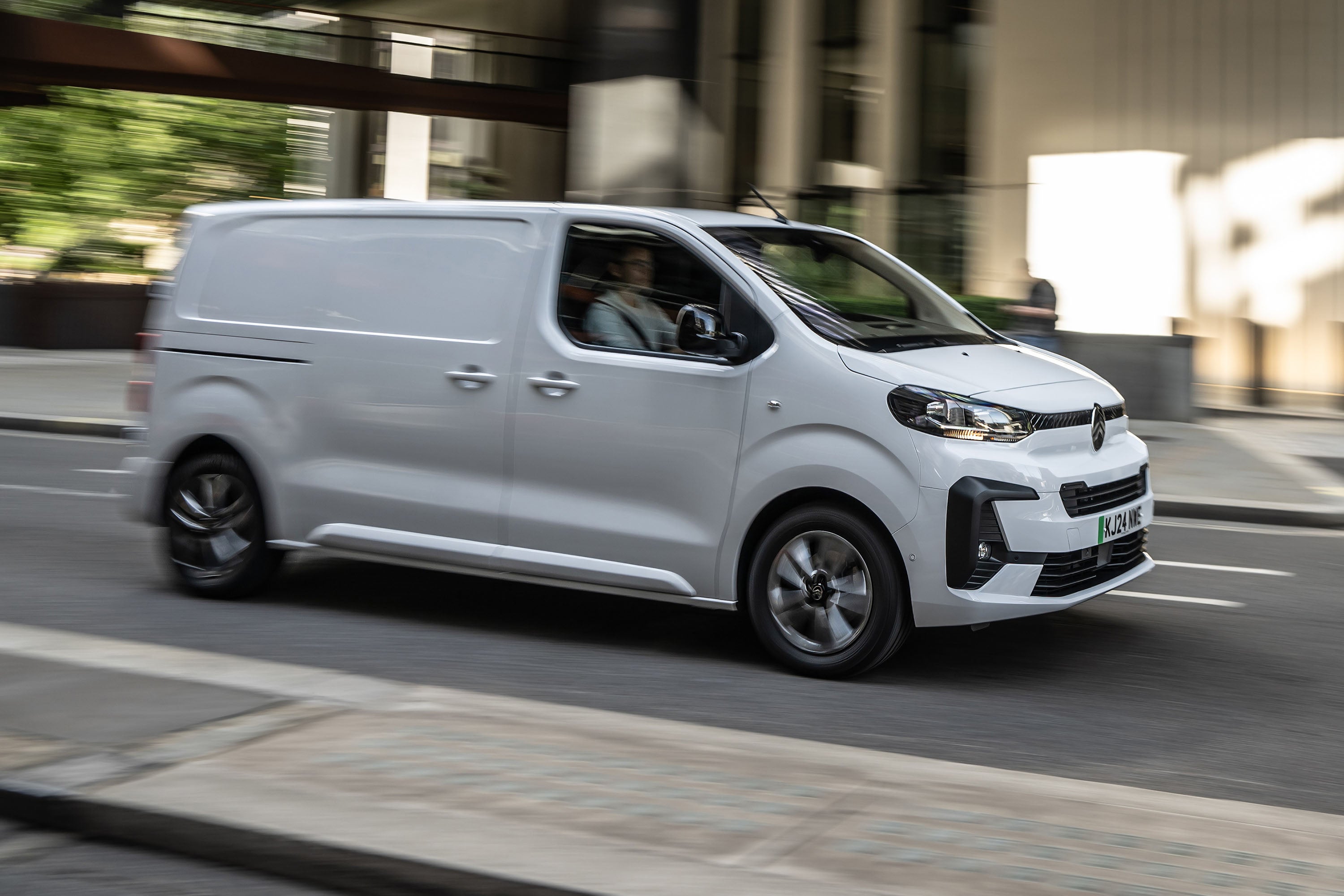
Citroen Dispatch Review

Written By Ivan Aistrop
- 2016
- Panel van, crew van
- Diesel, EV
What we love
Pleasant to drive
Good powertrain options
Impressive figures for payload
Things to consider
Not quite so good for load capacity
Sparse kit on early low-spec versions
Early examples didn’t have standard autonomous braking
The DRIVE take on the Citroen Dispatch, is it the right car for you?
If you need your van to be able to haul the maximum amount of weight, then the Citroen Dispatch is certainly worth considering because it has some of the best official payload figures in the business. However, if your business needs maximum load capacity, then several rivals offer more, so you’ll probably be better off with one of those.
The Citroen Dispatch in more detail
Like the strapline on a can of Barr’s Irn Bru, the Citroen Dispatch could legitimately lay claim to being the ‘original and best’ in the midsize van world. You see, badge engineering - the process of sharing the same parts and technology in a variety of similar models from different manufacturers to save development and production costs - is particularly rife in the van world, and many van manufacturers chop and change which other companies they get into bed with from generation to generation. The Dispatch, however, has always been at the core of the engineering it sits on, alongside the Peugeot Expert, and where such co-manufacturing arrangements exist, it’s always the mechanicals of the Dispatch/Expert that are donated elsewhere.
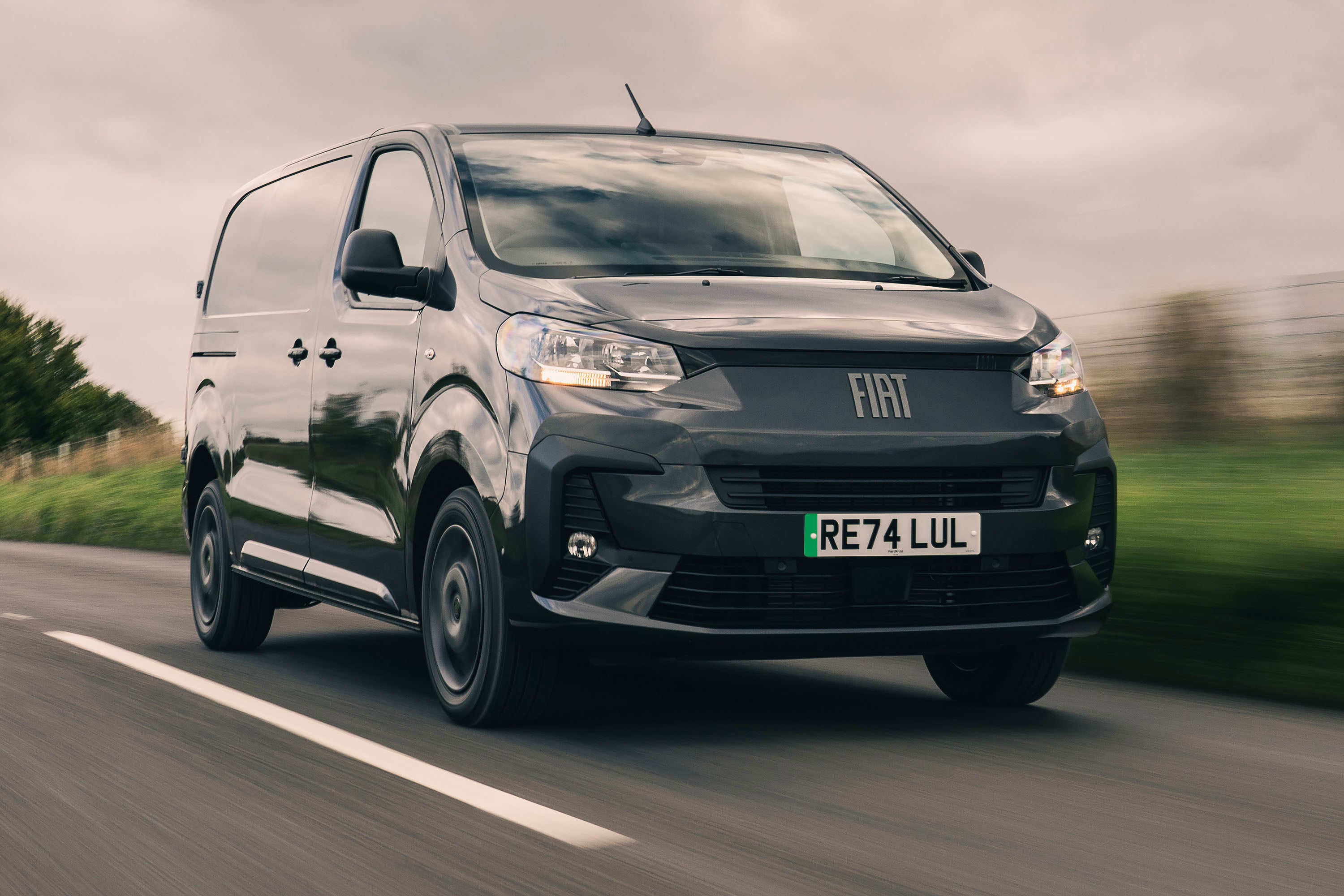
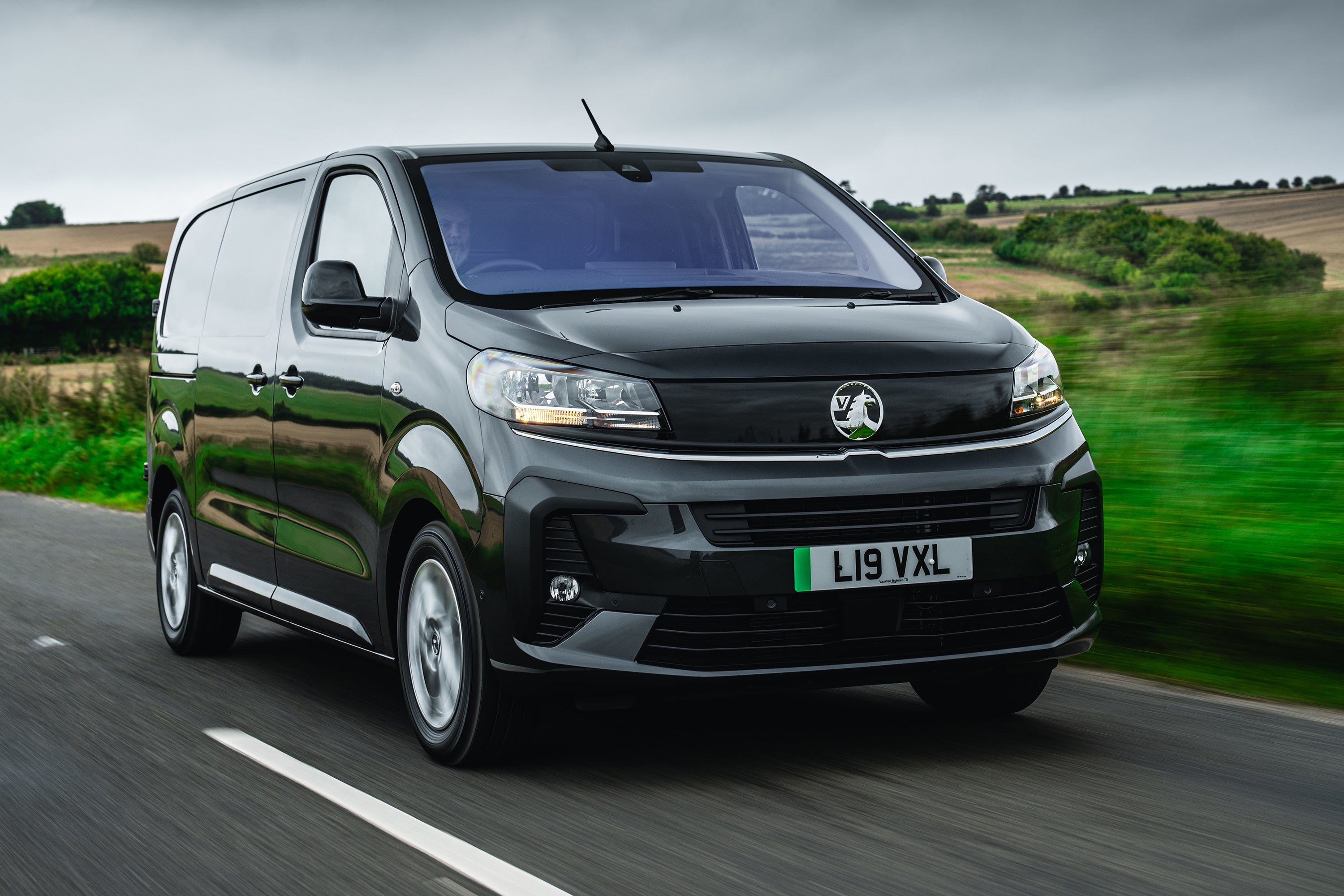
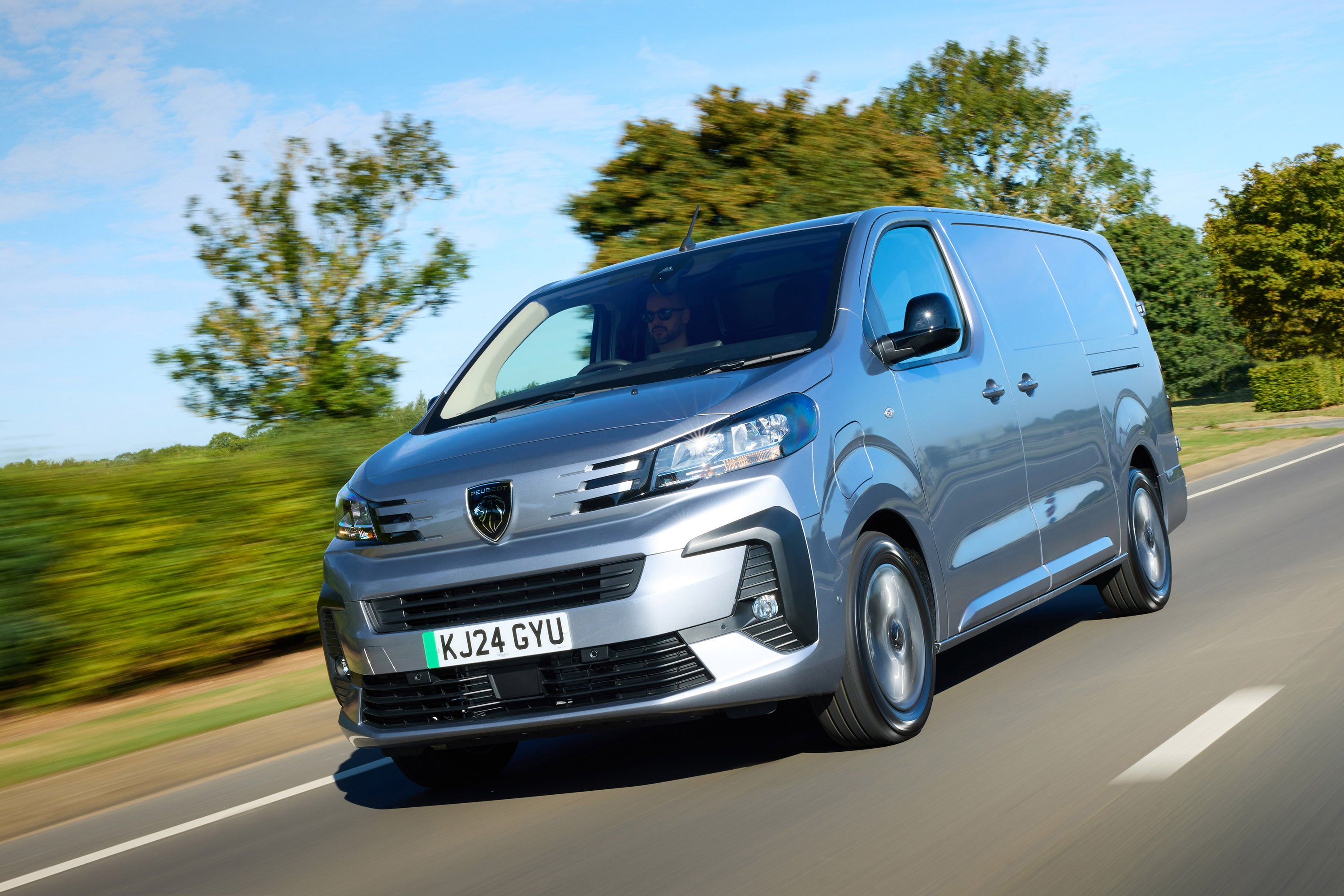
These days, the Citroen Dispatch and Peugeot Expert lend their mechanicals to other mid-size van offerings from brands within the Stellantis Group, those being the Fiat Scudo and Vauxhall Vivaro. Citroen also counts Toyota as a customer, because it builds the also-mechanically-identical Toyota Proace on the Japanese firm’s behalf.
So what are the Citroen Dispatch’s strengths? Well, like all the other vans we’ve talked about, it posts some of the most impressive payload figures in the class, so if you’ve got lots of weight to haul, the chances are that the Dispatch will haul it. Getting it all in might be a bit more of a challenge, though: while the Citroen Dispatch excels on payload, it’s not actually all that good when it comes to load volume, so if space takes priority over weight-lugging ability, one of the alternatives might suit you better.
In all other areas, the Citroen Dispatch does a thoroughly convincing job, even if it doesn’t really smash any of them out of the park. It’s solidly built, comfortable and tidy enough to drive, the powertrain options are good, it comes with a decent amount of standard equipment (although if you’re buying used, bear in mind that early examples were a bit more sparse than they are today) and running costs are competitive. It also happens to be one of the more affordable options among its sister vehicles to buy.
What's the best Citroen Dispatch trim and battery option?
For those whose work takes place exclusively in the local area, then there’s a very strong case for choosing the all-electric version of the Citroen Dispatch. Its limited range of up to 219 miles shouldn’t be a problem, and your running costs have the potential to be very low indeed, even if the electric version will cost you a lot more to buy in the first place.
If your work regularly takes you all over the shop, though, or you need more flexibility in the journeys you’re able to undertake, then a diesel version is still the way to go. The entry-level 120PS 1.5-litre engine is all you really need. Performance is fine, refinement is good, and fuel costs shouldn’t break the bank. That said, if you’re carrying heavy loads, which you might well be, you might appreciate the extra muscle of the more powerful 150PS 2.2-litre diesel.
What’s the price of the Citroen Dispatch?
Prices for the Dispatch panel van currently start at around £31,000 (excluding VAT) for the M version in Enterprise trim with the entry-level 1.5 diesel engine. Upgrading to the XL bodystyle ups the price by around £1,000, while upgrading to the pokier 150PS 2.0-litre diesel engine costs around £1,200. The upgrade from Enterprise trim to Driver trim is a little steeper at around £2,500. The regular diesel range tops out at around £36,000, although there have occasionally been limited-edition models that come properly tooled-up and cost a lot more: a recent example is the sporty VTR model that had sports styling, 18-inch alloys, a bunch of extra interior goodies, and the 180PS engine, and that version costs almost £45,000.
The crew van variant has a higher starting price, not least because it isn’t offered with the entry-level engine. For one of those, you’ll be paying between £35,000 and £39,000, approximately.
Obviously, prices for the electric versions are rather punchier than they are for the diesels, even after you deduct the £5,000 discount you’ll likely get courtesy of the Government’s Plug-in Van Grant (PiVG). Depending on trim level, prices for the electric panel van range between approximately £38,000 and £41,000, while the electric crew van costs anywhere between £40,000 and £43,000, roughly speaking.
In comparison to the competition, the Dispatch’s pricing sits around the middle of the pack. It’s not the cheapest van of its type out there, but it holds a useful price advantage over similarly-sized offerings from the likes of Ford, Volkswagen and Mercedes.
Alternatives to the Citroen Dispatch
As it happens, there are a number of vehicles that aren’t just similar to the Citroen Dispatch, they’re as-near-as-dammit identical. Those vehicles are the Fiat Scudo, Peugeot Expert and Vauxhall Vivaro. Why? Because all four brands are part of the same manufacturing company, known as Stellantis, so to save on development and production costs, all four midsize vans share their platform, powertrains, technology, and pretty much everything else. Even Toyota offers a version of the same vehicle in the Proace, despite not even being part of Stellantis.
There are plenty of vans from other stables that should be considered as rivals, though. The Ford Transit Custom, Volkswagen Transporter and Mercedes Vito are all very popular choices, while the Renault Trafic and Nissan Primastar will also compete for your cash.
What's the interior like in the Citroen Dispatch?
The interior of the Citroen Dispatch is unsurprisingly very workmanlike, with hard-wearing materials that should be durable. The various controls are easy to find and use, and the cabin is pretty comfy. In terms of load carrying, the loadbay isn’t the biggest compared with those of rivals, but the Dispatch does put in some pretty impressive figures when it comes to payload.
Citroen Dispatch boot space and practicality
The Dispatch’s high seating position gives you a great view of the road ahead of you, and there’s lots of adjustment in both the driver’s seat and steering wheel, so getting comfortable is reasonably easy.
Rear visibility on lower-spec versions is rather worse owing to the steel bulkhead right behind your bonce, so all you see behind you is what’s visible in your door mirrors. Higher-spec versions are much better on that score, because these have a 180-degree rear-view camera, and this makes a massive difference when trying to park.
The three seats up front are fairly even in their width, and the cabin is wide enough that three colleagues can sit side-by-side without feeling too cramped. However, the kneeroom of whoever ends up in the middle pew is impacted slightly by a protruding part of the lower dashboard that is home to the gearlever/drive selector.
The dashboard has a very simple and traditional design, with physical buttons and dials to control many functions, so not everything has to be controlled via the touchscreen, as is the case with many modern passenger cars these days. The controls are chunky and clearly marked, too, which makes them easy to find and use at a glance.
At the beginning of its life, the Dispatch was offered in three different lengths to suit differing business needs. The XS was 4.6 metres long, while the mid-size M is roughly 5.0 metres in length, and the longest XL version is around 5.3 metres long. You’ll notice that we referred to the XS in the past tense: that’s because it was discontinued quite a long time ago, so here, we’ll concentrate on the M and XL versions.
Despite the variety of choice over the length of your van, there’s no choice when it comes to height, so all versions have a fixed loadbay height of 1,397mm. Unsurprisingly, the width between the wheelarches is also identical in both versions, standing at 1,258mm.
The main difference between the M and the XL is the 350mm of extra load length you get in the latter. That doesn’t sound like a whole lot, but it can make a big difference depending on the nature of your business. For instance, the 2,512mm of load length you get in the M makes it capable of carrying two Europallets at a time, while the 2,862mm you get in the XL means that a third can be wedged in. What’s more, the sliding doors you get on both sides of the van as standard (some rivals only give you a slider on one side) conceal openings that are wide enough to allow those pallets to be loaded at the sides. The twin side-hinged doors on the back end can open at up to 180 degrees for easy access, too.
However, there’s a little more to the story where load length is concerned. Higher-spec versions get something called Extenso (it was previously called Moduwork if you’re buying used) as standard, or it can be specified as an optional extra on more basic versions. It’s definitely worth having if you can find a Dispatch with it fitted. It’s essentially a fold-down passenger seat with a handy load-through hatch in the bulkhead behind. This basically extends the loadbay into the passenger footwell, allowing you to carry long items - like planks and poles for scaffolding - of up to 3,674mm in the M, and up to 4,026mm in the XL.
The Moduwork feature also significantly boosts your overall load capacity figure. It jumps from 5.3 cubic metres to 5.8 cubic metres in the M, and from 6.1 cubic metres to 6.6 cubic metres in the XL. Don’t get too excited, though, because those figures aren’t all that good compared with those of some other mid-size vans.
The figures are decimated further if you go for the Crew Van variant: this adds a second row of three seats, taking the total to six, at the expense of some loadbay volume. In the M, your load length drops to 2,017mm, and even in the XL you get just 2,365mm, and that means that overall load capacities drop to 3.2 cubic metres and 4.0 cubic metres, respectively. You can’t boost this with the Extenso/Moduwork feature, either, because it’s not available in the Crew Van.
Where the Dispatch does have an edge over many of its rivals, though, is on its payload figures, which are really quite good by class standards. The diesels are the best on that score, with figures of between 1,121kg and 1,326kg depending on the version. The 2.0-litre diesels have the best figures, so seek one of those out if payload is particularly important. The electric versions don’t do quite as well with figures of between 1,011kg and 1,210kg, but those figures are still good by the standards of mid-size electric vans.
If you’ll be towing on a regular basis, then again, you want one of the 2.0-litre diesels, which are rated to pull a braked trailer of 2,500kg. The 1.5-litre diesels can haul 2,000kg, but because the permissible towing weights of EVs are always a bit rubbish by comparison, you’re looking at a figure of just 1,000kg for the all-electric e-Dispatch.
Citroen Dispatch dimensions
The shorter M version of the Citroen Dispatch is 4,980mm long, 1924mm wide (not including door mirrors, it’s 2,204mm with them) and 1,904mm high. The long-wheelbase XL version is precisely the same width, but it’s obviously longer at 5,331mm long, and a fraction taller at 1,935mm high.
Tech and infotainment in the Citroen Dispatch
In early Dispatches, entry-level models made do with a DAB radio and Bluetooth, while higher-spec versions got a 7.0-inch touchscreen with smartphone compatibility.
Later on, all versions were upgraded to have a 10.0-inch central touchscreen with full Apple CarPlay and Android Auto, plus a 10.0-inch digital instrument cluster. On higher-spec Driver models, the system also includes native navigation.
We have some experience of the latter system. It’s not the most advanced system you’ll ever encounter, with limited functionality and fairly basic graphics, but this simplicity makes it easy to use and to navigate, and it does everything you really need it to, so you’ll actually want for very little.
Materials available on the Citroen Dispatch
If you’re used to passenger cars, you might be aghast at the swathes of hard, uncushioned plastic that cover the interior of the Dispatch. Don’t judge it too harshly, though, because in a working vehicle such as this, these hard-wearing finishes are precisely what you want: even if Citroen did go to the bother of installing flashy cabin materials, they’d get scraped and scuffed after five minutes and spend the rest of their days looking sorry for themselves. So, not only is the hard, scratchy nature of the Citroen’s cabin materials forgivable, it’s also completely necessary.
What's the Citroen Dispatch like to drive?
The driving experience provided by the Citroen Dispatch is entirely adequate, with decent long-distance comfort and relatively tidy handling. All the various powertrain offerings have enough poke, too.
Citroen Dispatch range and performance
Early on in its life, this third-generation iteration of the Citroen Dispatch came exclusively with diesel engines. At first, these were 1.6-litre units with 95PS or 115PS, alongside 2.0-litre units with 120PS, 150PS or 180PS. It wasn’t long, however, before both 1.6s were replaced by a new 100PS 1.5-litre diesel option, while the 2.0-litre units remained largely the same.
More recently, the choice of diesel engines has become a lot slimmer. You now choose between a 120PS version of the 1.5 and a 150PS 2.2-litre unit. Both come with a six-speed manual gearbox as standard, while the latter can also be had with an eight-speed automatic transmission. There’s also a 180PS version of the 2.2-litre, but that's only offered on a limited-edition version with only temporary availability.
In truth, the entry-level option is all you need. It has enough urge to get you up to speed in a timely manner, and there’s enough low-rev poke to keep you sauntering along the road without the need for too many downshifts. You might need one or two of these on particularly steep inclines, mind, especially if you have a loadbay that’s choc-a-bloc with heavy cargo. The shift action of the manual gearbox is a little notchy, but not to an annoying or frustrating extent.
The manual gearbox has a similarly notchy quality when paired with the 2.2-litre engine. The bigger unit feels a good bit stronger than the smaller item, and that’s the case at all stages of the rev range. In fact, you might be surprised just how sprightly it feels off the line, but the more useful advantage of the extra power is that you don’t have to make as many downshifts to maintain your pace, keeping life a little more relaxed. That’s particularly noticeable when you have a heavy load in your cargo bay.
We haven’t had the chance to try the Dispatch with the larger engine and the torque converter automatic gearbox, but we’ve tried the auto’ in other Stellantis Group vans (although paired with different engines), and it operates fairly smoothly. We haven’t tried the 180PS engine, either.
If the idea of diesel is simply too unfashionable for you, or your business is conducted almost exclusively in the local area, then it might make sense to consider the e-Dispatch, which is the all-electric version. The electric motor develops a maximum of 136PS, but you only get the maximum output if you select the Power driving mode with the switch in the centre of the dashboard, next to the drive selector. Eco mode limits your output to just 80PS to maximise range, while Normal mode serves up 107PS to provide more of a balance between performance and efficiency.
When you’re pottering around town and tiptoeing along in urban traffic, Eco mode will usually be enough to get you around without feeling like you’re getting in the way of other road users. Once the surrounding traffic starts approaching the 50mph mark or thereabouts, though, you’ll be needing Normal mode to keep pace with it. In fact, Normal mode should be brisk enough for the vast majority of driving situations, with a relaxed but reasonable rate of acceleration. You should only really need to select the Power mode when you need that extra bit of clout for nipping into gaps in traffic, or joining motorways.
When the all-electric e-Dispatch first arrived, it was offered with two choices of battery size, those being 50kWh and 75kWh. At the time, these delivered official WLTP combined range figures of 143 miles and 205 miles, respectively.
One of the many changes made during the 2024 facelift was the discontinuation of the 50kWh battery option, leaving only the larger-capacity 75kWh battery. That wasn’t the extent of the news, though, because simultaneous improvements to the powertrain and battery chemistry improved the larger battery’s WLTP combined driving range to 219 miles. Do be aware that this official WLTP figure is based on the Citroen’s Normal driving mode, so you can probably expect a few miles more in Eco, and a few miles less in Power.
Performance data
| Model | Engine/battery size | Power | 0-62mph | Range/MPG |
|---|---|---|---|---|
1.5 manual 120 | Diesel | 120PS | TBC | Around 44mpg |
2.0 manual 150 | Diesel | 150PS | TBC | Around 45mpg |
2.0 automatic 150 | Diesel | 150PS | TBC | Around 43mpg |
2.0 automatic 180 | Diesel | 180PS | TBC | Around 43mpg |
e-Dispatch | Electric 75kWh | 136PS | 13.6 seconds | 219 miles |
Citroen Dispatch driving and refinement
Vans are usually less civilised to drive than cars, and that’s because they’re even more difficult to engineer. That’s because not only do you have to tune the suspension to deliver a good balance of ride and handling like you do with a car, but you also have to figure out how to deliver that balance both when the loadbay is empty, and when it’s full of weight.
And sure enough, the Citroen Dispatch isn’t as polished on the road as one of Citroen’s passenger cars, but it does a more-than-decent job compared with rival panel vans. Granted, the ride can occasionally feel a little jittery and unsettled, particularly when the loadbay is empty, but get more weight on board, and things improve, while going a bit faster also flattens out the ride a bit more. Get yourself up to motorway pace, and the Dispatch feels at its most settled.
By commercial vehicle standards, you’ll also enjoy fairly tidy handling. Body roll is controlled surprisingly well in corners, and while this won’t have you wanting to fling your van into bends like a rally car, it will keep things feeling stable and safe if you do happen to enter a corner a little faster than you intended.
The steering is very slow, as it is in most vans, meaning that lots of arm-action is needed to feed the wheel from lock to lock during low-speed manoeuvres. However, it’s light enough to make those manoeuvres easy, and there’s enough weight when you’re going faster to inspire reasonable confidence. You will feel the heaviness of the Dispatch when you’re hard on the brakes, because it takes a good old shove of the pedal to get the vehicle to slow down or stop in a hurry, but that’s the case with pretty much all vans of this size.
Whatever version of the Citroen Dispatch you choose, wind- and road noise can both be heard on the motorway, with the latter certainly being the more prevalent. However, neither is unreasonably loud, especially when compared with commercial vehicle rivals.
Obviously, the near-silent operation of electric motors means that the EV versions of the Dispatch are quieter on the move than the diesels, but the diesel engines are hushed enough at 70mph that they don’t become the primary source of noise, melting into the background nicely. They also stay pretty smooth and refined when you find yourself having to work them harder, but even so, they’re flexible enough that this isn’t often required.
The gearshift in manual models could be a little smoother, but it’s not so imprecise that it’ll annoy you. We haven’t tried the eight-speed torque converter automatic transmission in the Dispatch, but we’ve tried it in other Stellantis Group vans - albeit paired with different engines - and we’ve always found it to work smoothly. The e-Dispatch, like most EVs, has one fixed gear ratio rather than a gearbox, so the acceleration - albeit modest - comes in one stream that’s unhindered by gearshifts.
How safe is the Citroen Dispatch?
The Citroen Dispatch comes as standard with safety measures including electronic stability control, high beam assist, driver attention alert, intelligent speed limit assist, and lane keep assist. Automatic emergency braking was optional on early examples, but has since been made standard throughout the range.
Panel van versions get driver and passenger front airbags, while Crew Van versions add side airbags in the front, but there’s no airbag coverage for those in the rear.
Driver versions also add blind spot monitoring to the roster, along with front and rear park assist.
The passenger-carrying version of the Dispatch, known as the Citroen Spacetourer, was crash-tested by Euro NCAP way back in 2015, and achieved the full five-star rating, but that was when the tests were much easier to ace than they are today. In the same body’s commercial vehicle ratings, the Dispatch has more recently earned a four-star rating, which sounds pretty good, but this becomes less impressive when you learn that every van ever assessed has achieved four stars or above.
Running costs: What it's like to live with a Citroen Dispatch
Compared with other vans of a similar size, the Citroen Dispatch won’t be the cheapest van either to buy or to run, but it certainly won’t be the most expensive, either. The costs involved are entirely reasonable at every stage.
Citroen Dispatch charging times and costs
When it was first introduced, the all-electric version of the Dispatch was offered with two different battery sizes, one of 50kWh and one of 75kWh. Later on, the 50kWh option was discontinued, leaving only the 75kWh battery.
It is possible to charge the Dispatch from a regular three-pin domestic socket, although the cable for doing so isn’t provided. We wouldn’t recommend doing so on a regular basis anyway, because it takes ages: around 30 hours on the 50kWh Dispatch, and more like 40 hours on the 75kWh version. Charging in this way isn’t very good for your home’s electrics, either.
Most EV drivers have a 7.4kW wallbox charger installed, and with one of those, the same level of charge is delivered in a little over seven hours for the 50kWh battery, and a little over 11 hours for the 75kWh.
With both home charging solutions, a full juice-up is likely to cost you around £14 for the 50kWh Dispatch, and around £21 for the 75kWh. That’s assuming your household power is billed at the UK’s national average rate.
On those occasions where you need to fill up in a hurry, using a public DC rapid charger costs a lot more, often three times the price of charging at home. Both the 50kWh and the 75kWh versions support 100kW DC charging: the former can take on a 0-80% charge in around 30 minutes, with the latter doing it in 45 minutes.
Citroen Dispatch fuel economy
The Dispatch has been offered with such a broad spread of different diesel engines over the years - not to mention the broad spread of different body styles and trim levels on offer - that it’s no surprise that there’s also a pretty broad spread of official fuel economy figures, too.
Broadly speaking, early examples with the 100PS 1.5-litre diesel engine had official WLTP fuel economy figures of up to 45mpg, while the 120PS version returned around 40mpg according to official figures.
Figures for the 120PS version of the 2.0-litre engine were around 1mpg better than those of the equivalent 1.5, and that advantage might even be greater in the real world because the bigger engine is under less stress when delivering the same power, which is a key factor in real-world returns. Your economy is dented ever so slightly if you specify the automatic gearbox, however. For similar reasons, economy figures for the 150PS and 180PS versions of the 2.0-litre engine are actually a bit better than for the 120PS iteration.
Where the later engine options are concerned, the 120PS 1.5-litre option improved to around 44mpg, while the 150PS 2.2-litre returns around 45mpg when fitted with the manual gearbox. That drops to around 43mpg if your van is fitted with the automatic gearbox, and the figure is about the same for the 180PS engine.
Citroen Dispatch warranty and servicing
All versions of the Citroen Dispatch have two-year servicing intervals, which should help minimise downtime for your business, but the mileage limits placed on these intervals differ according to the powertrain you choose. Versions with the automatic gearbox have the most generous ones at 32,000 miles, while that limit drops to 30,000 miles for cars with the 150PS 2.2-litre engine and the manual gearbox. Choose the 120PS 1.5-litre engine, and the limit drops to 25,000 miles. The electric versions also have a two-year/25,000-mile interval, but an initial inspection is needed at one year/12,500 miles to make sure everything is hunky dory.
The warranty package is pretty par-for-the-course in the van market. You get two years of unlimited-mileage manufacturer warranty, followed by a third year of retailer-provided warranty, limited to 100,000 miles.
Citroen Dispatch insurance groups
Granular insurance grouping data is very tricky to source for commercial vehicles, but data we've seen suggests that groups of the Dispatch range sit between 29 to 42.
How much does it cost to tax a Citroen Dispatch?
As an LCV (Light Commercial Vehicle), the Citroen Dispatch is liable for a flat rate of VED road tax for such vehicles. This is currently charged at a basic rate of £360 per year. Also note that the all-electric e-Dispatch is no longer exempt from VED charges on account of it being an EV, so you’ll be liable for the same tax costs as drivers of diesel versions.
What trims are available with the Citroen Dispatch?
Early on in its life, the Dispatch was offered in X, Enterprise and Enterprise Plus trim levels. X was too poorly equipped to recommend: it got central locking, cruise control, DAB radio, and powered windows, but missed out on air-conditioning, an alarm, the Moduwork through-loading feature, the 7.0-inch touchscreen infotainment system, rear parking sensors and power adjusting door mirrors.
All those missing boxes were checked by the Enterprise trim level, making it the pick of the bunch. On top of that, Enterprise Plus trim added a 180-degree reversing camera with front- and rear sensors, automatic lights and wipers, power folding door mirrors, metallic paint, alloy wheels, and body-coloured bumpers, door handles and mirror housings in place of the black plastic ones on lower trim levels.
Later on, the range was trimmed down to include new better-equipped Enterprise and Driver trim levels. The entry-level Enterprise trim includes air-conditioning, electric windows, heated and electrically adjustable door mirrors, cruise control, the 10.0-inch central touchscreen and digital instrument screen, rear parking sensors, automatic lights and wipers, remote locking, and black plastic finishes for the bumpers, door handles and mirror housings.
Driver trim swapped the black plastic body elements for body-coloured ones, and also added LED headlights, front fog lights, an alarm, the Moduwork/Extenso load-through feature, front- and rear park assist, a reversing camera and a digital rear-view mirror.
Ask the Drive experts: common questions
Is the Citroen Dispatch electric?
Is the Citroen Dispatch a car or a van?
What’s the difference between the Citroen Dispatch, Vauxhall Vivaro, Peugeot Expert, and Fiat Scudo?
Get our latest advice, news and offers
Keep me updated by email with the latest advice, news and offers from Drive.
.jpg)