Hyundai Bayon Review

Written By Al Suttie
- 2021
- SUV
- Petrol
What we love
Good value for money
Standard digital dials and strong infotainment
Efficient petrol engine
Things to consider
There are more stylish small SUVs
Only one engine choice
Not as roomy as the best rivals
The DRIVE take on the Hyundai Bayon, is it the right car for you?
The Hyundai Bayon is a sensible, value-led small SUV with good standard tech, low running costs and an easy-going nature. It is not the most stylish, spacious or engaging option in this class, but it does the basics well and gives you a lot of equipment for the money.
If you want a small crossover that feels honest, straightforward and affordable to own, the Bayon makes plenty of sense. Just do not expect the polish of a Volkswagen T-Cross, the practicality of a Skoda Kamiq or the driver appeal of a Ford Puma.
The Hyundai Bayon in more detail
The Bayon sits below the Kona and Tucson in Hyundai’s SUV line-up and, in truth, it has always felt more like a practical variation on the i20 supermini than a distinct SUV in its own right. That is not necessarily a criticism. Plenty of buyers want the easier access, chunkier look and hatchback-like running costs that cars like this promise, and the Bayon delivers those things competently enough.
Its biggest strength has always been value, and that remains the key reason to consider it now. Even before the 2024 facelift it looked like a lot of car for the money, and the current version keeps that basic formula intact while simplifying the range. The trim structure has been cut back to Black Line and Tech Line, and the engine line-up has shrunk to a single 1.0-litre turbo petrol with 90PS, offered with either a six-speed manual or seven-speed dual-clutch automatic gearbox. That simplicity suits the Bayon, because this has never been a car that needed a complicated range to make sense.
That sounds limiting on paper, but it is not necessarily a bad fit for the Bayon’s character. This is not a driver’s crossover, and the old mild-hybrid choices never transformed it into one. What matters more is that the 1.0-litre engine is efficient enough, willing enough at everyday speeds and well matched to the sort of urban and suburban driving this car will mostly do.
Inside, the Bayon’s case is helped by a strong level of standard technology. All versions get a 10.25-inch digital instrument cluster and a 10.25-inch touchscreen with navigation, which gives it a more up-to-date feel than some cheaper rivals. It still does not feel plush, and there are plenty of hard plastics about, but the cabin is logically laid out and easy to get on with.
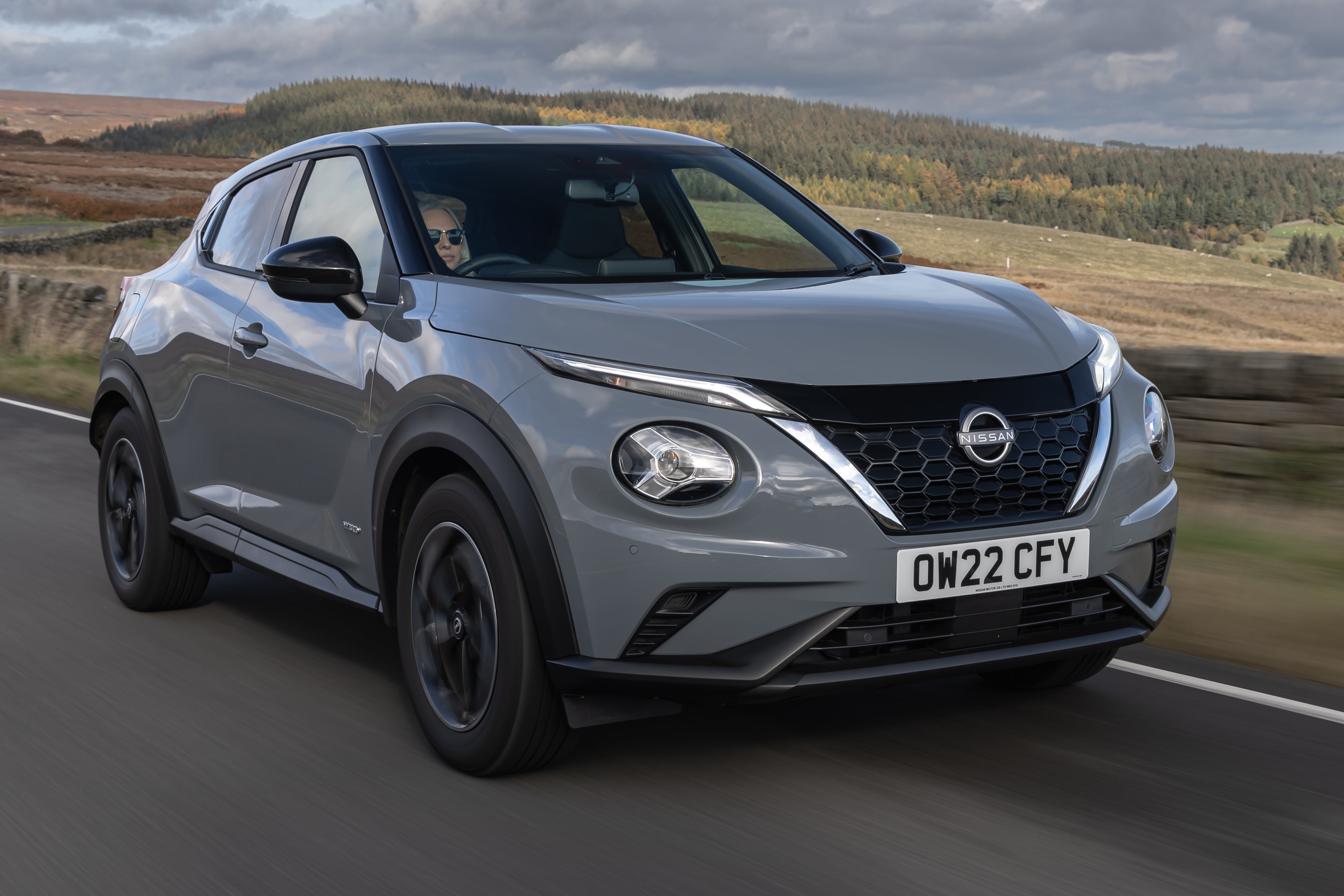
The Bayon’s problem is not that it gets anything badly wrong. It is that the class is so strong. The Bayon is not as stylish as a Nissan Juke, not as fun as a Ford Puma and not as practical as a Skoda Kamiq. But it strikes a decent middle ground, and it does so at a very fair price. If you want a small SUV that feels honest rather than aspirational, the Bayon makes sense.
What's the best Hyundai Bayon trim and engine option?
The sweet spot in the current range is the Black Line with the six-speed manual. It is the cheapest version, but it does not feel stripped out, because Hyundai now gives even the entry-level Bayon a strong amount of equipment. You still get the digital dials, the big nav screen, rear-view camera, heated steering wheel, heated front seats and 16-inch alloy wheels, which is a healthy spec for the money.
The manual also suits the Bayon’s modest performance. This is not a car with abundant reserves of power, so the ability to make the most of the engine yourself is useful, and the six-speed manual keeps the price keen. The seven-speed DCT is there if you spend a lot of time in traffic, but it is slower on paper and costs a noticeable chunk more.
Tech Line is worth considering if you particularly want automatic climate control, front parking sensors, wireless charging, rain-sensing wipers and the other extra convenience features it brings. But Black Line is the one that best highlights the Bayon’s value-led appeal.
What’s the price of the Hyundai Bayon?
The current Hyundai Bayon range starts at £22,725 for the Black Line 1.0T 90PS 6MT. Move to the Black Line 7DCT and the price rises to £23,975. The Tech Line 6MT costs £24,225, while the Tech Line 7DCT tops the standard range at £25,475.
That pricing keeps the Bayon at the more affordable end of the small-SUV market, which matters because value is one of its clearest strengths. There are rivals that feel more desirable, but many of them also cost more once you have matched the Hyundai for equipment.
It also means the Bayon makes more sense than some other Hyundai models in the showroom might for budget-conscious buyers. The Kona is a more rounded car overall, but it is also more expensive, and not every buyer needs the extra space or broader powertrain choice. If your budget is fixed and you want a new small SUV with a useful amount of kit, the Bayon has a straightforward appeal.
Alternatives to the Hyundai Bayon
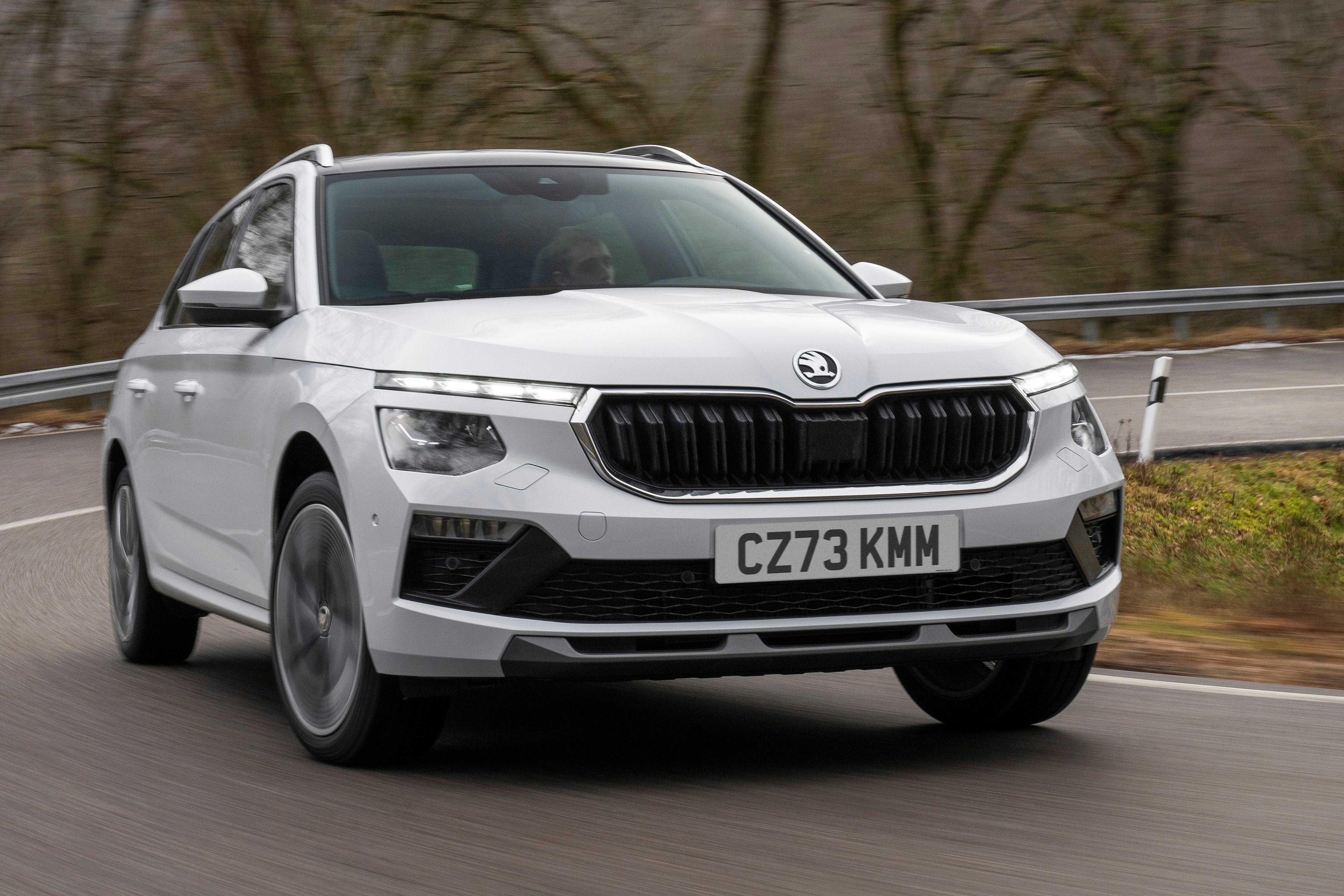
The Skoda Kamiq is one of the Bayon’s clearest rivals because it does the practical, sensible small SUV brief particularly well. It is roomier, feels a little more grown-up and has always been one of the easiest cars in this class to recommend.
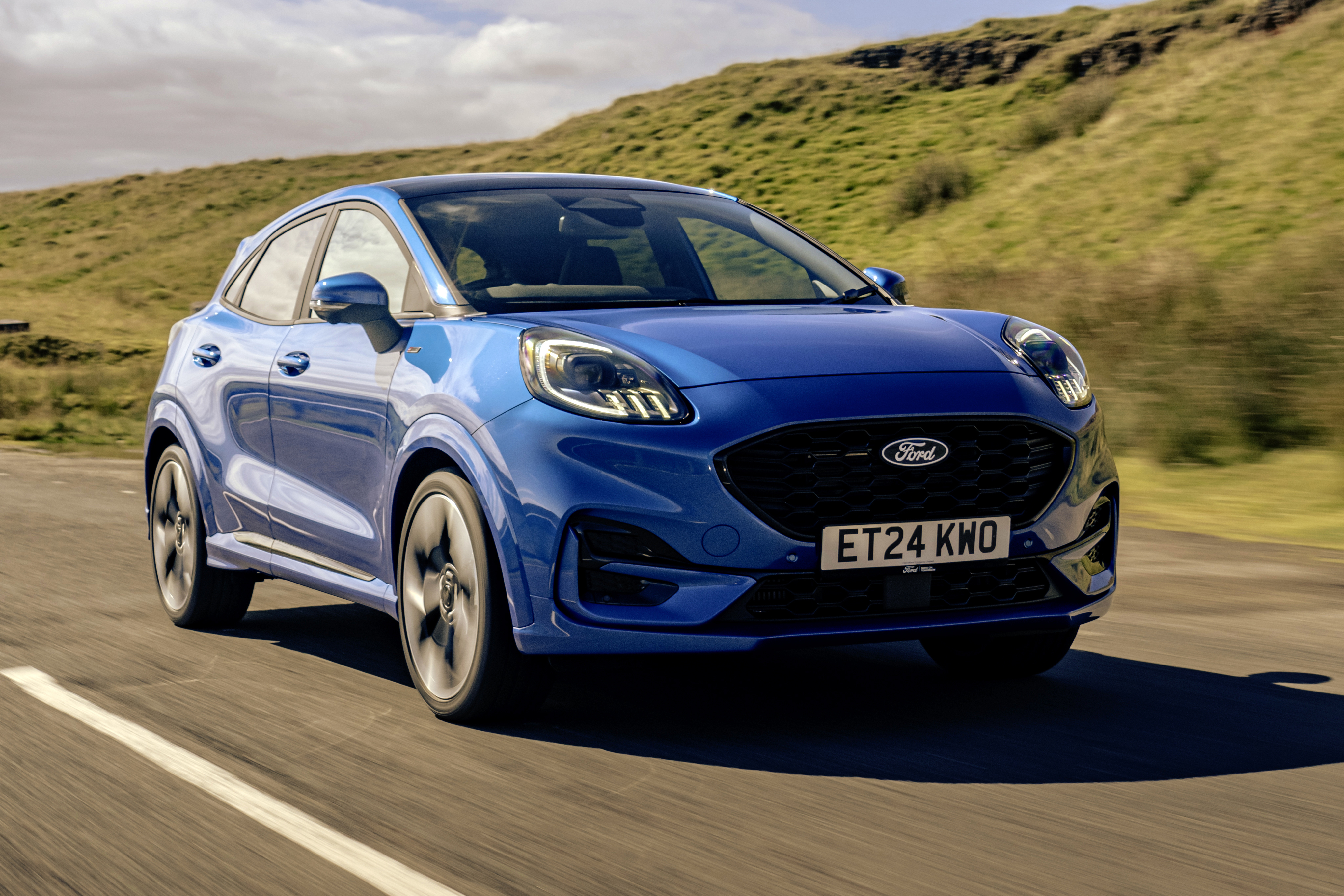
The Ford Puma is the alternative if you want something with more style and much sharper handling. It is simply the better driver’s car, and it has its own clever practicality trick in the form of the MegaBox boot storage.
The Volkswagen T-Cross is probably the most relevant VW alternative here. It feels a little more polished than the Bayon, offers clever rear-seat flexibility and has a stronger practicality story, even if it usually works out more expensive once you match the Hyundai for kit. The Renault Captur and Nissan Juke remain very popular choices for buyers who want a bit more visual flair.
You could also stay within the Hyundai-Kia orbit and look at the Kia Stonic, which is closely related and often competes on similar terms. The Toyota Yaris Cross is another strong option if efficiency is your priority, because its full-hybrid powertrain gives it an advantage in urban fuel economy.
What's the interior like in the Hyundai Bayon?
The Bayon’s cabin is not especially plush, but it is neat, easy to use and better equipped than you might expect for the money. The standout feature is the standard digital instrument display, while the infotainment is among the better systems in this part of the market.
Hyundai Bayon boot space and practicality
The Bayon is not an especially large small SUV, but it makes decent use of its footprint. Up front there is plenty of headroom, a useful amount of cabin storage and enough width that driver and passenger do not end up clashing elbows. The driving position is comfortable, although you do not sit especially high by SUV standards.
That last point is worth noting because some buyers come to this class expecting a more commanding perch. The Bayon feels more like a hatchback with a slightly raised body than a mini-Tucson, and that can either be a disappointment or a bonus depending on your point of view.
Rear-seat space is adequate rather than class-leading. You can squeeze three across if you have to, and there are Isofix points on the outer rear seats, but adults in the back will find knee room only average. Rivals such as the Skoda Kamiq and Volkswagen T-Cross feel more generous in the second row.
The boot measures 411 litres with the rear seats in place, which is decent enough for the class and usefully more than you get in many superminis. Fold the rear seats and capacity rises to 1205 litres. That said, if practicality is a priority, the T-Cross is one of the more convincing alternatives because its sliding rear bench gives it a little more flexibility in day-to-day use.
Hyundai Bayon dimensions
The Hyundai Bayon measures 4,180mm long, 1,775mm wide & 1,500mm high, with a wheelbase of 2,580mm. That makes it one of the smaller cars in this class, which helps explain why it feels easy to thread through town and easy to park.
Those tidy dimensions are part of the Bayon’s appeal if you are downsizing from a larger family car or simply want something that does not feel cumbersome on narrow UK roads. The compromise is that it cannot quite match the roomiest small SUVs for rear-seat or boot space.
Tech and infotainment in the Hyundai Bayon
This is one area where the Bayon punches above its price point. All current models get a 10.25-inch touchscreen with navigation and a 10.25-inch digital supervision instrument cluster, which gives the cabin a more modern feel than you might expect from a value-focused small SUV.
The infotainment itself is one of the better systems in this class. The menus are sensibly laid out, the graphics are clear and the screen is responsive enough that it does not become irritating to use. Apple CarPlay and Android Auto are standard, which matters more to many buyers than built-in navigation anyway.
Hyundai has also avoided making the interior more fiddly than it needs to be. Climate functions are kept separate, and in Tech Line trims the automatic climate controls use proper physical toggle-style buttons. That makes the Bayon easier to live with than some rivals that bury too many basics in a touchscreen.
Tech Line adds a few worthwhile extras, including front parking sensors, wireless charging, an auto-dimming rear-view mirror and a rear USB-C charge point. There is also an optional Tech Pack that bundles in a glass sunroof, acoustic windscreen and Bose sound system.
Materials available on the Hyundai Bayon
The Bayon’s materials are decent rather than impressive. Hyundai has made the cabin look reasonably modern, and the dual-screen set-up helps, but there are still quite a few hard plastics spread around the dash and doors.
That said, the car does not feel especially cheap. All versions get a leather-wrapped steering wheel and gear knob, and the overall fit and finish seem solid enough. Black Line models use a simpler treatment, while Tech Line adds a slightly richer ambience with extra convenience kit rather than a wholesale upgrade in material quality.
In short, the Bayon feels durable and presentable rather than plush. That is about right for the price point.
What's the Hyundai Bayon like to drive?
The Bayon is easy, predictable and undemanding to drive, which is exactly what many small-SUV buyers want. It is not a driver’s delight, but it rides comfortably enough, steers accurately enough and feels nicely manageable in town.
Hyundai Bayon range and performance
The current range uses a single engine: a 1.0-litre turbocharged three-cylinder petrol with 90PS and 172Nm of torque. You can have it with either a six-speed manual or a seven-speed dual-clutch automatic.
In manual form, the Bayon covers 0-62mph in 11.9 seconds and has a top speed of 108mph. Choose the DCT automatic and 0-62mph takes 13.3 seconds, with top speed trimming slightly to 107mph.
Those are not especially lively numbers, but they are perfectly acceptable for the kind of driving the Bayon is meant to do. Around town and at lower speeds, the little engine feels willing enough, and once up to speed it cruises happily enough on the motorway. Just do not expect brisk overtaking punch or much in the way of excitement.
Used buyers will still come across earlier mild-hybrid versions with 100PS or 120PS. Those are covered by the same basic character, but for a new car the choice is now much simpler.
Performance data
| Model | Engine/battery size | Power | 0-62mph | Range/MPG |
|---|---|---|---|---|
1.0T 90PS 6MT | 1.0-litre | 90PS | 11.9 seconds | Up to 47.9mpg |
1.0T 90PS 7DCT | 1.0-litre | 90PS | 13.3 seconds | Up to 48.7mpg |
Hyundai Bayon driving and refinement
On the road, the Bayon feels very much like a slightly taller i20. The steering is light, accurate and easy to place, which makes it well suited to town driving. Visibility is decent, and the compact footprint helps when parking or threading through tight streets.
Ride quality is one of its stronger points. It is not especially soft, but it deals with rougher surfaces reasonably well and generally strikes a sensible balance between comfort and control. It sits somewhere between a cushier Citroen C3 Aircross and a firmer Ford Puma, which is no bad place to be.
If you are hoping for something especially fun, though, look elsewhere. The Bayon does not feel particularly sporty, and selecting Sport mode does little beyond adding weight to the steering. Keen drivers will be better served by the Ford Puma.
Refinement is respectable for a small petrol SUV. Wind and road noise are kept reasonably well in check, and the engine is unobtrusive most of the time, even if it lacks the character or punch of some rival three-cylinder units. Overall, it feels calm enough for everyday use.
How safe is the Hyundai Bayon?
The Hyundai Bayon has a four-star Euro NCAP rating from 2021 rather than the full five stars some rivals manage. That sounds a little disappointing on paper, but it does not mean the car is fundamentally unsafe.
Standard safety kit is strong. All current Bayons get forward collision avoidance assist with car, pedestrian and cycle detection, intelligent speed limit assist, lane follow assist, lane keep assist, driver distraction warning, eCall and rear seat alert. That is a generous list for a car at this price point.
So while the headline rating is not class-leading, the Bayon still comes with a good spread of active safety technology as standard.
Running costs: What it's like to live with a Hyundai Bayon
This is one of the Bayon’s stronger areas. It is relatively cheap to buy, the little turbo petrol engine is efficient enough, insurance is sensible and Hyundai’s long warranty remains a strong selling point.
Hyundai Bayon fuel economy
Official combined fuel economy is 47.9mpg for the manual and 48.7mpg for the DCT automatic. Those numbers are decent rather than exceptional, but they should make the Bayon affordable enough to run in the real world.
With a 40-litre fuel tank, you are looking at a useful range between fill-ups, and because the Bayon is light by modern standards, it does not need a lot of fuel to keep going. If efficiency is your absolute priority, a full hybrid such as the Toyota Yaris Cross will still do better around town, but the Hyundai’s figures are respectable for a conventional petrol SUV.
Hyundai Bayon warranty and servicing
Hyundai’s five-year unlimited-mileage warranty remains one of the Bayon’s strongest selling points. It is more generous than the cover offered by many rivals and adds a useful layer of reassurance if you are planning to keep the car for a while.
There is no widespread evidence that the Bayon is especially troublesome, and Hyundai as a brand continues to enjoy a good reputation for reliability. That does not guarantee a fault-free ownership experience, of course, but the overall picture is reassuring enough.
Hyundai Bayon insurance groups
Current insurance groups are sensible. The Black Line 7DCT is group 13, while the manual Black Line and Tech Line sit in group 15. The Tech Line automatic is group 14.
That makes the Bayon quite easy to justify for cost-conscious buyers, and it reinforces the sense that this is a small SUV designed around sensible ownership rather than image-led indulgence.
How much does it cost to tax a Hyundai Bayon?
After year one, the Hyundai Bayon falls under the standard annual VED rate, currently £200.
Because all versions are well below the £40,000 Expensive Car Supplement threshold for petrol cars, you do not need to worry about the additional annual charge that applies to pricier models between years two and six. That helps keep the Bayon’s ownership costs neatly under control.
What trims are available with the Hyundai Bayon?
The current UK range is made up of two trims: Black Line and Tech Line.
Black Line is the entry point, but it comes with plenty. Standard kit includes 16-inch black alloy wheels, LED headlights and taillights, privacy glass, heated front seats, a heated leather-wrapped steering wheel, rear parking sensors, a rear-view camera, cruise control, the 10.25-inch touchscreen navigation system and the 10.25-inch digital instrument cluster. That is a strong specification for the money and one of the reasons the Bayon makes such a convincing value case.
Tech Line adds 17-inch alloy wheels, automatic climate control, front parking sensors, rain-sensing wipers, keyless entry and start, wireless charging, a rear USB-C charge port, an auto-dimming rear-view mirror, centre armrest, luggage net and luggage board. Those extras make it a little easier to live with day to day, but they are not essential.
There is also an optional Tech Pack on Tech Line, which adds a glass tilt-and-slide sunroof, an acoustic windscreen and a Bose premium sound system. It is a nice pack, but the standard Black Line still looks like the smarter buy overall.
Ask the Drive experts: common questions
How much does the Hyundai Bayon cost?
Is the Hyundai Bayon a hybrid?
Is the Hyundai Bayon bigger than the Hyundai Kona?
What is the best Hyundai Bayon version?
Get our latest advice, news and offers
Keep me updated by email with the latest advice, news and offers from Drive.
.jpg)
.jpg)