12/10/2026
Best automatic cars in the UK: Top picks for 2026

Written By Mark Nichol

Remember when saying someone drove 'an automatic' was another way of saying they drove 'a fancy car'? Doesn’t seem that long ago, right? Automatic gearboxes were for expensive cars… and Americans. But consider the following fact — of all the new cars registered in 2015, just under a third were automatics, yet a decade later, almost four in five were.
With that in mind, a 'best automatic cars' article could seem too broad. Like writing a list of the best chicken nuggets with chicken in them — they almost all do. So, instead, think of this as 'the cars whose automatic gearboxes add most to the experience'.
While almost every new car has an automatic option these days, they’re not all created equal. Some autos are there just because that’s what the market expects. Others transform the way a car drives. A good automatic can make a small car easier around town, turn a family car into a superb long-distance cruiser or allow a powerful sports car to make much quicker progress than you could yourself with your left arm and leg.
So we’ve picked ten cars across a broad price range, from affordable hatchbacks, to EVs, to sports cars and luxury SUVs. Something for everyone. Each one has an automatic gearbox that suits the car’s character especially well. Let’s go.
1. Toyota Yaris
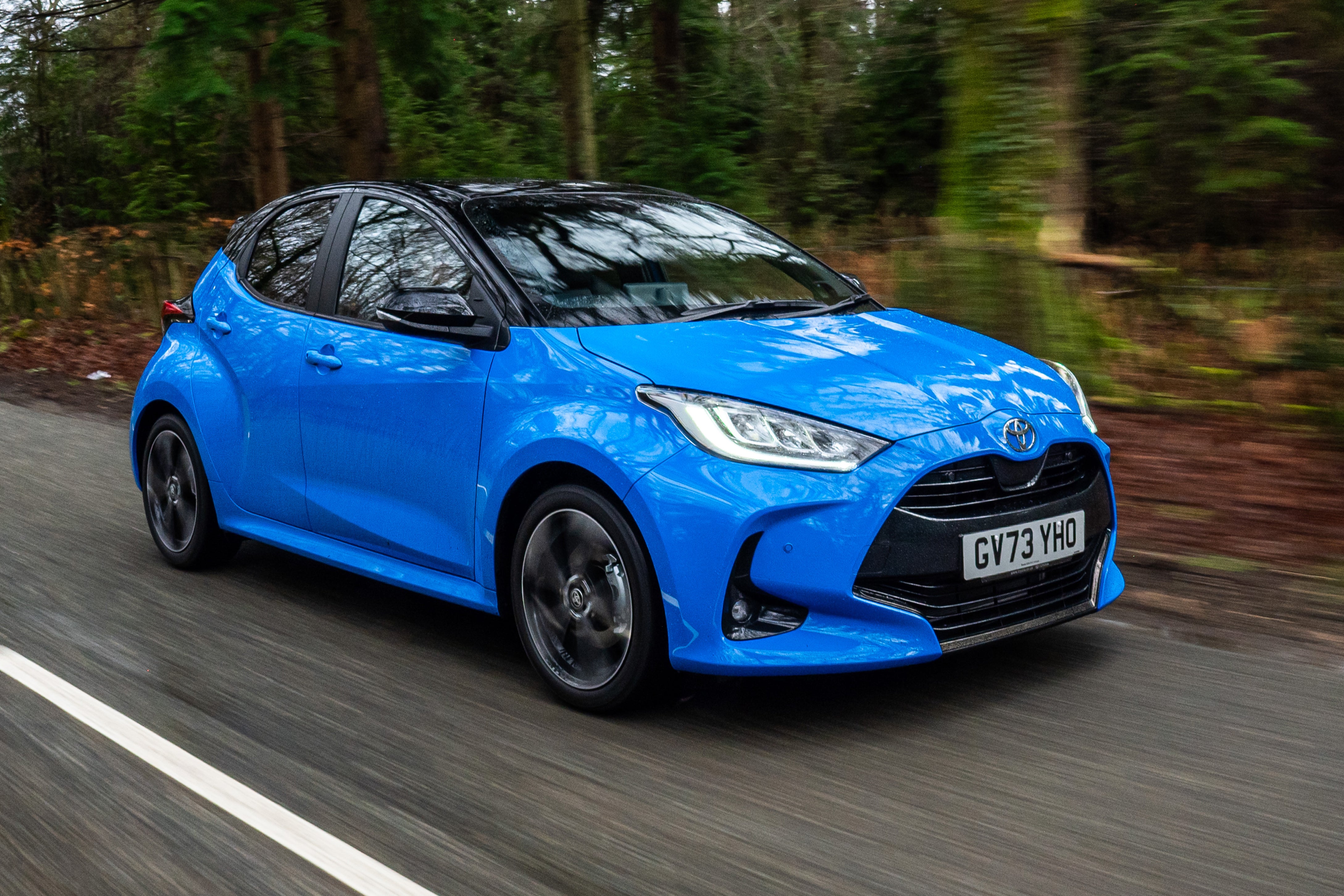
On paper, the Toyota Yaris should make a terrible automatic. It’s a little car with a Toyota hybrid system — and anyone who’s driven an early Prius will be familiar with the auto’s distinctly painful whine under hard acceleration. Eurgh.
But the modern Yaris Hybrid is a genuine joy… Well, it’s joyful in the same way that finally completing your expenses is. A sort of sensible, organised joy coupled with mild relief. Perfect for crowded roads, the Yaris has an e-CVT gearbox that’s smooth and exceptionally easy to drive. And because the car’s electric motor does much of the work at low speeds, it’s usually very quiet. There’s no fumbling for gears when you’re pulling out of a junction, creeping through traffic or squeezing into a parking space. Just press the accelerator and go.
It’s not perfect — the petrol engine can get quite vocal at motorway speeds — but around town it’s an ideal example of an automatic genuinely improving the car rather than simply making it more expensive.
2. Renault Clio E-Tech Full Hybrid
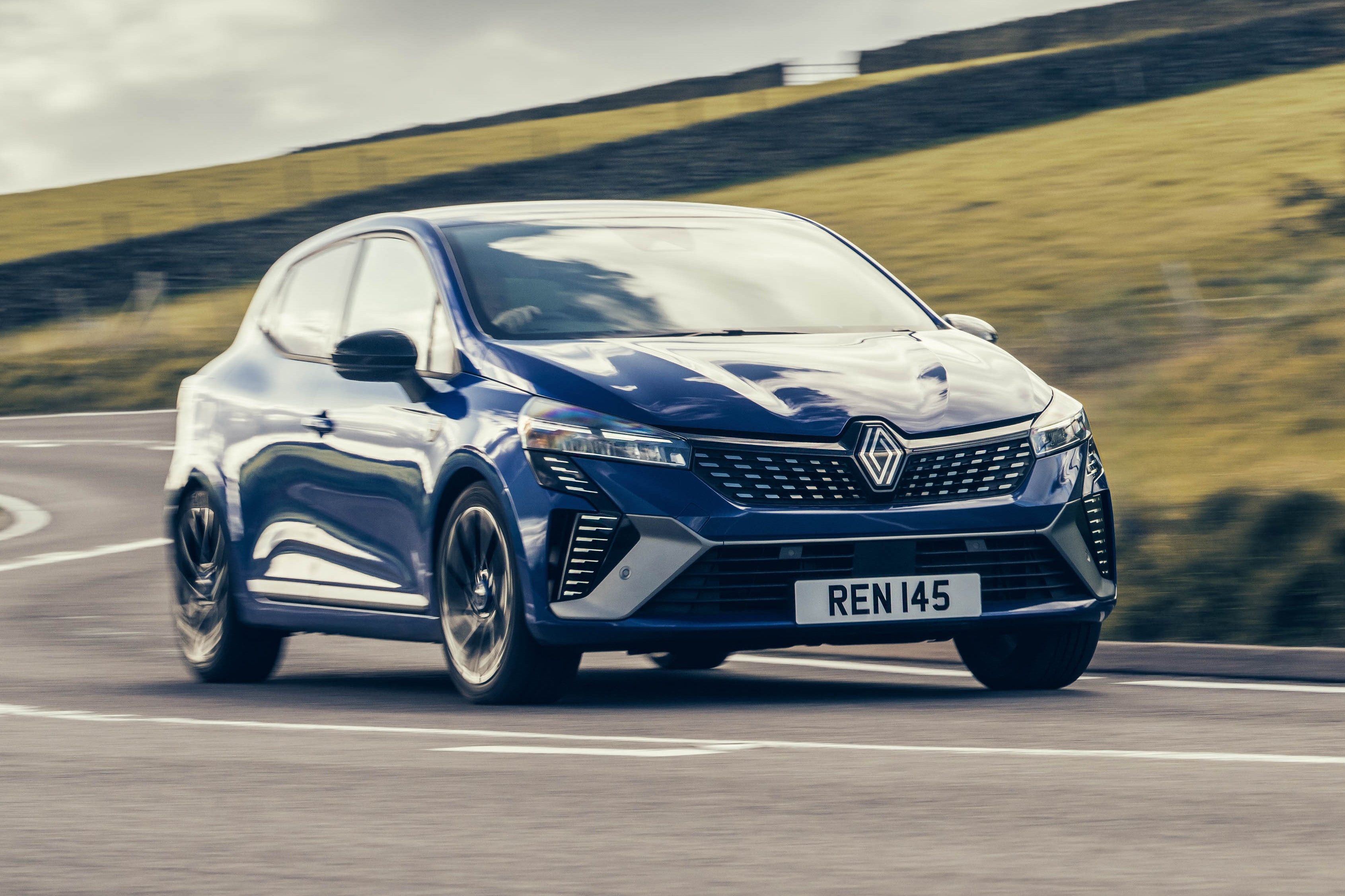
The Renault Clio E-Tech Full Hybrid looks great by numbers alone — 145PS (quite a lot), five seats, a 301-litre boot, up to a claimed 65.7mpg and all this for less than £21k.
And that’s without mentioning that the standard auto gearbox has Formula 1 technology. Which you will. A lot. The detail is baffling, but basically the setup combines a petrol engine, a four-speed gearbox and two electric motors, but without a conventional clutch. Instead, the clever electronics sync everything and select the right gear, while you just press ‘go’ and ‘stop’. As though you’re operating a Nutribullet, albeit with the pedals.
It’s a genuinely good automatic. The Clio E-Tech Full Hybrid feels relaxed and easy around town, but doesn’t suffer from the droning, elastic sensation you can get from some hybrid automatics. It’s also a nicer thing to look at and sit in than the Yaris, while retaining the sort of compact dimensions that make an automatic particularly useful in town.
Browse used automatic Renault Clio E-Tech Full Hybrids for sale on Drive →
3. Volkswagen Golf
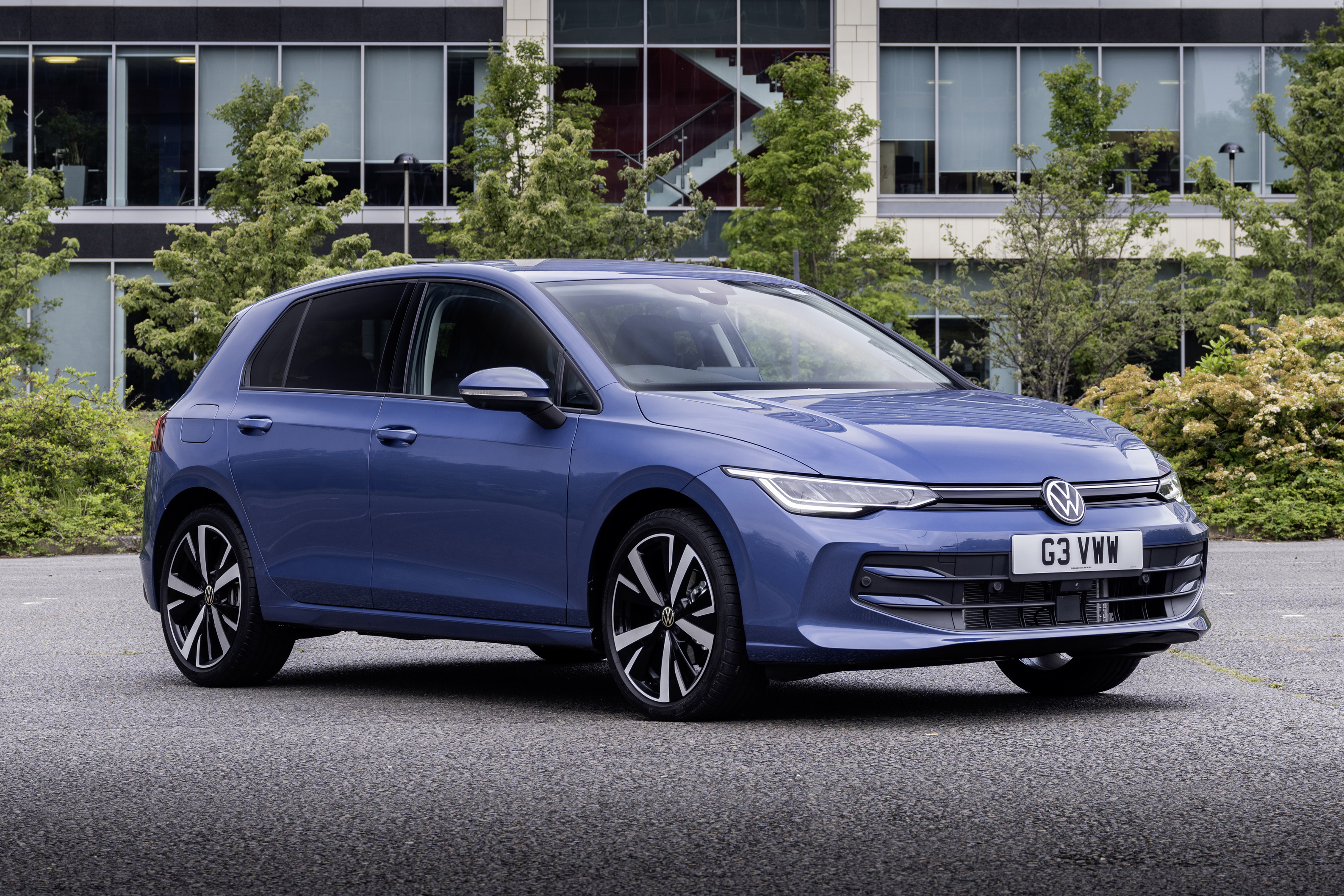
The Volkswagen Golf has been the sensible answer to almost every family car question for almost half a century. So naturally it belongs here. But there’s a particularly good reason to choose the automatic version: the 1.5-litre eTSI and seven-speed DSG make a superb pairing. Like 'reggae' and 'sauce'.
The mild-hybrid engine is smooth and punchy enough for everything from school runs to motorway trips, while the DSG changes gear so quickly, so imperceptibly, that it really does make the car feel like… and apologies for this… a go-kart. We know, we know.
There’s still a manual Golf if you really want one, but the DSG feels like the natural choice these days. It removes the minor chore of constantly working the clutch in traffic, but without taking anything away when you’re enjoying a faster road. It’s also the car here that perhaps best demonstrates how far automatic gearboxes have come — a DSG-equipped Golf can be — and usually is — more fuel efficient than the equivalently-engined manual model.
4. Škoda Octavia
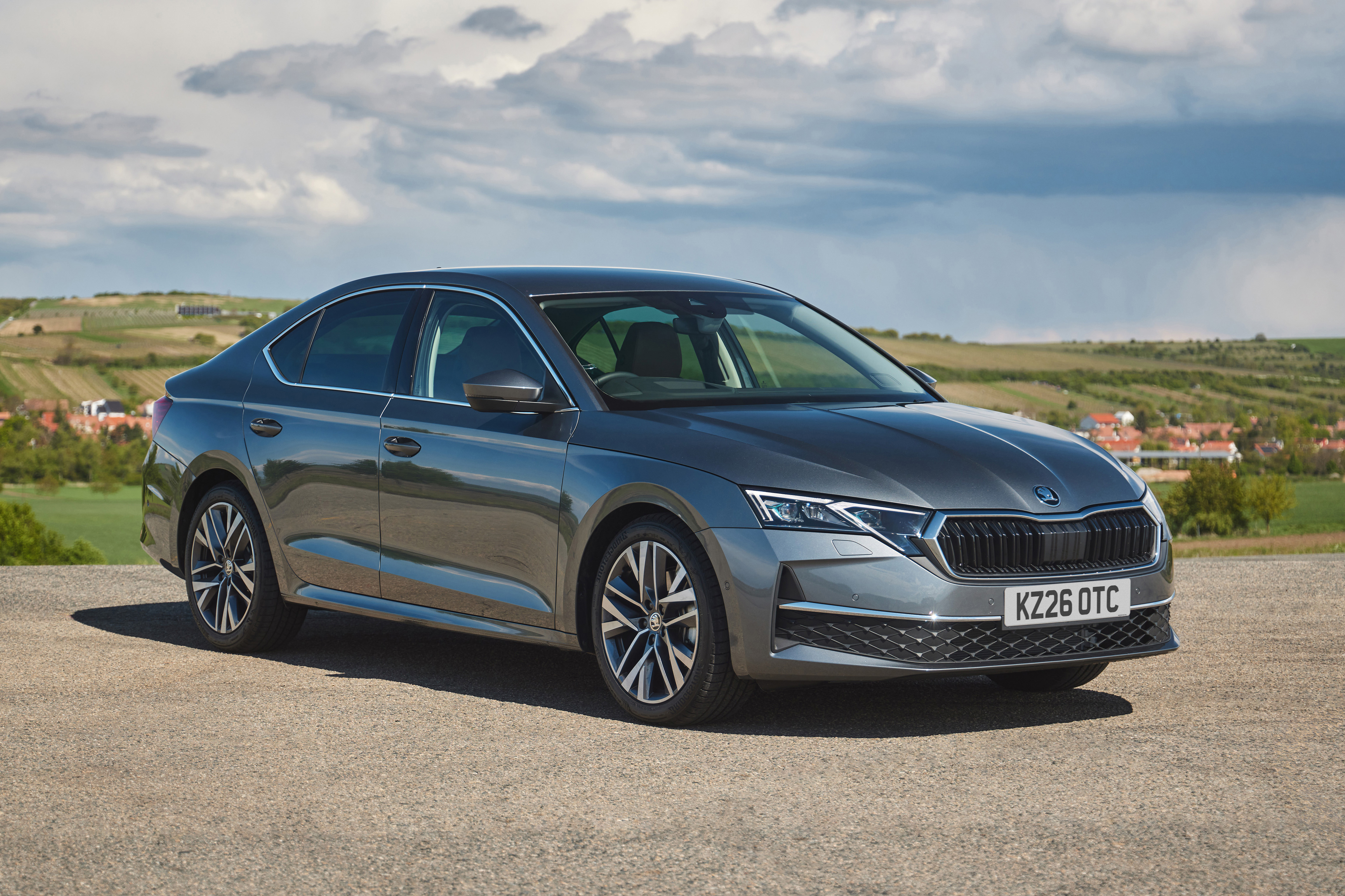
The Škoda Octavia is relentlessly sensible. It’s your mate who turns up to a party with a packed lunch, a phone charger and a spare pair of socks. But then is still there at 3am, doing the robot because your mate is also extremely talented and actually fun. Where were we..?
Yes, automatic gearboxes. The Octavia’s seven-speed DSG automatic — the same one you’ll find in the Golf — is a particularly good match for the car’s character. It’s smooth around town, settles into the right gear on a motorway and works beautifully with the 1.5-litre mild-hybrid petrol engine. You can also have a 150PS 2.0-litre TDI diesel with the DSG, which will give you up to 64mpg. It’s a mint choice if you’re doing loads of miles.
Then there’s the space. The hatchback has a 600-litre boot, while the estate swallows 640 litres, making it happier at Ikea than a competitive hot dog eater in training.
5. Renault 5 E-Tech
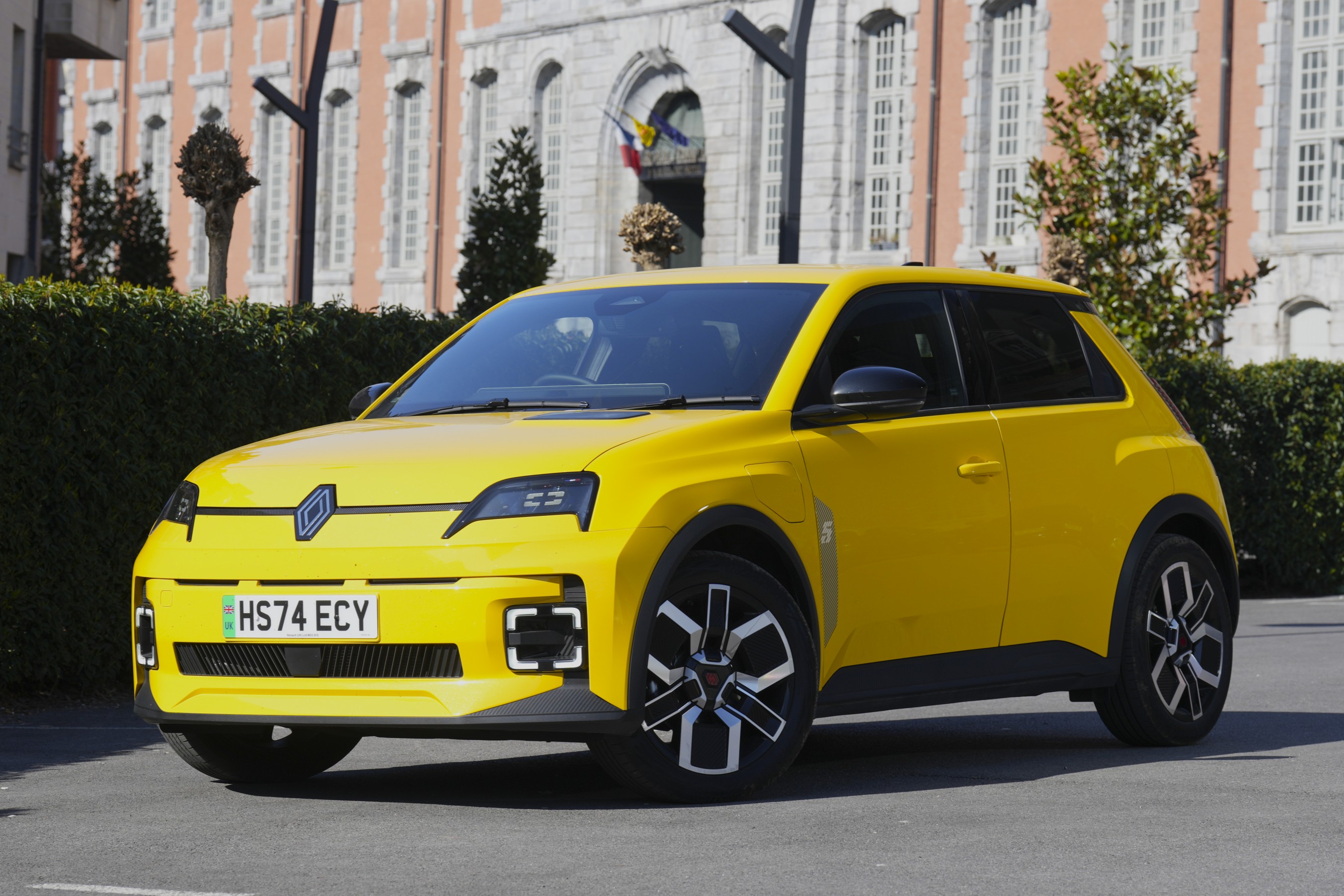
Strictly speaking, the Renault 5 E-Tech doesn’t have an automatic gearbox in the way we traditionally understand them. It has an electric motor and something called a single-speed reduction gear, which is basically why an EV can accelerate seamlessly without changing gear. That’s what makes all EVs feel smooth and why they are all categorised as automatics to drive — no clutch, no bother.
So why the Renault 5 specifically? Well, it’s a small, light-ish electric car designed to be fun and easy to drive, plus it looks great, has a fantastic driving position — even if you’re tall — and is reasonably priced.
Even the entry-level version has 120PS and 225Nm, while the more powerful 150PS version is properly brisk. The cheapest car has a 40kWh battery and a claimed 192-mile range, which will be more than enough for most. It’s the poster child for what a modern electric runabout should be.
6. Honda Civic e:HEV
.jpg)
The Honda Civic e:HEV is an interesting one because its automatic transmission is barely a transmission at all. Honda’s clever hybrid system can drive the wheels electrically, use the petrol engine as a generator, or connect the engine directly to the wheels at higher speeds. We asked the person who designed it to explain how it works once. An hour later we’d learned that… it works, somehow.
The important bit is that it’s excellent. Smooth, quiet and remarkably responsive, you can really never tell that it’s so complicated underneath. Around town it can shuffle along on electric power, while out on the open road the petrol engine settles into the background. The Civic will do a realistic 60mpg, while being a rare example of a hybrid that’s actually fun to drive.
It’s also a proper family car rather than a tiny hybrid — there are five seats and a 410-litre boot. If only it had a little more visual pizzazz, inside and out.
Browse used automatic Honda Civic e:HEVs for sale on Drive →
7. Audi A5 Saloon
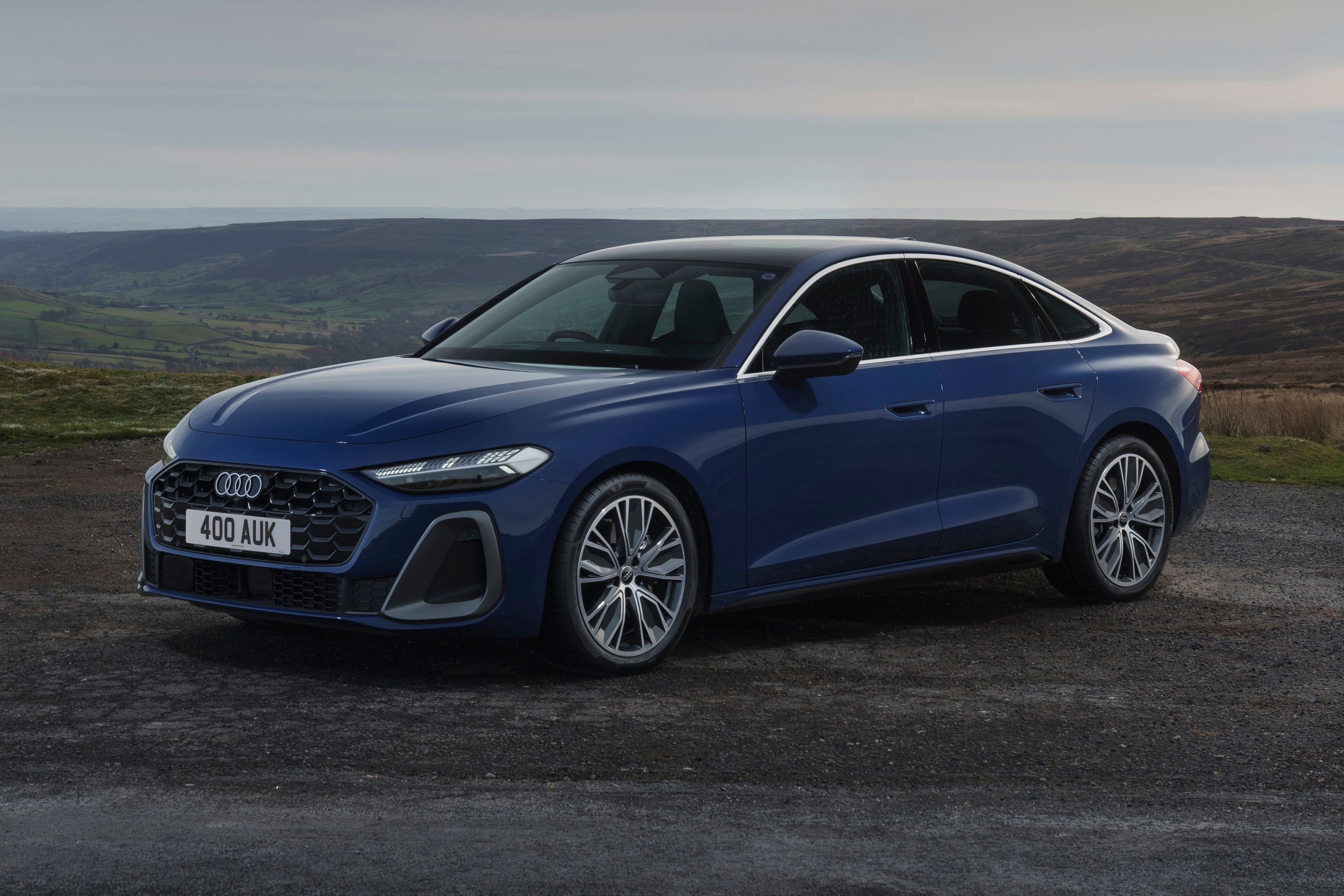
You could buy a manual Audi once upon a time. But in an A5, fiddling around with a clutch pedal feels as normal as wearing football boots to a middle management meeting. The Audi A5 Saloon is a proper long-distance machine and its seven-speed S tronic gearbox is smooth, quick and generally very good at working out what you want before you’ve quite decided yourself.
We’d prefer it to be a little less hesitant when you initially put your foot down from a standstill, but it’s something you’ll get used to. And some versions get a 48-volt mild-hybrid setup to make stop-start driving a little smoother, by adding some electric assistance at low speed. The system also allows the car to coast at motorway speeds with the engine off, reducing fuel use.
Add optional quattro all-wheel drive and you’ve got a properly capable all-weather cruiser. Overall, there’s no drama with the A5 — every inch of it feels designed to make big journeys feel small.
8. BMW 5 Series
.jpg)
The eight-speed automatic fitted to the BMW 5 Series isn’t a twin-clutch type like Audi’s — it’s basically an ‘old school’ torque converter. But don’t assume it’s any less sophisticated or good than the Audi’s. In fact, it’s arguably better.
Capable of changing gears so smoothly that you barely notice it’s happening, it’s also smart enough to drop several gears in an instant when you bury your right foot. The result is a car that can waft along a motorway at 70mph in near silence, but can also behave like a sports car — there are paddle shifts behind the wheel too. Like in a race car. Uh-huh.
There are mild and plug-in hybrid petrol versions of the 5 Series, all of which come with the auto as standard. And that makes sense — it's fundamentally a car for covering huge distances with minimum fuss. It’s big, comfortable and increasingly stuffed with technology, but underneath all of that there’s still something wonderfully simple about the experience. Select D and let the gearbox get on with it.
9. Porsche 911
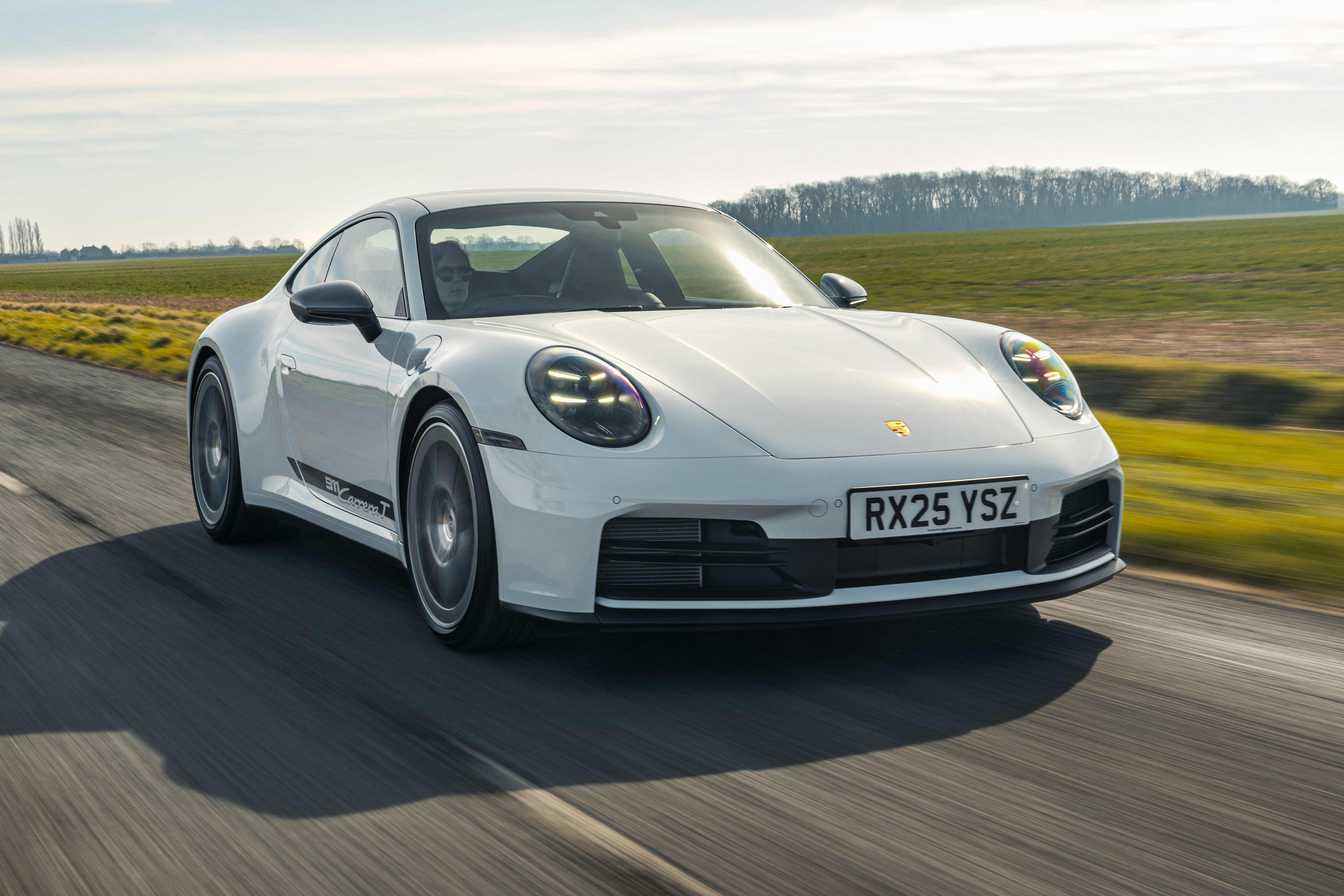
Do people still get upset about an automatic Porsche 911? Hopefully not. There’s always going to be that 'a proper sports car should have a manual gearbox' argument, though. And we get it. So does Porsche, actually — they’ll happily sell you one. But, honestly, you’d be missing out.
The 911’s PDK dual-clutch automatic is unbelievably good. It changes gear in milliseconds and knows exactly which gear you want — almost as though it’s reading your mind. When you’re really pushing on, that allows you to concentrate on steering, braking, and checking to make sure that the hand gesture you’re just seen from the pavement is indeed just a friendly wave.
The current ‘entry-level’ 911 Carrera produces 394PS and can hit 62mph from nothing in as little as 3.9 seconds with the right options. And although the PDK is ferociously quick at shifting gears, it’s perfectly civilised when you’re just popping to Tesco. A manual might make you feel more involved, but the PDK makes the 911 faster, easier and arguably more usable.
10. Range Rover
.jpg)
The Range Rover is the ultimate example of why automatic gearboxes exist. It’s huge, heavy and designed to transport you across continents or county lines while making you feel more relaxed than a DFS product tester. There was never going to be another manual Range Rover, ever.
The eight-speed automatic does its job with almost comical smoothness, shuffling through its ratios without any fuss at all. It’s especially amazing when you consider just how much body movement the Range Rover necessarily has built into it, in order to be comfortable and decent off road — a jerky gear shift would make the Range Rover’s body rock like the moshpit at Download festival.
At more than £100,000, it had better be good. But if you want to know what an automatic car should feel like when absolutely everything has been engineered around effortless progress, this is it.
Usually, yes — but not always by as much as you might expect. It used to be that an automatic gearbox could add several thousand pounds to the price of a new car. Now, though, some models are automatic-only and those that make it an option are far more reasonably priced — cars like the Volkswagen Golf, where the DSG automatic is a relatively modest step up from the equivalent manual.
Hybrids, plug-in hybrids and electric cars are automatic by default, too. It’s also worth considering the resale value: automatic cars are increasingly popular in the UK, which can help offset any extra cost when you come to sell.
That depends on what you want from your car. Automatics are easier in traffic, smoother — MUCH smoother if your clutch skills are ropey — and generally much cleverer and more fuel efficient than they used to be. They can also be quicker than manuals, especially in performance cars such as the Porsche 911.
Manuals can still be more engaging for keen drivers, though, and some people simply enjoy changing gear themselves. The best automatic cars are those where the gearbox genuinely suits the car, rather than merely being an option.
Not necessarily, but modern automatics can be very economical. Hybrid cars such as the Toyota Yaris and Renault Clio E-Tech can return impressive fuel economy while making town driving much easier. Some automatic cars are actually more efficient than their manual equivalents, while electric cars have no gearbox in the conventional sense and can be extremely cheap to run. Insurance, servicing, tyres, fuel or electricity costs and depreciation will usually have a much bigger impact on overall running costs than whether a car has two pedals or three.
For predominantly urban driving, we'd look closely at a small hybrid such as the Toyota Yaris Hybrid or a Volkswagen Polo with its seven-speed DSG automatic. Both are compact and easy to park, while the Yaris can use electric power at low speeds, making stop-start traffic much less tiring.
The Renault 5 E-Tech is another excellent option if you want to go fully electric. Its single-speed drivetrain means there are no gears to change and no clutch to operate, making it exceptionally simple to drive around town.
Electric cars don't have automatic gearboxes in the traditional sense, because most use a single-speed reduction gear rather than a multi-speed gearbox. However, they drive much like an automatic.
There is no clutch pedal, no gear-changing and usually just a simple selector for Drive, Reverse and Park. That's because an electric motor can produce useful torque across a very wide range of speeds, so it doesn't need multiple gears. In everyday driving, an EV is therefore about as effortless as an automatic gets.
There are a number of different types of automatic gearboxes and they all have their own plus and minus points. Traditional automatic gearboxes are known as torque converters, while clever dual-clutch transmissions (with lightning quick gear changes) are increasingly popular.
CVT transmissions can be less refined but are generally very efficient and reliable. Automated manual gearboxes are popular in small cars as they’re generally more affordable, but aren't usually as smooth in real-world use.