Fiat 500 Review

Written By Ivan Aistrop
- 2026
- City car
- Petrol mild hybrid
What we love
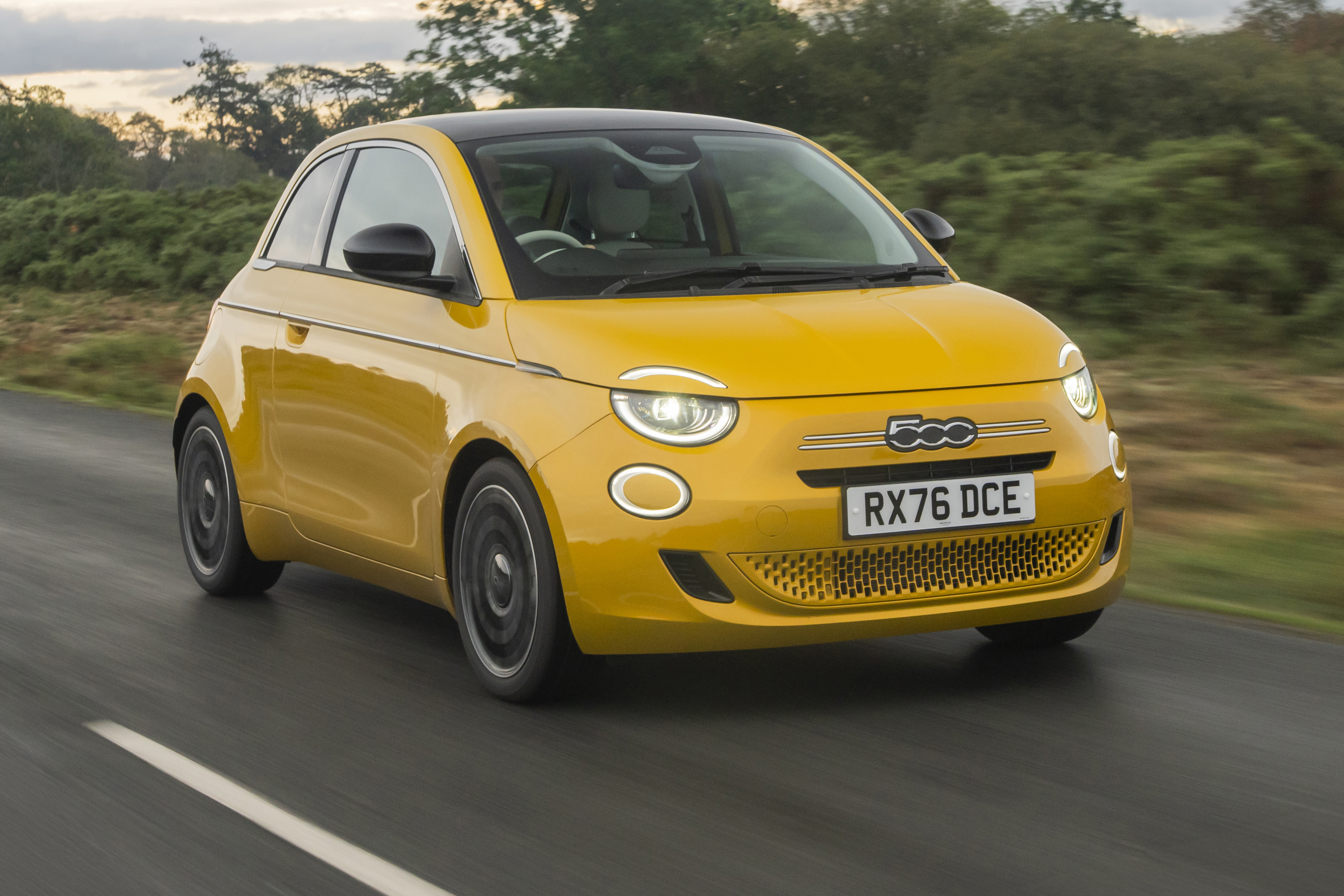
Still looks distinctive and stylish
Affordable by new-car standards
Easy and enjoyable around town
Things to consider
Very slow performance
Cramped rear seats and tiny boot
No automatic gearbox
The DRIVE take on the Fiat 500, is it the right car for you?
he Fiat 500 Hybrid is undeniably flawed. It’s far from the most practical car of its type, and it has limited performance, poor forward visibility, and an awkward driving position. For some drivers, though, none of that will matter one bit. It looks effortlessly cool and characterful, and it’s affordable to buy. And for those drivers, those two things alone will be enough for them to overlook all its other foibles, and they’ll love it no matter how compromised it is.
The Fiat 500 in more detail
The Fiat 500 is a car that represents a very significant about-turn for Fiat. When the current replacement for the super-successful previous-generation Fiat 500 came along in 2020, it was offered exclusively as an all-electric car. Were told in no uncertain terms that it always would be. However, fast-forward to 2026 and here we are with a new hybrid version of the Fiat 500.
So what gives? Why the change of heart? Well, the foundation of the monumental success of the previous version of the Fiat 500 was that it provided immense style and likeability for a very affordable pricetag. The adoption of an electric-only powertrain for its replacement immediately eroded that appeal because the car became considerably more expensive, making it a less accessible proposition, and sales of the latest 500 have been nowhere near those of its predecessor as a result.
And that’s made Fiat do something drastic. Its engineers have been busy revising and redesigning the 500e’s platform to retro-fit the petrol hybrid system from the previous iteration of the 500. This is quite the engineering feat, one that takes considerable investment in both time and money. Fiat wouldn’t tell us what it cost them in the latter, unsurprisingly, but on the former, we were told that this car has been in the making for around 18 months. Not a small undertaking, then.
Don’t be fooled by that ‘hybrid’ moniker, mind. The Fiat 500 Hybrid is a hybrid on a mere technicality, and the amount of electrical assistance provided by the puny 12-volt battery to the 1.0-litre three-cylinder petrol engine is absolutely minuscule. It’s actually more accurate to think of this as an old-fashioned petrol car, despite what Fiat’s marketing bods claim.
With just 65PS powering the front wheels, performance is predictably modest, but if you’re just pottering around the city, which is plainly this car’s natural habitat, then this is unlikely to bother you. The car can just about hold its own on most faster routes if you really wring the neck of the little engine, but those planning regular motorway runs might want to consider something with a little more poke.
Other aspects of the driving experience, such as the light steering and light pedals also help make this a car best-suited to urban use. In this environment, the ride feels smooth and the handling feels responsive and pointy, too, and while these characteristics deteriorate a little at faster speeds, it’s still a capable and likeable car to drive out-of-town.
The 500’s dinky dimensions are also partly responsible for its suitability as an urban-dweller, but that does mean obvious compromises in practicality. Even those up front feel a tad hemmed-in, while the driving position and forward visibility have some rather major issues, as we’ll discuss later. Those in the back feel positively cramped due to a shortage of both headroom and legroom, and the boot is tiny at just 183 litres.
As tight as the cabin is, though, it’s also colourful and charming, and stocked with a decent amount of standard luxury and safety kit. Interior quality is a bit mixed - nice in some areas and rather plasticky in others - but remember that this is likely to be a cheap car. We don’t yet know precisely how cheap, though, because UK prices are yet to be announced ahead of the car’s release in 2026.
All in all, how good the Fiat 500 Hybrid is depends on what you want from your small car. On the one hand, it’s less practical than several other city cars we could name, it’s slower, less refined and less civilised to drive, and its visibility and driving position are very compromised.
Its warranty is some way behind some competitors’, too. However, if you’re not fussed about any of that, and you’ve simply fallen in love with the car’s cutesy looks and cheerful character, and you can now finally afford to buy one thanks to its more affordable price, then you’ve probably decided to buy one already. That’s fine, and you’ll probably adore it as much as you already do: just make sure you heed our warnings over its shortcomings, and go in with your eyes open.
What's the best Fiat 500 trim and engine option?
Every 500 Hybrid uses the same 65PS 1.0-litre mild hybrid engine and six-speed manual gearbox.
Icon is our pick. It starts at £18,995 and comes with 16-inch alloy wheels, LED headlights, automatic air conditioning, a 10.25-inch touchscreen, wireless Apple CarPlay and Android Auto, a 7-inch driver display and rear parking sensors.
La Prima costs £20,995 and adds 17-inch wheels, a glass roof, heated front seats, a heated windscreen, navigation, wireless charging and a reversing camera.
What’s the price of the Fiat 500?
The Fiat 500 Hybrid starts at £18,995 for Icon, while La Prima costs £20,995. Convertible versions cost £3,000 more, taking prices to £21,995 and £23,995 respectively.
The larger Grande Panda Hybrid costs similar money and offers more space, stronger performance and an automatic gearbox. The 500 counters with smaller dimensions and more distinctive styling.
Alternatives to the Fiat 500
The Toyota Aygo X Hybrid is faster, more efficient and comes with an automatic gearbox, although it costs more.
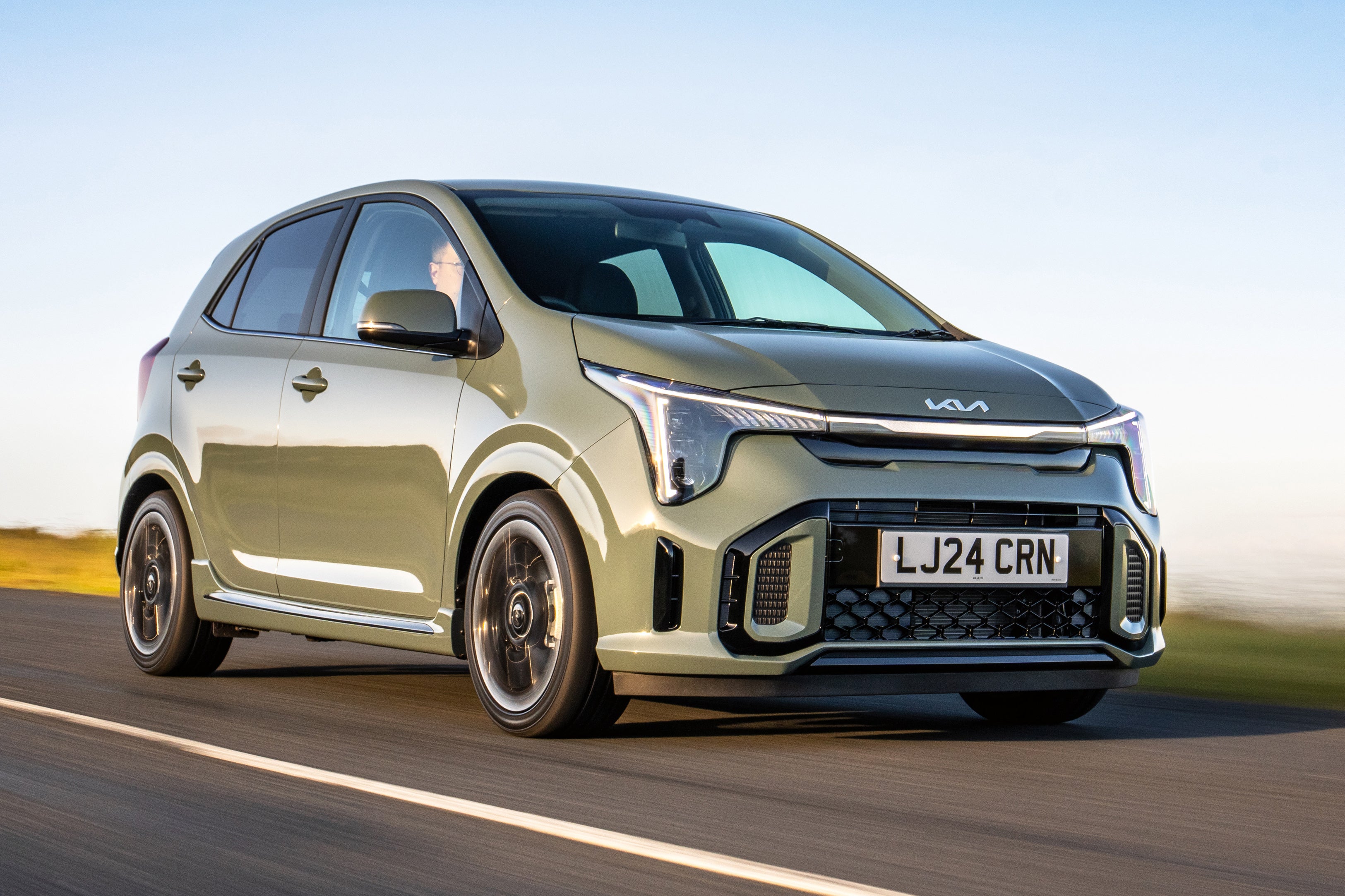
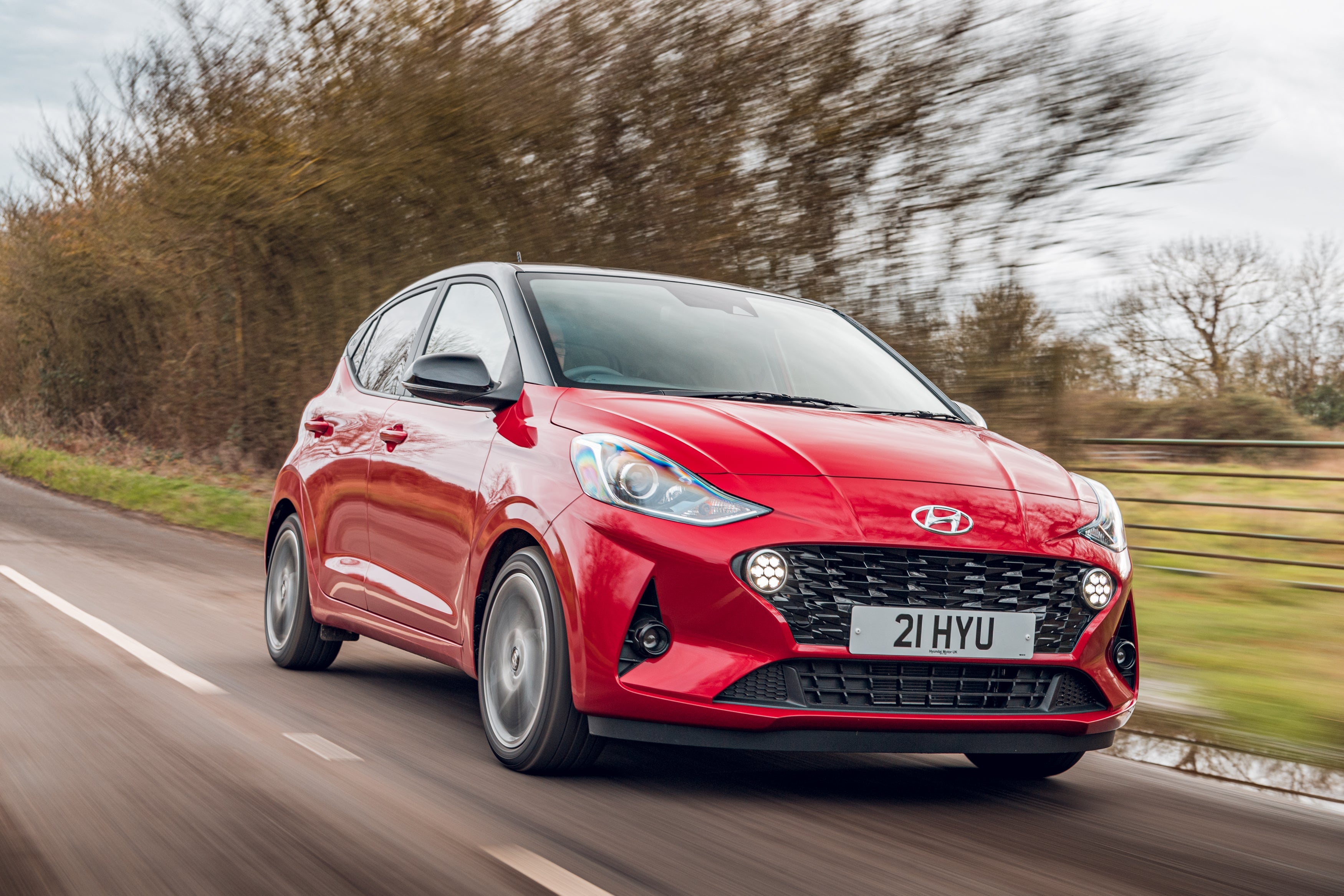
The Kia Picanto and Hyundai i10 are more practical, especially if you regularly use the rear seats, and both come with longer warranties.
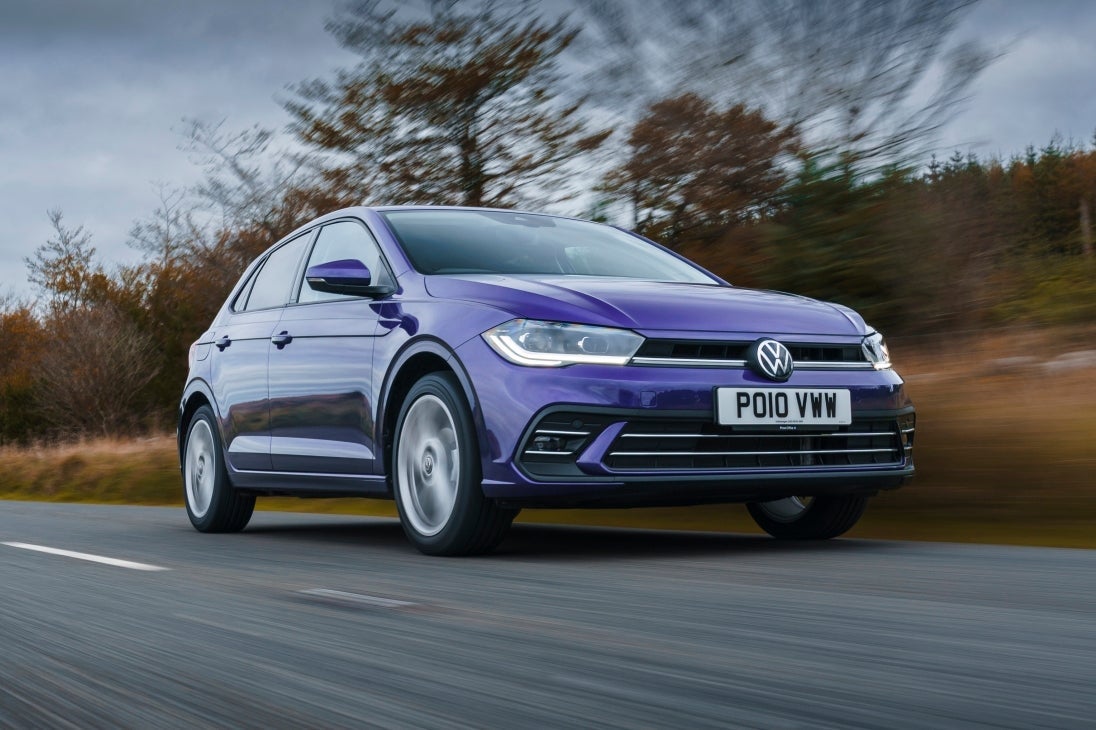
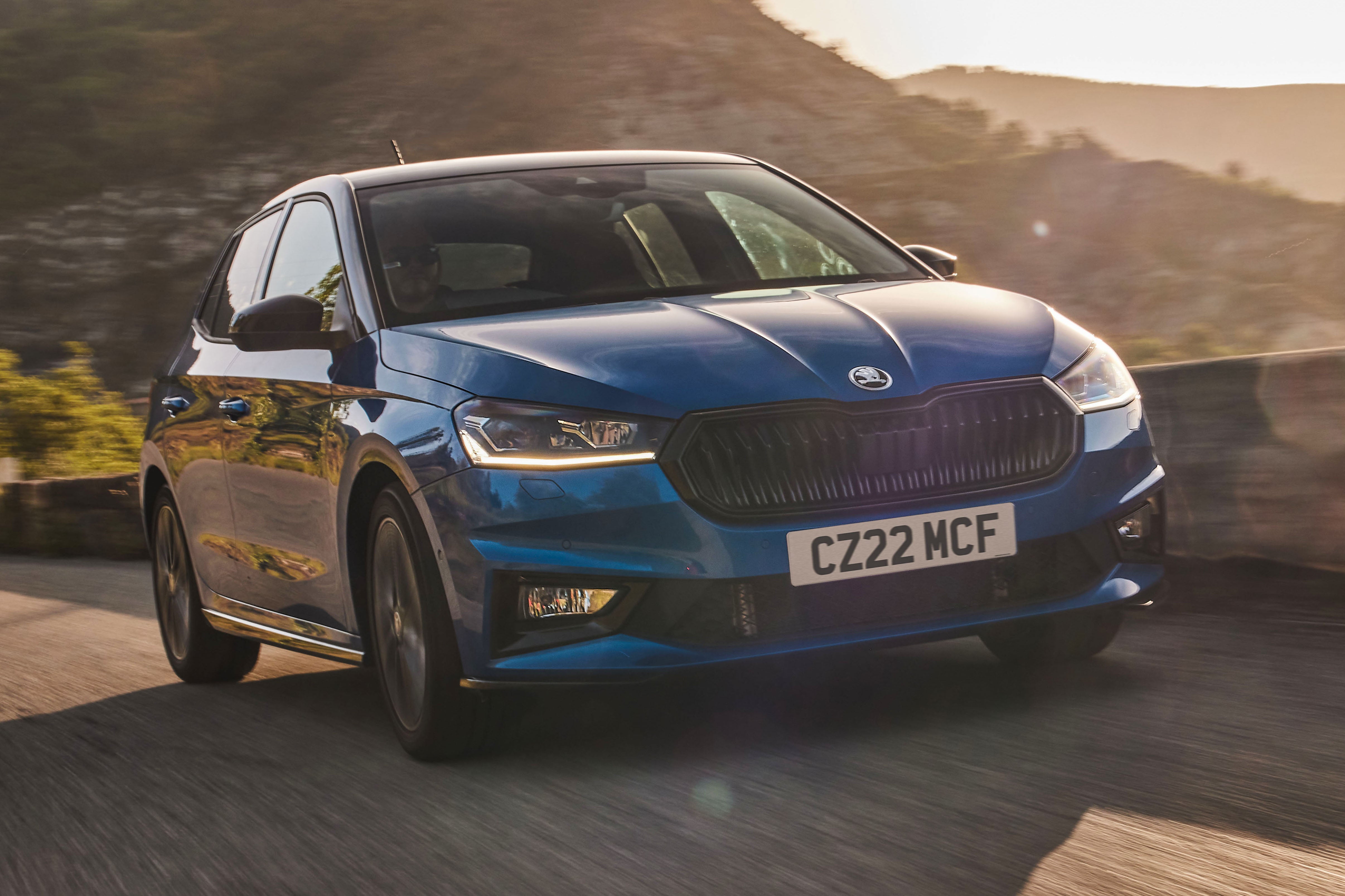
Fiat's own Grande Panda Hybrid is larger, more powerful and more practical, while costing only slightly more. The Volkswagen Polo and Skoda Fabia are larger and more expensive, but both offer much more space and stronger motorway manners.
What's the interior like in the Fiat 500?
You’ll probably be expecting sub-par practicality from such a small car, but you might not be expecting quite so many issues with the driving position and visibility. Still the interior ambience is cheery and fun.
Fiat 500 boot space and practicality
The Fiat 500 Hybrid is pretty much identical in size to the 500e that we’re already familiar with, and predictably for such a small car, practicality is not its forte. The boot is tiny at just 183 litres, and there’s no underfloor storage to speak of, plus there’s a big lip that you’ll have to muscle heavy items over.
The car is available in both regular three-door hatchback and two-door Cabrio forms, the latter of which gets a very large fabric sunroof (it’s not really a proper convertible) for a taste of open-air fun. The hatchback’s boot opening is a decent size, but the Cabrio has a bottom-hinged opening that makes access to the boot space a lot tighter.
Either way, dropping the rear seats frees up an only-slightly-less-rubbish 440 litres of cargo space, but because the backrest is a single-piece affair rather than being split, extending your loadbay takes out both of your two rear seats rather than just one. The backrest lies at a fairly steep angle, too, and there’s also a step down to the boot floor.
When the rear seats are needed for people, the news isn’t much better. Our six-foot road tester managed to squeeze in behind the driver’s seat when set for his own driving position, but his knees were pressed uncomfortably into the seat in front, and his head was wedged firmly into the headlining. This is not a place adult passengers will want to spend extended periods, and even kids will feel hemmed-in.
Getting into the rear seats in the first place isn’t without its challenges, either. The front seats tilt and slide out of the way, but the aperture you’re left to climb through is very narrow, and when you reinstate the front seats, they don’t return to their original position of their runners.
But surely things are all fine-and-dandy up front, right? Well, even here, there are some pretty fundamental challenges, or at least, there were in the left-hand-drive Italian cars we drove.
Crucially, the driving position is very flawed. The car’s high floor means that the driver’s seat is very high-set, and there’s no height adjustment lever to allow you to drop it down a smidge. The steering column has reach- and rake adjustment, but there isn’t enough travel in either, so you can struggle to see the instrument panel behind the steering wheel.
As a result, finding a comfortable driving position is very difficult - it’ll be impossible for some, especially taller drivers - and this is exacerbated by a pedal box that’s offset way to the right of the driver’s footwell (we suspect this is necessary to accommodate the car’s clutch mechanism). So much so, in fact, that when you lift your foot off the pedal, it often gets caught underneath a weird plastic lip on the lower part of the left side of the centre console.
The worst bit, though, is the visibility. Remember our six-foot road tester? Well, the high seating position was so high that he had to drive along stooping down just so that he could see the road ahead underneath the upper edge of the windscreen.
And even when he did, the massive rear-view mirror assembly blocked a large portion of his view at the front-left-hand corner of the car. We suspect that this might only afflict tall drivers, but if that’s you, it’ll be a constant pain. Rearward visibility isn’t quite so poor, interestingly, but a small rear window means it’s not exactly brilliant, either.
Granted, it’s possible that at least some of these foibles could be improved with the switch from left-hand drive to right-hand drive, but equally, it’s not impossible that they could be made even worse instead.
Fiat 500 dimensions
The Fiat 500 Hybrid is 3,631mm long, 1,684mm wide & 1,532mm high, with a 2,322mm wheelbase. Its compact size makes it easy to manoeuvre and park, but limits rear passenger and luggage space.
Tech and infotainment in the Fiat 500
All versions of the 500 come with the same basic infotainment system, which is centred around a 10.25-inch central touchscreen. On the entry-level Icon trim, the system comes equipped with DAB, Bluetooth, and wireless operation for both Apple CarPlay and Android Auto. Upgrade to La Prima trim, and you also get native satellite navigation.
The screen is bright, the graphics are pretty sharp, while the screen sensitivity is good and the software reaction times are brisk enough. Importantly, the on-screen menus are fairly logical, so it’s pretty easy to find your way around effectively.
One thing that we really like, however, is the neat line of buttons and rocker switches below the central screen that allows you to operate all parts of the car’s ventilation system without having to delve into endless submenus on the touchscreen. These controls are clearly marked and logically arranged, too.
Materials available on the Fiat 500
On the face of it, the 500’s interior is really nice. The dashboard has a glossy body-coloured panel stretching its entire width, which is cool and classy, and there are some other glossy surfaces to be found on the dashboard and steering wheel to give even more character. The 8-ball design of the manual gearknob tops things off nicely.
Look elsewhere, and you’ll find surfaces that are harder and grainier: this includes on the top of the dashboard and on the centre console, as well as on the door trims and in the footwells. They’re textured in such a way that they look okay, but they’re not very appealing for the fingertips.
What's the Fiat 500 like to drive?
The 500 Hybrid is at its best in the city, and mostly capable out of it, but anyone planning regular motorway journeys might want to think hard about precisely how important the 500’s style is to them.
Fiat 500 range and performance
The Fiat 500 Hybrid’s name is rather misleading. You see, not all hybrids are made equal: some are very sophisticated and provide several dozen miles of electric-only running, while some have little more than a clever starter motor, and provide only a minuscule amount of electric assistance to the petrol engine. The Fiat 500 Hybrid sits very much at the latter end of the scale, and it never runs solely on electric power, so it’s best just to ignore the word ‘hybrid’ entirely and think of it as an old-school petrol car.
And that petrol engine is modest to say the least. It’s a 1.0-litre three-cylinder petrol driving the front wheels through a six-speed manual gearbox, with a total power output of 65PS. Official acceleration figures put the 0-62mph sprint time at 16.2 seconds for the hatchback and 17.3 seconds for the convertible, while the top speed on both is given at 96mph.
Now, if you’re at all familiar with such figures, you’ll be thinking that this sounds very slow. And yes, it is, but not as slow as you might think. Away from the mark, the little three-cylinder engine actually pulls above its weight up until about 20mph, getting away fairly perkily.
From then on, acceleration is decidedly leisurely even if you absolutely pin the accelerator, which means you’ll need to do that for most of the time. However, keep the gears low and the revs high, and you’ll get around with enough purpose to keep up with traffic: it’s certainly not quick, but it’s not so slow as to feel dangerous.
Just be aware that driving like this results in a decidedly raspy and loud engine note, and lots of vibration coming through to the cabin from the engine bay. Somehow, though, this seems to suit the car’s Scrappy-Doo nature.
Motorway stints aren’t out of the question, but this isn’t a car that’ll sit happily at motorway speeds for hours on end, so if that sort of use will be a regular occurrence, you might want to look elsewhere.
Performance data
| Model | Engine/battery size | Power | 0-62mph | Range/MPG |
|---|---|---|---|---|
Fiat 500 Hybrid Hatchback | 1.0-litre 12V mild hybrid | 65PS | 16.2 seconds | Up to 53.3mpg |
Fiat 500 Hybrid Convertible | 1.0-litre 12V mild hybrid | 65PS | 17.3 seconds | Up to 52.3mpg |
Fiat 500 driving and refinement
As you’d probably expect, the Fiat 500 Hybrid is best suited to the city. The dinky dimensions and tight turning circle make it very manoeuvrable, even though your all-round visibility isn’t the best (more on that later), and steering that’s super-light and nicely responsive makes it feel eager to dart in and out of gaps in traffic. Light pedals and a reasonably snicky manual gearshift also help keep town driving easy.
The suspension also works well at low urban speeds, with enough forgiveness to soak up most of the lumps and bumps you encounter (it coped particularly well with the cobbled streets of Turin on which some of our test drive took place), yet there’s enough control that speed bumps don’t have the body bouncing around wildly.
The car doesn’t feel quite so at home on faster roads, but that’s certainly not to say that it feels out of its depth.
You do feel a bit more vertical movement in the suspension as speeds rise, but it’s not excessive, and while faster bends result in plenty of body lean, the cornering doesn’t feel too untidy and there’s plenty of grip. The ride feels settled and assured on the motorway, too, even if the powertrain doesn’t cope quite so well with such use, as we’ll find out in a moment.
Granted the steering has virtually zero feel when you’re going faster, but that’s pretty much irrelevant in a car like this, and at least it’s responsive and consistent in its reactions.
How safe is the Fiat 500?
The 500 Hybrid will have most of the same standard safety kit as the 500e, so you’ll be looking at a standard roster that includes automatic emergency braking, lane departure warning with lane keep assist, traffic sign recognition and driver attention alert.
The only real difference in driver assistance tech between the Hybrid and the EV will be that the Hybrid won’t be available with optional adaptive cruise control because this isn’t technically possible on a car with a manual gearbox. The Hybrid will get regular cruise control, though.
The 500e has already scored four stars out of a possible five in Euro NCAP crash tests, which doesn’t sound that great, but it’s actually not bad at all for the city car class. However, it’s not yet clear whether this same rating will apply to the Hybrid due to the significant mechanical and structural differences.
Running costs: What it's like to live with a Fiat 500
The 500 Hybrid should be relatively inexpensive to run, with fuel economy of up to 53.3mpg and insurance groups from 5 to 8.
Fiat 500 fuel economy
Where the Fiat 500 Hybrid is concerned, we’d advise being sceptical about the word ‘hybrid’. This is a mild hybrid, the very lowest level of electrical hybrid assistance you can get - we actually question whether such hybrids are hybrids at all - so don’t be expecting to swan around for vast distances on battery power. Indeed, the car can’t run at all on electric-only power.
Regardless of that, though, the car’s modest size and weight still allows it to achieve some fairly impressive WLTP official figures for fuel economy. Fiat quotes these at 53mpg for the hatchback, and 52mpg for the Convertible.
Again, however, we’d advise some scepticism here. As we explained earlier, you really have to wring the neck of the 500’s teeny petrol engine to achieve even moderate acceleration and keep up with traffic, and we suspect that’ll have a negative effect - and a significant one - on your real-world fuel returns.
Fiat 500 warranty and servicing
Fiat provides a three-year or 60,000-mile warranty, with unlimited mileage during the first two years. That is fairly standard for the class, but less generous than the longer cover offered by brands such as Kia and Hyundai.The hybrid battery is covered for eight years.
Servicing is required every 12 months or 9,000 miles, whichever comes first.
Fiat 500 insurance groups
The Fiat 500 Hybrid sits in insurance groups 5 to 8. Hatchbacks sit at the lower end of the range, while Convertible models are higher.
Those are low ratings by modern standards and should help keep insurance costs manageable.
How much does it cost to tax a Fiat 500?
The Fiat 500 Hybrid costs £200 a year to tax at the standard VED rate. There is no Expensive Car Supplement because every version sits well below the £40,000 threshold.
What trims are available with the Fiat 500?
The range consists of Icon and La Prima, with Torino offered as a special launch edition. All use the same 65PS mild hybrid engine and six-speed manual gearbox.
Icon starts at £18,995 and gets 16-inch alloy wheels, LED headlights, automatic air conditioning, a 10.25-inch touchscreen, wireless Apple CarPlay and Android Auto, a 7-inch driver display, cruise control and rear parking sensors.
Torino costs the same and adds unique styling details and upholstery.
La Prima costs £20,995 and adds 17-inch alloy wheels, a fixed glass roof, tinted rear windows, heated front seats, a heated windscreen, navigation, wireless phone charging and a reversing camera.
Convertible versions of Icon and La Prima cost an additional £3,000.
Icon is the version we would choose. It has all the important equipment while keeping the 500 Hybrid's price advantage intact.
Ask the Drive experts: common questions
Is the Fiat 500 Hybrid a proper hybrid?
Does the Fiat 500 Hybrid have an automatic gearbox?
What’s the difference between the Fiat 500 Hybrid and Fiat 500e?
Get our latest advice, news and offers
Keep me updated by email with the latest advice, news and offers from Drive.
.jpg)