12/10/2026
Best MPG cars in 2026

Written By Keith WR Jones

One of the most significant factors influencing new car choices is fuel efficiency, particularly for people who aren't considering a plug-in hybrid model, let alone going fully electric.
It's a legal requirement for car manufacturers to test and publish the fuel economy statistics for every individual derivative of car it offers for sale — including with different combinations of optional extras — under a methodology known as Worldwide Harmonised Light Vehicles Test Procedure. Mercifully, this is usually abbreviated to WLTP.
They are standardised, scientific tests which ensure parity between cars of different propulsion types, allowing car buyers to make informed decisions about which models could suit their fuel efficiency needs the best.
While they are not a guarantee of how economical the cars will prove to be in real life because that depends on a multitude of factors which are impossible to replicate, they are nevertheless more realistic than previous methods of official fuel efficiency testing.
For the UK market, fuel economy figures are expressed in mpg — short for miles per gallon — despite the fact that petrol and diesel pump fuel has been priced in litres for decades. That aside, it's a simple measurement to grasp — the higher the mpg figure, the more fuel efficient the car is.
In compiling our top 10, we have selected the most fuel efficient derivative from each range of cars currently on sale in the UK in 2026, providing that it's powered by a petrol or diesel engine, with or without mild hybrid (MHEV) or self-charging hybrid (HEV) electrical assistance. Plug-in hybrid (PHEV) fuel efficiency can be far superior, but those high figures are dependent on how much charge is in the hybrid system's battery, making real-world economy far worse than manufacturers' official claims.
It may come as a surprise that the the 10 most ecomical new cars aren't all tiny hatchbacks powered by low-powered engines — most are self-charging hybrids, which means that family sized models, including SUVs, have made the list.
Could one of these 10 cars with the best mpg figures be your next car?
1. Mazda 2 Hybrid
116PS Centre-Line — 76.3mpg
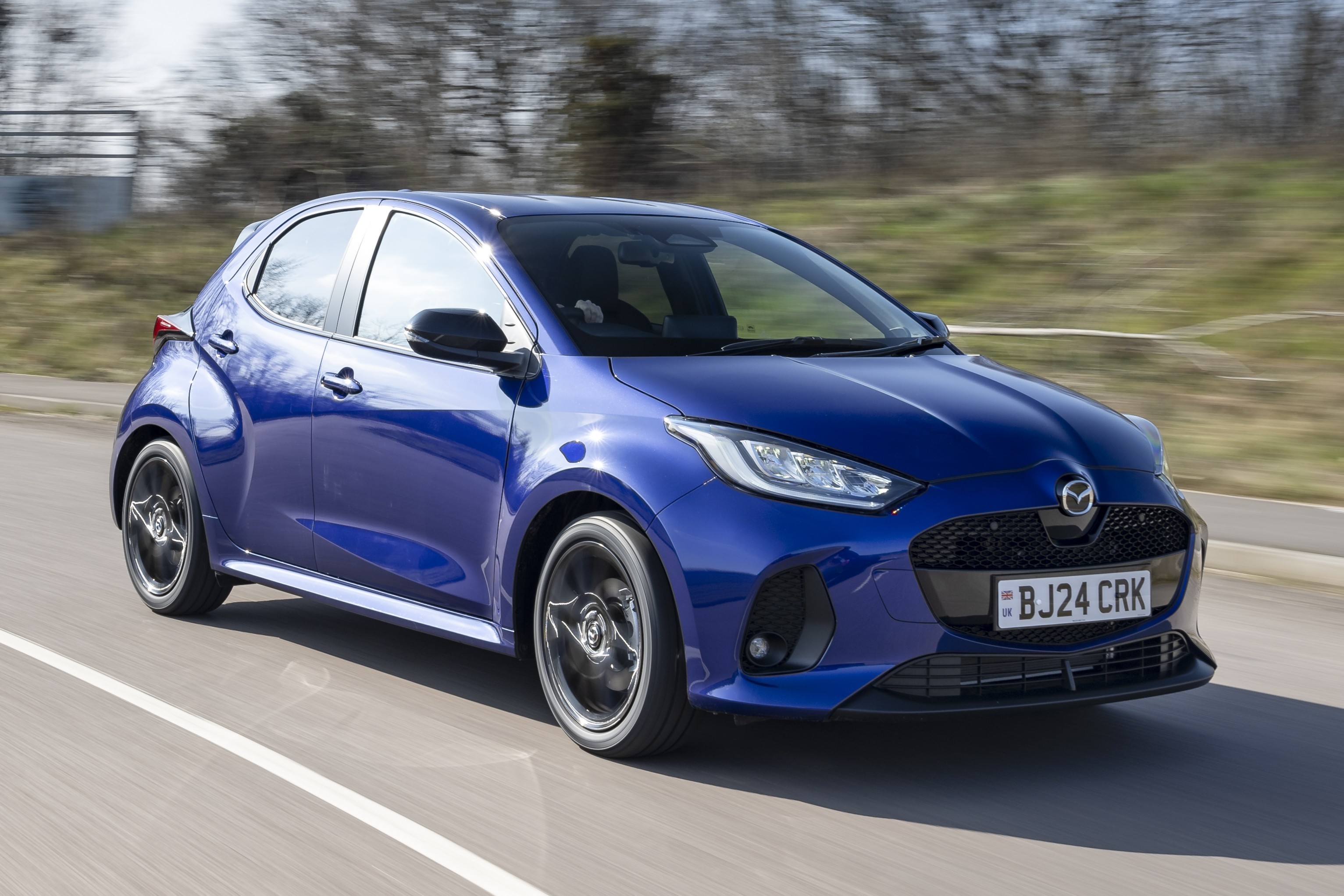
There are a couple quirks with the Mazda 2 Hybrid, which tops our list as most fuel efficient car currently on sale. Despite the badging, it's not a Mazda at all, but a lightly revised Toyota Yaris.
Even more curiously, Toyota doesn't sell a version of its own model which can match the 2 Hybrid's best of 76.3mpg, although note that figure is only claimed for the entry-level Centre-Line version costing from £24,690, which is £700 more than the least costly Yaris. Making the difference is that the Yaris's smallest wheels are 16 inches in diameter, whereas the 2 Hybrd Centre-Line runs on 15-inch rims, lessening its thirst for fuel.
To drive, the Mazda feels the equal of the Toyota — it's comfy and surprisingly engaging on a windier road, but its at its best at more sedate urban pace when its full hybrid system readily and seamlessly kicks in to quench its appetite for unleaded.
Interior space is fine for four, although adults will find the rear seats on the snug side, not helped by its tiny door apetures. Mazda quotes 286 litres of boot space with the rear seats in use, which is fine rather than spectacularly commodious.
Standard equipment on the Centre-Line trim includes automatic headlights with LED daytime-running lights, automatic wipers, climate control, an auto-dimming interior rear-view mirror, adaptive cruise control and a 9.0-inch touchscreen with wireless Android Auto and Apple CarPlay connectivity, so it's not exactly poverty specification.
Just be prepared to bite your tongue everyone asks how you're getting on with your Yaris...
2. Toyota Aygo X
Icon Hybrid 116PS — 74.3mpg
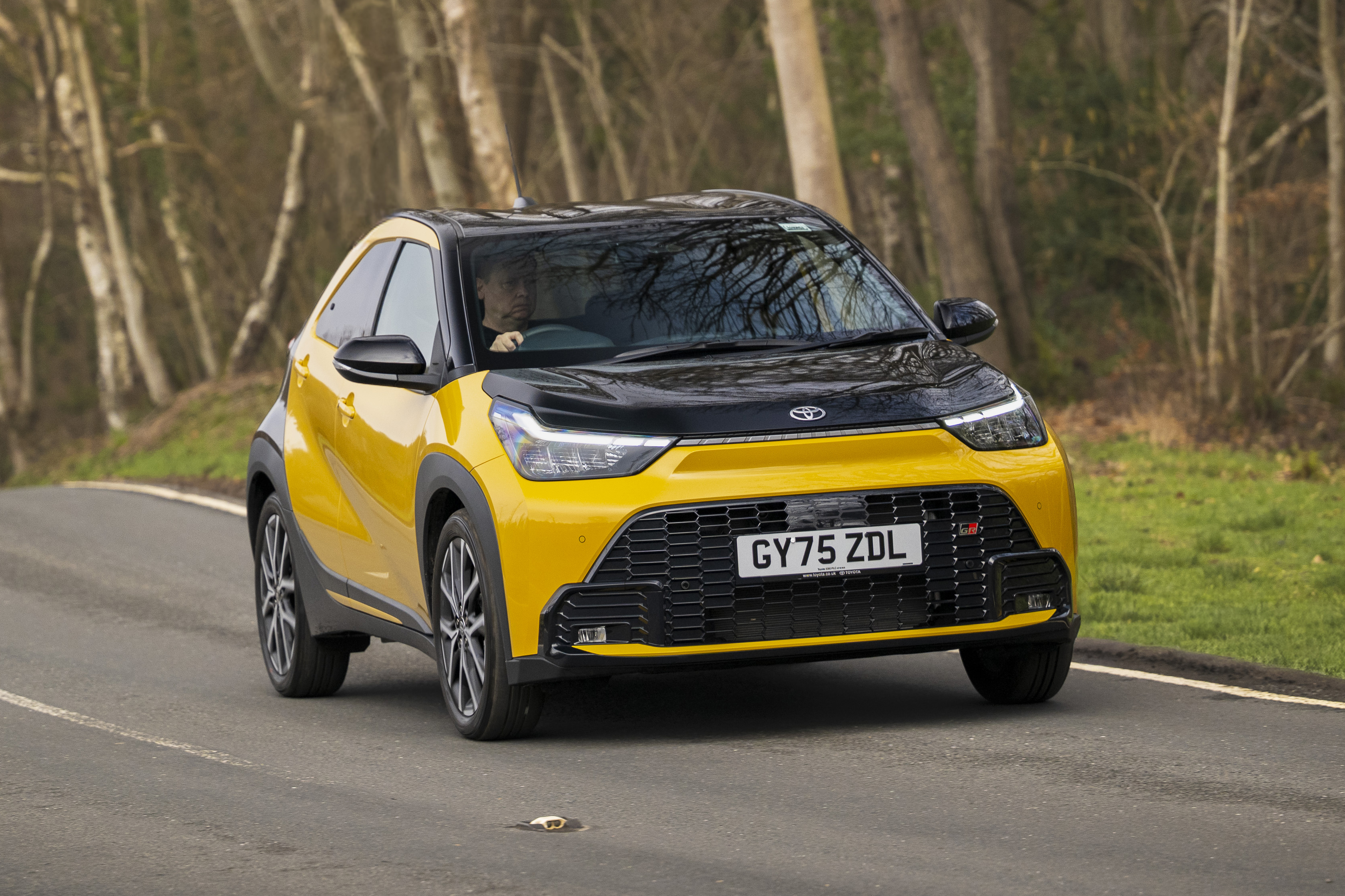
Despite the Mazda 2 Hybrid topping this best mpg list, the Yaris isn't immediately behind it in the rankings. Instead, second place goes to the recently hybridised Toyota Aygo X with a thrifty 74.3mpg claim in entry-level Icon specification, priced at £21,645.
In reality the Aygo is a dinky city car, but the X suffix — which you're supposed to pronounce as 'Cross' according to Toyota — is refective of its pseudo-SUV appearance. In comparison with the previous-generation Aygo, if not the Land Cruiser at the opposite end of the range.
The Aygo X's fuel-saving credentials were dramatically enhanced when it received the same 116PS hybrid system as the Yaris as part of its mid-life update in 2025. That brought with it a welcome performance augmentation, making it far easier to live with at higher speeds once you're beyond city limits than it was in 1.0-litre, non-hybrid guise. For a small car, it feels grown-up on motorways, with a composed ride quality that's not annoyingly bouncy, with a sense of being planted and not at the mercy of gusts when overtaking large lorries.
Naturally, interior space is tighter than it is in the Yaris, so expect to be a bit squished as an adult sat in the back, while boot space is modest at 231 litres.
Being at the inexpensive end of the range, standard equipment levels aren't super-generous, but Icon grade still comes with adaptive cruise control, climate control for the air-con and a 9.0-inch infotaintainment touchscreen with wireless connectivity for Android Auto and Apple CarPlay.
3. Toyota Yaris
Icon Hybrid 116PS — 70.6mpg
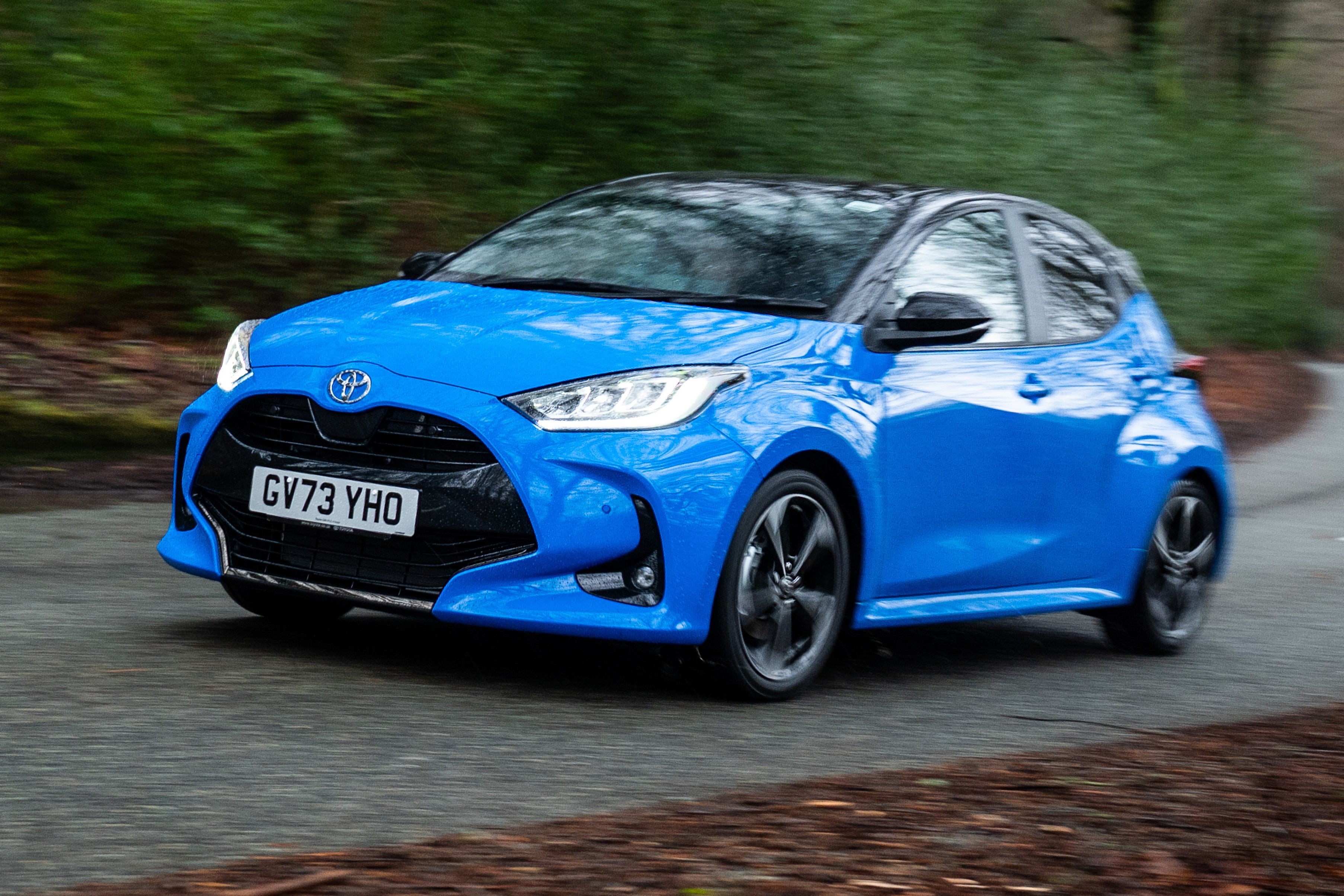
Just under £24k gets you into the lowest priced Toyota Yaris, but remember that it's highest WLTP Combined cycle claim of 70.6mpg is shy of what the nearly identical, but £700 dearer Mazda 2 Hybrid is said to achieve — the blame for the shortfall can be laid with the former's larger diameter alloy wheels, which require the engine to work ever so slightly harder to pull the car along.
In the real world, there's likely to be little difference, particularly if you're inclined to make the most of the Yaris hybrid's pep. Okay, with 116PS it's no ball of fire, but the instant torque from its electric motor helpd it zip up to 30mph from a standstill in sprightly fashion.
While it's at its best — and most economical — when you stick to driving it at town speeds, it handles with aplomb at higher speeds and on windier roads. It's no hot hatch, certainly, but there's the dedicated — and far thirstier — Toyota GR Yaris if that's what you're after.
Inside the Yaris, the differences between it and its 2 Hybrid clone are even fewer than those apparent outside, meaning the same adult-friendly accommodation up front, but with comparative snugness in the back, ahead of a 286-litre boot. Equipment levels for the Icon grade Toyota and Centre-Line specification Mazda are broadly similar, wheel size aside.
Where the Toyota trumps the Mazda is with its warranty potential. As standard, the Yaris comes with a five-year warranty, but providing you have your scheduled services carried out by a Toyota dealer, this can be extended to a full decade. By comparison, the 2 Hybrid has six years of cover as standard, with no Mazda-provided opportunity to extend it.
4. Škoda Octavia
SE Technology 2.0 TDI 116PS SCR — 66.3mpg
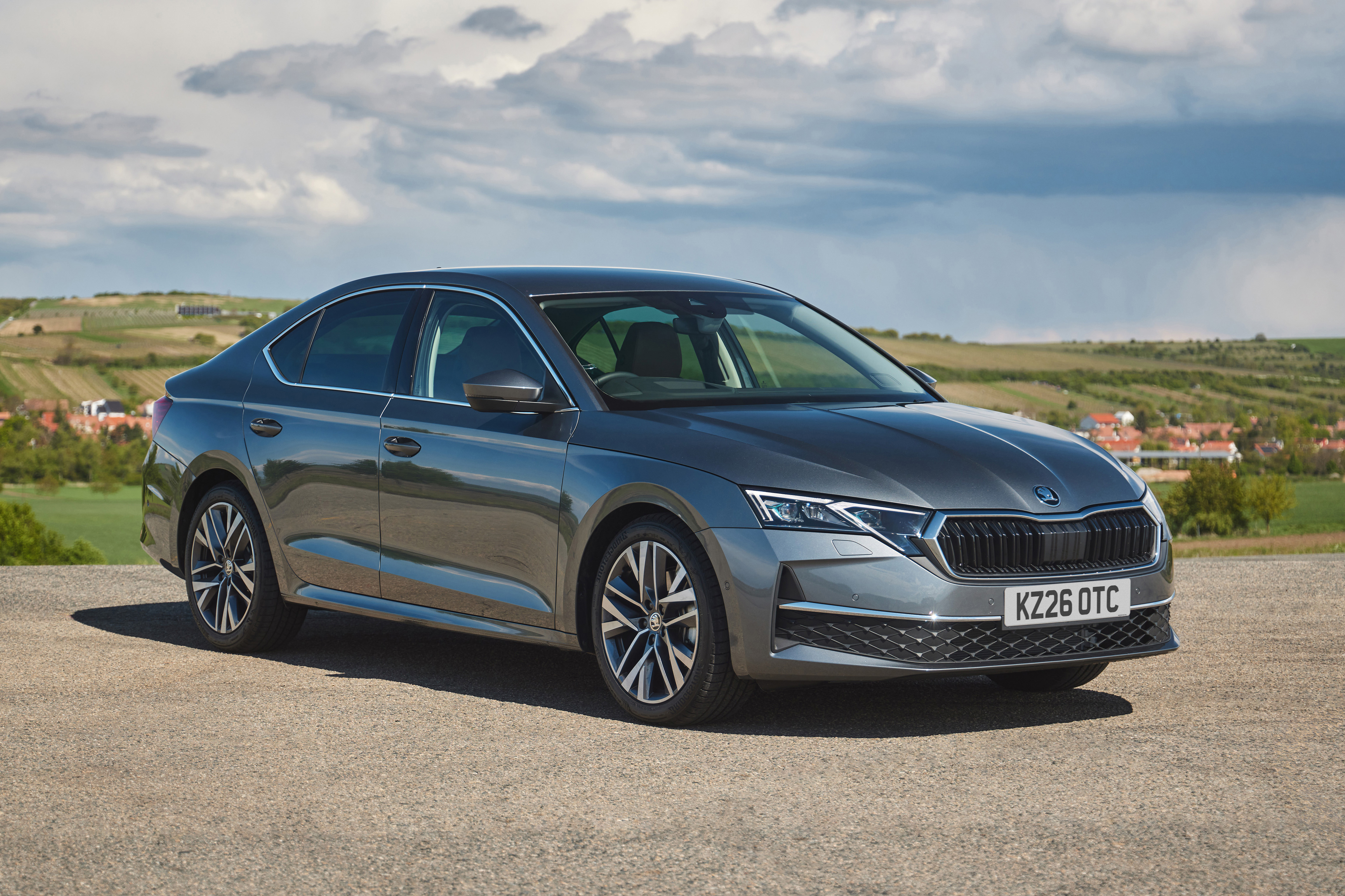
A smidgen over £31k gets you behind the wheel of the most economical diesel-engined car on sale in 2026 — the Škoda Octavia Hatch in SE Technology trim with the 116PS 2.0-litre TDI engine. It probably won't have escaped your attention that the first four cars have identical power outputs, but the Octavia's diesel engine is a larger capacity motor and does without hybrid assistance.
You may be tempted to forego this Octavia's impressive 66.3mpg Combined cycle fuel efficiency claim in favour of the punchier 150PS alternative for an extra £2500, but thanks to 300Nm of torque for the 116PS engine — a drop of 60Nm — in the real world it doesn't feel that much slower.
Not only is the Octavia Hatch a consumate family car with palatial degrees of legroom front and rear, with a 600-litre boot with all five seats in use, it manages to be both relaxing and comfortable to drive, reminiscent of much plusher and pricier models from upmarket brands.
There's no whiff of cheapness about it, despite this being the least expensive trim level, with standard features including LED lights front and rear, dual-zone climate control, heated front seats, a 10.25-inch driver's display screen, a 13.0-inch multimedia touchscreen with wireless Android Auto and Apple CarPlay... We could go on and on and still forget to mention Škoda's trademark Simply Clever door-mounted umbrella.
Just remember before you rush out and buy a diesel-engined car of any sort, not just an Octavia, that they're at their most fuel-miserly when they're running for long periods of time at consistent speeds, such as prolonged motorway driving. Irregular stop-start urban journeys don't get the best from them.
5. Renault Clio
Generation E-Tech Full Hybrid 145PS — 65.7mpg
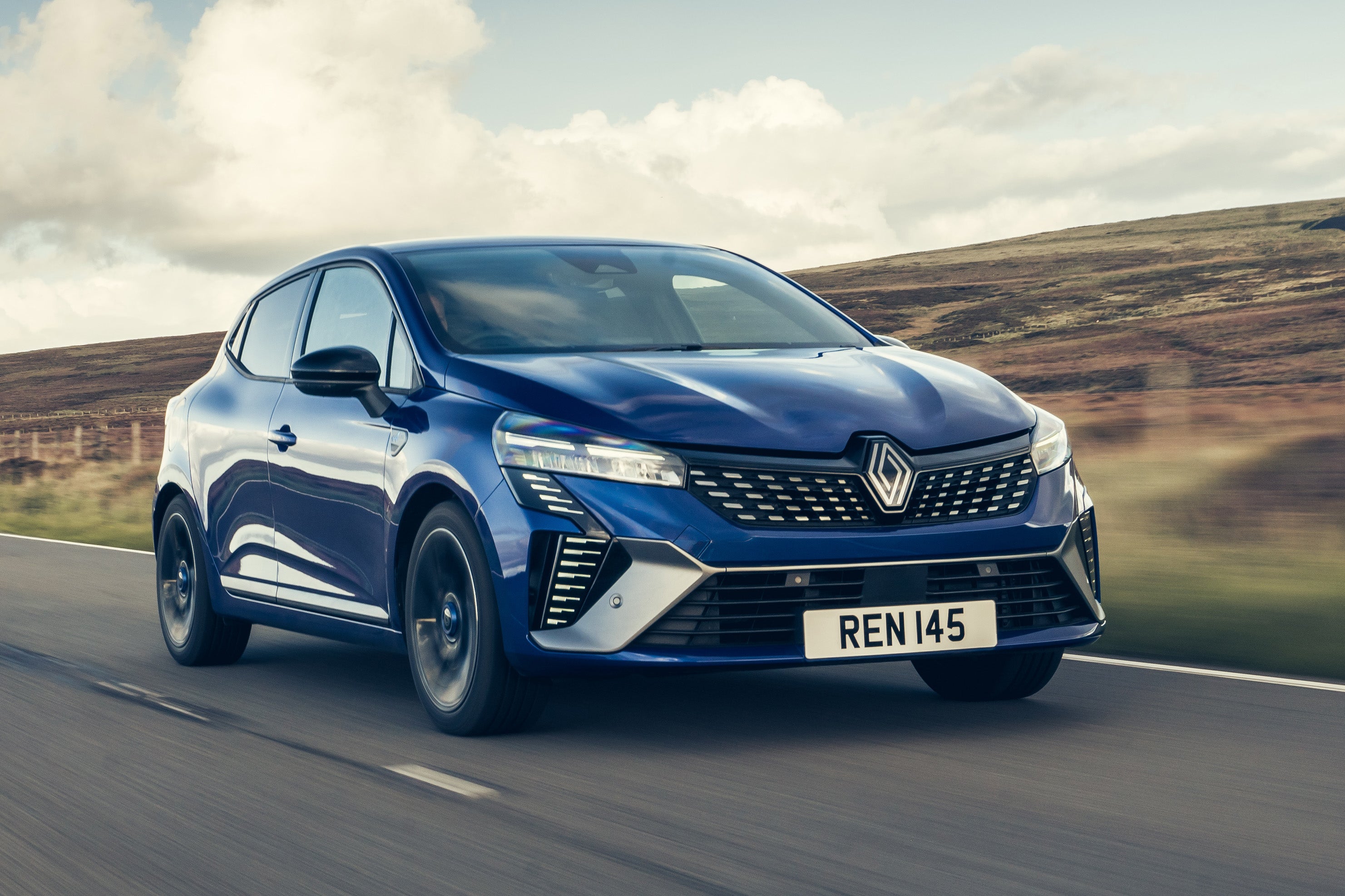
This-generation Renault Clio hasn't got very long left on the UK market before an all-new replacement arrives on this shores, which could mean there are some new car bargains to be had from dealers looking to clear out remaining stock quick sharp.
While the prospect of buying an 'out of date' car doesn't sound all that enticing, don't forge that this iteration of the Clio was excellent from the get-go and has improved with age like the proverbial fine wine. Its interior quality has always been a strong point, with plenty of squidgy plastics for an upmarket feel and generously proportioned, comfy front seats. Despite being longer than the Yaris, the Clio's rear seat space is on the tight side for adult occupants, although its 301-litre boot has 15 litres more volume. Note that boot capacity is for the economical Clio E-Tech Full Hybrid, whereas the petrol-only TCe 90 alternative can swallow 90 litres more.
For that attention-grabbing 65.7mpg you need to go for the Clio E-Tech Full Hybrid in entry-level Generation specifcation at a fiver under £21k. Despite the price, the Renault's kit count is impressive with LED headlights, front and rear parking sensors, a reversing camera, climate control, plus wireless Android Auto and Apple CarPlay connectivity accessed via its 7.0-inch touchscreen all included as standard.
With 145PS on tap, the Clio E-Tech's not shabby in the pace stakes, taking 9.3 seconds to complete the 0-62mph benchmark. Although it's more tuned for comfort, the Renault's also satisfyingly agile, with engaging handling characteristics when you decide to take the scenic route home.
Browse used Renault Clio E-Tech Full Hybrids for sale on Drive →
6. Nissan Qashqai
e-Power 205PS Acenta Premium — 65.7mpg
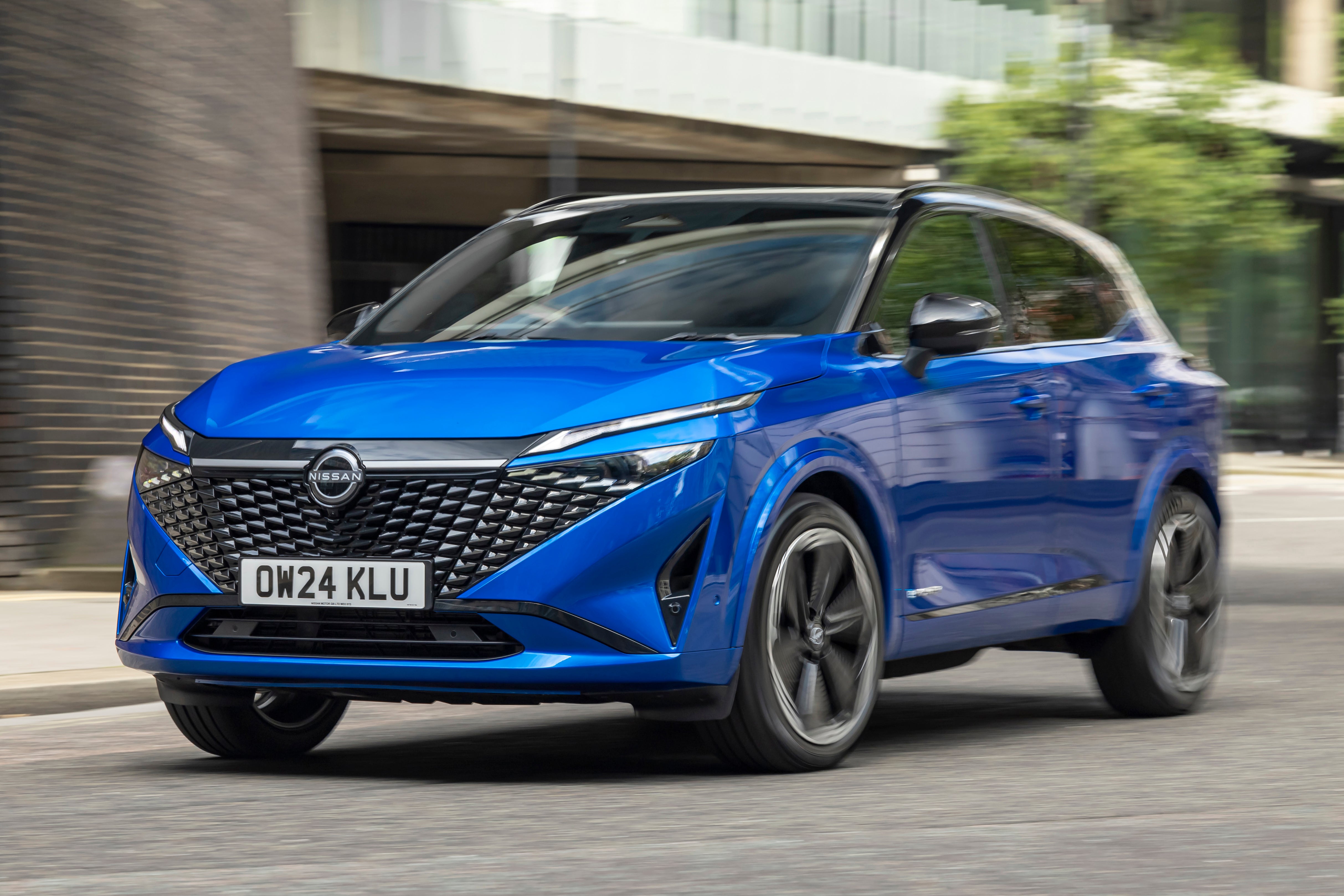
Just consider for a moment the pertinent figures related to the most fuel efficient version of the popular Nissan Qashqai — this is a family sized SUV, priced at under £35k, with 205PS and 330Nm at the driver's disposal, enabling a 7.6-second 0-62mph time, yet it can average a claimed 65.7mpg.
How does it achieve such impressive numbers? Largely because whereas must hybrid cars use an engine and an electric motor to jointly propel them along, the Qashqai's e-Power system relies on the petrol-fuelled component largely playing the role of a generator, leaving the driving to the electrical elements. As the engine operates at a more constant speed, it can therefore run in its most efficient setting for the majority of the time.
Despite the grunt available, the Nissan is very much a family car and not one you'd pick to take a long drive when shopping for a pint of milk on a Sunday morning, so convenience and kit are high on its agenda. Its rear doors open to 85 degrees making it even easier to wrangle child seats into the back, while its boot swallows up to 504 litres of stuff without lowering the rear bench.
It's the entry-level Qashqai Acenta Premium with the best fuel efficiency figure, yet the standard equipment list somehow remains longer than that of all the actors supposedly on the cusp of being announced as the new James Bond. Key features include 17-inch alloy wheels, keyless entry and starting, LED headlights with automatic main beam, dual-zone climate control and two 12.3-inch displays, with the multimedia touchscreen naturally including wireless Android Auto and Apple CarPlay access.
7. MG 3
Hybrid+ SE — 64.2mpg
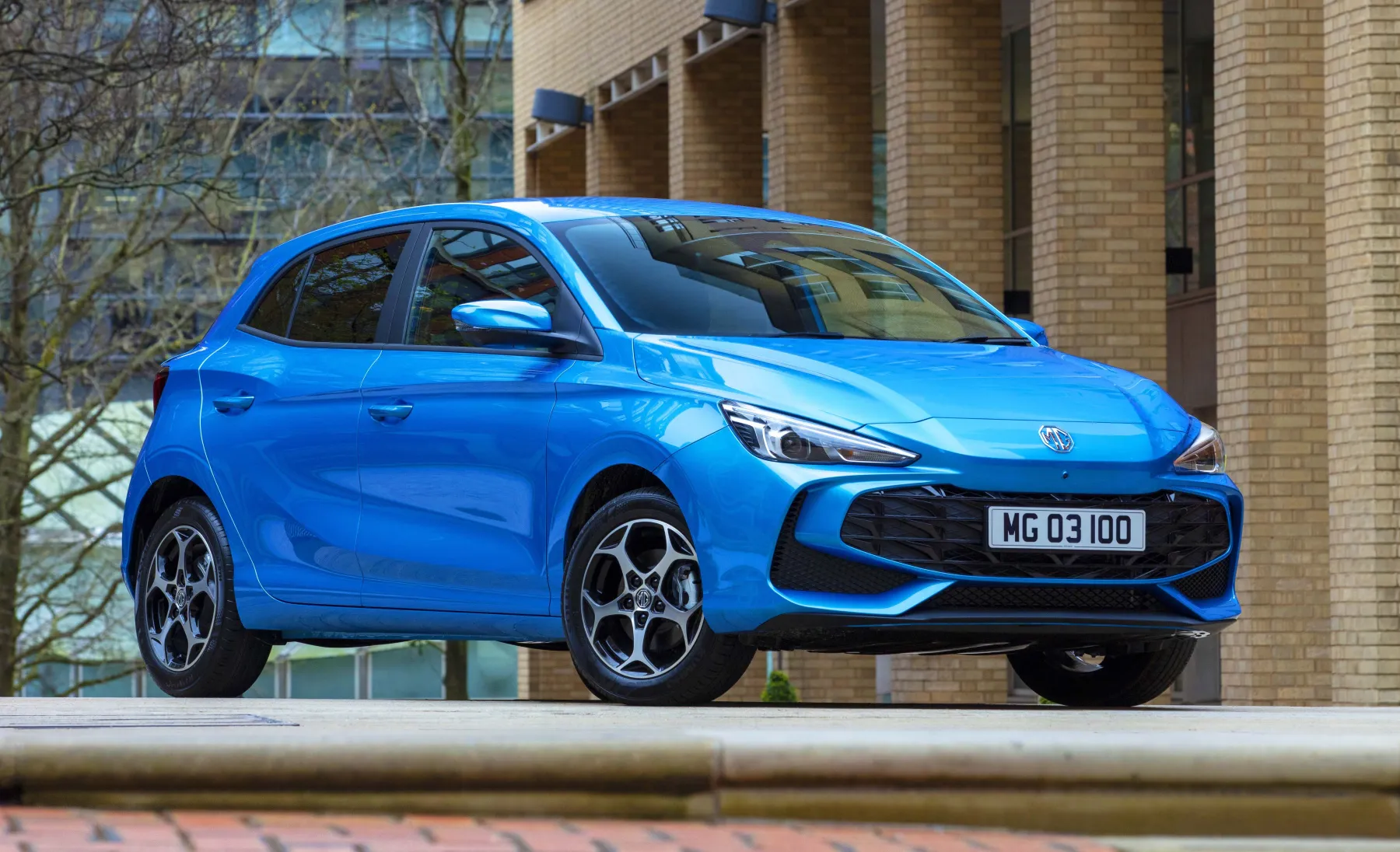
You can buy an MG 3 for less than the £19,495 required to get behind the wheel of the Hybrid+ SE version, but without its efficiency boosting petrol-electric combination, you won't get close to this one's 64.2mpg claimed average economy figure.
Even priced so temptingly — and the cheapest car here to the tune of £504 — some may dismiss the MG 3 as a small hatchback that appeals solely on being a bargain, but that's not true. Sure, you can see where some corners have been cut, such as with the finish of some interior plastics and the way the rear seat isn't split-folding when you need more than its 293-litre standard capacity, but its actually a fun wee thing to tackle a series of bends in.
With 194PS and 425Nm produced between the engine and electric motor, it's not short of pace, either, although an 8.0-second 0-62mph time isn't exactly hot hatch territory. Although the Hybrid+ system smoothly transitions from EV to petrol-electric modes, the three-speed automatic transmission seems slow-witted at times, causing the engine to rev highly with a coarse note to it.
Although SE specification is the gateway trim level for the MG 3 range, it's got a decent level of standard equipment, including 16-inch alloy wheels, rear parking sensor, climate control, Android Auto and Apple CarPlay plus a 10.25-inch multimedia touchscreen system to access them from.
8. Suzuki Swift
1.2 Mild Hybrid Motion — 64.2mpg
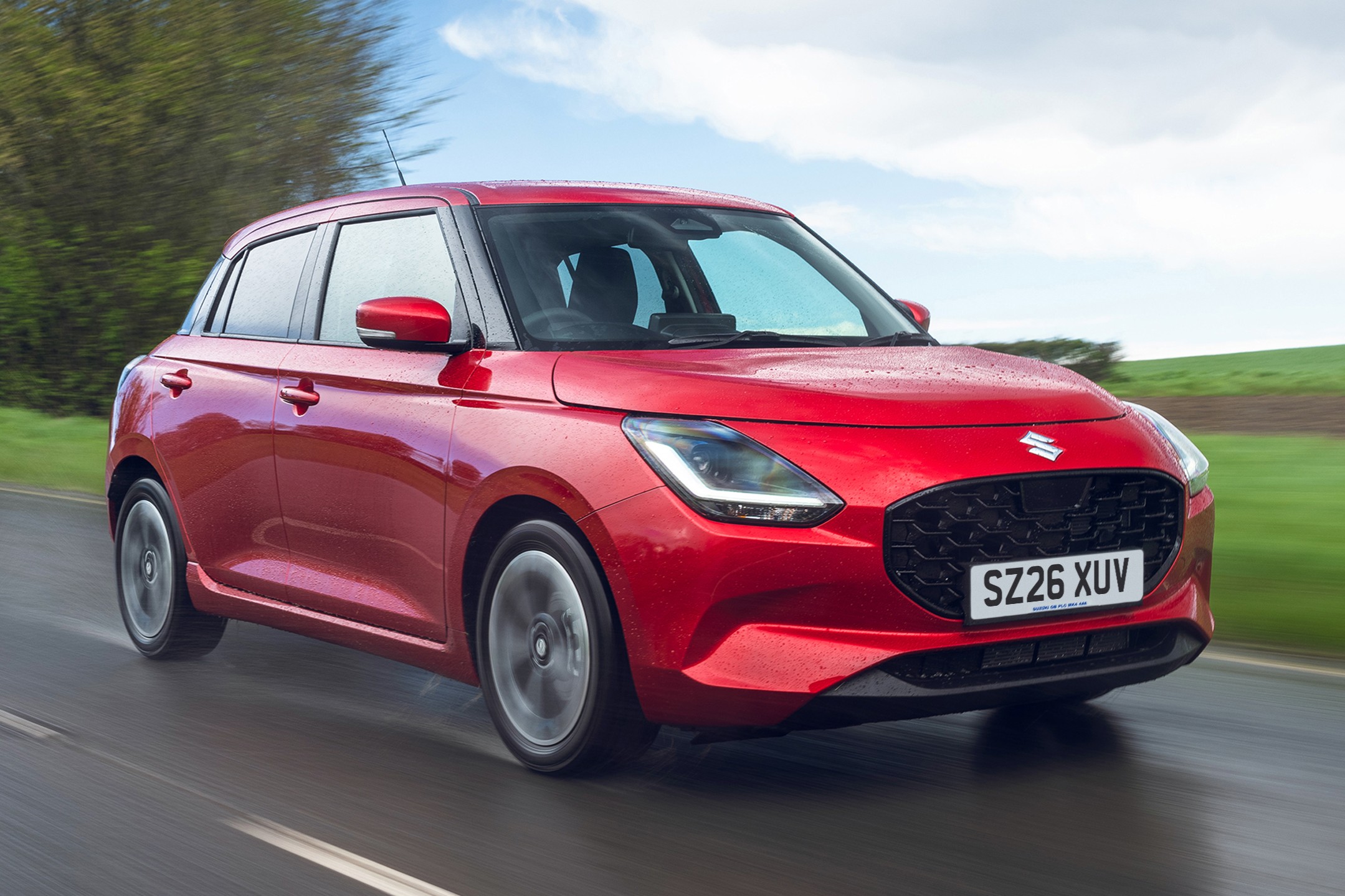
Costing a quid below £20k, the Suzuki Swift might not be as outright inexpensive as the MG 3, but it feels better value for money overall. Interestingly, the Suzuki matches the MG's 64.2mpg claimed average fuel economy despite running a mild hybrid system rather han a full, self-charging set-up, and it's one of the few small cars still available with a manual gearbox. And what a sweetly mechanical shift action it has, too.
Although it's primarily a small hatchback designed for being fuel efficient in urban settings — and despite packing just 82PS of power — the Swift's a joyous thing to drive on windier roads at the national speed limit, flicking the gear lever frequently to get the most from its three-cylinder, 1.2-litre engine as you maintain momentum across varied topography.
Inside, the Swift's a step up from the MG 3 in terms of material quality, but won't trouble the Renault Clio for overall plushness. It's pleasingly roomy for four adults, although the 265-litre boot is on the small side among similarly dimensioned alternatives.
It's the entry-grade Motion specification with the low price point, yet it's rammed with equipment including LED exterior lights, a reversing camera, adatpive cruise control, blind-spot monitoring, keyless entry and a 9.0-inch multimedia touchscreen with wireless Android Auto and Apple CarPlay connectivity. Curiously, although the Swift has air-con, it doesn't come with an automatic climate control function.
As with the Toyotas, Suzuki will extend the Swift's warranty to 10 years providing you have its scheduled services carried out at one of its dealers — quite the step up from the standard three-year package.
9. Renault Captur
Evolution E-Tech Full Hybrid 160PS — 64.2mpg
.jpg)
Essentially the Clio's bigger SUV sibling, the Renault Captur's E-Tech Full Hybrid also enjoys a power boost to 160PS, but isn't much worse off fuel efficiency-wise at 64.2mpg, although its £25,395 price is chunkily higher.
Much of what is true about the Clio also applies to the Captur E-Tech, with the exception of its back seat space being more generous for adult legroom, while its boot benefits from the rear bench sliding to and fro. Depending on where you position it, the volume grows from a modest 348 litres to a more generous 480 litres, although those numbers are way smaller than Capturs without the E-Tech package, which range from 484-616 litres.
But, the best the Captur TCe 115 can muster is a claimed average of 49.6mpg, so the E-Tech Full Hybrid wins out, here — in fact all Capturs with the hybrid arrangement have the same claimed fuel efficiency level.
Nevertheless we're still recommending going with the entry-level derivative — Evolution specification in the Captur E-Tech's case — due to its equipment levels for the money. Features include 17-inch alloy wheels, keyless entry and starting, automatic main beam, a reversing camera to complement the rear parking sensors, climate control and a 10.4-inch multimedia touchscreen, complete with wireless Android Auto and Apple CarPlay integration.
Browse used Renault Captur E-Tech Full Hybrids for sale on Drive →
10. Renault Symbioz
Techno E-Tech Full Hybrid 160PS — 64.2mpg
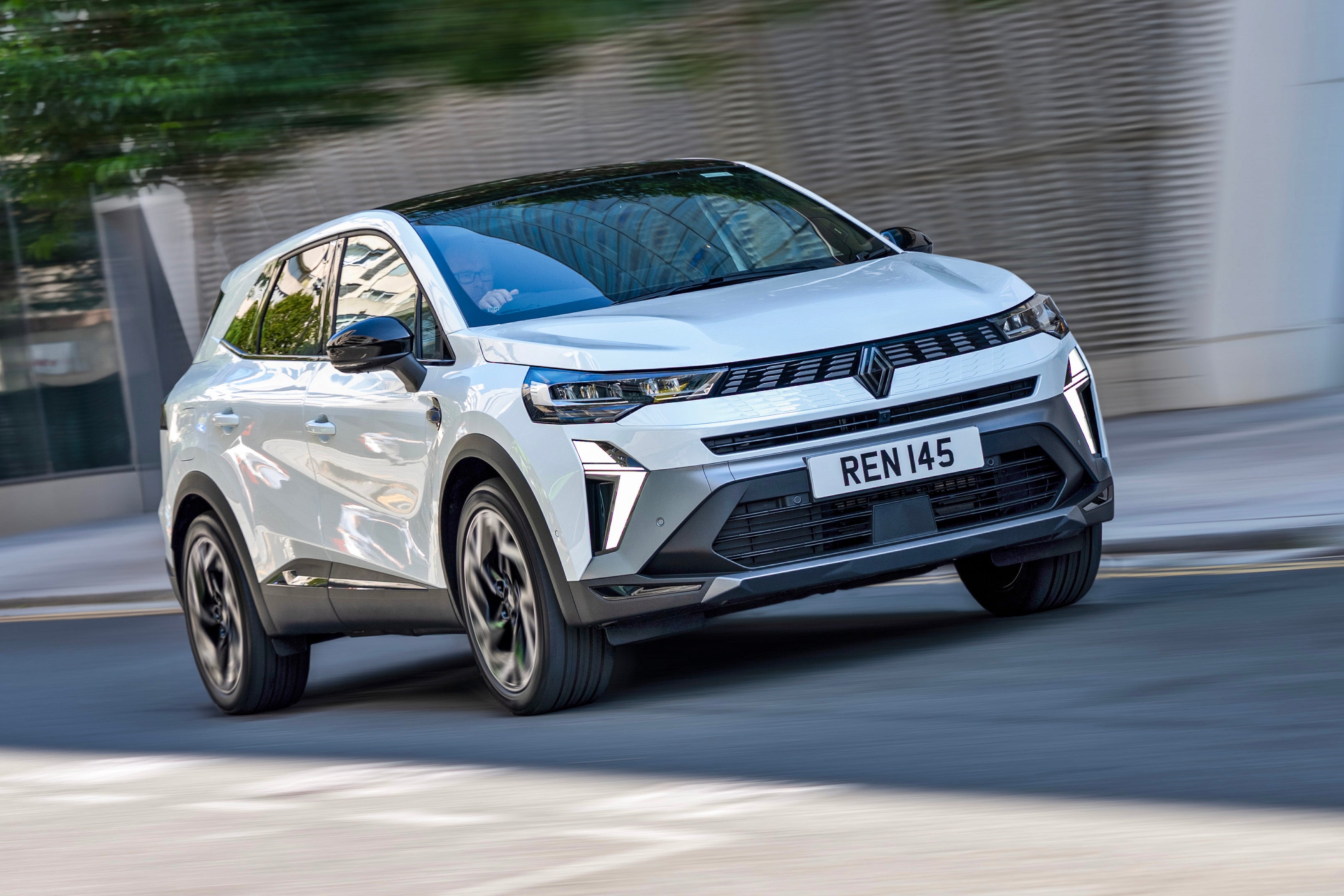
Despite the popularity of various models from the French brand, the Renault Symbioz is one of its least well-known models. It's effectively the next SUV up size-wise from the Captur and like the E-Tech Full Hybrid 160PS version of the smaller car, the Symbioz is available with the same system, resulting in the same 64.2mpg economy claim. Impressive stuff.
Being a larger car, more adept at carrying five adults and their luggage comfortably, the Symbioz E-Tech costs from a fiver under £30,000 in its cheapest Techno specification, so notably less than the similarly sized Qashqai e-Power, although not with such a clever electric-first hybrid system.
Just as the Captur feels like a larger Clio, the Symbioz has a strong sense of being the same recipe made in larger quanties, typified by the increased boot capacity. It too has the sliding rear bench seat, with the volume behind expanding from 492 litres to 624 litres when it's pushed fully forwards.
Material quality is a strong point of this Renault, too, reinforced once more by a high level of standard features. Equipment includes 18-inch alloys, LED headlights, adaptive cruise control, climate control, a 10.4-inch multimedia touchscreen with built-in Google features in addition to the wireless Android Auto and Apple CarPlay connection, plus a wireless charging pad.
Browse used Renault Symbioz E-Tech Full Hybrids for sale on Drive →
Excluding plug-in hybrids (PHEVs), the most fuel efficient new car on sale is the Toyota Yaris-based Mazda 2 Hybrid in entry level Centre-Line specification, with a WLTP Combined cycle figure of 76.3mpg.
At 66.3mpg, the Škoda Octavia Hatch SE Technology 2.0 TDI 116PS SCR is the most frugal diesel, while with a claim of 56.5mpg, the Škoda Fabia SE Edition 1.0 TSI 95PS is the most economical petrol-engined car without any hybrid assistance of any sort.
For high-mileage motorway drivers, diesels are usually a better bet. Hybrid cars offer good fuel economy for mixed driving (town and motorway) as they regenerate battery power at low speeds. For lots of short trips and low annual mileage, petrol and petrol-hybrid is a good choice.
No. Modern diesels are relatively clean and best suit drivers who cover a lot of motorway miles. So if you do a long commute and regular long trips — over 20 miles at a time as a rule of thumb — a diesel might be better for you than a petrol. Newer cars with the newest Euro 6 engine will also be the least affected by clean air regulations.
However, the elephant in the room is that an electric car could potentially suit you very well and be even more cost-effective to run.