- Home
- …
- Electric Cars
- Renault electric cars: Every EV explained
21/08/2026
Renault electric cars: Every model explained

Written By Keith WR Jones

Renault was one of the pioneers of the modern era of electric cars and today is reaping the rewards for that early embracing of battery technology. Today’s line-up of electric Renaults may not — yet — be as comprehensive as some other manufacturers’, but few others can claim theirs are as accomplished or as coveted.
Over a decade ago, the French brand already had two electric cars under its belt. First came the Renault Fluence, essentially a four-door saloon EV based on the contemporary Megane petrol and diesel hatchback. By today’s standards the Fluence’s 115-mile claimed driving range from a dinky 22kWh battery aren’t impressive, but it paved the way for improved technologies.
With the Renault Zoe, a template was set for its future electric cars. It used the same battery pack initially, but here yielded a 130-mile range, but more importantly this small hatchback was designed from the outset to be an EV, liberating more interior space than was typical for combustion-engined cars of this size.
An even more radical model appeared in the unique shape of the Renault Twizy. It was legally classed as a light quadricycle than a car, yet it looks impressively exotic with a tandem two-seater layout and a central driving position and scissor-action doors… If you opted to have doors fitted, that is. Best used for urban jaunts in warmer climes, the Twizy was nevertheless a mainstay on the UK market for the best part of a decade.
Fast-forward to Renault’s 2026 line-up of four electric cars and it’s easy to see how its early move into EVs is paying dividends. These aren’t models which are desirable because their zero-emission drive systems are being made virtuous — they’re dripping with appeal because they look and feel great and just happen to be electric.
Expect even more of the same in early 2027 when the Renault Twingo E-Tech slots in at the smaller end of the range. Styled with references aplenty from the froggy look of 1992’s original Twingo from — a model the UK market missed out on — its new electric namesake is bristling with charm and is set to become a hit in the same way the reborn Renault 5 has been.
If you’re looking for an electric Renault today, this is how its line-up looks:
Renault 5 E-Tech
Launched in: 2024
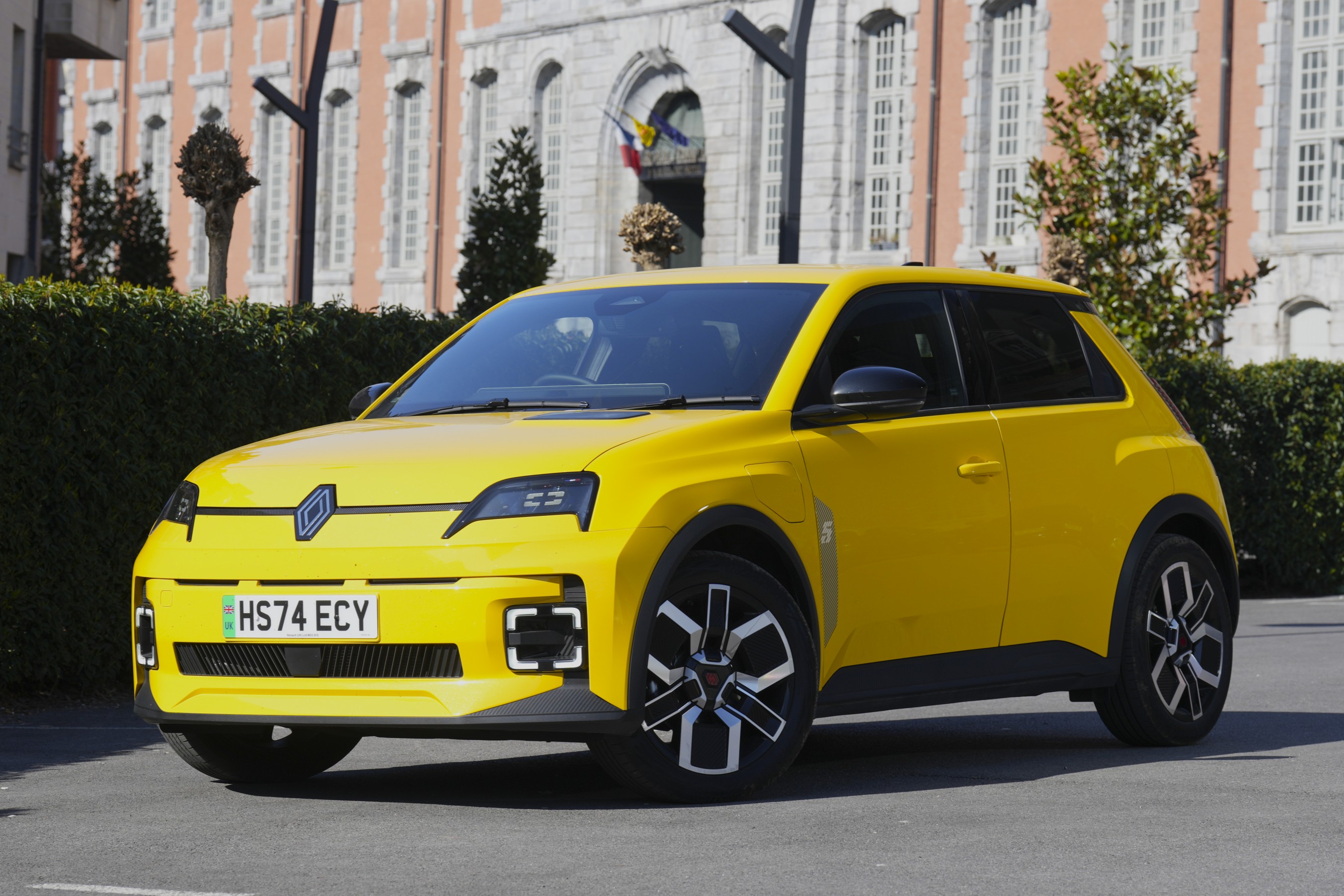
Other car manufacturers look upon the Renault 5 E-Tech’s success with both appreciation and envy. It’s styled to evoke memories of its namesake predecessors, yet despite being very obviously a Renault 5, it doesn’t look slavishly retro outside or in.
It’s a stand-out design, made all the more appealing by a colour palette which is evidently encouraging many buyers to go bold with vibrant yellows and greens, making the 5 E-Tech even more noticeable in today’s greyscale streetscapes.
Two battery and motor combinations are available here — the 5 E-Tech 120PS Urban Range features a 40kWh pack for a highest claimed range of 192 miles, while the 150PS Comfort Range’s 52kWh battery extends that as far as 252 miles. Decent figures, albeit outdone by the new Volkswagen ID. Polo, but expect Renault to match if not retake the initiative with an imminent update to the R5.
Using DC public charging stations, the Urban Range battery can accept an 80kW energy flow, resulting in a 15-80% recharge in 31 minutes. The Comfort Range alternative can be charged at 100kW, reducing the same 15-80% replenishment by a minute in spite its larger capacity.
Interior quality is good, with clear, user-friendly display screens and an Android-based multimedia system including integral Google Maps. The 5 E-Tech’s only real downside is that rear seat space is on the tight side for adults — given the ID. Polo’s palatial cabin, VW will retain the advantage there.
Driving the R5 is a positive experience, striking a largely successful balance between neat, engaging handling and a comfortably pliant ride. If you fancy something with more of a hot hatch vibe, then consider the Renault’s alter ego — the Alpine A290.
Our pick is the Renault 5 E-Tech Techno+ as it’s the cheapest version with the Comfort Range battery at £23,945 inclusive of its Electric Car Grant (ECG) discount, plus its generously appointed with LED head and tail lights, rear parking sensors and a reversing camera and a wireless smartphone charging pad.
Also note that the latest Nissan Micra is essentially a restyled Renault 5, sharing much of its interior fixtures and electric drive system, while the same hardware will also form the basis of Ford’s next small hatchback. If you can’t beat ‘em, join ‘em.
Renault 4 E-Tech
Launched in: 2025
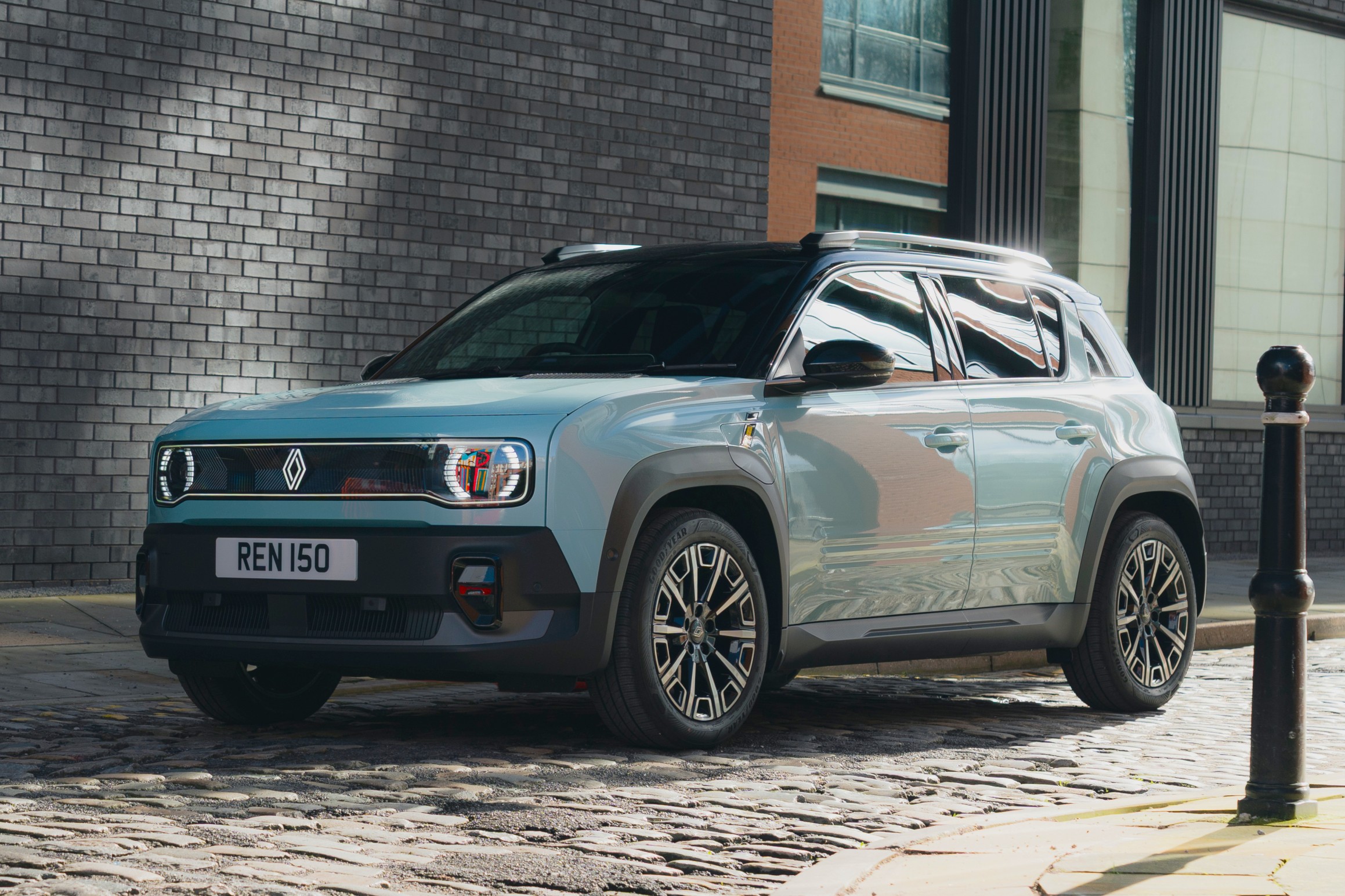
Despite the Renault 4 E-Tech being a lower number than the R5, it’s actually the larger of the two. While not particularly tall, the 4 is essentially the 5’s SUV sibling, riding on an extended version of the same platform meaning more rear seat space. Great for adults riding in the back and overall practicality, but the Skoda Epiq is even more spacious.
Still, what the 4 E-Tech possesses is stylistic charm — a rare commodity among compact SUVs regardless of their propulsion method — and is another which has been heavily influenced by a model from the firm’s back catalogue.
Given the original Renault 4 was never a huge seller in the UK, this car’s harking back appearance may be lost on many, but it nevertheless looks quirky even if its forebear is unfamiliar to you.
From the driver’s perspective, the R4’s dashboard is essentially the same as the R5’s, right down to the optional wicker baguette holder, while unsurprisingly, the driving experience is very similar. If you fancy a firmer, faster take on the 4 E-Tech’s recipe than hard luck as there’s no Alpine-fettled spin-off.
Renault only sells the 4 E-Tech in the UK with the larger Comfort Range 52kWh battery combined with the 150PS motor, which is a fine combination. Being that bit bigger and less aerodynamic than the R5, its maximum driving range potential drops three miles to 249, while recharging times are identical.
Again, we’re swayed towards the Techno+ version at £25,945, inclusive of its ECG discount, but if your budget can flex a further £1500, it could be worthwhile considering the Techno+ Plein Sud. That’s French for ‘due south’ and is Renaultspeak for an electrically operated, full-length fabric sunroof. It’s the nearest thing on sale to an electric SUV convertible if you fancy that kind of thing.
Renault Megane E-Tech
Launched in: 2022
.jpg)
Launching the Renault Megane E-Tech was a rather bold step. Previous generations of combustion-engined Meganes had been strong sellers, although the last of those wasn’t as popular as car buyers became more attracted to SUVs among cars of that size.
That made releasing the next Megane as an electric-only model less of a gamble. Okay, it still doesn’t sell in huge numbers, but for those car buyers who still favour a compact family hatchback it’s definitely one to shortlist.
While the Megane E-Tech’s interior spaciousness isn’t as airy and accommodating as the Volkswagen ID.3 Neo’s, particularly for adults sat in the back who may be left wondering where the claimed packaging advantages of EVs have gone, the Renault nevertheless feels much more upmarket than the VW.
More substantial, higher quality plastics abound, the multimedia system and touchscreens are sharper and more intuitive, plus the Megane also has physical rocker switches for adjusting the climate control temperatures. As blissful as it is common sense.
Right now, there are three Megane E-Techs to choose from, all using a 220PS electric motor fed by a 60kWh Comfort Range battery, yielding a maximum driving range of 285 miles. However, note that it’s imminently due a facelift with modifications to its drive system, so we’ll update the details accordingly.
Connected to DC public charger capable of delivering at 130kW of energy, the Megane E-Tech will increase its battery’s energy levels from 15-80% in 32 minutes. Performance-wise, the Renault is brisk, but no hot hatch, with a 7.5-second 0-62mph time despite having similar degrees of power to older Renaultsport Meganes.
As with the smaller electric Renaults, the Megane E-Tech is more tuned for comfort than fun, yet it’s neatly balanced on windier and undulating roads, maintaining its composure throughout.
All Megane E-Techs are well-equipped with dual-zone climate control, a heated steering wheel and front seats, Android Auto and Apple CarPlay connectivity with a wireless smartphone charger, plus all-round parking sensors and a reversing camera. The Techno specification costs £31,295 with the ECG discount applied.
Renault Scenic E-Tech
Launched in: 2023
_1.jpg)
If you think upon the Renault Scenic E-Tech as the larger, more practical and spacious sibling to the Megane E-Tech, you’re not far wrong. Consequently, the driving experience is similar, majoring on comfort but not at the expense of causing it to handle in the manner of a listing ship.
Some may lament that the Scenic name has been applied to an SUV rather than a cleverly packaged MPV as per the previous iterations, but given which bodystyle of car is much more popular nowadays, Renault’s pragmatism is understandable.
It’s an effective and capable alternative to the likes of the Skoda Elroq and Volkswagen ID.4, offering accommodation for five adults, along with a generous boot and in-cabin storage spaces, such as the Ingenious rear armrest — Renault’s name, not us being overly gushy. As well as a pair of cupholders inside it, there are two USB-C ports, a tablet computer holder and space for other odds and ends brought along for the journey.
Also just like the Megane, the Scenic E-Tech line-up of models is mercifully straightforward, with all versions featuring the same 220PS electric motor paired with a Long Range battery with an 87kWh capacity. It’s the largest of any electric Renault to date and enables a theoretical driving range of up to 381 miles before needing to be plugged in again.
Hook the Scenic E-Tech up to a public DC charger and it will manage an energy flow rate of 150kW. That’s okay rather than super-quick, so you’ll be looking at around 37 minutes for a 15-80% battery top up.
For most buyers we reckon the entry-level Scenic E-Tech Techno at £33,245 with the ECG discount lopped off is so generously appointed that the pricier versions are essentially superfluous. Its kit roster includes adaptive LED headlights, all-round parking sensors with a reversing camera, dual-zone climate control, a heated steering and front seats, plus wireless smartphone mirroring.
Just as other manufacturers have, Renault had built small test fleets of EVs long before it sold them commercially to the buying public.
Its first fully electric model was the Renault Fluence ZE — for Zero Emissions — available in the UK from 2012-2014, but it wasn’t designed from the outset as an EV. In fact, other European markets could also buy the Fluence, which was essentially a saloon version of the contemporary Megane hatchback, with combustion engines.
Shortly after that, the Renault Twizy electric quadricycle appeared, but it was 2013 when the Renault Zoe first arrived in showrooms as the company’s first car designed from the outset to be an EV.
Renault also sells electric versions of its Kangoo small van and Master large van. The all-new generation of Trafic medium van will also be available in fully electric guise.
Here, Renault is taking a leaf out of Porsche’s play book by applying the ‘Turbo’ word on an EV, which makes it technically impossible.
While the Renault 5 Turbo 3E looks similar-ish to the regular 5 E-Tech, it’s more closely related to the forthcoming electric Alpine A110 sports car. As such it has two seats, unique bodywork and power provided by a trio of electric motors.
Set to be sold in small numbers at six-figure prices that will cause a collective sharp intake of breath, the Turbo 3E is an homage to earlier iterations of extreme hot hatchbacks from the firm — the Renault 5 Turbo and 5 Turbo 2.
These were also two-seaters, with the engine slotted in where the rear seats would ordinarily be. Enormously broadened wings enabled copious volumes of air to be scooped up to feed the turbocharged engine and position the wheels further apart for enhanced stability.
As other manufacturers have done, in 2026 Renault announced it was rowing back on its 2022 statement to only sell fully electric cars by 2030 across Europe by conceding it will continue to offer E-Tech plug-in hybrid models beyond that date.
All car manufacturers have been caught out to varying degrees by consumer demand for EVs not climbing as quickly as their forecasts had predicted. So far, at least.
How long a recharge takes any EV is dependent on a variety of interlinked factors, including the battery's capacity and how powerful the charger is plugged into the car.
Renault typically quotes 15-80% recharge times for its EVs when using DC public chargers, meaning a plug-in duration of 30-40 minutes.
At home, using a common 7kW domestic wallbox charger, a flat-to-full recharge will likely take between eight and 14 hours.
Find an electric Renault for sale
- Images coming soon!0
Renault Megane E TechEV60 160kW Techno+ 60kWh Optimum Charge 5dr Auto
202419,120 milesElectric£19,500
LS197BZ Renault Scenic E Tech160kW Techno 87kWh Long Range 5dr Auto
20258,664 milesElectric£26,000
WF104RJRenault Megane E TechEV60 160kW Iconic 60kWh Optimum Charge 5dr Auto
202319,002 milesElectric£18,495
HD50RPRenault 4110kW Techno+ 52kWh Comfort range 5dr Auto
15 milesElectric£24,999
OL12QLRenault Megane E TechEV60 160kW Techno Esprit Alpine 60kWh 5dr Auto
20261,000 milesElectric£27,995
HD50RPRenault 4110kW Iconic 52kWh Comfort range 5dr Auto
20253,213 milesElectric£23,495
S711AJRenault 4110kW Techno 52kWh Comfort range 5dr Auto
20267,434 milesElectric£22,457
HD50RPRenault Scenic E Tech160kW Techno Esprit Alpine 87kWh Long Range 5dr AT
202510,260 milesElectric£26,990
S711AJ
More electric car guides
From choosing the right EV to understanding charging, running costs and more, our guides can help.