- Home
- …
- Electric Cars
- Citroen electric cars: Every EV explained
17/08/2026
Citroen electric cars: Every model explained

Written By Keith WR Jones

Citroen is one of the automotive world’s oldest car brands, yet its popularity has endured by adapting its portfolio of models to suit changing tastes and consumer demand. That’s particularly evident by its whole model line-up being available in fully electric guise.
Much of this French brand’s mystique has been generated by iconic models in its past, such as the Citroen 2CV at the simpler, almost agricultural end of the scale to the hydropneumatically suspended DS and its descendants at the costlier opposite.
Whatever their purpose and price, Citroens were famed for their supple ride quality. While its hydropneumatic fascination is a thing of the past, Advanced Comfort Suspension and lounge-like seats are to be found across its model range.
Along with the likes of Fiat, Peugeot and Vauxhall, Citroen is part of the enormous Stellantis group, providing enormous economies of scale by models across the suite of brands sharing platforms and technologies, including electric motors and battery packs.
Consequently, while Citroen’s 2026 range isn’t as technologically advanced relative to the competition as its forebears were, they’re bristling with quirky touches and a sense of fun.
One electric model you won’t find listed here is the tiny Citroen Ami. Although it looks like a dinky, two-seater city car, it’s built to regulations which require it to be registered as a light quadricycle.
Those rules include a restricted top speed of just 28mph, making the Ami a viable option only for those who never drive beyond a city’s limits — and even then, only if they’re willing to put up with the inconvenience of it being left-hand drive only.
Ami aside, here’s how Citroen’s electric car line-up looks today:
Citroen e-C3
Launched in: 2024
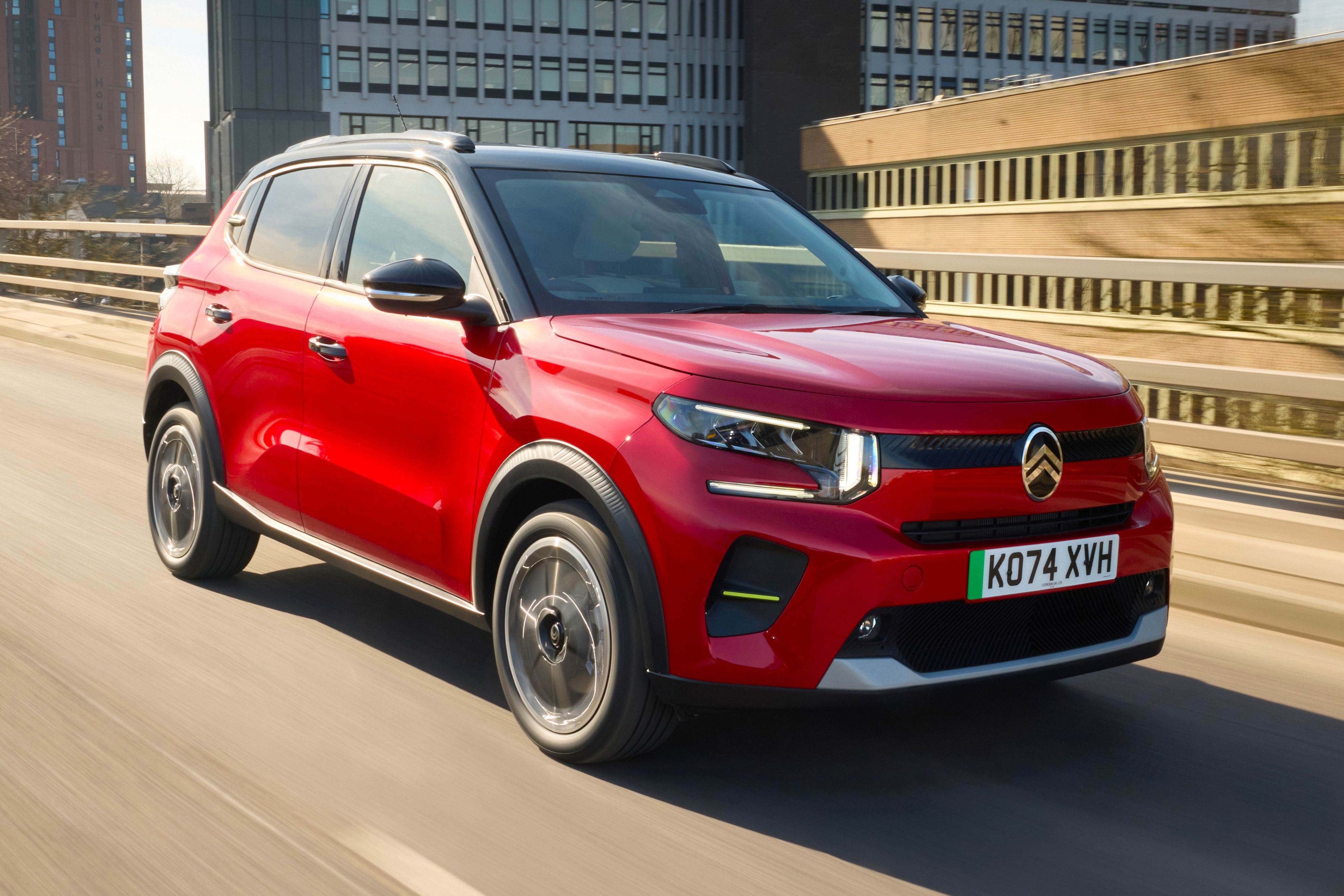
While the rival Renault 5 E-Tech is stealing most of the small electric car limelight right now, that doesn’t mean models such as the Citroen e-C3 aren’t worthy of your attention. It’s major attraction is just how comfortable it is — many larger, more expensive cars can’t remotely match its suppleness.
It’s a fundamentally simpler EV technically than the Renault, yet the e-C3’s taller bodywork liberates far more interior space, especially for those sat in the rear, something to consider if you regularly ferry adult passengers around in the back.
Despite the existence of the larger-still Citroen e-C3 Aircross, the e-C3 hatchback has a pseudo-SUV look to it, amplified with chunky unpainted plastic wheelarch extensions and silver skid plates at the bumper bases. Overall, its got a more rounded appearance than its Fiat Grande Panda Electric twin.
Inside, the e-C3 has a minimalist dashboard design with a thin slot just below the windscreen base where the digital instrumentation’s nestled. We’d suggest mid-range Collection trim is the pick of the range, with features including an interesting blue interior finish, plus a reversing camera and rear parking sensors, although all e-C3s feature LED headlights, a 10.25-inch multimedia touchscreen with Android Auto and Apple CarPlay as well as air-con.
What gives the Collection version the edge is that it’s the cheapest e-C3 with the larger Standard Range battery for a claimed driving range of 281 miles for it’s £21,215 price, inclusive of the Electric Car Grant (ECG) discount. At £18,495 the e-C3 Plus Urban Range is tempting, but it’s potential is 186 miles.
That Urban Range battery only charges at 30kW with a DC connection, whereas the Standard Range is more acceptable at 100kW, for a 20-80% top up in 26 minutes.
Citroen e-C3 Aircross
Launched in: 2025
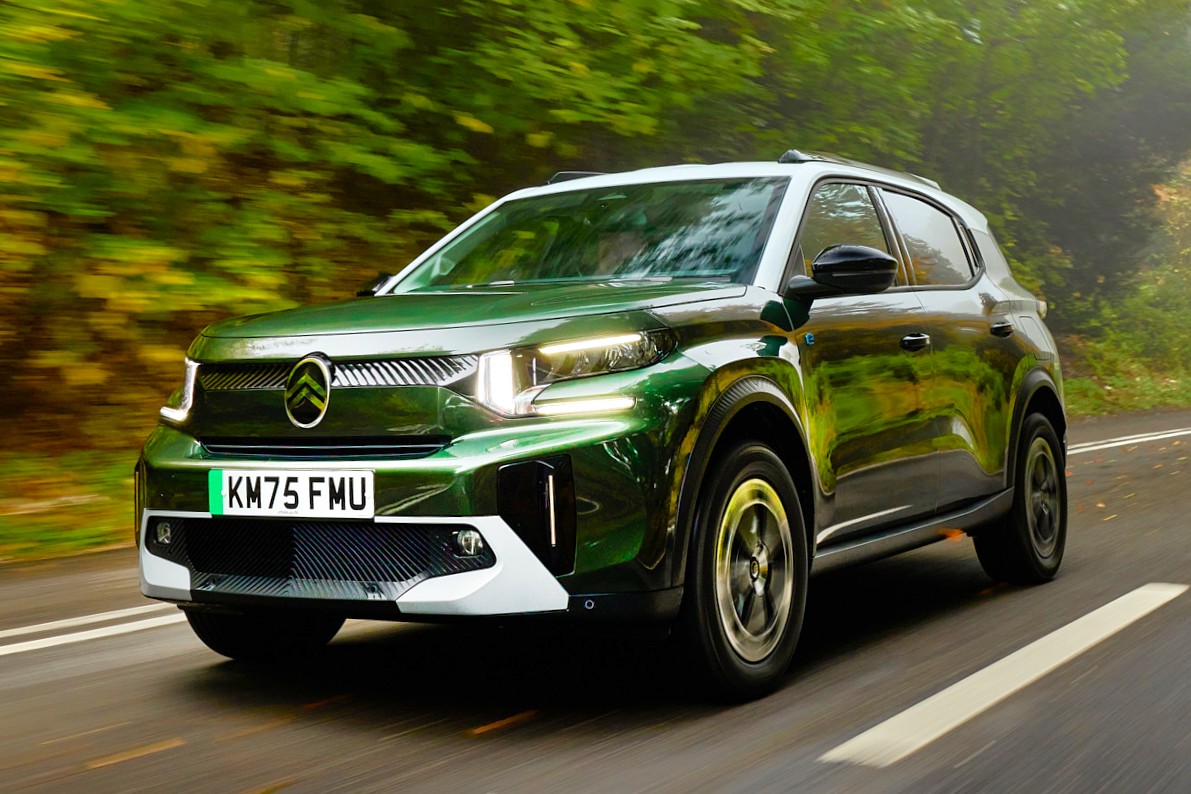
At first glance, the Citroen e-C3 Aircross appears to be little more than an e-C3 hatchback which has somehow been inflated by 10%, but there’s more to it than that.
They’re based on the same platform and feature the same 113PS electric motor powering the front wheels, but the e-C3 Aircross’s swollen dimensions liberate more space for passengers and luggage, making it a viable compact family car. With the rear seats in use there’s 500 litres of boot volume available, expanding to 1800 litres when they’re folded down flat.
Its interior is very like its hatchback sibling’s right down to the dashboard, plus it also feels so comfy to drive or ride in — its superior to the e-C3 in fact. It’s also more compliant over rough surfaces than the Vauxhall Frontera Electric — its close cousin. Not only are the same underpinnings used, the Citroen and Vauxhall even use the same doors.
Two batteries are available for the e-C3 Aircross with the Standard Range 44kWh being less rangy than the Extended Range 54kWh option. The latter can theoretically drive 249 miles in Collection specification — the one we recommend at £24,315 inclusive of ECG, whereas the smaller battery can only manage 190 miles and is only sold in pricier Max trim, so costs £300 more.
Using a DC public charger operating at the Citroen’s maximum 100kW energy flow rate, a 20-80% top up requires 26 minutes for the Standard Range and 28 minutes for the Extended Range versions.
Citroen e-C4
Launched in: 2020
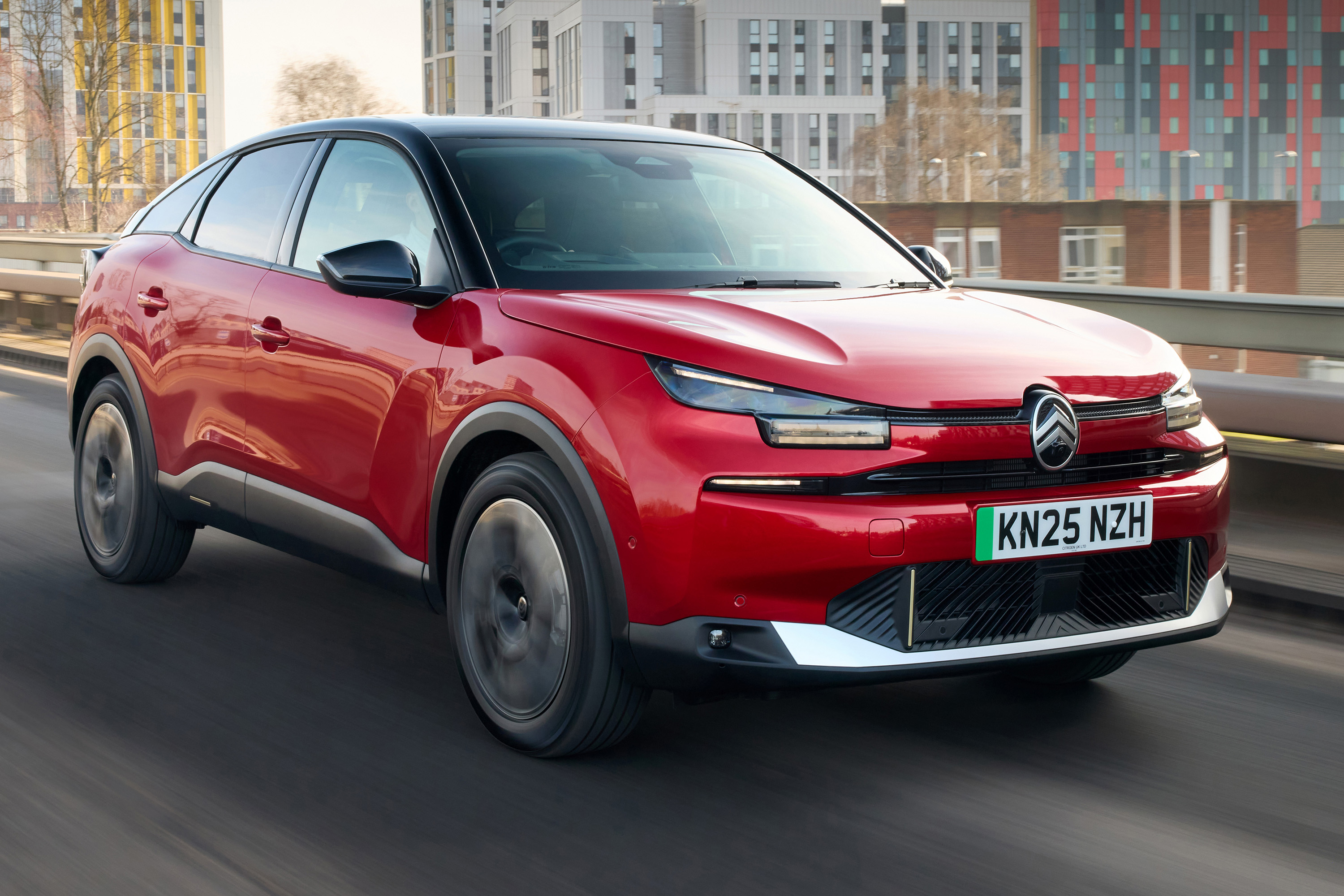
A recent facelift doesn’t disguise the fact that the Citroen e-C4 is one of the brand’s older models, with its EV technology being off the pace compared with newer rivals, such as the Kia EV4 and recently updated Volkswagen ID.3 Neo.
While the Citroen e-C4 X saloon derivative is no longer available the shorter yet more practical e-C4 hatchback proved the more popular among family car buyers thanks to its tailgate’s larger boot opening. Note that at 480 litres with the rear seats up and 1327 litres with them folded forwards, there’s more carrying capacity in the smaller, cheaper e-C3 Aircross.
There are two electric drive systems available for the e-C4, kicking off with a 136PS motor fed by a 50kWh Standard Range battery, with the alternative being a 156PS motor connected to a 54kWh Extended Range battery. At 9.2 seconds, the 156PS version is eight-tenths of a second quicker from 0-62mph, while its greater capacity battery yields a claimed driving of 257 miles versus 219 miles.
Both will charge at up to 100kW using a DC rapid station, increasing the battery’s energy levels from 20-80% in just under half an hour.
Okay, there’s a specification difference between them as well, with extra kit including automatic LED main beam headlights, all-round parking sensors, a heat pump and adaptive cruise control, but it seems steep to charge a further £3780 on top of the e-C4 Plus Standard Range’s ECG discount-inclusive £27,215 asking price for the Extended Range model.
Yes, the e-C4’s comfortable to drive, but beyond that it’s not going to leave a lasting impression. If you can negotiate a bargain discount, consider one, but otherwise go for a better rival instead.
Citroen e-C5 Aircross
Launched in: 2025
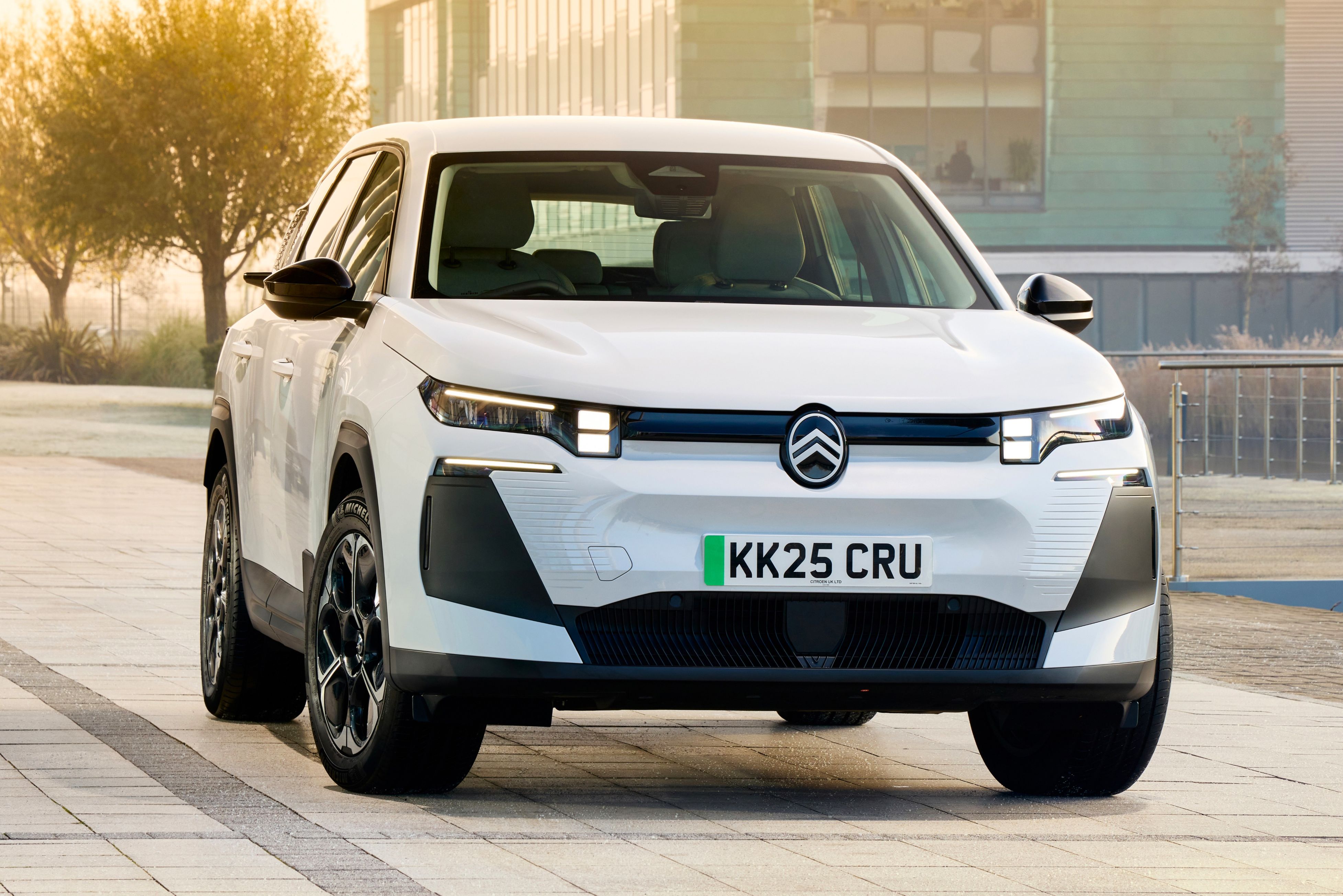
Below the Citroen e-C5 Aircross’s angular bodywork is the Stellantis SLTA Medium platform as also used by the Peugeot E-3008 and Vauxhall Grandland Electric. While the Peugeot has a choice of three electric drive systems and the Vauxhall a pair of them, the Citroen also has two, but a different combination from those propelling the Grandland.
Here for the e-C5 Aircross are the Comfort Range battery with a highest potential driving range of 323 miles and the Long Range, yielding a best of 423 miles. Power outputs aren’t so different at 210PS and 230PS respectively, with the punchier choice only accelerating from a standstill to 62mph a tenth of a second quicker at 8.8 seconds.
Both can charge at rates of as high as 160kW when plugged into a suitably powerful DC charger. A 20-80% state-of-charge increase requires 30 minutes for the 73.7kWh Comfort Range battery and 27 minutes for the larger 96.9kWh Long Range.
With the ECG discount factored in, the e-C5 Aircross Long Range is less than £400 pricier in entry-level You specification at £32,995, but if your budget permits we’d recommend the mid-range Plus alternative at £37,595.
Over the You, Plus adds power-folding door mirrors, an auto-dimming interior rear-view mirror, a reclining rear bench seat with central armrest, keyless entry and starting plus a reversing camera.
While the Citroen e-C5 Aircross is unlikely to set driving enthusiasts’ hearts pounding, it’s a supremely comfortable family chariot with ample space on board for five adults and 651 litres of boot space behind for all of their kit and caboodle. Need a makeshift van? Fold the split-folding rear bench over and when loaded to roof level, you can cart 1985 litres of stuff around.
Citroen e-Berlingo
Launched in: 2021
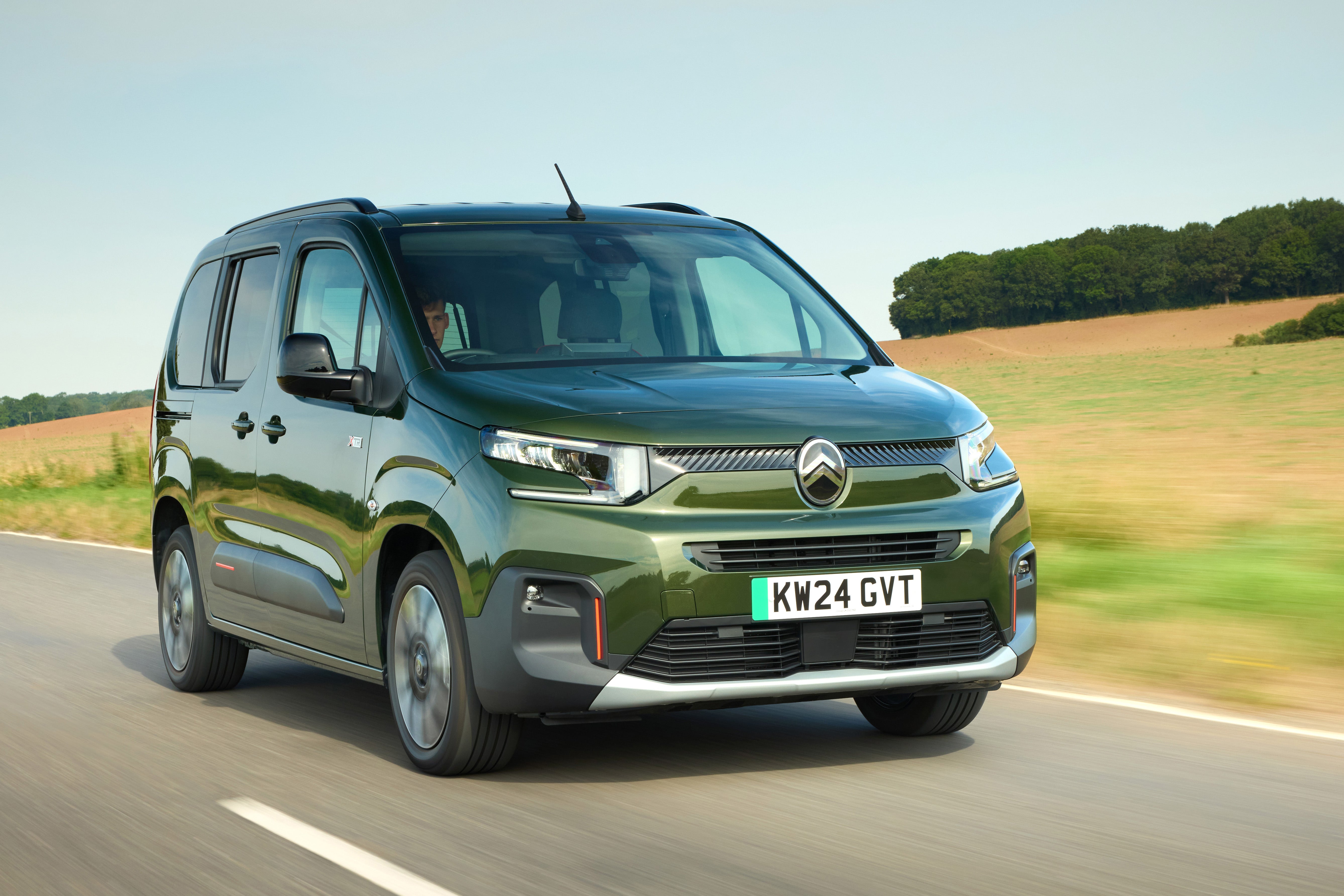
Many Stellantis brands — plus Toyota as a customer — sell a version of what’s known internally as the K9 van-derived MPV, yet somehow the Citroen e-Berlingo’s styling looks more related to the rest of the brands models than the Peugeot E-Rifter, Toyota Proace City Verso Electric and Vauxhall Combo Life Electric do theirs.
Despite that, Citroen’s pared-back the assortment of e-Berlingo derivatives it sells to just three. Go for the shorter, five-seater M (for Medium) body and you can choose either Collection or pricier Max specification, but the seven-seater XL is only paired with the former. All are powered by the same 136PS motor and supplied with energy from a 52kWh battery pack, with peak driving range of 211 miles. A 0-80% top-up at 100kW will take 30 minutes.
Key equipment differences between Collection and Max trims are the latter’s additional dual-zone climate control and practicality advantages afforded by its roof rails and opening rear windscreen — a really useful feature if there’s insufficient space to pop open its massive tailgate. Whether those additions are worth spending an extra £1415 taking the ECG-discounted price to £32,405 is debatable, but we think just about make sense.
Either way, once you’re on board, the e-Berlingo’s usefulness as a family-friendly car become immediately apparent. A minimum of 775 litres of boot space below the window line, is made all the more useful by three individual second-row seats which all fold slickly forming a continuous flat floor. Other storage facilities include two gloveboxes plus an open shelf above the windscreen.
Spend an extra £750 on the e-Berlingo’s Modutop Roof option adds a fixed, glazed roof with electric blind, a translucent front-to-rear storage shelf suspended below it, plus a roof-mounted locker above the boot, accessible from both the tailgate opening and the rear seats.
Driving the Citroen e-Berlingo is a relaxing affair, entirely in keeping with its role as a family wagon. It’s not particularly engaging to drive, but it’s very easy and while it lacks the trick suspension of others in the range, it’s the only car of this type with the Advanced Comfort Seats.
Citroen e-SpaceTourer
Launched in: 2020
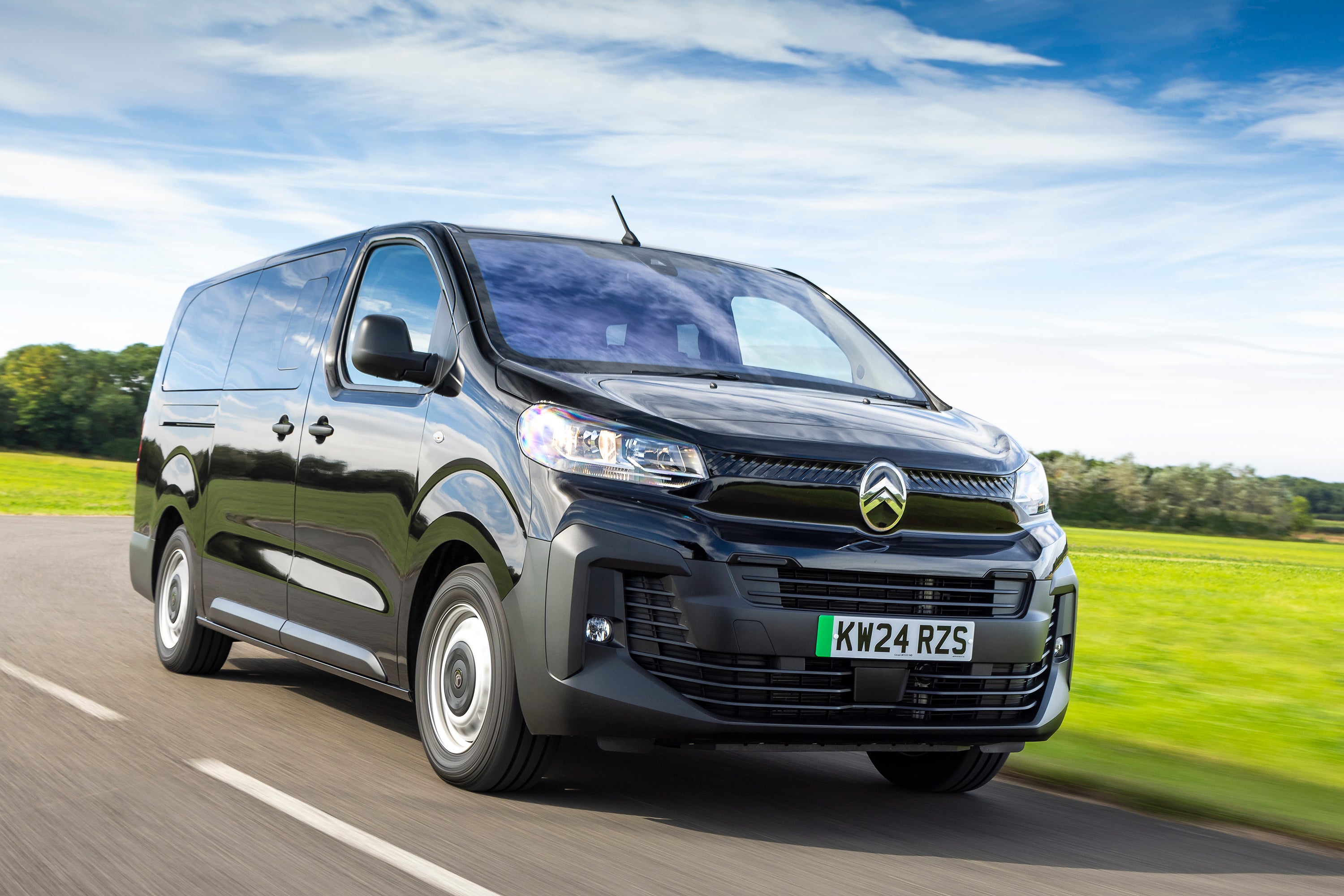
Despite the Citroen e-SpaceTourer essentially being a taller, longer and even more spacious variation of the e-Berlingo’s recipe, somehow the flavour’s been extracted from it. If there’s an automotive equivalent of beige food, this is it — along with its near-clones sold as the Peugeot E-Traveller, Toyota Proace Verso Electric and Vauxhall Vivaro Life Electric.
Part of its blandness is that the e-SpaceTourer feels devoid of any particular Citroen-ness. There aren’t even any superficial touches such as interesting plastics and upholstery colours, let alone the prospect of the Advanced Comfort Seats.
It is massive, though, especially with the longer XL bodywork, with seats about for nine if you plump for the entry-level You specification. While it’s £35,495 price is extraordinarily tempting, this is a properly stripped-out derivative, without carpet or flexible seating, which can make for it being an ultimately disappointing practical car. In truth, it’s squarely aimed at taxi and workforce shuttle operators.
For reasons unknown, unlike with its Peugeot and Vauxhall relations, there’s no middle-ranking e-SpaceTourer trim level, forcing you to spend an extra £13k on the Max grade if you wish to stick with the Citroen brand. Still, it’s the thick end of £10,000 less than the more cramped Volkswagen ID.Buzz.
It has eight leather seats as standard, which can be swapped for seven- or even six-seat configuration by swapping the rear benches out for extra-cost optional pairs of reclining captain’s chairs. Other Max features include three-zone climate control with roof-mounted vents in the rear, floor rails to slide the folding rear seats back and forth increasing practicality and electrically operated doors for accessing the passenger lounge.
All e-SpaceTourers have a 75kWh battery pack with a maximum theoretical driving range of up to 216 miles. Performance from its 136PS motor is just about adequate, as is the 100kW maximum recharging speed — meaning a 5-80% top up will take 45 minutes.
Well, without double-checking your browser history, we can’t say for sure, but we can confirm that yes, Citroen is already realising teaser videos for its all-new 2CV.
What it won’t be is a stripped-back, basic vehicle designed to be driven across ploughed fields as per its original namesake, but it will become Citroen’s least expensive new electric car, albeit more expensive than the Ami light quadricycle and its general styling themes will be reminiscent of earlier 2CVs.
Not many details have been announced at this stage, but autumn 2026 will see Citroen reveal a 2CV concept car which will preview lots about how the finished production version will look when it follows 12-18 months later.
Electric — or rather, Electrique — versions of the Citroen AX small hatchback and original Berlingo van were sold in tiny numbers in the mid-1990s, they weren’t officially available to buy in the UK.
As a result, the brand’s first EV for sale in this country was the Citroen C-Zero, with its name indicating that it nestled in below the C1 city car in the line-up.
In reality, it wasn’t really a Citroen, but a result of the parent companies then alliance with Mitsubishi. Built in Japan as the Mitsubishi i-MiEV, the C-Zero and its other near-facsimile, the Peugeot iOn, were sold from 2011.
Sales levels were tiny, yet it remained available for the almost the duration of the 2010s. From launch, its claimed 93-mile driving ensured the C-Zero was only going to appeal to a narrow band of car buyers, while its £33,155 price tag was even more of a sticking point.
Even with the government’s then Plug-in Car Grant (PiCG) lopping £5k off that figure, the tiny C-Zero was the fifth most expensive Citroen on sale at the time of its launch. How far EVs have come in just 15 years.
Unlike other Stellantis brands, Citroen hasn’t publicly announced a date by which it intends for all of its car sales to be fully electric, suggesting it will be dictated by consumer demand and incoming legislation banning the sale of brand new combustion-engined models.
This is determined by various related factors, including the battery capacity the charger's power output.
Ballpark figures for when using public chargers generally suggest electric Citroens usually increase from a 20-80% state of charge in 30 minutes, although that's notably longer for the e-SpaceTourer with a 5-80% recharge quoted at 45 minutes.
Plugged in to a typical 7kW wallbox charger at home, a 0-100% recharge will take between 10 and 16 hours depending on the Citroen EV in question.
Find an electric Citroen for sale
Citroen e-Berlingo100kW Max M 52kWh 5dr Auto
20245,257 milesElectric£20,000
ST15LGCitroen C3 Aircross83kW Extended Range Collection 54kWh 5dr Auto
Electric£26,165
WR38UACitroen C383kW Collection 44kWh 5dr Auto
Electric£23,360
WR38UACitroen C3 Aircross83kW Extended Range Collection 54kWh 5dr Auto
Electric£26,460
WR38UACitroen C3 Aircross83kW Standard Range Plus 44kWh 5dr Auto
Electric£24,040
WR38UA- Images coming soon!0
Citroen C3 Aircross83kW Extended Range Collection 54kWh 5dr Auto
Electric£26,460
WR38UA - Images coming soon!0
Citroen C383kW Collection 44kWh 5dr Auto
Electric£23,065
DE214XF - Images coming soon!0
Citroen C5 Aircross157kW Max 73kWh 5dr Auto
Electric£35,810
DE214XF
More electric car guides
From choosing the right EV to understanding charging, running costs and more, our guides can help.