- Home
- …
- Electric Cars
- Peugeot electric cars: Every EV explained
06/08/2026
Peugeot electric cars: Every model explained

Written By Keith WR Jones

Despite Peugeot being slower off the mark with its EVs portfolio than its French arch-rival Renault, it’s more than made up for lost time. Today’s line-up of Peugeot electric cars is one of the broadest on sale, with every model in its range available in battery-powered guise.
One of the key factors enabling Peugeot to have such a comprehensive assortment of EVs of various shapes and sizes is that it’s part of the enormous Stellantis manufacturing group.
Other brands also part of Stellantis which will be familiar to British car buyers comprise Abarth, Alfa Romeo, Citroen, DS, Fiat, Jeep, Leapmotor, Maserati and Vauxhall.
Due to Stellantis’s vastness, it’s able to generate enormous economies of scale by producing multiple models for its different marques, many of which share platforms, electric motors and battery packs, mostly clothed in unique bodywork and — in Peugeot’s case — its i-Cockpit dashboard layout.
For the uninitiated, this means a smaller than usual steering wheel, set at a lower angle than usual, with the instrument display screen set higher on the dashboard than you’re likely to be accustomed to. Rather than look through the gap in the upper half of the steering wheel to view your speed or battery charge level, you look over the top of it.
Today’s electric Peugeots are visually nigh-on identical to their combustion-engined counterparts and branded with an ‘E-‘prefix. That’s set to start changing over the next year with the next generation of its smallest models.
While the combustion-engined Peugeot 208 will be given a substantial facelift, its E-208 twin will be an all-new model, with an electric car-specific platform to maximise interior space and an updated i-Cockpit dashboard, complete with a solid rectangular steering ‘wheel’, punctuated with four circular holes.
For those of you looking to buy an electric Peugeot much sooner than that, this is how 2026’s range looks:
Peugeot E-208
Launched in: 2019
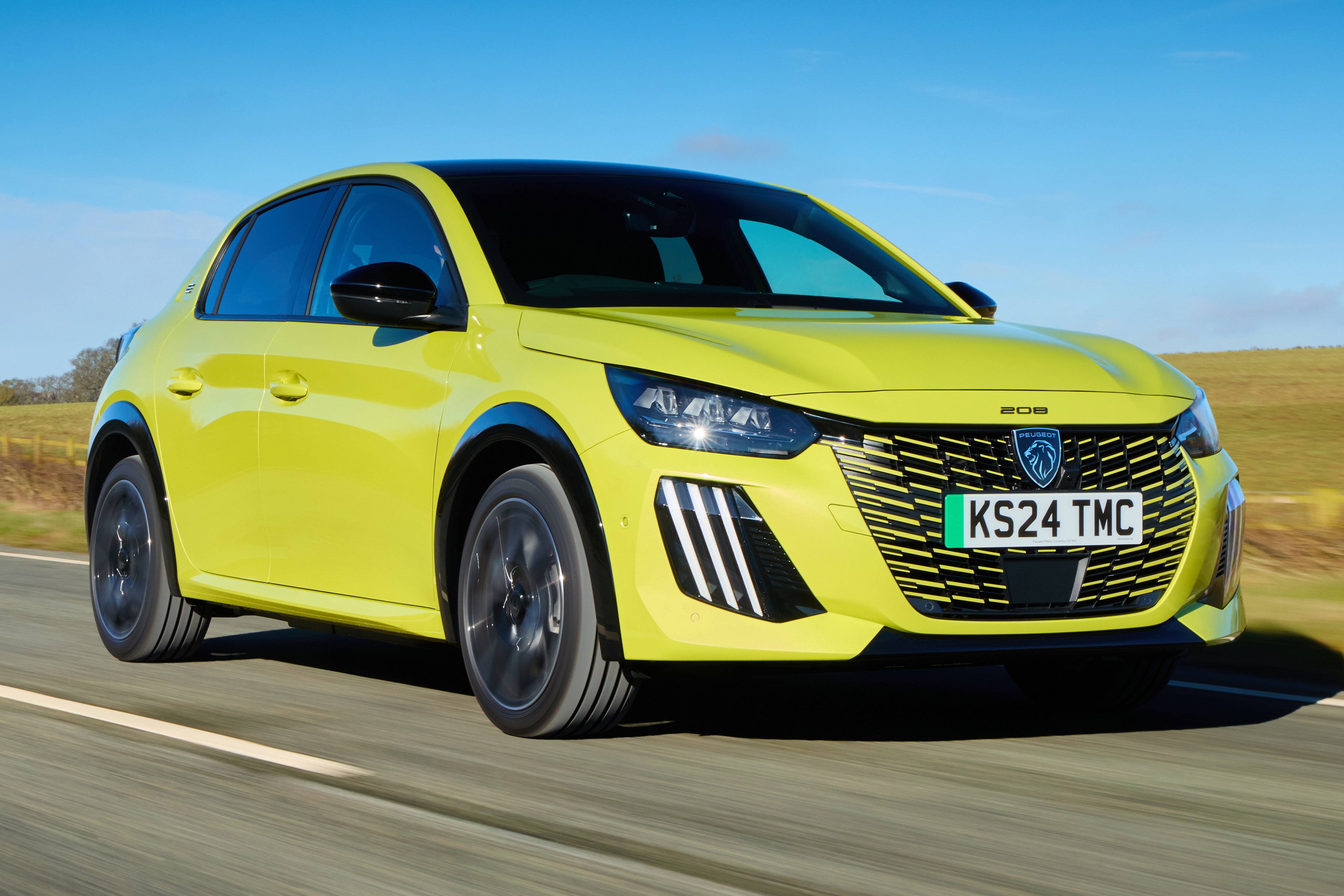
Despite the Peugeot E-208 still looking fresh — a mid-life nip and tuck, plus its vibrant paintwork palette help it out — it’s now one of the oldest small electric hatchbacks on sale, with an all-new replacement just around the corner.
Yet, despite that, it hasn’t prevented the late-in-the-day introduction of the high-performance Peugeot E-208 GTi as the range’s halo model. Okay, purists will quibble that the ‘i’ in GTi is nonsensical given you can’t fuel-inject an electric motor, but as it’s paying homage to the 205 GTI – replete with scarlet detailing inside and out — we’ll forgive this EV hot hatch its minor indiscretion.
How hot? Well, 281PS and 345Nm of torque ensure it will scorch from a standstill to 62mph in just 5.5 seconds, yet it’s priced enticingly at £33,495, inclusive of its government Electric Car Grant (ECG) discount.
Nevertheless, most E-208 customers will plump for one of the less ferocious models. Each of the Allure, GT and GT Premium trim levels can be had with a 46kWh usable battery and 136PS motor or, for an extra £800, a 49kWh pack and 156PS. Claimed driving ranges are as high as 226 miles for the smaller battery and 268 for the larger one. That 49kWh pack also features in the GTi, but its extra oomph pegs its potential range at 219 miles. All can be recharged at up to 100kW, with a 20-80% top-up taking a shade under half an hour.
There’s reasonable room aboard the E-208 for four adults to sit comfortably, albeit rear legroom’s a bit tight, while the boot has a 309-litre capacity – both fall significantly short of the Volkswagen ID. Polo’s capaciousness, particularly its 441-litre boot.
Yet the Peugeot E-208 still feels like an enjoyable small car to drive and spend time in, with good quality interior materials and an interesting i-Cockpit dashboard design. GTi aside, the Allure 54kW 156 makes the most sense with the maximum driving range, generous equipment levels and a £24,295 price tag with the ECG discount applied.
Peugeot E-2008
Launched in: 2019
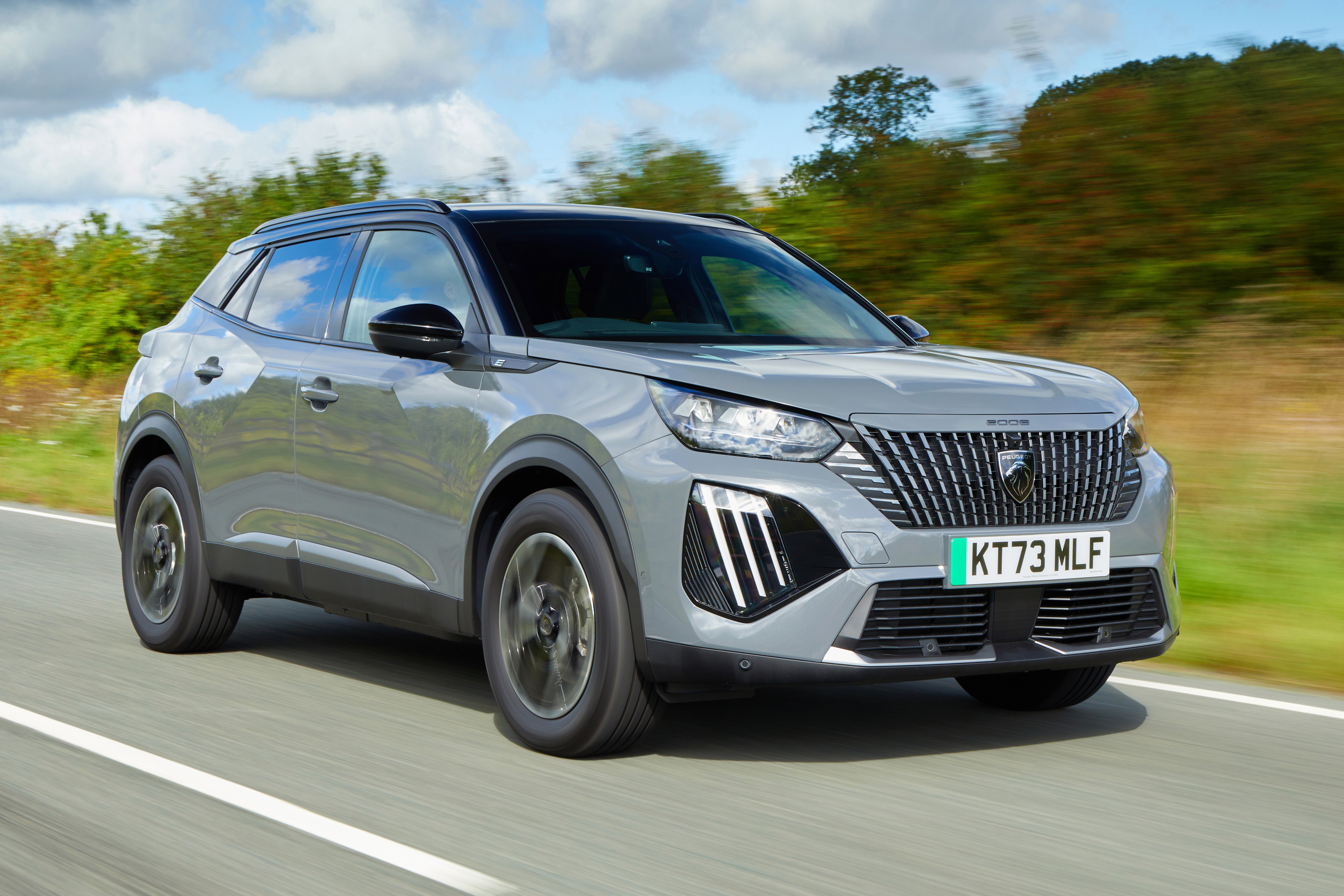
If you’re unfamiliar with the firm’s numbering strategy, the double-zero usually indicates an SUV of a similar size to the model it shares its initial digit with. Sure enough, the Peugeot E-2008 is a slightly taller, longer take on the E-208 recipe, albeit with an even simpler model range to get your head around.
Today’s E-2008 line-up comprises Allure, GT and GT Premium specifications, but Peugeot hasn’t mirrored Vauxhall’s closely-related Mokka Electric strategy with a sporty derivative, so don’t go looking for a GTi version.
Your sole battery choice is a 51kWh useable capacity pack paired with the 156PS front-mounted electric motor, serving up a maximum potential driving range of 248 miles should you plump for it in Allure specification, priced at a smidgen below £28k with the ECG discount taken included.
Look at it another way and that’s a near-£4000 price premium and 20 miles less driving range than the E-208, so what are you getting extra for your money? Space, mainly — not masses more, but enough of a difference for it to be noticeable whether you’re sat in the front or rear, although squeezing five adults aboard will still feel like a mobile game of sardines.
It’s in terms of carrying capacity where the E-2008 really streaks ahead, though. With the rear seats in use its boot has a 125-litre advantage over the E-208 at 434 litres, while at 1467 litres when they’re folded over, that difference expands to 349 litres in the SUV’s favour. For comparison, the new Skoda Epiq offers 475 litres seats down and 1345 litres when lowered, but costs £2k less.
Peugeot E-308
Launched in: 2023
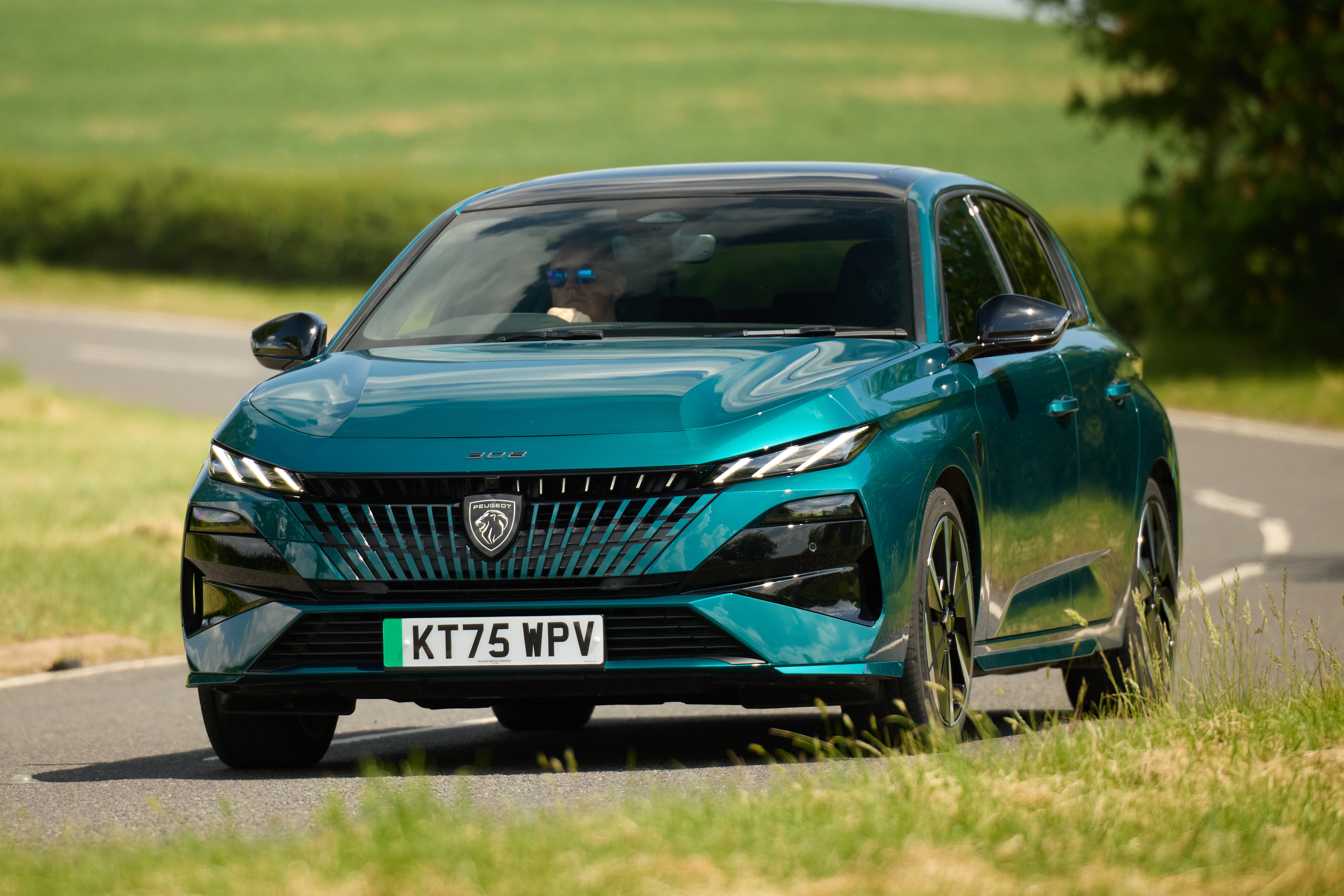
As medium-sized family hatchbacks go, the Peugeot E-308 feels like a classy choice, with plush interior fittings, striking exterior styling and an attractively low price tag for the entry-level Allure at £29,495, inclusive of the ECG discount.
Yet, against rivals such as the Volkswagen ID.3 Neo, which was designed from the outset to be EV-only, the E-308 feels compromised. Its platform is also used for combustion-engine only, mild hybrid and plug-in hybrid applications, meaning as a result its interior is roomier than the E-208’s but cramped next to the VW.
That’s particularly noticeable with the boot sizes: the Peugeot has 361 litres available seats up and 1258 litres seats down. By comparison — and despite housing its electric motor under the boot floor — VW quotes 383 litres and 1336 litres respectively.
Those compromises are also why there’s only one battery and motor combination available for the E-308 — a 55kWh useable capacity with 156PS and 270Nm of performance. It’s standstill to 62mph time is a steady 9.8 seconds, with a claimed driving range of up to 279 miles.
Public DC charging is limited to a 100kW maximum, but that’s sufficient for a 20-80% top-up in 30 minutes.
Equipment levels are very generous across the E-308 line-up and its refined and impressively comfortable to drive, but as an EV it lacks the all-rounder advantages of the ID.3 Neo.
Peugeot E-308 SW
Launched in: 2023
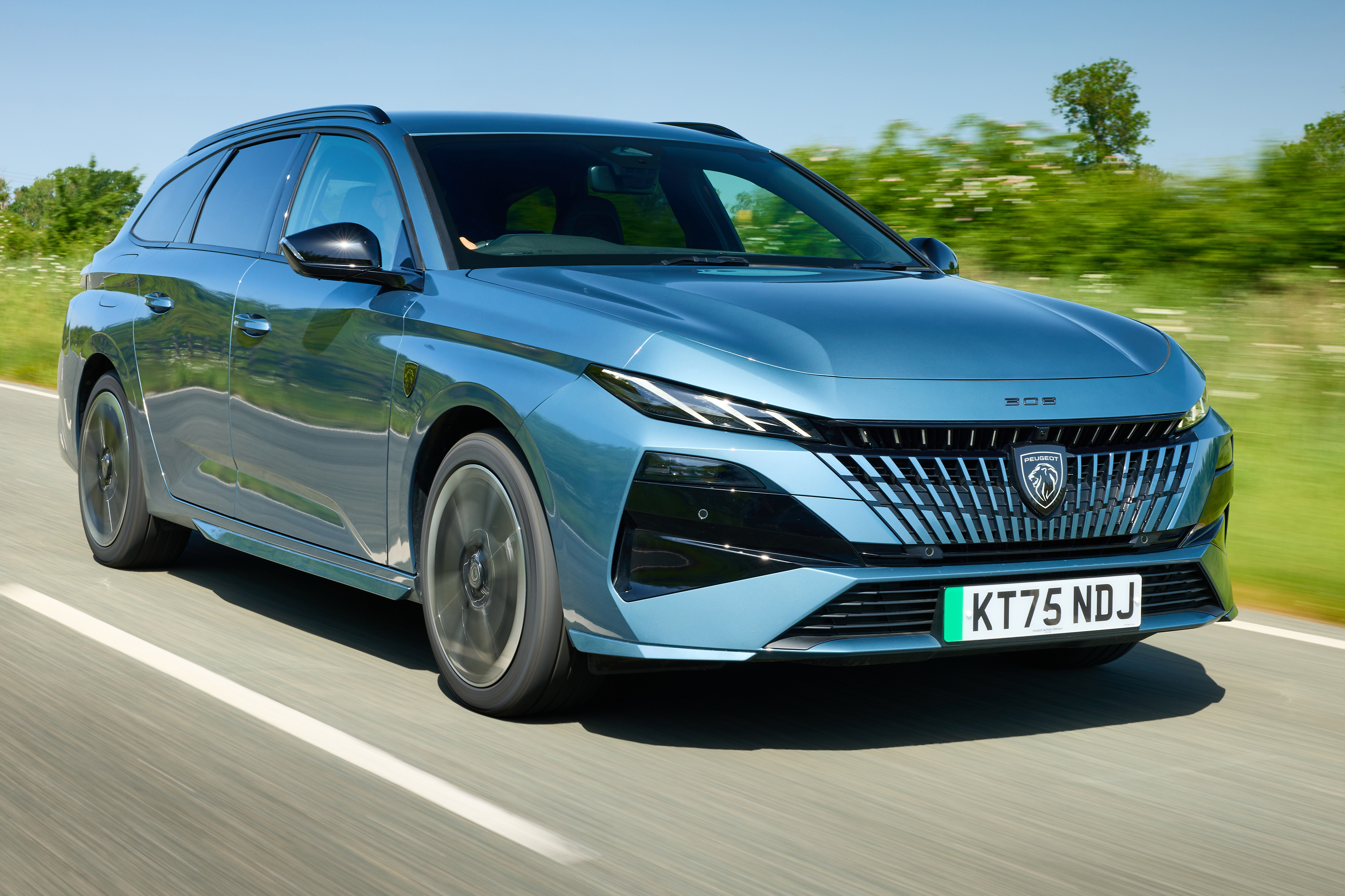
Electric estate cars are rare beasts, so that the Peugeot E-308 SW exists in the first place makes it worthy of attention. Yet it also shares the vast majority of its E-308 hatchback compromises, someone restricting its appeal as a load-lugger.
It’s significantly shorter — and consequently far less capacious than — the Volkswagen ID.7 Tourer, but the E-308 SW is also less accommodating than the Vauxhall Astra Sports Tourer Electric with which it shares its platform, battery and electric drive system.
With the rear seats in use, the E-308 SW’s boot will swallow 505 litres of cargo, compared with the Vauxhall’s best of 516 litres. With them folded over, those figures grow to 1402 litres and 1553 litres respectively.
The keen-eyed may have noticed that the E-308 SW’s wheelbase is 57mm longer than its hatchback twin’s but the additional length has all been given over to the boot, with rear seat legroom unchanged. At least the SW’s roofline, which remains more horizontal for a greater distance, ensures rear seat passengers enjoy 16mm extra headroom.
Potential driving range for the E-308 SW drops marginally to a best of 275 miles, with a £1200 model-for-model price increase across the three-derivative line-up. Whether that’s a price worth paying ultimately depends on how much you want the Peugeot E-308 hatchback, but wished it had greater levels of practicality.
Peugeot E-3008
Launched in: 2023
.jpg)
Inside or out, there’s little denying that the Peugeot E-3008 is a striking five-door SUV coupe and a significant departure in visual athleticism than its two combustion-engined predecessors. While this car’s also sold as the Peugeot 3008 in mild and plug-in hybrid guises, its newer STLA Medium platform is better-suited to be switched for different propulsion methods, hence why the electric versions have a trio of drive systems.
Available for the lowest prices are the E-3008 73kWh 210 versions, with the Dual Motor 73kWh 325 derivatives, featuring all-wheel drive being the most expensive. We’d go with the less costly Long Range 97kWh 230 iteration, which ekes as much as 89 extra miles of claimed driving range compared with the 73kWh 210, with a best of 435 miles between plug-ins.
Both battery sizes can be DC ultra-rapid charged at speeds of up to 160kW, with the larger battery pack taking 27 minutes for a 20-80% top up – three minutes faster than the smaller alternative, surprisingly.
There’s plenty of space for five passengers inside the E-3008’s stylish and upmarket feeling cabin, although ensure rear headroom is sufficient for adults you’ll carry in the back as the Peugeot’s rakish roofline means it’s only slightly better the smaller E-308 in this regard.
You won’t have any grumbles about the size of its boot, though, with a colossal 588-litre capacity with all five seats in use and up to 1663 litres with the split-folding rear bench laid flat. Don’t believe urban myths about SUVs not being any more practical than typical hatchbacks.
Although unusual looking, the E-3008’s swooping dashboard is very clear and easy to use, although we’d still prefer its climate control adjusters to be physical buttons or knobs than the touchscreen variety.
While the entry-level Allure specification is generously appointed, Allure Premium is a better all-round package, yet bizarrely it isn’t available in conjunction with the Long Range battery, despite it being specifiable with the cheaper trim. While the E-3008 Allure Long Range costs £39,695, it’s a £3,400 jump to the GT grade and a further £2150 for the plushest GT Premium option.
Peugeot E-408
Launched in: 2024
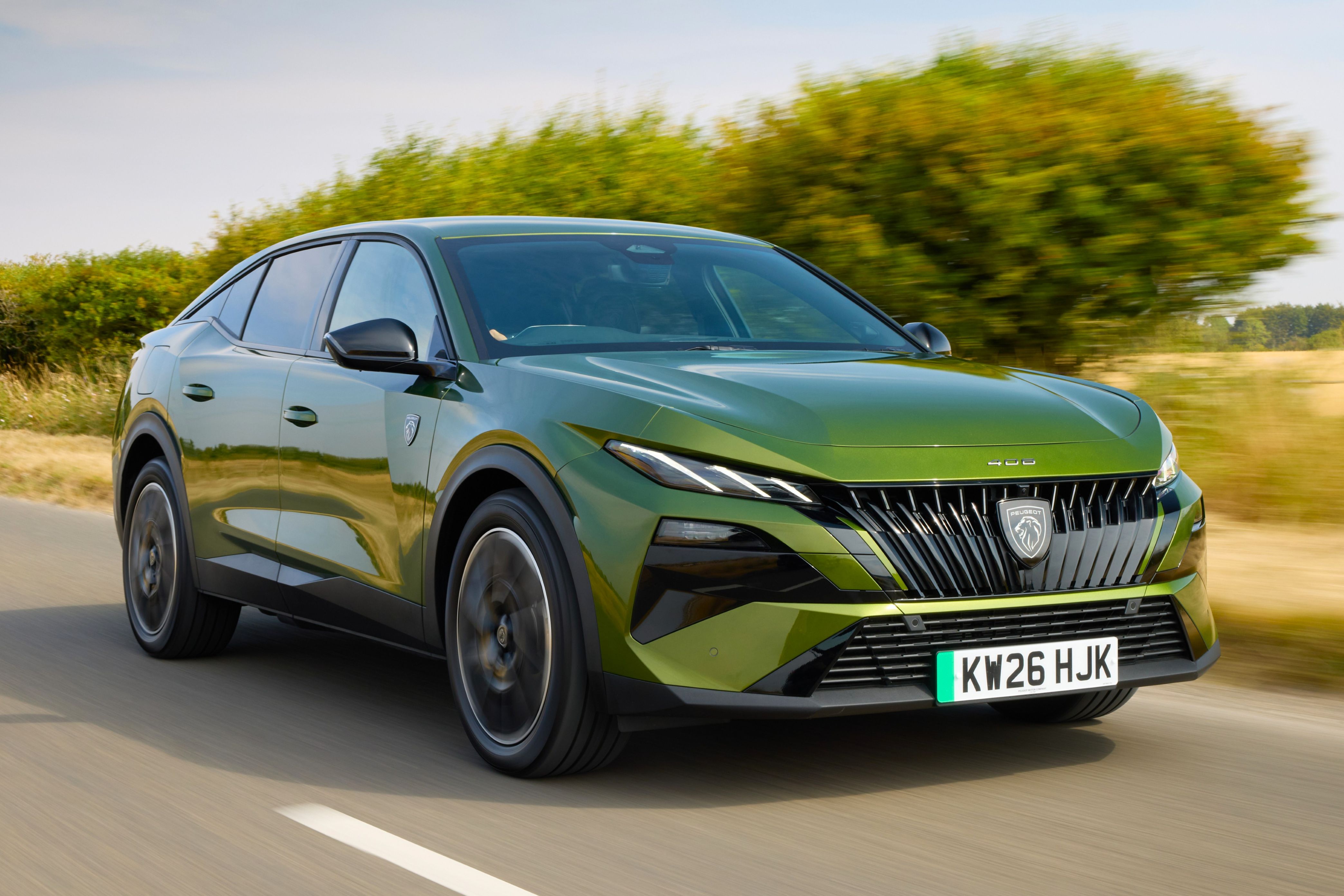
There are a couple of quirks with the Peugeot E-408 which are worth clarifying to understand its place in the range. Although it’s SUV-esque in appearance, it doesn’t have a double-zero model name and while its initial ‘4’ indicates it’s longer than the E-3008 — and it is by 145mm — in all other respects it’s smaller. No, we don’t understand the logic, either.
While the E-408 remains generally roomier for people and their stuff than the E-308 hatchback, with 110 litres of extra boot space albeit suffering from 16mm less rear seat headroom, the bare facts are that if you want an SUV coupe-style electric Peugeot, the E-3008 makes a far better fist of it.
Although the E-408 went on sale after the E-3008, it’s based on the older EMP2 platform which underpins the E-308, so there are limitations in terms of battery and power level choices. In fact, you’ve just the one option — the same 55kWh usable capacity pack but here paired with a 210PS electric motor.
As a result, the E-408’s a sprightly performer, with a 7.6-second 0-62mph time and, because its elongated shape cuts through the air more efficiently than the E-308, in spite of its extra urgency it’s also got a longer driving range with a best of up to 283 miles for both Allure and GT specifications, with the flagship GT Premium only being down by two miles.
So why might you opt for the Peugeot E-408 over the E-308 or E-3008? Well, in most respects it’s more accommodating than the E-308, but it costs an extra £3200 for an equivalent E-408 derivative. However, at £32,695 for the Allure trim, that’s a chunky £4300 saving over the nearest E-3008.
It’s still hardly compelling, though — if your budget means an E-3008 is within reach, go for that as it’s the fundamentally superior car.
Peugeot E-5008
Launched in: 2024
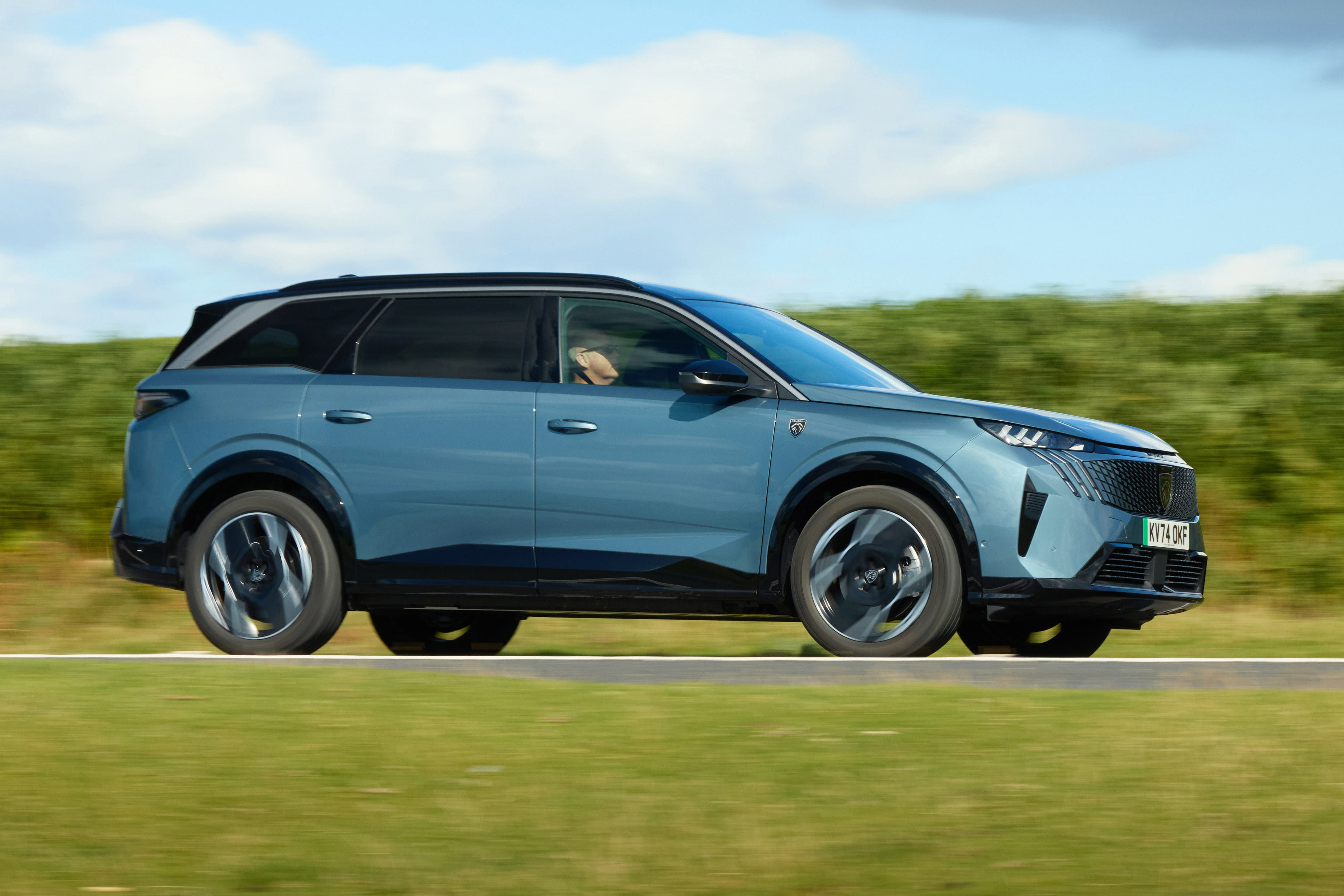
If the E-3008 appeals to you, but you just wish it was more… Well, more full stop, then the Peugeot E-5008 might well be the car you’re after. The front halves of the pair are more or less identical, but gone is the E-3008’s sportier roofline, exchanged for the E-5008’s longer, more perpendicular arrangement.
Not only is there more space in the E-5008’s second-row seats, Peugeot’s snuck in a third row of smaller chairs, which conveniently fold into the floor when they’re not required. They’re only designed for children and more petite adults, so it’s only really an occasional seven-seater, but that’s equally true of the forthcoming Skoda Peaq.
Yet in terms of its carrying capacity, the Peugeot bests the Skoda, regardless of how many seats are in use at any one time. All seven occupied? 348 litres of boot space for the E-5008 to 299 litres for the Peaq. In five-seater mode? 916 litres and 890 litres respectively? What about when configured as a plush two-seater van? The Peugeot’s still on top at 2232 litres to the Skoda’s 2075-litre volume.
What is likely to come as more of a surprise is that the least-expensive E-5008 is £11,500 cheaper than the Peaq costing from £40,595, albeit with a battery pack that manages up to 309 miles to the Skoda’s 395-mile tally. But, the equivalent E-5008 Long Range redresses that with a 413-mile maximum range between charges and it’s still far less pricey at £43,295.
Each E-5008 derivative has an equivalent in the E-3008 line-up, so the same points are pertinent when it comes to choosing the best one to go for. Just be sure that you’ll need and use the E-5008’s extra capacity as you’ll be paying an additional £3600-£3800 depending on the trim level for the privilege.
Peugeot E-Rifter
Launched in: 2021
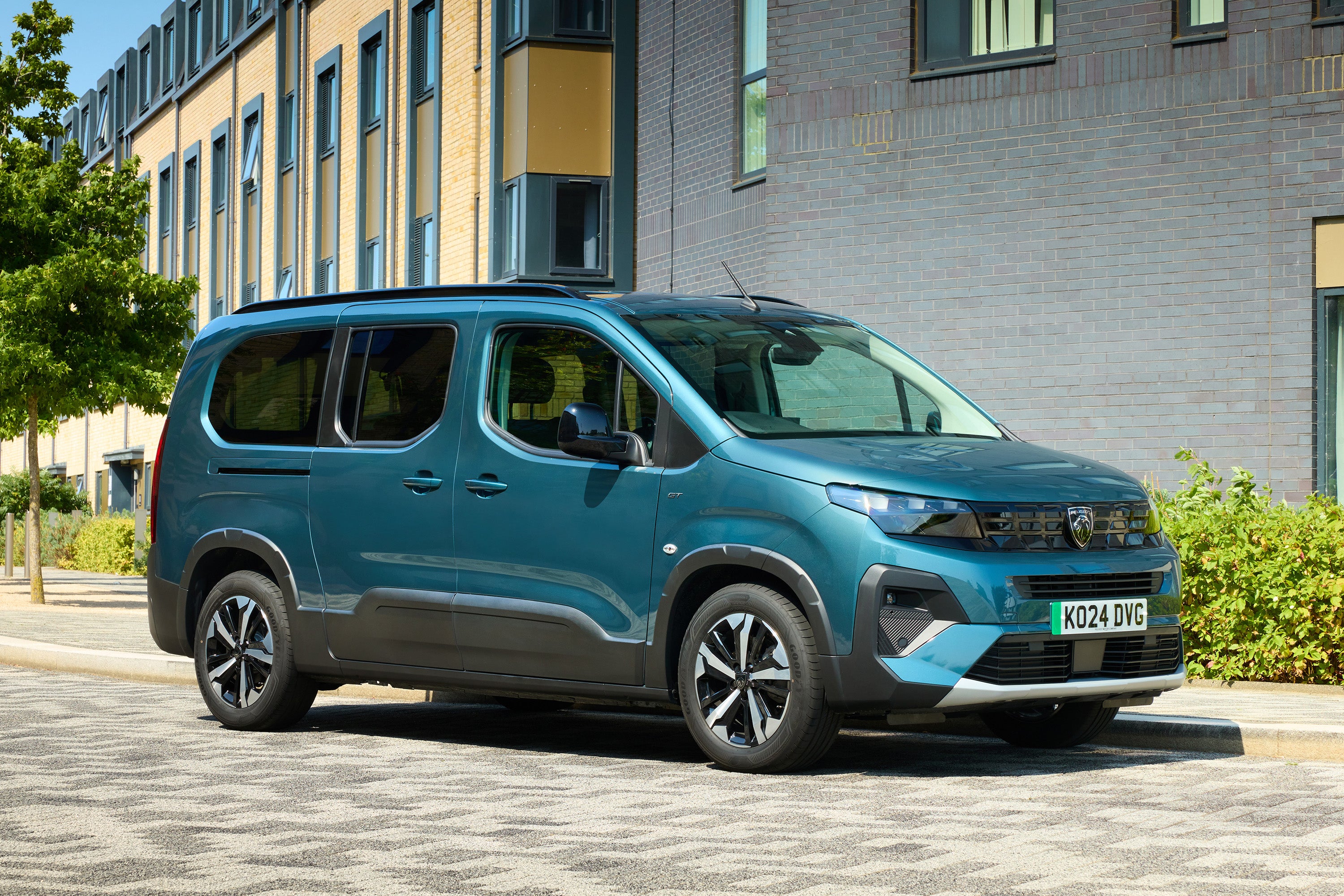
No amount of chunky plastic bodywork cladding, wheelarch extensions and faux skid plates can disguise the fact that the Peugeot E-Rifter is a medium-sized van-derived MPV, but they are useful for creating a degree of differentiation from its clones sold as the Citroen e-Berlingo, Toyota Proace City Verso Electric and Vauxhall Combo Life Electric.
Once you’ve clambered aboard and got used to the vastness of space and the wide variety of in-car storage solutions around you, you’ll also notice that the E-Rifter is further separated from its facsimiles by dint of its modified dashboard. Okay, much of it’s the same as the others, but Peugeot’s still given it the i-Cockpit arrangement, with a small steering wheel and higher-set instruments.
Two body lengths are available — the shorter E-Rifter Standard is a five-seater in both specifications, while the extended E-Rifter Long has seven seats in Allure trim, but five in the pricier GT guise. Odd, especially as the Long costs £900 more than the Standard whichever you choose, with prices starting at £31,000 with the ECG discount applied.
While the E-Rifter’s not going to win any beauty pageants and its interior is lined with tougher, van-grade plastics, it is a supremely flexible and capacious car, more than up to the job of dealing with the rigours of little kids’ sticky hands and kicky feet.
Its rear sliding doors are a Godsend which will prevent no end of car-parking dings from enthusiastic children as they rush out, while its van-aping shape ensures there’s no lack of boot space. Even the E-Rifter Standard with five seats in use will swallow 775 litres of luggage without hindering your view out of the rearmost windows.
Sure, it’s no ball of fire with just 136PS and 270Nm from its electric motor, but it doesn’t need to be quick, just easy. DC recharging at 100kW isn’t all that quick either by 2026’s standards, but it’s ample to zap your 52kWh battery up to 80% charge in 30 minutes.
Little can be done to help the bluff E-Rifter cleave the air with a greater degree of efficiency, meaning its claimed driving range of 199 miles will limit its appeal to those who’ll predominantly use it for short- to medium-length journeys. It will do those effectively and at low cost.
Our pick would be the E-Rifter Standard in GT specification at £33,795. It brings welcome equipment enhancements such as dual-zone climate control, a heated steering wheel, power-folding door mirrors and electric windows in the rear doors.
There’s also added practicality with three individual second-row seats, all with Isofix points, as well as an opening rear windscreen so you aren’t forced to use the enormous tailgate for boot access when space behind the car’s limited.
Peugeot E-Traveller
Launched in: 2020
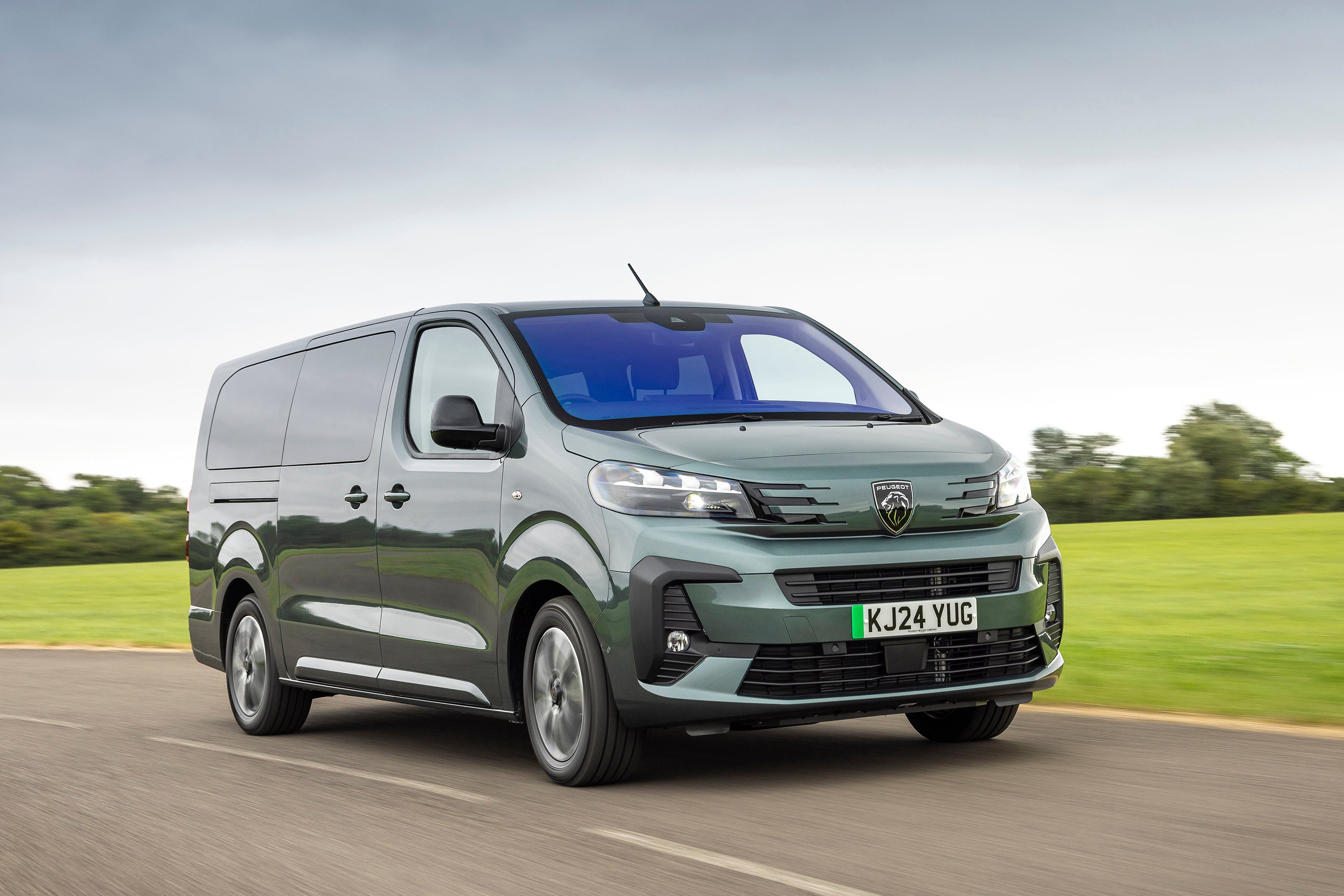
Another Stellantis van-derived people carrier, albeit larger with seats for between six and nine adults depending on the trim level and configuration chosen. Yet, while the smaller E-Rifter is charming, the Peugeot E-Traveller seems largely devoid of personality at all.
Yes, because it’s shaped more like a block of flats there’s more space inside the E-Traveller than you would hope to find in the Volkswagen ID. Buzz, but it feels more appliance-like. What doesn’t help is that aside from different headlights, grille and badging there’s nothing that shouts ‘Peugeot’ at you to mark it out from any of the Citroen e-SpaceTourer, Toyota Proace Verso Electric or Vauxhall Vivaro Life Electric.
It’s even more pronounced once you’ve hoicked yourself up into the driver’s seat. Aside from the Peugeot logo on the steering wheel, it’s identical to its Stellantis siblings — no i-Cockpit differentiation here.
Both Standard (shorter) and Long (erm, longer) bodies are available for the E-Traveller, each with the same motor as the E-Rifter — so it has its work cut out with an even bigger car — but fed energy from a 75kWh battery, which extends the range up to a 215-mile potential high.
With DC recharging still limited to 100kW, a 5-80% top up is going to take 45 minutes, but given how many passengers you have on board, it might take that long for them all to be fed, watered and toileted if you’re breaking up a long trip.
Three levels of specification are available for the E-Traveller, but we’d advise caution if tempted by the £35,490 price of the cheapest Combi grade. It has a very basic level of equipment, albeit with nine seats, you’ve hard plastic flooring instead of carpets and the heavy second- and third-row seats aren’t designed for the kind of flexibility most families crave, being more of a taxi-type specification.
If your budget permits, go for the priciest Allure trim level over the middling Active. Okay, it’s upwards of £48,125, but that’s over £10k less than the cheapest ID. Buzz, plus it makes the interior feel much more welcoming and user-friendly, with all of the rear seats sliding back and forth on rails, plus the sliding doors operate electrically, there are climate control vents for everyone in the back and the roof’s partially glazed.
For an extra £750 you can swap the second-row bench for two individual captain’s chairs and a pop-up table, while a further £740 brings a similar pair of seats for the third row. Yes, those changes drop the seating tally from eight, to seven to six, but if that number’s sufficient, each of them can recline and slide back and forth to maximise the room on offer.
Although Peugeot built electric versions of its small 106 hatchback and Partner van from the 1990s, with many used for real-world trials, they were never sold to the general public in the UK.
Yet, the first Peugeot-badged EV to be sold in the UK wasn’t really a Peugeot anyway, but the result of a corporate alliance with Mitsubishi. One of the fruits of this collaboration was that the Japanese-built Mitsubishi i-MiEV electric city car was additionally sold in Britain from 2010 as both the Citroen C-Zero and Peugeot iOn, both on sale from 2010.
Despite being available for the best part of a decade, sales levels were always tiny. While its claimed 93-mile driving didn’t work in the iOn’s favour, it’s £33,155 price tag was even more of a hindrance. Even the glamorous Peugeot RCZ in GT specification with 200PS of power only cost £25,595 at the time.
Potentially, yes, although it's worth noting that Peugeot has released the GTi very late in the current E-208's production run. We suspect if it makes a name for itself and there's strong demand, the next-generation E-208 will have a GTi derivative much sooner after launch.
Not that Peugeot's doing this alone, of course – the E-208 GTi's has a close cousin in the Vauxhall Corsa Electric GSE, while the Cupra Raval has a powerful range-topper mirrored with by relation, the Volkswagen ID. Polo GTI.
Plus, already getting established on the market is the Alpine A290 – the standaline electric hot hatch version of the Renault 5 E-Tech.
According to its previously issued statements, Peugeot’s intention is that by 2030 all of its car sales across Europe will be wholly electrically powered.
Whether market demand for EVs across the continent grows sufficiently to enable Peugeot to achieve that goal remains to be seen.
The time required depends on a number of related factors, not least the capacity of the battery and how powerful the charger is that you've plugged into it.
As a general rule, when using public chargers, Peugeot's EVs can typically increase from a 20-80% state of charge in 30 minutes, although the E-Traveller's 75kWh battery, limited by a 100kW on-board charger, extends that to 45 minutes.
When using a 7kW wallbox charger at home, a 0-100% recharge will likely take anywhere between 10 and 16 hours.
Find an electric Peugeot for sale
Peugeot 308115kW GT 54kWh 5dr Auto
202412,096 milesElectric£18,000
LS197BZ- Images coming soon!0
Peugeot 3008157kW Allure 73kWh 5dr Auto
20254,080 milesElectric£23,000
LS197BZ - Images coming soon!0
Peugeot 3008157kW GT 73kWh 5dr Auto
202512,264 milesElectric£24,395
HU139PB Peugeot 208115kW GT 51kWh 5dr Auto
15 milesElectric£21,995
DN163RLPeugeot 208115kW GT 51kWh 5dr Auto
15 milesElectric£21,995
DN163RLPeugeot 208100kW GT 50kWh 5dr Auto
15 milesElectric£20,495
DN163RLPeugeot 2008115kW GT 54kWh 5dr Auto
202664 milesElectric£24,995
ST163UFPeugeot 208115kW GT 51kWh 5dr Auto
Electric£23,482
DE214RX
More electric car guides
From choosing the right EV to understanding charging, running costs and more, our guides can help.