12/10/2026
Cheapest cars to insure 2026

Written By Tom Phillips

Buying a car is only the start of the expense. Once you've driven away, you'll also need to budget for fuel or charging, servicing, maintenance, road tax and, of course, insurance. Car insurance remains one of the biggest annual motoring costs for many drivers, particularly younger motorists and those with little driving experience. While your age, postcode, occupation and driving history all influence the premium you'll pay, the car you choose also has a major impact.
Every new car sold in the UK is placed into an insurance group from 1 to 50. Cars in the lowest groups are generally cheaper to insure because they're less expensive to repair, have lower performance and are fitted with good levels of safety and security equipment.
Choosing a model in one of the lower insurance groups won't automatically guarantee the cheapest premium, but it can make a significant difference. If you're looking to keep running costs down, these are some of the cheapest new cars to insure in the UK.
Cheapest cars to insure in 2026
1. Hyundai i10 Advance 1.0 5AMT
Insurance Group 2
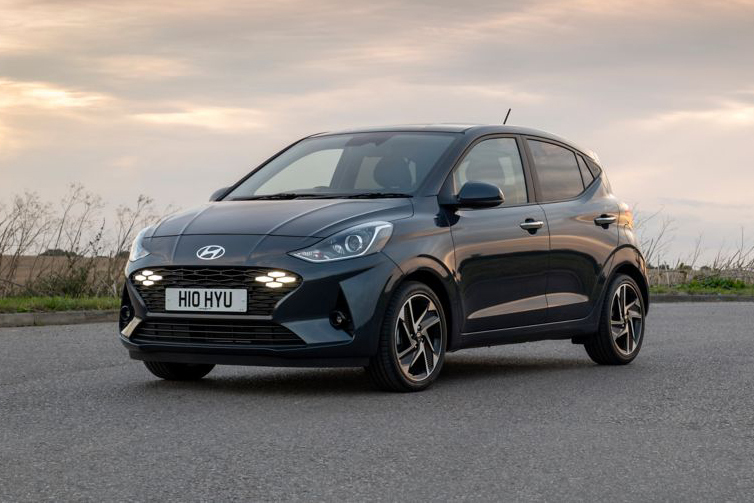
Although the Hyundai i10 is one of the best city cars on sale, combining sophisticated looks with the driving experience of a larger car, the sad news is that it won't be available for much longer. Production is ceasing, meaning the firm's small car offering will be the electric Hyundai Inster, which is in insurance group 23 – ouch!
Despite its diminutive dimensions, the i10 can accommodate four adults with ease, largely at the expense of boot space which is restricted to 252 litres of capacity when the rear bench is in use. Hyundai's equipment levels are generous, with all i10s featuring digital instrumentation, an 8.0-inch multimedia touchscreen complete with Apple CarPlay and Android Auto compatibility, plus a host of driver assistance and safety systems all included as standard.
There are two petrol engines to choose from that qualify for the group 2 insurance banding: a 63PS 1.0-litre and a 79PS 1.2-litre. If you opt for entry-level Advance trim, you can choose either engine – as long as it’s paired with a five-speed automated gearbox – and get group 2 insurance, with the more expensive Premium version it's just the smaller one.
The Hyundai i10's combination of modest performance, excellent Euro NCAP safety credentials and relatively inexpensive repair costs all help keep insurance premiums low. It's one of the few new cars that still sits close to the very bottom of the insurance group rankings, making it an excellent choice for new drivers.
2. Kia Picanto Pure 1.0 GDi 5AMT
Insurance Group 3
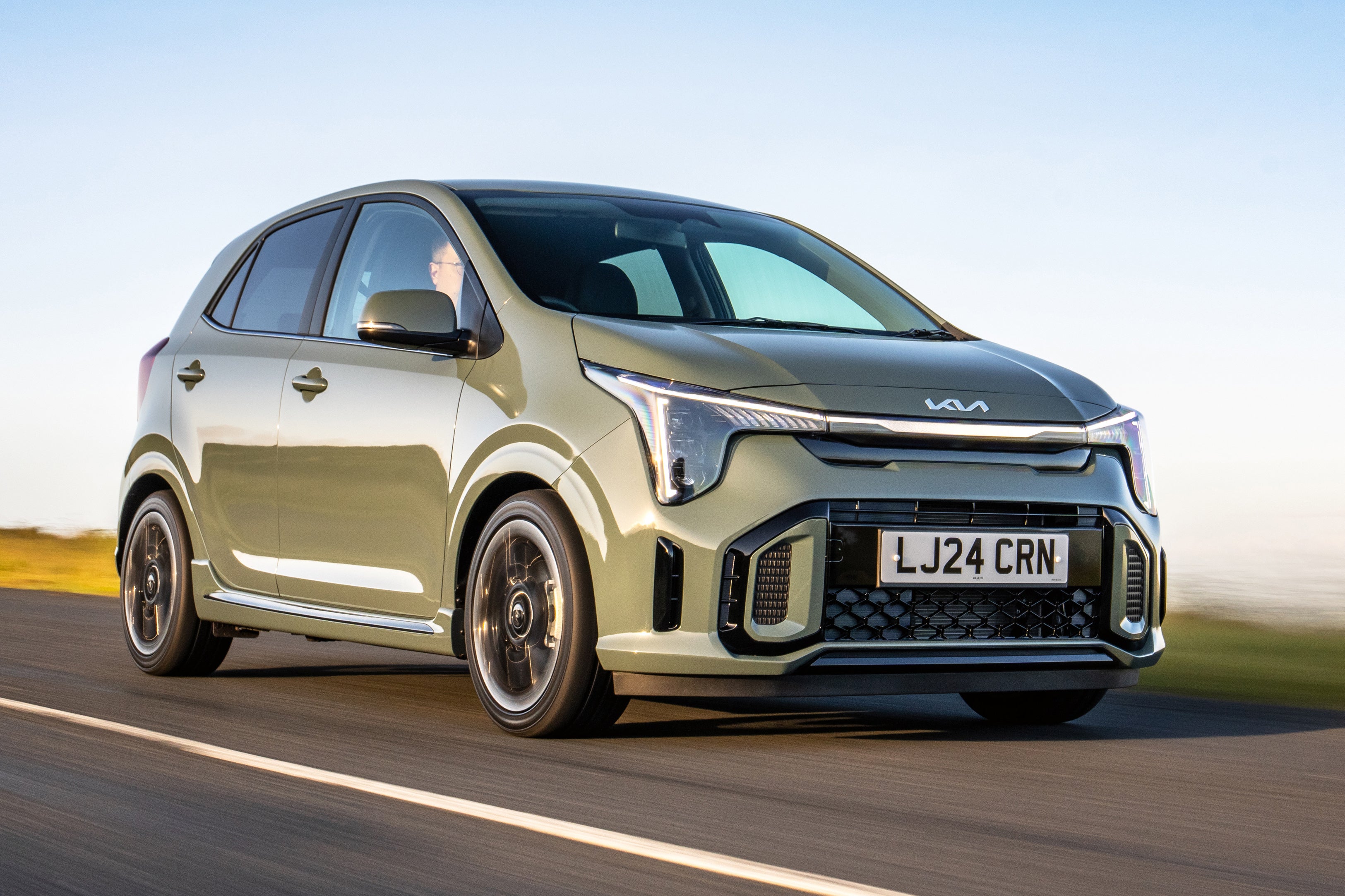
Since its mid-life facelift in 2025, bringing its styling more into line with its larger model ranges, prices of the Kia Picanto have crept up a little since the Kia gave it a mid-life facelift in 2025. The latest look is eye-catching if, perhaps, a tad aggressive for a small car. There's little sense of the Picanto being cute and cuddly.
Despite its tininess, the Picanto drives engagingly well and – as is the case with its Hyundai i10 close cousin – gives you the impression you're at the wheel of something much larger, requiring a glance in the rear-view mirror to remind you of how close the back of the car really is. Its tiny 1.0 petrol engine, also shared with the i10, doesn’t cost much to run, plus there's the long-term reassurance of Kia’s seven-year/100,000-mile warranty package.
Only one version of the Kia Picanto falls into Group 3 insurance – the entry-level Pure version with the automated gearbox. Despite that being the lowest of the specifications available equipment still includes 14-inch alloy wheels, an 8.0-inch multimedia touchscreen and a reversing camera.
Also like the Hyundai i10, the Kia Picanto benefits from simple mechanicals, affordable replacement parts and a strong safety package. Those factors all work in its favour when insurers calculate premiums.
3. Volkswagen Polo Life 1.0 MPI
Insurance Group 3
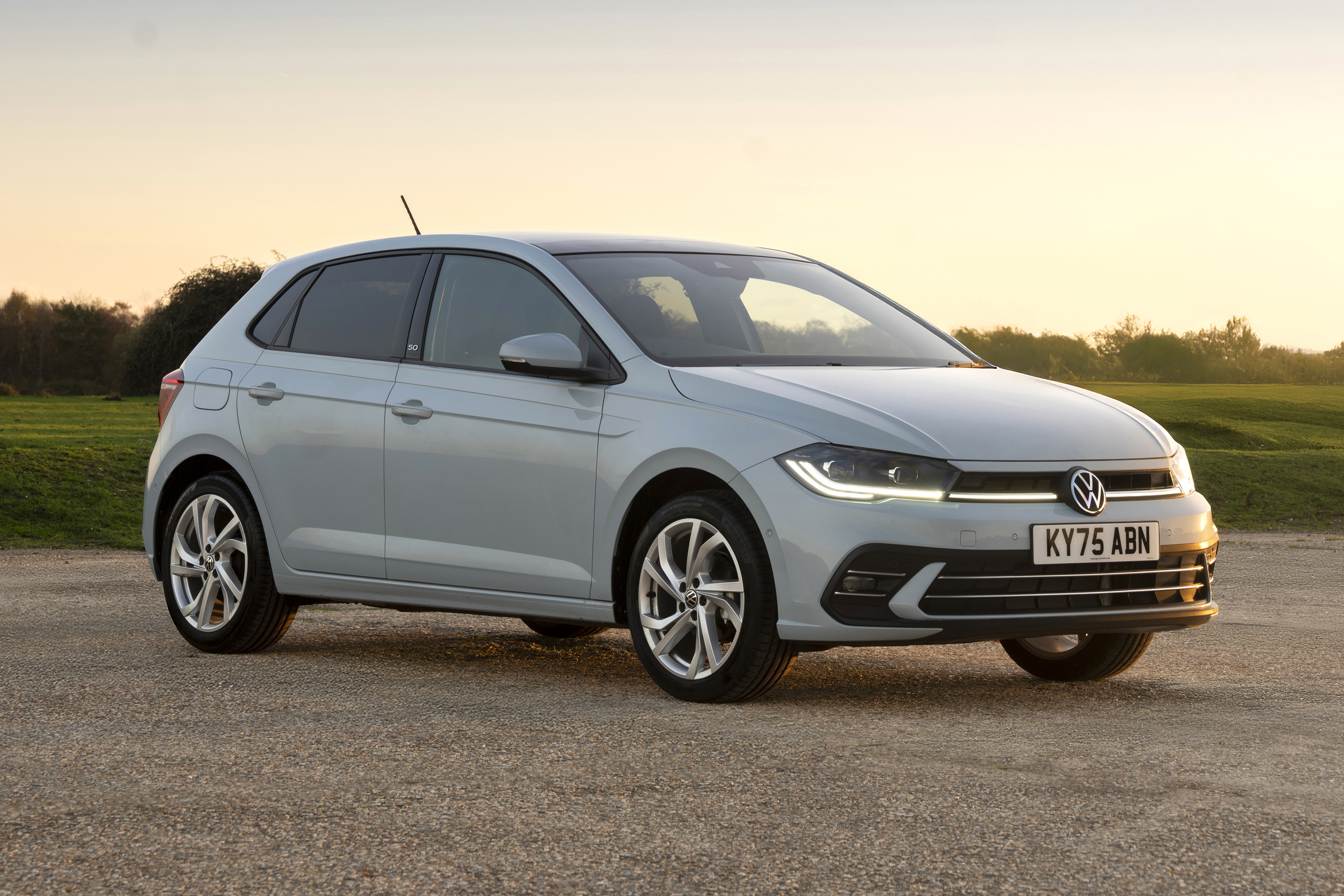
Today’s Volkswagen Polo is now similar in size to the original Volkswagen Golf. The trade-off for taking up more space on the road is that the Polo is also the closest small hatchback you can buy to a car from the class above.
In terms of its comfortable driving experience, interior quality and tech features available, a Polo feels more like a Golf than ever. It just seems quieter and more refined on the road than its rivals, while even entry-level Life versions have LED headlights and wireless phone connectivity for Apple CarPlay and Android Auto.
The downside is perhaps obvious: you pay a premium for driving perhaps the most grown-up small hatchback on the market, with new prices among the highest in the class starting a shade over £22k. However, thanks to an excellent Euro NCAP safety rating and solid build quality, if you opt for an entry-level VW Polo Life with the least powerful 1.0-litre MPI 80PS engine, it's graded in insurance group 3, while running costs should be low.
Although the Polo costs more to buy than its rivals, insurers tend to view it favourably thanks to its excellent crash protection, solid build quality and sensible engine options. It proves that you don't always need to sacrifice refinement to keep insurance costs under control.
4. Škoda Fabia SE Edition 1.0 MPI
Insurance Group 4E
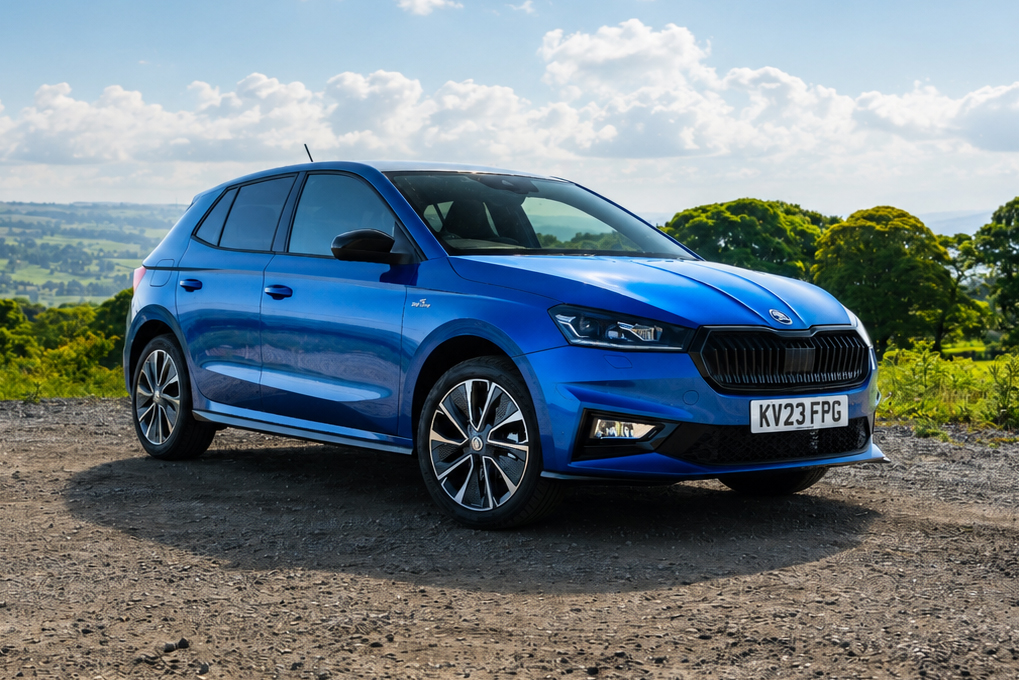
The Škoda Fabia remains one of the best small hatchbacks on sale and has become very popular thanks to the fact it’s a really solid all-rounder, despite its small size. The Fabia has a slightly bland but spacious interior, with plenty of room for four adults while its 380-litre is one of the biggest you can get for this type of car.
The Fabia drives well, too, with smooth engines and a soft, supple ride that makes longer journeys slip by comfortably, although performance is no more than adequate for the 80PS 1.0-litre engine that's fitted to the two versions in insurance group 4.
As ever, Škoda likes to prove the lengths it has gone to to think about the small things you might need on your journey. Its Simply Clever features on the Fabia include an ice scraper behind the fuel filler flap and an umbrella hidden in the driver’s door.
The Škoda Fabia also shares much of its engineering with the Volkswagen Polo, meaning parts are widely available and repair costs remain competitive, while its five-star Euro NCAP safety rating was regarded as the best performance for a small hatchback when it was tested in 2021, further helping to keep insurance premiums on the low side.
5. Kia Stonic Pure 1.0 T-GDi 7-speed DCT
Insurance Group 10E
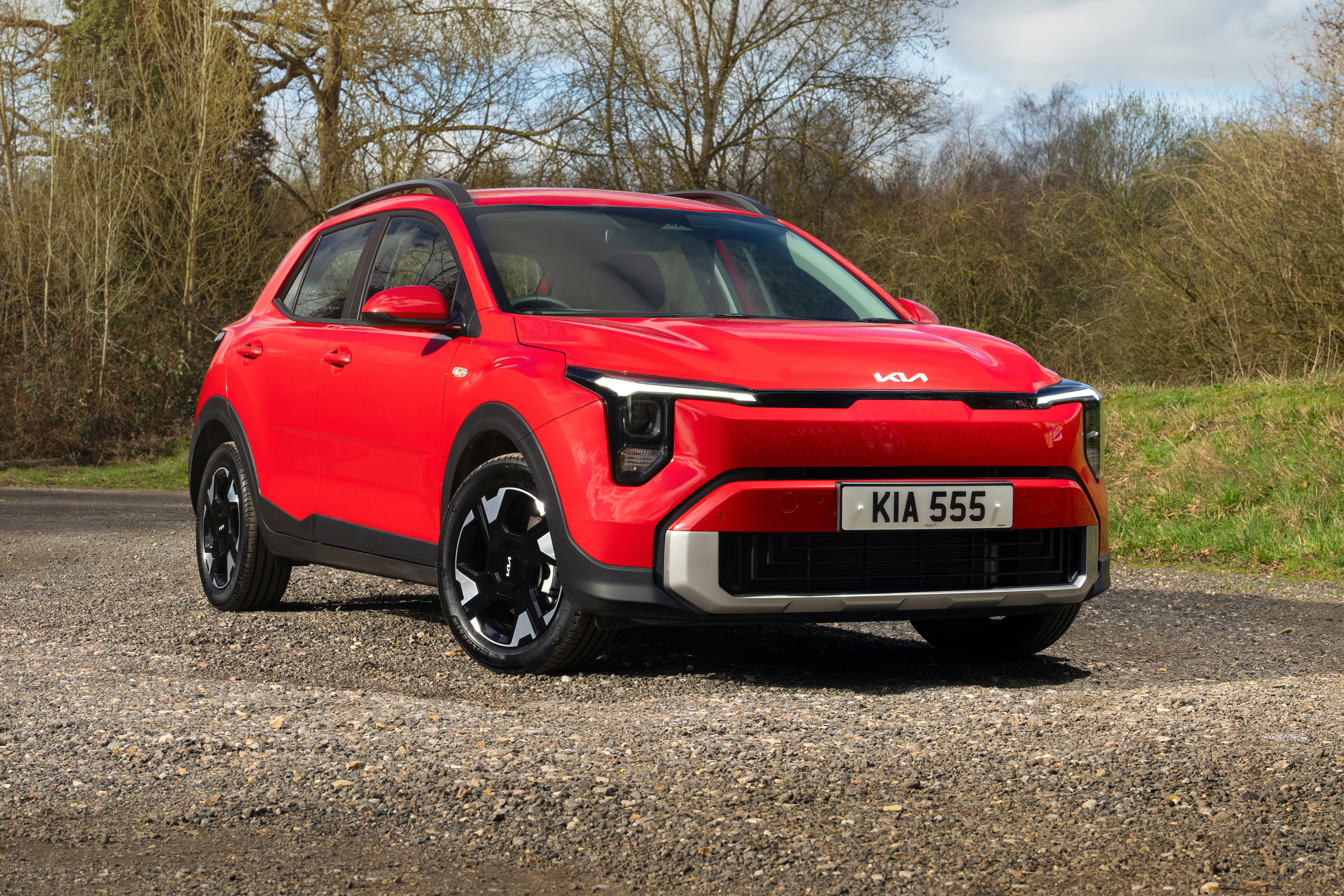
Freshly facelifted to bring its design into line with its larger models, the Kia Stonic is a car that’s designed to be very easy to live with. Although Kia calls it an SUV, it’s not one that's capable of any serious off-roading, so think upon it more as a small hatchback with a height advanytage.
Not only does the Stonic look fresher outside, you can tell that a significant amount of work has gone into making its interior feel more modern and of a higher quality since the upgrade. New technology features heavily, centred around a 12.3-inch multimedia touchscreen, even on entry-level Pure models. Space is good for front-seat passengers, but a bit tighter in the rear, while a 352-litre boot offers a good amount of luggage space for the car’s size.
All models are powered by a 1.0 engine paired with a six-speed manual gearbox or seven-speed dual clutch automatic. If you’re looking for the cheapest Stonic to insure, you’ll need to opt for the entry-level Pure model with the automatic, which comes in insurance group 10E.
For buyers wanting rugged styling without the higher insurance costs that often accompany larger SUVs, the Kia Stonic is a sensible alternative. It offers the elevated driving position many buyers want while remaining low-powered, relatively inexpensive to repair and popular with older motorists who typically make fewer insurance claims.
6. Dacia Sandero Essential TCe 100
Insurance Group 10E
.jpg)
The latest Dacia Sandero may not have the ultra-simplistic sense of personal transportation of its predecessor, as evidence by its higher pricing, but it is still a fundamentally cheap car to buy and run, with its low insurance group 10 rating being part and parcel of that.
While the Sandero isn’t the last word in performance motoring, that's in its favour when it comes to its insurance rating. Statistically, it's not the kind of car which is likely to be involved in a high-speed accident, so its modest speeds are a positive in this regard.
Because the Sandero has been built to a low price in the first place, the knock-on effect that its parts are similarly inexpensive, significantly reducing the cost of accident reparations. Neither is it a car with a particularly covetable brand image, further lowering its appeal to car thieves.
When its safety was assessed by the experts at Euro NCAP back in 2021, the Dacia Sandero was given a low two-star rating out of five, in large part due to its modest suite of driver assistance technologies. While their absence helps keep the Sandero's pricing on the low side, they don't help reduce insurance premiums – Dacia has scope to move the needle there as the tech become more mature and less costly.
7. Volkswagen Caddy Life 1.5 TSI C20 SWB
Insurance Group 10E
.jpg)
The Volkswagen Caddy might be an unexpected entry in this group, as it’s much larger and more expensive than the other cars featured. However, entry-level Caddy Life models with a 116PS 1.5 TSI petrol engine and seven-speed dual clutch automatic gearbox start in insurance group 10.
The latest Caddy is an interesting combination. It looks like a van because it's based on one, offering much of the practicality benefits that entails. There’s lots of space for passengers, a huge boot and handy features such as overhead storage which could never fit in a conventional car. Vans tend to be tough and resilient, helping reduce the Caddy's insurance costs, while retained features such as the sliding rear side doors not only make access easier, they reduce the chances of denting other vehicles in the process.
Beneath the Caddy's functional bodywork is a platform which is essentially the same as the Volkswagen Golf. Not only does this make it very car-like to drive, handling well, albeit leaning more through corners, that commonality is another feature in its cap when it comes to keeping insurance premiums affordable.
Add in all manner of the latest driver assistance technologies, such as adaptive cruise control and a reversing camera and the VW Caddy helps mitigate the chances of bending its bodywork in the first place.
8. Renault Clio Techno+ TCe 90
Insurance Group 11E
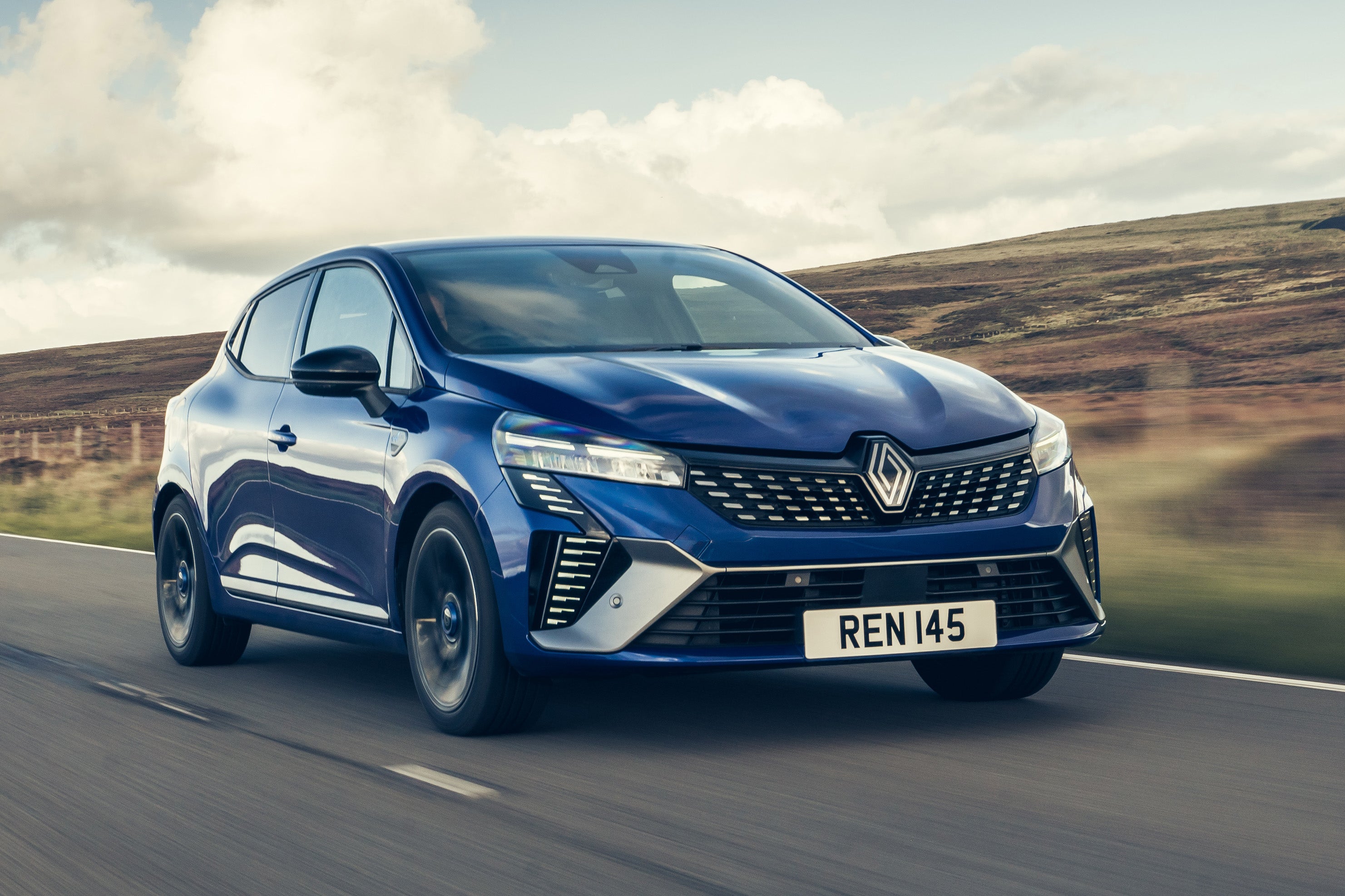
The current Renault Clio will soon be replaced by an all-new model – as a result, the two versions of the line-up which fall into insurance group 11 are now stock-only purchases, meaning you have to buy what's already been made with no factory orders being taken. Renault has recently cut the Clio's prices, enhancing its value for money, with both of the inexpensive to insure cars powered by the TCe 90 petrol engine weighing in at under £21,000.
The Clio has quite a firm ride but the payoff is sharp handling, while the petrol engine is reasonably smooth and economical, with an official claim of 53.3mpg. It also features plenty of desirable equipment, with entry-level Techno+ models including heated front seats, a 7.0-inch multimedia touchscreen and wireless smartphone charging as standard.
Space is decent up front, although rear-seat passengers might not be so comfortable as a greater proportion of the Clio's length has been given to its 284-litre boot.
Impressive levels of driver assistance equipment as standard and a strong five-star Euro NCAP safety rating – albeit one to non-current levels of stringency, together with relatively inexpensive repair costs all combine to ensure the Renault Clio's low-cost insurance levels.
9. SEAT Ibiza SE 1.0 TSI 95PS
Insurance Group 11E
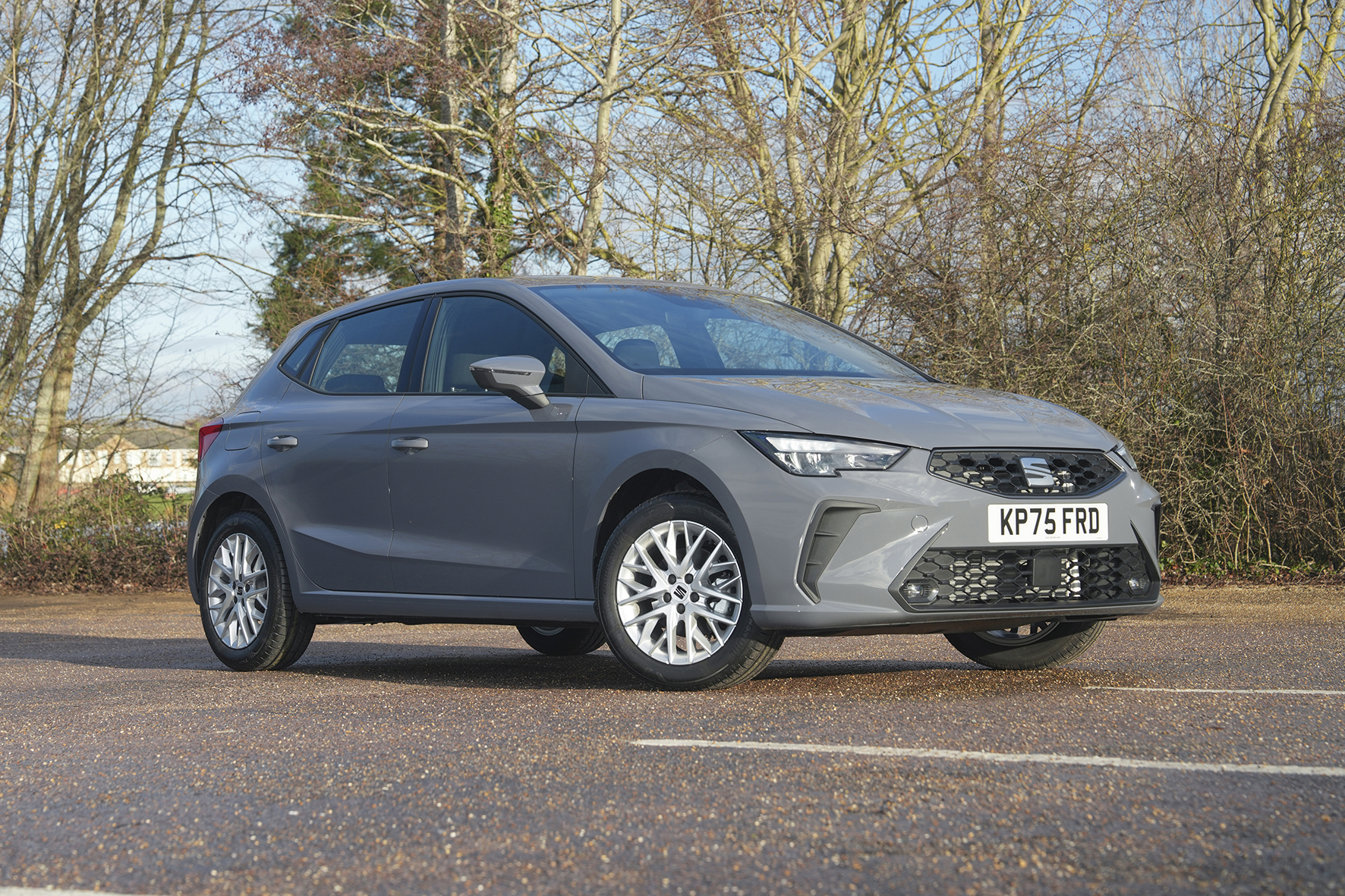
This generation of SEAT Ibiza has been with us since 2017, but to help it maintain its appeal against a tide of much newer rivals, the small hatchback has just received its second facelift. In fairness, the overall shape still feels modern as well as being more lithe-looking than the Skoda Fabia and Volkswagen Polo it shares its platform and engines with.
That commonality is one of the reasons why the Ibiza is in relatively low insurance group 11, but it is significantly higher than its corporate cousins. Exactly why hasn't been made publicly clear, but we suspect it's in large part due to the fact SEAT has a sportier image overall, even if that's been diluted over the years since Cupra was separated away as a standalone brand.
Being targeted at a younger audience tends to elevate a car's perceived risk factor, even if the majority of Ibiza driver's aren't that youthful. It's also worth noting that only one version of the SEAT is in group 11, that being the entry-level SE specification powered by a slightly punchier and turbocharged 1.0-litre engine producing 95PS. That's only 15PS more than those premium-friendly Fabias and Polos, but mention of 'turbo' still makes insurance companies think 'speed'.
Another possibility is that the Ibiza's body panels are more intricate, with a greater number substantial creases stamped into it. This might make repairing damaged bodywork more time-consuming, thus increasing the cost, while replacement parts could also be more expensive.
Its strong five-star Euro NCAP safety rating was undertaken as recently as 2022, which will count in its favour, as will the associated driver assistance systems. While insurance premiums shouldn't be eye-wateringly expensive for the SEAT Ibiza in group 11, we would encourage you to get quotes for the comparable Fabias and Polos before making a purchase.
10. Toyota Yaris Icon 1.5
Insurance Group 13E
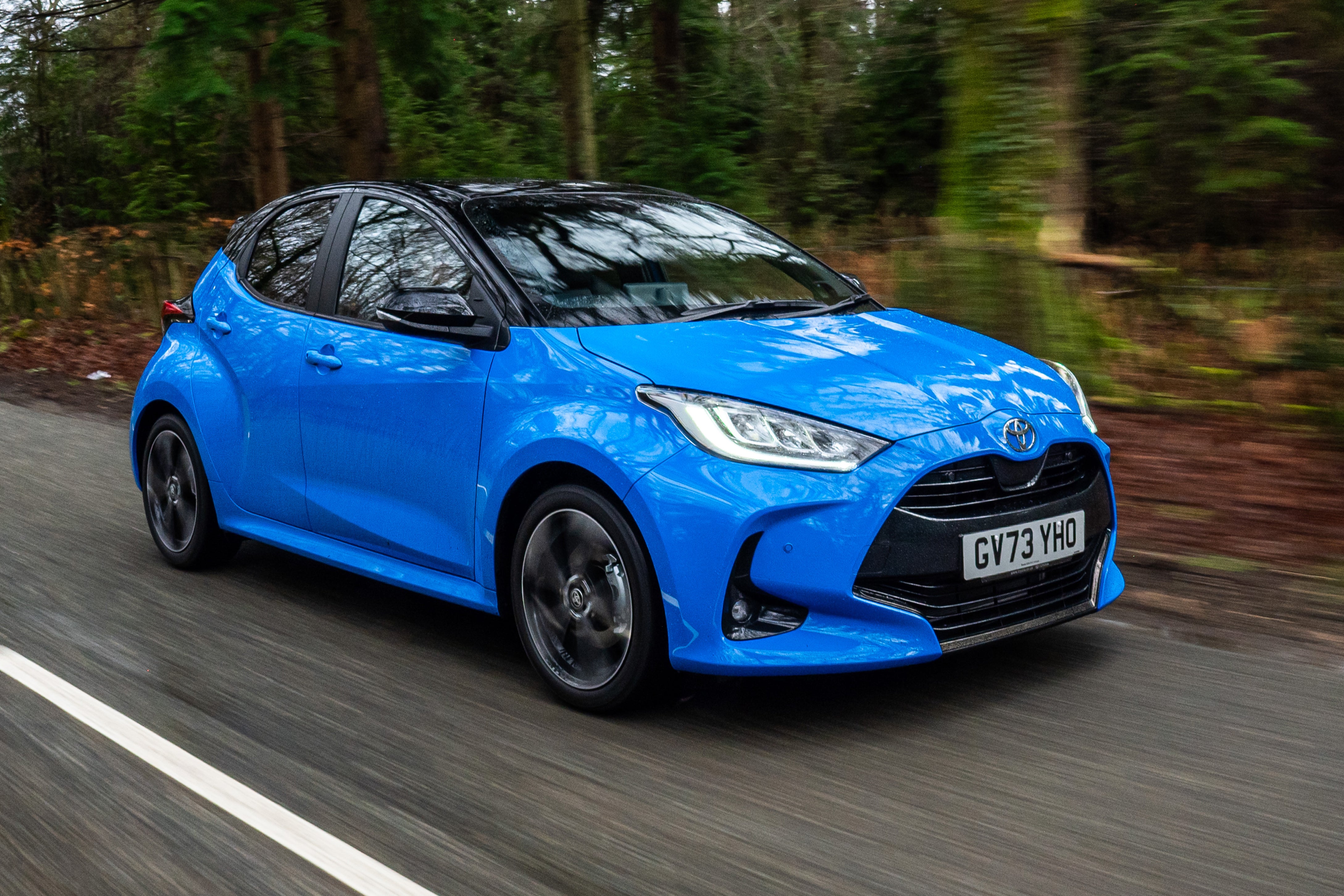
The Toyota Yaris is a great example of automotive downsizing. Despite its relatively small size, the Yaris packs in a lot of technolgy, comfort and safety features as standard.
All models are smooth and efficient petrol hybrids, which make driving around down very quiet and comfortable, as most of the time the engine is switched off.
Even the basic Icon trim is well equipped, too, with plenty of physical buttons as well as a central touchscreen, making everything easy to use. Despite everything it offers, insurance for a Yaris shouldn’t prove too expensive to run, with insurance rated as group 13 for the entry-level Icon specification.
Why so low? Well, for one the Yaris's decent Euro NCAP safety rating will be in its favour, despite dropping from five stars to four when it was re-tested in 2025. Its other key advantages are that it's popular with an older demographic of buyers who are treated as lower risk, plus it's also a car that people favour who wish to maximise their fuel economy, lessening perceptions of it being in any way a performance car. As a comparison, the specialist Toyota GR Yaris hot hatchback can be as high as insurance group 44.
What affects the cost of your car insurance?
Insurance groups are only one part of the picture. Insurers also consider a range of personal factors before calculating your premium, including:
Your age and driving experience
Where you live and where the car is kept overnight
Your occupation
Annual mileage
Previous claims or convictions
Voluntary excess
No-claims discount
Even if two people buy exactly the same car, they may receive very different insurance quotes. However, choosing a car in one of the lower insurance groups gives you the best possible starting point.
What this means for you
If keeping running costs as low as possible is your priority, the Hyundai i10 and Kia Picanto are difficult to beat. Both combine very low insurance groups with affordable purchase prices and excellent fuel economy. If you need more space, the Volkswagen Polo and Skoda Fabia offer a more grown-up driving experience while remaining inexpensive to insure. Buyers wanting an SUV should consider the Kia Stonic, while the Toyota Yaris is an excellent choice if you cover lots of miles and want the efficiency of a hybrid.
There are many personal factors at play, like where you live, how much you drive and what you do for a living, but generally, the cheapest cars to get cover for are small city cars. The Hyundai i10, Kia Picanto and Volkswagen Polo are all good options, as they have small engines without much power, lots of safety equipment and cost little to repair.
Car insurance is an expensive running cost, but you can do certain things to help bring down your premium.
It’s always worth shopping around using a comparison webiste rather than letting your existing policy auto-renew. Do this weeks in advance of your current policy ending, because premiums can often be lower when organised early rather than the night before they're due to take effect.
Paying all in one for your annual policy is usually cheaper than paying monthly if your budget permits, while some insurers will let you fit a telematics 'black box' that monitors your driving, rewarding you with lower premiums for demonstrating that you're a low-risk driver.
A UK not-for-profit organisation called Thatcham Research assesses each car and gives it a rating, which is then reviewed by the underwriting industry to agree the insurance group each car is assigned with. An insurance group is then assigned for each individual derivative of car, not the model line-up as a whole.
Group 1 is the lowest of the scale, theoretically being the cheapest to insure when all other considerations are equal. At the opposite end and most likely to result in the most expensive premiums is insurance group 50.
If you see a car’s insurance group number has an E after it, the significance is that the car in question Exceeds the expected safety and/or security standards for a car of that type.
Those cars whose insurance groups have the E suffix should be theoretically less costly to insure than those without it.
At present, electric cars usually cost more to insure because they can prove far more expensive to repair if the high-voltage battery pack is damaged as a result of an accident. Although it happens rarely in comparison with vehicle fires of combustion-engined cars, EV battery fires tend to be more severe.
Another factor increasing the cost of EV insurance is that presently few garages and repair shops are specially trained in dealing with electric vehicles, both in terms of the hardware and software applications. While those skills are more specialist and trickier to find, their cost is at a premium.