09/07/2026
Best hybrid cars 2026: The ultimate UK buying guide

Written By Keith WR Jones

If you’ve decided that a hybrid car suits your motoring needs best of all, there’s a relatively broad assortment of choice available across a variety of differently sized and shaped models.
Whether you’re on the lookout for a small hybrid that’s perfect for inner-city driving, a larger model that will be perfect for family life as your kids grow or even if you fancy something with a sportier edge, there’s a car that’s right for you which combines petrol-engine ease of use together with electrical efficiency.
Having choice is a good thing, but it can also be a source of confusion, especially when hybrids come in three types – mild, self-charging and plug-in – and it not always being clear which is which. Here we are purely looking at self-charging hybrids that don’t require plugging in, but even then they can come with different bodystyles as well as levels of power and equipment, adding layers of complexity.
Our ensemble of car reviewing experts has got together to produce a shortlist for you, identifying which hybrids will satisfy car buyers’ different requirements to ensure you’re not wasting time pondering models which leave plenty to be desired.
It's also worth knowing that buying a hybrid no longer means paying less annual car tax. Hybrids registered from 1 April 2017 are now subject to the same standard annual VED rate as petrol and diesel cars, although CO2 emissions still affect the first-year tax on a brand new car. You can see exactly what you'll pay in our 2026-2027 VED car tax guide.
The Drive hybrid car shortlist
Best hybrid overall: Hyundai Santa Fe – A great car that also happens to be a hybrid
Best hybrid for small families: Dacia Duster – Resilient, practical and with growing room
Best hybrid for large loads: Toyota Corolla Touring Sports – Lugs loads efficiently
Best large family hybrid: Hyundai Santa Fe – Spaciousness with low running costs
Best luxury hybrid: Lexus LM – Luxury road travel re-imagined with hybrid efficiency
Best used hybrid for under £10k: Lexus CT200h– All the plush for modest cash
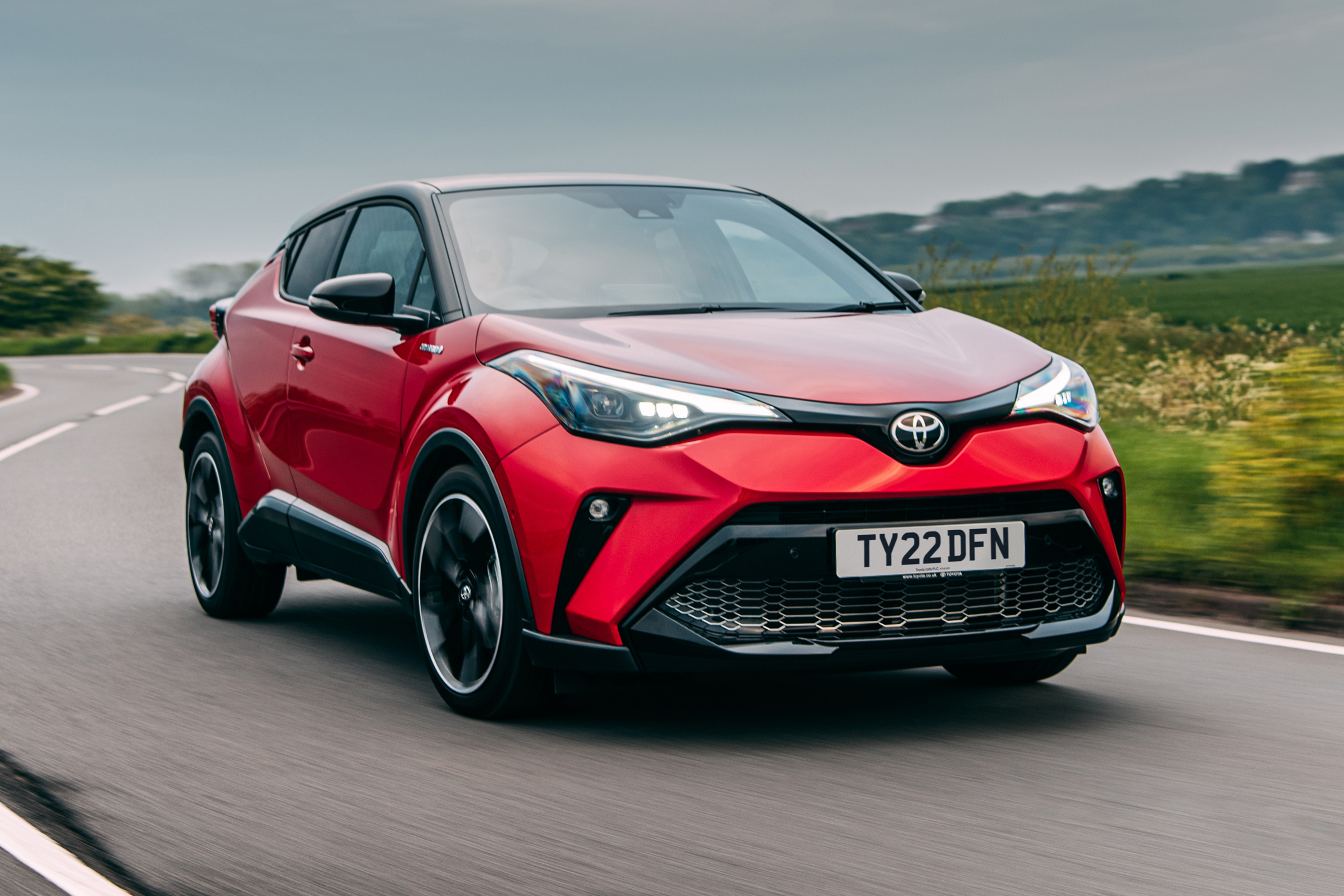
Best used hybrid for under £20k: Toyota C-HR (2016-2023) – Sleek, fun to drive SUV
Best hybrid sports car: Honda Prelude – Sporty coupe that’s right for the times
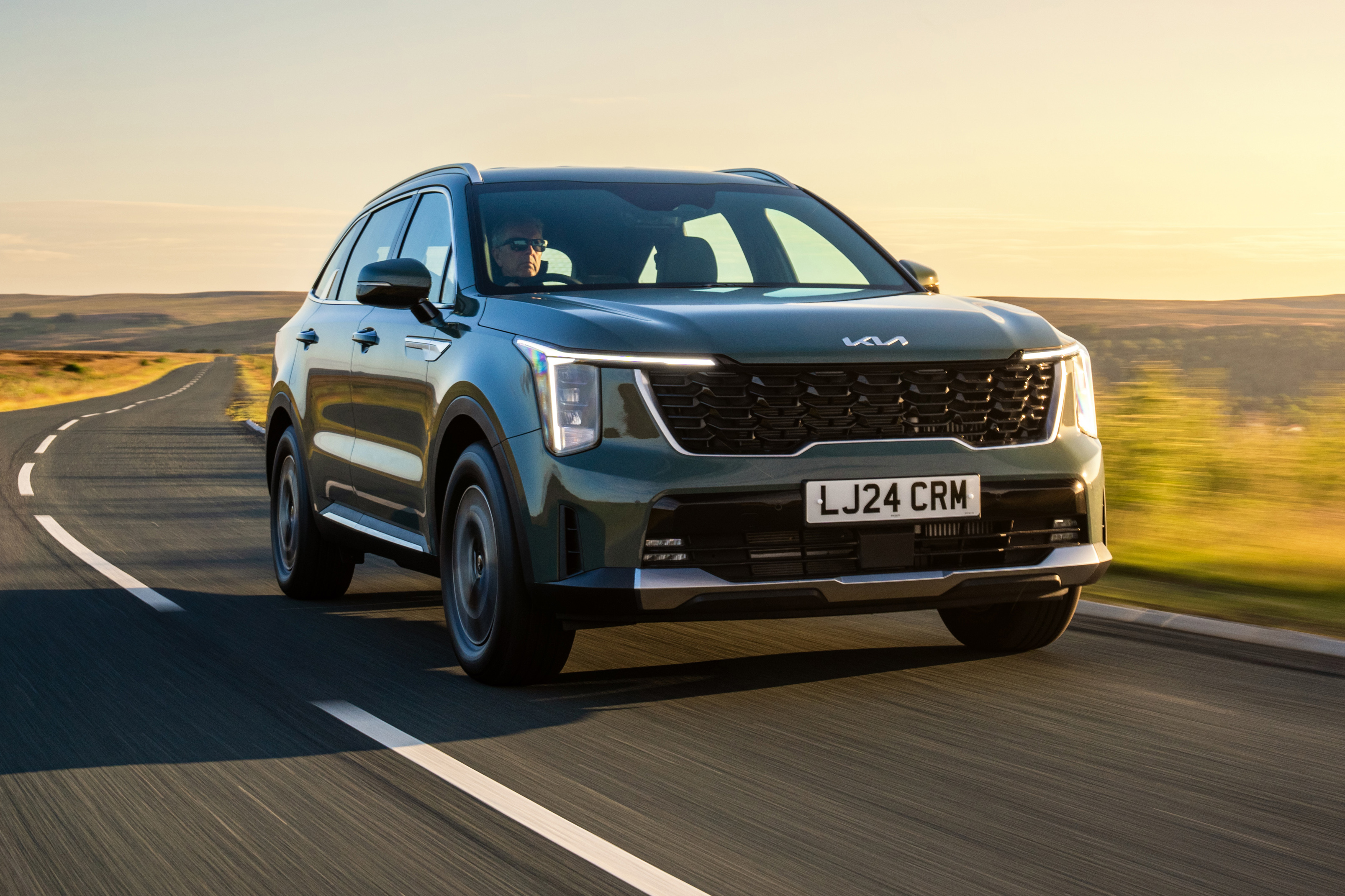
Best hybrid for towing: Kia Sorento – Flexible, spacious and economical hybrid hauler
Best small hybrid cars
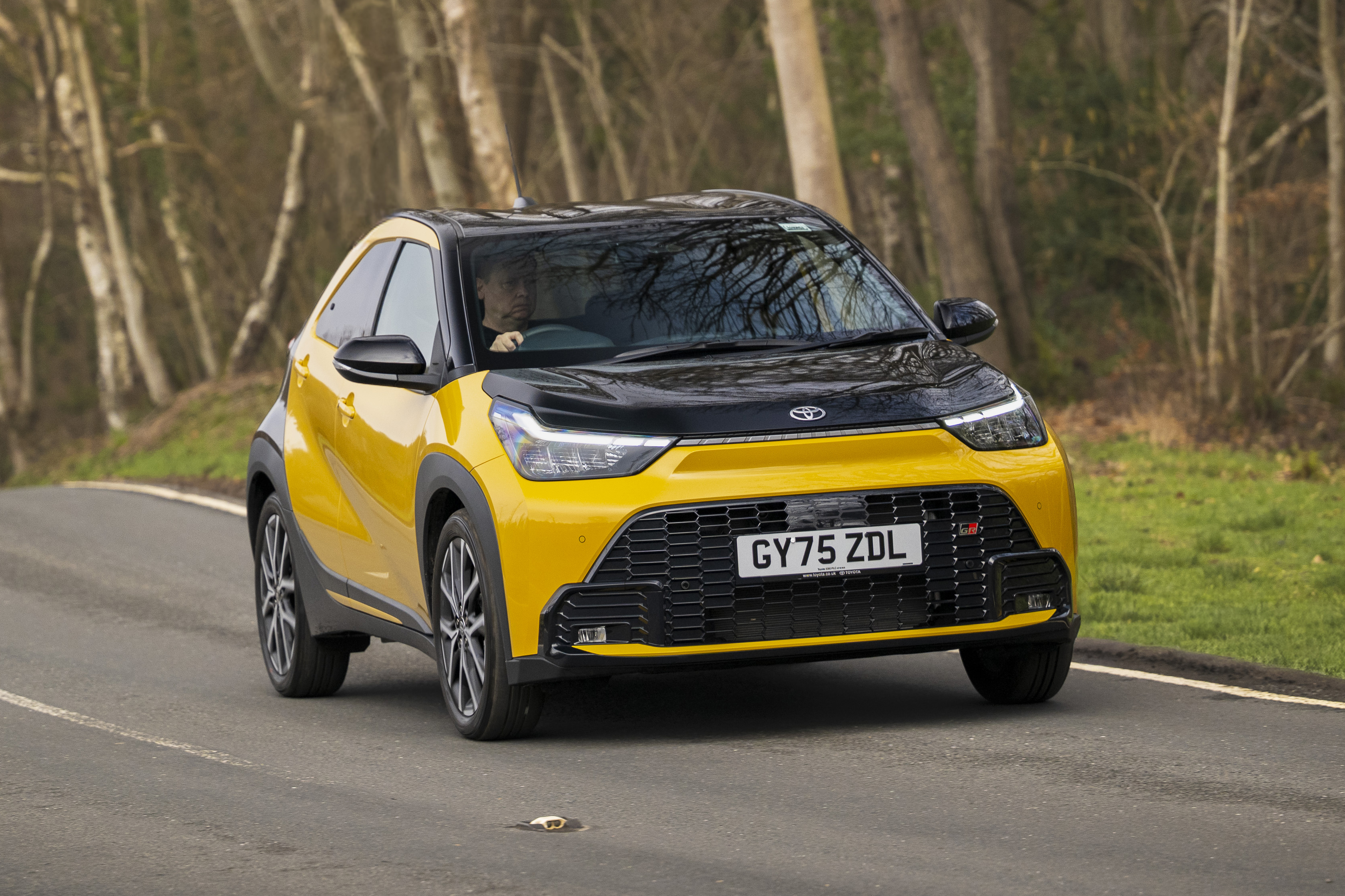
While the assortment of compact hybrid hatchbacks isn’t exactly vast, each has its own appeal: from the diddy Toyota Aygo X combining city car looks with SUV styling, through the value-focused but fun to drive MG 3, through to the urban sophisticate that is the Toyota Yaris and its Mazda 2 Hybrid clone.
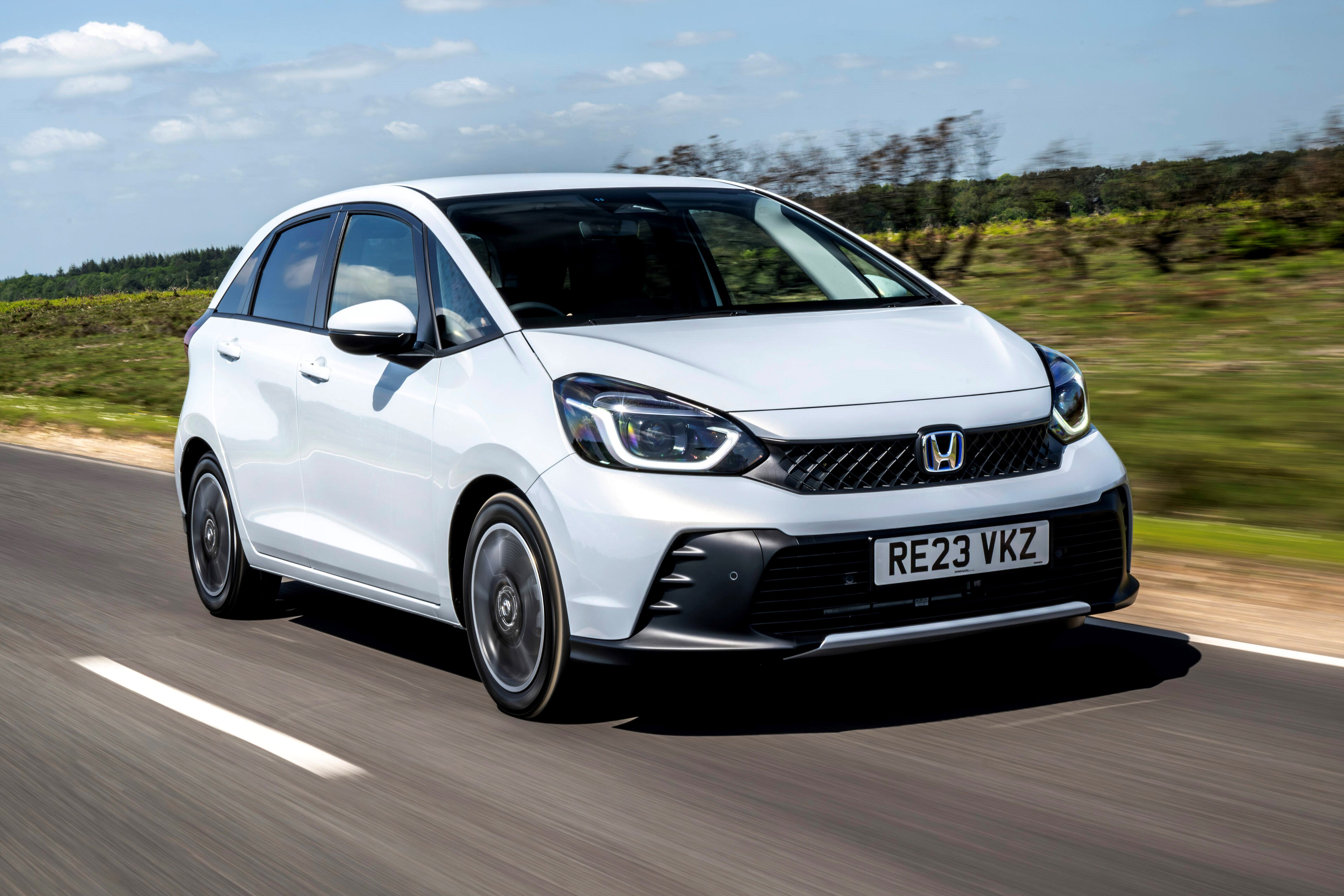
Our pick does almost everything that bit differently, though – and to great effect. Not only does the Honda Jazz look more like a shrunken MPV than a small hatch, its e:HEV hybrid system works more like an EV that happens to use the engine primarily as an on-board generator.
Acknowledging the elephant in the room, the Jazz does have a reputation for finding favour with older drivers, not exactly conveying a hip, youthful image you might hope. Don’t let that put you off, though, because the Honda’s clever, flexible interior almost has enough space inside to take said elephant out for a drive.
Its secret is its Magic Seats, which is Hondaspeak for a 60/40-split rear bench that folds conventionally to expand the boot space, but where the seat bases can also be flipped-up vertically. They create a divider, providing extra capacity between the front seats and boot proper.
Other Jazz strengths are its ease of driving, albeit at the expense of much fun being had behind the wheel, and a real world 60mpg without even trying to be economically minded. The Honda’s pricing is on the high side, but so are its equipment levels – a reversing camera, climate control and a smartphone mirroring multimedia touchscreen are all found on the entry-level Elegance version at £28,475.
Best hybrid cars for young families
Any parents and caregivers who regularly ferry about a young family know that however spacious a car may be, you could always do with even more room. So, while hybrid-powered versions of the Hyundai Kona and Toyota Yaris Cross have plenty of appeal for households with little ones, the Dacia Duster is a larger car for similar money.
Its clever petrol-electric hybrid system is shared with various Renaults and is well-regarded for delivering useful performance for safe overtaking without sacrificing fuel efficiency – expect to see close to 57mpg in the real world. Less impressive is the Duster’s three-start Euro NCAP safety rating, although this middling result is more a result of its lack of sophisticated driver aids than its crashworthiness.
Inside the Dacia, as well as masses of space ensuring you don’t find your family doesn’t fit partway through your finance deal, you will find generous levels of equipment, especially in range-topping Extreme specification, climate control, keyless entry and a 360-degree parking camera system, all for £27,600.
The Duster’s also thoughtfully trimmed with resilient, harder plastics and plastic-coated fabrics, all of which are easily cleaned and designed to withstand the worst toddlers can throw at them.
Best hybrid cars for large loads
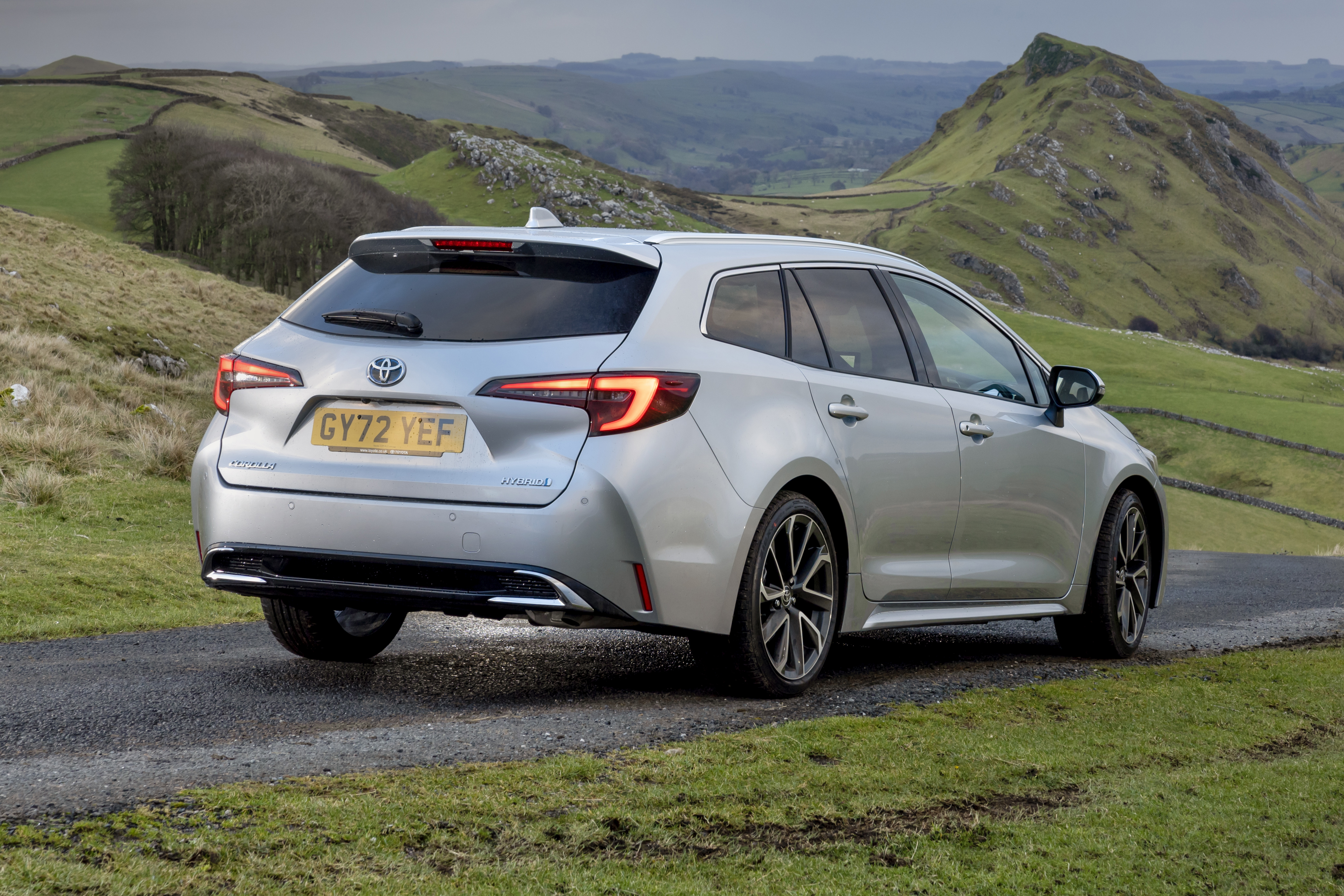
If you need a capacious load-lugger for regular cargo carrying or to transport your canine companion, right now the only self-charging hybrid-powered on sale is the Toyota Corolla Touring Sports. Even its clone, the Suzuki Swace, is no longer available.
While that sounds like Hobson’s choice, the estate-bodied Corolla has long been one of our favourite wagons anyway, regardless of how it’s powered. It’s a doddle to drive, yet also pleasingly engaging for those who enjoy being behind the wheel, combining pliant ride comfort with well-controlled handling.
Stick to the 1.8-litre engine option, which still provides ample performance thanks to 140PS of power, and you also maximise boot space. In this guise the Toyota has 596 litres of space with the seats upright, 1606 litres when they’re lowered, plenty of capacity for your carrying needs. Handily, the release handles are mounted on the sidewalls of the boot, so you can lower them while stood under the tailgate.
Not only that, the Touring Sports has more generous rear legroom than the Corolla hatchback, which is in part why they are so popular with minicab operators. As downsides go, your friends and neighbours assuming you’re moonlighting as an Uber driver isn’t exactly severe.
Expect a real-world 55mpg without too much difficulty, with low monthly costs further guaranteed by opting for the entry-level Icon specification at just over £32k. It still comes with conveniences such as keyless entry, a wireless smartphone charging pad, dual-zone climate control and adaptive cruise control.
Best hybrid cars for motorway driving
Anyone who spends most of their time driving up and down the UK’s network of motorways and dual-carriageways appreciates the importance of a comfortable, refined and relaxed car, which effortlessly soaks up the miles and doesn’t guzzle fuel in the process.
Naysayers might claim that self-charging hybrids only perform efficiently at urban speeds, but that’s not true of current models, where the likes of the Ford Kuga, the Honda CR-V and the Lexus NX all devour motorway journeys with ease and economy.
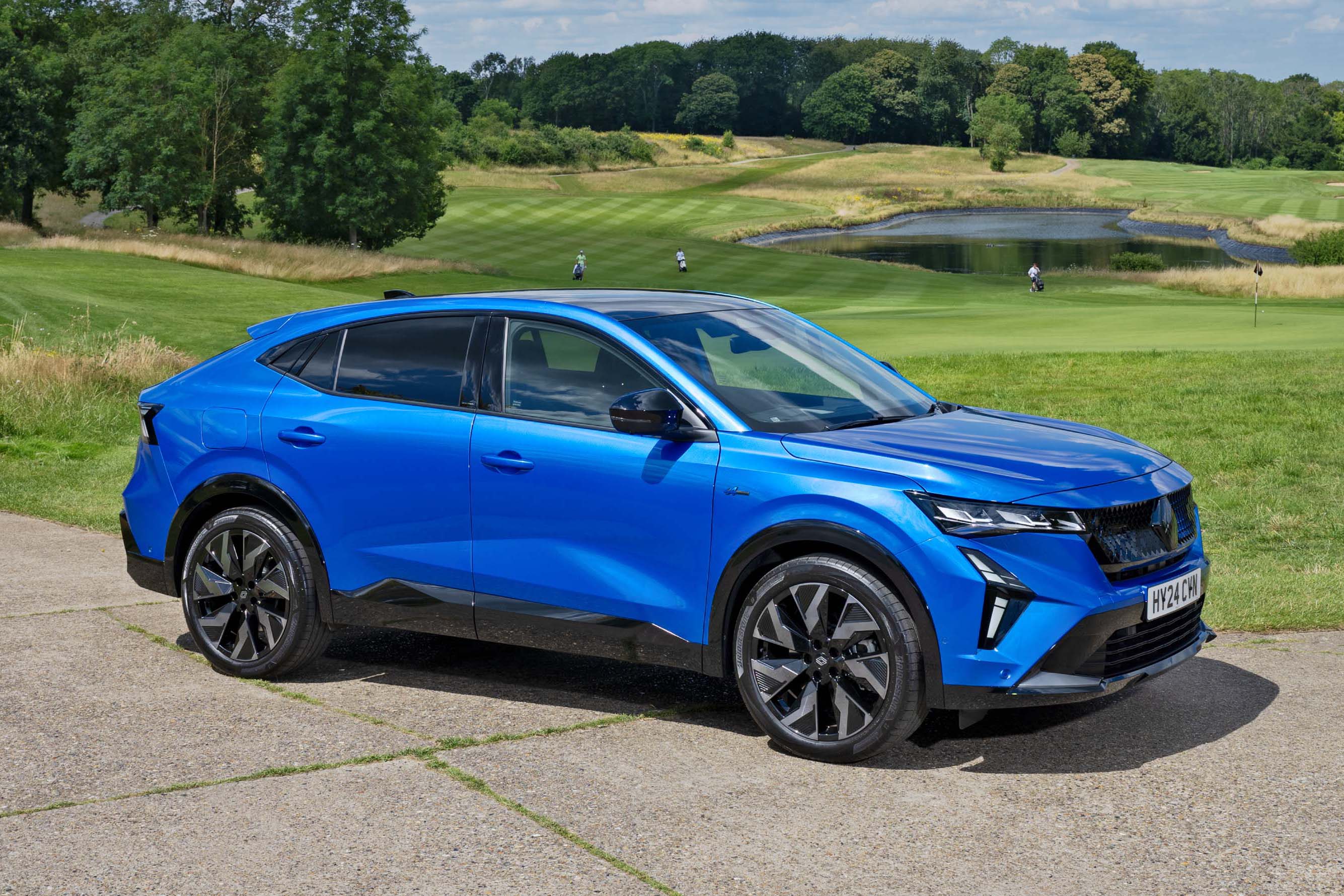
Our choice is also an SUV, but one with a more rakishly shaped roofline, both for styling and efficiency purposes – the Renault Rafale is also the most prestigious of the brand’s line-up with an appropriately plush interior to match. If it’s good enough for President Macron…
Despite producing 200PS of power, around 54mpg is a sensible economy average to expect across a mixture of road types, but it’s plying motorways that the Rafale Full Hybrid E-Tech is at its most serene and where is lack of engagement for more enthusiastic drivers matters less.
At £40,495 the Techno Esprit Alpine trim level provides an appealing blend of features that help make motorway driving that bit less of a chore, with a head-up display for key driving information, LED matrix headlights, adaptive cruise control and massaging front seats.
Best large family hybrid car
Seven-seater SUVs have become very popular with large families who appreciate their sense of rugged style more than the rather functional shape of van-based MPVs. That said, few such SUVs are available in self-charging hybrid form, with the two which are being closely related.
While the Kia Sorento was once the darling of customers who sought an upmarket seven-seater in all but price, it’s largely been put in the straight-edged shadow of its closely related cousin, the Hyundai Santa Fe.
While the Hyundai’s boxy shape won’t be to all tastes, reminiscent of a Lego model built to full scale, the space and comfort inside its well-made cabin very much will, featuring three rows of seats which all easily fold flat into the floor when you need to a more van-like space – there’s up to 1949 litres of space available.
Front and all-wheel drive are both available, but we recommend sticking with the former as its real-world average of 37mpg is likely to be at least 3mpg to the good over Santa Fes sending power to each wheel.
While refined and quiet to drive, the Santa Fe’s ride quality can be unsettled with just the driver aboard, feeling much more accomplished when passengers and their stuff are along for the ride.
Equipment levels are very super-generous, meaning the entry-level Premium grade will have the key equipment you need for convenient family transport, including dark-tinted rear privacy glass, USB-C charging ports for all three rows of seats and leather upholstery for both a touch of luxury and wipe-down practicality.
It doesn’t come cheap, though – the least expensive Hyundai Santa Fe Hybrid is just over £49,000, but the ownership experience will be a satisfying one.
.jpg)
Best hybrid cars for driving thrills
Sporty, low-slung coupes have fallen out of favour with new car buyers over the past couple of decades to the point few manufacturers bother selling them. That makes the return of the Honda Prelude after a 25-year hiatus all the more intriguing, especially when it costs under £42k.
Unlike Ford, which resurrected both the Puma and Capri names and applied them to more rakish SUVs, the latest Prelude is very much a coupe in the sports car tradition, with two side doors and tiny rear seats that anyone taller than a child will struggle to wriggle into. There has been a nod to practicality thanks to the Honda’s enormous tailgate, but you’ll need to fold the token rear seats down to expand the capacity from a piffling 269 litres to a more usable 760 litres.
Just like a proper sports coupe, the Prelude handles engagingly, borrowing many trick suspension components from the now-discontinued Honda Civic Type R hatchback, although thankfully that model’s very firm ride characteristics have been softened-off for improved comfort.
Under the Honda Prelude’s bonnet is where the major deviation from sports coupe norms are found. You won’t find the Civic Type R’s engine nor the old Prelude’s advanced 2.2-litre VTEC, but a similar e:HEV hybrid set-up to that found in other Hondas.
Although the engine primarily operates as an on-board generator, it can also drive the front wheels directly, delivering fine performance thanks to its 203PS and 315Nm of torque outputs. There are even eight simulated gear ratios to enhance the driver appeal – they work impressively well via the paddles on the back of the steering wheel, but downshifts are less convincing.
Officially the Honda Prelude e:HEV returns 54.3mpg, but in the real world – and assuming you can administer some self-control and drive reasonably gently – 48mpg should be possible without too much trouble.
Best luxury hybrid car
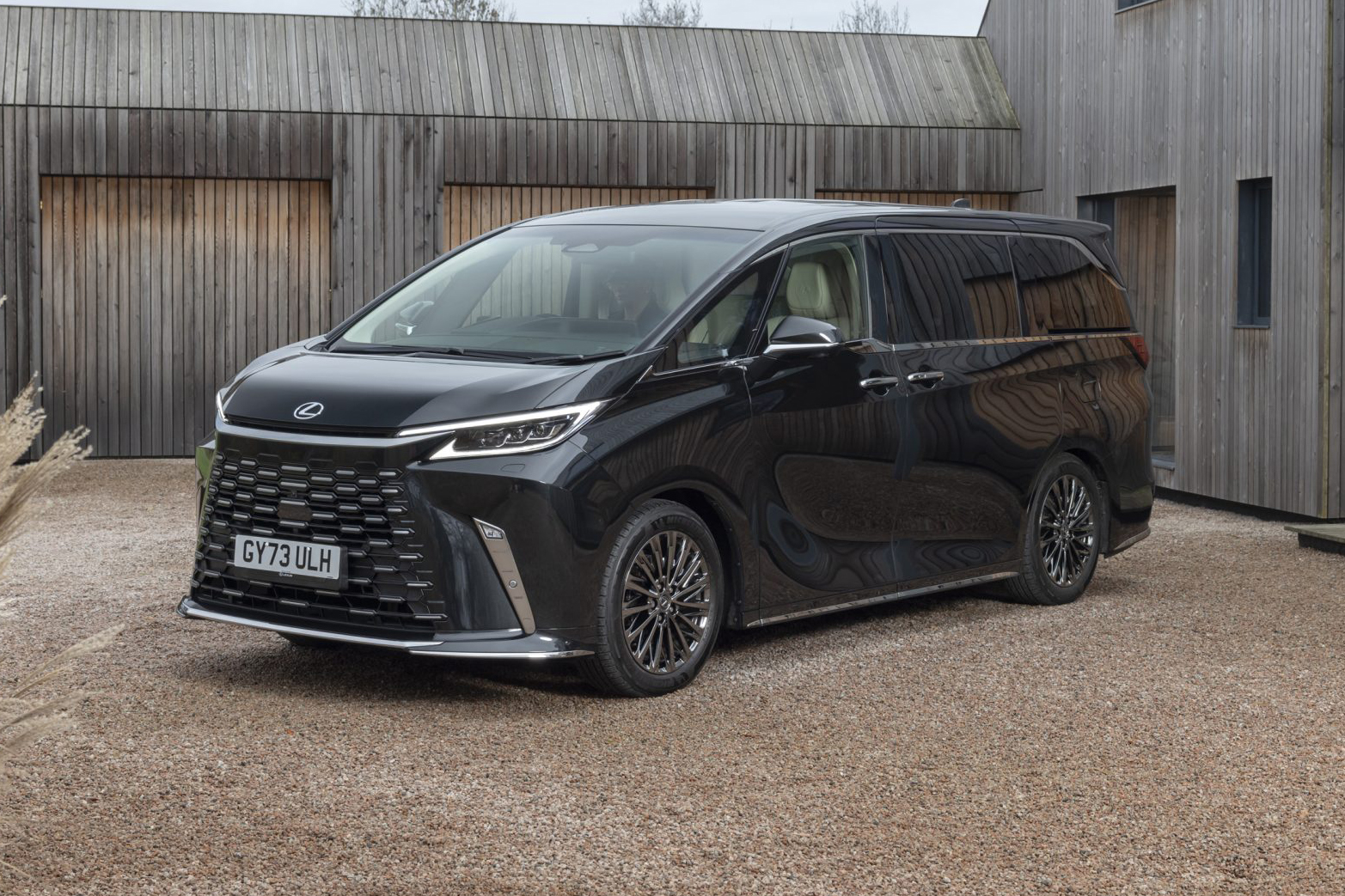
Space is the ultimate luxury which is why upmarket saloons tended to resemble massive land yachts in order to provide the expected interior commodiousness. As no such model is currently powered by a self-charging hybrid, we’ve taken a side-step into the leftfield world of luxury MPVs with the Lexus LM 350h.
Describing the tall Lexus as an MPV rather undersells its potential, because while it is available with seven seats across three rows, in its most luxurious guise it only seats four, with two business class flight-style electric recliners occupying the cavernous space behind the front seats. Naturally they offer heating, ventilation and massage functions and include an extendable footrest, which is also heated.
From there you can lay back within the LM’s exceptionally high quality cabin and watch the world go, or you can train your eyes at the 48-inch ultra-wide display screen integrated into a panel separating the VIP area from the that of a driver ahead. There’s even an electrically operated opaque internal window to elevate the privacy in the back, as you quaff champagne from the built-in refrigerator and listen to the incredible 23-speaker Mark Levinson audio package.
Your Lexus’s chauffeur has a hybrid-assisted 2.5-litre engine at their disposal, powerful enough to whisk you along serenely and quietly from 0-62mph in 9.1 seconds. The LM 350h is a heavy and not especially aerodynamic mode of transport, but should still average 35mpg overall – potentially over 40mpg on mainly urban journeys.
Of course, this degree of supreme comfort comes at quite a price – £117,645 for the four-seater, in fact – but then, no other hybrid car offers the levels of luxury experienced in the Lexus LM 350h.
Best hybrid cars for towing
There’s something of a misconception about hybrid-powered cars being unable to tow very heavy loads. In reality, because hybrids are usually aimed at consumers who want to maximise fuel efficiency for their choice of car, manufacturers don’t engineer them to be able to haul along the heaviest of trailers.
Two that have been are the Hyundai Santa Fe and its close cousin – and our pick here – the Kia Sorento Hybrid. Both can tow braked trailers weighing up to 2000kg, which is significantly shy of the 3500kg maximum legal capacity. For reference, the diesel-engined Sorento is homologated to tow 2500kg, while the Plug-in Hybrid is down at 1700kg.
Despite their equal towing abilities, we’ve plumped for the Kia on the basis it’s significantly cheaper than the Hyundai at £44,705 versus £51,195 when all-wheel drive traction is taken into account – a major aid when towing heavier loads. Many people buy such large SUVs for hauling horseboxes, shoving all manner of equine-related paraphernalia, mud and feed in the boot – the Sorento not feeling quite as plush inside works to its advantage.
There’s also more space in the Kia’s boot than the Hyundai’s. With the third-row seats folded flat into the boot floor, the Sorento can swallow up to 813 litres to the Santa Fe’s 628-litre capacity. That advantage continues when the second-row seats are also folded down at 1996 litres to 1949 litres respectively.
Even in entry-level Pure specification, the Sorento Hybrid’s equipment list includes a heated steering wheel and front seats, automatic climate control and wirelessly connected Android Auto and Apple CarPlay smartphone mirroring.
Driving across a mixture of road types – and not when towing two tonnes behind you – the Kia Sorento Hybrid will return in the region of 36mpg, despite having 239PS of power available and being a large SUV that tips the scales at 1955kg.
Best value hybrid cars
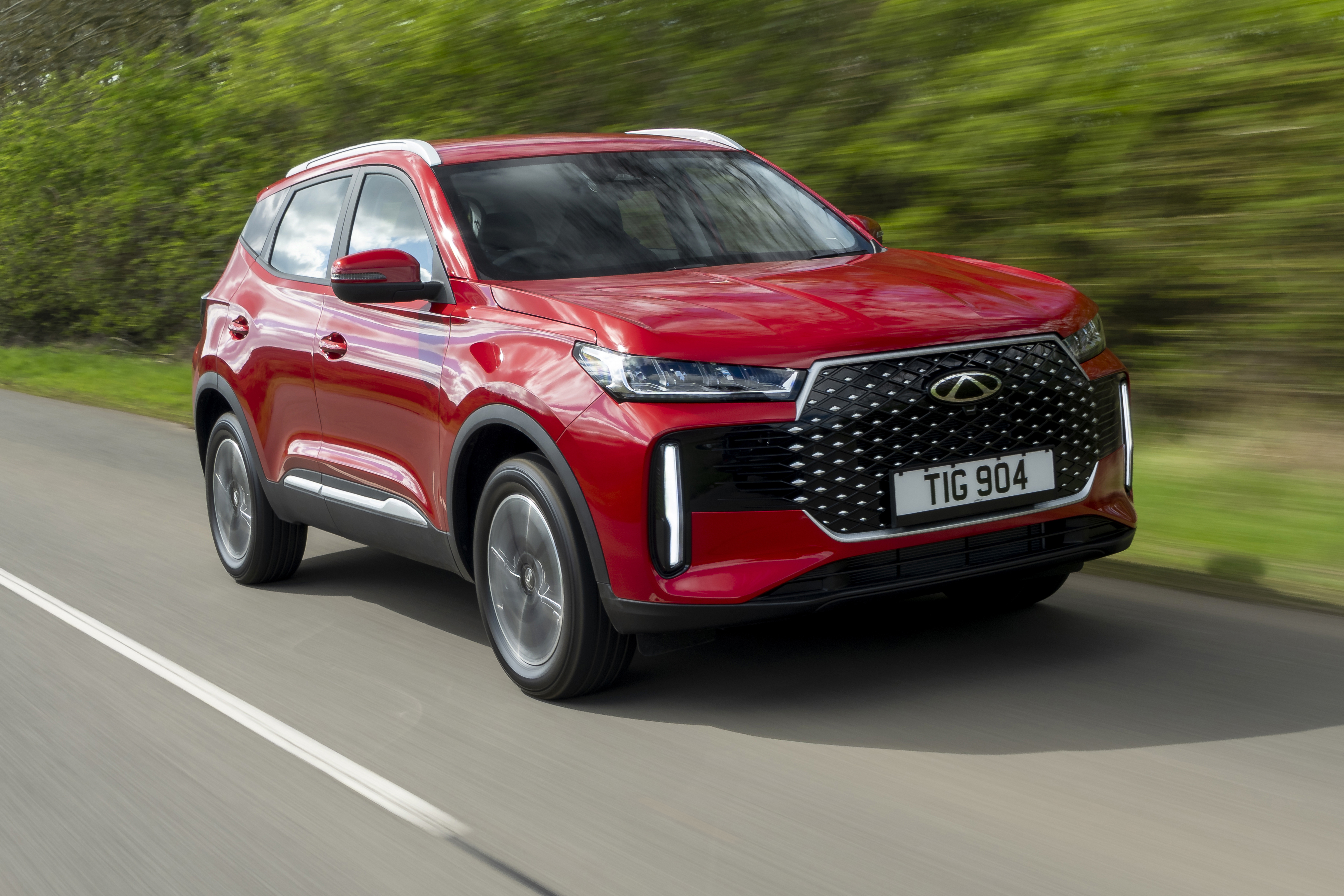
That the Chery Tiggo 4 CSH – that’s for Chery Super Hybrid – is a compact SUV available for a smidge under £20,000 is an eye-widening statistic for those running more established brands. Yes, it has some shortcomings that are outlined below, but for those primarily looking for inexpensive to buy and run transport, they are unlikely to prove significant detractions.
In terms of driving enjoyment, the MG ZS Hybrid+ – a similarly small SUV targeting the same buyers – does a much better job than the Chery, which feels overly assisted and slightly disconnected by comparison. But if saving money’s the aim here, even at £23k the cheapest MG is still £1000 more expensive than the priciest version of the Tiggo 4.
There’s a huge amount of standard equipment packed into the Chery with the least expensive Tiggo 4 Aspire still fitted with LED lights front and rear, 17-inch alloy wheels, adaptive cruise control and two 12.3-inch screens for the dashboard display, the leftmost one being a touchscreen where you can operate Android Auto and Apple CarPlay wirelessly.
While that equipment roster gives plenty to boast about, it won’t take your mind off the overly nannying ADAS systems and their melody of chimes and bongs. Yes, they’re supposed to get your attention, but… Still, the interior is amply spacious for four adults and the quality of fixtures and fittings is really impressive – and not just for the money.
With an official average of 53.2mpg, you can realistically expect the Chery Tiggo 4 CSH to return 47mpg without trying too hard in the real world. If keeping your motoring costs modest is a primary buying decision, the Chery will prove to be a satisfying purchase.
Best hybrid cars under £10,000
Two truths about pre-owned self-charging hybrids: they hold their value well and they’re also popular with minicab operators. This means that you may need to consider a model older than you were expecting to as well as one that isn’t a common sight among taxi drivers. This is actually good news, because among those cars which are left once you’ve ignored the Honda Insights and Toyota Aurises is the impressively plush Lexus CT.
Sold between 2010 and 2021, with more facelifts than Cher to keep it looking youthful, the CT is essentially a very posh Toyota Prius wearing different bodywork and fitted with its own interior, all finished to Lexus’s exactingly high standards. Boot space is good, rather than generous: 375 litres with the rear seats in use, expanding to 985 litres when they’re folded over.
Seat comfort and space, particularly up front, is excellent, although the CT’s ride quality and performance weren’t exactly the brand’s finest hour – getting from a standstill to 62mph in sub-10 seconds isn’t possible, for instance. But it is brilliantly fuel-efficient, so if you can expect to average at least 55mpg without trying to be miserly.
As a budget of £10k will buy you a flagship CT 200h Premier from 2014 with around 40,000 miles under its wheels, you can indulge in a specification list that doesn’t feel remotely like budget motoring: keyless entry, high quality leather upholstery and an excellent 13-speaker Mark Levinson sound system are all part of the Lexus’s package. As is people saying ‘it’s like the Japanese Mercedes’ in an Alan Partridge-aping voice. It’s a small price to pay – literally and metaphorically.
Best used hybrid cars under £20,000
Those same used hybrid-buying rules also apply when the budget’s doubled to £20k, particularly as that opens more opportunities for family sized SUVs, which are frequently becoming used for taxi duties.
As good as the likes of the hybrid-powered Ford Kuga and Kia Sportage are, we’re recommending something that’s ever so slightly more niche in terms of its styling, yet remains fuel efficient but is also good fun to drive – the first-generation Toyota C-HR.
It’s essentially a contemporary Toyota Prius, with an elevated ride height to give improved visibility and raise the level of the seats – great for those with mobility issues and for making installing child seats less of a pain in the neck. The C-HR also has a rather rakish roofline for an SUV, though – that pays dividends aerodynamically, reducing its thirst for fuel, but it does impinge on rear seat headroom, which can feel a bit claustrophobic due to the rising window line.
Choose a C-HR with the 1.8-litre hybridised engine for a 377-litre boot compared with the 2.0-litre’s 358-litre space behind the rear seats. When they’re folded over the load volume grows to 1164 and 1102 litres respectively. That 1.8-litre engine is also the choice with the better fuel efficiency, where around 50mpg is a realistic average to expect across a variety of road types.
For £20,000, your budget will net you a late C-HR from 2022 that’s covered around 30,000 miles in eye-catching GR Sport specification. Its niceties include two-tone paint, 19-inch machine-finished alloy wheels, adaptive LED headlights, black faux suede and leather upholstery and a nine-speaker JBL system linked to a multimedia package that can function with both Android Auto and Apple CarPlay.
Expert guidance: How to choose your hybrid
Small, family-sized or seven-seater hybrid car?
Determining the right size of hybrid car for you will depend on a variety of factors, not least your budget and how you plan to use it. Alongside the hybrid’s purchase price, consideration also must be given to running costs such as fuel consumption, insurance and maintenance, all of which typically increase as the size of car grows.
For many buyers, day-to-day usage will be the biggest deciding factor. The size of your household, the number of passengers you regularly carry and your luggage requirements should all influence your choice. Try to avoid occasional factors, such as once-a-year family visits where having a seven-seater would be useful but where for the other 364 days they remain vacant.
Small hybrids are usually the most affordable to buy and run. They can be a good option for couples or young families, but their compact dimensions often mean less rear passenger room and a smaller boot, which could be overcome by going for an SUV over a hatchback model. Consider how much space bulky child seats, a pushchair or a big grocery shop typically take up in a car.
Medium-sized models, particularly hybrid-powered family SUVs, offer a more practical balance. Increased rear legroom and a larger boot can make them better suited to growing families. Despite the extra space, carrying three passengers across the rear seat can still be a squeeze, especially if child seats or teenagers are involved.
Larger hybrids, including seven-seat SUVs and MPVs, provide the greatest levels of passenger and luggage space. However, the third-row seats in some models may be best suited to children or occasional use rather than regular adult travel. Think very carefully about how often those sixth and seventh seats will be used in reality.
Boot space vs passenger space
Whether passenger space or boot capacity is more important will depend on how you intend to use your hybrid car. In practice, most five-seater models strike an effective balance between the two, with the greatest compromises usually found at either end of the market among the smallest and largest choices.
Compact hybrids are often designed with shorter urban journeys expected to be the most common, meaning interior space can be limited. Some such models prioritise luggage capacity, providing a surprisingly large boot at the expense of rear passenger room, on the basis drivers are more likely to be carrying ‘stuff’ than passengers.
Small hybrid SUVs can be a useful middle ground, because although they occupy a similarly small footprint to many hatchbacks, their taller bodies and higher seating positions usually liberate more space inside. This can make them a more practical choice for younger families without a significant increase in overall size of the car.
Seven-seat hybrids introduce a different set of considerations. While they offer additional passenger capacity when required, boot space with all three rows occupied is often limited. In some models, there may only be enough room for a few small bags, which can make family holidays, airport runs and other luggage-heavy trips more challenging.
For buyers who regularly need to carry seven passengers and their belongings, large MPVs are a practical solution, except self-charging hybrid-powered choice is limited to the lovely – but very expensive – Lexus LM, so won’t be a consideration for many.
If carrying seven people in a hybrid car is important but a more budget-friendly solution is required, the Dacia Jogger remains your go-to option.
Mild vs self-charging vs plug-in hybrids
Hybrid-powered cars today are available in three varieties: mild hybrids (usually shortened to MHEV), self-charging – or full – hybrids (HEV) and plug-in hybrids (PHEV). Those are generic terms, but manufacturers have different marketing names which can blur the distinctions between them.
Fundamentally, all three hybrid types combine a traditional combustion engine with a small electric motor to propel the car. That motor is powered by electricity stored in a high-voltage battery, usually located below the car’s floor. When the car slows down, regenerative braking enables energy that would otherwise be wasted to be converted into electricity and stored in the battery.
So what separates the three types from those common features?
Mild hybrid cars use a very small electric motor, often integrated between the engine and gearbox, along with a tiny battery and a 48-volt electrical circuit. Their purpose is to give the engine a little extra support when accelerating and enable it to switch off for brief periods, such as when decelerating or even coasting. These measures give modest fuel efficiency and exhaust emissions improvements compared with equivalent models without MHEV technology.
Those electrical features are significantly beefed-up for self-charging hybrids, including with more powerful motors, larger capacity batteries and higher voltages. These typically give much greater efficiency advantages, so much so that a petrol-engined HEV will use less fuel than a diesel-engined MHEV.
Those components take up more space, which often meant earlier hybrids had reduced boot space, but that’s less common now, but their cost to manufacturers is higher, usually mirrored with higher purchase prices for consumers than MHEVs.
Plug-in hybrids typically work similarly to HEVs, albeit with a much larger capacity battery pack, which is designed to be primarily charged by plugging it in, hence the name. These additional components make PHEVs not only more expensive than comparable HEVs, but also heavier, with the knock-on effect being they are less fuel efficient if the battery isn’t regularly fully charged.
Most PHEVs deliver over 50 miles of electric driving range, which mean that some owners may only experience the engine firing into life very occasionally. This also means that they don’t offer the same degree of energy efficiency as a fully electric car, as PHEVs are hauling an engine, gearbox and fuel tank around that could be largely redundant.
Hybrid vs electric
While self-charging hybrids offer a greater number of advantages than MHEVs and PHEVs, comparing them with a fully electric car (EV) presents a different assortment of considerations.
Convenience, whether perceived or actual, is one claim in hybrids’ favour, because they can be refuelled quickly without needing any degree of planning about where that might be done – filling stations are easily found.
While public charging points are becoming more commonplace and more powerful, the process of recharging an EV using one still isn’t a two-minute task. However, most EV owners charge their cars at home – although the flow of energy isn’t very quick, the convenience of having a topped-up battery when you head out to work in the morning beats visiting a filling station for many owners. Not everyone can charge at home easily, though, which makes HEVs more attractive for those consumers.
Many HEVs will travel further with a full tank of fuel than EVs will with a fully charged battery. While that sounds like an advantage, whether it really is depends on how far you drive in one go. Typically a 180-mile journey will take around three hours, by which point taking a break’s advisable – a break often long enough to top-up an EV’s battery, if needed.
Hybrid purchase prices can also be lower than those of equivalent EVs, although the difference is narrowing quickly.
However, HEVs have limitations. Their batteries are much smaller than those fitted to EVs, meaning they can only travel short distances using electric power alone. For most journeys, the engine will still be running for most of the time, resulting in higher fuel costs and harmful exhaust emissions.
Electric cars also tend to offer lower day-to-day running costs, especially when charged at home on an off-peak tariff. Many EVs provide stronger acceleration and a quieter driving experience, while their simpler mechanical design can reduce maintenance requirements over the long-term.
Towing with a hybrid
Not all hybrid cars have been engineered to tow trailers, even light ones let alone those which can haul anything closer to the 3500kg maximum braked trailer capacity legally permitted on UK roads. In many cases, manufacturers choose not to homologate their hybrids for towing because the additional load will have a significant impact on fuel efficiency, undermining one key HEV advantage.
Even among models that are approved for towing, maximum trailer weights are often lower than those of comparable petrol- and diesel-powered vehicles. In fact, most MHEV, PHEV and EV models will be able to pull heavier loads than HEVs.
For buyers intending to tow regularly, particularly larger trailers such as horseboxes or car transporters, a larger SUV is usually the most suitable option. These vehicles tend to be heavier, more powerful and engineered to handle greater towing loads, although they also command higher purchase prices and running costs.
That said, the two best-performing models – the Hyundai Santa Fe and Kia Sorento – are limited to a 2000kg maximum in Hybrid guise.
Whatever type of vehicle you choose, it is important to check both the maximum towing weight and the vehicle's gross train weight before purchase, as these figures can vary significantly between different models and specifications.
Motorway comfort
Self-charging hybrids can be sensible choices for drivers who spend a significant amount of time on motorways. While they do not offer the zero-emission driving capability of an EV, they combine some of the efficiency benefits of electrification with the convenience and flexibility of a conventional petrol vehicle.
One of their biggest advantages is the ability to cover long distances without requiring charging stops. Refuelling takes only a few minutes, making motorway journeys easier to plan, particularly for drivers who regularly travel hundreds of miles in a day or who cover routes where rapid charging facilities may be limited or busy.
Most HEVs are also designed with efficiency in mind. Although the electric motor contributes less at motorway speeds than it does in urban driving, the hybrid system can still help reduce fuel consumption during slower sections of a journey, such as roadworks, congestion and stop-start traffic around major junctions. The result is often lower fuel use than an equivalent non-hybrid petrol car.
Another benefit is HEVs’ predictability. Unlike EVs, whose real-world range can be affected greatly by factors such as cold weather, high speeds and towing, HEVs can be refuelled almost anywhere, reducing the need for journey planning and eliminating concerns about charging availability.
There are drawbacks to consider, such as at sustained motorway speeds, the petrol engine does most of the work, meaning the efficiency advantage over a non-HEV is smaller than it is for urban-centric journeys. Running costs are also typically higher than those of a fully electric vehicle charged at home, not least given how expensive petrol is as a fuel.
Running costs
When the government announced plans that from April 2028 an additional pay-per-mile taxation called eVED, would be levied against EVs and PHEVs, the rationale contained a comparative detail. In the first year of operation, the eVED electric car drivers will pay will equate to 3p per mile – the fuel duty applied to petrol and diesel already broadly equates to 6p per mile.
Also consider that for an equivalent distance to be covered, the cost of electrical energy for an EV is much lower than for a petrol or diesel car to do the same, even without the taxation taken into account. Self-charging hybrids lessen that difference, but the running cost advantage still remains in EVs’ favour.
By dint of containing both combustion engines and electric drive technologies, hybrids are much more complex than conventionally propelled cars and EVs, meaning maintenance can be pricier due to the amount of components to check over and the variety of parts which need replacing as part of the routine servicing schedule.
Tyre wear and expense is usually comparable between HEVs and EVs, which is to say that they can wear out sooner than they will on a non-hybrid model, but similar to an electric car, a self-charging hybrid’s braking systems have a regenerative function, using the motor to help slow the car down and harvest energy, meaning the actual brakes on the wheels are used to a lesser degree.
Hybrids costing over £40,000 are also liable for the Expensive Car Supplement taxation, a threshold that’s £10,000 lower than for EVs. Based on current pricing, that will set you back a further £440 annually between years two and six of ownership.
Used vs new vs lease
Whether you choose a new or used hybrid car largely comes down to what you can comfortably afford, but both paths have distinct financial trade-offs.
New HEVs offer longer warranties and manufacturer incentives, plus you can also tailor the specification with factory options. The downside? New cars suffer the steepest depreciation in their first few years.
Used HEVs avoid that initial drop, as depreciation slows significantly after year three. While the upfront savings are substantial, older cars require annual MOT testing, while consumables such as tyres and brakes are likely closer to needing replacement. You are also limited to whatever specification the original owner chose.
Most buyers use finance rather than paying outright:
Hire Purchase (HP): This method spreads the full cost of the hybrid, plus interest, across the duration of the agreement. It's straightforward but monthly payments are higher than with other finance options.
Personal Contract Purchase (PCP): Here the finance covers only the car’s expected depreciation – albeit with interest – resulting in lower monthly payments than with HP. However, higher interest rates on used-car PCPs can sometimes erase this advantage. At the end, you can pay a final balloon payment to buy it outright, part-exchange it and start a new PCP agreement, or return the car and walk away.
Personal Contract Hire (PCH): Essentially a long-term lease, there is no option to buy, but it offers lower monthly payments and sometimes includes servicing. This is a good solution if owning the car outright is not of interest to you.
Ultimately, the right choice depends entirely on your budget and how you prefer to manage the costs of ownership.