- Home
- …
- Electric Cars
- Vauxhall electric cars: Every EV explained
10/08/2026
Vauxhall electric cars: Every model explained

Written By Keith WR Jones

Cars bearing the Vauxhall name — and variations of its griffin logo — have been sold since 1903, yet despite its long-standing association with Britishness, it’s been owned by companies from overseas for over a century.
For the past decade, Vauxhall’s been part of the manufacturing group now known as Stellantis, which has enabled it to have a complete line-up of electric cars in very short order. The technology beneath its EVs are essentially to common with other marques within the same company, including Citroen, Fiat and Peugeot.
Vauxhall’s position within Stellantis is a slightly unusual one. Its role is to be as mainstream as possible, with the broadest mass-market appeal to both private buyers and company car choosers.
As a result, Vauxhall’s models look up-to-date and are packed with features consumers expect, but there are very few points of distinction about its EVs — little to get excited about, then, but on the flip-side, not much for folk to find divisive. By contrast, Citroen’s pitched as a super-comfy but quirky alternative, while Peugeot’s been pushed upmarket with daring styling to match.
What’s arguably more curious about Vauxhall is that it’s a name which is only used in the UK. Elsewhere across Europe plus the Middle East and North Africa, the same line-up of cars are sold under the Opel brand, complete with a circular logo bisected by a lightning flash.
In Europe, Opel has an additional EV which Vauxhall doesn’t offer. It’s a rebadged version of the Citroen Ami and Fiat Topolino electric quadricycle, sold as the Opel Rocks. Given it’s only produced in left-hand drive form and is designed purely for city use, the Ami’s slow sales have already confirmed there’s little interest in it from British buyers.
Despite the relative youthfulness of Vauxhall’s EV line-up, its four longest-serving models all received a naming tweak in autumn 2022. Launched as the Corsa-e, Mokka-e, Combo-e Life and Vivaro-e Life, each had the ‘-e’ suffix swapped for Electric, with that being the format adopted for each new model since.
Here’s how 2026’s Vauxhall Electric line-up looks:
Vauxhall Corsa Electric
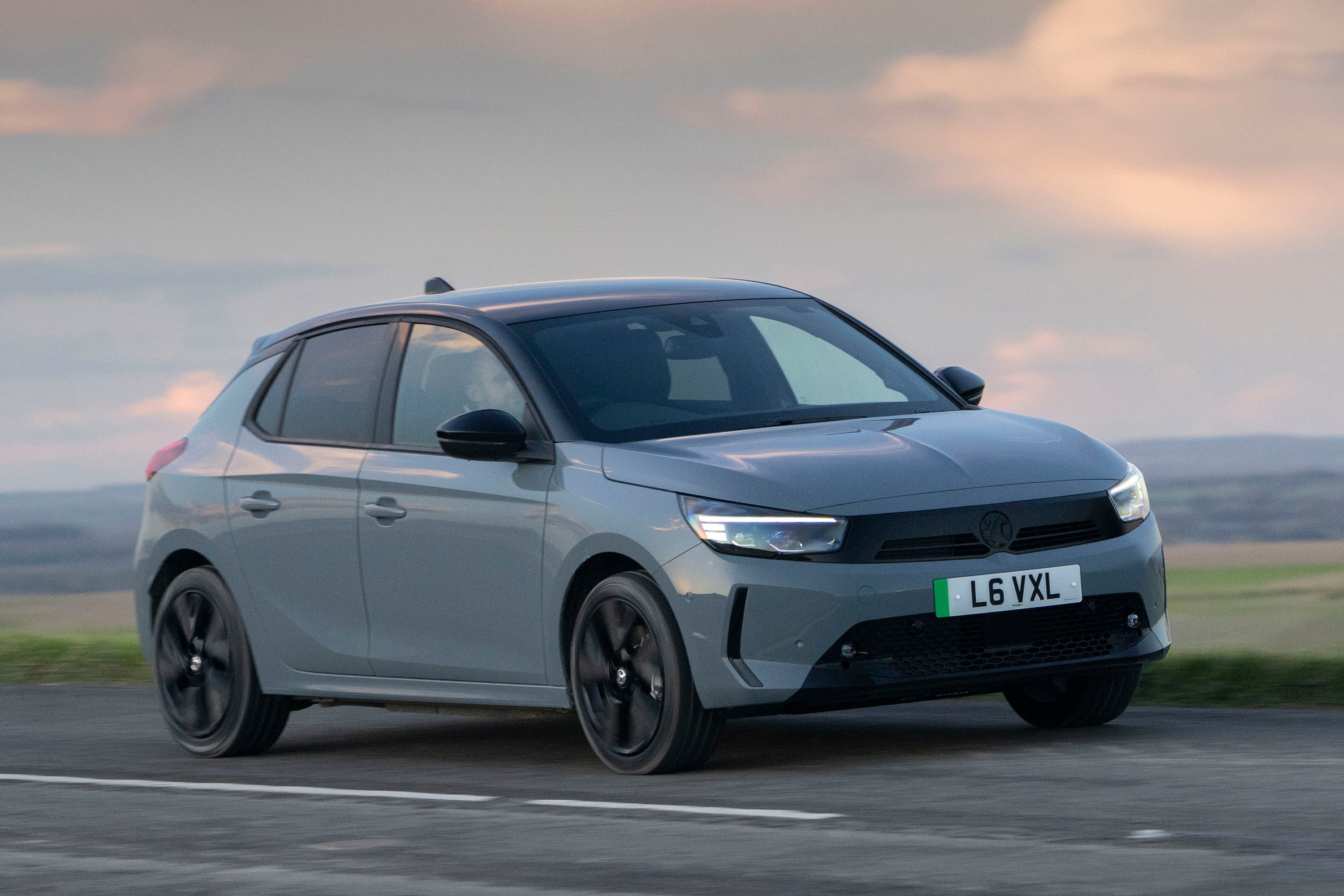
Given the amount of attention lavished upon its Renault 5 E-Tech rival, you’d be forgiven for forgetting that the Vauxhall Corsa Electric was still on sale. Since its launch, the combustion-engined Corsa has been a constantly top-selling car and as the battery-powered version looks virtually identical, it tends to blend into the streetscape.
Sharing its platform, electric motor and battery pack choices with the Peugeot E-208 means the Vauxhall is easy to use, handles neatly and proves comfortable, but there’s little to get excited about.
That may change when the Vauxhall Corsa GSE goes on sale — it’s the sister car to the Peugeot E-208 GTi, promising colossal performance for a hot hatchback, although there are few visual clues as to the GSE’s 281PS performance potential.
Compared with the Volkswagen ID. Polo, the Corsa Electric’s interior feels both ordinary and cramped, particularly for adults sat in the rear seat. It’s also significantly shy of the VW when it comes to carrying cargo, with just 267 litres of boot space available with the rear bench in use, while the ID. Polo provides an astonishing 441 litres of space.
GSE aside, there are two motor and battery combinations available for the Corsa Electric, each sold in Yes, GS and Ultimate specification grades. There’s a 46kWh usable capacity battery and 136PS for the less expensive choice costing £26,005 with the Electric Car Grant (ECG) discount applied, or a 49kWh pack with 156PS if you’re willing to spend a chunky £1395 more, making it pricier than the E-208, 5 E-Tech and ID. Polo.
Official driving range figures are up to 221 miles for the smaller battery and 265 for the bigger one. Connected to a public DC charger, both can be topped-up at 100kW, with a 0-80% replenishment taking 30 minutes.
You’ll need to negotiate a substantial discount for the Corsa Electric to be genuinely attractive against newer, better opposition.
Vauxhall Frontera Electric
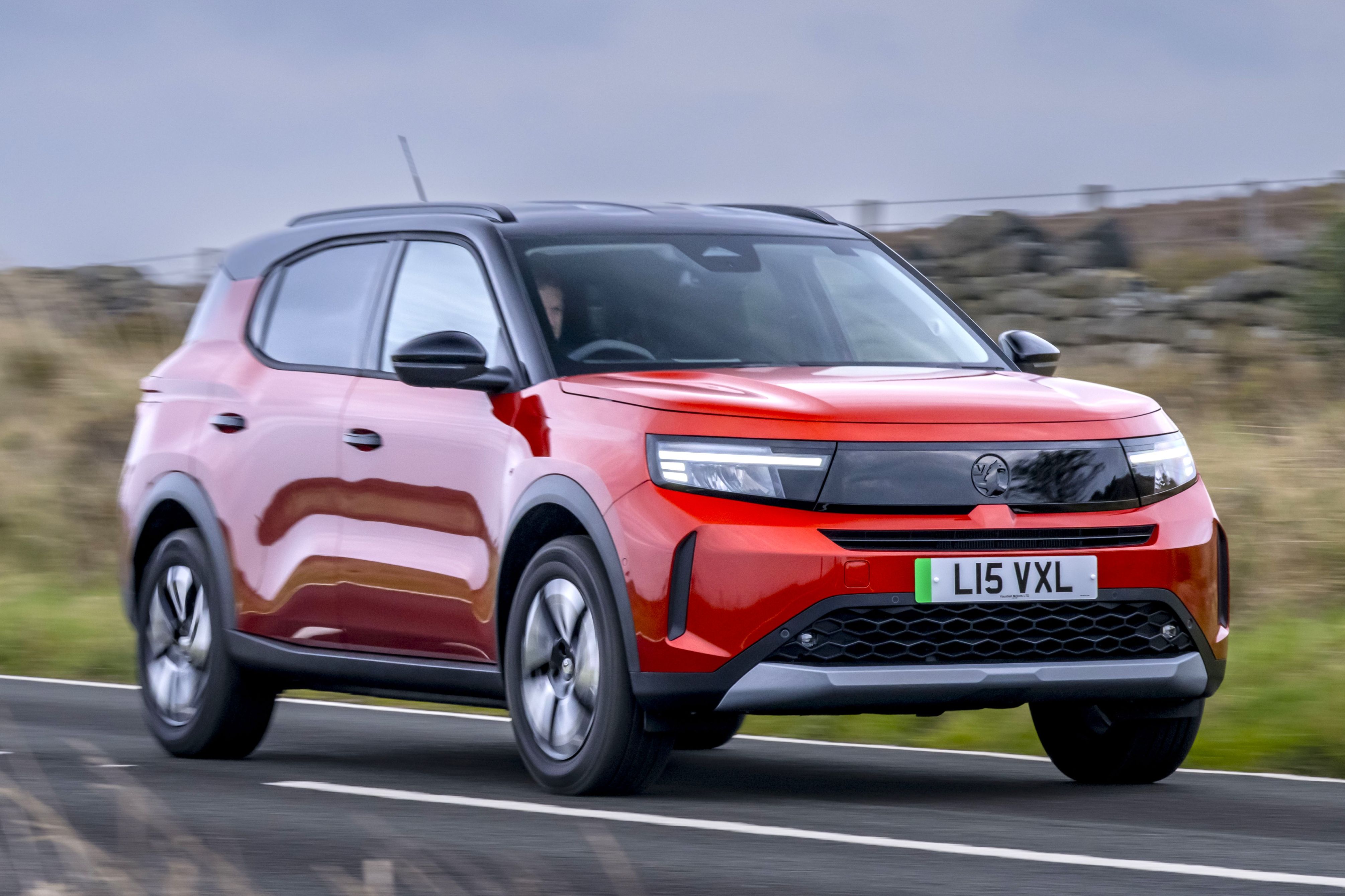
Dusting a name down from a manufacturer’s back-catalogue isn’t an unusual marketing strategy to help make EVs feel more familiar to undecided car buyers, although aside from being an SUV, there’s little to link the Vauxhall Frontera Electric with its chunky predecessors from the 1990s.
What’s also unusual about the Frontera Electric is that in spite of it being larger and more spacious than the Corsa Electric, it’s also up to £2710 less expensive. How so?
Well, the Frontera Electric is built on a cheaper-to-manufacture Stellantis platform that’s used by a larger number of models across the globe, with many sharing some exterior bodywork to further keep costs pegged down. You’ll already find the same doors on the Citroen e-C3 Aircross, with the forthcoming Fiat Grizzly also adopting them.
Although the Frontera Electric’s interior is an uninspiring arrangement of hard, dark grey plastics, its assembled well and provides a generous amount of head and legroom for four adults — five will fit, but at a squeeze. Boot space is a handy 460 litres with the rear seats up, expanding to 1600 when they’re folded, but unlike with the combustion-engined Frontera, there’s no seven-seater option for the EV. Not a great loss, in all honesty.
Whether you go for the smaller 44kWh battery or the Extended Range 54kWh alternative, power is limited to just 113PS, so the Vauxhall’s no ball of fire, but for an inexpensive and practical family car, that’s fine.
With a claimed range of up to 190 miles, the smaller battery will suit those who tend to mainly undertake short- and medium-length journeys, suggesting the 248-mile range of the Frontera Electric Extended Range is a better all-rounder. It is, but it’s also a hefty £3500 more expensive for each of the Design, GS and Ultimate trim levels, although even the dearest is still sub-£30k.
Recharging at a public station is capped at a 100kW maximum, which is sufficient for increasing the state of charge from 20-80% in 26 minutes for the 44kWh battery and 28 minutes for the 54kWh.
Vauxhall Mokka Electric
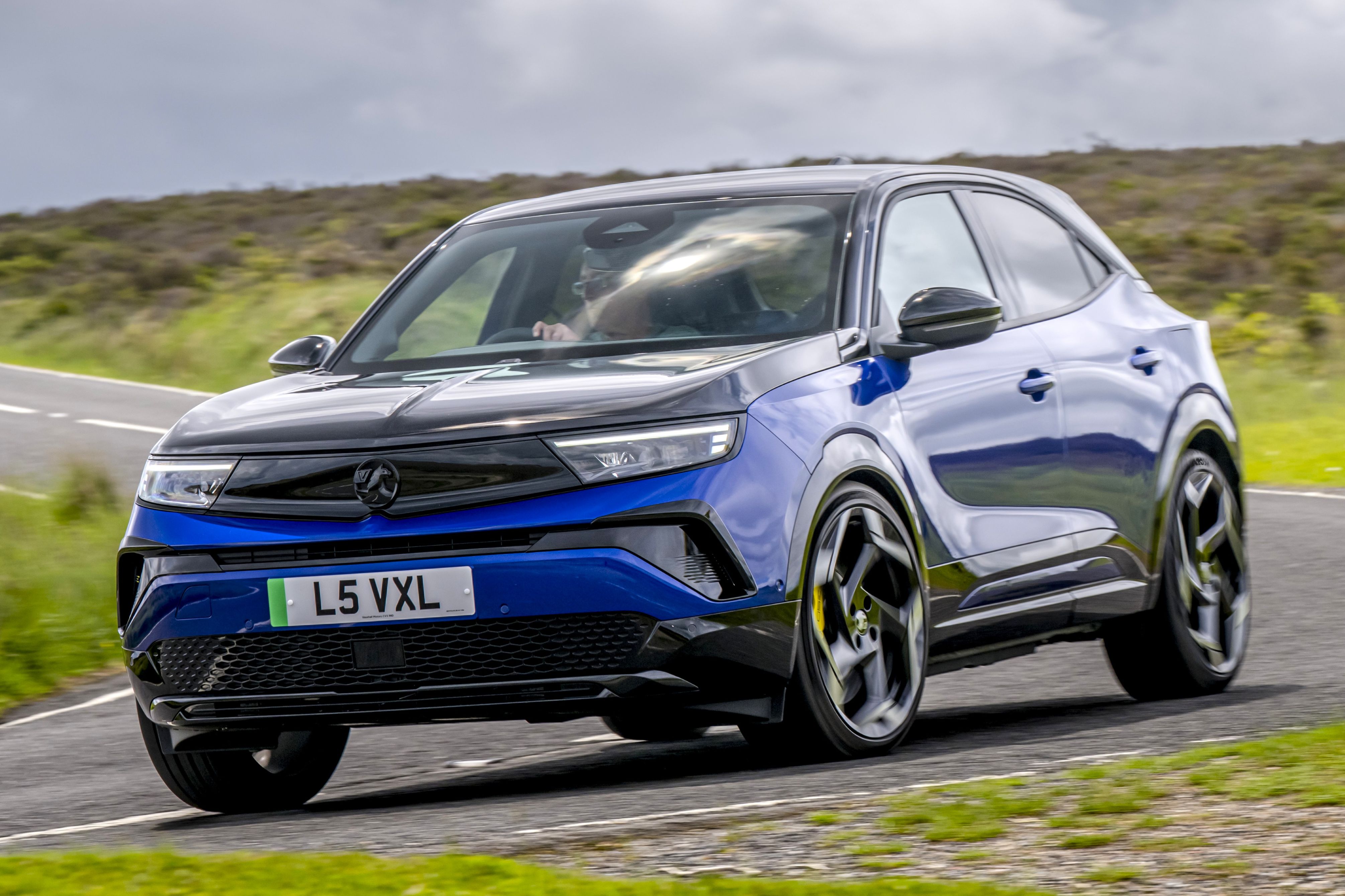
Size-wise, the Vauxhall Mokka Electric is closer to the Corsa than the Frontera, yet pitched as a sporty-ish SUV, it’s more expensive than both, with prices starting at a fiver over £31k with the government’s ECG discount applied.
Thanks to being more rakish in silhouette, it’s far from obvious that the Mokka Electric is related to more practical and perpendicular Stellantis compact SUVs, such as the Jeep Avenger Full-Electric or the Peugeot E-2008.
It’s a shame, then, that by and large to drive the Mokka Electric isn’t as interesting as its styling hints that it might be. We’ve qualified that statement because at the top of the range is the Mokka GSE, packing 281PS and 345Nm of urgency resulting in an eye-widening 5.9-second 0-62mph time. It’s a genuinely fine-handling machine being the stand-out pick of the line-up — and at £35,495, the GSE also feels like fine value compared with other Mokka Electrics.
Talking of which, they all have a 156PS motor in Yes, GS and Ultimate specifications, with all Mokka Electrics now having a 51kWh useable capacity battery. It’s sufficient for a 250-mile claimed driving range for each barring the GSE, which drops to 209 miles. A flat-to-80% DC recharge at up to 100kW from a public unit takes 30 minutes.
There’s not a great deal of extra space inside the Mokka Electric over the smaller Corsa, with rear seat room still limited, especially for legs. Boot space is nothing to write home about at 310 litres before the back seat’s folded over to expand its potential to 1060 litres.
Look elsewhere if practicality is what you’re after, but don’t dismiss the Vauxhall Mokka GSE — it’s an interesting hot hatch alternative.
Vauxhall Astra Electric
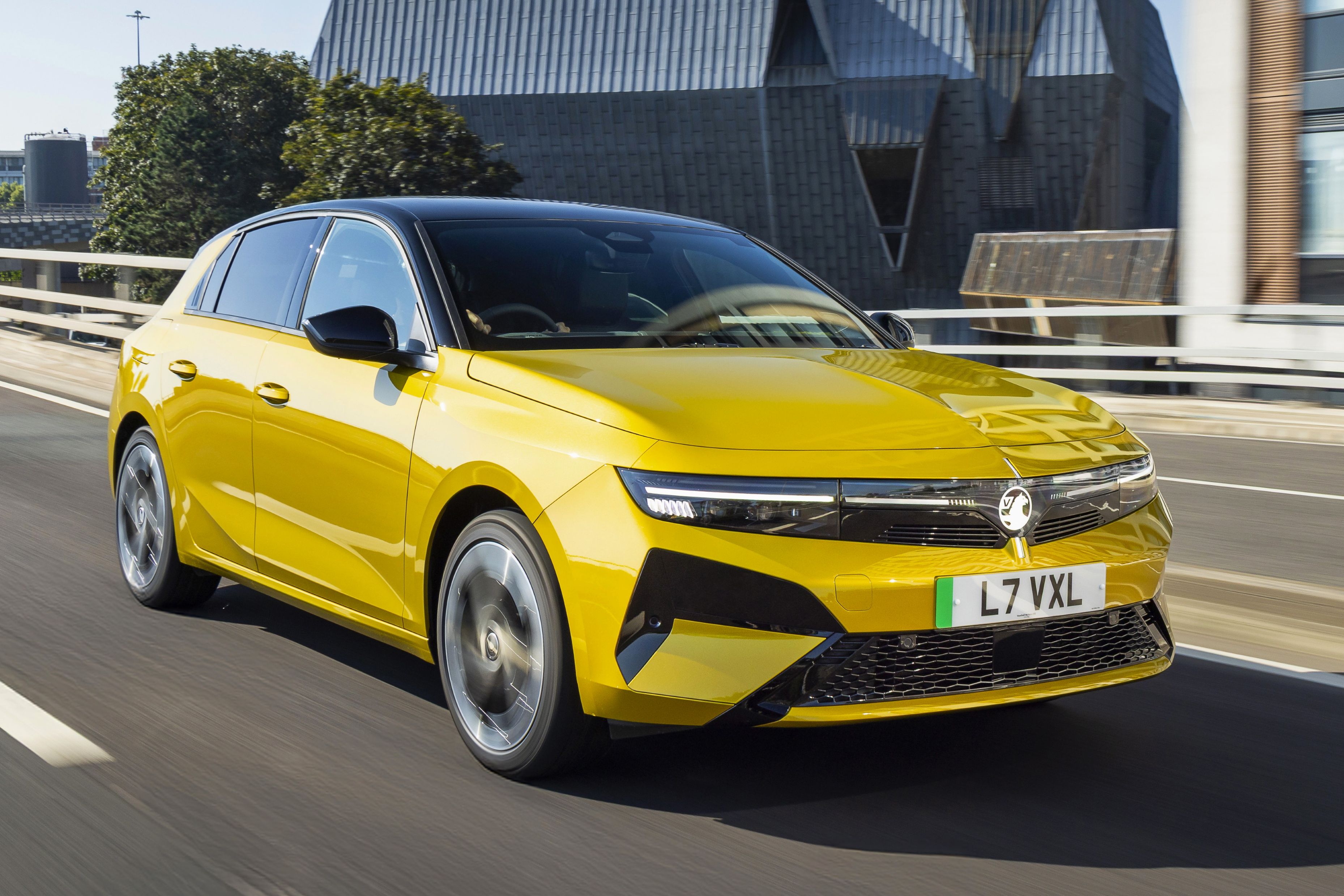
Subtly updated for 2026, the Vauxhall Astra Electric is a striking five-door hatchback sharing its platform and EV componentry with the Peugeot E-308, yet starts at £1000 less than it’s in-house rival. In fact, from £28,495, the Astra Electric is one Vauxhall’s better value EVs, being cheaper and more spacious than the Mokka Electric.
Unfortunately for Vauxhall, it nevertheless lags behind the Volkswagen ID.3 Neo when it comes to interior accommodation, helped by dint of the VW being designed from the outside to be EV-only. By contrast, you can also by mild and plug-in hybrid-powered versions of the Astra.
Five adults would be acceptably comfy in the ID.3 Neo, but the same passengers would find the Astra more of a squeeze. Similarly, the VW’s boot offers 383 litres of space with the rear bench in use — and that’s with its electric motor beneath the floor — whereas the Vauxhall only musters 352 litres, which is also nine litres shy of the E-308’s capacity.
Only one battery and motor combination is available for Astra Electric fanciers, with a 55kWh useable capacity feeding energy for 156PS and 270Nm of drive. That’s sufficient for a 9.3-second 0-62mph time It’s standstill to 62mph time is a steady 9.8 seconds, with a claimed driving range of up to 281 miles.
DC charging at public facilities is capped at 100kW, requiring 32 minutes for a 20-80% battery energy replenishment.
Standard equipment is generous even with the entry-level Griffin grade, although we reckon the mid-range Astra Electric GS is the one to have at just below £30k, as it also includes a reversing camera, keyless entry and dual-zone climate control. Just be sure to also test drive a VW ID.3 Neo before you commit to going for the Vauxhall.
Vauxhall Astra Sports Tourer Electric
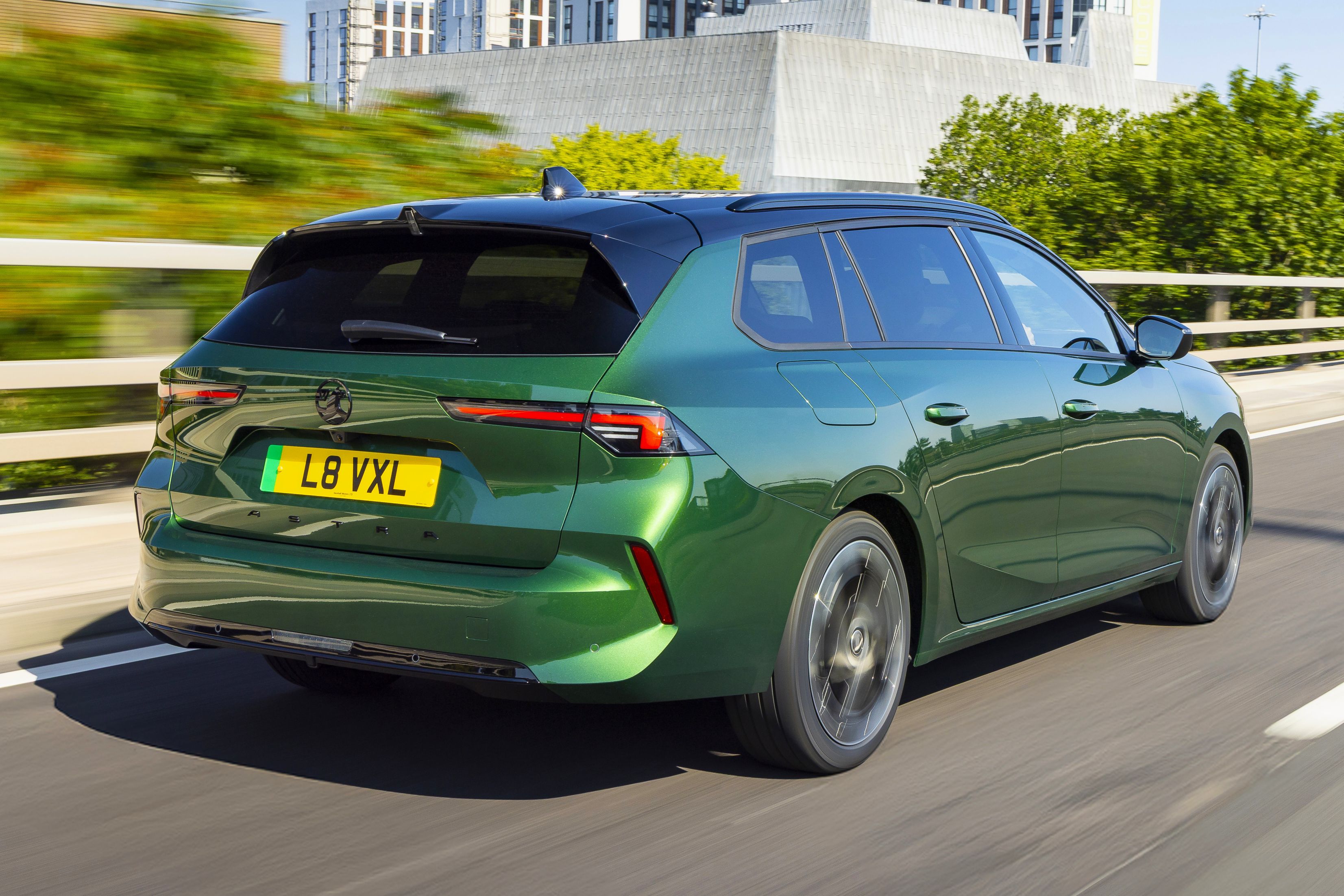
Perhaps surprisingly, the Vauxhall Astra Sports Tourer Electric makes a strong case for itself to be the sweetest spot in the brand’s entire EV range.
Okay, its claimed driving range figures are six miles short of its Astra Electric hatchback twin at a high of 275 miles, plus it’s a shade slower from 0-62mph at 9.5 seconds, but at 516 litres with the seats up and 1553 litres when they’re folded over, the Sports Tourer’s boot is respectively 164 and 285 litres more capacious.
That’s all well and good, but how much extra is the larger estate’s bodywork going to set you back in the first place? Here’s the clincher: nothing at all.
Yes, with prices ranging from mid-£28k-£32k, the Astra Sports Tourer Electric costs exactly the same as the hatchback alternative.
Even more significantly, that’s £2200 less than the starting price of the closely related Peugeot E-308 SW, which the Vauxhall is also more commodious than.
We would again recommend sticking with the mid-range GS trim level for the Astra Sports Tourer Electric, priced at £29,995 with the ECG discount applied. A comfy, spacious family estate with an eight-mile longer driving range priced at £1500 less than the Corsa Electric GS with the same level of power.
Make it make sense, Vauxhall.
Vauxhall Grandland Electric
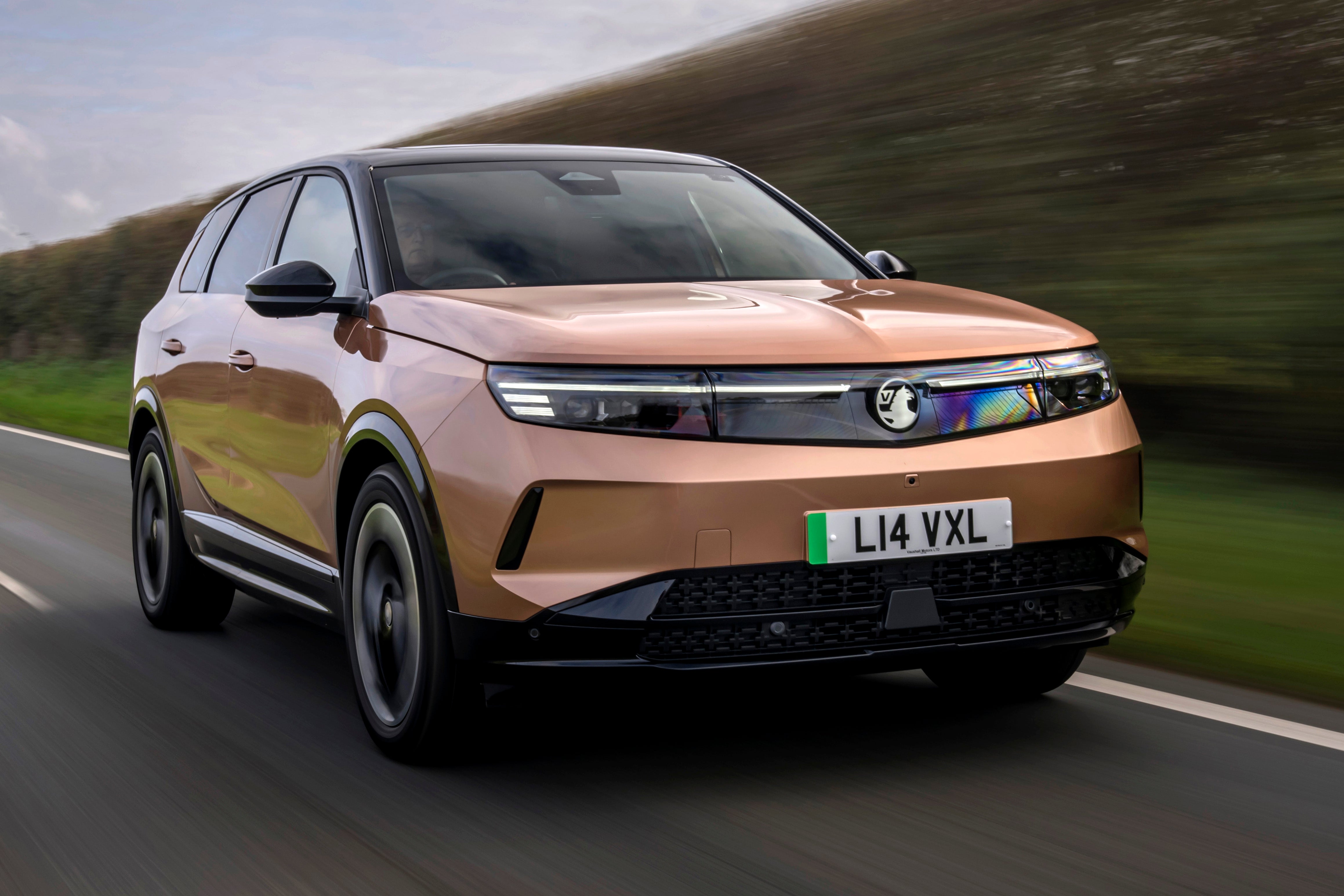
Sharing its Stellantis SLTA Medium underpinnings with the Peugeot E-3008 among others, the Vauxhall Grandland Electric is more of a practically shaped SUV with less-raked tailgate. That said, while it’s roomy inside for both people and their luggage, its 550-litre boot is 38 litres less accommodating than its Peugeot cousin’s.
Our pick of the E-3008’s motor and battery combinations was the Long Range 97kWh 230, yet that particular mix is not — yet — available in the Grandland Electric, which is a pity. Instead, it makes do with a 73kWh useable capacity pack with a choice of 213PS or 325PS and all-wheel drive if you opt for the dual motor version.
There’s no real-world benefit to the power increase aside from improved traction, but you would still be better off spending the money on a set of winter tyres for the front-wheel drive versions. The extra power also gnaws at the Vauxhall’s potential driving range, with a best of 306 miles as opposed to 322 miles for the more efficient versions.
Ultra-rapid DC charging is increased from other Vauxhalls to a more generous 160kW, with a 20-80% top up needing 30 minutes.
Prices start at just over £35k for the Grandland Electric Griffin, but again it’s the mid-range GS trim that catches our attention at £37,405, inclusive of its ECG discount.
It builds on an already extensive kit list by adding a six-inch larger multimedia touchscreen, a wireless smartphone charging pad, heated steering wheel and front seats, plus extra-dark-tinted glass for the rear windows to its roster.
Come on, though, Vauxhall — get the longer range battery on sale already.
Vauxhall Combo Life Electric
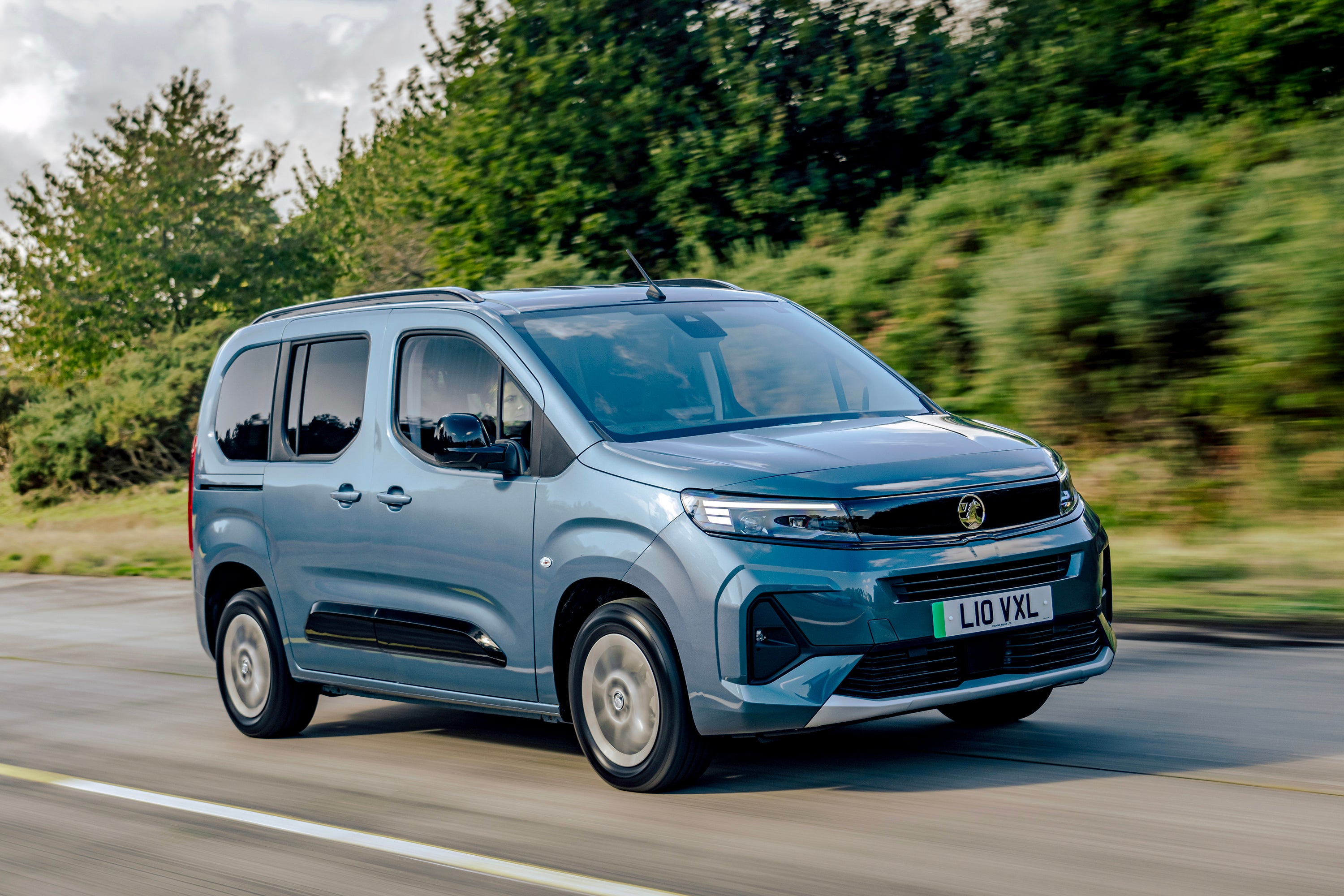
No prizes are being awarded for spotting that the Vauxhall Combo Life Electric is essentially a near-clone of its Citroen e-Berlingo and Peugeot E-Rifter Stellantis stablemates, but as per the British brand’s role in the group, it looks far plainer and shorn of interesting decor. As a result, it also looks far closer to the Combo Electric van than the others do.
Once inside the Combo Life Electric, that ordinariness is amplified by the dark plastics and fabrics, which seem deliberately sapped of any potential talking points, but as a functional, incredibly spacious family car, that might prove to be of little importance.
Design and Ultimate trim levels are available with both the shorter, five-seater body and its Combo Life Electric XL seven-seater alternative. Regardless of which you opt for, all are propelled by a 136PS motor fed by a 52kWh battery pack, with the furthest official driving range figure quoted at 213 miles.
As with most other Vauxhall — and Stellantis — EVs, maximum public charging station speeds are capped at 100kW here, so a 0-80% top-up will take 30 minutes for the Combo Life Electric.
We would suggest choosing the Combo Life Electric in Ultimate specification with the five-seater body at £33,355 post-ECG discount. Not only do the windows in the sliding rear doors rise and lower electrically, there’s dual-zone climate control, three individual, Isofix-equipped second row seats, an opening tailgate window to access the boot in confined places and a reversing camera.
Talking of boot space, even with five seats in use and only loaded to the window line, the five-seater Combo Life Electric will still gobble 775 litres of cargo.
Vauxhall Vivaro Life Electric
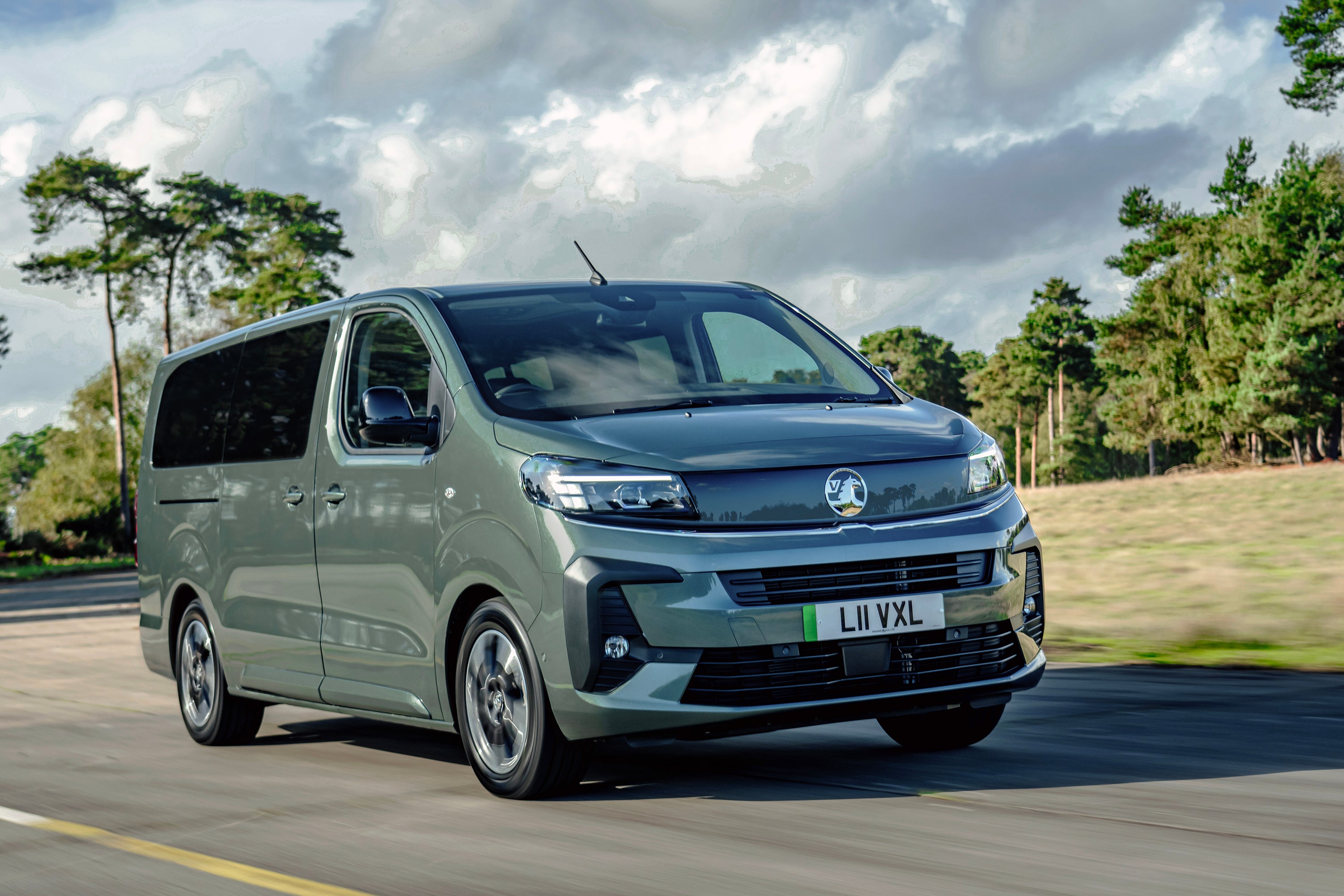
Everything of key interest about the Vauxhall Vivaro Life Electric is identical to comments made about the Peugeot E-Traveller and the other Stellantis van-derived people carriers based on the same design.
None of them feel particularly close to other cars sold by each brand, so don’t worry about having an affinity with one marque over the other. Instead, base your decisions on more pragmatic reasons, such as which can you get the largest discount on and which has a showroom nearest to you. Or, spend significantly more and opt for a less space-efficient Volkswagen ID. Buzz instead.
Curiously, Vauxhall quotes a maximum potential driving range of 216 miles for the most efficient Vivaro Life Electric — one further than its Peugeot equivalent, but the difference isn’t really here or there. Either way, its 75kWh battery will still require 45 minutes being plugged-in for a 5-80% recharge when hooked up to a 100kW DC connection.
As with the E-Traveller, ignore the Vauxhall’s inexpensive-sounding Combi specification, which is mainly aimed at taxi operators and staff shuttlers. It may seat nine people, but it’s a very basic and not especially practical way of doing so.
Both Design and Ultimate trim levels seat eight as standard, but the pricier of the two is optionally available with fewer seats if you plump for the £750 middle row pair of captain’s chairs and a further £740 for repeating that in the third row. Six adult-sized, reclining and sliding seats in a cabin this cavernous makes for a very flexible way of ferrying people and cargo.
Going for those VIP seat packs pushes the price of the most expensive Vivaro Life Electric XL Ultimate to £50,425, which is an awful lot of money, but it’s still over £9k less than its cheapest six-seater VW ID. Buzz alternative.
Available to order from 2019, the Vauxhall Corsa-e was the brand’s first fully electric car to be sold here.
Previously, between 2012 and 2015 it also sold the Vauxhall Ampera — a restyled twin of the Chevrolet Volt.
Both cars were marketed as range-extender electric cars, which are driven entirely electrically, but feature a combustion engine to operate as an on-board generator. But in the cases of the Ampera and Volt, this wasn’t strictly accurate.
While they did operate as range-extenders in the vast majority of conditions, propulsion could also be sourced via a transmission from the engine itself, which really makes them both plug-in hybrids.
According to its Electric Mission announced in July 2021, Vauxhall will be an electric-only brand from 2028.
That’s far more ambitious than most other legacy manufacturers’ commitments, most of which have tentatively cited 2030 as the year. However, given all of Vauxhall’s range is already on sale in battery-powered form, it’s not an implausible suggestion.
This depends on a number of interlinked element, including the battery's capacity and the charger you've plugged into it's power output.
Generally speaking, DC public chargers typically enable Vauxhall's EVs to reach an 80% charge level in 30 minutes or less, with the Vivaro Life Electric's larger battery drawing that about by an extra 15 minutes.
If using a domestic 7kW wallbox charger, a flat-to-full recharge will likely take anywhere between 10 and 16 hours.
Find an electric Vauxhall for sale
Vauxhall Mokka100kW SRi Premium 50kWh 5dr Auto
202225,754 milesElectric£12,248
WF104RJVauxhall Astra115kW GS 54kWh 5dr Auto
202419,217 milesElectric£16,898
DN24NU- Images coming soon!0
Vauxhall Mokka100kW SRi Premium 50kWh 5dr Auto
2022823 milesElectric£14,000
LS197BZ Vauxhall Vivaro100kW 75kWh Prime H1 Van Auto
202625 milesElectric£37,432
inc. VATDE216HBVauxhall Vivaro3100 100kW Prime 50kWh H1 Van Auto
20253,431 milesElectric£20,865
inc. VATNG56BNVauxhall Astra115kW GS 54kWh 5dr Auto
202411,292 milesElectric£16,495
BD14RYVauxhall Astra115kW Ultimate 55kWh 5dr Auto
10 milesElectric£32,995
PO61SRVauxhall Frontera83kW GS 54kWh Extended Range 5dr Auto [NI]
15 milesElectric£21,990
OL12QL
More electric car guides
From choosing the right EV to understanding charging, running costs and more, our guides can help.